
The Forsyte Saga
by John Galsworthy
The Forsyte Chronicles (Collections and Selections — Omnibus 1-3, 2 Interludes)
On This Page
Description
John Galsworthy's The Forsyte Saga collects together three novels and two interludes, all published between 1906 and 1921. Not far removed from their farming history, the members of an upper-middle-class British family are painfully aware of being "new money". As a "man of property", Soames Forsyte's abilities bring him material wealth, but they grant him no quarter in the happiness stakes..
Tags
Recommendations

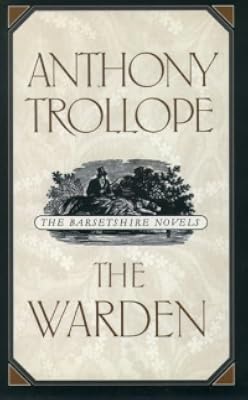
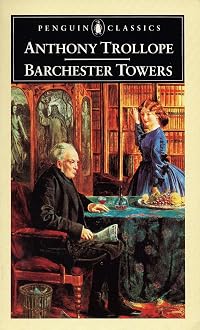


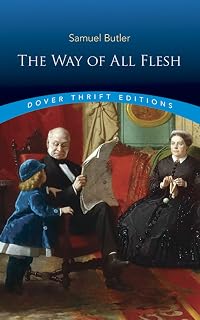


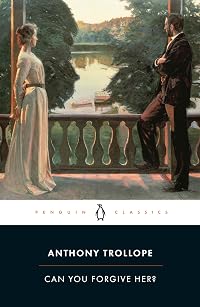






Member Recommendations

Member Reviews
This was the first of the three trilogies Galsworthy wrote about the eponymous family of successful upper middle class lawyers and businessmen, whom he uses to stand for a certain Victorian, English set of attitudes and values focused on the primacy of money, social position, respectability and security.
The lawyer Soames Forsyte has a central position in all three novels: he’s an almost-perfect embodiment of Forsyteism, his idea of himself as a Man of Property invariably trumping any distant echoes of aesthetic sense or human feeling that get through to him. In the first novel we see his despotic possession of his wife Irene fall apart when she falls for the distinctly un-Forsyteish architect Philip; in the second we find him being show more pushed into a position where his desire for a child forces him into the ultimate sacrifice of respectability, a passage through the divorce court; and in the third he is pushed towards another major sacrifice of reputation for the sake of his daughter.
Galsworthy writes with a Trollope-like irony towards his characters (and a very Trollope-like fascination with legal quirks), but it’s informed by a 20th-century scepticism about Victorian values, written in the aftermath of the humiliation of South Africa and (in the last book) the horrors of the Great War. And a certain sense of nostalgia, too: when Timothy Forsyte, last of the Victorian generation, is interred in Highgate Cemetery, it’s a bit like the death of Emperor Franz-Joseph. Oddly, he doesn’t have anything to say about the Women’s Suffrage movement, but he does stress how Victorian law and custom were used to oppress women, and puts in his own plea for a long-overdue reform of divorce laws. show less
The lawyer Soames Forsyte has a central position in all three novels: he’s an almost-perfect embodiment of Forsyteism, his idea of himself as a Man of Property invariably trumping any distant echoes of aesthetic sense or human feeling that get through to him. In the first novel we see his despotic possession of his wife Irene fall apart when she falls for the distinctly un-Forsyteish architect Philip; in the second we find him being show more pushed into a position where his desire for a child forces him into the ultimate sacrifice of respectability, a passage through the divorce court; and in the third he is pushed towards another major sacrifice of reputation for the sake of his daughter.
Galsworthy writes with a Trollope-like irony towards his characters (and a very Trollope-like fascination with legal quirks), but it’s informed by a 20th-century scepticism about Victorian values, written in the aftermath of the humiliation of South Africa and (in the last book) the horrors of the Great War. And a certain sense of nostalgia, too: when Timothy Forsyte, last of the Victorian generation, is interred in Highgate Cemetery, it’s a bit like the death of Emperor Franz-Joseph. Oddly, he doesn’t have anything to say about the Women’s Suffrage movement, but he does stress how Victorian law and custom were used to oppress women, and puts in his own plea for a long-overdue reform of divorce laws. show less
I've been reading this 1000 page novel made up of three novels and 2 short interludes all month and I think I'm going to miss it now that its over. This book follows several generations of the Forsyte family, an upper middle class family in England the end of the 19th cent and through WWI. The Forsytes and their characteristics become a metaphor for the whole upper middle class society.
The book revolves around the miserable marriage of Soames Forsyte to Irene. Soames treats Irene as his property, and with marriage laws being what they are at the time, in essence she is his property. Soames is possibly the most despicable character I've met in literature. Irene falls in love with a young architect and ends up escaping Soames. In the show more next book, Soames is back, wanting a child and needing Irene to comply or divorce him. She ends up falling in love with a different Forsyte and marrying him. In the third book, the children of Soames and Irene's subsequent marriages of course fall in love.
The plot seems soap opera-esque, but it's all so tastefully and artfully done, that it definitely reads like literature. Irene is a main character, but she's so passive that the story just happens around her. But there are strong women characters, like June and Holly, so the book doesn't fall into the annoying trap of no female characters. Soames is despicable, but so fleshed out through the book that he's understandable and therefore even more disgusting. I didn't love the last of the three parts because I found the relationship between the youngest Forsyte generation to be kind of annoying, but I was happy with the ending.
Overall, I loved the experience of reading this epic novel. show less
The book revolves around the miserable marriage of Soames Forsyte to Irene. Soames treats Irene as his property, and with marriage laws being what they are at the time, in essence she is his property. Soames is possibly the most despicable character I've met in literature. Irene falls in love with a young architect and ends up escaping Soames. In the show more next book, Soames is back, wanting a child and needing Irene to comply or divorce him. She ends up falling in love with a different Forsyte and marrying him. In the third book, the children of Soames and Irene's subsequent marriages of course fall in love.
The plot seems soap opera-esque, but it's all so tastefully and artfully done, that it definitely reads like literature. Irene is a main character, but she's so passive that the story just happens around her. But there are strong women characters, like June and Holly, so the book doesn't fall into the annoying trap of no female characters. Soames is despicable, but so fleshed out through the book that he's understandable and therefore even more disgusting. I didn't love the last of the three parts because I found the relationship between the youngest Forsyte generation to be kind of annoying, but I was happy with the ending.
Overall, I loved the experience of reading this epic novel. show less
The last book of 2017 is the one and only book of the year that reaches the lofty heights of the 90%+ rating needed to enter Arukiyomi’s Hall of Fame. And deservedly so. This study of a Victorian family was one of the best portraits of generations that I have ever set eyes on.
From start to finish, the writing is excellent. At times, it is utterly sublime. I don’t think I will ever forget the passage at the end of The Indian Summer of a Forsyte. If you are looking for writing that will move you to tears with its beauty, try that out.
But the writing is so much more than that. Galsworthy has given us a quintessential study of the Victorian age as the sun begins to set on empire and the values that formed it. The characters of each show more generation are vividly brought to life, and through them, you live in another age.
At the pinnacle of Galsworthy’s achievement sits the character of Soames Forsyte. Rarely have I felt so many different emotions for a character over the course of a novel. He is at once repellent and yet also so very human I couldn’t help avoid the realisation that he was, at least in some aspects, every one of us.
One of the most memorable things about this book is that my wife and I read it to each other over the course of more than a year. We lived the saga together and shared our thoughts. This was a perfect book to read along with someone else because there’s just so much to reflect on and enjoy.
And while Galsworthy writes beautiful descriptions and detailed characters, he also makes sure you are satisfied for plot. As Soames dominates much of the proceedings, there are plenty of others who populate the novel whose sub-plots keep you occupied.
This is a majesterial novel which perfectly captures the spirit of the age it focusses on and does so in the most engaging way possible. show less
From start to finish, the writing is excellent. At times, it is utterly sublime. I don’t think I will ever forget the passage at the end of The Indian Summer of a Forsyte. If you are looking for writing that will move you to tears with its beauty, try that out.
But the writing is so much more than that. Galsworthy has given us a quintessential study of the Victorian age as the sun begins to set on empire and the values that formed it. The characters of each show more generation are vividly brought to life, and through them, you live in another age.
At the pinnacle of Galsworthy’s achievement sits the character of Soames Forsyte. Rarely have I felt so many different emotions for a character over the course of a novel. He is at once repellent and yet also so very human I couldn’t help avoid the realisation that he was, at least in some aspects, every one of us.
One of the most memorable things about this book is that my wife and I read it to each other over the course of more than a year. We lived the saga together and shared our thoughts. This was a perfect book to read along with someone else because there’s just so much to reflect on and enjoy.
And while Galsworthy writes beautiful descriptions and detailed characters, he also makes sure you are satisfied for plot. As Soames dominates much of the proceedings, there are plenty of others who populate the novel whose sub-plots keep you occupied.
This is a majesterial novel which perfectly captures the spirit of the age it focusses on and does so in the most engaging way possible. show less
(28) I read these three novels and two short stories all at once. They really don't seem to be novels in and of themselves and read rather like one long book. Very enjoyable. I adore Victorian and turn of the century novels and this was no exception. Victorian in terms of setting but written in a more modernist fashion with multiple POV's and a lot of stream of consciousness narrative. Excellent characters. Understated but poignant drama as opposed to melodrama like many Victorian pieces.
I would say the main protagonist is Soames Forsyte - a member of the moneyed bourgeois of the time as opposed to the nobility say featured in 'Downton Abbey,' The Forsyte clan is essentially parodied as being obsessed with possessions and unfortunately show more for Soames his beautiful wife Irene is the one possession he has that he can't seem to hold on to properly. The tensions that ensue between these two make up the heart of the novel with repercussions that effect both Soames parents' generation as well as the next. I can't wait to see the Masterpiece theater production of these novels and hope they do as masterful a job with Soames as Galsworthy did in print. His character is just so . . . unlikable . . . despite us as the reader being so intimate with his thoughts and emotions.
There are times when the novel is just so long that it rambles -- I found parts focused on June Forsyte and Uncle Swithin a bit tiresome and I was a wee bit disappointed with the ending. But all and all it is a biting, affecting, absorbing story that engulfed me for several weeks. I would highly recommend for lovers of English literature. Despite being a definite wrist bending door-stopper, it has been one of my favorite books so far this year. show less
I would say the main protagonist is Soames Forsyte - a member of the moneyed bourgeois of the time as opposed to the nobility say featured in 'Downton Abbey,' The Forsyte clan is essentially parodied as being obsessed with possessions and unfortunately show more for Soames his beautiful wife Irene is the one possession he has that he can't seem to hold on to properly. The tensions that ensue between these two make up the heart of the novel with repercussions that effect both Soames parents' generation as well as the next. I can't wait to see the Masterpiece theater production of these novels and hope they do as masterful a job with Soames as Galsworthy did in print. His character is just so . . . unlikable . . . despite us as the reader being so intimate with his thoughts and emotions.
There are times when the novel is just so long that it rambles -- I found parts focused on June Forsyte and Uncle Swithin a bit tiresome and I was a wee bit disappointed with the ending. But all and all it is a biting, affecting, absorbing story that engulfed me for several weeks. I would highly recommend for lovers of English literature. Despite being a definite wrist bending door-stopper, it has been one of my favorite books so far this year. show less
Drat. I see I lost the slip of paper where I write page numbers and the little notes for the book report. There are a few numbers scrawled on the inside back cover; page 785 has cricket, 808 the fixed idea, and there's a giant dog-ear folded from the bottom of the page. That would be a chapter I want to read again. I put off finishing it too. The book was left untouched at page 830 for an entire month. Didn't want to finish it. I had been through too much with them, especially the unloveable Soames, and the houses; Robin Hill and Timothy's.
"His heart made a faint demonstration within him while he stood in full south sunlight on the newly whitened doorstep of that little house where four Forsytes had once lived, and now but one dwelt on show more like a winter fly; the house into which Soames had come and out of which he had gone times without number, divested of, or burdened with, fardels of family gossip; the house of the 'old people' of another century, another age."
That house.
The passage of time is strong in this book and Galsworthy's precision and wit so timeless, I can recognize in Soame's misgivings about motor cars my own dizzy suspicions about cellphones. Whether it's the 19th or 20th century that's turning, things only seem to go faster. This is not going back on the shelf. I'm tucking this dogeared beast under the bedside table so I can reread all my favourite parts. show less
"His heart made a faint demonstration within him while he stood in full south sunlight on the newly whitened doorstep of that little house where four Forsytes had once lived, and now but one dwelt on show more like a winter fly; the house into which Soames had come and out of which he had gone times without number, divested of, or burdened with, fardels of family gossip; the house of the 'old people' of another century, another age."
That house.
The passage of time is strong in this book and Galsworthy's precision and wit so timeless, I can recognize in Soame's misgivings about motor cars my own dizzy suspicions about cellphones. Whether it's the 19th or 20th century that's turning, things only seem to go faster. This is not going back on the shelf. I'm tucking this dogeared beast under the bedside table so I can reread all my favourite parts. show less
Four and a half stars. Actually three books in one, this is a wonderfully poignant tale spanning the years from Victorian 1865 to the "modern" 1920. Galworthy develops his characters beautifully; they are so like real people, the reader becomes immersed in their lives, applauding their strengths and lamenting their fatal flaws. These characters evoke strong opinions! A story of life moving on - the fading away of the older generation and their "simple" ways to the disintegration of class distinction and a new world where those caught between the generations mourn the loss of that past. The final book was not as appealing to me as the earlier two (hence the loss of 1/2 star), probably because I identified with mourning the loss of the show more past and the new, modern world just marked the end of an era of which I am reluctant to let go. Read it! You'll not be sorry. show less
If you despise the upper middle class as I do, with their tiresome entitlement, you will know why I gave this work five stars. Despite its sexist-ness (see page 595), and racist-ness (re: what the characters say about the time of the Boer war), it's still a delicious read.
Members
- Recently Added By
Lists

1001 Books You Must Read Before You Die
1,448 works; 1,134 members
BBC Big Read
191 works; 45 members
Best of British Literature
226 works; 41 members

Favorite Long Books
330 works; 41 members

20th Century Literature
1,161 works; 54 members

Best Family Stories
241 works; 22 members

In and About the 1920s
181 works; 31 members

Best family sagas
244 works; 32 members

Western World's Greatest Books - Project Gutenberg
295 works; 15 members

Nobel Price Winners
222 works; 20 members

Best 20th Century Books as of 1924
100 works; 6 members

Blue Pyramid 1,276 Best Books of All Time
1,248 works; 32 members
Harold Bloom - The Western Canon: D. The Chaotic Age
833 works; 24 members
LibraryThingers' 1001 Books You Must Read Before You Die
442 works; 30 members

Global Reads: Books Set in the United Kingdom and Ireland
109 works; 5 members

Mensa for Kids Excellence in Reading Award Program (Grades 9-12)
116 works; 5 members

Love Triangles in Literature
108 works; 15 members

Top Five Books of 2016
795 works; 228 members
1,001 BYMRBYD Concensus
723 works; 27 members
Lamont's Hundred Best Novels (1947)
100 works; 4 members
1920s
141 works; 6 members
Mensa for Kids Excellence in Reading Award Program (Grades 9-12)
116 works; 3 members

Vote - Bookmarque's Teetering TBR Tower
33 works; 8 members

Five star books
1,757 works; 108 members

Books with Twins
175 works; 12 members
Best Books of the 20th Century
193 works; 5 members
Books Read in 2016
4,666 works; 197 members
Trinity College Booklist (1951): Class Ten, English Literature
358 works; 5 members

Books Read in 2022
5,166 works; 114 members

DigitalDreamDoor top 300
300 works; 4 members
.
194 works; 2 members

Classics
31 works; 1 member

.
396 works; 1 member

Unmarried women
66 works; 6 members

Books You Couldn't Finish
202 works; 32 members

My TBR
371 works; 3 members

Books Read in 2018
4,360 works; 110 members

Unread books
1,063 works; 84 members
Talk Discussions
Past Discussions
Group Read: The Forsyte Saga in 2018 Category Challenge (September 2021)
The Forsyte Saga in 18th-19th Century Britain (December 2017)
Group Read for August 2013: The Forsyte Saga in 1001 Books to read before you die (August 2013)
Author Information

343+ Works 11,774 Members
At age 28, after a gentlemanly education at Harrow and Oxford, and a training at law, Galsworthy settled into simultaneous careers as a novelist and a playwright. The Silver Box, Galsworthy's first successful drama, was staged in 1906, the year he published the first volume of what was to become The Forsyte Saga. His one-word titles - Justice show more (1910), Strife (1909), Loyalties (1922)---suggest the nature of Galsworthy's artistic ambition: to generalize a social indictment, keeping faith with the objective methods of naturalism. In each, Galsworthy favors an austere irony and unresolvable situations, and balanced moral positions are displayed in the cabinetwork of "well-made" playwrighting. Reputed to have led to reforms in its time, his realism today seems contrived to produce aesthetic distance and a sense of resignation that is precisely what contemporary political dramatists strain hardest to avoid. Not surprisingly, critics have come away from revivals with the sense that (especially in his spare language) Galsworthy anticipates Harold Pinter rather than more socially engaged playwrights. Galsworthy wrote novels and plays alternately throughout his life. His masterwork, The Forsyte Saga, begun in 1906 and finished in 1928, and consisting of six separate novels and two linking interludes, is the most famous example of the sequence novel in English literature. It is a study of the property sense, the possessive spirit, in different individuals and generations of English middle-class society. He also completed a second trilogy dealing with the Forsyte family, called A Modern Comedy (1928). His last trilogy, a study of the Charwell family, is called End of the Chapter (1933). Galsworthy's later years brought him many honors, including the presidency of P.E.N. and honorary degrees from Oxford, Cambridge, and several other universities. After World War I, he was offered a knighthood, which he refused. He did, however, accept the Order of Merit in 1929, and in 1932 he was awarded the Nobel Prize. He was, however, too ill to attend the Nobel ceremony and died within two months of receiving the award. Although his posthumous reputation had waned, the centenary of his death, in 1967, brought a re-creation of The Forsyte Saga on British and American television in serial form. Interest in him skyrocketed, and the Forsyte novels again became bestsellers. With new popularity came fresh critical analysis. Pamela Hansford Johnson called The Forsyte Saga "a work of profound social insight and patchy psychological insight" (N.Y. Times). His critical writings include The Inn of Tranquility: Studies and Essays (1911) and Author and Critic. (Bowker Author Biography) show less
Some Editions
Awards and Honors
Awards
Notable Lists
BBC's Big Read (123)
Series

Belongs to Publisher Series
Work Relationships
Is contained in
Contains
Common Knowledge
- Canonical title
- The Forsyte Saga
- Original title
- The Forsyte Saga
- Original publication date
- 1921
- People/Characters
- Jolyon Forsyte; Soames Forsyte; Irene Heron; Jolyon "Jolly" Forsyte; Holly Forsyte; Jolyon "Jon" Forsyte (show all 10); Fleur Forsyte; Winifred Dartie; Monty Dartie; Val Dartie
- Important places
- London, England, UK
- Related movies
- The Forsyte Saga (1967 | IMDb); The Forsyte Saga (2002 | IMDb); The Forsyte Saga: To Let (2003 | IMDb)
- Epigraph
- book I: the man of property: "...You will answer/ The slaves are ours...." ~ merchant of venice
book II: in chancery: "Two households both alike in dignity, [...] From ancient grudge break to new mutiny." ~ romeo and juliet
book III: to let: "From out the fatal loins of those two foes/ A pair of star-crossed lovers take their life." ~ romeo and juliet
interlude: indian summer of a forsyte: "And summer's lease hath all too short a date." ~ Shakespeare - Dedication
- book I: the man of property: TO EDWARD GARNETT
indian summer of a forsyte: TO ANDRE CHEVRILLON
book II: in chancery: TO JESSIE AND JOSEPH CONRAD
book III: to let: TO CHARLES SCRIBNER
To MY WIFE I DEDICATE THE FORSYTE SAGA IN ITS ENTIRETY, BELIEVING IT TO BE OF ALL MY WORK THE LEAST UNWORTHY OF ONE WITHOUT WHOSE ENCOURAGEMENT, SYMPATHY AND CRITICISM I COULD NEVER HAVE BECOME EVEN SUCH A WRITER AS I AM - First words
- Those privileged to be present at a family festival of the Forsytes have seen that charming and instructive sight—an upper middle-class family in full plumage.
- Quotations
- Nothing in the world is more sure to upset a Forsyte than the discovery that something on which he has stipulated to spend a certain sum has cost more. And this is reasonable, for upon the accuracy of his estimates the whole ... (show all)policy of his life is ordered. If he cannot rely on definite values of property, his compass is amiss; he is adrift upon bitter waters without a helm. (book I: the man of property: part II: chapter XIII: perfection of the house)
For all men of great age, even for all Forsytes, life has had bitter experiences. The passer-by, who sees them wrapped in cloaks of custom, wealth, and comfort, would never suspect that such black shadows had fallen on their ... (show all)roads. (book I: the man of property: part III: chapter VIII: bosinney's departure)
When a man is very old and quite out of the running, he loves to feel secure from the rivalries of youth, for he would still be first in the heart of beauty. (indian summer of a forsyte: I)
By the cigars they smoke, and the composers they love, ye shall know the texture of men's souls. (indian summer of a forsyte: I)
Even grief sobbed itself out in time; only Time was good for sorrow--Time who saw the passing of each mood, each emotion in turn; Time the layer-to-rest. (indian summer of a forsyte: I)
"Love has no age, no limit, and no death." (indian summer of a forsyte: II)
I didn't care whether I lived or died. When you're like that, Fate ceases to want to kill you. (indian summer of a forsyte: II)
Faust in the opera had bartered his soul for some fresh years of youth. Morbid notion! No such bargain was possible, that was _real_ tragedy! No making oneself new again for love or life or anything. Nothing left to do but en... (show all)joy beauty from afar off while you could, and leave something in your Will. (indian summer of a forsyte: III)
A marvellous cruelly strong thing was life when you were old and weak; it seemed to mock you with its multitude of forms and its beating vitality. (indian summer of a forsyte: V)
To be ashamed of his own father is perhaps the bitterest experience a young man can go through. (book II: in chancery: part I: chapter II: exit a man of the world)
"People who don't _live_ are wonderfully preserved." (book II: in chancery: part I: capter VIII: jolyon prosecutes trusteeship)
Passing into the picture gallery, as it was still called, he saw Irene standing over by the window. She came towards him saying: "I've been trespassing; I came up through the coppice and garden. I always used to come that way... (show all) to see Uncle Jolyon." "You couldn't trespass here," replied Jolyon; "history makes that impossible. I was just thinking of you." Irene smiled. And it was as if something shone through; not mere spirituality--serener, completer, more alluring. "History!" she answered; "I once told Uncle Jolyon that love was for ever. Well, it isn't. Only aversion lasts." Jolyon stared at her. Had she got over Bosinney at last? "Yes!" he said, "aversion's deeper than love or hate because it's a natural product of the nerves, and we don't change _them._" "I came to tell you that Soames has been to see me. He said a thing that frightened me. He said: 'You are still my wife'!" "What!" ejaculated Jolyon. "You ought not to live alone." And he continued to stare at her, afflicted by the thought that where Beauty was, nothing ever ran quite straight, which, no doubt, was why so many people looked on it as immoral. (book II: in chancery: part I: chapter XIII: jolyon finds out where he is)
From where he sat he could see a cluster of apple-trees in blossom. Nothing in Nature moved him so much as fruit-trees in blossom; and his heart ached suddenly because he might never see them flower again. Spring! Decidedly n... (show all)o man ought to have to die while his heart was still young enough to love beauty! (book III: to let: part I: chapter III: at robin hill)
In a homeopathic age, when boy and girls were co-educated, and mixed-up in early life till sex was almost abolished, Jon was singularly old-fashioned. His modern school took boys only, and his holidays had been spent at Robin... (show all) Hill with boy friends, or his parents alone. He had never, therefore, been inoculated against the germs of love by small doses of the poison. (book III: to let: part I: chapter III: at robin hill)
There are houses whose souls have passed into the limbo of Time, leaving their bodies in the limbo of London. (book III: to let: part I: chapter IV: the mausoleum)
"I love all kinds of beauty," went on Fleur, "when it's exciting. I don't like Greek things a bit." "What! Not Euripedes?" "Euripedes? Oh! no, I can't bear Greek plays; they're so long. I think beauty's always swift. I like t... (show all)o look at _one_ picture, for instance, and then run off. I can't bear a lot of things together. Look!" She held up her blossom in the moonlight. "That's better than all the orchard, I think." And, suddenly, with her other hand, she caught Jon's. "Of all the things in the world, don't you think caution's the most awful? Smell the moonlight!" She thrust the blossom against his face; Jon agreed giddily that of all things in the world caution was the worst, and bending over, kissed the hand which held his. "That's nice and old-fashioned," said Fleur calmly. "You're frightfully silent, Jon. Still I like silence when it's swift." (book III: to let: part I: chapter VII: fleur)
We've often talked about love being a spoil-sport; well, that's all tosh, it's the beginning of sport, and the sooner you feel it, my dear, the better for you. (book III: to let: part I: chapter VII: fleur)
One of the chief effects of love is that you see the air sort of inhabited, like seeing a face in the moon; and you feel--you feel dancey and soft at the same time, with a funny sensation--like a continual first sniff of oran... (show all)ge-blossom--just above your stays.(book III: to let: part I: chapter VII: fleur)
She spoke of dogs, and the way people treated them. It was wicked to keep them on chains! She would like to flog people who did that. Jon was astonished to find her so humanitarian. (book III: to let: part I: chapter VIII: id... (show all)yll on grass)
"It's their sense of property," he said, "which makes people chain things. The last generation thought of nothing but property; and that's why there was the War." (book III: to let: part I: chapter VIII: idyll on grass)
Ah! why on earth are we born young? Now, if only we were born old and grew younger year by year, we should understand how things happen, and drop all our cursed intolerance. (book III: to let: part I: chapter X: trio)
That "small" emotion, love, grows amazingly when threatened with extinction. (book III: to let: part I: chapter XI: duet)
A philosopher when he has all that he wants is different from a philosopher when he has not. (book III: to let: part II: chapter II: fathers and daughters)
Youth only recognizes Age by fits and starts. (book III: to let: part II: chapter III: meetings)
The War was bad for manners, sir--it was bad for manners. (book III: to let: part II: chapter III: meetings)
A Forsyte is instinctively aware that facts are the real crux of any situation. (book III: to let: part II: chapter VIII: the bit between the teeth)
You know, I believe each of us only has about one or two people who can see the best that's in us, and bring it out. (book III: to let: part II: chapter X: decision)
"The fixed idea," which has outrun more constables than any other form of human disorder, has never more speed and stamina than when it takes the avid guise of love. To hedges and ditches, and doors, to humans without ideas f... (show all)ixed or otherwise, to perambulators and the contents sucking their fixed ideas, even to the other sufferers from this fast malady--the fixed idea of love pays no attention. It runs with eyes turned inward to its own light, oblivious to all other stars. Those with the fixed ideas that human happiness depends on their art, on vivisecting dogs, on hating foreigners, on paying super-tax, on remaining Ministers, on making wheels go round, on preventing their neighbours from being divorced, on conscientious objection, Greek roots, Church dogma, paradox and superiority to everybody else, with other forms of ego-mania--all are unstable compared with him or her whose fixed idea is the possession of some her or him. (book III: to let: part III: chapter V: the fixed idea)
An unhappy marriage [...] can play such havoc with other lives besides one's own. (book III: to let: part III: chapter VI: desperate)
Admiration of beauty and longing for possession are not love. (book III: to let: part III: chapter VI: desperate)
After all was said and done there was something real about land, it didn't shift. Land, and good pictures! The values might fluctuate a bit, but on the whole they were always going up--worth holding on to, in a world where th... (show all)ere was such a lot of unreality, cheap building, changing fashions, such a "Here to-day and gone tomorrow" spirit. (book III: to let: part III: chapter VII: embassy)
Fleur smiled bitterly. "Tell me, didn't [Irene] spoil your life too?" June looked up. "Nobody can spoil a life, my dear. That's nonsense. Things happen, but we bob up." (book III: to let: part III: chapter X: fleur's wedding)
As a family they had so guarded themselves from the expression of all unfashionable emotion that it was impossible to go up and give her daughter a good hug. (In Chancery) - Last words
- (Click to show. Warning: May contain spoilers.)And only one thing really troubled him, sitting there--the melancholy craving in his heart--because the sun was like enchantment on his face and on the clouds and on the golden birch leaves, and the wind's rustle was so gentle, and the yew-tree green so dark, and the sickle of a moon pale in the sky. He might wish and wish and never get it--the beauty and the loving in the world!
- Disambiguation notice
- The Forsyte Saga, Volumes 1 to 3 - The Man of Property, In Chancery and To Let - and two interludes - Indian Summer of a Forsyte and Awakening
Classifications
Statistics
- Members
- 2,789
- Popularity
- 6,545
- Reviews
- 44
- Rating
- (4.15)
- Languages
- 17 — Chinese, Czech, Dutch, English, Estonian, Finnish, French, German, Hungarian, Italian, Lithuanian, Norwegian (Bokmål), Portuguese, Russian, Slovak, Slovenian, Spanish
- Media
- Paper, Audiobook, Ebook
- ISBNs
- 127
- UPCs
- 6
- ASINs
- 127