
1929: The Year of the Great Crash
by William K. Klingaman
On This Page
Description
The author captures all the drama of the economic events and shows how the entire world was experiencing a year of crisis.Tags
Recommendations













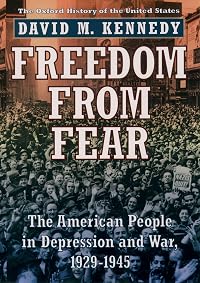
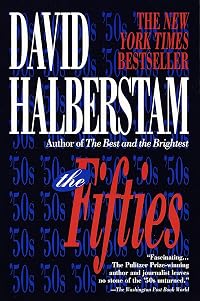
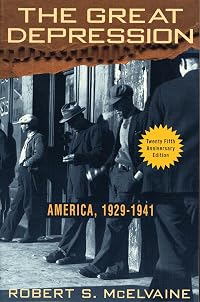


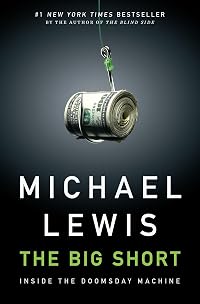


Member Recommendations
Member Reviews
An amazing journey through the 1920s, especially 1928-29, as Wall Street crept closer to the crash. Then the repercussions after the crash. A few things I learned:
1 - The market crashed more than once, with many rallies and downturns throughout 1929. On October 24, Black Thursday, a major crash wiped out the small investors, and on October 29, Black Tuesday, the millionaires were wiped out. More mini-rallies and downturns continued through the next few years, but the depression had taken firm hold as the economy ground to a near halt.
2 - The whole world was affected, including Germany, which paved the way for Hindenburg to appoint Hitler as Chancellor. He thought maybe Hitler could clean up their economic mess and say no to the show more impossible reparations payments to the Allies.
3 - Two of the most boring U.S. presidents ever are now clear in my mind -- Coolidge and Hoover. Now I know them as people... sort of.
4 - The Marx Brothers' family was an interesting read, and how Groucho was affected by his huge losses. Harpo took it in stride, but Groucho was, well, grouching! He was so depressed he sometimes refused his stage roles, necessitating a stand-in.
5 - Re. Huey P. Long and the Louisiana Legislature: "...the flimsy... accusation that he had tried to hire an assassin to murder one of his political opponents. Within seconds, the assembly chamber degenerated into an unseemly melee of angry, shouting bald-headed and potbellied men, as Huey's supporters and opponents punched and shoved one another and tried to grab the podium; paste pots and inkwells were flying everywhere." Ah, American politics at its best!
A most riveting read as the crash loomed. Recommended! show less
1 - The market crashed more than once, with many rallies and downturns throughout 1929. On October 24, Black Thursday, a major crash wiped out the small investors, and on October 29, Black Tuesday, the millionaires were wiped out. More mini-rallies and downturns continued through the next few years, but the depression had taken firm hold as the economy ground to a near halt.
2 - The whole world was affected, including Germany, which paved the way for Hindenburg to appoint Hitler as Chancellor. He thought maybe Hitler could clean up their economic mess and say no to the show more impossible reparations payments to the Allies.
3 - Two of the most boring U.S. presidents ever are now clear in my mind -- Coolidge and Hoover. Now I know them as people... sort of.
4 - The Marx Brothers' family was an interesting read, and how Groucho was affected by his huge losses. Harpo took it in stride, but Groucho was, well, grouching! He was so depressed he sometimes refused his stage roles, necessitating a stand-in.
5 - Re. Huey P. Long and the Louisiana Legislature: "...the flimsy... accusation that he had tried to hire an assassin to murder one of his political opponents. Within seconds, the assembly chamber degenerated into an unseemly melee of angry, shouting bald-headed and potbellied men, as Huey's supporters and opponents punched and shoved one another and tried to grab the podium; paste pots and inkwells were flying everywhere." Ah, American politics at its best!
A most riveting read as the crash loomed. Recommended! show less
3739. 1929: The Year of the Great Crash, by William K. Klingaman (read 1 May 2003) It was 29 Nov 1997 when I so enjoyed this author's evocative and stunning book 1941 Our Lives in a World on the Edge. So when I saw this book (published in 1989) I wanted to read it. It is an equally good read, though it is popular rather than academic history. He begins with Election Day 1928 and progresses into 1930, with a great epilogue, telling a bit about what happened to the people prominent during 1929. While the stock market is a central thesis much more of what happened during the period is covered, e.g., the Feb 14, 1929, massacre, events in England and Germany, etc. I have read other books on the 1929 crash, such as The Day America Crashed by show more Tom Schachtman (read 3 July 1979) and The Day the Bubble Burst: A Social History of the Wall Street Crash of 1929 by Gordon Thomas and Max Morgan-Witts (read 25 Mar 2000--coincidentally the height of the Clinton Years bull market!) but found this book much better than either of those. The bibliography lists no less than 26 books I've read, and also many that I would like to read show less
Ratings
Members
- Recently Added By
Lists

What A Year: Books titled with a particular year
147 works; 2 members
Author Information

14 Works 934 Members
William K. Klingaman holds a Ph.D. in American History from the University of Virginia and has taught at the University of Virginia and the University of Maryland. He is the author of several books, including The Year Without Summer, The First Century, Abraham Lincoln and The Road to Emancipation, and histories of the years 1919, 1929, and 1941.
Common Knowledge
- Important events
- Great Depression
Classifications
Statistics
- Members
- 62
- Popularity
- 501,537
- Reviews
- 2
- Rating
- (4.21)
- Languages
- English, German
- Media
- Paper
- ISBNs
- 3


