On This Page
Description
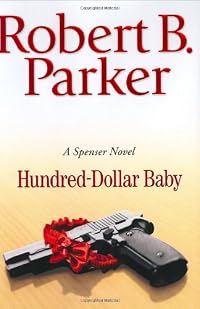
Spenser, a Boston PI, is once again hired by April Kyle who was a teenage runaway that turned to prostitution. Now she is a madam of an up-scale, all-female operation that some men are trying to take away from her. April claims she doesn't know who is after her business, but Spenser finds ties to organized crime. Spenser without much surprise also finds that April, the thugs and everyone else involved is lying to him.Tags
Recommendations












Member Reviews
Hundred-Dollar Baby was a last hurrah of sorts for the Spenser series, and a return to near-greatness for Parker as a writer. The emotional impact of the final entry in the sad April Kyle trilogy within the Spenser canon was well written and deeply moving. The years seemed to disappear — almost — as you turned the pages of Hundred-Dollar Baby, aka Dream Girl. This was a return to the early days of Spenser, before Parker shifted the focus of the series to the vain and pretentious mess that was Susan Silverman, allowing the cloying and nauseating exchanges between the two, and the psychobabble to eclipse plot, and depth.
It was the shift in focus brought about by events in Parker’s own life which, in my opinion, throttled the show more literary heights to which he had begun to strive for with the series. The second entry in the story-line, Taming a Sea-Horse, came after Catskill Eagle, and the focus had shifted completely. Reading it after Ceremony was almost a shock. Having re-read Hundred-Dollar Baby on the heels of reading Sea-Horse that book feels like an aberration sandwiched between Ceremony and Hundred-Dollar Baby. But whereas reading Sea-Horse is a disappointing shock after Ceremony, Hundred-Dollar Baby is a startling surprise after the changed focus in Sea-Horse.
Parker had invested a lot in the April Kyle saga. Proof of that is that he kept returning to her in the series. Perhaps he sensed that neither this series, nor its writer, could go on forever, and he wanted to at least write one more great one. The fact that he chose to make it the final book in the April Kyle story, speaks volumes about his own feelings for the character. Parker once again, and finally gave readers a real mystery, with both Spenser and the reader not quite able to connect the dots in a multi-layered plot in which every time Spenser peels back one layer, another emerges. It’s the classic detective novel — Parker’s style imposed on it — of a detective working on a case where everyone is lying to him, including his client. In this case the client is a beautiful and sophisticated woman Spenser doesn’t at first recognize when she walks into his office — April Kyle.
The years have apparently been kind to April, as the troubled kid once hooking in Boston’s Combat Zone seems to have become very much like Patricia Utley. While Spenser might have hoped she would find love at some point and take a Linda Rabb route, it’s impossible to be disappointed with the smiling, lovely and elegant woman in front of him. Outwardly at least, April seems to have overcome her damage, but as Spenser attempts to help her, he gradually realizes things are not as they seem. Before this one is over, there will be no doubt that April never really overcame the damage at all, and that Spenser’s morally ambiguous solution in Ceremony — even if it seemed like the only one at the time — was the wrong one.
April is running a Back Bay branch office of sorts for New York’s Patricia Utley, but someone is trying to horn in on the very high-end operation. The carefully recruited women working for April are teachers, real estate agents, graduate students, and bored but beautiful housewives. The clientele is upscale and as painstakingly screened as possible. When Spenser speaks with them during the investigation, it becomes clear that at least in this instance, these women are doing what they want to do, and feel like they’re the ones doing the exploiting. The psychology of that is of course hashed around by Spenser and Susan, but this is more the Spenser and Hawk show; and eventually, the Spenser and April show.
Parker could not change what he’d done from Valediction going forward at this point in the series, so he just worked around Susan. He gave the reader a real mystery with a labyrinth plot, and a depth missing in the Spenser entries which were simply great entertainment. By keeping the interludes between Spenser and Susan to a not-too-nauseating level, he kept the focus on April Kyle, which is what the character deserved. Only twice, when Susan mentions that business out West, does the reader cringe, because it’s a reminder of where this series jumped the rails, and never found its way to its intended destination once it got back on them.
As Spenser and Hawk discourage the thugs attempting to muscle in, Spenser learns that the overhead on April’s operation is so great, it leaves little for Patricia Utley. Then he discovers Utley only expanded into Boston because she cares for April, and wanted her to have something of her own. Once Spenser realizes there really isn’t a lot worth taking, he sadly concludes that April must be lying to him. It bothers Spenser on a personal level more than professional, and it bothers him that April seemingly rejects even the possibility of love. It is an early hint to both the reader and Spenser, that there will be no Linda Rabb happy ending, and suggests that the fateful decision at the end of Ceremony, was not the right one.
The threat to April’s operation escalates when one of her girls get worked over and put in the hospital. Because Spenser can already feel something wrong, the beating makes no sense. With Vinnie in Cincinnati helping his new boss, Gino, “persuade” some people, and Chollo on his way to Mexico to do similar work, Spenser brings in Tedy Sapp from Hugger Mugger to help Hawk watch over the Back Bay brothel, while he pokes around in New York. What Spenser discovers, he doesn’t like. But the more layers of a possible con game Spenser peels back, the more confused he is. With everyone lying to him, including Patricia Utley, it’s unclear just who is doing the playing, and who is getting played.
This time around, just as in Sea-Horse, Tony Marcus and Spenser have parallel interests, and Tony is content to let Spenser rid him of a problem. Tony is getting a cut of April’s operation, and doesn’t want anyone else splitting up the pie. Corsetti, the New York cop from the earlier book in the saga, lends Spenser out of town support in this one, and it’s too bad Parker didn’t include him more in the series. Parker addresses the Hawk issue here, by having Hawk tell Spenser in a moment of banter, that he isn’t Tonto. Parker could not have been unaware of the opportunities he missed with Hawk, Vinnie and others in the series, once he’d shifted the focus to perhaps placate his personal demons, and assuage truncated expectations. He was too good a writer not to be aware of it, or not be aware of how millions of readers disliked the vain and pretentious Susan Silverman — and what she made Spenser become when they were together. One can infer that Parker is acknowledging that he should have never allowed Hawk to become Tonto to Spenser’s Lone Ranger, nor compromised the series.
When the guy doing the muscle work for someone trying to cut into April's Back Bay operation gets burned, and New York mob connections emerge, this one becomes about a dream, and unaddressed damage. The conclusion is deeply sad, and emotionally powerful. Twisting and involving, and in the end, terribly moving, this was Parker’s final great moment. The insipid Now and Then followed this one, and it seemed for a moment as though, having expended so much on this entry, Parker had emptied the tank. But then we got the very good The Professional. It was fumes, but they were high-octane fumes, so it was a terrific read, even if it didn’t have the deeply moving emotional resonance of Hundred-Dollar Baby.
If you’re reading the Spenser series, I suggest reading The Professional before this one, allowing this late entry to be Parker’s swan song. It’s sad and moving, it has a multi-layered plot, and for those who've read the previous entries concerning April Kyle (Ceremony, and Taming a Sea-Horse), the human drama of April Kyle, especially the final scene, is one you’re not likely to ever forget. If you're a true Parker fan, let it end here, on a powerful note in Parker's own literary voice; avoiding the gore and superfluous expletives, and characters that no longer seem themselves now that Parker has passed, and others are writing this series. Parker’s own work was his legacy, just like every writer, and Hundred-Dollar Baby was a sad and powerful way to say goodbye. show less
It was the shift in focus brought about by events in Parker’s own life which, in my opinion, throttled the show more literary heights to which he had begun to strive for with the series. The second entry in the story-line, Taming a Sea-Horse, came after Catskill Eagle, and the focus had shifted completely. Reading it after Ceremony was almost a shock. Having re-read Hundred-Dollar Baby on the heels of reading Sea-Horse that book feels like an aberration sandwiched between Ceremony and Hundred-Dollar Baby. But whereas reading Sea-Horse is a disappointing shock after Ceremony, Hundred-Dollar Baby is a startling surprise after the changed focus in Sea-Horse.
Parker had invested a lot in the April Kyle saga. Proof of that is that he kept returning to her in the series. Perhaps he sensed that neither this series, nor its writer, could go on forever, and he wanted to at least write one more great one. The fact that he chose to make it the final book in the April Kyle story, speaks volumes about his own feelings for the character. Parker once again, and finally gave readers a real mystery, with both Spenser and the reader not quite able to connect the dots in a multi-layered plot in which every time Spenser peels back one layer, another emerges. It’s the classic detective novel — Parker’s style imposed on it — of a detective working on a case where everyone is lying to him, including his client. In this case the client is a beautiful and sophisticated woman Spenser doesn’t at first recognize when she walks into his office — April Kyle.
The years have apparently been kind to April, as the troubled kid once hooking in Boston’s Combat Zone seems to have become very much like Patricia Utley. While Spenser might have hoped she would find love at some point and take a Linda Rabb route, it’s impossible to be disappointed with the smiling, lovely and elegant woman in front of him. Outwardly at least, April seems to have overcome her damage, but as Spenser attempts to help her, he gradually realizes things are not as they seem. Before this one is over, there will be no doubt that April never really overcame the damage at all, and that Spenser’s morally ambiguous solution in Ceremony — even if it seemed like the only one at the time — was the wrong one.
April is running a Back Bay branch office of sorts for New York’s Patricia Utley, but someone is trying to horn in on the very high-end operation. The carefully recruited women working for April are teachers, real estate agents, graduate students, and bored but beautiful housewives. The clientele is upscale and as painstakingly screened as possible. When Spenser speaks with them during the investigation, it becomes clear that at least in this instance, these women are doing what they want to do, and feel like they’re the ones doing the exploiting. The psychology of that is of course hashed around by Spenser and Susan, but this is more the Spenser and Hawk show; and eventually, the Spenser and April show.
Parker could not change what he’d done from Valediction going forward at this point in the series, so he just worked around Susan. He gave the reader a real mystery with a labyrinth plot, and a depth missing in the Spenser entries which were simply great entertainment. By keeping the interludes between Spenser and Susan to a not-too-nauseating level, he kept the focus on April Kyle, which is what the character deserved. Only twice, when Susan mentions that business out West, does the reader cringe, because it’s a reminder of where this series jumped the rails, and never found its way to its intended destination once it got back on them.
As Spenser and Hawk discourage the thugs attempting to muscle in, Spenser learns that the overhead on April’s operation is so great, it leaves little for Patricia Utley. Then he discovers Utley only expanded into Boston because she cares for April, and wanted her to have something of her own. Once Spenser realizes there really isn’t a lot worth taking, he sadly concludes that April must be lying to him. It bothers Spenser on a personal level more than professional, and it bothers him that April seemingly rejects even the possibility of love. It is an early hint to both the reader and Spenser, that there will be no Linda Rabb happy ending, and suggests that the fateful decision at the end of Ceremony, was not the right one.
The threat to April’s operation escalates when one of her girls get worked over and put in the hospital. Because Spenser can already feel something wrong, the beating makes no sense. With Vinnie in Cincinnati helping his new boss, Gino, “persuade” some people, and Chollo on his way to Mexico to do similar work, Spenser brings in Tedy Sapp from Hugger Mugger to help Hawk watch over the Back Bay brothel, while he pokes around in New York. What Spenser discovers, he doesn’t like. But the more layers of a possible con game Spenser peels back, the more confused he is. With everyone lying to him, including Patricia Utley, it’s unclear just who is doing the playing, and who is getting played.
This time around, just as in Sea-Horse, Tony Marcus and Spenser have parallel interests, and Tony is content to let Spenser rid him of a problem. Tony is getting a cut of April’s operation, and doesn’t want anyone else splitting up the pie. Corsetti, the New York cop from the earlier book in the saga, lends Spenser out of town support in this one, and it’s too bad Parker didn’t include him more in the series. Parker addresses the Hawk issue here, by having Hawk tell Spenser in a moment of banter, that he isn’t Tonto. Parker could not have been unaware of the opportunities he missed with Hawk, Vinnie and others in the series, once he’d shifted the focus to perhaps placate his personal demons, and assuage truncated expectations. He was too good a writer not to be aware of it, or not be aware of how millions of readers disliked the vain and pretentious Susan Silverman — and what she made Spenser become when they were together. One can infer that Parker is acknowledging that he should have never allowed Hawk to become Tonto to Spenser’s Lone Ranger, nor compromised the series.
When the guy doing the muscle work for someone trying to cut into April's Back Bay operation gets burned, and New York mob connections emerge, this one becomes about a dream, and unaddressed damage. The conclusion is deeply sad, and emotionally powerful. Twisting and involving, and in the end, terribly moving, this was Parker’s final great moment. The insipid Now and Then followed this one, and it seemed for a moment as though, having expended so much on this entry, Parker had emptied the tank. But then we got the very good The Professional. It was fumes, but they were high-octane fumes, so it was a terrific read, even if it didn’t have the deeply moving emotional resonance of Hundred-Dollar Baby.
If you’re reading the Spenser series, I suggest reading The Professional before this one, allowing this late entry to be Parker’s swan song. It’s sad and moving, it has a multi-layered plot, and for those who've read the previous entries concerning April Kyle (Ceremony, and Taming a Sea-Horse), the human drama of April Kyle, especially the final scene, is one you’re not likely to ever forget. If you're a true Parker fan, let it end here, on a powerful note in Parker's own literary voice; avoiding the gore and superfluous expletives, and characters that no longer seem themselves now that Parker has passed, and others are writing this series. Parker’s own work was his legacy, just like every writer, and Hundred-Dollar Baby was a sad and powerful way to say goodbye. show less
Oh goodness, definitely a good thing I was a helicopter parent. Not a good fit for dad. Suddenly I understand why Parker has the Jesse Stone series: as Spenser is the noir-ish (heavy on the -ISH, post-1990) side of mystery, Stone lets him cater to a reader that wants a more lawful sort of experience.
This is the one where Spenser gets a call from someone he helped in the past, first as a deeply troubled and abused teen, then as a call girl. This time, April is running her own house of prostitution in Boston. An unknown person is harassing her and she calls Spenser for help. Spenser, despite having been doing this for at least twenty years by now, remains extraordinarily gullible. Hawk is at his side, however, and keeps him in line. Tony show more Marcus makes a brief appearance, as does Patricia Utley.
Obviously, the reader needs to be comfortable with all sorts of hypotheticals, although Parker takes pains to make this the rightest of setups. The sex-workers are all women who enjoy sex, working for fun and cash (/eyeroll), April screens her clients and has protections in place so no one does what they don't agree to, 'girls' are medically screened (but not the johns), blah-blah.
In fact, Spenser and Susan are going strong in this one, which gives Susan a chance to psychoanalyze April and the sex-for-money issue for the reader, proving that it is probably exploitative in some manner (I kind of appreciate her leading the reader to that conclusion). We also get to hear a number of times how awesome their relationship is and how healthily they've adjusted to bumps in other books. This aspect may prove annoying to fans who have limited Susan tolerance. I will note that she does eat part of a doughnut in this one, as well as cooks some beet risotto, so that's kind of fun.
These are short, four to five page chapters on the whole, but there's a great ending, and some even better dynamics between Spenser and Hawk that make it series notable. But I think I'll be exchanging these for the Jesse Stones for the dad.
Two-and-a-half stars, rounding up because today I felt like it. show less
This is the one where Spenser gets a call from someone he helped in the past, first as a deeply troubled and abused teen, then as a call girl. This time, April is running her own house of prostitution in Boston. An unknown person is harassing her and she calls Spenser for help. Spenser, despite having been doing this for at least twenty years by now, remains extraordinarily gullible. Hawk is at his side, however, and keeps him in line. Tony show more Marcus makes a brief appearance, as does Patricia Utley.
Obviously, the reader needs to be comfortable with all sorts of hypotheticals, although Parker takes pains to make this the rightest of setups. The sex-workers are all women who enjoy sex, working for fun and cash (/eyeroll), April screens her clients and has protections in place so no one does what they don't agree to, 'girls' are medically screened (but not the johns), blah-blah.
In fact, Spenser and Susan are going strong in this one, which gives Susan a chance to psychoanalyze April and the sex-for-money issue for the reader, proving that it is probably exploitative in some manner (I kind of appreciate her leading the reader to that conclusion). We also get to hear a number of times how awesome their relationship is and how healthily they've adjusted to bumps in other books. This aspect may prove annoying to fans who have limited Susan tolerance. I will note that she does eat part of a doughnut in this one, as well as cooks some beet risotto, so that's kind of fun.
These are short, four to five page chapters on the whole, but there's a great ending, and some even better dynamics between Spenser and Hawk that make it series notable. But I think I'll be exchanging these for the Jesse Stones for the dad.
Two-and-a-half stars, rounding up because today I felt like it. show less
Good but ultimately very disturbing. April Kyle makes her final appearance and I started to wonder how it was possible to save and rehabiltate Paul Giacomin but not April. Perhaps it isn't a good analogy and, to be fair, Parker has Spenser agonize over it as well but still very upsetting at the end.
Hundred-Dollar Baby is the 34th novel by Robert B. Parker about the Boston P.I. Spenser. Having created such a large oeuvre, Parker had plenty of former characters to reintroduce. His fans will recognize his formidable trusty black side-kick, Hawk, and all of the local Boston cops and gangsters who have appeared in many previous Spenser novels. This one also involves April Kyle, whom we last met as an ingénue prostitute who Spenser “rescues” from life on the streets by referring her to Patricia Utley, a high class New York madam.
The novel begins when a highly attractive sophisticated woman enters Spenser’s office and seeks to hire his services. The woman is April Kyle, who has matured and gentrified so much that Spenser does not show more recognize her. She is still in the sex for hire business, but is now running the Boston branch of Patricia Utley’s operation. She says that some ruffians are trying to ruin her business and that she can hardly go to the police (given the nature of the enterprise) for protection.
Of course, Spenser takes her case, but as he pursues the bad guys he finds that things are not as they first appear and that EVERYONE has been lying to him. As usual in these books, the solution requires a good bit of rough stuff and some clever sleuthing to come to a satisfactory conclusion. Along the way, the reader is treated to Parker’s usual snappy dialog, particularly involving racial stereotypes as Spenser and Hawk tease each other unmercifully. And, through Spenser’s dialog with his Harvard-educated-psychologist-girlfriend, we get a little of Parker’s theories about why some fairly well educated, prosperous women end up free lancing for high end “escort services.”
Every one of Parker’s Spenser novels that I have read has been fast moving, funny, and thoroughly entertaining, (if not terribly realistic) and this one is no exception.
(JAB) show less
The novel begins when a highly attractive sophisticated woman enters Spenser’s office and seeks to hire his services. The woman is April Kyle, who has matured and gentrified so much that Spenser does not show more recognize her. She is still in the sex for hire business, but is now running the Boston branch of Patricia Utley’s operation. She says that some ruffians are trying to ruin her business and that she can hardly go to the police (given the nature of the enterprise) for protection.
Of course, Spenser takes her case, but as he pursues the bad guys he finds that things are not as they first appear and that EVERYONE has been lying to him. As usual in these books, the solution requires a good bit of rough stuff and some clever sleuthing to come to a satisfactory conclusion. Along the way, the reader is treated to Parker’s usual snappy dialog, particularly involving racial stereotypes as Spenser and Hawk tease each other unmercifully. And, through Spenser’s dialog with his Harvard-educated-psychologist-girlfriend, we get a little of Parker’s theories about why some fairly well educated, prosperous women end up free lancing for high end “escort services.”
Every one of Parker’s Spenser novels that I have read has been fast moving, funny, and thoroughly entertaining, (if not terribly realistic) and this one is no exception.
(JAB) show less
Spencer has some twisted morals... human life is negligible but relationships are paramount, particularly with his dog. Not suprisingly, he holds a lot in common with the bad guys he spars with... but hey, that makes for good entertainmnent. Throw in some James Bond one-liners and you have a Spenser paperback. This book was rather entertaining as Spenser found himself in the middle of defending a whore house run by an old friend. A quick read... kind of like eating a candy bar.. tastes good, though it isn't real deep or necessarily fulfilling.
What's not to love about Spenser? He has a sense of humor and he knows when to shut up and sit still. There was one point in this book (toward the beginning) that I laughed out loud, probably at something Hawk said.
Love Spenser. Love Hawk. Spenser's girlfriend? Yeah, I'd hang out with her (even though she does take every opportunity to wave her Harvard diploma).
The 'damsel in distress' - April Kyle (apparently back for a third time in Spenser's life)? I could not care less about her or what happened to her. Wow.
Now, I know that women who are 'damaged' (I've been reading that description a lot recently) often have issues, but if she burst into tears or flew off the handle for no apparent reason one more time, after asking Spenser for show more his (free) help, I woulda gone looking for a stereotypical Vinnie to pop her. Of course, I have no patience for manipulative women, so maybe I was too hard on her. Or not.
Read the book. I don't think you'll be too surprised or disturbed by the ending (which seemed a bit abrupt, by the way). show less
Love Spenser. Love Hawk. Spenser's girlfriend? Yeah, I'd hang out with her (even though she does take every opportunity to wave her Harvard diploma).
The 'damsel in distress' - April Kyle (apparently back for a third time in Spenser's life)? I could not care less about her or what happened to her. Wow.
Now, I know that women who are 'damaged' (I've been reading that description a lot recently) often have issues, but if she burst into tears or flew off the handle for no apparent reason one more time, after asking Spenser for show more his (free) help, I woulda gone looking for a stereotypical Vinnie to pop her. Of course, I have no patience for manipulative women, so maybe I was too hard on her. Or not.
Read the book. I don't think you'll be too surprised or disturbed by the ending (which seemed a bit abrupt, by the way). show less
Years ago, Boston PI Spenser made a difficult decision in helping troubled teen April Kyle get off the streets. Now the adult April is back in Boston running an upscale call-girl operation. April says she has been pretty successful in running the all-women business, but recently some thugs have been threatening to take it all away from her. They've come by the business a few times to squeeze some money from her and now they've starting beating up some of her workers and she wants Spenser to stop them. Spenser, who still wonders if he made the right decision years ago in sending April to work for Madame Patricia Utley, agrees to help April. But the more involved Spenser gets, the more he realizes that several people are lying to him, show more including April. The deeper Spenser digs into the case, the more he realizes that it's not going to have a happy ending.
Robert Parker fans will enjoy "Hundred-Dollar Baby" but other readers may find it lacking. It's a sequel of sorts to Ceremony, an earlier, gritty and thought-provoking Spenser book. "Hundred-Dollar Baby" is not as good as "Ceremony", but it's still a good, quick read. At this point, Parker can probably write the Spenser books in his sleep. The book is dialogue driven and much of the dialogue feels like it could be lifted from this book and inserted into any other Spenser book especially Spenser's conversations with long-time girlfriend Susan Silverman (as can his observations about her eating habits). I love the repartee between Hawk and Spenser, but all too often other characters exchange the same witty dialogue, so they all blur together as characters. The plot line with April is interesting, with some twists and turns and a surprising, if somewhat unbelievable ending. Long-time fans will enjoy seeing characters from other Spenser books turn up in this one including April, Patricia Utley, Eugene Corsetti, and Tedy Sapp. Parker's greatest strength is his ability to capture the streets of Boston in his writing and he again does it well in this book - I could picture the various streets and locations in my mind while reading the book.
"Hundred-Dollar Baby" doesn't break any new ground, but Spenser fans will still enjoy it. show less
Robert Parker fans will enjoy "Hundred-Dollar Baby" but other readers may find it lacking. It's a sequel of sorts to Ceremony, an earlier, gritty and thought-provoking Spenser book. "Hundred-Dollar Baby" is not as good as "Ceremony", but it's still a good, quick read. At this point, Parker can probably write the Spenser books in his sleep. The book is dialogue driven and much of the dialogue feels like it could be lifted from this book and inserted into any other Spenser book especially Spenser's conversations with long-time girlfriend Susan Silverman (as can his observations about her eating habits). I love the repartee between Hawk and Spenser, but all too often other characters exchange the same witty dialogue, so they all blur together as characters. The plot line with April is interesting, with some twists and turns and a surprising, if somewhat unbelievable ending. Long-time fans will enjoy seeing characters from other Spenser books turn up in this one including April, Patricia Utley, Eugene Corsetti, and Tedy Sapp. Parker's greatest strength is his ability to capture the streets of Boston in his writing and he again does it well in this book - I could picture the various streets and locations in my mind while reading the book.
"Hundred-Dollar Baby" doesn't break any new ground, but Spenser fans will still enjoy it. show less
Members
- Recently Added By
Author Information

126+ Works 72,849 Members
Robert Brown Parker is an American fiction writer of mysteries. He was born in Springfield, Massachusetts and earned his BA degree from Colby College in Waterville, Maine. He went on to earn his master's degree in English literature from Boston University. He started his career working in advertising. After some years, he went back to school to show more earn his PhD in English from Boston University in 1971. He then began his writng career while teaching at Northeastern University. He decided to become a full-time writer in 1979. His most popular works were the 40 novels written about the private detective Spenser. The ABC Television Network developed the television series "Spenser: For Hire", based on the character in the mid-1980s. Parker also wrote nine novels based on the character Jesse Stone and six novels based on the character Sunny Randall. On January 18, 2010, Robert Parker died suddenly of a heart attack at his home in Cambridge Massachusetts. (Bowker Author Biography) show less
Some Editions
Awards and Honors
Distinctions
Series

Work Relationships
Common Knowledge
- Canonical title
- Hundred-Dollar Baby
- Original publication date
- 2006-10
- People/Characters
- Alana Adler; Frank Belson; Vernon Brown; Chollo; Eugene Corsetti; Ollie DeMars (show all 22); Brooks DeNucci; Lionel Farnsworth; Arnold Fisher; Marcus Galvin; Hawk; Junior, Tony Marcus' bodyguard; April Kyle; Tony Marcus; Pearl the Wonder Dog II; Bev Prendergast; Martin Quirk; Tedy Sapp; Susan Silverman; Spenser; Ty-Bopp Tatum; Patricia Utley
- Important places
- Boston, Massachusetts, USA; Massachusetts, USA; New York, USA; New York, New York, USA
- Epigraph
- [None]
- Dedication
- For Joan: Priceless
- First words
- The woman who came into my office on a bright January day was a knockout.
- Last words
- (Click to show. Warning: May contain spoilers.)"You did what you could," Hawk said.
"Wasn't enough," I said.
"Sometimes it isn't," Hawk said.
Classifications
Statistics
- Members
- 1,330
- Popularity
- 17,960
- Reviews
- 27
- Rating
- (3.45)
- Languages
- English, German, Spanish
- Media
- Paper, Audiobook, Ebook
- ISBNs
- 25
- ASINs
- 11