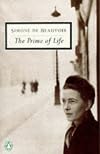
On This Page
Description
This is the second volume in Simone de Beauvoir's autobiography. In it she continues the story of her life from the age of 21, through the uneasy rebellious 30s, the war years and finally to the liberation of Paris in 1944.Tags
Recommendations



























Member Recommendations
JuliaMaria Die Memoiren der beiden Schwestern, Schriftstellerin die eine, Malerin die andere.

Cecrow Lamblin's account of her relationship with Beauvoir and Sartre.

Member Reviews
Why do authors commit themselves to writing an autobiography. Is is to tell the story of an interesting life? perhaps to put the record straight? to reveal the inner workings of the mind or to supply reasons for their actions. Of course it could be because they wish to augment or aggrandise their fame or to increase their stock in public life, whatever the reason they do leave themselves open for judgement by their readers. Simone de Beauvoir's The Prime of Life covers fifteen years of her life from 1929 to 1944 in over 600 pages of densely written paragraphs and in her introduction she reveals why she has embarked on this second instalment. She claims that by revealing details of her own life she is also telling the story of other show more lives and in this case particularly that of her long term friend and lover Jean-Paul Sartre. She also says it is a way of dealing with the age old questions that writers are asked by their admirers: why do they write and what is involved? She goes on to say that she has no intention of telling her readers everything and that:
'there are many things which I firmly intend to leave in obscurity'.
Why should this be one wonders, is she trying not to cause any harm, or any offence to friends and associates, is she being economical with the truth or does she wish to avoid accusations of scandal-mongering? My own interpretation is that for all the detail and all the soul searching that is evident in this tome of an autobiography there is a big fat "elephant in the room"
There is no doubt that de Beauvoir has an interesting story to tell, the fifteen years covers the flourishing artistic world in France following the emergence from the devastation of the first world war and then the rise of Fascism in neighbouring Germany which led inevitably to the second world war. She spent the majority of the war in Paris under Nazi occupation and brings vividly to life firstly the flight from the invading troops and then the uneasy co-existence with the regime in Paris. A high point of the book is her description of the liberation of Paris, especially the fraught few days when the Germans were evacuating before the eventual arrival of the allied troops.
She was the confidant, lover and friend to Jean-Paul Sartre: she describes their life together, and their life apart because often they found themselves posted to different towns in their teaching profession. Their relationship was very much a meeting of minds, she tells of their joint development as writers and how they helped each other. At times this has the feeling of Boswell's biography of Dr Johnson in that we are told in great detail of the hotels they used and the meals they ate. She in particular had a desire to see and experience all that life could offer and she became a little obsessive in her holidays and hiking tours, sometimes dragging an uncomplaining Sartre along with her. They were frequently low on money relying on their teachers pay and she takes pride in telling how they were happy to 'rough it' on their travels.
De Beauvoir reflects long and hard on her own writing career and her thoughts on the 'big questions'. She reveals early on that she sees two main tendencies in herself, a zest for life and an urge towards literary achievement.
She fights to live more in the moment and to banish her fears, she wishes to be able to take things in her stride as Sartre seems more able to do. She reflects on the meaning of her life and her fears of death. She says she does not see herself as a philosopher, but it is clear that she helps Sartre with his theories and his writing. On her own account she tells why she writes and what she is trying to achieve in her novel writing. She goes into some detail, giving synopsis and critique of her own writing projects. This does provide some insight into her work although her examination of her unpublished work can get a little tedious.
The artistic milieu that was part of Parisian life and which swirled around the intellectual couple especially after Sartre and then de Beauvoir became published authors is lovingly described. We are told of the books they admired, the films they saw, the plays in which they became involved and of course the people with whom they were associated: writers Malraux, Camus, Jean Genet, artists Giacometti and Picasso and the entourage surrounding Charles Dullin: theatre manager and director. The cafes and hotels where they worked, the restaurants they frequented, the streets of Paris and the walks, the hiking and the holidays all around the country all serve as detailed background to the lives of this special couple.
Yes, it is the special couple aspect of this autobiography that begins to raise concerns with this reader. Certainly de Beauvoir's "urge towards literary achievement" is the prime mover in her life, so much so that I get the feeling that if someone desperately needed help; perhaps choking to death then Simone, would be minded to finish the book she was reading first. She and Sartre are totally wrapped up in their own lives. They are aware of the rise of fascism in Germany, but are in almost total denial to the build up to war, they see the persecution of their Jewish friends and keep their heads below the parapet. Friends and colleagues get involved in political action, but Simone and Sartre go on holiday. Their work as writers always comes first. However there is another aspect to this special couple that de Beauvoir needs to leave in obscurity and the elephant in the room is their sexual predilections. Early in their relationship Sartre and de Beauvoir agree to have an open relationship where they are free to indulge in love affairs. Simone reveals that she has trouble controlling her sexual urges and is obviously bisexual and goes on to say she does not want to involve her readers in sexual tittle tattle and so we have to read between the lines that when she says that she is meeting someone or staying with someone she is probably sleeping with them and likewise with Sartre. However she begins to refer to a string of pupils that become special friends and who also become friendly with Sartre. Students some as young as sixteen end up staying with her and she refers to them as a trio or as family. She describes how difficult some of these young students can be and the tensions that results from what becomes obvious to me is a menage-a-trois. Perhaps worse than that is the thought that de Beauvoir may have been procuring students for Sartre. She was dismissed from her teaching post for an inappropriate relationship with one of her students.
Autobiographies often leave authors open to judgement from their readers, sometimes from what they choose not to say and it is always tempting to read between the lines. De Beauvoir's Prime of Life was first published in France in 1960 when many of the people to whom she refers were still alive and obviously she had to be careful what she said. I detect nothing malicious or gossipy in her revelations and she rarely has anything bad to say about the people in her circle. I think she was being as honest as she could possibly be, unfortunately this honesty lays bare the selfish and at times patronising approach to life taken by this special couple who may also have been a predatory couple. As readers we do not always have to like or approve of the actions of the subjects of biographies, but what we do want is some additional knowledge of the people involved and a realistic portrayal of the context surrounding the world in which they lived. We certainly get this from de Beauvoir's autobiography, but I think that perhaps she has revealed a little too much and the detail can be a little overwhelming even tedious and so 4 stars. show less
'there are many things which I firmly intend to leave in obscurity'.
Why should this be one wonders, is she trying not to cause any harm, or any offence to friends and associates, is she being economical with the truth or does she wish to avoid accusations of scandal-mongering? My own interpretation is that for all the detail and all the soul searching that is evident in this tome of an autobiography there is a big fat "elephant in the room"
There is no doubt that de Beauvoir has an interesting story to tell, the fifteen years covers the flourishing artistic world in France following the emergence from the devastation of the first world war and then the rise of Fascism in neighbouring Germany which led inevitably to the second world war. She spent the majority of the war in Paris under Nazi occupation and brings vividly to life firstly the flight from the invading troops and then the uneasy co-existence with the regime in Paris. A high point of the book is her description of the liberation of Paris, especially the fraught few days when the Germans were evacuating before the eventual arrival of the allied troops.
She was the confidant, lover and friend to Jean-Paul Sartre: she describes their life together, and their life apart because often they found themselves posted to different towns in their teaching profession. Their relationship was very much a meeting of minds, she tells of their joint development as writers and how they helped each other. At times this has the feeling of Boswell's biography of Dr Johnson in that we are told in great detail of the hotels they used and the meals they ate. She in particular had a desire to see and experience all that life could offer and she became a little obsessive in her holidays and hiking tours, sometimes dragging an uncomplaining Sartre along with her. They were frequently low on money relying on their teachers pay and she takes pride in telling how they were happy to 'rough it' on their travels.
De Beauvoir reflects long and hard on her own writing career and her thoughts on the 'big questions'. She reveals early on that she sees two main tendencies in herself, a zest for life and an urge towards literary achievement.
She fights to live more in the moment and to banish her fears, she wishes to be able to take things in her stride as Sartre seems more able to do. She reflects on the meaning of her life and her fears of death. She says she does not see herself as a philosopher, but it is clear that she helps Sartre with his theories and his writing. On her own account she tells why she writes and what she is trying to achieve in her novel writing. She goes into some detail, giving synopsis and critique of her own writing projects. This does provide some insight into her work although her examination of her unpublished work can get a little tedious.
The artistic milieu that was part of Parisian life and which swirled around the intellectual couple especially after Sartre and then de Beauvoir became published authors is lovingly described. We are told of the books they admired, the films they saw, the plays in which they became involved and of course the people with whom they were associated: writers Malraux, Camus, Jean Genet, artists Giacometti and Picasso and the entourage surrounding Charles Dullin: theatre manager and director. The cafes and hotels where they worked, the restaurants they frequented, the streets of Paris and the walks, the hiking and the holidays all around the country all serve as detailed background to the lives of this special couple.
Yes, it is the special couple aspect of this autobiography that begins to raise concerns with this reader. Certainly de Beauvoir's "urge towards literary achievement" is the prime mover in her life, so much so that I get the feeling that if someone desperately needed help; perhaps choking to death then Simone, would be minded to finish the book she was reading first. She and Sartre are totally wrapped up in their own lives. They are aware of the rise of fascism in Germany, but are in almost total denial to the build up to war, they see the persecution of their Jewish friends and keep their heads below the parapet. Friends and colleagues get involved in political action, but Simone and Sartre go on holiday. Their work as writers always comes first. However there is another aspect to this special couple that de Beauvoir needs to leave in obscurity and the elephant in the room is their sexual predilections. Early in their relationship Sartre and de Beauvoir agree to have an open relationship where they are free to indulge in love affairs. Simone reveals that she has trouble controlling her sexual urges and is obviously bisexual and goes on to say she does not want to involve her readers in sexual tittle tattle and so we have to read between the lines that when she says that she is meeting someone or staying with someone she is probably sleeping with them and likewise with Sartre. However she begins to refer to a string of pupils that become special friends and who also become friendly with Sartre. Students some as young as sixteen end up staying with her and she refers to them as a trio or as family. She describes how difficult some of these young students can be and the tensions that results from what becomes obvious to me is a menage-a-trois. Perhaps worse than that is the thought that de Beauvoir may have been procuring students for Sartre. She was dismissed from her teaching post for an inappropriate relationship with one of her students.
Autobiographies often leave authors open to judgement from their readers, sometimes from what they choose not to say and it is always tempting to read between the lines. De Beauvoir's Prime of Life was first published in France in 1960 when many of the people to whom she refers were still alive and obviously she had to be careful what she said. I detect nothing malicious or gossipy in her revelations and she rarely has anything bad to say about the people in her circle. I think she was being as honest as she could possibly be, unfortunately this honesty lays bare the selfish and at times patronising approach to life taken by this special couple who may also have been a predatory couple. As readers we do not always have to like or approve of the actions of the subjects of biographies, but what we do want is some additional knowledge of the people involved and a realistic portrayal of the context surrounding the world in which they lived. We certainly get this from de Beauvoir's autobiography, but I think that perhaps she has revealed a little too much and the detail can be a little overwhelming even tedious and so 4 stars. show less
After being blown away by the first volume of Simone de Beauvoir's memoirs last September, I knew I had to get to the second installment as soon as possible. Let me just say, it did not disappoint. Covering the years from 1929, when Beauvoir graduated from college and first lived on her own as an adult, through the development of her ideas and interpersonal relationships of the 1930s and into the war years to the liberation of Paris in 1944, La force de l'âge (translated into English as The Prime of Life) is seven hundred pages of densely-packed insight, and a new favorite for me.
In both volumes I've read, what sets Beauvoir's autobiographical writing apart is her concern with both the specific details of her own life at any given time show more (standard memoir fare), and also with drilling down into the ontological state of being a 5-year-old girl, a 23-year-old intellectual, a 32-year-old novelist, and so on. In Mémoires, for example, she describes the gradual process she went through in order to understand the nature of signifier and signified, believing at first that the word "vache" was uniquely and innately bound to the actual cow-object, and only later coming to accept that language and other systems of thought are arbitrarily imposed by humans in order to divide up and make sense of the world around them. Similarly, in La force de l'âge Beauvoir delves into her persistent perception, throughout her 20s, that her own subjectivity and way of being in the world is "true"—the subjectivity of others being a persistent myth which she might believe intellectually but for which she saw little viscerally convincing evidence. She, like so many people in their teens and early twenties, perceives herself at this time as the center of her universe: she is vaguely threatened when she encounters people who cannot be "annexed" to her own circle of friends or way of being, and is frankly incredulous at the idea that any serious catastrophe could ever happen to her. She calls this irrational but stubborn mode of thought her "schizophrenia," and analyzes throughout the book the different ways in which it manifested and developed over the years.
Beauvoir examines the ways in which this "schizophrenic dream" is facilitated by her unacknowledged privilege: the world never seems to deny her the things she really cares about, so she imagines that it is not capable of doing so. Similarly, the deprivations she suffers in the pre-war period (she and Sartre are living paycheck-to-paycheck, without much luxury) are things about which she never cared in the first place, and are more than made up for by the freedoms inherent in the belief that nothing truly bad will happen to her. This ability to live the life that best suits her own nature, in turn engenders a philosophy of extreme individualism in the young Beauvoir: throughout their 20s she and Sartre distrust any political organizations, identifying as liberal intellectuals but limiting themselves to the role of witnesses when, for example, the Front Populaire wins the 1936 elections and institutes the 40-hour work week and paid vacation. Although this complaisance is threatened on a number of occasions and evolves over the years, it isn't until the outbreak of the Second World War that Beauvoir's insularity is truly overturned, and that she accepts on a fundamental level her solidarity with other people, and the uncertainty of all human lives. I know this passage is long, but I find it so beautiful I have to share.
This trajectory from individualism to solidarity is just one thread running through La force de l'âge, and is linked with many more: the need for autonomy and connection; Beauvoir's burgeoning feminism and the ways in which she balances that with her long-term relationship to Jean-Paul Sartre; her fear of and eventual partial acceptance of death, and the ways in which she realizes that catastrophes can happen to her as well as to other people. This is all examined with an intelligence both patient and passionate, and makes Beauvoir's narrative far more memorable than a simple catalog of events.
At the same time, there is also plenty of the kind of thing that makes standard biography and autobiography interesting. Beauvoir chronicles the voyages she and Sartre took all over Europe during the 1930s, traveling in Spain in 1931 (still giddy with the rise of the Second Spanish Republic), Italy in the early 1930s (where they saw their first Fascist), Berlin shortly after Hitler's rise to power, Greece in the late 30s, France's Free Zone during the war. She describes her long backpacking trips in France and elsewhere, in which she takes off alone on foot for weeks at a time, armed with her wine-skin and espadrilles. She writes about the couple's non-traditional romantic arrangements, their decision to eschew legal marriage and monogamy and the struggles and benefits that result from that. The second half of the memoir, which deals with the war years, provides a vivid account of the everyday chaos, uncertainty, shifting moods and sudden devastation of life in Paris during the German occupation.
There are, of course, pages on Beauvoir's and Sartre's famous friends, among them Albert Camus and Alberto Giacommetti. She describes exhaustively the plays and films she saw from year to year, and her reactions to painting, sculpture, and music. Unsurprisingly, she also writes with insight about the books that she and Sartre read and discussed during those years, going into great detail at times about why the work of novelists like Faulkner and Dos Passos was so important to her, both as a writer and as a person. Beauvoir acknowledges beautifully the way in which the discovery of a book can be a pivotal life event.
Of course, she also records her own writing life and that of Sartre, both from an artistic-development standpoint and from a perspective of publishing, critical reception, and political engagement. I look forward to revisiting these passages when I'm more familiar with both of their novels and essays. Even without that familiarity, though, I was impressed with the frankness Beauvoir brings to a discussion of her own work: she is not easy on herself, and in retrospect she finds herself guilty of many serious flaws. At the same time, she does not hesitate to point out the elements which she still, after 20 or more years, finds powerful or effective. She gives the impression of taking herself seriously, but not more seriously than she would any other writer. So too, she examines the ways in which one book lead to the next for her, each one being a reaction to and against its predecessor.
I've spent almost a month with La force de l'âge, and although I am ready to be done with this volume for now, I also feel a tiny bit sad to put it on the shelf; I know it will be one I return to many times in the future. I also feel so lucky to be about to visit Paris and Rouen, where Sartre and Beauvoir lived and taught. I hope to pick up more of her work while I'm there! show less
In both volumes I've read, what sets Beauvoir's autobiographical writing apart is her concern with both the specific details of her own life at any given time show more (standard memoir fare), and also with drilling down into the ontological state of being a 5-year-old girl, a 23-year-old intellectual, a 32-year-old novelist, and so on. In Mémoires, for example, she describes the gradual process she went through in order to understand the nature of signifier and signified, believing at first that the word "vache" was uniquely and innately bound to the actual cow-object, and only later coming to accept that language and other systems of thought are arbitrarily imposed by humans in order to divide up and make sense of the world around them. Similarly, in La force de l'âge Beauvoir delves into her persistent perception, throughout her 20s, that her own subjectivity and way of being in the world is "true"—the subjectivity of others being a persistent myth which she might believe intellectually but for which she saw little viscerally convincing evidence. She, like so many people in their teens and early twenties, perceives herself at this time as the center of her universe: she is vaguely threatened when she encounters people who cannot be "annexed" to her own circle of friends or way of being, and is frankly incredulous at the idea that any serious catastrophe could ever happen to her. She calls this irrational but stubborn mode of thought her "schizophrenia," and analyzes throughout the book the different ways in which it manifested and developed over the years.
Ainsi, nos aînés nous interdisaient-ils d'envisager qu'une guerre fût seulement possible. Sartre avait trop d'imagination, et trop encline à l'horreur, pour respecter tout à fait cette consigne; des visions le traversaient dont certaines ont marqué La Nausée: des villes en émeute, tous les rideaux de fer tirés, du sang aux carrefours et sur la mayonnaise des charcuteries. Moi, je poursuivais avec entrain mon rêve de schizophrène. Le monde existait, à la manière d'un objet aux replis innombrables et dont la découverte serait toujours une aventure, mais non comme un champ de forces capables de me contrarier.
Also, our elders forbade us to envisage that a war was even possible. Sartre had too much imagination, and that too inclined to horror, to respect this ban completely; visions passed through his mind of which some featured in Nausea: cities in a state of riot, all the shop gates pulled down, blood in the intersections and in the butcher's mayonnaise. Me, I continued cheerfully in my schizophrenic dream. The world existed, in the manner of an object with innumerable folds whose discovery would always be an adventure, but not as a force field capable of thwarting me.
Beauvoir examines the ways in which this "schizophrenic dream" is facilitated by her unacknowledged privilege: the world never seems to deny her the things she really cares about, so she imagines that it is not capable of doing so. Similarly, the deprivations she suffers in the pre-war period (she and Sartre are living paycheck-to-paycheck, without much luxury) are things about which she never cared in the first place, and are more than made up for by the freedoms inherent in the belief that nothing truly bad will happen to her. This ability to live the life that best suits her own nature, in turn engenders a philosophy of extreme individualism in the young Beauvoir: throughout their 20s she and Sartre distrust any political organizations, identifying as liberal intellectuals but limiting themselves to the role of witnesses when, for example, the Front Populaire wins the 1936 elections and institutes the 40-hour work week and paid vacation. Although this complaisance is threatened on a number of occasions and evolves over the years, it isn't until the outbreak of the Second World War that Beauvoir's insularity is truly overturned, and that she accepts on a fundamental level her solidarity with other people, and the uncertainty of all human lives. I know this passage is long, but I find it so beautiful I have to share.
[N]on seulement la guerre avait changé mes rapports à tout, mais elle avait tout changé: les ciels de Paris et les villages de Bretagne, la bouche des femmes, les yeux des enfants. Après juin 1940, je ne reconnus plus les choses, ni les gens, ni les heures, ni les lieux, ni moi-même. Le temps, qui pendant dix ans avait tourné sur place, brusquement bougeait, il m'entraînait: sans quitter les rues de Paris, je me trouvais plus dépaysée qu'après avoir franchi des mers, autrefois. Aussi naïve qu'un enfant qui croit à la verticale absolue, j'avais pensé que la vérité du monde était fixe... [...]
Quel malentendu! J'avais vécu non pas un fragment d'éternité mais une période transitoire: l'avant-guerre. [...] La victoire même n'allait pas renverser le temps et ressusciter un ordre provisoirement dérangée; elle ouvrait une nouvelle époque: l'après-guerre. Aucun brin d'herbe, dans aucun pré, ni sous aucun de mes regards, ne redeviendrait jamais ce qu'il avait été. L'éphémère était mon lot. Et l'Histoire charriait pêle-mêle, avec des moments glorieux, un énorme fatras de douleurs sans remède.
Not only had the war changed my relationship with everything, but it had changed everything: the skies of Paris and the villages of Brittany, the mouths of women, the eyes of children. After June 1940, I no longer recognized things, or people, or hours, or places, or myself. Time, which for ten years had revolved in place, suddenly moved, and carried me away: without leaving the streets of Paris, I found myself more disoriented than I had been after crossing the seas in former times. Naive as a child who believes in the absolute vertical, I had thought that the truth of the world was fixed ... [...]
What a misunderstanding! I had lived through, not a fragment of eternity, but a transitory era: the pre-war. [...] Even victory would not reverse time and restore some provisionally disarranged order; it would begin a new era: the post-war. No blade of grass, in any field, under any gaze of mine, would ever return to what it was. The ephemeral was my lot. And History barreled along pell-mell, with glorious moments, an immense jumble of grief with no cure.
This trajectory from individualism to solidarity is just one thread running through La force de l'âge, and is linked with many more: the need for autonomy and connection; Beauvoir's burgeoning feminism and the ways in which she balances that with her long-term relationship to Jean-Paul Sartre; her fear of and eventual partial acceptance of death, and the ways in which she realizes that catastrophes can happen to her as well as to other people. This is all examined with an intelligence both patient and passionate, and makes Beauvoir's narrative far more memorable than a simple catalog of events.
At the same time, there is also plenty of the kind of thing that makes standard biography and autobiography interesting. Beauvoir chronicles the voyages she and Sartre took all over Europe during the 1930s, traveling in Spain in 1931 (still giddy with the rise of the Second Spanish Republic), Italy in the early 1930s (where they saw their first Fascist), Berlin shortly after Hitler's rise to power, Greece in the late 30s, France's Free Zone during the war. She describes her long backpacking trips in France and elsewhere, in which she takes off alone on foot for weeks at a time, armed with her wine-skin and espadrilles. She writes about the couple's non-traditional romantic arrangements, their decision to eschew legal marriage and monogamy and the struggles and benefits that result from that. The second half of the memoir, which deals with the war years, provides a vivid account of the everyday chaos, uncertainty, shifting moods and sudden devastation of life in Paris during the German occupation.
There are, of course, pages on Beauvoir's and Sartre's famous friends, among them Albert Camus and Alberto Giacommetti. She describes exhaustively the plays and films she saw from year to year, and her reactions to painting, sculpture, and music. Unsurprisingly, she also writes with insight about the books that she and Sartre read and discussed during those years, going into great detail at times about why the work of novelists like Faulkner and Dos Passos was so important to her, both as a writer and as a person. Beauvoir acknowledges beautifully the way in which the discovery of a book can be a pivotal life event.
Of course, she also records her own writing life and that of Sartre, both from an artistic-development standpoint and from a perspective of publishing, critical reception, and political engagement. I look forward to revisiting these passages when I'm more familiar with both of their novels and essays. Even without that familiarity, though, I was impressed with the frankness Beauvoir brings to a discussion of her own work: she is not easy on herself, and in retrospect she finds herself guilty of many serious flaws. At the same time, she does not hesitate to point out the elements which she still, after 20 or more years, finds powerful or effective. She gives the impression of taking herself seriously, but not more seriously than she would any other writer. So too, she examines the ways in which one book lead to the next for her, each one being a reaction to and against its predecessor.
I've spent almost a month with La force de l'âge, and although I am ready to be done with this volume for now, I also feel a tiny bit sad to put it on the shelf; I know it will be one I return to many times in the future. I also feel so lucky to be about to visit Paris and Rouen, where Sartre and Beauvoir lived and taught. I hope to pick up more of her work while I'm there! show less
i liked this less than #! but it was still very interesting. she certainly doesn't talk much about her sex life which seems to have been very free.
she writes about her travels--walking, biking, trains, her friends--especially sartre, writing, the war, a little at the beginning about teaching.
she writes about her travels--walking, biking, trains, her friends--especially sartre, writing, the war, a little at the beginning about teaching.
Simone de Beauvoir, 1908 - 1986 Simone de Beauvoir was born January 9, 1908 in Paris, France to a respected bourgeois family. Her father was a lawyer, her mother a housewife, and together they raised two daughters to be intelligent, inquisitive individuals. de Beauvoir attended the elementary school Cours Desir in 1913, then L'Institute Sainte Nary under the tutelage of Robert Garric, followed by the Institute Catholique in Paris, before finally attending the Sorbonne, where she graduated from in 1929. It was there that she met the man who would become her life long friend and companion, John Paul Sartre, who contributed to her philosophy of life. She is perhaps best know for her novel entitled "The Second Sex", which describes the show more ideal that women are an indescribable "other", something "made, not born", and a declaration of feminine independence. After graduating from the Sorbonne, de Beauvoir went on to teach Latin at Lycee Victor Duruy, philosophy at a school in Marseilles, and a few other teaching positions before coming to teach at the Sorbonne. During the course of her twelve years of teaching, from 1931 to 1943, de Beauvoir developed the basis for her philosophical thought. She used her formal philosophy background to also comment on feminism and existentialism. Her personal philosophy was that freedom of choice is man's utmost gift of value. Acts of goodness make one more free, acts of evil decrease that selfsame freedom. In 1945, de Beauvoir and Sartre founded and edited Le Temps Modernes, a monthly review of philosophical thought and trends. In 1943, with the money she had earned from teaching, de Beauvoir turned her full attention to writing, producing first "L'Envitee", then "Pyrrhus et Cineas" in 1944. In 1948, she wrote perhaps her most famous philosophical work, "The Ethics of Ambiguity". "The Second Sex", regarded by many as the seminal work in the field of feminism, is her most famous work. Other works include "The Coming of Age", which addresses society's condemnation of old age, the award winning novel "The Mandarins", "A Very Easy Death", about the death of her mother and a four part biography. In "The Woman Destroyed", a collection of two long stories and one short novel, de Beauvoir discusses middle age. One of her last novels was in the form of a diary recording; it told of the slow death of her life-long compatriot, Jean Paul Sartre. On April 14, 1986, Simone de Beauvoir, one of the mothers of feminism, passed away in her home in Paris. show less
« Encore une fois, cet exposé ne se présente aucunement comme une explication. Et même, si je l’ai entrepris, c’est en grande partie parce que je sais qu’on ne peut jamais se connaître mais seulement se raconter ».
Publié en 1960, soit deux années après Mémoires d’une jeune fille rangée, La force de l’âge est le deuxième tome des mémoires de Simone de Beauvoir.
Elle y traite de la période de sa vie s'étendant de 1929, de sa réussite à l'agrégation préparée avec Jean-Paul Sartre, à la Libération de Paris en août 1944. Elle y évoque ses années de professeur de philosophie à Marseille puis à Rouen, des amitiés, de nombreuses rencontres, des voyages entrepris, son formidable goût de la marche, sa show more relation avec Sartre, bien sûr...
Elle fait le récit d'une dizaine d’années de liberté, de découverte et de bonheur :
« L’hôtel me déchargeait de tous soucis. Peu m’importait de disposer d’une seule chambre, et qu’elle manquât de charme : j’avais Paris, ses rues, ses places, ses cafés. »
« Je m’étonnais inlassablement des choses et de ma présence ; cependant, la rigueur de mes plans changeait cette contingence en nécessité. Sans doute était-ce là le sens — informulé — de ma béatitude : ma liberté triomphante échappait au caprice, comme aussi aux entraves, puisque les résistances du monde, loin de me brimer, servaient de support et de matière à mes projets. Par mon vagabondage nonchalant, obstiné, je donnais une vérité à mon grand délire optimiste ; je goûtais le bonheur des dieux : j’étais moi-même le créateur des cadeaux qui me comblaient. »
« Je voulais encore que ma vie fût « une belle histoire qui devenait vraie au fur et à mesure que je me la racontais » ; tout en me la racontant, je lui donnais des coups de pouce pour l’embellir »).
Son supplément de vie et celui qu'elle savait donner à toutes choses confèrent beaucoup de force, d'intensité et d'attrait à son personnage et à ses témoignages.
On a également envie de saluer son sens aigu de la formule, comme l'illustre par exemple cette phrase : "Sartre avait mis tant d’ardeur à être jeune qu’au moment où sa jeunesse le quittait il aurait fallu de fortes joies pour l’en consoler."
La deuxième partie du livre est nécessairement beaucoup moins solaire puisqu’elle couvre la période de la Seconde Guerre mondiale, dont la déclaration crée une véritable cassure dans la vie de Beauvoir. La dureté de la période de l'Occupation, sa séparation forcée d’avec Sartre mobilisé dans l’est de la France, annoncent une période beaucoup plus sombre dans sa vie.
C’est cette expérience de la guerre qui conduira Sartre et Beauvoir à modifier leur façon d'envisager leur rôle d'écrivain et de citoyen.
« Sartre pensait beaucoup à l’après-guerre ; il était bien décidé à ne plus se tenir à l’écart de la vie politique. Sa nouvelle morale, basée sur la notion d’authenticité, et qu’il s’efforçait de mettre en pratique exigeait que l’homme « assumât » sa « situation » ; et la seule manière de le faire c’était de la dépasser en s’engageant dans une action : toute autre attitude était une fuite, une prétention vide, une mascarade fondées sur la mauvaise foi. On voit qu’un sérieux changement s’était produit en lui, et aussi en moi qui me ralliai tout de suite à son idée ; car notre premier soin naguère avait été de tenir notre situation à distance par des jeux, des leurres, des mensonges. »
L’engagement des deux intellectuels sera très largement décrit dans les deux tomes suivants des mémoires de Beauvoir (La Force des choses I et II).
Est-il besoin de préciser qu’il est énormément question de Sartre dans ces mémoires au point qu’elles deviennent aussi un peu les siennes ? Le « je » fait régulièrement place au « nous ».
Elle évoque la relation unique, extrêmement étroite, particulière (à la fois exclusive et partagée) qu’elle entretenait avec Sartre.
« Je l’ai dit : Sartre vivait pour écrire ; il avait mandat de témoigner de toutes choses et de les reprendre à son compte à la lumière de la nécessité ; moi, il m’était enjoint de prêter ma conscience à la multiple splendeur de la vie et je devais écrire afin de l’arracher au temps et au néant ».
« je tenais d’abord à la vie, dans sa présence immédiate, et Sartre d’abord à l’écriture. Cependant, comme je voulais écrire et qu’il se plaisait à vivre, nous n’entrions que rarement en conflit. »
« Je travaillais souvent chez moi. Sartre habitait à l’étage au-dessus. Nous avions ainsi tous les avantages d’une vie commune, et aucun de ses inconvénients.»
« Sartre n’avait pas la vocation de la monogamie ; il se plaisait dans la compagnie des femmes qu’il trouvait moins comiques que les hommes ; il n’entendait pas, à vingt-trois ans, renoncer pour toujours à leur séduisante diversité. « Entre nous, m’expliquait-il en utilisant un vocabulaire qui lui était cher, il s’agit d’un amour nécessaire : il convient que nous connaissions aussi des amours contingentes ».
« j’avais déjà éprouvé la solidité des paroles de Sartre. Avec lui, un projet n’était pas un bavardage incertain, mais un moment de la réalité. S’il me disait un jour : « Rendez-vous, dans vingt-deux mois exactement, à 17 heures, sur l’Acropole », je serais assurée de le retrouver sur l’Acropole, à 17 heures exactement, vingt-deux mois plus tard. D’une manière plus générale, je savais qu’aucun malheur ne me viendrait jamais par lui, à moins qu’il ne mourût avant moi. »
« Nous conclûmes un autre pacte : non seulement aucun des deux ne mentirait jamais à l’autre, mais il ne lui dissimulerait rien. Les « petits camarades » éprouvaient le plus grand dégoût pour ce qu’on appelle « la vie intérieure » ; dans ces jardins où les âmes de qualité cultivent de délicats secrets, ils voyaient, eux, de puants marécages ; c’est là que s’opèrent en douce tous les trafics de la mauvaise foi, c’est là que se dégustent les délices croupies du narcissisme. »
Les trios amoureux, dont celui qui a été entrepris avec la jeune Olga, ne sont pas sans tension et surtout sans risque pour la tierce personne qui n’est pas forcément bien armée pour subir les conséquences du pacte scellé par le duo initial. Beauvoir en convient : « Nous placions sa jeunesse plus haut que notre expérience : son rôle était tout de même celui d’une enfant, aux prises avec un couple d’adultes qu’unissait une complicité sans faille. Nous pouvions bien la consulter avec dévotion : nous gardions en main la direction du trio. Nous n’avions pas établi avec elle de véritables relations d’égalité, mais plutôt nous l’avions annexée. »
Cette notion d’« annexion » est pour le moins glaçante.
Par l’activité de sa pensée sans cesse en mouvement, le duo pouvait par ailleurs sacrément déconcerter sinon fatiguer son cercle d’amis :
« nous inventions des attitudes, des théories, des idées ; nous refusions de nous y enchaîner, nous pratiquions la révolution permanente ; cela gênait souvent nos proches qui croyaient fidèlement nous suivre alors que nous nous trouvions déjà tout à fait ailleurs. »
L’alcool tient visiblement une place non négligeable dans la vie de ce cercle (on ne compte plus les passages dans lesquels Beauvoir évoque les « verres » consommés ici et là) et le compagnon régulier de fiestas mémorables :
« C’était surtout la boisson qui nous aidait à rompre avec le quotidien : sur l’alcool, nous ne rechignions pas ; personne, parmi nous, ne répugnait à se saouler ; certains s’en faisaient presque un devoir. […] chacun de nous se faisait ainsi, plus ou moins délibérément, le bouffon de tous les autres, et les attractions ne manquaient pas : nous étions toute une foire avec ses histrions, ses charlatans, ses pitres, ses parades. Dora Marr mimait une course de taureaux ; Sartre au fond d’un placard dirigeait un orchestre ; Limbour découpait un jambon avec des airs de cannibale ; Queneau et Bataille se battaient en duel avec des bouteilles en guise d’épée ; Camus, Lemarchand jouaient des marches militaires sur des casseroles ; ceux qui savaient chanter chantaient, et aussi ceux qui ne savaient pas ; pantomimes, comédies, diatribes, parodies, monologues, confessions, les improvisations ne tarissaient pas et elles étaient accueillies dans l’enthousiasme. On mettait des disques, on dansait, les uns très bien — Olga, Wanda, Camus — les autres moins. »
La curiosité de Beauvoir est inlassable, c’est le monde dans sa totalité qu’elle compte embrasser, rien de moins :
« Il me fallait viser la totalité de l’univers si je voulais en posséder la moindre poussière. »
« je préférais la diversité à la répétition, et voir à neuf Naples plutôt que de retourner à Venise ».
Elle coupe court aux critiques qu'on serait bien tentés de lui adresser en se chargeant de les écrire elle-même :
« Je demeurai pénétrée de l’idéalisme et de l’esthétisme bourgeois. Surtout, mon entêtement schizophrénique au bonheur me rendit aveugle à la réalité politique. Cette cécité ne m’était pas personnelle : presque toute l’époque en souffrait. »
« comme Sartre me l’a dit un jour, nous avions un sens réel de la vérité, c’est déjà quelque chose : mais cela n’impliquait aucunement que nous ayons un sens vrai de la réalité. Non seulement nous étions, comme tous les bourgeois, protégés du besoin, et, comme tous les fonctionnaires, de l’insécurité, mais nous n’avions pas d’enfants, pas de famille, pas de responsabilités : des elfes. Il n’existait aucun lien intelligible entre le travail, somme toute amusant et pas du tout fatigant, que nous fournissions et l’argent que nous recevions : il ne pesait pas son poids. »
Nous n’aurions pas mieux dit.
A raison, Beauvoir ne se considérait pas comme une philosophe (« Je savais très bien que mon aisance à entrer dans un texte venait précisément de mon manque d’inventivité ») mais savait remarquablement commenter et restituer la vie et le monde alentour, les vicissitudes de son siècle, par l’acuité d’un regard qui ne cédait jamais rien à la complaisance. La rigueur de sa pensée, sa très vive intelligence, sa curiosité insatiable, l’immense richesse intellectuelle de l’entourage qu’elle s’est choisi (à commencer par la compagnie de Sartre, bien sûr) font d’elle une auteure tout à fait à part dans le monde littéraire et intellectuel du 20ème siècle.
La Force de l’âge en témoigne de bout en bout. show less
Publié en 1960, soit deux années après Mémoires d’une jeune fille rangée, La force de l’âge est le deuxième tome des mémoires de Simone de Beauvoir.
Elle y traite de la période de sa vie s'étendant de 1929, de sa réussite à l'agrégation préparée avec Jean-Paul Sartre, à la Libération de Paris en août 1944. Elle y évoque ses années de professeur de philosophie à Marseille puis à Rouen, des amitiés, de nombreuses rencontres, des voyages entrepris, son formidable goût de la marche, sa show more relation avec Sartre, bien sûr...
Elle fait le récit d'une dizaine d’années de liberté, de découverte et de bonheur :
« L’hôtel me déchargeait de tous soucis. Peu m’importait de disposer d’une seule chambre, et qu’elle manquât de charme : j’avais Paris, ses rues, ses places, ses cafés. »
« Je m’étonnais inlassablement des choses et de ma présence ; cependant, la rigueur de mes plans changeait cette contingence en nécessité. Sans doute était-ce là le sens — informulé — de ma béatitude : ma liberté triomphante échappait au caprice, comme aussi aux entraves, puisque les résistances du monde, loin de me brimer, servaient de support et de matière à mes projets. Par mon vagabondage nonchalant, obstiné, je donnais une vérité à mon grand délire optimiste ; je goûtais le bonheur des dieux : j’étais moi-même le créateur des cadeaux qui me comblaient. »
« Je voulais encore que ma vie fût « une belle histoire qui devenait vraie au fur et à mesure que je me la racontais » ; tout en me la racontant, je lui donnais des coups de pouce pour l’embellir »).
Son supplément de vie et celui qu'elle savait donner à toutes choses confèrent beaucoup de force, d'intensité et d'attrait à son personnage et à ses témoignages.
On a également envie de saluer son sens aigu de la formule, comme l'illustre par exemple cette phrase : "Sartre avait mis tant d’ardeur à être jeune qu’au moment où sa jeunesse le quittait il aurait fallu de fortes joies pour l’en consoler."
La deuxième partie du livre est nécessairement beaucoup moins solaire puisqu’elle couvre la période de la Seconde Guerre mondiale, dont la déclaration crée une véritable cassure dans la vie de Beauvoir. La dureté de la période de l'Occupation, sa séparation forcée d’avec Sartre mobilisé dans l’est de la France, annoncent une période beaucoup plus sombre dans sa vie.
C’est cette expérience de la guerre qui conduira Sartre et Beauvoir à modifier leur façon d'envisager leur rôle d'écrivain et de citoyen.
« Sartre pensait beaucoup à l’après-guerre ; il était bien décidé à ne plus se tenir à l’écart de la vie politique. Sa nouvelle morale, basée sur la notion d’authenticité, et qu’il s’efforçait de mettre en pratique exigeait que l’homme « assumât » sa « situation » ; et la seule manière de le faire c’était de la dépasser en s’engageant dans une action : toute autre attitude était une fuite, une prétention vide, une mascarade fondées sur la mauvaise foi. On voit qu’un sérieux changement s’était produit en lui, et aussi en moi qui me ralliai tout de suite à son idée ; car notre premier soin naguère avait été de tenir notre situation à distance par des jeux, des leurres, des mensonges. »
L’engagement des deux intellectuels sera très largement décrit dans les deux tomes suivants des mémoires de Beauvoir (La Force des choses I et II).
Est-il besoin de préciser qu’il est énormément question de Sartre dans ces mémoires au point qu’elles deviennent aussi un peu les siennes ? Le « je » fait régulièrement place au « nous ».
Elle évoque la relation unique, extrêmement étroite, particulière (à la fois exclusive et partagée) qu’elle entretenait avec Sartre.
« Je l’ai dit : Sartre vivait pour écrire ; il avait mandat de témoigner de toutes choses et de les reprendre à son compte à la lumière de la nécessité ; moi, il m’était enjoint de prêter ma conscience à la multiple splendeur de la vie et je devais écrire afin de l’arracher au temps et au néant ».
« je tenais d’abord à la vie, dans sa présence immédiate, et Sartre d’abord à l’écriture. Cependant, comme je voulais écrire et qu’il se plaisait à vivre, nous n’entrions que rarement en conflit. »
« Je travaillais souvent chez moi. Sartre habitait à l’étage au-dessus. Nous avions ainsi tous les avantages d’une vie commune, et aucun de ses inconvénients.»
« Sartre n’avait pas la vocation de la monogamie ; il se plaisait dans la compagnie des femmes qu’il trouvait moins comiques que les hommes ; il n’entendait pas, à vingt-trois ans, renoncer pour toujours à leur séduisante diversité. « Entre nous, m’expliquait-il en utilisant un vocabulaire qui lui était cher, il s’agit d’un amour nécessaire : il convient que nous connaissions aussi des amours contingentes ».
« j’avais déjà éprouvé la solidité des paroles de Sartre. Avec lui, un projet n’était pas un bavardage incertain, mais un moment de la réalité. S’il me disait un jour : « Rendez-vous, dans vingt-deux mois exactement, à 17 heures, sur l’Acropole », je serais assurée de le retrouver sur l’Acropole, à 17 heures exactement, vingt-deux mois plus tard. D’une manière plus générale, je savais qu’aucun malheur ne me viendrait jamais par lui, à moins qu’il ne mourût avant moi. »
« Nous conclûmes un autre pacte : non seulement aucun des deux ne mentirait jamais à l’autre, mais il ne lui dissimulerait rien. Les « petits camarades » éprouvaient le plus grand dégoût pour ce qu’on appelle « la vie intérieure » ; dans ces jardins où les âmes de qualité cultivent de délicats secrets, ils voyaient, eux, de puants marécages ; c’est là que s’opèrent en douce tous les trafics de la mauvaise foi, c’est là que se dégustent les délices croupies du narcissisme. »
Les trios amoureux, dont celui qui a été entrepris avec la jeune Olga, ne sont pas sans tension et surtout sans risque pour la tierce personne qui n’est pas forcément bien armée pour subir les conséquences du pacte scellé par le duo initial. Beauvoir en convient : « Nous placions sa jeunesse plus haut que notre expérience : son rôle était tout de même celui d’une enfant, aux prises avec un couple d’adultes qu’unissait une complicité sans faille. Nous pouvions bien la consulter avec dévotion : nous gardions en main la direction du trio. Nous n’avions pas établi avec elle de véritables relations d’égalité, mais plutôt nous l’avions annexée. »
Cette notion d’« annexion » est pour le moins glaçante.
Par l’activité de sa pensée sans cesse en mouvement, le duo pouvait par ailleurs sacrément déconcerter sinon fatiguer son cercle d’amis :
« nous inventions des attitudes, des théories, des idées ; nous refusions de nous y enchaîner, nous pratiquions la révolution permanente ; cela gênait souvent nos proches qui croyaient fidèlement nous suivre alors que nous nous trouvions déjà tout à fait ailleurs. »
L’alcool tient visiblement une place non négligeable dans la vie de ce cercle (on ne compte plus les passages dans lesquels Beauvoir évoque les « verres » consommés ici et là) et le compagnon régulier de fiestas mémorables :
« C’était surtout la boisson qui nous aidait à rompre avec le quotidien : sur l’alcool, nous ne rechignions pas ; personne, parmi nous, ne répugnait à se saouler ; certains s’en faisaient presque un devoir. […] chacun de nous se faisait ainsi, plus ou moins délibérément, le bouffon de tous les autres, et les attractions ne manquaient pas : nous étions toute une foire avec ses histrions, ses charlatans, ses pitres, ses parades. Dora Marr mimait une course de taureaux ; Sartre au fond d’un placard dirigeait un orchestre ; Limbour découpait un jambon avec des airs de cannibale ; Queneau et Bataille se battaient en duel avec des bouteilles en guise d’épée ; Camus, Lemarchand jouaient des marches militaires sur des casseroles ; ceux qui savaient chanter chantaient, et aussi ceux qui ne savaient pas ; pantomimes, comédies, diatribes, parodies, monologues, confessions, les improvisations ne tarissaient pas et elles étaient accueillies dans l’enthousiasme. On mettait des disques, on dansait, les uns très bien — Olga, Wanda, Camus — les autres moins. »
La curiosité de Beauvoir est inlassable, c’est le monde dans sa totalité qu’elle compte embrasser, rien de moins :
« Il me fallait viser la totalité de l’univers si je voulais en posséder la moindre poussière. »
« je préférais la diversité à la répétition, et voir à neuf Naples plutôt que de retourner à Venise ».
Elle coupe court aux critiques qu'on serait bien tentés de lui adresser en se chargeant de les écrire elle-même :
« Je demeurai pénétrée de l’idéalisme et de l’esthétisme bourgeois. Surtout, mon entêtement schizophrénique au bonheur me rendit aveugle à la réalité politique. Cette cécité ne m’était pas personnelle : presque toute l’époque en souffrait. »
« comme Sartre me l’a dit un jour, nous avions un sens réel de la vérité, c’est déjà quelque chose : mais cela n’impliquait aucunement que nous ayons un sens vrai de la réalité. Non seulement nous étions, comme tous les bourgeois, protégés du besoin, et, comme tous les fonctionnaires, de l’insécurité, mais nous n’avions pas d’enfants, pas de famille, pas de responsabilités : des elfes. Il n’existait aucun lien intelligible entre le travail, somme toute amusant et pas du tout fatigant, que nous fournissions et l’argent que nous recevions : il ne pesait pas son poids. »
Nous n’aurions pas mieux dit.
A raison, Beauvoir ne se considérait pas comme une philosophe (« Je savais très bien que mon aisance à entrer dans un texte venait précisément de mon manque d’inventivité ») mais savait remarquablement commenter et restituer la vie et le monde alentour, les vicissitudes de son siècle, par l’acuité d’un regard qui ne cédait jamais rien à la complaisance. La rigueur de sa pensée, sa très vive intelligence, sa curiosité insatiable, l’immense richesse intellectuelle de l’entourage qu’elle s’est choisi (à commencer par la compagnie de Sartre, bien sûr) font d’elle une auteure tout à fait à part dans le monde littéraire et intellectuel du 20ème siècle.
La Force de l’âge en témoigne de bout en bout. show less
Aug 15, 2021French
En Memorias de una joven formal, Simone de Beauvoir nos contó cómo surgió su vocación de escritora en el circunspecto ambiente burgués de su familia. En La plenitud de la vida nos hace con la misma honradez el relato de cómo se realizó esa vocación. Son los años de lucha, de aspiraciones, esfuerzos y vicisitudes dentro del círculo de intelectuales que tanto iba a aportar a las letras francesas. Simone ha conquistado su independencia. Se permite dar la espalda a las convenciones. Llega con Jean-Paul Sartre a un pacto que ambos cumplen escrupulosamente, tal vez porque es un pacto que les respeta esa libertad individual que tienen en tanta estima. Son dos vidas inquietas, totalmente absorbidas por la docencia, la literatura y una show more especie de manía ambulatoria. show less
Dec 1, 2017Spanish
Members
- Recently Added By
Lists

Blue Pyramid 1,276 Best Books of All Time
1,248 works; 32 members

1940s
221 works; 25 members
Author Information

247+ Works 29,073 Members
Simone de Beauvoir, 1908 - 1986 Simone de Beauvoir was born January 9, 1908 in Paris, France to a respected bourgeois family. Her father was a lawyer, her mother a housewife, and together they raised two daughters to be intelligent, inquisitive individuals. de Beauvoir attended the elementary school Cours Desir in 1913, then L'Institute Sainte show more Nary under the tutelage of Robert Garric, followed by the Institute Catholique in Paris, before finally attending the Sorbonne, where she graduated from in 1929. It was there that she met the man who would become her life long friend and companion, John Paul Sartre, who contributed to her philosophy of life. She is perhaps best know for her novel entitled "The Second Sex", which describes the ideal that women are an indescribable "other", something "made, not born", and a declaration of feminine independence. After graduating from the Sorbonne, de Beauvoir went on to teach Latin at Lycee Victor Duruy, philosophy at a school in Marseilles, and a few other teaching positions before coming to teach at the Sorbonne. During the course of her twelve years of teaching, from 1931 to 1943, de Beauvoir developed the basis for her philosophical thought. She used her formal philosophy background to also comment on feminism and existentialism. Her personal philosophy was that freedom of choice is man's utmost gift of value. Acts of goodness make one more free, acts of evil decrease that selfsame freedom. In 1945, de Beauvoir and Sartre founded and edited Le Temps Modernes, a monthly review of philosophical thought and trends. In 1943, with the money she had earned from teaching, de Beauvoir turned her full attention to writing, producing first "L'Envitee", then "Pyrrhus et Cineas" in 1944. In 1948, she wrote perhaps her most famous philosophical work, "The Ethics of Ambiguity". "The Second Sex", regarded by many as the seminal work in the field of feminism, is her most famous work. Other works include "The Coming of Age", which addresses society's condemnation of old age, the award winning novel "The Mandarins", "A Very Easy Death", about the death of her mother and a four part biography. In "The Woman Destroyed", a collection of two long stories and one short novel, de Beauvoir discusses middle age. One of her last novels was in the form of a diary recording; it told of the slow death of her life-long compatriot, Jean Paul Sartre. On April 14, 1986, Simone de Beauvoir, one of the mothers of feminism, passed away in her home in Paris. (Bowker Author Biography) show less
Some Editions
Series

Belongs to Publisher Series
Work Relationships
Common Knowledge
- Canonical title*
- L'età forte
- Original title
- La Force de l’âge
- Original publication date
- 1960
- People/Characters
- Simone de Beauvoir; Jean-Paul Sartre
- Dedication*
- Für Jean-Paul Sartre
- Original language
- French
*Some information comes from Common Knowledge in other languages. Click "Edit" for more information.
Classifications
- Genre
- Biography & Memoir
- DDC/MDS
- 848.91409 — Literature & rhetoric French Literature French miscellaneous writings 1900- 1900-1999 1945-1999 Individual authors
- LCC
- PQ2603 .E362 .Z5153 — Language and Literature French, Italian, Spanish and Portuguese literatures French literature Modern literature 1900-1960
- BISAC
Statistics
- Members
- 996
- Popularity
- 26,406
- Reviews
- 9
- Rating
- (3.98)
- Languages
- 13 — Danish, Dutch, English, Finnish, French, German, Hungarian, Italian, Japanese, Norwegian (Bokmål), Portuguese (Portugal), Spanish, Swedish
- Media
- Paper, Ebook
- ISBNs
- 41
- ASINs
- 35