The Red Laugh
by Leonid Andreyev
On This Page
Description
A Russian Army officer fighting in Manchuria in 1904, returns home physically and mentally crippled by the war.Tags
Recommendations


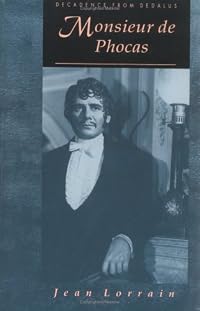

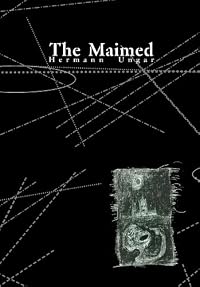
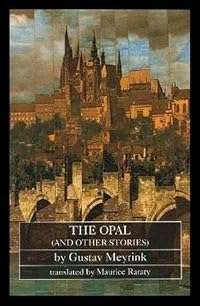
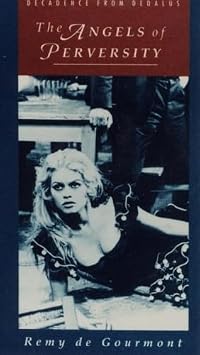












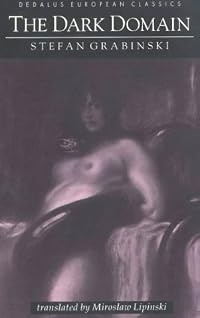

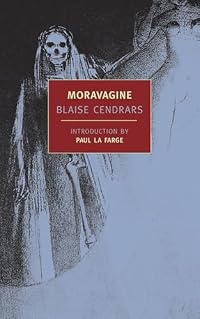
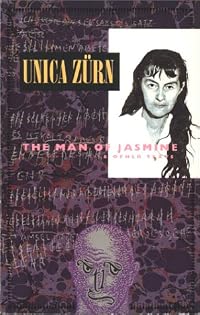
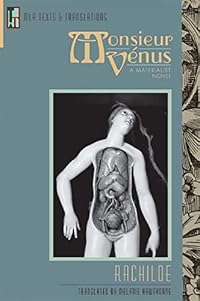
Member Recommendations
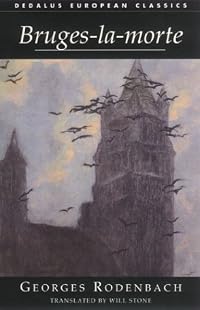
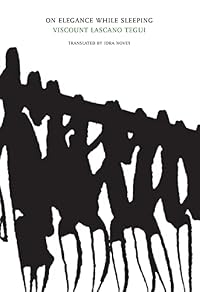
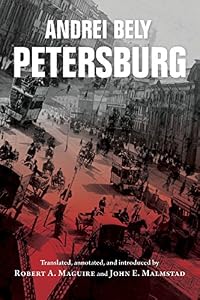
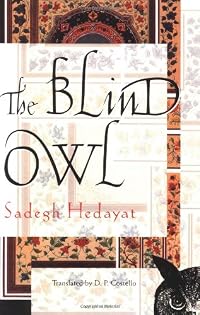
bluepiano Different tone and focus in the two books but both are remarkably powerful and disturbing accounts of war from soldiers' perspectives.
Member Reviews
Something was ominously burning in a broad red glare, and in the smoke there swarmed monstrous, misshapen children, with heads of grown-up murderers. They were jumping lightly and nimbly, like young goats at play, and were breathing with difficulty, like sick people. Their mouths, resembling the jaws of toads or frogs, opening widely and convulsively; behind the transparent skin of their naked bodies the red blood was coursing angrily--and they were killing each other at play. They were the most terrible of all that I had seen, for they were little and could penetrate everywhere.show more
[...]
"He can crawl in under the door," said I to myself with horror, and as if he had guessed my thoughts, he grew thin and long and waving the end of his tail
rapidly, he crawled into the dark crack under the front door.Leonid Andreyev was a controversial and well-known writer, a contemporary of Chekhov and Gorky, but has become virtually unread in the past few decades. This novel shows why. His range is quite limited. There are no actual characters, no real human beings in this book because they are all indistinguishable... there isn't much of a storyline either. What matters more in this book is getting across a sensation, a single horrific vision.
It's a grotesque vision of war, a bit like watching a contortionist's act, and darkly comical. Andreyev does not do subtlety. The scariest parts of his vision do not come with the physical toll of war, but the mental ones. This book is filled with madmen, every one of them, including the two narrators, as if the focus had long gone out of their eyes, they tumble forward in a sleepy haze, zombies ready to tear at the throat of any shadow that flickers.
"That is the red laugh. When the earth goes mad, it begins to laugh like that. You know, the earth the earth has gone mad. There are no more flowers or songs on it; it has become round, smooth and red like a scapled head. Do you see it?"show less
"Yes, I see it. It is laughing."
"Look what its brain is like. It is red, like bloody porridge, and is muddled."
"It is crying out."
"It is in pain. It has no flowers or songs. And now--let me lie down upon you."
"You are heavy and I am afraid."
"We, the dead, lie down on the living. Do you feel warm?"
"Yes."
"Are you comfortable?"
"I am dying."
"Awake and cry out. Awake and cry out. I am going away..."
Written in 1905, upon the first major war of the century (was it?), Russia-Japan – that particular setting being irrelevant; this is a horror-scape devoid of real-world setting, no details except for red and orange uniforms. War takes over the world in this account. There is a sense of its omnipresence; it saturates existence so much that corpses pop out of the ground, in the end. It is a visionary story, both in being nightmarishly constructed and in seeming to prophesy the saturation-level wars of the century ahead.
Damn, I called a Russian writer a prophet. I hate that. They’re not Rasputin. But Andreyev derives a ‘fantastic realism’ from Dostoyevsky, who is cursed to be a prophet of the century after him. It’s just the show more fantastic realism, that projects.
The other story by Andreyev I have read, Seven Who Were Hanged, is entirely realistic. That is another protest story, anti-execution while this is anti-war; he makes them step up, beyond the protest. Seven I admire more for craft, and it affected me more, but I’m giving this 5 stars too.
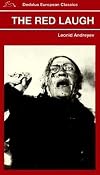
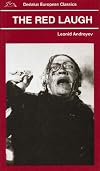
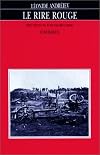
I hear his short stories, in their grotesquerie, are symbols for the hideous circumstances in Russia (Aileen Kelly said this, Toward Another Shore: Russian Thinkers Between Necessity and Chance). He died a couple of years after ‘loud protest’ at Bolshevik victory. He led a troubled inner life, which I think the introduction in my Dedalus edition describes almost contemptuously – along with much of his fiction. The intro writer is out of sympathy with fantastic realism or the grotesque. It says his stories lack human compassion, which is just crazy. The translation (Alexandra Lindem) did not seem bad, although there is no information given about it. Cover is a still from _Battleship Potemkin_, the only reason to get this edition. show less
Damn, I called a Russian writer a prophet. I hate that. They’re not Rasputin. But Andreyev derives a ‘fantastic realism’ from Dostoyevsky, who is cursed to be a prophet of the century after him. It’s just the show more fantastic realism, that projects.
The other story by Andreyev I have read, Seven Who Were Hanged, is entirely realistic. That is another protest story, anti-execution while this is anti-war; he makes them step up, beyond the protest. Seven I admire more for craft, and it affected me more, but I’m giving this 5 stars too.
I hear his short stories, in their grotesquerie, are symbols for the hideous circumstances in Russia (Aileen Kelly said this, Toward Another Shore: Russian Thinkers Between Necessity and Chance). He died a couple of years after ‘loud protest’ at Bolshevik victory. He led a troubled inner life, which I think the introduction in my Dedalus edition describes almost contemptuously – along with much of his fiction. The intro writer is out of sympathy with fantastic realism or the grotesque. It says his stories lack human compassion, which is just crazy. The translation (Alexandra Lindem) did not seem bad, although there is no information given about it. Cover is a still from _Battleship Potemkin_, the only reason to get this edition. show less
NBB-7
May 19, 2021Catalan
Ratings
Members
- Recently Added By
Lists

Books Read in 2020
4,379 works; 123 members

Books We Discovered On LibraryThing
530 works; 130 members
Author Information

198+ Works 1,483 Members
Leonid Andreyev became one of the most popular writers of the first decade of the twentieth century because of his ability to combine modernist and realist techniques and his willingness to break taboos of theme. His subjects included topics, such as venereal disease, and various abnormalities. His works caused a scandal but won their author a show more wide following. In the aftermath of 1905, Andreyev dealt with the defeated revolutionaries' moral and psychological dilemmas and with the intelligentsia as a whole, while in The Tale of the Seven Who Were Hanged (1909), he produced a stunning condemnation of the death penalty. Andreyev had a talent for depicting the dark, irrational forces in life within existential dilemmas. However, his pessimism and mysticism are sometimes undercut by a blatant tugging on the heartstrings and a lack of personal engagement and authenticity. Andreyev died in 1919. (Bowker Author Biography) show less
Some Editions
Series
Belongs to Publisher Series
Work Relationships
Common Knowledge
- Canonical title
- The Red Laugh
- Original title
- Krassni Smiekh
- Original publication date
- 1904
Classifications
- Genres
- Fiction and Literature, General Fiction
- DDC/MDS
- 891.733 — Literature & rhetoric Asian Literature East Indo-European and Celtic literatures Russian and East Slavic languages Russian fiction 1800–1917
- LCC
- PG3452 — Language and Literature Slavic languages and literatures. Baltic languages. Albanian language Slavic. Baltic. Albanian Russian literature Individual authors and works 1870-1917 Andreev
- BISAC
Statistics
- Members
- 123
- Popularity
- 264,221
- Reviews
- 3
- Rating
- (4.04)
- Languages
- 12 — Catalan, English, Esperanto, French, German, Italian, Polish, Portuguese, Russian, Spanish, Swedish, Turkish
- Media
- Paper, Ebook
- ISBNs
- 18
- ASINs
- 7