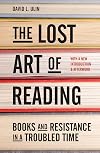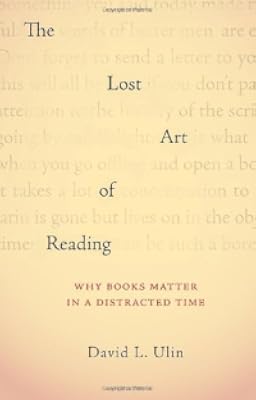
The Lost Art of Reading: Why Books Matter in a Distracted Time
by David L. Ulin
On This Page
Description
"The new introduction and afterword bring fresh relevance to this insightful rumination on the act of reading--as a path to critical thinking, individual and political identity, civic engagement, and resistance. The former LA Times book critic expands his short book, rich in ideas, on the consequence of reading to include the considerations of fake news, siloed information, and the connections between critical thinking as the key component of engaged citizenship and resistance. Here is the show more case for reading as a political act in both public and private gestures, and for the ways it enlarges the world and our frames of reference, all the while keeping us engaged"-- show lessTags
Recommendations
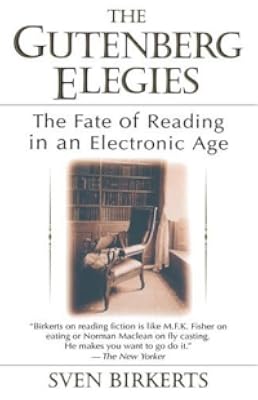
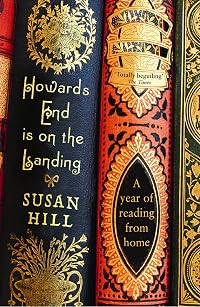
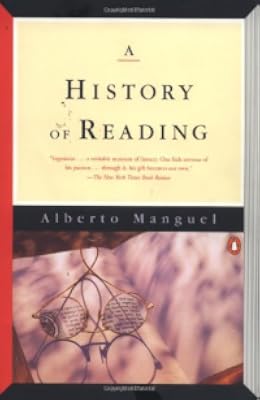
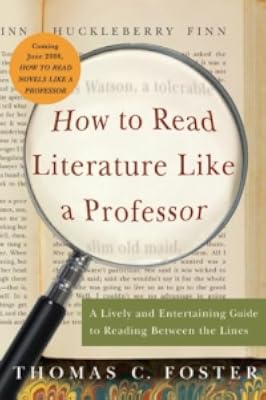
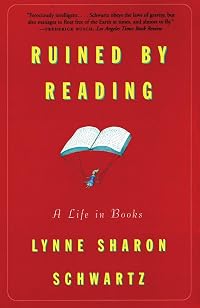
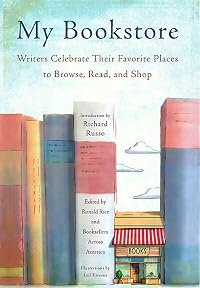
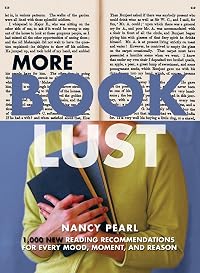
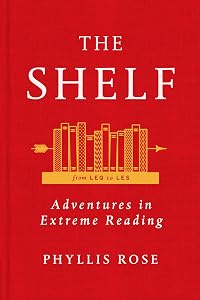
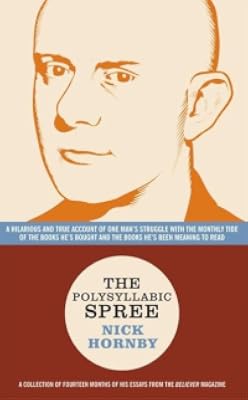
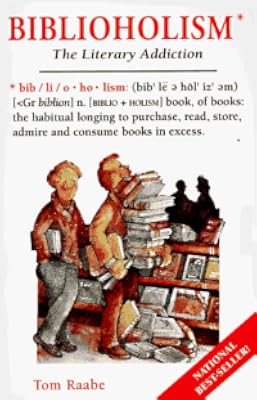
Member Recommendations
Member Reviews
The Lost Art of Reading by David L. Ulin was originally published as an essay in The Los Angeles Times. It is offered up as an examination of the importance of reading in a day and age of electronic distractions.
The book starts off simply enough — Ulin is a concerned father, worried that his son isn't enjoying The Great Gatsby. Then it completely falls apart. It becomes more of a diatribe and a pat on the back than an essay on managing reading.
Here's the thing — not every reader likes The Great Gatsby. Yes, it's the most compact example of Fitzgerald's writing — containing the distilled themes and motifs that he had been developing throughout his writing career. But without knowing the body of his work, Gatsby can be a strange, show more off-putting book.
BUT even knowing Fitzgerald doesn't automatically make The Great Gatsby a beloved book. Nor does NOT liking Gatsby make the reader a failure at reading! For anyone to feel disappointment, frustration or concern over another person's lack of interest in personal favorites is shameful. Reading is a very personal experience. Not all books work for all people. show less
The book starts off simply enough — Ulin is a concerned father, worried that his son isn't enjoying The Great Gatsby. Then it completely falls apart. It becomes more of a diatribe and a pat on the back than an essay on managing reading.
Here's the thing — not every reader likes The Great Gatsby. Yes, it's the most compact example of Fitzgerald's writing — containing the distilled themes and motifs that he had been developing throughout his writing career. But without knowing the body of his work, Gatsby can be a strange, show more off-putting book.
BUT even knowing Fitzgerald doesn't automatically make The Great Gatsby a beloved book. Nor does NOT liking Gatsby make the reader a failure at reading! For anyone to feel disappointment, frustration or concern over another person's lack of interest in personal favorites is shameful. Reading is a very personal experience. Not all books work for all people. show less
This book was a random impulse selection at the library. I know, I've been trying not to check out anything but graphic novels as I already have too much to read at home, but this tiny volume was hardly intimidating, and it felt familiar, as if I'd read about it somewhere and intended to read it, so home with me it went.
It's clear that this book is deeply personal to the author. Framed around an interaction with his son, repeatedly referencing books that were clearly touchstones in his life (many of which I'd never heard of before), his subject matter is still somehow universal and easily relatable -- at least to devoted readers like myself. Well, at least, I guess, to myself. Some conversations with other devoted readers sparked by the show more reading of this book made it clear that not all felt the same. I guess I should feel lucky that I found myself on such a similar wavelength to the author.
The section of the book I found most interesting was when Ulin was writing about the problem of reading -- of fully immersing oneself in a book -- in this distracted age of Facebook and texting and instant communication. As I read, I was deeply struck by the contrast of my experience reading this book with reading The President just a few short weeks ago. After such a long period of mostly reading books in short bursts -- two to three pages at a time, while the majority of my reading was in shorter form -- magazines, internet articles, Facebook statuses... By the time I had that entire afternoon to devote to The President, I'd fallen entirely out of the habit of sustained, immersive reading. And that frustrating experience closely mirrored Ulin's descriptions in this section. But in the following weeks, I'd spent so much more time reading books -- I must have retrained my brain, because that afternoon in the park when I read most of this book, it was suddenly obvious how much easier it was to just fall into a book. It seemed a testament to the elasticity of the brain and of experience. And a hopeful sign that this empathic experience that is at the heart of reading novels, biographies, essays, need not be completely lost to this digital age. It just takes a little practice. show less
It's clear that this book is deeply personal to the author. Framed around an interaction with his son, repeatedly referencing books that were clearly touchstones in his life (many of which I'd never heard of before), his subject matter is still somehow universal and easily relatable -- at least to devoted readers like myself. Well, at least, I guess, to myself. Some conversations with other devoted readers sparked by the show more reading of this book made it clear that not all felt the same. I guess I should feel lucky that I found myself on such a similar wavelength to the author.
The section of the book I found most interesting was when Ulin was writing about the problem of reading -- of fully immersing oneself in a book -- in this distracted age of Facebook and texting and instant communication. As I read, I was deeply struck by the contrast of my experience reading this book with reading The President just a few short weeks ago. After such a long period of mostly reading books in short bursts -- two to three pages at a time, while the majority of my reading was in shorter form -- magazines, internet articles, Facebook statuses... By the time I had that entire afternoon to devote to The President, I'd fallen entirely out of the habit of sustained, immersive reading. And that frustrating experience closely mirrored Ulin's descriptions in this section. But in the following weeks, I'd spent so much more time reading books -- I must have retrained my brain, because that afternoon in the park when I read most of this book, it was suddenly obvious how much easier it was to just fall into a book. It seemed a testament to the elasticity of the brain and of experience. And a hopeful sign that this empathic experience that is at the heart of reading novels, biographies, essays, need not be completely lost to this digital age. It just takes a little practice. show less
Several years ago I read a wonderful book, Distraction, by the philosopher and author Damon Young. His book describes the success of several great thinkers and writers in living a thoughtful life filled with freedom from distraction. One of the hallmarks of the lives he described was reading. It is this act, which David Ulin describes as "an act of resistance in a landscape of distraction, a matter of engagement in a society that seems to want nothing more than for us to disengage"(p 150).
This observation is near the end of Ulin's essay on why books matter, The Lost Art of Reading. Some of us have not lost the art, but may need a reminder of its importance. For reading is more than entertainment, although it often is entertaining; it show more may also be invigorating, meditative, or even a spiritual life enhancing experience. Above all, as Ulin argues, it is a way to get in touch with ourselves in this instant as we connect with the thoughts of authors that may have lived millenniums ago. That connection is one that can be experienced reading authors as disparate as Dostoevsky, Milton, or Murakami. It has often been referred to as "The Great Conversation".
The essay focuses on reading a through a variety of metaphors. Reading is "a journey of discovery"(p 13). The journey is different for each individual but one example highlighted by the author resonated with me. It was the immersion of Frank Conroy in books when he was a boy.His journey began with what seems a chaotic passage through book and authors both great and small, heavy and light, but it was a start and a wonderful way for Conroy to get the lay of the land. To enter into a world that would provide him with a place that was apart from the distraction of society became a foundation on which he could build his own life as a writer.
David Ulin remembers his own library of books as a " virtual city, a litropolis, in which the further you were from the axis, the less essential a story you had to tell.(p 17). It was this view of books as a city that he translated later into remembering cities by their books and populating his reading life with a vision of the world based on his own tastes and aspirations. This is something that each of us as readers may do in our own life. The essay takes you through encounters with readers like Ulin's own son, who has to read and reluctantly annotate Fitzgerald's Great Gatsby, with the encouragement of his father. But he also discusses writers like Anne Fadiman who is among the greatest connoisseurs of reading and writing that I have encountered. And we are regaled with a story about reading David Foster Wallace, a contemporary writer of revolutionary tomes. There is even a discussion about reading on a Kindle which is not necessarily a bad thing except there are a lot of worthwhile books that are not available on a Kindle, so the book is safe for the moment.
As a reader I found this essay encouraging and invigorating. It is a reminder of what I love about reading, what I would love to reread, and where I may go to continue my own journey. Just as I enjoy the freedom from distraction that reading can bring, I wonder at the infinite worlds that are opened when we take time to get in touch with ourselves in the pages of a book. I hope for a future that includes many things, but above all reading. Listen to the words of Walt Whitman:
"SHUT not your doors to me proud libraries,
For that which was lacking on all your well-fill'd shelves, yet
needed most, I bring,
Forth from the war emerging, a book I have made,
The words of my book nothing, the drift of it every thing,
A book separate, not link'd with the rest nor felt by the intellect,
But you ye untold latencies will thrill to every page." show less
This observation is near the end of Ulin's essay on why books matter, The Lost Art of Reading. Some of us have not lost the art, but may need a reminder of its importance. For reading is more than entertainment, although it often is entertaining; it show more may also be invigorating, meditative, or even a spiritual life enhancing experience. Above all, as Ulin argues, it is a way to get in touch with ourselves in this instant as we connect with the thoughts of authors that may have lived millenniums ago. That connection is one that can be experienced reading authors as disparate as Dostoevsky, Milton, or Murakami. It has often been referred to as "The Great Conversation".
The essay focuses on reading a through a variety of metaphors. Reading is "a journey of discovery"(p 13). The journey is different for each individual but one example highlighted by the author resonated with me. It was the immersion of Frank Conroy in books when he was a boy.His journey began with what seems a chaotic passage through book and authors both great and small, heavy and light, but it was a start and a wonderful way for Conroy to get the lay of the land. To enter into a world that would provide him with a place that was apart from the distraction of society became a foundation on which he could build his own life as a writer.
David Ulin remembers his own library of books as a " virtual city, a litropolis, in which the further you were from the axis, the less essential a story you had to tell.(p 17). It was this view of books as a city that he translated later into remembering cities by their books and populating his reading life with a vision of the world based on his own tastes and aspirations. This is something that each of us as readers may do in our own life. The essay takes you through encounters with readers like Ulin's own son, who has to read and reluctantly annotate Fitzgerald's Great Gatsby, with the encouragement of his father. But he also discusses writers like Anne Fadiman who is among the greatest connoisseurs of reading and writing that I have encountered. And we are regaled with a story about reading David Foster Wallace, a contemporary writer of revolutionary tomes. There is even a discussion about reading on a Kindle which is not necessarily a bad thing except there are a lot of worthwhile books that are not available on a Kindle, so the book is safe for the moment.
As a reader I found this essay encouraging and invigorating. It is a reminder of what I love about reading, what I would love to reread, and where I may go to continue my own journey. Just as I enjoy the freedom from distraction that reading can bring, I wonder at the infinite worlds that are opened when we take time to get in touch with ourselves in the pages of a book. I hope for a future that includes many things, but above all reading. Listen to the words of Walt Whitman:
"SHUT not your doors to me proud libraries,
For that which was lacking on all your well-fill'd shelves, yet
needed most, I bring,
Forth from the war emerging, a book I have made,
The words of my book nothing, the drift of it every thing,
A book separate, not link'd with the rest nor felt by the intellect,
But you ye untold latencies will thrill to every page." show less
Six reasons I don't want to lose the art of reading:
1. Reading broadens my experience, connects me to the ongoing human conversation. Generally, it is a form of communication, at times between reader & author, at others between readers across time & space. Civilisation certainly is possible without reading and writing, but would be less nuanced, less detailed – or at least, that part of it accessible to me certainly would be. More narrowly, it is a necessary counter to prejudice and error. If prejudice results either from willfulness (hatred) or naiveté, in many cases reading supplies experiences not as readily available directly. Reading ensures my judgments draw from a larger sample set, even if no substitute for direct experience. show more Hatred might be countered by reading, too, insofar as it encourages empathy, to wit:
2. Reading puts me in a sympathetic frame of mind, even with those I might prefer not to know or to avoid, and in turn breeds empathy without requiring I approve of those whose minds I inhabit. Novels, especially, refine my empathic sense, deepen my instinct for psychology. Reading expands my sense of self.
3. Reading and writing develop different ways of thinking, both as a skill and at the neurological level. I do not mean mere variation in opinions or moral ground. I mean: considered, well-crafted, cogent argument; focused discussion which is sensitive to layers of precedent; thematic analysis. These do not often arise as I complete my daily activities. When they do, they are often interrupted and recognizable primarily as fragments better found in my reading.
4. My ability to make myself understood is enhanced by my reading, not only when I express myself in writing but also in conversation. Vocabulary, to be sure, but also idiom, and tactics for expressing a thought to different audiences, in different circumstances and to varying effect (rhetoric).
5. Books offer an escape, entertainment – as much a trip to the fun house as the real thing. Better, many times, given the available options.
6. Reading and writing are creative acts. Acts of imagination in the first instance; but possibly and subsequently, their realities are actualized once words & ideas percolate through identity and behaviour, personal interactions, and culture.
David Ulin touches on points 2 and 3 in his The Lost Art of Reading, but for the most part his essay concentrates on another concern: the ways contemporary culture (fast-paced, always connected through shallow interactions such as online social networking) works against deep, reflective reading; and the concomitant worry that electronic media exacerbates the trend. Those concerns account for his subtitle. Ulin’s musings are fairly scattered, though, jumping from idea to idea, and just as likely from quote to quote, reference to reference.
It appears the essay was a valuable exercise for Ulin personally, and his struggle is in communicating that to the reader. For me he wasn’t entirely successful in communicating the buzz of ideas and instincts with which he’s wrestling. And yet, my dissatisfaction with his essay prompted me to ask what I’d hoped to find, what was missing. There are a number of titles on my wishlist which I now understand to address one or more of my six points. (Ulin cites one of them, Carr’s The Shallows, and I suspect he's read several others.) Now I have a clearer idea of what I hope to find in these books, and at least one way of reading them.
ADDENDUM (not necessarily from Ulin's text but related)
Allegedly from Vladimir Nabokov's Lectures on Literature: "Read books not for the infantile purpose of identifying oneself with the characters, and not for the adolescent purpose of learning to live, and not for the academic purpose of indulging in generalizations ... read books for the sake of their form, their visions, their art."
//
Tactics for making the reading I do count more:
A. Keep a loose reading agenda, updated yearly. Not a schedule, closer to a syllabus with lots of room to read other things in between. It helps ensure what I read is most likely to meet my needs, and not be side-tracked by easy or flashy options.
B. Write reviews, though they take so much time & I'm always behind on them, I've recognised for years that when I review a book, I remember more of it for a longer time, I process it more thoroughly, and ultimately the reading is more satisfying and fulfilling than when I don't. show less
1. Reading broadens my experience, connects me to the ongoing human conversation. Generally, it is a form of communication, at times between reader & author, at others between readers across time & space. Civilisation certainly is possible without reading and writing, but would be less nuanced, less detailed – or at least, that part of it accessible to me certainly would be. More narrowly, it is a necessary counter to prejudice and error. If prejudice results either from willfulness (hatred) or naiveté, in many cases reading supplies experiences not as readily available directly. Reading ensures my judgments draw from a larger sample set, even if no substitute for direct experience. show more Hatred might be countered by reading, too, insofar as it encourages empathy, to wit:
2. Reading puts me in a sympathetic frame of mind, even with those I might prefer not to know or to avoid, and in turn breeds empathy without requiring I approve of those whose minds I inhabit. Novels, especially, refine my empathic sense, deepen my instinct for psychology. Reading expands my sense of self.
3. Reading and writing develop different ways of thinking, both as a skill and at the neurological level. I do not mean mere variation in opinions or moral ground. I mean: considered, well-crafted, cogent argument; focused discussion which is sensitive to layers of precedent; thematic analysis. These do not often arise as I complete my daily activities. When they do, they are often interrupted and recognizable primarily as fragments better found in my reading.
4. My ability to make myself understood is enhanced by my reading, not only when I express myself in writing but also in conversation. Vocabulary, to be sure, but also idiom, and tactics for expressing a thought to different audiences, in different circumstances and to varying effect (rhetoric).
5. Books offer an escape, entertainment – as much a trip to the fun house as the real thing. Better, many times, given the available options.
6. Reading and writing are creative acts. Acts of imagination in the first instance; but possibly and subsequently, their realities are actualized once words & ideas percolate through identity and behaviour, personal interactions, and culture.
David Ulin touches on points 2 and 3 in his The Lost Art of Reading, but for the most part his essay concentrates on another concern: the ways contemporary culture (fast-paced, always connected through shallow interactions such as online social networking) works against deep, reflective reading; and the concomitant worry that electronic media exacerbates the trend. Those concerns account for his subtitle. Ulin’s musings are fairly scattered, though, jumping from idea to idea, and just as likely from quote to quote, reference to reference.
It appears the essay was a valuable exercise for Ulin personally, and his struggle is in communicating that to the reader. For me he wasn’t entirely successful in communicating the buzz of ideas and instincts with which he’s wrestling. And yet, my dissatisfaction with his essay prompted me to ask what I’d hoped to find, what was missing. There are a number of titles on my wishlist which I now understand to address one or more of my six points. (Ulin cites one of them, Carr’s The Shallows, and I suspect he's read several others.) Now I have a clearer idea of what I hope to find in these books, and at least one way of reading them.
ADDENDUM (not necessarily from Ulin's text but related)
Allegedly from Vladimir Nabokov's Lectures on Literature: "Read books not for the infantile purpose of identifying oneself with the characters, and not for the adolescent purpose of learning to live, and not for the academic purpose of indulging in generalizations ... read books for the sake of their form, their visions, their art."
//
Tactics for making the reading I do count more:
A. Keep a loose reading agenda, updated yearly. Not a schedule, closer to a syllabus with lots of room to read other things in between. It helps ensure what I read is most likely to meet my needs, and not be side-tracked by easy or flashy options.
B. Write reviews, though they take so much time & I'm always behind on them, I've recognised for years that when I review a book, I remember more of it for a longer time, I process it more thoroughly, and ultimately the reading is more satisfying and fulfilling than when I don't. show less
Ulin's long essay in book form (I'll estimate it's about 40,000 words) makes some good points about reading in the age of Twitter and texting and the pull of near-constant connectedness, and I certainly agree with his claim that what one might call "traditional" reading (that done with a paper book, not a device that can "do things," like look up words, log on to Facebook, or check e-mail) is important for the ways it cultivates and develops deep thinking and long attention spans. I was heartened that he does not cast the internet and e-readers and all things digital as the Devil, as some of conservative mind on this subject do, because I think doing so is unconscionably shortsighted and unhelpful. In one of the most interesting parts show more of the essay, Ulin references studies that show how internet usage actually changes our brains and discusses the likelihood that the initial rise of reading did so as well. There's no question that we're living at a cusp; we're changing ourselves, and we know we're doing it.
But for all of the good points and the interesting bits, The Lost Art of Reading is somehow unsatisfying in the end. I often felt as if Ulin were wandering away from his thesis, and while wandering can often be quite fruitful in an essay, sometimes he just didn't quite get anywhere useful. And while there were many moments in the text where I nodded and made little checks of agreement in the margin, there were also many places he didn't go that I thought the essay begged to get to. For example, he talks about how distracting hyperlinks can be to a reader of a digital text and discusses how this fragments one's reading but treats this as if it were a new experience in the digital age without making any reference to the long-familiar and (to my mind anyway) quite similar experience of reading a paper book that is densely footnoted. I also would have liked to have seen a fuller discussion of how "traditional" reading does that which other activities cannot do. Ulin calls literature a "voice of pure expression" (25), and makes a case for the act of reading as training for the kind of critical thinking necessary for anyone who hopes to engage in or understand political discourse. He seems to imply that that these things require "traditional" reading, but does not really explore why. Perhaps I am asking too much of this essay, perhaps I am asking it to do things it did not set out to do. But Ulin has jumped into turbulent waters here, and, while I agree with his conclusions, I'm not sure he's done enough to keep them afloat. show less
But for all of the good points and the interesting bits, The Lost Art of Reading is somehow unsatisfying in the end. I often felt as if Ulin were wandering away from his thesis, and while wandering can often be quite fruitful in an essay, sometimes he just didn't quite get anywhere useful. And while there were many moments in the text where I nodded and made little checks of agreement in the margin, there were also many places he didn't go that I thought the essay begged to get to. For example, he talks about how distracting hyperlinks can be to a reader of a digital text and discusses how this fragments one's reading but treats this as if it were a new experience in the digital age without making any reference to the long-familiar and (to my mind anyway) quite similar experience of reading a paper book that is densely footnoted. I also would have liked to have seen a fuller discussion of how "traditional" reading does that which other activities cannot do. Ulin calls literature a "voice of pure expression" (25), and makes a case for the act of reading as training for the kind of critical thinking necessary for anyone who hopes to engage in or understand political discourse. He seems to imply that that these things require "traditional" reading, but does not really explore why. Perhaps I am asking too much of this essay, perhaps I am asking it to do things it did not set out to do. But Ulin has jumped into turbulent waters here, and, while I agree with his conclusions, I'm not sure he's done enough to keep them afloat. show less
I had high hopes for this short little book, not much more than an essay, really, (albeit a chapterless essay), about the place reading has in the current age.
I was hoping it'd compare favorably to the recent Pat Conroy book, My Life in Reading. It's not bad but certainly not Conroy-like great. Though it has its flashes of brilliance, mostly, it just meanders. It's not what I'd hoped for so, in that sense, I was disappointed with it.
Although Ulin muses about various things, using overly long quotations from books, I might add, this book is more about how we read now than it is about books. He has a knack for stating the obvious. Nothing earthshattering. Mostly just bland.
His musings on blogs, the internet, anonymous electronic comments, show more e-books, and other reading-related topics were somewhat interesting but those moments were too few and far between.
Do I sound disjointed and of two minds about this book? I am. I'd recommend it, with some reservations. I'm glad I read it but I'm sorry I wasted my gift certificate dollars on it. show less
I was hoping it'd compare favorably to the recent Pat Conroy book, My Life in Reading. It's not bad but certainly not Conroy-like great. Though it has its flashes of brilliance, mostly, it just meanders. It's not what I'd hoped for so, in that sense, I was disappointed with it.
Although Ulin muses about various things, using overly long quotations from books, I might add, this book is more about how we read now than it is about books. He has a knack for stating the obvious. Nothing earthshattering. Mostly just bland.
His musings on blogs, the internet, anonymous electronic comments, show more e-books, and other reading-related topics were somewhat interesting but those moments were too few and far between.
Do I sound disjointed and of two minds about this book? I am. I'd recommend it, with some reservations. I'm glad I read it but I'm sorry I wasted my gift certificate dollars on it. show less
An interesting essay on reading in our current times (circa 2010/2011; still mostly relevant today in 2017). Part essay on WHY we should still be reading, part lament on why we are NOT reading as much as we should be, and part rebuke at our own distractedness (apparently thats not a word and the auto-correct on Firefox is saying I should use 'disconnectedness' instead; which also seems apt) due to the internet, smart phones, apps, 24/7 news cycle, information overload, etc. That all of this takes us away from the actual ACT of reading, which is to simply sit somewhere, and stare, and read, and internalize (as Vonnegut would say - ) - 26 letters, and 10 different numbers and a handful of punctuation marks all in black ink on a white show more piece of dead tree.... and to just BE as we do this. The connection to a past author, to a living author, to someone, writing and us reading this however long after they've written it and engaging mentally with it and through that - with them. That's something we're losing now, something the newer and younger generations are skipping and losing out on. Something that staring at laptops and smart phones can't replace. It's a form of meditation that we as a culture are sadly losing. show less
Members
- Recently Added By
Author Information

15+ Works 1,000 Members
David L. Ulin is the author or editor of eight previous books, including The Lost Art of Reading: Why Books Matter in a Distracted Time and the Library of America's Writing Los Angeles: A Literary Anthology, which won a California Book Award. A 2015 Guggenheim Fellow, he is book critic, and former book editor, of the Los Angeles Times.
Common Knowledge
- Quotations
- [R]eading is, by its nature, a strategy for displacement, for pulling back from the circumstances of the present and immersing in the textures of a different life.
Lately, I've begun to think of this as the touchstone ... (show all)of a quiet revolution, an idea as insurrectionary, in its own sense, as those of Thomas Paine. Reading, after all, an act of resistance in a landscape of distraction, a matter of engagement in a society that seems to want nothing more than for us to disengage. [150]
Reading is an act of contemplation, perhaps the only act in which we allow ourselves to merge with the consciousness of another human being. [16]
Classifications
- Genres
- Nonfiction, Literature Studies and Criticism, General Nonfiction
- DDC/MDS
- 028.9 — Computer science, information & general works Library & information sciences Reading and use of other information media Character of reading in libraries
- LCC
- Z1003 .U45 — Bibliography, Library Science and Information Resources General bibliography Biography of bibliographers
- BISAC
Statistics
- Members
- 463
- Popularity
- 65,862
- Reviews
- 26
- Rating
- (3.55)
- Languages
- English
- Media
- Paper, Ebook
- ISBNs
- 5
- UPCs
- 1
- ASINs
- 2