On This Page
Description
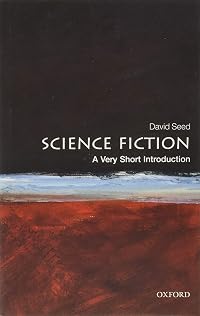
David Seed examines how science fiction has emerged as a popular genre of literature in the 20th century, and discusses it in relation to themes such as science and technology, space aliens, utopias, and gender. He also considers the wider social and political issues it raises.Tags
Recommendations




















Member Reviews
A solid short introduction to science fiction, largely by theme. There are no great insights in this book but it provides a good basic starting point for anyone not well versed in the genre and wanting an up-to-date guide to where they might put some time into learning more.
As one expects nowadays, obeisance is made to the small but highly respectable contribution of feminist writers and to the tiny group of self-consciously black authors in the genre. There is a respectful slight nod to Marxism so the text clearly comes from the modern academy.
There are around 15 decent illustrations.
As one expects nowadays, obeisance is made to the small but highly respectable contribution of feminist writers and to the tiny group of self-consciously black authors in the genre. There is a respectful slight nod to Marxism so the text clearly comes from the modern academy.
There are around 15 decent illustrations.
This is a brief discussion of recent academic criticism of Science Fiction (both literature and movies). Though the author promises to avoid a historical approach, devoting chapters to themes rather than periods, each chapter turns out to be a small history. This leads to a sense of repetition. Within each chapter the author surveys a variety of critical approaches, citing many examples from Science Fiction books and film, without devoting much attention to any one of them. Though there is a faint Marxist undertone to the book, still, as in many Oxford Very Short Introductions, the appropriate genuflections are made in the directions of all popular critical coteries. In short, this book doesn't say much of interest to the Science show more Fiction fan, but gets lost in an academic echo chamber. Recommended for undergraduates in literature looking for a compendium of quick references. show less
Useful book with good recommendations for futher reading.
Ratings
Members
- Recently Added By
Lists

Huxley's reading log 2017
45 works; 1 member
Author Information

22+ Works 314 Members
David Seed is Professor of English at the University of Liverpool. He is the editor of The Blackwell Companion to Science Fiction (2005) and (with Susan Castillo) American Travel and Empire (Liverpool University Press, 2009); author of Cinematic Fictions (Liverpool University Press, 2009) and brainwashing: The Fictions of Mind Control (Kent State show more University Press, 2004). show less
Series

Common Knowledge
- Canonical title
- Science Fiction: A Very Short Introduction
- Original title
- Science Fiction: A Very Short Introduction
- Original publication date
- 2011
- First words
- Science fiction has proved notoriously difficult to define.
- Last words
- (Click to show. Warning: May contain spoilers.)However experimental an individual work might be, it will generate meaning partly through its interacting with the accretional 'mega-text' built up by science fiction over the decades.
- Original language
- English
Classifications
- Genres
- Literature Studies and Criticism, Nonfiction, Fiction and Literature
- DDC/MDS
- 809.3 — Literature & rhetoric Literature, rhetoric & criticism History, description, critical appraisal of more than two literatures Fiction
- LCC
- PN3433.5 .S44 — Language and Literature Literature (General) Literature (General) Prose. Prose fiction Special kinds of fiction. Fiction genres
- BISAC
Statistics
- Members
- 163
- Popularity
- 197,348
- Reviews
- 3
- Rating
- (3.37)
- Languages
- English, Polish
- Media
- Paper, Audiobook, Ebook
- ISBNs
- 7
- ASINs
- 3