On This Page
Description
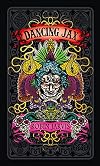
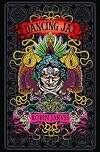
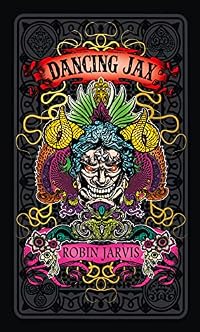
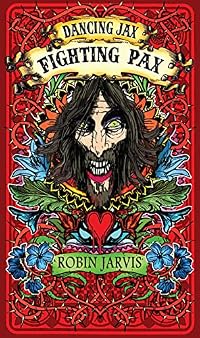
A brilliant supernatural thriller with a modern twist, and a triumphant return from one of Britain's best-loved writers.At the end of a track, on the outskirts of an ordinary coastal town, lies a dilapidated house. Once, a group of amateur ghost hunters spent the night there. Two of them don't like to speak about the experience. The third can't speak about it. He went into the basement, you see, and afterwards he screamed so hard and so long he tore his vocal cords.
Now, a group of show more teenagers have decided to hang out in the old haunted house. Dismissing the fears of the others, their leader Jezza goes down into the basement... and comes back up with a children's book, full of strange and colourful tales of a playing-card world, a fairytale world, full of Jacks, Queens and Kings, unicorns and wolves.
But the book is no fairytale. Written by Austerly Fellows, a mysterious turn-of-the-century occultist, it just might be the gateway to something terrifying...and awfully final. As the children and teenagers of the town are swept up by its terrible power, swept into its seductive world, something has begun that could usher in hell on earth. Soon, the only people standing in its way are a young boy with a sci-fi obsession, and his dad -- an unassuming maths teacher called Martin...
. show less
Tags
Recommendations









Member Reviews
If Stephen King were to write a book for young adults then I would imagine it would be something very much like Dancing Jax. Although Robin Jarvis suggests that he doesn't see himself as a horror author, this book is as chilling as anything the great King has published. Reading it certainly made me feel the same as I did when I first read 'Salem's Lot, which was very nervous indeed. I don't scare easily these days, and I totally love horror films, but both of these stories had me feeling on edge pretty much from the first chapter.
I have now been sitting staring at my screen for an hour trying to come up with words that describe this book. The blurb at the top of this post says a lot about the plot, and I feel that saying much more could show more not so much create spoilers, but in some way diminish reading enjoyment anyway. I think this is because the plot seems unique to me; I certainly don't think that I have come across anything similar in YA literature before. The beginning of the story suggests a fairly standard horror story of ghostly/demonic possession, but Robin Jarvis very quickly dispels any thoughts that his story will be as straightforward as this. And I'm still struggling to work out the best way to describe it. To call it a horror story would, I feel, do it an injustice as it is so much more than that. Similarly, to call it fantasy does not feel right. It is a brilliant hybrid of all the best elements of horror, fantasy, fairy tales, folk lore and even social commentary, and somehow Robin Jarvis has blended all of these ingredients as if he were a master chef cooking a perfect five course meal for a panel of the world's most hard-to-please food critics.
The story revolves around a book, the (almost) titular Dancing Jacks; a book created by a truly evil man - the supposedly long missing and presumed dead Austerly Fellows. This book has the power to 'convert' anybody who reads it into a devotee of the Ismus, but not in the brainwashed cult way that we see occasionally in the media today. These converts start to believe in another world, where the Ismus is lord and master, and each new follower has a specific role to play, based upon a deck of playing cards. Therefore, we have the likes of the Jack of Diamonds, the Jill of Clubs, the Queen of Spades as main characters in this fantasy world, and the lower numbers become serfs with menial tasks. And they genuinely all believe that this world exists, thanks to the malevolent magic that permeates from the book, corrupting all who read or hear its story.
I think the element I found most disturbing is that the first people who are targeted by the Ismus are the children of the secondary school on the fringes of Felixstowe. Like a clever drug dealer, the Ismus gets the book into the hands of a few and this very quickly snowballs, with 'addict' after 'addict' falling under the spell of the evil book. And before too long, so are the adults. Maybe I'm just being overly sensitive as I spend a big part of my life encouraging young people to read, and yet in Dancing Jax it is this very activity that becomes their downfall. How disturbing is that? And possibly slightly unnerving is the fact that Robin Jarvis's Dancing Jax is almost as addictive as its fictional namesake - I just did not want to stop reading it and found myself reading well into the night, and then rushing home very tired from work the next day to get it finished off.
Going back to my earlier assertion that this work is similar to that of Stephen King, I think I feel this way because of the way in which Robin Jarvis builds his story. Like King, he focuses on the minutiae of the day-to-day lives of the people of this part of Felixstowe: their hopes and fears, the way they interact with each other on a daily basis, the way they deal with tragedy. In doing so we 'meet' a huge array of characters and therefore we really do not know who is going to be the hero of the story who will eventually thwart the plans of the villain. Just as I thought it would be one particular character the plot would twist, they would fall foul of the Book's magic and become another one of the ever growing legion of Ismus devotees. This also means that just as you get attached to and start rooting for a character your hopes are violently dashed and your character allegiance has to shift. I remember thinking exactly the same thoughts as I read 'Salem's Lot, as first one member of the town became a vampire, and then another, and another, although because of the way that book opens we always know that Ben Mears is likely to be a survivor.
As I was reading Dancing Jax I couldn't help but feel that at times Robin Jarvis was commenting on how our society has degraded over the last few decades. These thoughts were confirmed by one of my favourite passages in the book, which comes towards the end as the Ismus arrogantly justifies the magic of the book and his actions by preaching:
"There are no children in this world any more. You dress and treat them as mini-adults. You let little girls play with dolls that look like Berlin prostitutes. The morality and hypocrisy I used to find so stomach-churning no longer exists. You foist on to your young people role models whose brains are never as active as their underwear, and whose talents and achievements extend only as far as the bedroom door and the ability to blurt every detail of what happens behind it. You give your precious offspring access to a lightning-fast network of corruption and danger. You immerse them in computer games far more violent than the most savage and dirty war, and target prepubescents with inappropriate music and imagery - giving them a vocabulary that would have revolted sailors back in my day. There are not stigmas, no taboos, no boundaries, no respect and certainly no innocence left. To be pregnant at thirteen is no longer an everlasting shame, merely a career choice."
Perhaps the Ismus is correct, and Dancing Jacks is the only solution to today's social problems? Scary thought. show less
I have now been sitting staring at my screen for an hour trying to come up with words that describe this book. The blurb at the top of this post says a lot about the plot, and I feel that saying much more could show more not so much create spoilers, but in some way diminish reading enjoyment anyway. I think this is because the plot seems unique to me; I certainly don't think that I have come across anything similar in YA literature before. The beginning of the story suggests a fairly standard horror story of ghostly/demonic possession, but Robin Jarvis very quickly dispels any thoughts that his story will be as straightforward as this. And I'm still struggling to work out the best way to describe it. To call it a horror story would, I feel, do it an injustice as it is so much more than that. Similarly, to call it fantasy does not feel right. It is a brilliant hybrid of all the best elements of horror, fantasy, fairy tales, folk lore and even social commentary, and somehow Robin Jarvis has blended all of these ingredients as if he were a master chef cooking a perfect five course meal for a panel of the world's most hard-to-please food critics.
The story revolves around a book, the (almost) titular Dancing Jacks; a book created by a truly evil man - the supposedly long missing and presumed dead Austerly Fellows. This book has the power to 'convert' anybody who reads it into a devotee of the Ismus, but not in the brainwashed cult way that we see occasionally in the media today. These converts start to believe in another world, where the Ismus is lord and master, and each new follower has a specific role to play, based upon a deck of playing cards. Therefore, we have the likes of the Jack of Diamonds, the Jill of Clubs, the Queen of Spades as main characters in this fantasy world, and the lower numbers become serfs with menial tasks. And they genuinely all believe that this world exists, thanks to the malevolent magic that permeates from the book, corrupting all who read or hear its story.
I think the element I found most disturbing is that the first people who are targeted by the Ismus are the children of the secondary school on the fringes of Felixstowe. Like a clever drug dealer, the Ismus gets the book into the hands of a few and this very quickly snowballs, with 'addict' after 'addict' falling under the spell of the evil book. And before too long, so are the adults. Maybe I'm just being overly sensitive as I spend a big part of my life encouraging young people to read, and yet in Dancing Jax it is this very activity that becomes their downfall. How disturbing is that? And possibly slightly unnerving is the fact that Robin Jarvis's Dancing Jax is almost as addictive as its fictional namesake - I just did not want to stop reading it and found myself reading well into the night, and then rushing home very tired from work the next day to get it finished off.
Going back to my earlier assertion that this work is similar to that of Stephen King, I think I feel this way because of the way in which Robin Jarvis builds his story. Like King, he focuses on the minutiae of the day-to-day lives of the people of this part of Felixstowe: their hopes and fears, the way they interact with each other on a daily basis, the way they deal with tragedy. In doing so we 'meet' a huge array of characters and therefore we really do not know who is going to be the hero of the story who will eventually thwart the plans of the villain. Just as I thought it would be one particular character the plot would twist, they would fall foul of the Book's magic and become another one of the ever growing legion of Ismus devotees. This also means that just as you get attached to and start rooting for a character your hopes are violently dashed and your character allegiance has to shift. I remember thinking exactly the same thoughts as I read 'Salem's Lot, as first one member of the town became a vampire, and then another, and another, although because of the way that book opens we always know that Ben Mears is likely to be a survivor.
As I was reading Dancing Jax I couldn't help but feel that at times Robin Jarvis was commenting on how our society has degraded over the last few decades. These thoughts were confirmed by one of my favourite passages in the book, which comes towards the end as the Ismus arrogantly justifies the magic of the book and his actions by preaching:
"There are no children in this world any more. You dress and treat them as mini-adults. You let little girls play with dolls that look like Berlin prostitutes. The morality and hypocrisy I used to find so stomach-churning no longer exists. You foist on to your young people role models whose brains are never as active as their underwear, and whose talents and achievements extend only as far as the bedroom door and the ability to blurt every detail of what happens behind it. You give your precious offspring access to a lightning-fast network of corruption and danger. You immerse them in computer games far more violent than the most savage and dirty war, and target prepubescents with inappropriate music and imagery - giving them a vocabulary that would have revolted sailors back in my day. There are not stigmas, no taboos, no boundaries, no respect and certainly no innocence left. To be pregnant at thirteen is no longer an everlasting shame, merely a career choice."
Perhaps the Ismus is correct, and Dancing Jacks is the only solution to today's social problems? Scary thought. show less
For some reason, I found the opening section of this book quite hard to get into, and I wasn't looking forward to continuing. Then there suddenly came a point where everything suddenly seemed clear, and I had trouble putting it down!
It opens with a group of adults going into an abandoned house, where the leader appears to become possessed by something. Whilst in the house, they discover and take crates of a book - when others in his group start to read it, they also start to change.
As the story continues, it becomes apparent how important this book is - almost everyone who reads it becomes changed.. mainly children and teens, but then also adults. I won't spoil any more of the story by explaining why or how.
I do have small criticisms show more - the first is the fact that the opening section appears to be more confusing than the rest of the book, which may lose it some readers, but then it's quite possible that was just me. I would say though, that if you do struggle with the opening, it's worth carrying on.
The other criticism I have is of the small 'rants' the author makes, through some of the characters speeches. They are good observations of our society, but they could have been put across in a more subtle way - it really did feel like a sledgehammer approach, and to me affected the flow.
However, these two things aside, my overall impression of this book is really rather good. It's a clever idea that reading can affect people in such a negative way, there's a building sense of anxiety, and some rather disturbing scenes. For me, this falls into the genre of YA horror, mainly because of the scenes mentioned. It's not particularly gory or scary in the traditional horror way, but it is rather disturbing. I wouldn't recommend it for young children, or those too sensitive. But for someone looking for an absorbing, disturbing read, it comes recommended.. for young or old. show less
It opens with a group of adults going into an abandoned house, where the leader appears to become possessed by something. Whilst in the house, they discover and take crates of a book - when others in his group start to read it, they also start to change.
As the story continues, it becomes apparent how important this book is - almost everyone who reads it becomes changed.. mainly children and teens, but then also adults. I won't spoil any more of the story by explaining why or how.
I do have small criticisms show more - the first is the fact that the opening section appears to be more confusing than the rest of the book, which may lose it some readers, but then it's quite possible that was just me. I would say though, that if you do struggle with the opening, it's worth carrying on.
The other criticism I have is of the small 'rants' the author makes, through some of the characters speeches. They are good observations of our society, but they could have been put across in a more subtle way - it really did feel like a sledgehammer approach, and to me affected the flow.
However, these two things aside, my overall impression of this book is really rather good. It's a clever idea that reading can affect people in such a negative way, there's a building sense of anxiety, and some rather disturbing scenes. For me, this falls into the genre of YA horror, mainly because of the scenes mentioned. It's not particularly gory or scary in the traditional horror way, but it is rather disturbing. I wouldn't recommend it for young children, or those too sensitive. But for someone looking for an absorbing, disturbing read, it comes recommended.. for young or old. show less
Wirklich schön geschriebenes und spannendes Buch. War zunächst etwas skeptisch - ich habe ja bisher nicht viel aus dem Horror/Fantasy Genre gelesen und wusste nicht so recht, was mich erwarten würde - aber letztendlich konnte das Buch mich trotz allem in seinen Bann ziehen. Ich konnte gar nicht warten um herauszufinden, was als nächstes passiert. Auch der Erzählstil hat mir sehr gut gefallen, der Wechsel zwischen den Perspektiven war sehr gelungen und die einzelnen Charaktere waren gut zu unterscheiden, obwohl es wirklich viele davon gab.
Bin schon sehr gespannt auf die Fortsetzung.
Bin schon sehr gespannt auf die Fortsetzung.
Dancing Jax pulls you in and doesn't free you until the last page. Martin Baxter a maths teacher and sci fi fanatic is pulled into a real life mystery when most everyone in town is under the spell of a sinister book. When a former pupil of his warns him that the Dancing Jax book is evil he his skeptical until someone close to him is drawn into the madness. This series is a new favorite. Looking forward to the second book in the series. I will also be checking out other books by this talented author.
Highly compelling book, for adults and children alike. Pitty it didn't have a more solid ending. But cant wait to read the sequel.
Allgemeines
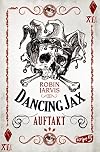
Mit dem Satz "Dieses Buch ist gefährlich, ja sogar schädlich" wirbt Robin Jarvisauf dem Buchrücken. Der Inhalt dreht sich um ein Buch, welches alle Leser süchtig macht und in eine andere Welt zieht. Bleibt offen, ob es jemand schafft, sich aus dem Bann zu befreien. Dies ist der erste Teil einer Triologie. Band 2 hat den Titel "Dancing Jax - Zwischenspiel" und Band 3 "Dancing Jax - Das Finale" (erscheint erst Oktober 2014). Die Reihe ist dem Genre Fantasy/Horror zugeordnet und obwohl es im Jugendbuch-Verlag script5 erschienen ist, welcher auf seiner Homepage wirbt, dass sein Programm „junge Belletristik“ für Leser zwischen 16 und 30 beinhaltet, würde ich das Buch eher für junge und junggebliebene Erwachsene show more empfehlen.
Inhalt
Die Geschichte handelt von einem Buch, welches magische Kräfte hat und die Menschen in eine Parallelwelt zieht. Das Konzept dahinter ist sehr interessant und spannend aufgebaut. Dabei ist die Parallelwelt wie eine Märchenwelt. Die Menschen kleiden sich mittelalterlich und es gibt böse Hexen und gute Feen. Wer das Magische mag, wird auch in diesem Buch fündig.
Struktur
Die Kapitel wechseln sich immer ab, mit den Geschehnissen in der irdischen Welt und der magischen Parallelwelt. So lernt der Leser die magische Welt und ihre Protagonisten immer stückchenweise kennen.
Sprache
Die Sprache ist locker und flüssig.
Zusammenfassung und Bewertung
Ich habe den ersten Teil verschlungen. Wollte über die Damen und Herrschaften der magischen Welt immer mehr lesen und habe auch gleich den zweiten Band rangehängt. Wer es etwas mittelalterlich, zauberhaft, magisch mag, der wird dieses Buch lieben. Ich gebe dem Buch 5 von 5 Sternen. show less
Mit dem Satz "Dieses Buch ist gefährlich, ja sogar schädlich" wirbt Robin Jarvisauf dem Buchrücken. Der Inhalt dreht sich um ein Buch, welches alle Leser süchtig macht und in eine andere Welt zieht. Bleibt offen, ob es jemand schafft, sich aus dem Bann zu befreien. Dies ist der erste Teil einer Triologie. Band 2 hat den Titel "Dancing Jax - Zwischenspiel" und Band 3 "Dancing Jax - Das Finale" (erscheint erst Oktober 2014). Die Reihe ist dem Genre Fantasy/Horror zugeordnet und obwohl es im Jugendbuch-Verlag script5 erschienen ist, welcher auf seiner Homepage wirbt, dass sein Programm „junge Belletristik“ für Leser zwischen 16 und 30 beinhaltet, würde ich das Buch eher für junge und junggebliebene Erwachsene show more empfehlen.
Inhalt
Die Geschichte handelt von einem Buch, welches magische Kräfte hat und die Menschen in eine Parallelwelt zieht. Das Konzept dahinter ist sehr interessant und spannend aufgebaut. Dabei ist die Parallelwelt wie eine Märchenwelt. Die Menschen kleiden sich mittelalterlich und es gibt böse Hexen und gute Feen. Wer das Magische mag, wird auch in diesem Buch fündig.
Struktur
Die Kapitel wechseln sich immer ab, mit den Geschehnissen in der irdischen Welt und der magischen Parallelwelt. So lernt der Leser die magische Welt und ihre Protagonisten immer stückchenweise kennen.
Sprache
Die Sprache ist locker und flüssig.
Zusammenfassung und Bewertung
Ich habe den ersten Teil verschlungen. Wollte über die Damen und Herrschaften der magischen Welt immer mehr lesen und habe auch gleich den zweiten Band rangehängt. Wer es etwas mittelalterlich, zauberhaft, magisch mag, der wird dieses Buch lieben. Ich gebe dem Buch 5 von 5 Sternen. show less
Jul 27, 2014German
Ratings
Members
- Recently Added By
Lists

Books Read in 2015
3,298 works; 129 members
Author Information

35+ Works 3,470 Members
Robin Jarvis was born in Liverpool, England on May 8, 1963. He studied graphic design at Newcastle Polytechnic. After college, he worked in the television and advertising industries as a model-maker. He started writing in 1988. He writes numerous series including The Deptford Mice, Deptford Histories, Whitby, Tales from the Wyrd Museum, Hagwood, show more Intrigues of the Reflected Realm, Mouselets of Deptford, and Dancing Jax. (Bowker Author Biography) show less
Series

Common Knowledge
- Canonical title*
- Dancing Jax: Auftakt
- Original title
- Dancing Jax
*Some information comes from Common Knowledge in other languages. Click "Edit" for more information.
Classifications
Statistics
- Members
- 130
- Popularity
- 246,706
- Reviews
- 6
- Rating
- (3.85)
- Languages
- English, German
- Media
- Paper, Ebook
- ISBNs
- 8
- ASINs
- 2