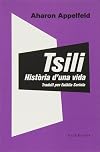
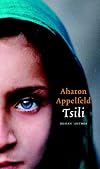
Tzili: The Story of a Life
by Aharon Appelfeld
On This Page
Description
A young Jewish girl survives the Holocaust living alone in the forest and among the gentile peasants she fears.Tags
Recommendations

























Member Recommendations

Member Reviews
This is such a tragic story. It's fiction, I know, but the author is Aharon Appelfeld, a Jew who was imprisoned in a Nazi concentration camp during World War II as a child, but who escaped and survived the war. I have read other novels by this author. He doesn't write about concentration camps, but in his novels he writes about what happened to Jews who suffered other tragedies.
This story is about a young teenager who is totally abandoned by her family so she must do whatever she needs to do to survive. Sometimes she is alone; sometimes she is with others. The story is heartbreaking, but a necessary read. Readers do need to know what it felt like for Jews to endure the war years in Europe, even if they were not murdered.
A jarring part show more of this story for me was near the end when I discovered that Tzili ended up in Zagreb. Zagreb is a city in Croatia, part of the former Republic of Yugoslvaia. My maternal grandparents lived there, but they died in Auschwitz at the hands of the Nazis.
I generally don't like to read novels about this period in history, but I hesitatingly do read novels by authors who themselves experienced deep trauma at the hands of the Nazis. They have stories to tell. show less
This story is about a young teenager who is totally abandoned by her family so she must do whatever she needs to do to survive. Sometimes she is alone; sometimes she is with others. The story is heartbreaking, but a necessary read. Readers do need to know what it felt like for Jews to endure the war years in Europe, even if they were not murdered.
A jarring part show more of this story for me was near the end when I discovered that Tzili ended up in Zagreb. Zagreb is a city in Croatia, part of the former Republic of Yugoslvaia. My maternal grandparents lived there, but they died in Auschwitz at the hands of the Nazis.
I generally don't like to read novels about this period in history, but I hesitatingly do read novels by authors who themselves experienced deep trauma at the hands of the Nazis. They have stories to tell. show less
On the first pages of Tzili: The Story of a Live the storyteller says that Tzili's life is hard and sad and possibly not worth telling -- a beginning that made me put the book aside for a few days after reading the first chapter while I decided whether I could get past this grim beginning and read on. But despite the unarguably difficult time Tzili has, a slow, dreamy early adolescent child in a family of examination-taking siblings, each of whom intends to raise their merchant family into a better social class, she nevertheless is so appealing that we want to find out what happens to her. When she is left behind, ostensibly to guard the family's possessions and protected by her dimness, when the family flees the approaching army and show more being sent to the camps, she seems ill-equipped to survive on her own, and thus doomed.
But she proves instinctively more clever than anyone imagined, and the book chronicles her wanderings and the various ploys that keep her going in a very dangerous world.
We aren't told when or where the story takes place -- there's very little background information about Tzili's world, in which the Jews are in constant distress, from struggling with the other residents, but also from their own precarious existence and fear of failure. For a wonderfully indeterminate view of this world alone, the novel is a bitter pleasure. The Dalya Bilu translation is both lovely and invisible. show less
But she proves instinctively more clever than anyone imagined, and the book chronicles her wanderings and the various ploys that keep her going in a very dangerous world.
We aren't told when or where the story takes place -- there's very little background information about Tzili's world, in which the Jews are in constant distress, from struggling with the other residents, but also from their own precarious existence and fear of failure. For a wonderfully indeterminate view of this world alone, the novel is a bitter pleasure. The Dalya Bilu translation is both lovely and invisible. show less
Tsili kan niet zo goed leren als haar broers en zus, maar ze weet zich wel in leven te houden in de oorlog. Ze werkt bij mensen en later ontmoet ze op een plek in de buurt van een dorp een man die op de vlucht is. Af en toe verkopen ze bezittingen van de man. Hij verdwijnt. De oorlog loopt af en er komen stromen ex-gevangenen langs. Tsili voegt zich bij hen, omdat ze niemand anders heeft. Ze blijkt zwanger te zijn en een van de ex-gevangenen bekommert zich om haar als ze veel pijn blijkt te hebben.
Een stuk uit het leven van een meisje dat niet zo belangrijk is op het wereldtoneel, in een heftige tijd. Wat kan Appelfeld schitterend vertellen!
Een stuk uit het leven van een meisje dat niet zo belangrijk is op het wereldtoneel, in een heftige tijd. Wat kan Appelfeld schitterend vertellen!
Sep 26, 2016Dutch
En 1942, Tsili Kraus a douze ans. Elle est la " petite dernière " d'une famille nombreuse et vit dans un village d'Europe centrale. Quand la haine anti-juive éclate, tous s'enfuient, laissant Tsili pour garder la maison. Mais personne ne reviendra... Tsili va se battre pour survivre. Elle passe trois années à se cacher, cueillant des fruits sauvages, volant de la nourriture, se réfugiant dans des granges ou des écuries. Jusqu'à ce qu'elle rencontre Marek, évadé d'un camp, et qui se cache lui-aussi... Ils vont s'aimer et revivre ensemble la malédiction biblique de la descendance de Caïn " Tu seras errant et fugitif " (Genèse, IV, 12).
Au-delà du témoignage, ce livre extraordinaire montre comment, plongé dans l'horreur, un show more enfant parvient à construire son identité à travers sa perception physique du monde. (fonte: Fnac) show less
Au-delà du témoignage, ce livre extraordinaire montre comment, plongé dans l'horreur, un show more enfant parvient à construire son identité à travers sa perception physique du monde. (fonte: Fnac) show less
Jun 2, 2020Italian
Een Joods meisje wordt door haar familie bij de nadering van de Nazi's in Oost-Europa achtrgelaten
May 2, 2016Dutch
Una nena jueva abandonada per la seva família i en l'entorn del desencadenant d'una guerra
Dec 25, 2017Catalan
Members
- Recently Added By
Lists

Jewish Books
367 works; 24 members

Top Five Books of 2023
767 works; 317 members
Author Information

77+ Works 3,675 Members
Aharon Appelfeld was born in a town near Czernowitz, Romania on February 16, 1932. When he was 8 years old, he and his father endured a forced march to a labor camp in Ukraine. He escaped the camp and spent the next three years as a shepherd working for various peasants and always concealing his Jewish identity. He then joined the Soviet Army as a show more cook's helper. After World War II, he spent months in a refugee camp in Italy before going to Palestine in 1946. He worked on a kibbutz, fought in the 1948 Arab-Israeli war, and studied philosophy at Hebrew University. The Holocaust was the main subject of his books. His first novel, The Skin and the Gown, was published in 1971. His other works include Badenheim 1939, The Age of Wonders, To the Land of the Cattails, The Healer, The Immortal Bartfuss, For Every Sin, and Writing and the Holocaust. He received the Israel Prize for literature, The Prime Minister's Prize for Creative Writing, and two Anne Frank Literary Prizes. He taught Hebrew literature for many years at Ben-Gurion University of the Negev, in Beersheba. He died on January 4, 2018 at the age of 85. (Bowker Author Biography) show less
Some Editions
Awards and Honors
Awards
Series
Belongs to Publisher Series
Common Knowledge
- Quotations
- Death is not as terrible as it seems. All you have to do is conquer your fear.
In the course of the years she had learned a little Yiddish, and she still remembered a few words—the word dafka, for instance.
Thus they reached Zagreb. Zagreb was in turmoil. In the yard of the Joint Distribution Committee people were distributing biscuits, canned goods, and colored socks from America. In the courtyard, they all mingled freely: visi... (show all)onaries, merchants, money-changers and sick people. No one knew what to do in the strange half-ruined city.
Classifications
- Genres
- Fiction and Literature, General Fiction
- DDC/MDS
- 892.4 — Literature & rhetoric Literatures of other languages Afro-Asiatic literatures Jewish, Israeli, and Hebrew
- LCC
- PJ5054 .A755 .K813 — Language and Literature Oriental languages and literatures Oriental philology and literature Hebrew Literature Individual authors and works
- BISAC
Statistics
- Members
- 200
- Popularity
- 164,300
- Reviews
- 7
- Rating
- (3.50)
- Languages
- 7 — Catalan, Danish, Dutch, English, French, German, Spanish
- Media
- Paper, Ebook
- ISBNs
- 17
- ASINs
- 5