On This Page
Description
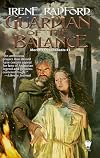
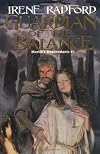
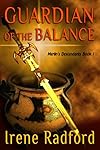
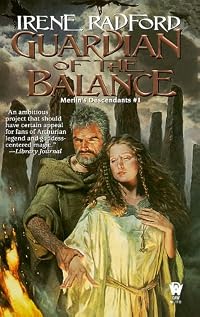
Caught between her beloved father, the Merlin of Britain, and Arthur Pendragon, the old ways and the new, Wren must find a way to balance the forces of Chaos with peace. She nurtures the land and the people, creating a haven for anyone displaced by the turbulence. And for the safety of all she must guard her heart against the deep love she shares with Arthur, a married king who holds the future of all the Britains in his hands and his sword..
Tags
Recommendations


Member Reviews
Once I'd realised this was solely an Arthurian fantasy, and wasn't going to jump into the future (descendants implies a longer timescale) I could enjoy it properly. It's a very well worked retelling of some of the myths. The choice of protagonist as an unknown childhood friend worked very well.
Wren is Merlin's secret daughter. The gods forgave his one night of passion on Beltane, and charged him to look after her in addition to his responsibilities to Britain. Wren has grown up knowing her father's love, and gained only some of his secrets, and a few of the Morrigan's and a few of her own. Fairies speak to her, when the conditions are right, and she remains steadfast in her obedience to the Old Gods despite the spread of christianity. show more As the years pass, Britain grows more troubled and the old king Uther finally dies. Her father reveals that Wren's old playmate is truly Arthur, but by this time Wren has been married off to a husband not of her choosing. The only was Merlin can assure her safety in these wild times. Wren's husband is more brute than any expected and has ties to the demon worshipping Naeme and Morgaine. He is often away, and Wren manages to carve an oasis of calm in the small caer she rules in his name.
It's complex. You do need some familiarity with the more common interpretations to get the best out of this I think. The story is always Wren's rather than Arthur's and better for it, but it does mean that some of the more famous events only get a passing mention. Wren endures a lot, but remains a wonderfully inspiring character, honest to herself and the world around her, and always mindful of the required balance between the elements and powers around her. there's very little magic as such, a little faerie that creeps in, and the demons. It's not fast, and covers an entire life, but the pacing is well done with enough action and time covered to always keep you interested. Some actions have long consequences as they should do.
I enjoyed this, I'm not sure there is sufficient for a series of 5 but I will certainly try the next. show less
Wren is Merlin's secret daughter. The gods forgave his one night of passion on Beltane, and charged him to look after her in addition to his responsibilities to Britain. Wren has grown up knowing her father's love, and gained only some of his secrets, and a few of the Morrigan's and a few of her own. Fairies speak to her, when the conditions are right, and she remains steadfast in her obedience to the Old Gods despite the spread of christianity. show more As the years pass, Britain grows more troubled and the old king Uther finally dies. Her father reveals that Wren's old playmate is truly Arthur, but by this time Wren has been married off to a husband not of her choosing. The only was Merlin can assure her safety in these wild times. Wren's husband is more brute than any expected and has ties to the demon worshipping Naeme and Morgaine. He is often away, and Wren manages to carve an oasis of calm in the small caer she rules in his name.
It's complex. You do need some familiarity with the more common interpretations to get the best out of this I think. The story is always Wren's rather than Arthur's and better for it, but it does mean that some of the more famous events only get a passing mention. Wren endures a lot, but remains a wonderfully inspiring character, honest to herself and the world around her, and always mindful of the required balance between the elements and powers around her. there's very little magic as such, a little faerie that creeps in, and the demons. It's not fast, and covers an entire life, but the pacing is well done with enough action and time covered to always keep you interested. Some actions have long consequences as they should do.
I enjoyed this, I'm not sure there is sufficient for a series of 5 but I will certainly try the next. show less
This review was written for LibraryThing Early Reviewers.
I had read this book (and those following) several years ago, but had never written a review. On seeing it on offer in the ER list, I decided to give the book another go and actually write a review this time. I'm glad I did! Ms. Radford's research into the culture and beliefs of the time period is quite evident, even more than I remembered. Her story-telling surprised me as it's not very often that I find myself truly wanting to know what comes next when I'm re-reading a book! The story begins with a wonderful pace and doesn't really let up until the end. I can see why some readers may find it "dragging," but I love the details Ms. Radford uses to truly set the scene, physically, show more emotionally, and spiritually. (Then again, I love the details in Tolkein, and some of my friends think he drags on and on for far too long!)
This is definitely one of my favorite feminist spins on the Arthurian legend, ranking right up there with Marion Zimmer Bradley (maybe even surpassing Ms. Bradley in the historical details). It is decidedly not for those unprepared for the harsher realities of life in the times, especially attitudes toward sex, as we follow Wren's journey from the innocence of childhood to an adult understanding of the balance needed in all things. show less
I had read this book (and those following) several years ago, but had never written a review. On seeing it on offer in the ER list, I decided to give the book another go and actually write a review this time. I'm glad I did! Ms. Radford's research into the culture and beliefs of the time period is quite evident, even more than I remembered. Her story-telling surprised me as it's not very often that I find myself truly wanting to know what comes next when I'm re-reading a book! The story begins with a wonderful pace and doesn't really let up until the end. I can see why some readers may find it "dragging," but I love the details Ms. Radford uses to truly set the scene, physically, show more emotionally, and spiritually. (Then again, I love the details in Tolkein, and some of my friends think he drags on and on for far too long!)
This is definitely one of my favorite feminist spins on the Arthurian legend, ranking right up there with Marion Zimmer Bradley (maybe even surpassing Ms. Bradley in the historical details). It is decidedly not for those unprepared for the harsher realities of life in the times, especially attitudes toward sex, as we follow Wren's journey from the innocence of childhood to an adult understanding of the balance needed in all things. show less
 This review was written for LibraryThing Early Reviewers.
In all my readings of the Arthurian mythos, the sole representation of the women of that era has been "The Mists of Avalon." Now, there is this book, bringing a character into the warp and weft who is the sole daughter of Merlin. Unlike Bradley's Merlin, but more in the Mary Stewart aspect, Merlin here is allowed one night's liaison with Deirdre, the Lady of Avalon, as long as he swears to all the Dieties that he will raise her in the traditions of ancient Britain. He does, and when his daughter is born, Wren travels the length and breadth of this land, keeping an eye on Curyll and the other fosterlings of Ector while teaching his daughter the various magicks of his craft.
This book relies heavily on magick (with a k) and ritual and the show more change of seasons, as well as fairies and the religious change in the world. The overarching theme is balance: balance of the elements, the king balancing the land, humans balancing their needs with the good of their folk, and so forth. Interwoven into this re-telling are the characters of Nimue, Ygraine, and Morgaine (here not a sympathetic character). While Merlin's voice is one of several POV, his is the only male voice that tells a story; the others are given to the women of the time with the exception of Ygraine and Guinevere. Radford also choose to make Lancelot a contemporary since boyhood of Arthur's and yes, he does fall in love with Guinevere. But Wren and Arthur also share a profound love since childhood, and Radford is able to make that love part of the tragedy that befalls the Arthurian legend. show less
This book relies heavily on magick (with a k) and ritual and the show more change of seasons, as well as fairies and the religious change in the world. The overarching theme is balance: balance of the elements, the king balancing the land, humans balancing their needs with the good of their folk, and so forth. Interwoven into this re-telling are the characters of Nimue, Ygraine, and Morgaine (here not a sympathetic character). While Merlin's voice is one of several POV, his is the only male voice that tells a story; the others are given to the women of the time with the exception of Ygraine and Guinevere. Radford also choose to make Lancelot a contemporary since boyhood of Arthur's and yes, he does fall in love with Guinevere. But Wren and Arthur also share a profound love since childhood, and Radford is able to make that love part of the tragedy that befalls the Arthurian legend. show less
Telling of the life of Wren, the daughter of Merddyn Emrys (the Merlin of Arthurian fame), this story also recounts details of the gradual take-over of Christianity in the British Isles and the relegation of the traditional religion and worship of the Celtic deities to secrecy. Wren also plays a significant role in the life of Arthur, who is known to her as Curyll. Fostered, as are many of the children that resulted from the traditional Beltane trysts, he grows up strong and smart, but held back by a ferocious stutter. Wren travels in the summer with her father, Merlin, but during the winter they stay with Curyll’s foster family. Through the years, Wren grows into her magic and goes to Avalon, where she becomes a priestess. She show more communes with faeries and learns mysteries. But the Saxons are converging on the land, and Uther Pendragon is near death, his disease causing damage to all of Britain through his covenant with the Goddess. Will Wren and Merlin be able to keep Uther alive long enough for Arthur to come into his own, as Pendragon in his own right? Will the balance and covenant between Pendragon and Goddess be honored, or will Britain be drowned in the darkness rising from the twin invasions of the Saxons and the followers of the White Christ, all intent on the destruction of the way of balance and Light?
As far as I can tell, the details of the Celtic/Druidic religion seem to be fairly well researched, which is nice. I found it very difficult to read about the destruction of the belief system of the Druids, as I’ve always been drawn to that particular structure and their pantheon of Goddesses. The fact that the book affected me so strongly is a very good sign – well-written stories will dig into your brain that way. I did find that after a certain amount of time, I would become so angry at the insidious way that the Christians set about destroying the native belief systems, I simply had to stop reading for a time. These are all signs of a well-written book – one that causes strong emotional reactions in the reader. Because this covers a dark time in history in many ways, it is not a light-hearted book, so in that way also it was very difficult for me to read. However, fans of Arthurian legends, the Druids and well-written historical fantasy should enjoy this book. show less
As far as I can tell, the details of the Celtic/Druidic religion seem to be fairly well researched, which is nice. I found it very difficult to read about the destruction of the belief system of the Druids, as I’ve always been drawn to that particular structure and their pantheon of Goddesses. The fact that the book affected me so strongly is a very good sign – well-written stories will dig into your brain that way. I did find that after a certain amount of time, I would become so angry at the insidious way that the Christians set about destroying the native belief systems, I simply had to stop reading for a time. These are all signs of a well-written book – one that causes strong emotional reactions in the reader. Because this covers a dark time in history in many ways, it is not a light-hearted book, so in that way also it was very difficult for me to read. However, fans of Arthurian legends, the Druids and well-written historical fantasy should enjoy this book. show less
This review was written for LibraryThing Early Reviewers.So many books these days are using witchcraft and wicca as springboards for cute n cosy little romance novels and mysteries that its a pleasure to read a book where the pagan ritual and practice is well researched, accurate and engaging.
If you read the famous Mary Stewart trilogy of the Merlin story, you may remember that Merlin was celibate and sort of drew power from his isolation from human sexuality.
Well in this book the author postulates that the Merlin of the Arthurian legend did once give in to passion at the annual Beltane (May Day) orgy and out of that came a daughter, Wren.
From their the author spins a fine yarn about Merlin and Wren travelling through Britian, dealing with magic and belief and the beginning of the Christian show more faith taking root and weakening the belief in the Old Ways. (Her stay on the Isle of Glass is worth the price of admission)
The author can tell a story, and she tells an interesting one. Like any picaresque it wanders, and sometimes you want to shout "Hurry up!" at the characters.
And her word choice is sometimes glaringly modern and pulls me out of the time and place a bit - and Merlin never really becomes the towering figure he should be.
But Wren and her journey are wonderful and - mythic - and I want to read more.
Didn't realise when I picked this up it was first book of a series. show less
If you read the famous Mary Stewart trilogy of the Merlin story, you may remember that Merlin was celibate and sort of drew power from his isolation from human sexuality.
Well in this book the author postulates that the Merlin of the Arthurian legend did once give in to passion at the annual Beltane (May Day) orgy and out of that came a daughter, Wren.
From their the author spins a fine yarn about Merlin and Wren travelling through Britian, dealing with magic and belief and the beginning of the Christian show more faith taking root and weakening the belief in the Old Ways. (Her stay on the Isle of Glass is worth the price of admission)
The author can tell a story, and she tells an interesting one. Like any picaresque it wanders, and sometimes you want to shout "Hurry up!" at the characters.
And her word choice is sometimes glaringly modern and pulls me out of the time and place a bit - and Merlin never really becomes the towering figure he should be.
But Wren and her journey are wonderful and - mythic - and I want to read more.
Didn't realise when I picked this up it was first book of a series. show less
This review was written for LibraryThing Early Reviewers.I have an academic interest in Celtic culture and mythology, and in Arthurian literature especially, so this is the framework I judge all literature set in that world by. This is why I am usually somewhat skeptical when picking up modern novels set in an Arthurian context, so when I started reading this I had my doubts.
While reading the first few pages my fears seemed warranted. It seemed to me like someone had taken all the bits of Arthurian legends and modern romantic (mis)conceptions about Celtic mythology out there trying to fit them together somehow. But the further I got into the story the more it grabbed me. I found a decent balance between historical facts and legend, brought together in a way I started to like more and more show more the further I read.
I liked the fact that the story was mainly concerned with side characters, and not the core of the Arthurian legends. It contained a few fresh takes on familiar elements making them shine in a new light.
In the end I came to realize that I enjoyed the book after all, and that my knowledge of the Celtic world is not a thorough as I thought it was.
On the more technical side, the constant switching between first person and third person narrative annoyed me at first, but I got used to it in the end. I came to see the point in it, but still it's not a choice I would make. show less
While reading the first few pages my fears seemed warranted. It seemed to me like someone had taken all the bits of Arthurian legends and modern romantic (mis)conceptions about Celtic mythology out there trying to fit them together somehow. But the further I got into the story the more it grabbed me. I found a decent balance between historical facts and legend, brought together in a way I started to like more and more show more the further I read.
I liked the fact that the story was mainly concerned with side characters, and not the core of the Arthurian legends. It contained a few fresh takes on familiar elements making them shine in a new light.
In the end I came to realize that I enjoyed the book after all, and that my knowledge of the Celtic world is not a thorough as I thought it was.
On the more technical side, the constant switching between first person and third person narrative annoyed me at first, but I got used to it in the end. I came to see the point in it, but still it's not a choice I would make. show less
This review was written for LibraryThing Early Reviewers.I received this book as part of the Early Reviewers program.
Initially, I was excited. I've read a lot of Arthurian legend/Magic/Fantasy type books, and I was stoked to read about a feminine angle of the Arthurian legend with all the magic and flourish of high fantasy novels.
Merlin has a daughter, Wren who is raised as a high-priestess of the old religion and she finds out that her destiny is interwoven along with her father's to restore Britain to glory.
Sounded pretty good.
As I started reading it though, I was sorely disappointed in the style (Think Hunger Games POV) and the details that strained the bits of plot into this muddy social/religion/history commentary that threatened to halt the pace altogether. On top of being extraneously show more detailed in areas that should be hand-waved to get the characters to more exciting action sequences, the author notoriously strong-arms the reader into a world of incest, pedophilia, rape and molestation that although were prominent in the days of the 'Dark Ages', I personally am appalled by the notion of reading about such things in a fantasy novel to start with.
I found that if the author had just stuck with the high-priestess/warrior trope and stayed away from the romance/rape/incest/pedophilia angles, this would have been an enjoyable read. Instead, I was traumatized by many a scene and jarringly removed from the imagery and enjoyment of the plot.
I was essentially aghast soon as the 11 year old Wren spoke of watching Beltane orgies, and was upset that she wasn't able to partake in the Beltane orgies herself. But it worsened. A 13 year old Gwen is essentially raped by her bridegroom, a 35+ year old warrior. It's dark, it's explicit and not at all enjoyable in the fantasy sense. If I wanted realism in my fantasy novels, I'd have chosen instead a history book on the Dark Ages. I was sorely disappointed with the style and detours the author chose to take away from the main storyline. I forget to mention that the faery people are anatomically correct and actually attempt to mate with humans in this book. This may be seen as a selling point to some, but the human involved was a child at the time of the scene, and the sexual nature of the writing was choppy and not at all sensual in the least.
I must add that when I read this line, I essentially shut down the book for a week, appalled that such a line could exist in a published work of this caliber.
"Somehow, sex had awakened more magic within me than I thought possible."--Wren, age 13
Long story short, if you like to read the ins and outs of religion, politics and social injustices of the Dark Ages wrapped around the Arthurian legend wrapped around a romance novel, then by all means enjoy. I must say that I did not enjoy it at all, and I wish that it expressed darker themes in the summary of the book as it would have affected my desire to read it at all. show less
Initially, I was excited. I've read a lot of Arthurian legend/Magic/Fantasy type books, and I was stoked to read about a feminine angle of the Arthurian legend with all the magic and flourish of high fantasy novels.
Merlin has a daughter, Wren who is raised as a high-priestess of the old religion and she finds out that her destiny is interwoven along with her father's to restore Britain to glory.
Sounded pretty good.
As I started reading it though, I was sorely disappointed in the style (Think Hunger Games POV) and the details that strained the bits of plot into this muddy social/religion/history commentary that threatened to halt the pace altogether. On top of being extraneously show more detailed in areas that should be hand-waved to get the characters to more exciting action sequences, the author notoriously strong-arms the reader into a world of incest, pedophilia, rape and molestation that although were prominent in the days of the 'Dark Ages', I personally am appalled by the notion of reading about such things in a fantasy novel to start with.
I found that if the author had just stuck with the high-priestess/warrior trope and stayed away from the romance/rape/incest/pedophilia angles, this would have been an enjoyable read. Instead, I was traumatized by many a scene and jarringly removed from the imagery and enjoyment of the plot.
I was essentially aghast soon as the 11 year old Wren spoke of watching Beltane orgies, and was upset that she wasn't able to partake in the Beltane orgies herself. But it worsened. A 13 year old Gwen is essentially raped by her bridegroom, a 35+ year old warrior. It's dark, it's explicit and not at all enjoyable in the fantasy sense. If I wanted realism in my fantasy novels, I'd have chosen instead a history book on the Dark Ages. I was sorely disappointed with the style and detours the author chose to take away from the main storyline. I forget to mention that the faery people are anatomically correct and actually attempt to mate with humans in this book. This may be seen as a selling point to some, but the human involved was a child at the time of the scene, and the sexual nature of the writing was choppy and not at all sensual in the least.
I must add that when I read this line, I essentially shut down the book for a week, appalled that such a line could exist in a published work of this caliber.
"Somehow, sex had awakened more magic within me than I thought possible."--Wren, age 13
Long story short, if you like to read the ins and outs of religion, politics and social injustices of the Dark Ages wrapped around the Arthurian legend wrapped around a romance novel, then by all means enjoy. I must say that I did not enjoy it at all, and I wish that it expressed darker themes in the summary of the book as it would have affected my desire to read it at all. show less
This review was written for LibraryThing Early Reviewers.Members
- Recently Added By
Author Information

68+ Works 4,429 Members
Series

Belongs to Publisher Series
DAW Book Collectors (1113)
Common Knowledge
- Canonical title
- Guardian of the Balance
- People/Characters
- Ambrosius Aurelianus; Wren; Merlin; King Arthur
- Important places
- Camelot
Classifications
Statistics
- Members
- 301
- Popularity
- 106,100
- Reviews
- 41
- Rating
- (3.52)
- Languages
- English, French
- Media
- Paper, Ebook
- ISBNs
- 6
- ASINs
- 3