On This Page
Description
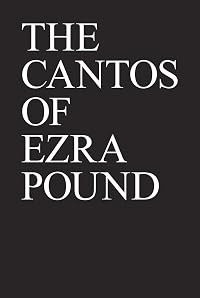
For this edition of one of the great landmarks in twentieth-century poetry two previously uncollected cantos have been added, and some passages from other cantos, omitted from earlier printings, restored to the text. The additional cantos, numbered LXXII and LXXIII, were written by Ezra Pound in Italian, during the collapse of Italy at the end of the war. They belong in the sequence between the John Adams and the Pisan cantos.Tags
Recommendations




Member Reviews
Phew. This is something. I feel like I've run a marathon.
This is a wholly absorbing set of poetry. Approximately 120 cantos which start off reminiscing about the Renaissance, going through all eras and ages of history, citing letters, missives, pamphlets, rages. History as poetry, a grand tour. Chinese characters, intricate, representing ideas and names and figures.
The chant, USURA, elicits rage and greed and war, and the titanic struggles against corruption and ideology which have consumed this past century and which still rage in this one.
As much I find Pound the man abhorrent and mad, but as for Pound the poet, he is a force. I will reread this.
This is a wholly absorbing set of poetry. Approximately 120 cantos which start off reminiscing about the Renaissance, going through all eras and ages of history, citing letters, missives, pamphlets, rages. History as poetry, a grand tour. Chinese characters, intricate, representing ideas and names and figures.
The chant, USURA, elicits rage and greed and war, and the titanic struggles against corruption and ideology which have consumed this past century and which still rage in this one.
As much I find Pound the man abhorrent and mad, but as for Pound the poet, he is a force. I will reread this.
Is it worth reading, or is it a load of horseshit?
Yes.
In my opinion there was a strong strain of horseshit in old Ez, and this is not just because he was at certain points of his life a lousy anti-Semite. When he bothered to leave his ear ON, he had one of the more exquisite ears of any poet; however, he often chose (at least to me it "feels like" he chose) to turn his ear OFF, and leave whatever poetry was coming out of him slathered with blubs and slubs of undigested ... stuff. And the stuff chokes out whatever music there might have been (no, I don't think all poetry has to strive for a quality of music, but ...). In The Cantos, this gets really bad in the "Adams" sections of the work.
More to come -- I'm going to start through this show more again soon. show less
Yes.
In my opinion there was a strong strain of horseshit in old Ez, and this is not just because he was at certain points of his life a lousy anti-Semite. When he bothered to leave his ear ON, he had one of the more exquisite ears of any poet; however, he often chose (at least to me it "feels like" he chose) to turn his ear OFF, and leave whatever poetry was coming out of him slathered with blubs and slubs of undigested ... stuff. And the stuff chokes out whatever music there might have been (no, I don't think all poetry has to strive for a quality of music, but ...). In The Cantos, this gets really bad in the "Adams" sections of the work.
More to come -- I'm going to start through this show more again soon. show less
Easily the most complicated poem I have ever read. Enjoyable but a guide is necessary to reading if you wish to maximize the experience. Very original and raw.
For all its maddening qualities, the foundation stone of modern American poetry. "These are the Alps. What is there to say about them?" (Bunting)
One of the inescapable works of the Twentieth Century, for all of its difficulty; it left poetry as a field permanently changed and enriched, even if Pound's own approach was so specific to himself that he has no true successors, but only a vast field of those whom he influenced.
How even approach this master work? From the SIDE, is the answer. Attempt a vertical reading. The Grandpa will brook no pussies. Be ready to not be ready. He WILL slay. It's absolutely worth the trouble, if you're interested in poems. If not, you're not needed.
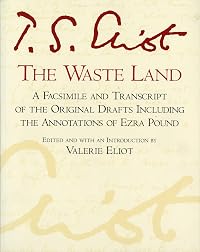
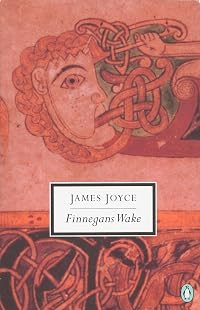
The Cantos. Ezra Pound. The very mention of those names send shudders down even the most well-read literary snob. T. S. Eliot’s “The Waste Land” seems like a small indentation in comparison. The only work with comparable difficulty and lit crit caché is Finnegans Wake by James Joyce. Reading these works carries along serious bragging rights. “I saw the new Terrance and Philip movie. Now who wants to touch me?” Eric Cartman said in the South Park movie.
Review continues here: http://driftlessareareview.wordpress.com/2009/06/08/the-cantos-by-ezra-pound-a-c...
Review continues here: http://driftlessareareview.wordpress.com/2009/06/08/the-cantos-by-ezra-pound-a-c...
Members
- Recently Added By
Lists

Philip Ward's Lifetime Reading Plan
592 works; 22 members

Harold Bloom - The Western Canon: D. The Chaotic Age
833 works; 24 members

Modernism
140 works; 9 members

Five star books
1,767 works; 110 members

1960s, Best books published therein
254 works; 22 members

Greatest Books, allegedly
484 works; 9 members

Recommended Reading : 600 Classics Reviewed, Editors of Salem Press, 2015
634 works; 6 members

Books talked about in Pamela Dean's Tam Lin
74 works; 1 member
Author Information

390+ Works 10,789 Members
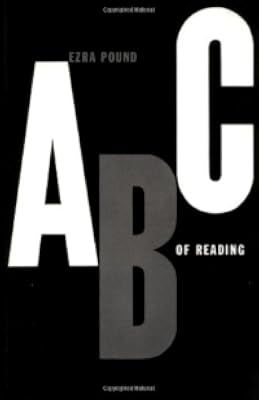
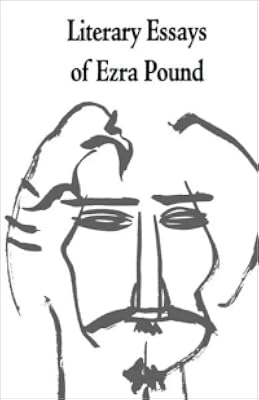
Ezra Pound, 1885-1972 Ezra Weston Loomis Pound ("Ezra Pound"), along with T. S. Eliot, was one of the two main influences on British and U.S. poetry between the two world wars. Pound was born in a small, two-storey house in Hailey, Idaho Territory on October 30, 1885. Between 1897 and 1900 Pound attended Cheltenham Military Academy, sometimes as a show more boarder, where he specialized in Latin. Pound graduated from the University of Pennsylvania and went abroad to live in 1908. The collection of his Letters, 1907--1941 revealed the great erudition of this most controversial expatriate poet. His first book, A Lume Spento, a small collection of poems, was published in Venice in 1908. With the publication of Personae in London in 1909, he became the leader of the imagists abroad. Pound's writings have been subject to many foreign influences. First he imitated the troubadours; then he came under the influence of the Chinese and Japanese poets. The Cantos (1925--60), his major work, to which he added for many years, is a mixture of modern colloquial language and classical quotation. The Pisan Cantos (1948), written during his imprisonment in Italy, is more autobiographical. Pound's prose, as well as his poetry, has been extremely influential. The Spirit of Romance (1910) is a revision of his studies of little-known romance writers. ABC of Reading (1934) is an exposition of his critical method. His critical writings include Literary Essays of Ezra Pound (1954), Instigations (1920), and Guide to Kulchur (1938). Pound was a linguist, whom Eliot called "the inventor of Chinese poetry for our time." His greatest translating achievements from Japanese, Chinese, Anglo-Saxon, Italian, Provencal, and French are collected in The Translations of Ezra Pound (1933). Among his other writings are Make It New: Essays; Jefferson and/or Mussolini, a discussion of American democracy and capitalism and fascism; and The Classic Noh Theatre of Japan, with Ernest Fenollosa. Living in Italy, Pound felt that some of the practices of Mussolini were in accord with the doctrines of social credit, in which he had become interested in the 1920s and 1930s. He espoused some of the general applications of fascism and also was a strong advocate of anti-Semitism. During World War II, he broadcast a pro-Fascist series of programs addressed to the Allied troops on Italian radio. Indicted for treason and brought to the United States to stand trial in 1946, he was judged mentally incompetent to prepare a defense and was committed to St. Elizabeth's Hospital in Washington, D.C. for over 12 years. After a concerted appeal to the federal government by American poets, led by Robert Frost, Pound was at last released in 1958 and returned to Italy. Pound died on November 1, 1972. (Bowker Author Biography) show less

Ezra Pound has a Legacy Library. Legacy libraries are the personal libraries of famous readers, entered by LibraryThing members from the Legacy Libraries group.
Some Editions
Awards and Honors
Series

Belongs to Publisher Series
Work Relationships
Contains
Has as a reference guide/companion
Has as a student's study guide
Common Knowledge
- Canonical title
- The Cantos of Ezra Pound
- Original publication date
- 1948; 1985
- Disambiguation notice
- Published 1975, contains Cantos 1-117, including 72 & 73. Do not combine with earlier, incomplete collections.
Classifications
Statistics
- Members
- 1,553
- Popularity
- 14,826
- Reviews
- 16
- Rating
- (3.94)
- Languages
- 6 — English, French, German, Italian, Portuguese, Spanish
- Media
- Paper
- ISBNs
- 20
- ASINs
- 12