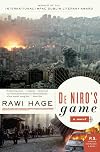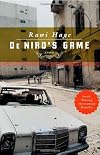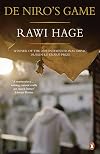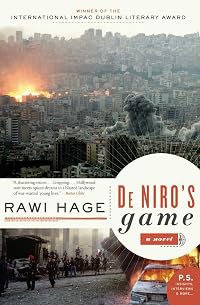
De Niro's Game
by Rawi Hage
On This Page
Description
There is but one truly serious philosophical problem, and that is suicide. In Rawi Hage's unforgettable novel, winner of the 2008 IMPAC Prize, this famous quote by Camus becomes a touchstone for two young men caught in Lebanon's civil war. Bassam and George are childhood best friends who have grown to adulthood in war torn Beirut. Now they must choose their futures: to stay in the city and consolidate power through crime; or to go into exile abroad, alienated from the only existence they show more have known. Bassam chooses one path: obsessed with leaving Beirut, he embarks on a series of petty crimes to finance his departure. Meanwhile, George builds his power in the underworld of the city and embraces a life of military service, crime for profit, killing, and drugs. Told in the voice of Bassam, De Niro's Game is a beautiful, explosive portrait of a contemporary young man shaped by a lifelong experience of war. Rawi Hage's brilliant style mimics a world gone mad: so smooth and apparently sane that its razor-sharp edges surprise and cut deeply. A powerful meditation on life and death in a war zone, and what comes after. show lessTags
Recommendations


















Member Recommendations
Member Reviews
I really liked Rawi Hage's 'De Niro's Game'. First off--it's got great tone.
Street level scenes of the 1982 Lebanese civil war as seen the eyes of one Bassan--who one might call a small time hood (or disaster capitalist--if one wants to look at my recent review of Naomi Klein's 'The shock doctrine--keeping in mind there's a great difference between small time and big time). He and his friend George (aka 'De Niro) are scamming the local slot machines from which the head of the local Chistian falange Abou-Nahra raises money to pay for the war against Muslims and communist/socialist factions. To be honest there is not a lot of difference to be found comparing Abou-Nahra to a Tony Soprano. Bassan and George see themselves kind of as free show more lancers but they have to tread very quietly when Abou-Nahra or his associaties are in the vicinity. But things eventually go wrong. George is pressured into joining Abou-Nahra's militia and Bassan is left to keep their business going only to find that the people holding up George's end are out to cheat him.
Having considered themselves brothers--a wedge is slowly being driven between George and Bassan--it's complicated by George's deliberately taking Bassan's girlfriend Rana's affections away and at the same time the friendship Bassan has with George's mother Nabila who helps Bassan out of a lot of jams--for instance Bassan is picked up by some of Abou-Nahra's men--interrogated and tortured for information about a Frenchman and his wife who he had been supplying with drugs--and Nabila eventually is the one who saves him. George disappears for a while--he goes to Israel to train with Israeli special forces--he comes back and takes part in the massacres of Palestinians in the Sabra and Shatilla refugee camps. He relates these events to Bassan--it's obvious at this point that their freindship is never going to be the same.
Bassan as well is suspect because he has an uncle who lives in East Beirut--among the Muslims--who is a communist. His existence threatened on more than one side--Nabila gives him a phone number for George's father living in Paris--he decides to leave Lebanon. Before that happens though one day George picks him up and they go for a ride. I'll leave the readers of this review to find out for themselves what happens that day.
The last part of the book describes his stay in France. George's father as it happens has died--his wife and George's half sister Rhea (who has never met George but very keen on it) however set him up in a hotel near their own apartments. There are some shady characters as well lurking around them--a French diplomat and a Mossad agent who had recruited George while he was in Israel but has lost contact and wants Bassan's help finding him. All this is not clear until the final pages--the use of blackmail and threats--in turn thwarted by Bassan's own history of violence and gun ownership.
De Niro's Game is very well paced, suspenseful, action packed and the characters are well drawn. Hage's portraits of their differentiating psycholoigies is astute. In a sense it depends on the linkage of small stories to tell a larger more complete one--and as well it also depends on the history of the Lebanese 1982 conflict. I thought it was excellent throughout and hopefully Hage will with time write more works of fiction. Anyway I'd highly recommend it. show less
Street level scenes of the 1982 Lebanese civil war as seen the eyes of one Bassan--who one might call a small time hood (or disaster capitalist--if one wants to look at my recent review of Naomi Klein's 'The shock doctrine--keeping in mind there's a great difference between small time and big time). He and his friend George (aka 'De Niro) are scamming the local slot machines from which the head of the local Chistian falange Abou-Nahra raises money to pay for the war against Muslims and communist/socialist factions. To be honest there is not a lot of difference to be found comparing Abou-Nahra to a Tony Soprano. Bassan and George see themselves kind of as free show more lancers but they have to tread very quietly when Abou-Nahra or his associaties are in the vicinity. But things eventually go wrong. George is pressured into joining Abou-Nahra's militia and Bassan is left to keep their business going only to find that the people holding up George's end are out to cheat him.
Having considered themselves brothers--a wedge is slowly being driven between George and Bassan--it's complicated by George's deliberately taking Bassan's girlfriend Rana's affections away and at the same time the friendship Bassan has with George's mother Nabila who helps Bassan out of a lot of jams--for instance Bassan is picked up by some of Abou-Nahra's men--interrogated and tortured for information about a Frenchman and his wife who he had been supplying with drugs--and Nabila eventually is the one who saves him. George disappears for a while--he goes to Israel to train with Israeli special forces--he comes back and takes part in the massacres of Palestinians in the Sabra and Shatilla refugee camps. He relates these events to Bassan--it's obvious at this point that their freindship is never going to be the same.
Bassan as well is suspect because he has an uncle who lives in East Beirut--among the Muslims--who is a communist. His existence threatened on more than one side--Nabila gives him a phone number for George's father living in Paris--he decides to leave Lebanon. Before that happens though one day George picks him up and they go for a ride. I'll leave the readers of this review to find out for themselves what happens that day.
The last part of the book describes his stay in France. George's father as it happens has died--his wife and George's half sister Rhea (who has never met George but very keen on it) however set him up in a hotel near their own apartments. There are some shady characters as well lurking around them--a French diplomat and a Mossad agent who had recruited George while he was in Israel but has lost contact and wants Bassan's help finding him. All this is not clear until the final pages--the use of blackmail and threats--in turn thwarted by Bassan's own history of violence and gun ownership.
De Niro's Game is very well paced, suspenseful, action packed and the characters are well drawn. Hage's portraits of their differentiating psycholoigies is astute. In a sense it depends on the linkage of small stories to tell a larger more complete one--and as well it also depends on the history of the Lebanese 1982 conflict. I thought it was excellent throughout and hopefully Hage will with time write more works of fiction. Anyway I'd highly recommend it. show less
I really, really wanted to like this book. Ever since I read the interview of the author in the Globe and Mail prior to the Gillers, it's been on my shortlist of books to read. So when Ibis3 offered it up I jumped at the chance. But (you knew there was going to be a but) I found Bassam an unlikeable character and I could not care about what was happening to him. Some would argue that he became the person he was because of the horrific experiences during the Lebanese civil war but my feeling, based upon incidents from his childhood that he narrated, was that he would have been a violent and manipulative adult anyway. Years ago I used to have to interview incarcerated criminals and what always struck me about them was that, when faced show more with a problem, their immediate solution was to commit a crime, either violent or property-based. And that's what I felt about Bassam. All kinds of people tried to help him but he always managed to drive them away.
In fact, about the only character I liked in the book was George's aunt Nabila. She genuinely seemed to care for George and Bassam without expecting anything in return. She should have been the one getting out of Beirut.
In a strange coincidence just as I was on my way to the computer to write this report, CBC led off its evening newscast with an article about the fighting in the Nahr el Bared camp. This quote from one of the militants in the camp shows that, even though the people and issues have changed, nothing is really different:
Meanwhile, Fatah Islam has continued to reject government calls for a surrender.
"This is not only impossible, this is unthinkable. Our blood is cheaper than handing over our weapons and surrendering," said Abu Hureira.
It's a sad commentary on life in the Middle East. show less
In fact, about the only character I liked in the book was George's aunt Nabila. She genuinely seemed to care for George and Bassam without expecting anything in return. She should have been the one getting out of Beirut.
In a strange coincidence just as I was on my way to the computer to write this report, CBC led off its evening newscast with an article about the fighting in the Nahr el Bared camp. This quote from one of the militants in the camp shows that, even though the people and issues have changed, nothing is really different:
Meanwhile, Fatah Islam has continued to reject government calls for a surrender.
"This is not only impossible, this is unthinkable. Our blood is cheaper than handing over our weapons and surrendering," said Abu Hureira.
It's a sad commentary on life in the Middle East. show less
De Niro's Story is the story of two childhood friends, now young men, who take different paths in the Lebanese Civil War. It's told from the viewpoint of one of the two, Bassam, in a spare prose laced with western pop culture references and a wonderful kind of urban verse.
Bombs fell, warriors fought, people ate, and the garbage piled up on the corners of our streets. Cats and Dogs were feasting and getting fatter. The rich were leaving or France and letting their dogs roam loose on the streets: orphan dogs, expensive dogs, potty-trained dogs, dogs with French names and red bowties, fluffy dogs, well-bred dogs, china dogs, genetically modified dogs, and incestuous dogs that clung to one another in packs, covered the streets in tens, show more and gathered under the command of a charismatic three-legged mutt. The most expensive pack of wild dogs roamed Beirut and the earth, and howled to the big moon, and ate from mountains of garbage on the corners of our streets. p. 31
The result is a unique voice and a mesmerizing tale of life in a war zone. show less
Bombs fell, warriors fought, people ate, and the garbage piled up on the corners of our streets. Cats and Dogs were feasting and getting fatter. The rich were leaving or France and letting their dogs roam loose on the streets: orphan dogs, expensive dogs, potty-trained dogs, dogs with French names and red bowties, fluffy dogs, well-bred dogs, china dogs, genetically modified dogs, and incestuous dogs that clung to one another in packs, covered the streets in tens, show more and gathered under the command of a charismatic three-legged mutt. The most expensive pack of wild dogs roamed Beirut and the earth, and howled to the big moon, and ate from mountains of garbage on the corners of our streets. p. 31
The result is a unique voice and a mesmerizing tale of life in a war zone. show less
Living in the Christian half of Beirut during the civil war, Bassam is a young man who has grown-up with random violence, adjusting to the loss of family and friends and developing a cynical, hard-boiled outlook on life.
Unlike his friend George, Bassam avoids the militias and as he gradually becomes more alone, losing the last of his family and girlfriend, he makes plans to get out of the country. Eventually a combination of small-time crimes and smuggling gives him enough funds to get himself onto a cargo ship heading for Marseille.
Just before his departure Bassam comes dangerously close to losing everything when he is picked up by the militia and accused of killing an old man. Inexplicably he is released and on the day that he is due show more to leave George picks him up and drives him to a deserted construction site. George seems to understand that Bassam is leaving and their waning friendship is over. He has orders to arrest him again, but first he wants a confessor for the terrible things he has seen and done. Initially it is unclear what transpires at his final meeting with George, but by the end of the book we understand.
Some of the descriptions of Beirut and the surrounding Lebanese countryside are oddly delicate amongst the brutal violence and the writing strikes a satisfying balance between the thriller elements and something more literary and intelligent. When Bassam reaches Paris and needs a book to read in his cheap hotel it is no surprise that the concierge digs out a copy of The Outsider for him. show less
Unlike his friend George, Bassam avoids the militias and as he gradually becomes more alone, losing the last of his family and girlfriend, he makes plans to get out of the country. Eventually a combination of small-time crimes and smuggling gives him enough funds to get himself onto a cargo ship heading for Marseille.
Just before his departure Bassam comes dangerously close to losing everything when he is picked up by the militia and accused of killing an old man. Inexplicably he is released and on the day that he is due show more to leave George picks him up and drives him to a deserted construction site. George seems to understand that Bassam is leaving and their waning friendship is over. He has orders to arrest him again, but first he wants a confessor for the terrible things he has seen and done. Initially it is unclear what transpires at his final meeting with George, but by the end of the book we understand.
Some of the descriptions of Beirut and the surrounding Lebanese countryside are oddly delicate amongst the brutal violence and the writing strikes a satisfying balance between the thriller elements and something more literary and intelligent. When Bassam reaches Paris and needs a book to read in his cheap hotel it is no surprise that the concierge digs out a copy of The Outsider for him. show less
“Ten thousand bombs had landed, and I was waiting for George.” At turns a truly brilliant debut novel, proving, as if anyone ever had any doubt, that 1980’s Beirut was a horrible place to grow up. Hage intermingles a hypnotic style of descriptive prose with his sharp, tense dialogues between George (or, DeNiro) & Bassam, best friends on very different life paths. As Bassam dreams of life away from Hell, George tries to “make the best of things” by embracing the brutality all around him. As a result, their friendship becomes more & more precarious as their city threatens to engulf them both into its frightening civil war. A stunning book.
Rawi Hage's first novel has received huge critical praise scooping a number of high profile literary prizes including 2008's IMPAC Dublin literary award. It is a narrative that follows the lives of two young Beiruti Christians, Bassam and George set during the early 1980s. Bassam the narrator describes them as '...aimless, beggars and thieves, horny Arabs with curly hair and open shirts and Marlboro packs rolled in our sleeves, dropouts, ruthless nihilists with guns, bad breath, and long American jeans'. As their city is divided and shelled they become sucked into the cycle of violence gripping Lebanon. Bassam dreams of escape while George begins to drift toward the militias. The prose is taut, economical and utterly compelling. The show more descriptions of two lives, their families and besieged communities stay with the reader like a dry and dusty thirst. It is a story that illustrates powerfully the physical and psychological damage endured by those surviving through conflict. show less
An entertaining read though the testosterone-fueled stream of consciousness passages seemed overly-embellished. What was most compelling for this reader was the portrayal of various characters' participation in the Lebanese civil war being motivated from personal loyalty or gain rather than ideological conviction, that many of the combatants were boys who fought with an attitude of nihilism rather than idealism.
Members
- Recently Added By
Lists

The Guardian's 1000 Novels Everyone Must Read
1,005 works; 548 members

The Best of Canadian Literature
235 works; 33 members

Best 21st Century Books (So Far)
670 works; 86 members
CBC Books - Canada's 100 (+ bonus 10): Which have you read?
110 works; 23 members

Books With a Twist
69 works; 46 members

Best of World Literature
434 works; 51 members
International IMPAC Dublin Literary Award
179 works; 6 members

Middle East Fiction
179 works; 16 members

Top 50 Favourite Books
50 works; 2 members

First Novels
373 works; 17 members

Arab and Arab Diaspora Literature We Recommend
112 works; 53 members
Author Information

8+ Works 1,363 Members
Some Editions
Awards and Honors
Awards
Common Knowledge
- Canonical title*
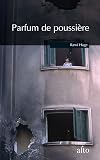
- Parfum de poussière
- Original title
- De Niro's Game
- Original publication date
- 2006
- Important places
- Beirut, Lebanon; Paris, France
- Epigraph
- "And the breadth shall be ten thousand."
--The Book of the Prophet Ezekiel
"How, from a fire that never sinks or sets, would you escape?"
--Heraclitus
"Moi, j'ai les mains sales. Jusqu'aux coudes. Je les ai plongées dans la merde et dans le sang."
--Jean-Paul Sartre - Dedication*
- For my parents.
- First words
- Ten thousand bombs had landed, and I was waiting for George.
- Last words
- (Click to show. Warning: May contain spoilers.)Roma, I said. Roma.
- Blurbers
- Atom Egoyan
*Some information comes from Common Knowledge in other languages. Click "Edit" for more information.
Classifications
Statistics
- Members
- 650
- Popularity
- 44,469
- Reviews
- 28
- Rating
- (3.54)
- Languages
- 13 — Catalan, Danish, Dutch, English, Estonian, Finnish, French, German, Greek, Italian, Norwegian (Bokmål), Spanish, Turkish
- Media
- Paper, Audiobook, Ebook
- ISBNs
- 45
- ASINs
- 7