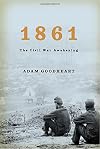
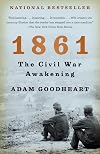
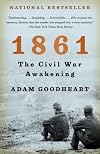
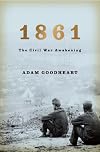
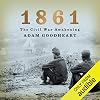
1861: The Civil War Awakening
by Adam Goodheart
On This Page
Description
As the United States marks the 150th anniversary of our defining national drama, historian Adam Goodheart presents an original account of how the Civil War began. 1861 is an epic of courage and heroism beyond the battlefields. Early in that fateful year, a second American revolution unfolded, inspiring a new generation to reject their parents' faith in compromise and appeasement, to do the unthinkable in the name of an ideal. It set Abraham Lincoln on the path to greatness and millions of show more slaves on the road to freedom. Goodheart takes us from the corridors of the White House to the slums of Manhattan, from the mouth of the Chesapeake to the deserts of Nevada, from Boston Common to Alcatraz Island, vividly evoking the Union at this moment of ultimate crisis and decision.--From publisher description. show lessTags
Recommendations











Member Reviews
Last month I started reading "Storm Over the Land," by Carl Sandburg, and realized I didn't remember enough about the actual events of the Civil War -- not the general gist but the specific timeline -- to enjoy Sandburg's lyrical, poetic account, billed as "a profile of the Civil War." It glances at many events, or makes quick references to people, and I knew I was missing out because I didn't really know what those events and people were, aside from generally knowing they were Civil War-y. (It's like reading Thomas Carlisle on the French Revolution, which he wrote while events were still so fresh in everyone's minds that he could namedrop.)
So I took some advice from Lisa Bu's TED Talk, and found a second book to pair with it.
And so show more far, "1861" is everything I wanted. It contains lots of facts, a good plain explanation of events, but it's also beautifully written and surprising on every page.
What I can't get enough of, what just continually blows my mind, is how desperate the South was (and some of the North) to keep slavery alive. In the book, I'm just to the point of the Crittenden Compromise and the proposed Corwin amendment to the constitution. It's astonishing to think as a country how close we were to not only preserving but encouraging human slavery, and what "1861" does well is help you see how truly not-that-long-ago that happened, and how very like us the people were who almost pulled it off. It's amazing to think we have photographs, not woodcuts or paintings but photos, of people who advocated for human slavery on the floor of the US Congress. show less
So I took some advice from Lisa Bu's TED Talk, and found a second book to pair with it.
And so show more far, "1861" is everything I wanted. It contains lots of facts, a good plain explanation of events, but it's also beautifully written and surprising on every page.
What I can't get enough of, what just continually blows my mind, is how desperate the South was (and some of the North) to keep slavery alive. In the book, I'm just to the point of the Crittenden Compromise and the proposed Corwin amendment to the constitution. It's astonishing to think as a country how close we were to not only preserving but encouraging human slavery, and what "1861" does well is help you see how truly not-that-long-ago that happened, and how very like us the people were who almost pulled it off. It's amazing to think we have photographs, not woodcuts or paintings but photos, of people who advocated for human slavery on the floor of the US Congress. show less
Fabulous writing. I loved the way he makes the era come alive, by focusing on the thoughts of normal people. You really get the sense of the Civil War being a second American revolution. Highly recommended. Wish I had several more like it.
Adam Goodheart's series of vignettes covering various stories of mostly "supporting" actors in the drama of 1861 from the aftermath of Lincoln's election up to the Battle of Bull Run is well executed and was a pleasure to read. Each chapter could stand on its own but covers every section of the country, blacks as well as whites, women as well men, and of course Northerners of various political opinions and Southerners including some notorious fire-eaters. Without going into detail about each chapter I will only call out the fact that the first people who were "woke" in our history were apparently the self-described "Wide Awakes", a collection of white males who originated in Hartford, CT and spread throughout the North to advocate for show more resistance to the "slave power". When you read this book and you should read it, don't skip the PostScript. show less
What were Americans—Southern, Northern, Western, white, black—thinking at the outset of the Civil War? What made large numbers of Northerners willing to fight to keep the South in the Union, and eventually to get rid of slavery (as patchy and incomplete as that willingness was)? Goodheart argues that, while there is no doubt as to the right and wrong sides in the war, the standard narrative in which the South triggered the war downplays the agency of those in the North. He packs his account of that year with lots of physical details, from the sound of gunfire to the smell of shit in the Capitol where early troops were housed before better accommodations were found. It was hard not to read this history of the growth of apocalyptic show more thinking and the abandonment of compromise in the face of a Southern intransigience that seemingly wouldn’t be appeased by anything short of begging for forgiveness for electing Lincoln and letting slavery become universal as saying something about the Tea Party/the current role of the white South in our national war of all against all. show less
excellent. If you think that history is dry, stuffy or boring, you need to read this book!
Wonderful prose that pulls you along. Non-fiction page turner.
Well thought out. Amazing how he avoids looking at the period and that year in the context of the outcome four years later, showing the fullest range of opinions and attitudes to the various issues: race relations, human rights, constitutional law, federal law, religion. Full of biographical detail that gives depth to the issues. covers technological changes in mass media that effected public opinion in a way I had not read about before.
Wonderful prose that pulls you along. Non-fiction page turner.
Well thought out. Amazing how he avoids looking at the period and that year in the context of the outcome four years later, showing the fullest range of opinions and attitudes to the various issues: race relations, human rights, constitutional law, federal law, religion. Full of biographical detail that gives depth to the issues. covers technological changes in mass media that effected public opinion in a way I had not read about before.
Terrific new book on the events of the earliest phase of the Civil War (the last few months before it began, and the first few months thereafter) which deserves the critical praise that's been heaped upon it. It takes an unusual slant on Civil War history, focusing on popular movements and popular heroes of the day, not on the usual parade of generals and battles. This doesn't preclude a lot of attention to key figures, most notably Abraham Lincoln, whose development in the months in question is central to the book. (Goodheart also focusses on other lesser know actors on the Civil War stage whose deeds and words make fascinating reading -- particularly the irrepressible Ben Butler, a.k.a "Beast".)
The book is vividly written, full of show more color and emotion, in strong contrast to many other valuable works of history. But it is also meticulously footnoted: I'm not a scholar, but it seems eminently scholarly to me. It also has a compelling narrative drive. In his first chapter, the author says that "I wanted to learn more about how Americans -- both ordinary citizens and national leaders -- experienced and responded to a moment of sudden crisis and change as it unfolded". He communicates those experiences and responses as they happened, not as they look through the backward looking lens of history. But the reader does know what will happen -- a tension that produces narrative drive.
I very much enjoyed reading this book, and I learned a lot from it. Most important, it underlined for me the fact that the war really was about slavery, on both sides of the battlefronts. In the North, that became clearer as the war raged on, but the roots of an anti-slavery commitment were there in 1861, as Goodheart makes clear. As we enter the 150th anniversary of the Civil War, however, it's important to remember what happened after it ended, as well as how it began. A sad counterpoint to "1861" is provided by Nicholas Lemann's "Redemption", which shows how the whites took back power in Mississippi in 1875, an event which was shortly repeated across the South. The war did end slavery, but the other two grand promises that it achieved -- 14th and 15th amendments -- were still unfulfilled 100 years after the War ended. Indeed, many would question whether or not they have been fulfilled today. show less
The book is vividly written, full of show more color and emotion, in strong contrast to many other valuable works of history. But it is also meticulously footnoted: I'm not a scholar, but it seems eminently scholarly to me. It also has a compelling narrative drive. In his first chapter, the author says that "I wanted to learn more about how Americans -- both ordinary citizens and national leaders -- experienced and responded to a moment of sudden crisis and change as it unfolded". He communicates those experiences and responses as they happened, not as they look through the backward looking lens of history. But the reader does know what will happen -- a tension that produces narrative drive.
I very much enjoyed reading this book, and I learned a lot from it. Most important, it underlined for me the fact that the war really was about slavery, on both sides of the battlefronts. In the North, that became clearer as the war raged on, but the roots of an anti-slavery commitment were there in 1861, as Goodheart makes clear. As we enter the 150th anniversary of the Civil War, however, it's important to remember what happened after it ended, as well as how it began. A sad counterpoint to "1861" is provided by Nicholas Lemann's "Redemption", which shows how the whites took back power in Mississippi in 1875, an event which was shortly repeated across the South. The war did end slavery, but the other two grand promises that it achieved -- 14th and 15th amendments -- were still unfulfilled 100 years after the War ended. Indeed, many would question whether or not they have been fulfilled today. show less
Recommendation: If you have already read Bruce Catton, Shelby Foote or any of the other major chroniclers of the Civil War and are looking for a different perspective this is the book for you. If you are just starting out it will have less resonance, read Catton first and come back to this later to get the most out of it.
Quick Take: Really solid in-depth exposure the causes and perspectives of the American Civil War. Presents some interesting perspectives for anyone interested in the emotional aspects of why Northerners ardently accepted war against their own fellow citizens.
I was really not that interested in this book to begin with as I had just finished the Bruce Catton trilogy and a book on reconstruction. Also having already read a show more multitude of books on the Civil War over the years - including the Shelby Foote trilogy, Shaara's "The Killer Angels", several Catton volumes and biographies on each of the major participants, I really didn't want another rehash of the causes of the war and especially not another rehash of why Lincoln was unsure or how Buchanan's cabinet was corrupt.
I need not have worried. Goodheart's excellently researched book asks interesting questions, adds a great deal of nuance and even manages to shed some light on things that Catton and others have passed over. The exposure of all this is done by asking relatively simple questions. "How does a nation of real people go from a relatively peaceful state to a willingness to engage in bloody civil war in just a short matter of time? What changed within the minds of individuals, never mind the political and military figures, that allowed for this to happen?"
In answering his questions the author exposes in greater detail than I have seen elsewhere the responses, motivations and actions of several lesser known characters in the drama that unfolded. His delineations of the character and outlook of Elmer Ellsworth, Benjamin Butler and Major Robert Anderson are insightful and well researched. They add the color that turns the historical work into something with the feel of a novel. While not a page turner the revelations make for interesting reading and the work moves along at a brisk pace. His somewhat sympathetic portrayal of Butler is particularly interesting, a controversial character that played a much larger role (both good and bad) in how the war played out.
Another aspect that is well dealt with is the overall impact and role of emancipation, while not an original argument the author does accept that slavery was the major motivation for the war and that despite both sides denials in the end it explains a good portion of why the war had to happen. Overall an excellent overview of the opening of the Civil War, albeit primarily from a Northern perspective and yes despite my misgivings he does explain that Buchanan's Cabinet was corrupt. This, in the end, is particularly relevant since there currently seems to be a push to re-invent Buchanan as a less inept figure in the contemporary perspective. Also recommended for anyone who is interested in this pivotal time in American History that wants to understand some of the sideshow aspects of the war's opening. I doubt there is anyone who can read the Elmer Ellsworth story and not shake their head in wonder at how it all played out. show less
Quick Take: Really solid in-depth exposure the causes and perspectives of the American Civil War. Presents some interesting perspectives for anyone interested in the emotional aspects of why Northerners ardently accepted war against their own fellow citizens.
I was really not that interested in this book to begin with as I had just finished the Bruce Catton trilogy and a book on reconstruction. Also having already read a show more multitude of books on the Civil War over the years - including the Shelby Foote trilogy, Shaara's "The Killer Angels", several Catton volumes and biographies on each of the major participants, I really didn't want another rehash of the causes of the war and especially not another rehash of why Lincoln was unsure or how Buchanan's cabinet was corrupt.
I need not have worried. Goodheart's excellently researched book asks interesting questions, adds a great deal of nuance and even manages to shed some light on things that Catton and others have passed over. The exposure of all this is done by asking relatively simple questions. "How does a nation of real people go from a relatively peaceful state to a willingness to engage in bloody civil war in just a short matter of time? What changed within the minds of individuals, never mind the political and military figures, that allowed for this to happen?"
In answering his questions the author exposes in greater detail than I have seen elsewhere the responses, motivations and actions of several lesser known characters in the drama that unfolded. His delineations of the character and outlook of Elmer Ellsworth, Benjamin Butler and Major Robert Anderson are insightful and well researched. They add the color that turns the historical work into something with the feel of a novel. While not a page turner the revelations make for interesting reading and the work moves along at a brisk pace. His somewhat sympathetic portrayal of Butler is particularly interesting, a controversial character that played a much larger role (both good and bad) in how the war played out.
Another aspect that is well dealt with is the overall impact and role of emancipation, while not an original argument the author does accept that slavery was the major motivation for the war and that despite both sides denials in the end it explains a good portion of why the war had to happen. Overall an excellent overview of the opening of the Civil War, albeit primarily from a Northern perspective and yes despite my misgivings he does explain that Buchanan's Cabinet was corrupt. This, in the end, is particularly relevant since there currently seems to be a push to re-invent Buchanan as a less inept figure in the contemporary perspective. Also recommended for anyone who is interested in this pivotal time in American History that wants to understand some of the sideshow aspects of the war's opening. I doubt there is anyone who can read the Elmer Ellsworth story and not shake their head in wonder at how it all played out. show less
Members
- Recently Added By
Published Reviews
ThingScore 88
150 years after the surrender of Fort Sumter, the journalist, travel writer and historian Adam Goodheart has let loose his own salvo in what will be a four-year firestorm of books commemorating the Civil War. Many good studies about the struggle will be published, but few will be as exhilarating as “1861: The Civil War Awakening.”
added by Shortride
"Slated for release in conjunction with the sesquicentennial of the Battle of Fort Sumter, 1861 is essential reading for those who wish to learn more about the Civil War’s crucial first months."
added by bookfitz
Lists

r/AskHistorians' Recommended Books
1,068 works; 19 members

What A Year: Books titled with a particular year
147 works; 2 members
Author Information

4+ Works 972 Members
Awards and Honors
Awards
Distinctions
Common Knowledge
- Original title
- 1861: The Civil War Awakening
- Original publication date
- 2011-04-05
- People/Characters
- Abraham Lincoln; James Buchanan; Robert Anderson; Thomas Hart Benton; Benjamin Franklin Butler
- Important places
- Fort Sumter, Charleston Harbor, South Carolina, USA; Capitol Building, Washington, D.C., USA; Charleston, South Carolina, USA
- Important events
- American Civil War (1861 | 1865); Compromise of 1850 (1850); Dred Scott Decision (1857); United States presidential election (1860); Assassination of Abraham Lincoln (1865-04); Republican National Convention (1860) (show all 7); Crittenden Compromise
- Epigraph
- It seems as if we were never alive till now; never had a country till now. -A young woman in New York writing to a friend, May 1861
- Dedication
- For my family / and in memory of / Rose Sudman Goodheart (Teleneshty, Russian Empire, 1905 - Philadelphia, Pennsylvania, 1997), / who made America's history ours, too.
- First words
- (Prologue) Night fell at last.
On a fine afternoon in the lst autumn of the old republic, an ancient man stepped haltingly onto the platform of the Boston & Maine Railroad depot and peered about him with watery eyes. - Last words
- (Click to show. Warning: May contain spoilers.)And then it was gone, continuing on its own mysterious errand toward some incalculable future rendezvous, beyond human sight.
(Click to show. Warning: May contain spoilers.)(Postscripts) Shepard Mallory last appears in the census records in 1920, aged about eighty and still working, self-employed. - Blurbers
- Horwitz, Tony; Holzer, Harold; Cramer, Richard Ben; Fadiman, Anne; Winik, Jay; McPherson, James M.
- Canonical DDC/MDS
- 973.711
- Canonical LCC
- E459
Classifications
- Genres
- History, Nonfiction, General Nonfiction
- DDC/MDS
- 973.711 — History & geography History of North America United States Civil War Era (1857-1865) James Buchanan (1857-1861) Causes
- LCC
- E459 — History of the United States United States Civil War period, 1861-1865 Lincoln's administrations, 1861-April 15, 1865
- BISAC
Statistics
- Members
- 917
- Popularity
- 29,224
- Reviews
- 30
- Rating
- (4.13)
- Languages
- English
- Media
- Paper, Audiobook, Ebook
- ISBNs
- 10
- ASINs
- 8