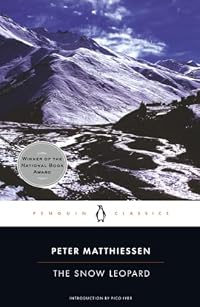
The Snow Leopard
by Peter Matthiessen
On This Page
Description
In 1973, Peter Matthiessen and field biologist George Schaller traveled high into the remote mountains of Nepal to study the Himalayan blue sheep and possibly glimpse the rare and beautiful snow leopard. Matthiessen, a student of Zen Buddhism, was also on a spiritual quest to find the Lama of Shey at the ancient shrine on Crystal Mountain. As the climb proceeds, Matthiessen charts his inner path as well as his outer one, with a deepening Buddhist understanding of reality, suffering, show more impermanence, and beauty. -- From book. show lessTags
Recommendations









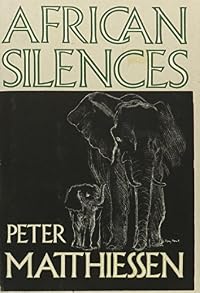
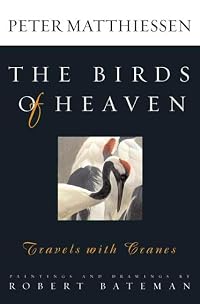
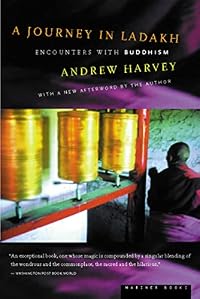


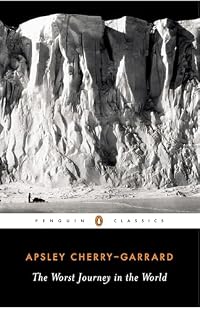












Member Recommendations
Cecrow His wife's work, quoted from.
Member Reviews
Still haunting. I was somewhere under the Pacific when I first read this penultimate line:
"The path I followed breathlessly has faded among the stones; in spiritual ambition, I have neglected my children and done myself harm, and there is no way back. Nor has anything changed; I am still beset by the same old lusts and ego and emotions, the endless nagging details and irritations - that aching gap between what I know and what I am."
(257-258 of the Folio edition)
I shuddered reading that the first time as a single unattached 25 year-old. Now, twenty years on, it echoes still. I can't imagine that voyage after the death of a partner leaving the children for others to manage for months on end.
An immensely powerful book, perhaps in my show more lifetime top ten. Read it. show less
"The path I followed breathlessly has faded among the stones; in spiritual ambition, I have neglected my children and done myself harm, and there is no way back. Nor has anything changed; I am still beset by the same old lusts and ego and emotions, the endless nagging details and irritations - that aching gap between what I know and what I am."
(257-258 of the Folio edition)
I shuddered reading that the first time as a single unattached 25 year-old. Now, twenty years on, it echoes still. I can't imagine that voyage after the death of a partner leaving the children for others to manage for months on end.
An immensely powerful book, perhaps in my show more lifetime top ten. Read it. show less
The Himalayas (a name composed of "alaya" meaning home, and "hima" meaning snow) are a wonder to anyone's imagination, conjuring up images of monks inhabiting lofty peaks and mountain climbers attempting the same. In 1973, about a year after his wife's death of cancer, Peter Matthiessen accepted his friend George Schaller's invitation to venture into this area on foot. It becomes an inner journey as much as an outer one, with frequent asides to describe Buddhist lore. The sighting of a snow leopard is never the journey's goal, only a metaphor for seeking something just as elusive: a glimpse of the connection between inner self and the Great Unknown.
I was deeply impressed by Matthiessen's full portrayals of their porters and especially show more of his sherpas. They are all realized in these pages as distinct people and personalities, not just the nameless help. Some of the hazards they encounter together can be anticipated - landslides obscuring the trail, snow and cold, inclement weather, reluctant porters - but others like the dogs are more surprising. There is an entire zoo of unfamiliar animals and birds that I was compelled to google: the tahr and the bharal, the hoopoe, the accipiter, and the claterynge of chough.
Fifty years ago Mathiesson was worried about animal extinction, shrinking forests and erosion. He made predictions about the wilderness disappearing, grousing at the intrusions of men. Google maps shows a highway has since been forged along valleys he hiked on foot, and the once-tiny village of Kusma is now thriving with tourist trade as it features the highest rope bridge in Nepal. Even remote Shey now receives frequent visitors. Much has been tamed and something was lost in the process. Only through Matthiessen can it still be recaptured. show less
I was deeply impressed by Matthiessen's full portrayals of their porters and especially show more of his sherpas. They are all realized in these pages as distinct people and personalities, not just the nameless help. Some of the hazards they encounter together can be anticipated - landslides obscuring the trail, snow and cold, inclement weather, reluctant porters - but others like the dogs are more surprising. There is an entire zoo of unfamiliar animals and birds that I was compelled to google: the tahr and the bharal, the hoopoe, the accipiter, and the claterynge of chough.
Fifty years ago Mathiesson was worried about animal extinction, shrinking forests and erosion. He made predictions about the wilderness disappearing, grousing at the intrusions of men. Google maps shows a highway has since been forged along valleys he hiked on foot, and the once-tiny village of Kusma is now thriving with tourist trade as it features the highest rope bridge in Nepal. Even remote Shey now receives frequent visitors. Much has been tamed and something was lost in the process. Only through Matthiessen can it still be recaptured. show less
The Snow Leopard tells the story of a very long and very hard walk that writer Peter Matthiessen took in the fall of 1973. The journey was hard for at least two reasons. Most transparently, the author spent two months trekking through the Himalayan mountains of Nepal at elevations exceeding 15,000 feet with the famed naturalist George Schaller, who was there to study the mating habits of the indigenous bharal blue sheep. But the more subtle challenge of the trip was the spiritual quest that Matthiessen, a practicing Zen Buddhist, found himself on following the recent and untimely death of his wife. Along the way, the two men focus much of their energies on catching a glimpse of a snow leopard, an animal so elusive at that point in time show more that only a few visitors to the region had ever seen one in the wild. For the author, this unrequited effort becomes a perfect metaphor for the search for enlightenment and inner peace that he seemed quite desperate to attain.
I had a decidedly mixed reaction to reading this book, which is composed as an extended daily journal of the entire trip. On one hand, it is extraordinarily well written. Matthiessen was a truly gifted scribe of the natural world and his closely observed account of all that he saw and experienced along the arduous route pulled the reader in right along with him. However, I also found the whole trip to be so highly self-indulgent as to be more than a little off-putting. To make the journey, for instance, the author left his young son—who undoubtedly was also grieving the loss of a mother—at home in tears and broke a promise to return for the holidays. Further, many of Matthiessen’s actions on the trek were boorish and inconsistent with the philosophy of living he espouses in ponderous detail throughout the book (e.g., he is frequently cross with the hired staff and the people he meets along the way and, at one point, even urinates on a dog whose barking disturbed his sleep—really, who does something like that?) On balance, then, I found this to be a travel narrative that promised a little more than it was able to deliver. show less
I had a decidedly mixed reaction to reading this book, which is composed as an extended daily journal of the entire trip. On one hand, it is extraordinarily well written. Matthiessen was a truly gifted scribe of the natural world and his closely observed account of all that he saw and experienced along the arduous route pulled the reader in right along with him. However, I also found the whole trip to be so highly self-indulgent as to be more than a little off-putting. To make the journey, for instance, the author left his young son—who undoubtedly was also grieving the loss of a mother—at home in tears and broke a promise to return for the holidays. Further, many of Matthiessen’s actions on the trek were boorish and inconsistent with the philosophy of living he espouses in ponderous detail throughout the book (e.g., he is frequently cross with the hired staff and the people he meets along the way and, at one point, even urinates on a dog whose barking disturbed his sleep—really, who does something like that?) On balance, then, I found this to be a travel narrative that promised a little more than it was able to deliver. show less
Far away eastward, far below, the Marsa River opens out into Lake Phewa, near Pokhara, which glints in the sunset of the foothills. There are no roads west of Pokhara, which is the last outpost of the modern world; in one day’s walk, we are a century away.
After a few aborted attempts to read Peter Matthiessen’s’ most popular ‘The Snow Leopard’, the lock-down gave me at last the time and space needed to join the famous author-adventurer-conservationist on his trek into the thin air of the Tibetan mountain-range.
In the last months of 1973, Matthiessen teamed up with the legendary naturalist George Schaller for a trip to the Dolpa region in western Nepal. The reason for the expedition was that Schaller wanted to study the Bharal, show more the Himalayan Blue sheep. His intention was to find out if the animal was more a goat than a sheep. Or if it was someting different altogether, a proto-sheep or a proto-goat, a common ancestor to both. The lama (Spiritual Master) of the Shey gompa (monastery) had in the past, and in his capra-philic wisdom, protected these beautiful animals. The result was that the Bharal were still very abundant in the wider area around the Gompa. And this in turn attracted wolves and even the elusive and therefore mythical snow leopard.
While the study of the sheepish goats would not offer sufficient attraction to an adventurer, such as Matthiessen, the long walk in fact offered many more excitements. The hope of glimpsing the Snow Leopard, this near mythic beast, was reason enough for the entire journey. But, even if that was very unlikely, the journey would still unwind along such wonders as the Blue Lake, the Saldang, the Crystal mountain and the Shey Phoksundo. For Matthiessen, a keen student of Zen, it would also allow him to practice his new acquired knowledge in the very environment where Buddhism had its cradle. It would even allow him to personally meet a famous Lama. Matthiessen from the start understood that he had embarked on a true pilgrimage, a journey of the heart.
The book ‘The Snow Leopard' recounts, in the form of a realistic travelling journal (with dates, maps and all), the long walk, Peter Matthiessen undertook, towards the Tibetan monastery hidden high up in the Himalayan Mountain range. It is a faithful recollection of the three-month tour, a genuine Himalayan expedition with Sherpa’s, carriers, yaks and all. The long trek, in a snowy, cold and unforgiving mountainous area has its hidden and not so hidden dangers. The travelers are mentally and physically challenged to the extreme and find themselves more than once on the brink of life threatening situations. But the book is more than just a description of an arduous trek. Matthiessen elegantly mixes the journal entries of the expedition’s progress with digressions on what preoccupies his mind and lyrical descriptions of a sublime nature.
The long and lonely walks on the interminable paths leading around and finally up the mountain liberate the mind for long bouts of introspections. Mentally, Matthiessen was not in the best of shapes for such a trip. Feelings of guilt, sadness and uselessness seep into his mind as he grows tired and encounters more and more obstacles on his way. Confronted with the overwhelming sublime vistas of the mountain range, emotions wash over him and bring him to tears. A year earlier Matthiessen lost his second wife to cancer. Memories of her last days grieve him and feelings of guilt of leaving his orphaned children behind constantly besiege him. Like anyone who has chosen to live an independent life, it comes at the cost of doubts and remorse.
Matthiessen who is a Zen apprentice, constantly switches, whenever possible, to his concentration, introspection and Shikantaza exercises. He commits his feelings and doings unadorned to the pages and from all this honest introspection and self-explaining rambling appears a real man of life and blood. And maybe it is all a bit too honest. The narrator at times comes over as arrogant, egotistical and impatient with the ways of the locals. He is aware of it though and writes down how he regrets it. Matthiessen can never entirely shed his American-Ivy League upbringings. He likes to indulge in the ways of the locals but when confronted with their dangerous or unhealthy lives he turns away in a reflex of self-protection. In the preparation of his earlier book, Far Tortuga, he joined a crew of fisherman but when he experiences their true living conditions, he bails out without finishing the voyage. In the Snow Leopard, on his way back, he constantly outdistances his travelling companions (who carry his stuff) in an impatient grumbling pace. At each camp-fire he then regrets his attitude. One cannot but compare it to Eric Newby’s attitude to the locals in the Hindu Kush. How more humane, with its mix of mock-attitude and self-depreciation.
Matthiessen, an ecologist, is mostly interested in nature and wildlife around him. The writer has but a mere descriptive eye for the man-made wonders he sees; when he visits for example the age-old monastery lost between the peaks of the mountain range...
Then he (The Lama) enters the little prayer room that looks out over the snows through its bright blue window. On the walls of the prayer room hang two fine thangkas, or cloth paintings, and the altar wall has figures in both brass and bronze of Karma-pa, the founder of this subsect, (…). On both sides are shelves of ancient scrolls, or ‘books’, as well as thangkas (the old thangkas on the wall are in poor repair, and these rolled-up ones must be even more decrepit). The walls all around are crowded with frescoes and religious paintings, and each corner is cluttered with old treasures, all but lost in musty darkness.
It is a pity. One can only regret that Robert Byron, Chatwin or Norman Douglas are not around to elaborate further and illuminate us with their comments on the architecture of the impressive shey’s and the significance of the old thangkas displayed in the decrepit vaults of the ancient monasteries and anchoretic dungeons.
Matthiessen regularly interrupts the narration of his progress, to tell us about his experimentations with hallucinogens, the story of Siddhartha, how Asian cosmology compares with the findings of ‘modern’ physics and so on. Together with the Kathmandu scenery (his second visit) the book is basically a wrap-up of all the subjects an entire generation of hippy youth gobbled up in the last ten years preceding this book. Rather than giving the book a generous and nostalgic gloss fifty years later, one must conclude that the Snow Leopard, despite its scope, has not aged very well on all levels. At times, it is a bit boring. I suspect the Snow Leopard is one of those cult books that, in the words of journalist H. Anderson, lost their Cool’.
Matthiessen belongs to that post-war generation of writers - adventurers - discoverers who through their books, and to finance their lifestyle, contributed to open a pristine world to a larger public. They are then surprised and lament that the vanguard of encroaching commercial tribes and their reader-adepts following in their wake have destroyed the very wonders they described. They then turn into fierce environmentalist and defenders of the local communities and set-up half efficient organizations to protect what is been destroyed. Alas, all is business. And the Shey Phoksundo National Park, so magisterially described, is no exception. The internet shows that we now can book Snow leopard tours and Matthiessen tours to follow on the steps of the famous writer. Rafting those wild rivers is an option and bungee jumping over the Bhote Koshi River is a must. Matthiessen's son has lately reenacted with his father erstwhile companion Schaller, the trip all over again, walking in his dad's steps. His introduction contributes to the marketing of the Folio society’s beautiful edition of The Snow Leopard, including Schaller's original pictures. Images that are scandalously missing in my first signed edition.
As said Matthiessen is most entertaining when he describes wildlife around him. The shape of the valleys and mountains create natural amphitheater that allows a wide theatrical overview of the surrounding valleys and mounts. Matthiessen and Schaller can follow a flock of Bharal’s chased by a pack of wolves and cheer when an animal is caught or escapes by daring jumps. Schaller confesses that he has never been able to follow so well an entire chase in his long career.
We suspect that the writer is motivated by more than mere scientific interest, when he describes the kinky rutting behavior of the sporting blue sheep: male mounting male, dipping their snouts in the urine streams of the females. Both Matthiessen and Schaller exult whenever there is another ‘beautiful’ penis - lick.
There are a few true nuggets of amused wonder to be found among the 340 pages of the book.
The Nepal government takes yeti seriously, and there is a strict law against killing them. But one of the Arun Valley scientists has a permit to collect one of these creatures, and I asked him what he would do if, one fine morning, a yeti presented itself within fair range; it seemed to me that this decision should not wait for the event. The biologist was unsettled by the question; he had not made this hard decision, or if he had, was not at peace with it.
Cut away in Matthiessen book a few of his introspective ramblings and you are left with a wonderfully narrated voyage in the most sublime environments this planet can show. Fortunately for the reader, the overwhelming beauty abounds in 'The Snow Leopard’. The descriptions of the beautiful vistas, the gorgeous natural phenomenon’s and the animal sightings take the overhand from the introspective brooding in the second part of the book. The writing is beautiful too. Matthiessen’s Zen stuff works like John Ruskin’s ‘drawing advice’; to make one stop the time and take in the details’. Matthiessens exercises help him to 'see the world more clearly and to live with a deeper dense of presence’. This and the wonderful trip he does (and of which we are a bit jealous) remains the major attraction of the book. It is not likely to disappear soon.
The trail follows the south bank of the Ghustang, a wild torrent off the Dhaulagiri glacier that cascades down over the rust-colored boulders through a forest of great evergreens, merging farther to the west with the Uttar Ganga and the lower Bheri. Where bamboo appears, four thousand feet below our Dhaulagiri camp, a log bridge crosses the torrent and a trail climbs an open, grassy slope of stolid oaks and lithe wild olives that dance in the silver breeze of the afternoon. show less
After a few aborted attempts to read Peter Matthiessen’s’ most popular ‘The Snow Leopard’, the lock-down gave me at last the time and space needed to join the famous author-adventurer-conservationist on his trek into the thin air of the Tibetan mountain-range.
In the last months of 1973, Matthiessen teamed up with the legendary naturalist George Schaller for a trip to the Dolpa region in western Nepal. The reason for the expedition was that Schaller wanted to study the Bharal, show more the Himalayan Blue sheep. His intention was to find out if the animal was more a goat than a sheep. Or if it was someting different altogether, a proto-sheep or a proto-goat, a common ancestor to both. The lama (Spiritual Master) of the Shey gompa (monastery) had in the past, and in his capra-philic wisdom, protected these beautiful animals. The result was that the Bharal were still very abundant in the wider area around the Gompa. And this in turn attracted wolves and even the elusive and therefore mythical snow leopard.
While the study of the sheepish goats would not offer sufficient attraction to an adventurer, such as Matthiessen, the long walk in fact offered many more excitements. The hope of glimpsing the Snow Leopard, this near mythic beast, was reason enough for the entire journey. But, even if that was very unlikely, the journey would still unwind along such wonders as the Blue Lake, the Saldang, the Crystal mountain and the Shey Phoksundo. For Matthiessen, a keen student of Zen, it would also allow him to practice his new acquired knowledge in the very environment where Buddhism had its cradle. It would even allow him to personally meet a famous Lama. Matthiessen from the start understood that he had embarked on a true pilgrimage, a journey of the heart.
The book ‘The Snow Leopard' recounts, in the form of a realistic travelling journal (with dates, maps and all), the long walk, Peter Matthiessen undertook, towards the Tibetan monastery hidden high up in the Himalayan Mountain range. It is a faithful recollection of the three-month tour, a genuine Himalayan expedition with Sherpa’s, carriers, yaks and all. The long trek, in a snowy, cold and unforgiving mountainous area has its hidden and not so hidden dangers. The travelers are mentally and physically challenged to the extreme and find themselves more than once on the brink of life threatening situations. But the book is more than just a description of an arduous trek. Matthiessen elegantly mixes the journal entries of the expedition’s progress with digressions on what preoccupies his mind and lyrical descriptions of a sublime nature.
The long and lonely walks on the interminable paths leading around and finally up the mountain liberate the mind for long bouts of introspections. Mentally, Matthiessen was not in the best of shapes for such a trip. Feelings of guilt, sadness and uselessness seep into his mind as he grows tired and encounters more and more obstacles on his way. Confronted with the overwhelming sublime vistas of the mountain range, emotions wash over him and bring him to tears. A year earlier Matthiessen lost his second wife to cancer. Memories of her last days grieve him and feelings of guilt of leaving his orphaned children behind constantly besiege him. Like anyone who has chosen to live an independent life, it comes at the cost of doubts and remorse.
Matthiessen who is a Zen apprentice, constantly switches, whenever possible, to his concentration, introspection and Shikantaza exercises. He commits his feelings and doings unadorned to the pages and from all this honest introspection and self-explaining rambling appears a real man of life and blood. And maybe it is all a bit too honest. The narrator at times comes over as arrogant, egotistical and impatient with the ways of the locals. He is aware of it though and writes down how he regrets it. Matthiessen can never entirely shed his American-Ivy League upbringings. He likes to indulge in the ways of the locals but when confronted with their dangerous or unhealthy lives he turns away in a reflex of self-protection. In the preparation of his earlier book, Far Tortuga, he joined a crew of fisherman but when he experiences their true living conditions, he bails out without finishing the voyage. In the Snow Leopard, on his way back, he constantly outdistances his travelling companions (who carry his stuff) in an impatient grumbling pace. At each camp-fire he then regrets his attitude. One cannot but compare it to Eric Newby’s attitude to the locals in the Hindu Kush. How more humane, with its mix of mock-attitude and self-depreciation.
Matthiessen, an ecologist, is mostly interested in nature and wildlife around him. The writer has but a mere descriptive eye for the man-made wonders he sees; when he visits for example the age-old monastery lost between the peaks of the mountain range...
Then he (The Lama) enters the little prayer room that looks out over the snows through its bright blue window. On the walls of the prayer room hang two fine thangkas, or cloth paintings, and the altar wall has figures in both brass and bronze of Karma-pa, the founder of this subsect, (…). On both sides are shelves of ancient scrolls, or ‘books’, as well as thangkas (the old thangkas on the wall are in poor repair, and these rolled-up ones must be even more decrepit). The walls all around are crowded with frescoes and religious paintings, and each corner is cluttered with old treasures, all but lost in musty darkness.
It is a pity. One can only regret that Robert Byron, Chatwin or Norman Douglas are not around to elaborate further and illuminate us with their comments on the architecture of the impressive shey’s and the significance of the old thangkas displayed in the decrepit vaults of the ancient monasteries and anchoretic dungeons.
Matthiessen regularly interrupts the narration of his progress, to tell us about his experimentations with hallucinogens, the story of Siddhartha, how Asian cosmology compares with the findings of ‘modern’ physics and so on. Together with the Kathmandu scenery (his second visit) the book is basically a wrap-up of all the subjects an entire generation of hippy youth gobbled up in the last ten years preceding this book. Rather than giving the book a generous and nostalgic gloss fifty years later, one must conclude that the Snow Leopard, despite its scope, has not aged very well on all levels. At times, it is a bit boring. I suspect the Snow Leopard is one of those cult books that, in the words of journalist H. Anderson, lost their Cool’.
Matthiessen belongs to that post-war generation of writers - adventurers - discoverers who through their books, and to finance their lifestyle, contributed to open a pristine world to a larger public. They are then surprised and lament that the vanguard of encroaching commercial tribes and their reader-adepts following in their wake have destroyed the very wonders they described. They then turn into fierce environmentalist and defenders of the local communities and set-up half efficient organizations to protect what is been destroyed. Alas, all is business. And the Shey Phoksundo National Park, so magisterially described, is no exception. The internet shows that we now can book Snow leopard tours and Matthiessen tours to follow on the steps of the famous writer. Rafting those wild rivers is an option and bungee jumping over the Bhote Koshi River is a must. Matthiessen's son has lately reenacted with his father erstwhile companion Schaller, the trip all over again, walking in his dad's steps. His introduction contributes to the marketing of the Folio society’s beautiful edition of The Snow Leopard, including Schaller's original pictures. Images that are scandalously missing in my first signed edition.
As said Matthiessen is most entertaining when he describes wildlife around him. The shape of the valleys and mountains create natural amphitheater that allows a wide theatrical overview of the surrounding valleys and mounts. Matthiessen and Schaller can follow a flock of Bharal’s chased by a pack of wolves and cheer when an animal is caught or escapes by daring jumps. Schaller confesses that he has never been able to follow so well an entire chase in his long career.
We suspect that the writer is motivated by more than mere scientific interest, when he describes the kinky rutting behavior of the sporting blue sheep: male mounting male, dipping their snouts in the urine streams of the females. Both Matthiessen and Schaller exult whenever there is another ‘beautiful’ penis - lick.
There are a few true nuggets of amused wonder to be found among the 340 pages of the book.
The Nepal government takes yeti seriously, and there is a strict law against killing them. But one of the Arun Valley scientists has a permit to collect one of these creatures, and I asked him what he would do if, one fine morning, a yeti presented itself within fair range; it seemed to me that this decision should not wait for the event. The biologist was unsettled by the question; he had not made this hard decision, or if he had, was not at peace with it.
Cut away in Matthiessen book a few of his introspective ramblings and you are left with a wonderfully narrated voyage in the most sublime environments this planet can show. Fortunately for the reader, the overwhelming beauty abounds in 'The Snow Leopard’. The descriptions of the beautiful vistas, the gorgeous natural phenomenon’s and the animal sightings take the overhand from the introspective brooding in the second part of the book. The writing is beautiful too. Matthiessen’s Zen stuff works like John Ruskin’s ‘drawing advice’; to make one stop the time and take in the details’. Matthiessens exercises help him to 'see the world more clearly and to live with a deeper dense of presence’. This and the wonderful trip he does (and of which we are a bit jealous) remains the major attraction of the book. It is not likely to disappear soon.
The trail follows the south bank of the Ghustang, a wild torrent off the Dhaulagiri glacier that cascades down over the rust-colored boulders through a forest of great evergreens, merging farther to the west with the Uttar Ganga and the lower Bheri. Where bamboo appears, four thousand feet below our Dhaulagiri camp, a log bridge crosses the torrent and a trail climbs an open, grassy slope of stolid oaks and lithe wild olives that dance in the silver breeze of the afternoon. show less
What I most thought of in reading this book was its year of publication: 1978. Both because of the ecological crisis Matthiessen portrays (good god, what must it be like now, more than 30 years on?! Is it all lost?) and because of the very distinctive 1970s male sensibility in his work-- which might not even be perceptible to a reader who is not of Matthiessen's generation, as I am. A kind of sturdy and guiltless self-absorption that is likely no longer available to us fallen children is both nostalgic and a little nightmarish, to a woman who's lived with guys like this for a few decades.
I really enjoyed this book, which is really the story of two journeys writ together. The first is the physical trek into the Himalayas. The second is the spiritual journey, which began long before and continued long after the book's end. (Matthiessen was a Buddhist to his recent death and a priest.) The writing is beautiful and the story skillfully told.
I was surprised at the author's honesty in his observations of the people he met. Sometimes, this honesty does not reflect well upon the people he meets or Matthiessen. He readily characterizes the local people he meets as dirty, dishonest, backward, foolish.... Are these honest observations, or are they judgment that doesn't seem to be in the spirit of non-judgment that the author show more might be thought to accept as an integral part of his spiritual path? Would he write the same book in the post-PC world of today? I don't know, but if anything struck me and made me consider the book somewhat critically it was this. He also has a somewhat bizarre obsession with yetis. That may also be a product of the time period in which the book was written. show less
I was surprised at the author's honesty in his observations of the people he met. Sometimes, this honesty does not reflect well upon the people he meets or Matthiessen. He readily characterizes the local people he meets as dirty, dishonest, backward, foolish.... Are these honest observations, or are they judgment that doesn't seem to be in the spirit of non-judgment that the author show more might be thought to accept as an integral part of his spiritual path? Would he write the same book in the post-PC world of today? I don't know, but if anything struck me and made me consider the book somewhat critically it was this. He also has a somewhat bizarre obsession with yetis. That may also be a product of the time period in which the book was written. show less
Matthiessen's The Snow Leopard is his account of his two months in Nepal. He was invited along by field biologist George Schaller on his expedition to study Himalayan Blue Sheep--and perhaps catch a glimpse of the elusive snow leopard. (Said in the book to consist of only 120 remaining individuals. Thankfully, at least according to the Wiki, the current population is estimated to be in the thousands.) So on September 28 of 1973 "two white sahibs, four Sherpas, fourteen porters" assembled to make their way up the Himalayas. As the introduction notes, the book begins like many a "scientific log" with maps and ends with notes and index, and this book was found in the nature section of my neighborhood book store. And the nature and travel show more part of this narrative was superb. Matthiessen has a gift for bringing to the page vivid details of the landscape and people, painting it so vividly you hardly yearn for photographs. His writing at times approaches poetry and there are many beautiful passages.
Where it loses points for me? Well, it might have been shelved with books on science, but despite the title there's really little here about the snow leopard and not enough really about nature. On the back of the book it's described as a "spiritual journey" and I could have used much less of the "spiritual." Matthiessen at the time considered himself a "student" of Zen Buddhism and according to the introduction would later be "ordained as a Zen priest." I could identify with the irritation of Schaller, his scientist companion, at Matthiessen's mysticism--even as Matthiessen insists Buddhism has nothing to do with the occult. He's the kind of guy that takes seriously the Yeti and Carlos Castaneda. I know for many the spiritual aspect of the book is the point--for me it was intrusive and Matthiessen's tone often hectoring. I found his attitude towards the Sherpas and porters all the more annoying because some of them shared his faith--at one point he compares amulets with one of them--and yet he displays plenty of condescension towards them--describing them more than once as "childlike." Admittedly, I don't agree with his philosophy, though after reading Thich Nhat Hanh, Thoreau and Emerson and Joseph Campbell within the last few months, I also felt as if the way Matthiessen conveyed Buddhist philosophy was trite. It was like going from reading the New Testament, Saint Augustine of Hippo, Thomas Aquinas and C.S. Lewis to reading the ramblings of some narcissistic Christian television evangelist as he treks over the mountains. Add to that Matthiessen's rapturous description of his experimentation with mind-altering drugs in search of enlightenment (and his abandonment for months of his young son who had just lost his mother in search of a Buddhist lama on Crystal Mountain)--well, it was hard to tap down my disdain at times. Very, very hippie. show less
Where it loses points for me? Well, it might have been shelved with books on science, but despite the title there's really little here about the snow leopard and not enough really about nature. On the back of the book it's described as a "spiritual journey" and I could have used much less of the "spiritual." Matthiessen at the time considered himself a "student" of Zen Buddhism and according to the introduction would later be "ordained as a Zen priest." I could identify with the irritation of Schaller, his scientist companion, at Matthiessen's mysticism--even as Matthiessen insists Buddhism has nothing to do with the occult. He's the kind of guy that takes seriously the Yeti and Carlos Castaneda. I know for many the spiritual aspect of the book is the point--for me it was intrusive and Matthiessen's tone often hectoring. I found his attitude towards the Sherpas and porters all the more annoying because some of them shared his faith--at one point he compares amulets with one of them--and yet he displays plenty of condescension towards them--describing them more than once as "childlike." Admittedly, I don't agree with his philosophy, though after reading Thich Nhat Hanh, Thoreau and Emerson and Joseph Campbell within the last few months, I also felt as if the way Matthiessen conveyed Buddhist philosophy was trite. It was like going from reading the New Testament, Saint Augustine of Hippo, Thomas Aquinas and C.S. Lewis to reading the ramblings of some narcissistic Christian television evangelist as he treks over the mountains. Add to that Matthiessen's rapturous description of his experimentation with mind-altering drugs in search of enlightenment (and his abandonment for months of his young son who had just lost his mother in search of a Buddhist lama on Crystal Mountain)--well, it was hard to tap down my disdain at times. Very, very hippie. show less
Members
- Recently Added By
Lists

Recommended Nature Writing
346 works; 180 members

501 Must-Read Books
508 works; 71 members

Top Five Books of 2017
757 works; 231 members

Read This Next
120 works; 3 members

Books about Animals
86 works; 4 members

Books Read in 2022
5,164 works; 113 members

Books and authors mentioned by Le Clézio in his Nobel Prize speech
87 works; 3 members

Favorite Animal Non-Fiction
293 works; 144 members

Tibet & Tibetan Buddhism
96 works; 1 member

Animals in the Title
498 works; 11 members
Author Information

48+ Works 13,947 Members
Peter Matthiessen was born in Manhattan, New York on May 22, 1927. He served in the Navy at Pearl Harbor. He graduated with a degree in English from Yale University in 1950. It was around this time that he was recruited by the CIA and traveled to Paris, where he became acquainted with several young expatriate American writers. In the postwar years show more the CIA covertly financed magazines and cultural programs to counter the spread of Communism. While in Paris, he helped found The Paris Review in 1953. After returning to the United States, he worked as a commercial fisherman and the captain of a charter fishing boat. His first novel, Race Rock, was published in 1954. His other fiction works include Partisans, Raditzer, Far Tortuga, and In Paradise. His novel, Shadow Country, won a National Book Award. His novel, At Play in the Fields of the Lord, was made into a movie. He started writing nonfiction after divorcing his first wife. An assignment for Sports Illustrated to report on American endangered species led to the book Wildlife in America, which was published in 1959. His travels took him to Asia, Australia, South America, Africa, New Guinea, the Florida swamps, and beneath the ocean. These travels led to articles in The New Yorker as well as numerous nonfiction books including The Cloud Forest: A Chronicle of the South American Wilderness, Under the Mountain Wall: A Chronicle of Two Seasons of Stone Age New Guinea, Blue Meridian: The Search for the Great White Shark, The Tree Where Man Was Born, and Men's Lives. The Snow Leopard won the 1979 National Book Award for nonfiction. He died from leukemia on April 5, 2014 at the age of 86. (Bowker Author Biography) show less
Some Editions
Awards and Honors
Awards
Distinctions
Series
Belongs to Publisher Series
Work Relationships
Common Knowledge
- Canonical title
- The Snow Leopard
- Original title
- The Snow Leopard
- Alternate titles
- El leopardo de las nieves
- Original publication date
- 1978
- People/Characters
- Peter Matthiessen; George Schaller
- Important places
- Nepal; Himalayas
- Epigraph
- That is at bottom the only courage that is demanded of us: to have courage for the most strange, the most singular, and the most inexplicable that we may encounter. That mankind has in this sense been cowardly has done life ... (show all)endless harm; the experiences that are called "visions," the whole so-called "spirit-world," death, all those things that are so closely akin to us, have by daily parrying been so crowded out of life that the senses with which we could have grasped them are atrophied. To say nothing of God.
—Rainer Maria Rilke - Dedication
- For
Nakagawa Soen Roshi
Shimano Eido Roshi
Taizan Maezumi Roshi
GASSHO
in gratitude, affection, and respect - First words
- In late September of 1973, I set out with GS on a journey to the Crystal Mountain, walking west under Annapurna and north along the Kali Gandaki River, then west and north again, around the Dhaulagiri peaks and across the Kan... (show all)jiroba, two hundred and fifty miles or more to the Land of Dolpo, on the Tibetan Plateau.
- Quotations
- In another life - this isn't what I know, but how I feel - these mountains were my home; there is a rising of forgotten knowledge, like a spring from hidden aquifers under the earth. To glimpse one's own true nature is a kind... (show all) of homegoing, to a place East of the Sun, West of the Moon - the homegoing that needs no home, like that waterfall on the upper Suli Gad that turns to mist before touching the earth and rises once again into the sky.
- Last words
- (Click to show. Warning: May contain spoilers.)Under the Bodhi Eye, I get on my bicycle again and return along gray December roads to Kathmandu.
- Original language
- English
Classifications
- Genres
- Travel, Nonfiction, Religion & Spirituality, Biography & Memoir, General Nonfiction
- DDC/MDS
- 915.496 — History & geography Geography & travel Geography of and travel in Asia India and neighboring south Asian countries Other jurisdictions Nepal; Himalaya Mountains
- LCC
- QH193 .H5 .M37 — Science Natural history – Biology Natural history (General) General
- BISAC
Statistics
- Members
- 3,050
- Popularity
- 5,760
- Reviews
- 55
- Rating
- (3.98)
- Languages
- 10 — Dutch, English, Estonian, French, German, Italian, Polish, Portuguese, Spanish, Swedish
- Media
- Paper, Audiobook, Ebook
- ISBNs
- 50
- ASINs
- 36