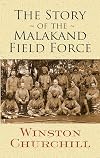
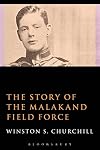
The Story of the Malakand Field Force: An Episode of Frontier War
by Winston S. Churchill
On This Page
Description
In this early work, the future Prime Minister recounts his observations as a young war correspondent in late 19th century British Colonial India. In 1897, Winston Churchill was a 22-year-old subaltern in the 4th Hussars, stationed in Bangalore. Seeking military distinction, he talked his way onto the Malakand Field Force to battle indigenous tribes after meeting the commander, Sir Bindon Blood, at a social engagement. There were no openings for junior officers-but Churchill convinced the show more commander to allow him to come along as a war correspondent. And thus a great career was born. This book shows the determination and spirit that would later mature into the indomitable personality of Winston Churchill in his prime. While not as polished as his later work, it is still elegantly crafted--and shows a brash willingness to criticize military leaders, including Lord Kitchener himself. It is one of Churchill's more rare works; until a new edition was published in 1990, it had been out of print in English since 1916. show lessTags
Recommendations
















Member Reviews
Winston Churchill’s first book. Churchill got himself attached as a war correspondent to a force sent to “chastise” border tribes; an interesting accomplishment since he was on active duty with another unit and already had a reputation for reporting that was less than fully complementary to the military. Rumor has it that this assignment was accomplished by his mother’s bedroom negotiations with commanding officer Sir Bindon Blood. Perhaps; Churchill certainly is more complimentary to Blood than he is to Kitchener in The River War. Relatively straightforward accounts of action on the Northwest Frontier. Mullahs rouse the local tribes; skirmishes with garrisons ensue, an expeditionary force gets organized to “teach them a show more lesson”; it does so (it doesn’t take, though). Contains the famous quote “There is nothing in life so exhilarating as to be shot at without result”, although it’s applied to a cavalry unit Churchill observes returning from action, not to himself personally. Churchill’s politics are interesting; he’s contemptuous of home politicians who don’t understand the realities of war on the frontier, particularly how civilian casualties are unavoidable since there aren’t any civilians. However, Churchill is sympathetic to native units in the Indian Army, suggesting that the Victoria Cross be awarded regardless of race and that British and native officers be treated equally (he suggests that since they meet as equals on the polo field they should meet as equals elsewhere). A short, quick read; much of the book is appendices consisting of dispatches mentioning various officers (this, of course, is back when being “mentioned in despatches” was a major boost to promotion chances). show less
A very early work by Churchill; in fact, one of the first books he produced over a long career. As related in his autobiography, he was able to obtain a position in a force sent to quell an uprising in the "Northwest Frontier" (present-day Pakistan-Afghanistan border), and in the course of doing so, sent dispatches to both an English and an Indian newspaper. This book contains those articles, rearranged. Some of the book is a bit of dry exposition of casualties, but the descriptions of combat, particularly clashes that Churchill himself saw, show flashes of the style that millions would come to know. There are also some asides and comments on policy and tactics (such as the destruction of the Afghan villages [which he favoured]) that show more seem slightly presumptuous coming from a newly-minted Sandhurst graduate. The battle itself is comparatively small, and were it not for this book, would probably be forgotten. Of definite interest to Churchill fans (and in that light should be read with "My Early Years"), and of interest to those who follow wars in this part of Southwest Asia. show less
You can tell there's something brewing here, a superb, if self-serving, account.
Ratings
Members
- Recently Added By
Author Information

561+ Works 34,715 Members
Sir Winston S. Churchill (1874-1965) was Prime Minister of the United Kingdom on two occasions, from 1940-1945 and again from 1951 to 1955. Celebrated as one of the greatest leaders of the twentieth century, he was also a gifted orator, statesman and historian. The author of more than 40 books, he was awarded the Nobel Prize for Literature in 1953 show more and in 1963 was made an honorary citizen of the United States. show less
Series
Belongs to Publisher Series
Work Relationships
Common Knowledge
- Original publication date
- 1898-03-14
- Important places
- Malakand, NWFP, Pakistan; Dir, NWFP, Pakistan
- Dedication
- Major-General Sir Bindon Blood, K.C.B. under whose command the operations therein recorded were carried out; by whose generalship they were brought to a successful conclusion; and the whose kindness the author is indebted fo... (show all)r the most valuable and fascinating experience of his life.
Classifications
Statistics
- Members
- 159
- Popularity
- 205,250
- Reviews
- 3
- Rating
- (4.07)
- Languages
- Czech, English, Swedish
- Media
- Paper, Ebook
- ISBNs
- 29
- ASINs
- 14