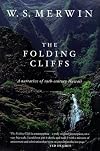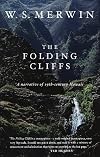
The Folding Cliffs: A Narrative
by W. S. Merwin
On This Page
Description
Pursued by colonial troops, a family in 19th century Hawaii flees into the interior to avoid internment as lepers. Written in verse, the novel looks at the destruction of an indigenous culture.Tags
Recommendations








































Member Reviews
THE FOLDING CLIFFS is an epic story of Hawaii composed in ten-to-fourteen syllable, mostly punctuation-free, enjamned lines. The central narrative seems as unlikely as it is compelling. It is the late 19th century on the Hawaiian island of Kauai. Foreigners are conspiring to seize the island chain from its lawful native rulers in a bloodless coup d'état. One of the colonizer's tools for effecting this change is the law governing the quarantining of lepers. Even today many still think of leprosy as a highly contagious and incurable disease, which is not true. Neither is forced quarantine and segregation of its victims necessary. In late 19th century Hawaii the disease falls conveniently into the colonizer's lily-white hands. Widely show more viewed as God's vengeance on the overly sensual native manner of living, the foreigners are able to use it as a way of attacking native Hawaiian social integrity. Families, communities are easily split with a simple diagnosis of leprosy. One family, however, that of Ko'olau and Pi'ilani and their son Kaliemanu, decide they will not allow themselves to be hauled off to quarantine. Instead, they go to Kalalau, a valley in northwest Kauai where others who have been diagnosed have decided to gather. Otherwise, it's off to the island of Molok'ai and the leprosarium there run by Father Damien where contact with their families is almost impossible. After Ko'olau and his family join the others, they are pursued by an ambitious fellow by the name of Stoltz, who is determined to clear the valley of them. Ko'olau--justifiably--shoots him dead. The white man, now in charge of the so-called Provisional Government in Honolulu, calls out the army. The book's set piece is the family's retreat to Kalalau, its life there, and the subsequent military incursion. Cover to cover the book is gripping. It reads like a novel, quickly, without a lot of poetic claptrap in the way to gum up the action. The leper side of the story, in a brief overview like this, might seem off-putting. Please, don't allow yourself to be. Merwin's handling of the story is deft and compassionate. This is one of the most beautiful stories I have ever read. Emotionally, it is almost intolerably moving, to use Anthony Burgess' well-worn phrase. But not in the sense that the reader squirms. It's not like a thriller in that respect, though there is suspense. It is rather the deep emotional connection of many of the characters. There are sections that remind me of Faulkner. But not in a derivative way. Rather, Merwin is touching on the same core rhythms of the language and making it sing, as Faulkner did. The book is a marvel. How did Merwin do it? We can get a sense of many of the creative decisions he made along the way, but the final product is greater than the sum of its parts. It's a wonder of true art. Read it. It will keep you up at night, turning the pages. show less
I am willing to accept that this is verse, tentatively. If ever I cross paths with Mr. Merwin, I will ask him why we can claim it to be verse. That said, though I couldn't identify a meter, there is a chant like quality and an intensity that begs special recognition.
That chant like quality and intensity serve the story, which is a story of family despair, and possibly of national despair. It is also a story of personal triumph. Reading the last chapter, I experienced chills, and a few minutes after I finished the book I cried a little, for the first time in about two decades.
The volume captures the feel of Hawaii, and Mr. Merwin claims not to have falsified anything -- I believe he is true.
I encourage anyone literate to engage this show more tale. It is at least close to necessary. show less
That chant like quality and intensity serve the story, which is a story of family despair, and possibly of national despair. It is also a story of personal triumph. Reading the last chapter, I experienced chills, and a few minutes after I finished the book I cried a little, for the first time in about two decades.
The volume captures the feel of Hawaii, and Mr. Merwin claims not to have falsified anything -- I believe he is true.
I encourage anyone literate to engage this show more tale. It is at least close to necessary. show less
a long form historical epic.
Ratings
Members
- Recently Added By
Published Reviews
ThingScore 100
It is this situation that makes a book like W.S. Merwin’s The Folding Cliffs such a remarkable and apparently impossible achievement. There is nothing stylized or heraldic about it. It does not claim to be a novel in verse; it does not involuntarily invoke the tradition of the epic, the verse chronicle in many parts, or the mock-heroic. It describes itself as neither more nor less than “a show more narrative of 19th-century Hawaii,” and that is what it is. Its breadth of implication and its spirit of power transform the modesty of this subtitle. It never tells the reader it is a poem, but the majesty as well as the natural drama of the poetic inhabit its pages like invisible presences, even as the reader becomes as absorbed in the story, its setting and its detail, as if he were reading a thriller. show less
added by EvelynWaugh
Lists

Narrative verse for pleasure
75 works; 8 members
Author Information

90+ Works 4,045 Members
W. S. Merwin was born William Stanley Merwin in New York City on September 30, 1927. He received a bachelor's degree from Princeton University in 1948 and did some graduate work there in Romance languages. He worked as a tutor and translator while writing poetry. In 1952, his first collection of poetry, A Mask for Janus, was awarded the Yale show more Younger Poets Prize. He wrote numerous collections of poetry including Green with Beasts, The Moving Target, The Lice, The Compass Flower, The Rain in the Trees, The River Sound, The Moon Before Morning, and Garden Time. He won the Pulitzer Prize in 1971 for The Carrier of Ladders and in 2009 for The Shadow of Sirius, the National Book Award in 2005 for Migration: New and Selected Poems, and the Lenore Marshall Poetry Prize for The Vixen. He also published essays, short fiction, memoirs, and translations of Dante, Pablo Neruda, and Osip Mandelstam. Merwin's other works included Unframed Originals, The Lost Upland, The Ends of the Earth, and Summer Doorways. He also received the Bollingen Prize, the Ruth Lilly Poetry Prize, the PEN Translation Prize, the Shelley Memorial Award, the Tanning Prize and the Lila Wallace-Reader's Digest Writers' Award. He died on March 15, 2019 at the age of 91. (Bowker Author Biography) show less
Awards and Honors
Awards
Work Relationships
Is contained in
Common Knowledge
- Important places
- Hawai'i, USA
Classifications
Statistics
- Members
- 81
- Popularity
- 391,199
- Reviews
- 3
- Rating
- (4.58)
- Languages
- English
- Media
- Paper
- ISBNs
- 2
- ASINs
- 1