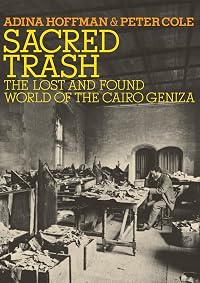
Sacred Trash: The Lost and Found World of the Cairo Geniza
by Adina Hoffman (Author), Peter Cole (Author)
On This Page
Description
NATIONAL JEWISH BOOK AWARD FINALISTPart of the Jewish Encounter series
One May day in 1896, at a dining-room table in Cambridge, England, a meeting took place between a Romanian-born maverick Jewish intellectual and twin learned Presbyterian Scotswomen, who had assembled to inspect several pieces of rag paper and parchment. It was the unlikely start to what would prove a remarkable, continent-hopping, century-crossing saga, and one that in many ways has revolutionized our sense of what it show more means to lead a Jewish life.
In Sacred Trash, MacArthur-winning poet and translator Peter Cole and acclaimed essayist Adina Hoffman tell the story of the retrieval from an Egyptian geniza, or repository for worn-out texts, of the most vital cache of Jewish manuscripts ever discovered. This tale of buried scholarly treasure weaves together unforgettable portraits of Solomon Schechter and the other heroes of this drama with explorations of the medieval documents themselves—letters and poems, wills and marriage contracts, Bibles, money orders, fiery dissenting tracts, fashion-conscious trousseaux lists, prescriptions, petitions, and mysterious magical charms. Presenting a panoramic view of nine hundred years of vibrant Mediterranean Judaism, Hoffman and Cole bring modern readers into the heart of this little-known trove, whose contents have rightly been dubbed "the Living Sea Scrolls." Part biography and part meditation on the supreme value the Jewish people has long placed on the written word, Sacred Trash is above all a gripping tale of adventure and redemption.
. show less
Tags
Recommendations






Member Recommendations
Member Reviews
Like the Geniza, the crowded storeroom for discarded documents written in Hebrew characters (although in many languages) in the attic of an old Cairo synagogue, this wonderful book is filled with a multiplicity of discoveries, from insights into the medieval development of the Jewish religion, including a variety of sects, to poetry from the cultural flowering in Muslim-ruled Spain, to business transactions, to personal letters; and, like the palimpsests that were found in the Geniza, it reveals its treasures on two levels, that of the scholars who found, lived with, and deciphered the finds from the Geniza and that of the Jews of old Cairo, or Fustat, whose daily activities sprang to life from these old pages.
In the middle ages, show more Cairo/Fustat was at the center of the Jewish world, with travelers, students and scholars, traders, poets and others passing through from Spain in the west to Jerusalem and even India in the west. As a result, their writings ended up in the Geniza where they sat for centuries until the late 1800s when two British women showed a document, written in Hebrew, that they had bought in Cairo, to Cambridge scholar Solomon Schecter. While some other material from the Geniza had filtered out earlier, Dr. Schecter immediately and dramatically realized its value and traveled to Cairo where he convinced the rabbi in charge of the old synagogue to let him take whatever he wanted. Since then, the study of these documents has kept scholars happily busy, investigating what seems to be an inexhaustible treasure trove of information on religion, history, poetry, the relationships between Jews and Muslims, cultural life, daily life, personal relationships and dramas, language, and much much more, from the 10th through the 13th centuries, a time when the vast majority of Jews lived largely peaceably in what was largely a Muslim world. In their preoccupations with family and business, love and death, celebrations and study, they seem a lot like us.
Fascinating as these medieval Jews are, the true heroes of this book are the scholars, and Hoffman and Cole characterize each of them and their work so brilliantly and readably that they too spring to life from the pages of this book. Buried as they were in the dusty and often smelly documents, obsessed with their research, demanding of their students, uncaring about their own health, they are the ones who figured out the connections between one scrap of paper and another, and between all this information and the larger threads of history and culture and religion.
Not only did I learn a lot about the life of Jews in the medieval middle east, but I also came away with a new appreciation of scholarship. The work of understanding the treasures of the Cairo Geniza continues to this day. show less
In the middle ages, show more Cairo/Fustat was at the center of the Jewish world, with travelers, students and scholars, traders, poets and others passing through from Spain in the west to Jerusalem and even India in the west. As a result, their writings ended up in the Geniza where they sat for centuries until the late 1800s when two British women showed a document, written in Hebrew, that they had bought in Cairo, to Cambridge scholar Solomon Schecter. While some other material from the Geniza had filtered out earlier, Dr. Schecter immediately and dramatically realized its value and traveled to Cairo where he convinced the rabbi in charge of the old synagogue to let him take whatever he wanted. Since then, the study of these documents has kept scholars happily busy, investigating what seems to be an inexhaustible treasure trove of information on religion, history, poetry, the relationships between Jews and Muslims, cultural life, daily life, personal relationships and dramas, language, and much much more, from the 10th through the 13th centuries, a time when the vast majority of Jews lived largely peaceably in what was largely a Muslim world. In their preoccupations with family and business, love and death, celebrations and study, they seem a lot like us.
Fascinating as these medieval Jews are, the true heroes of this book are the scholars, and Hoffman and Cole characterize each of them and their work so brilliantly and readably that they too spring to life from the pages of this book. Buried as they were in the dusty and often smelly documents, obsessed with their research, demanding of their students, uncaring about their own health, they are the ones who figured out the connections between one scrap of paper and another, and between all this information and the larger threads of history and culture and religion.
Not only did I learn a lot about the life of Jews in the medieval middle east, but I also came away with a new appreciation of scholarship. The work of understanding the treasures of the Cairo Geniza continues to this day. show less
A geniza(h) is a kind of storeroom found in a Jewish synagogue or cemetery, used to store old Hebrew religious texts, as it was forbidden to throw away or destroy any document which contained the name of God. Over time, genizot also came to contain many writings of a secular nature in languages like Yiddish or Ladino, because even personal letters and legal contracts could begin with a divine invocation. The Cairo Geniza is one of the largest medieval genizot, with documents and document fragments numbering in the hundreds of thousands.
The title of this book is a little misleading—Sacred Trash is really more a collection of linked biographies about key scholars, such as Solomon Schechter and S.D. Goitein, who've worked on the Cairo show more Geniza since its "discovery" in the late 19th century. To that extent, it may be a little dense for someone who doesn't have much background in the area; certainly, while I've read some about this Geniza before, and about the Jewish community of Fustat, there were parts that went over my head. Hoffman and Cole do seem to assume a Jewish readership, or at least a readership which has done more focused reading in the area than I have. Still, I think if you do have an interest in the area, or even just in the role of serendipity, chance, and hard work in scholarly endeavours, Sacred Trash makes for a very interesting read. show less
The title of this book is a little misleading—Sacred Trash is really more a collection of linked biographies about key scholars, such as Solomon Schechter and S.D. Goitein, who've worked on the Cairo show more Geniza since its "discovery" in the late 19th century. To that extent, it may be a little dense for someone who doesn't have much background in the area; certainly, while I've read some about this Geniza before, and about the Jewish community of Fustat, there were parts that went over my head. Hoffman and Cole do seem to assume a Jewish readership, or at least a readership which has done more focused reading in the area than I have. Still, I think if you do have an interest in the area, or even just in the role of serendipity, chance, and hard work in scholarly endeavours, Sacred Trash makes for a very interesting read. show less
Fascinating, but I'm overwhelmed with facts; I won't remember them all: There are the names of all the people connected with the Cairo Geniza and what they found from there and how it changed, created, added to many topics, including biblical commentary, Spanish poetry, daily life, and our knowledge of many important scholars, poets, writers, some not known before. I found out that Solomon Schechter met Flinders Petrie, "the leading English Egyptologist of the day [p.81]," and they sailed back from Egypt to England together and nearly drowned on the same ship. They shared "Petrie's belief in the archeological importance of 'unconsidered trifles' for the reconstruction of history." [p. 81]
For centuries, Jewish communities disposed of worn out or no longer useful documents by placing them in a geniza, a storage room in a synagogue or sometimes in a cemetery. Through a series of events at the end of the 19th century, the contents of a geniza in a synagogue in Fustat (Old Cairo) made their way to Cambridge and other centers of higher learning. Through painstaking cleaning and close examination of documents from the disorganized mass, scholars discovered works and authors that had been “lost” for several centuries.
Successive generations of scholars have built on each other’s discoveries. For instance, where one scholar focused on recovering the original text of palimpsests (reused parchment), a subsequent scholar show more recognized that some of the overwritten documents were authored by Yannai, a Jewish liturgical poet from the early Middle Ages whose works were thought to have been lost to history. Scholars continue to make new discoveries in the preserved documents with the assistance of advanced technologies. show less
Successive generations of scholars have built on each other’s discoveries. For instance, where one scholar focused on recovering the original text of palimpsests (reused parchment), a subsequent scholar show more recognized that some of the overwritten documents were authored by Yannai, a Jewish liturgical poet from the early Middle Ages whose works were thought to have been lost to history. Scholars continue to make new discoveries in the preserved documents with the assistance of advanced technologies. show less
a member of our book swapping club asked me to get this book last month when it was my turn to buy books.
I don't think she understood what this book is about.
This book is about the process of uncovering and restoring the material the S. Shechter brought back from Cairo to Cambridge University.
It's a biography of the researchers and scholars that examined, sorted, in some cases, catalogued and then transcribed, translated and researched the text they found on the thousands of scraps of parchment, vellum and paper in Cairo Geniza. It is more about what motivated these researchers to tackle this nearly impossible task.
It's about Bible criticism, rabbinical responsa, some rare texts in the Apocrypha. The last part of the book deals with the show more search for information about everyday of life Jewish communities in the Mediterranean sea area-from Spain to Jerusalem during the period from 950 CE to about 1250 CE, including the trade between Egypt and India.
If you are looking for the results of the research-stories and tidbits about life in that period, there are a few and they're interesting, but this isn't place to read about it.
this might be what she was looking for: https://www.goodreads.com/book/show/1156729.A_Mediterranean_Society show less
I don't think she understood what this book is about.
This book is about the process of uncovering and restoring the material the S. Shechter brought back from Cairo to Cambridge University.
It's a biography of the researchers and scholars that examined, sorted, in some cases, catalogued and then transcribed, translated and researched the text they found on the thousands of scraps of parchment, vellum and paper in Cairo Geniza. It is more about what motivated these researchers to tackle this nearly impossible task.
It's about Bible criticism, rabbinical responsa, some rare texts in the Apocrypha. The last part of the book deals with the show more search for information about everyday of life Jewish communities in the Mediterranean sea area-from Spain to Jerusalem during the period from 950 CE to about 1250 CE, including the trade between Egypt and India.
If you are looking for the results of the research-stories and tidbits about life in that period, there are a few and they're interesting, but this isn't place to read about it.
this might be what she was looking for: https://www.goodreads.com/book/show/1156729.A_Mediterranean_Society show less
There was some fascinating information in this book, but the writing was confusing. It seemed to assume a level of knowledge that I don't have, and it kept jumping in and out of historical time periods. Overall, I'm glad I'd read it.
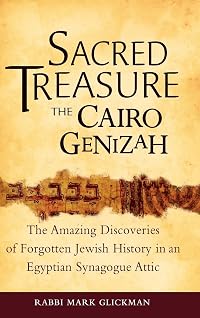
Interesting that both this book and Sacred Treasure - The Cairo Genizah: The Amazing Discoveries of Forgotten Jewish History in an Egyptian Synagogue Attic were published almost simultaneously in 2011, so I decided to read them both back to back. Both detail [and I do mean detail] the history of the discovery of the Cairo Geniza, a repository for old Jewish manuscripts. But this one reads like a scholarly tome, more a history of the scholars who worked on the geniza manuscripts than on the geniza itself.
I was particularly disappointed that Friedburg Geniza project for digitalizing all the known fragments, which will surely revolutionize the study of these manuscripts, was barely mentioned in the .afterword. Even worse, one would never show more know from this book that the majority of geniza texts are spells, incantations, and instructions for performing these from myriads of ancient magic manuals.
If you want to read one book on the Cairo Geniza, read Mark Glickman's, not this one show less
I was particularly disappointed that Friedburg Geniza project for digitalizing all the known fragments, which will surely revolutionize the study of these manuscripts, was barely mentioned in the .afterword. Even worse, one would never show more know from this book that the majority of geniza texts are spells, incantations, and instructions for performing these from myriads of ancient magic manuals.
If you want to read one book on the Cairo Geniza, read Mark Glickman's, not this one show less
Members
- Recently Added By
Published Reviews
ThingScore 100
If the authors' rendition of Hebrew verse is exquisite, their expository prose is charmingly breezy. They describe a palimpsest "as a kind of medieval Etch A Sketch pad," and quite rightly compare some of the work of Geniza scholars to the popular television gameshow Jeopardy!, where the answer is provided, and the trick is to come up with the question that prompted it. Though aimed at the show more wider public, Sacred Trash has much to satisfy the academic reader as well. The authors' grasp of the scholarly issues in Geniza research and the rich, discursive endnotes show that they have read a great deal of the academic literature in Hebrew and English. Most readers will skip the endnotes, but they are well worth reading for anyone who wants to pursue the topic. show less
added by atbradley
Author Information


Awards and Honors
Awards
Series
Belongs to Publisher Series
Common Knowledge
- Canonical title
- Sacred Trash: The Lost and Found World of the Cairo Geniza
- Original title
- Sacred trash
- People/Characters
- Agnes Smith Lewis; Margaret Smith Gibson
- Epigraph
- Hidden wisdom and concealed treasures, what is the use of either?
--Ben Sidra - Dedication
- For MMHC,
our Geniza's sphinx - First words*
- When the self-taught Scottish scholar of Arabic and Syriac Agnes Lewis and her no-less-learned twin sister, Margaret Gibson, hurried down a street or hallway, they moved - as a friend later described them - "like ships in ful... (show all)l sail".
- Last words*
- (Click to show. Warning: May contain spoilers.)And there are, it would seem, as many ways to write a history of the Geniza as there are scholars or readers who have stepped, or might step, through the looking glass of its scattered leaves.
- Blurbers
- Bloom, Harold; Grafton, Anthony; Kugel, James; Ozick, Cynthia
*Some information comes from Common Knowledge in other languages. Click "Edit" for more information.
Classifications
Statistics
- Members
- 311
- Popularity
- 102,798
- Reviews
- 9
- Rating
- (3.89)
- Languages
- English
- Media
- Paper, Ebook
- ISBNs
- 3
- ASINs
- 4