
On This Page
Description
"Delicious and addictive."—Salon.com"Reads . . . as if David Lynch directed a Raymond Chandler novel."—CNN
"What would you get if that punkish dragon girl Lisbeth Salander met up with Jim Sallis's Lew Griffin walking the back streets of New Orleans? Or Sue Grafton's Kinsey Millhone transformed herself into a tattooed magnolia driving a 4x4? Clare DeWitt, that's what you'd get . . . DeWitt's mesmerizing character and memorable voice take your breath away."—New Orleans Times-Picayune
show more This knock-out start to a bracingly original new series features Claire DeWitt, the world's greatest PI—at least, that's what she calls herself. A one-time teen detective in Brooklyn, she is a follower of the esoteric French detective Jacques Silette, whose mysterious handbook Détection inspired Claire's unusual practices. Claire also has deep roots in New Orleans, where she was mentored by Silette's student the brilliant Constance Darling—until Darling was murdered. When a respected DA goes missing she returns to the hurricane-ravaged city to find out why.
"The hard-living, wisecracking titular detective bounces around post-Katrina New Orleans trying to track down a missing prosecutor in this auspicious debut of a new mystery series—and the Big Easy is every bit her equal in sass and flavor."—Elle
"Reminds me why I fell in love with the genre."—Laura Lippman
"I love this book!" — Sue Grafton. show less
Tags
Recommendations







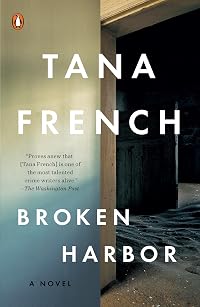
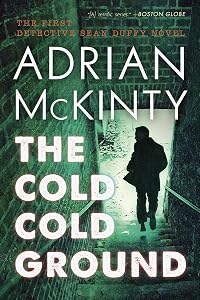
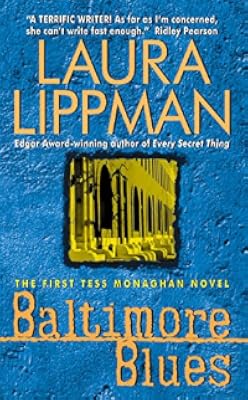



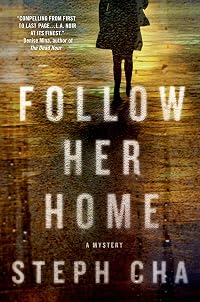
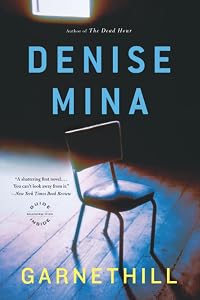

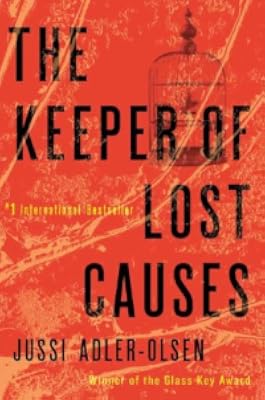
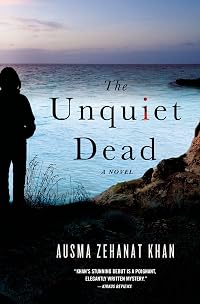

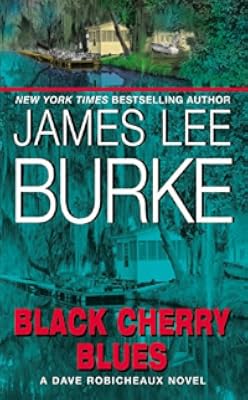








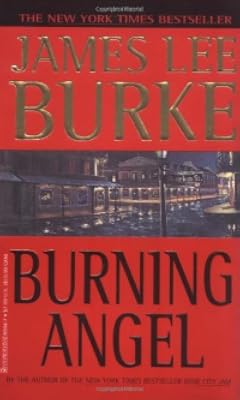
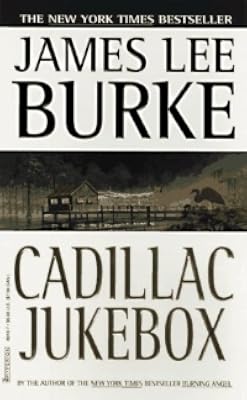
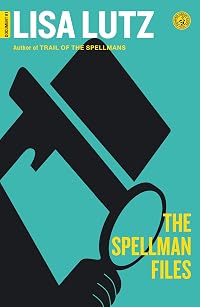
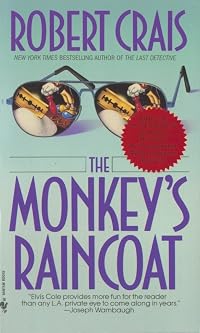
Member Recommendations
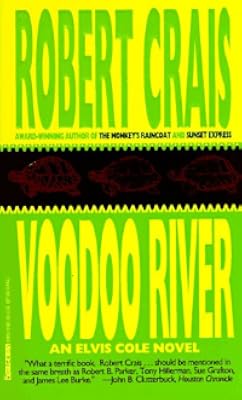
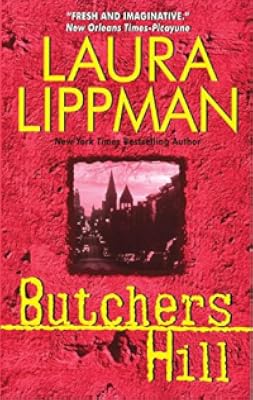
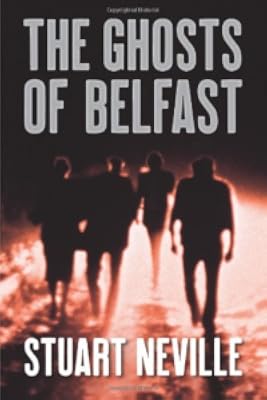
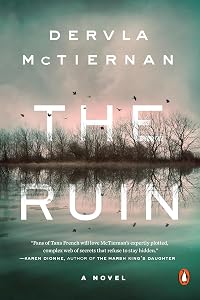
JuliaMaria Zwei sehr verschiedene Krimis, die jeweils in New Orleans spielen.

Member Reviews
I read [b:The Infinite Blacktop|38532150|The Infinite Blacktop (Claire DeWitt Mysteries, #3)|Sara Gran|https://i.gr-assets.com/images/S/compressed.photo.goodreads.com/books/1523631136l/38532150._SY75_.jpg|58137013] on the basis of strong reviews when it was first published in 2018. I enjoyed it, but when I was done I realized that I very much wanted to read the first book in the series, [b:Claire DeWitt and the City of the Dead|9231999|Claire DeWitt and the City of the Dead (Claire DeWitt Mysteries, #1)|Sara Gran|https://i.gr-assets.com/images/S/compressed.photo.goodreads.com/books/1312909281l/9231999._SY75_.jpg|14112168]. Infinite Blacktop was laced with references to Claire's personal history, and I had an idea that it would all make show more more sense if I started at the beginning.
Well, I've just done that, and although I can't say that "making sense" is something Sara Gran is going for in the Claire DeWitt series, I can say that I enjoyed City of the Dead even more than Infinite Blacktop. Her descriptions of the aftermath of Hurricane Katrina, the impact of the storm and the broken levees (the worst engineering disaster in the history of the US, according to Wikipedia) not just on the physical structures of New Orleans but on the mental health of the survivors, is nothing short of amazing. It is not a conventional rendering in any sense, but I would venture to say that it is far more compelling than 90% of what you've seen on broadcast news or social media.
The mystery that brings Claire back to The City of the Dead is both tied to the storm and its aftereffects, and separate from them. And as is so often the case with books set in New Orleans, the city itself is something of a character.
Gran is an author of unique talents, one who stimulates us to consider issues related to The Meaning Of Life and other equally weighty topics through Claire's musings, her search for omens, her interest in the I-Ching and her ingestion and inhalation of all manner of illicit and unhealthy substances. It's easy to feel connected to her even if you share no life experiences simply because she challenges you at every turn and presents you with realities that, as she would say, you may not want but you definitely need.
I look forward to reading the middle book in the series, [b:Claire DeWitt and the Bohemian Highway|15814401|Claire DeWitt and the Bohemian Highway (Claire DeWitt Mysteries, #2)|Sara Gran|https://i.gr-assets.com/images/S/compressed.photo.goodreads.com/books/1368071910l/15814401._SY75_.jpg|21540836]. I guess at the end of the day I just enjoy being in the reading company of difficult women who challenge me to think beyond the mystery they are ostensibly attempting to resolve. show less
Well, I've just done that, and although I can't say that "making sense" is something Sara Gran is going for in the Claire DeWitt series, I can say that I enjoyed City of the Dead even more than Infinite Blacktop. Her descriptions of the aftermath of Hurricane Katrina, the impact of the storm and the broken levees (the worst engineering disaster in the history of the US, according to Wikipedia) not just on the physical structures of New Orleans but on the mental health of the survivors, is nothing short of amazing. It is not a conventional rendering in any sense, but I would venture to say that it is far more compelling than 90% of what you've seen on broadcast news or social media.
The mystery that brings Claire back to The City of the Dead is both tied to the storm and its aftereffects, and separate from them. And as is so often the case with books set in New Orleans, the city itself is something of a character.
Gran is an author of unique talents, one who stimulates us to consider issues related to The Meaning Of Life and other equally weighty topics through Claire's musings, her search for omens, her interest in the I-Ching and her ingestion and inhalation of all manner of illicit and unhealthy substances. It's easy to feel connected to her even if you share no life experiences simply because she challenges you at every turn and presents you with realities that, as she would say, you may not want but you definitely need.
I look forward to reading the middle book in the series, [b:Claire DeWitt and the Bohemian Highway|15814401|Claire DeWitt and the Bohemian Highway (Claire DeWitt Mysteries, #2)|Sara Gran|https://i.gr-assets.com/images/S/compressed.photo.goodreads.com/books/1368071910l/15814401._SY75_.jpg|21540836]. I guess at the end of the day I just enjoy being in the reading company of difficult women who challenge me to think beyond the mystery they are ostensibly attempting to resolve. show less
"Claire Dewitt and the City of the Dead" is an extraordinary book: fascinating, rewarding, often upsetting but really hard to describe.
It's a book that invites the reader to look beyond the narrative and ask themselves questions about mysteries: our ability to see them, our willingness to solve them and how we continue on day by day while the truth of our own lives constantly slips through our fingers.
I entered it expecting a whodunnit mystery with some local New Orleans colour and a clever plot. Two hours into it, I had no idea what it was about. I knew what was happening but I'd started to understand that that was the answer to a different question.
This was Noire but not as I know it. I was reading something that seemed to be the show more lovechild of Raymond Chandler and Jean-Paul Satre.
Claire Dewitt, a PI who makes Philip Marlowe seem like a romantic softy with a tendency to take things too literally, solves cases, sorry, mysteries, by using a kind of muscular mysticism that is stretched tight over a skeleton of existential panic with grief as its marrow.
More than a year after Katrina, Claire is investigating the disappearance and possible death of a wealthy District Attorney in New Orleans during the storm. She is guided in this by a book called "Détection" by Cillette, a French criminologist who has a very out-there view of what detection is.
For Cillette, detection is about following clues to find the truth. By following he seems to mean: giving yourself up to the flow so you can see the bigger picture. By clues, he seems to mean all the things that we don't let ourselves see but which, once seen, will change our understanding fundamentally. By truth he seems to mean... well, actually that's something he wants us to work for ourselves.
In "Détection" he tells us that a detective can most quickly solve a mystery by looking in all the places she is certain do not contain the answers:
"...because this for better or worse is exactly where the truth lies at the intersection of the forgotten and the ignored, in the neighbourhood of all we have tried to forget."
At the start of the novel, there is little action. There are a lot of mundane frustrations and a lot of waiting and slowly dawning awareness that Claire Dewitt is a very driven and very damaged person who is following her own agenda to hunt down the truth using methods taught to her by her now deceased mentor, Constance.
Despite the inaction, I found myself carried along by the absolute authority of the writing and the vivid descriptions of the desolation of much of post-Katrina New Orleans.
This is not the New Orleans the tourist office would like to sell and that many crime novels dress themselves in. This New Orleans is a city that has been broken and abandoned and is now being cynically abused. A city with the highest murder rate in the country and a legal system so corrupt in under-resourced that even the few people arrested for murder are mostly released after sixty days because there is no capacity to process them. This is a city populated by people who have survived the equivalent of a war but a war in which their own government gave them no support. Sara Gran captures it with the precision of a documentary maker and Claire Dewitt sees it with the slow but constant anger of one who has long ago ceased to believe in happy endings.
It seems to me that one of the clues to this book is in the title (well duh!) in that it is primarily about Claire Dewitt, her history, who she is now, who she may become and about a New Orleans haunted by the dead from Claire's past, from the mystery she is investigating and from the storm and its aftermath. There is a clever and convincing plot but it provides the framework for understanding Claire in the context of this city of ghosts.
Sara Gran brings the city to life through the people Claire meets, the lost, the broken, the violent and the traumatised. One of these is an ex-colleague or hers. They had the same mentor but are no longer following the same path. He lost everything in the storm and is now trying to redeem himself and restore his faith in the possibility of goodness by volunteering to work with kids in trouble with the law. After a meeting in Claire's motel room to discuss the disappearance of the DA we get a description of him that gives a flavour of this book:
"I remembered what he used to smell like: woodsy and sweaty. I rolled over on the bed to the spot where he'd lay. He didn't smell like that any more. Now he smelled like pot and plaster dust and smoke and mould. Like sadness. Like New Orleans."
At one point, early in the book, Claire talks about the first time she and her teenage friends read "Détection". Her experience of it is eerily similar to what Sara Gran put me through.
"'Détection' was a door to another world. A world where, even if we didn’t understand things, we were sure they could be understood. A world where people paid attention, where they listened, where they looked for clues. A world where mysteries could be solved or so we thought.
By the time we realised we were wrong, that we had misunderstood everything, it was too late, Cillette had already branded us. For better or worse, we were not the same girls any more."
I realise that I often retreat to crime books and mystery books because they create a mythical world where cause and effect are not only understood but result in some kind of accountability. Real life, mine at least, is rarely like that. In "Claire Dewitt and the City of the Dead" I'm invited to think about why that is.
This is a book about finding the truth and I found myself fascinated by the insights that appeared like nuggets of gold as I sifted through the narrative. I liked Constance's advice to a young Claire:
"Never be afraid to learn from the ether," Constance told me. "That's where knowledge lives before someone hunts it, kills it and mounts it in a book."
Or Frank, an ex-soldier who, when Claire shares with him what really happened to the missing DA, says:
"The thing about the truth", Frank said after a while, "It's never just what you want it to be is it?"
The dialogue in this book is beautifully done, capturing patterns of speech without patronising them. The passage below, in which a young, uneducated boy describes his experience of reading "Détection", is a great example of this and also reflects how I felt about "Claire Dewitt and the City of the Dead" after finishing it:
"I mean, honest, it don't make no sense to me", he said "And it's hard but I, I don't know, I kinda like it anyway. Like there's this one little thing he says, it's kinda like my favourite, he says something like, if you hold on to a mystery you're never gonna to succeed. You gotta let it go through your fingers and then it come to ya and it tell you everything. I don't know I like it."
Sara Gran is now on my Must-Read-Everything-They-Write list. There are two more Claire Dewitt novels and a number of standalone books waiting for me.
You can learn more about her and her books here
My enjoyment of "Claire Dewitt and the City of the Dead" was greatly enhanced by the nuanced narration delivered by Carol Monda. I'll be looking out for books she has narrated. You can hear a sample of her work by clicking on the SoundCloud link below.
[soundcloud url="https://api.soundcloud.com/tracks/259124128" params="color=#ff5500&auto_play=false&hide_related=false&show_comments=true&show_user=true&show_reposts=false&show_teaser=true&visual=true" width="100%" height="300" iframe="true" /]
show less
It's a book that invites the reader to look beyond the narrative and ask themselves questions about mysteries: our ability to see them, our willingness to solve them and how we continue on day by day while the truth of our own lives constantly slips through our fingers.
I entered it expecting a whodunnit mystery with some local New Orleans colour and a clever plot. Two hours into it, I had no idea what it was about. I knew what was happening but I'd started to understand that that was the answer to a different question.
This was Noire but not as I know it. I was reading something that seemed to be the show more lovechild of Raymond Chandler and Jean-Paul Satre.
Claire Dewitt, a PI who makes Philip Marlowe seem like a romantic softy with a tendency to take things too literally, solves cases, sorry, mysteries, by using a kind of muscular mysticism that is stretched tight over a skeleton of existential panic with grief as its marrow.
More than a year after Katrina, Claire is investigating the disappearance and possible death of a wealthy District Attorney in New Orleans during the storm. She is guided in this by a book called "Détection" by Cillette, a French criminologist who has a very out-there view of what detection is.
For Cillette, detection is about following clues to find the truth. By following he seems to mean: giving yourself up to the flow so you can see the bigger picture. By clues, he seems to mean all the things that we don't let ourselves see but which, once seen, will change our understanding fundamentally. By truth he seems to mean... well, actually that's something he wants us to work for ourselves.
In "Détection" he tells us that a detective can most quickly solve a mystery by looking in all the places she is certain do not contain the answers:
"...because this for better or worse is exactly where the truth lies at the intersection of the forgotten and the ignored, in the neighbourhood of all we have tried to forget."
At the start of the novel, there is little action. There are a lot of mundane frustrations and a lot of waiting and slowly dawning awareness that Claire Dewitt is a very driven and very damaged person who is following her own agenda to hunt down the truth using methods taught to her by her now deceased mentor, Constance.
Despite the inaction, I found myself carried along by the absolute authority of the writing and the vivid descriptions of the desolation of much of post-Katrina New Orleans.
This is not the New Orleans the tourist office would like to sell and that many crime novels dress themselves in. This New Orleans is a city that has been broken and abandoned and is now being cynically abused. A city with the highest murder rate in the country and a legal system so corrupt in under-resourced that even the few people arrested for murder are mostly released after sixty days because there is no capacity to process them. This is a city populated by people who have survived the equivalent of a war but a war in which their own government gave them no support. Sara Gran captures it with the precision of a documentary maker and Claire Dewitt sees it with the slow but constant anger of one who has long ago ceased to believe in happy endings.
It seems to me that one of the clues to this book is in the title (well duh!) in that it is primarily about Claire Dewitt, her history, who she is now, who she may become and about a New Orleans haunted by the dead from Claire's past, from the mystery she is investigating and from the storm and its aftermath. There is a clever and convincing plot but it provides the framework for understanding Claire in the context of this city of ghosts.
Sara Gran brings the city to life through the people Claire meets, the lost, the broken, the violent and the traumatised. One of these is an ex-colleague or hers. They had the same mentor but are no longer following the same path. He lost everything in the storm and is now trying to redeem himself and restore his faith in the possibility of goodness by volunteering to work with kids in trouble with the law. After a meeting in Claire's motel room to discuss the disappearance of the DA we get a description of him that gives a flavour of this book:
"I remembered what he used to smell like: woodsy and sweaty. I rolled over on the bed to the spot where he'd lay. He didn't smell like that any more. Now he smelled like pot and plaster dust and smoke and mould. Like sadness. Like New Orleans."
At one point, early in the book, Claire talks about the first time she and her teenage friends read "Détection". Her experience of it is eerily similar to what Sara Gran put me through.
"'Détection' was a door to another world. A world where, even if we didn’t understand things, we were sure they could be understood. A world where people paid attention, where they listened, where they looked for clues. A world where mysteries could be solved or so we thought.
By the time we realised we were wrong, that we had misunderstood everything, it was too late, Cillette had already branded us. For better or worse, we were not the same girls any more."
I realise that I often retreat to crime books and mystery books because they create a mythical world where cause and effect are not only understood but result in some kind of accountability. Real life, mine at least, is rarely like that. In "Claire Dewitt and the City of the Dead" I'm invited to think about why that is.
This is a book about finding the truth and I found myself fascinated by the insights that appeared like nuggets of gold as I sifted through the narrative. I liked Constance's advice to a young Claire:
"Never be afraid to learn from the ether," Constance told me. "That's where knowledge lives before someone hunts it, kills it and mounts it in a book."
Or Frank, an ex-soldier who, when Claire shares with him what really happened to the missing DA, says:
"The thing about the truth", Frank said after a while, "It's never just what you want it to be is it?"
The dialogue in this book is beautifully done, capturing patterns of speech without patronising them. The passage below, in which a young, uneducated boy describes his experience of reading "Détection", is a great example of this and also reflects how I felt about "Claire Dewitt and the City of the Dead" after finishing it:
"I mean, honest, it don't make no sense to me", he said "And it's hard but I, I don't know, I kinda like it anyway. Like there's this one little thing he says, it's kinda like my favourite, he says something like, if you hold on to a mystery you're never gonna to succeed. You gotta let it go through your fingers and then it come to ya and it tell you everything. I don't know I like it."
Sara Gran is now on my Must-Read-Everything-They-Write list. There are two more Claire Dewitt novels and a number of standalone books waiting for me.
You can learn more about her and her books here
My enjoyment of "Claire Dewitt and the City of the Dead" was greatly enhanced by the nuanced narration delivered by Carol Monda. I'll be looking out for books she has narrated. You can hear a sample of her work by clicking on the SoundCloud link below.
[soundcloud url="https://api.soundcloud.com/tracks/259124128" params="color=#ff5500&auto_play=false&hide_related=false&show_comments=true&show_user=true&show_reposts=false&show_teaser=true&visual=true" width="100%" height="300" iframe="true" /]
show less
I was a little afraid to re-read this book, because the first time through was so absolutely stunning, it was as if it was written for me. As my first review did not do justice to its wonderful combination of mystery, introspection, and setting, I'm setting out to rectify it.
Claire DeWitt is a detective, willing to use all means necessary--including hallucinogens, the I Ching and fingerprint analysis--to solve her cases. She knows ultimately she will be solving the case for herself, because sometimes the client doesn't want it solved:
"The client already knows the solution to his mystery. But he doesn't want to know. He doesn't hire a detective to solve his mystery. He hires a detective to prove that his mystery can't be solved."
Leon is show more a client who has requested her help finding his uncle Vic, a lawyer who disappeared during Hurricane Katrina. He feels a little guilty: "'You know what it says in the Bible,' Leon said with resignation. 'Look out for thine uncle as you would thineself. Or whatever.'"
Claire tends to lie a little if it suits, usually in service to detecting, and isn't entirely honest about her history to Leon.
"'How old are you?'
'Forty-two,' I said. I was thirty-five. But no one trusts a woman under forty. I'd started being forty when I was twenty-nine."
Claire's search brings her into contact with gangs of feral, forgotten children and with her own tumultous history as a detective when she apprenticed in New Orleans. Claire frequently references a book by a famous detective (albeit fictional in the real world) whose thoughts on detecting are philosophical bon mots on mystery, truth, and humanity, as well as her history with her mentor, Constance. The time shifts flow smoothly and don't feel the intrusive into the story; in fact, they blended very well, sometimes foreshadowing the next development in the mystery. Claire's own mystery was worked in nicely, leaving a feel for her character but with a sense there is a lot more to discover.
As in many detective mysteries, setting plays a crucial role. One of the many small mysteries of the book is how Claire and the people of New Orleans never refer to Katrina by name, the way the rest of the country does. They call it a 'flood' and speak of it in terms of days ("'By Monday the phones were down and...' The rest of his sentence was obvious and he didn't say it out loud") or by location: at the Superdome, Houston, back home. Claire notes the problem with locating people, phone numbers, addresses in post-Katrina New Orleans, and at least a couple of the locals involved in Claire's mystery are suffering from post-traumatic-stress disorder. Finding Vic means visiting some of the ravaged areas, and Gran's imagery is striking in its naked description:
"Signs with letter missing told the story: lots of OTELS and HOT BO LED CRA FISH and AWN SH PS. In the intermediate zone I started to see the marks spray-painted on houses: circles with X's through them, numbers and letters in the hollows of the X."
For those that are sensitive to it, there is proliferate drug use, but it is handled well. Without being judgmental, it is apparently an activity Claire engages in to self-medicate as well as bridge gaps between herself and other people. Interestingly, I thought Gran managed a nice balance between acknowledging the reasons for doing it at the same time showing the non-glamorous side.
I can't say enough about Gran's ability with language--my Kindle copy has highlights every chapter. The dispassionate descriptions lend themselves to the creation of emotionally blunted characters, and yet somehow Gran manages to convey humanity, tragedy and humor, as well as the character of a city.
Gran's writing has a lovely sense of balance, injecting small bon mots of humor, sarcasm, and absurdity that leaven the emotional weight of the mystery and of the post-flood setting. Claire is very good at mocking herself as well as those that ignore the mysteries around them:
--"He looked like he was waiting to see a doctor about an unusual lump."
--"I concentrated on the goats. They were good company. They overlooked most of my personality defects and failures, my withdrawal of food from the fatties, and my inability to speak goat."
--"You don't know that," Mick said, weakly trying to fake liberal outrage.
--"Houses are like people, only less annoying."
--"I heard Mick roll his eyes over the phone."
Yet despite the humor, both Claire and Gran are very careful and compassionate with the hollow-eyed thin adolescents of New Orleans. I loved that finesse, the unwillingness to sacrifice a character or story to the villain prototype. The inclusion of the social-economic commentary elevates it beyond mere mystery to a meditation on humanity, all without sermonizing or being particularly heavy-handed.
It's an odd little cross-genre read, but a highly enjoyable, thought-provoking one. After reading, I immediately tracked down a hardcover so I could be assured of being able to read it again, anytime, much like Claire and her copy of Détection.
Cross posted at http://clsiewert.wordpress.com/2013/06/13/claire-dewitt-and-the-city-of-the-dead...
re-read July 16, 2015. Because it's just that good.
re-read July 24, 2017, because I need a drug-smoking detective who believes in the IChing to help me understand my own mysteries.
re-read October, 2024, because there's something so Buddhist about Claire's approach. Also, hurricanes. show less
Claire DeWitt is a detective, willing to use all means necessary--including hallucinogens, the I Ching and fingerprint analysis--to solve her cases. She knows ultimately she will be solving the case for herself, because sometimes the client doesn't want it solved:
"The client already knows the solution to his mystery. But he doesn't want to know. He doesn't hire a detective to solve his mystery. He hires a detective to prove that his mystery can't be solved."
Leon is show more a client who has requested her help finding his uncle Vic, a lawyer who disappeared during Hurricane Katrina. He feels a little guilty: "'You know what it says in the Bible,' Leon said with resignation. 'Look out for thine uncle as you would thineself. Or whatever.'"
Claire tends to lie a little if it suits, usually in service to detecting, and isn't entirely honest about her history to Leon.
"'How old are you?'
'Forty-two,' I said. I was thirty-five. But no one trusts a woman under forty. I'd started being forty when I was twenty-nine."
Claire's search brings her into contact with gangs of feral, forgotten children and with her own tumultous history as a detective when she apprenticed in New Orleans. Claire frequently references a book by a famous detective (albeit fictional in the real world) whose thoughts on detecting are philosophical bon mots on mystery, truth, and humanity, as well as her history with her mentor, Constance. The time shifts flow smoothly and don't feel the intrusive into the story; in fact, they blended very well, sometimes foreshadowing the next development in the mystery. Claire's own mystery was worked in nicely, leaving a feel for her character but with a sense there is a lot more to discover.
As in many detective mysteries, setting plays a crucial role. One of the many small mysteries of the book is how Claire and the people of New Orleans never refer to Katrina by name, the way the rest of the country does. They call it a 'flood' and speak of it in terms of days ("'By Monday the phones were down and...' The rest of his sentence was obvious and he didn't say it out loud") or by location: at the Superdome, Houston, back home. Claire notes the problem with locating people, phone numbers, addresses in post-Katrina New Orleans, and at least a couple of the locals involved in Claire's mystery are suffering from post-traumatic-stress disorder. Finding Vic means visiting some of the ravaged areas, and Gran's imagery is striking in its naked description:
"Signs with letter missing told the story: lots of OTELS and HOT BO LED CRA FISH and AWN SH PS. In the intermediate zone I started to see the marks spray-painted on houses: circles with X's through them, numbers and letters in the hollows of the X."
For those that are sensitive to it, there is proliferate drug use, but it is handled well. Without being judgmental, it is apparently an activity Claire engages in to self-medicate as well as bridge gaps between herself and other people. Interestingly, I thought Gran managed a nice balance between acknowledging the reasons for doing it at the same time showing the non-glamorous side.
I can't say enough about Gran's ability with language--my Kindle copy has highlights every chapter. The dispassionate descriptions lend themselves to the creation of emotionally blunted characters, and yet somehow Gran manages to convey humanity, tragedy and humor, as well as the character of a city.
Gran's writing has a lovely sense of balance, injecting small bon mots of humor, sarcasm, and absurdity that leaven the emotional weight of the mystery and of the post-flood setting. Claire is very good at mocking herself as well as those that ignore the mysteries around them:
--"He looked like he was waiting to see a doctor about an unusual lump."
--"I concentrated on the goats. They were good company. They overlooked most of my personality defects and failures, my withdrawal of food from the fatties, and my inability to speak goat."
--"You don't know that," Mick said, weakly trying to fake liberal outrage.
--"Houses are like people, only less annoying."
--"I heard Mick roll his eyes over the phone."
Yet despite the humor, both Claire and Gran are very careful and compassionate with the hollow-eyed thin adolescents of New Orleans. I loved that finesse, the unwillingness to sacrifice a character or story to the villain prototype. The inclusion of the social-economic commentary elevates it beyond mere mystery to a meditation on humanity, all without sermonizing or being particularly heavy-handed.
It's an odd little cross-genre read, but a highly enjoyable, thought-provoking one. After reading, I immediately tracked down a hardcover so I could be assured of being able to read it again, anytime, much like Claire and her copy of Détection.
Cross posted at http://clsiewert.wordpress.com/2013/06/13/claire-dewitt-and-the-city-of-the-dead...
re-read July 16, 2015. Because it's just that good.
re-read July 24, 2017, because I need a drug-smoking detective who believes in the IChing to help me understand my own mysteries.
re-read October, 2024, because there's something so Buddhist about Claire's approach. Also, hurricanes. show less
“There are no coincidences, only mysteries that haven't been solved, clues that haven't been placed. Most are blind to the language of the bird overhead, the leaf in our path, the phonographic record stuck in a groove, the unknown caller on the phone. They don't see the omens. They don't know the signs.”
One of my favorite literary character archetypes is the hot mess of dammit female private detective: socially caustic, prone to excess, often self-destructive, but obsessively driven to solve every case and right all the wrongs. Izzy Spellman ([b:The Spellman Files|129117|The Spellman Files (The Spellmans, #1)|Lisa Lutz|https://i.gr-assets.com/images/S/compressed.photo.goodreads.com/books/1347521714l/129117._SX50_.jpg|2896642]) and show more Roxane Weary [b:The Last Place You Look|31450910|The Last Place You Look (Roxane Weary, #1)|Kristen Lepionka|https://i.gr-assets.com/images/S/compressed.photo.goodreads.com/books/1478185197l/31450910._SY75_.jpg|52153749] are my favorites that come to mind. Claire DeWitt can join that party. (And what a party it would be. Hide your booze and your drugs when she's around. Girlfriend will try anything, even if it's laced with embalming fluid. Apparently that's a thing.)
Claire has been living in California, but she's hired to find a missing person in New Orleans in the aftermath of Hurricane Katrina. She spent several years in NOLA, studying the detection methods of an esoteric French detective (Jacques Silette) under one of his former students (Constance Darling). Her history there is slowly revealed, along with her troubled youth in Brooklyn, but that's part of the story, interwoven beautifully with the portrait of the historical city struggling back from the brink of destruction.
Claire claims to be the world's greatest detective since the death of her mentor. Now, while she may be prone to delusions of grandeur, she also has some serious skills. One of my favorite scenes has Claire meeting some rather rough young men at the community center. She wants information they may have and is trying to convince them she's a private detective (but not a cop). From a single sentence (and also general observation), she's able to tell one of the young men essentially his entire life story.
She's obsessed with solving the mystery of what happened to her client's uncle, a district attorney who hasn't been seen since a few days after Katrina hit. Even when she hits dead end after dead end, even when her investigation puts her in danger, even when her client tells her to stop investigating, she's determined to find out what happened.
“It doesn't matter what people want to hear. It doesn't matter if people like you. It doesn't matter if the whole world thinks you're crazy. It doesn't matter whose heart you break. What matters is the truth.”
Claire DeWitt is obsessed, mentally unstable, and I kind of love her. I'm looking forward to seeing where this series goes next. show less
One of my favorite literary character archetypes is the hot mess of dammit female private detective: socially caustic, prone to excess, often self-destructive, but obsessively driven to solve every case and right all the wrongs. Izzy Spellman ([b:The Spellman Files|129117|The Spellman Files (The Spellmans, #1)|Lisa Lutz|https://i.gr-assets.com/images/S/compressed.photo.goodreads.com/books/1347521714l/129117._SX50_.jpg|2896642]) and show more Roxane Weary [b:The Last Place You Look|31450910|The Last Place You Look (Roxane Weary, #1)|Kristen Lepionka|https://i.gr-assets.com/images/S/compressed.photo.goodreads.com/books/1478185197l/31450910._SY75_.jpg|52153749] are my favorites that come to mind. Claire DeWitt can join that party. (And what a party it would be. Hide your booze and your drugs when she's around. Girlfriend will try anything, even if it's laced with embalming fluid. Apparently that's a thing.)
Claire has been living in California, but she's hired to find a missing person in New Orleans in the aftermath of Hurricane Katrina. She spent several years in NOLA, studying the detection methods of an esoteric French detective (Jacques Silette) under one of his former students (Constance Darling). Her history there is slowly revealed, along with her troubled youth in Brooklyn, but that's part of the story, interwoven beautifully with the portrait of the historical city struggling back from the brink of destruction.
Claire claims to be the world's greatest detective since the death of her mentor. Now, while she may be prone to delusions of grandeur, she also has some serious skills. One of my favorite scenes has Claire meeting some rather rough young men at the community center. She wants information they may have and is trying to convince them she's a private detective (but not a cop). From a single sentence (and also general observation), she's able to tell one of the young men essentially his entire life story.
She's obsessed with solving the mystery of what happened to her client's uncle, a district attorney who hasn't been seen since a few days after Katrina hit. Even when she hits dead end after dead end, even when her investigation puts her in danger, even when her client tells her to stop investigating, she's determined to find out what happened.
“It doesn't matter what people want to hear. It doesn't matter if people like you. It doesn't matter if the whole world thinks you're crazy. It doesn't matter whose heart you break. What matters is the truth.”
Claire DeWitt is obsessed, mentally unstable, and I kind of love her. I'm looking forward to seeing where this series goes next. show less
i feel like i shouldn't have liked this book much at all, but somehow i really did, quite a bit. it's not perfect and there are some mistakes that shouldn't have been made (as an example she takes fingerprints from around an apartment - off the cabinets, the bird cage, the refrigerator - the very refrigerator that was the only thing missing in the kitchen - which she'd made sure to mention a couple of pages before) or things left out (like she leaves a car running in a neighborhood where it would have immediately been stolen (so if she was going to mention that she initially left it running, she should have also mentioned that she's grabbed the keys and locked the door)). minor mistakes or overlooks, though, i'd say, in a book that show more generally is so interesting, well written, innovative, and well done. she even made me laugh, multiple times.
i loved what she did with katrina here, the way the storm and even new orleans were characters. i haven't read too many books that take place around hurricane katrina and so this gave me a perspective i really hadn't had before, so i appreciate it for that.
i also love that the people here are complicated. it's not cut and dry or good/evil. it's more realistic in that it's a mixture of both. she says over and over again that new orleans isn't a place for happy endings, so we were warned that it's not so easy or simple. she handled this part especially well, i thought.
i love that she follows this esoteric detective as her guide, and it makes her more of a misfit than she already was, and also more of herself and helps her find her people.
i love what she does here, it's really a fun way to subvert and honor the genre, and she does it well.
"'No one is innocent,' Silette wrote. 'The only question is, how will you bear your portion of guilt?'"
"Some people, I saw, had drowned right away. And some people were drowning slow motion, drowning a little bit at a time, and would be drowning for years. And some people, like Mick, had always been drowning. They just hadn't known what to call it until now."
"In New Orleans, it's hard to tell where your murder case ends and everyone else's begins."
"'...this, for better or worse, is exactly where the truth lies - at the intersection of the forgotten and the ignored, in the neighborhood of all we have tried to forget.'" show less
i loved what she did with katrina here, the way the storm and even new orleans were characters. i haven't read too many books that take place around hurricane katrina and so this gave me a perspective i really hadn't had before, so i appreciate it for that.
i also love that the people here are complicated. it's not cut and dry or good/evil. it's more realistic in that it's a mixture of both. she says over and over again that new orleans isn't a place for happy endings, so we were warned that it's not so easy or simple. she handled this part especially well, i thought.
i love that she follows this esoteric detective as her guide, and it makes her more of a misfit than she already was, and also more of herself and helps her find her people.
i love what she does here, it's really a fun way to subvert and honor the genre, and she does it well.
"'No one is innocent,' Silette wrote. 'The only question is, how will you bear your portion of guilt?'"
"Some people, I saw, had drowned right away. And some people were drowning slow motion, drowning a little bit at a time, and would be drowning for years. And some people, like Mick, had always been drowning. They just hadn't known what to call it until now."
"In New Orleans, it's hard to tell where your murder case ends and everyone else's begins."
"'...this, for better or worse, is exactly where the truth lies - at the intersection of the forgotten and the ignored, in the neighborhood of all we have tried to forget.'" show less
"'There are no innocent victims,' wrote Jacques Silette. 'The victim selects his role as carefully and unconsciously as the policeman, the detective, the client, or the villain. Each chooses his role and then forgets this, sometimes for many lifetimes, until one comes along who can remind him. This time you may be the villain or the victim. The next time your roles may switch. It is only a role. Try to remember.'"
The only thing better than discovering an amazing new detective novel is learning that the author has written two more in the series. With Claire DeWitt, Sara Gran gives us a hard-drinking, psychically damaged, extremely confident detective with unorthodox methods that alienate pretty much everyone around her, including her show more clients. This isn't actually all that unusual in the world of fictional private investigators, but in Claire's case she is also a 35-year-old white woman with an edgy haircut and a serious lack of needing someone to save her.
Claire is called back to New Orleans, a city she left ten years ago after the death of her mentor, Constance Darling. It is one year after Katrina and the city and her people are still reeling. Her client, Leon, wants someone to investigate the death of his uncle, Vic Willing, a wealthy, handsome, white New Orleanian who served a as a district attorney and lived in a very nice apartment in the French Quarter. He didn't leave town and disappeared during the storm, leaving his fortune to Leon, who assumes his uncle probably drowned, but feels obligated to check all the angles.
Claire's method of investigation involves traditional things like looking through Vic's apartment, talking to people who knew him, and dusting for fingerprints, but ultimately it is guided by her close reading of the book Détection (1959) by the philosophical (fictional) detective Jacques Silette, a method which also relies heavily on dreams and clues that may seem to the untrained eye like coincidences, unrelated anecdotes, or random objects. Somehow, it works.
Gran has a real gift for characterization and dialogue. Many books have characters from different backgrounds, ages, races, and circumstances, but few are able to really give each character a distinctive voice without relying on stereotypes or cliches. Gran has a way of creating a heightened reality for her characters where their interactions with Claire and each other help to quickly color in their personalities, add fodder to the mystery, and give the narrative its humanity and humor. She also gives us a closely observed New Orleans from an outsider's loving perspective. I could have used a few less repetitions of the conclusion that there are no happy endings to stories in New Orleans, but beyond that, her depictions of the post-Katrina city read pretty spot-on to me.
A blurb at the front of this book compares Claire DeWiitt to Lisbeth Salander, the young and edgy heroine of the Girl with a Dragon Tattoo books. I only read the first of those and HATED it in a way that I rarely hate anything I read, so I was happy to find that that reviewer was dead wrong. A blurb on the back of the book compares Gran's writing to David Lynch directing a Raymond Chandler novel. That's still not quite right, but much closer. Anyone looking for an engrossing read and a satisfying mystery should dig into this one -- I can't wait to read her other books. show less
The only thing better than discovering an amazing new detective novel is learning that the author has written two more in the series. With Claire DeWitt, Sara Gran gives us a hard-drinking, psychically damaged, extremely confident detective with unorthodox methods that alienate pretty much everyone around her, including her show more clients. This isn't actually all that unusual in the world of fictional private investigators, but in Claire's case she is also a 35-year-old white woman with an edgy haircut and a serious lack of needing someone to save her.
Claire is called back to New Orleans, a city she left ten years ago after the death of her mentor, Constance Darling. It is one year after Katrina and the city and her people are still reeling. Her client, Leon, wants someone to investigate the death of his uncle, Vic Willing, a wealthy, handsome, white New Orleanian who served a as a district attorney and lived in a very nice apartment in the French Quarter. He didn't leave town and disappeared during the storm, leaving his fortune to Leon, who assumes his uncle probably drowned, but feels obligated to check all the angles.
Claire's method of investigation involves traditional things like looking through Vic's apartment, talking to people who knew him, and dusting for fingerprints, but ultimately it is guided by her close reading of the book Détection (1959) by the philosophical (fictional) detective Jacques Silette, a method which also relies heavily on dreams and clues that may seem to the untrained eye like coincidences, unrelated anecdotes, or random objects. Somehow, it works.
Gran has a real gift for characterization and dialogue. Many books have characters from different backgrounds, ages, races, and circumstances, but few are able to really give each character a distinctive voice without relying on stereotypes or cliches. Gran has a way of creating a heightened reality for her characters where their interactions with Claire and each other help to quickly color in their personalities, add fodder to the mystery, and give the narrative its humanity and humor. She also gives us a closely observed New Orleans from an outsider's loving perspective. I could have used a few less repetitions of the conclusion that there are no happy endings to stories in New Orleans, but beyond that, her depictions of the post-Katrina city read pretty spot-on to me.
A blurb at the front of this book compares Claire DeWiitt to Lisbeth Salander, the young and edgy heroine of the Girl with a Dragon Tattoo books. I only read the first of those and HATED it in a way that I rarely hate anything I read, so I was happy to find that that reviewer was dead wrong. A blurb on the back of the book compares Gran's writing to David Lynch directing a Raymond Chandler novel. That's still not quite right, but much closer. Anyone looking for an engrossing read and a satisfying mystery should dig into this one -- I can't wait to read her other books. show less
Detective Claire DeWitt returns to New Orleans to track down a man who went missing during Hurricane Katrina.
I enjoyed Claire's distinctive narrative voice and her unusual approach to detection. Rather than follow logic, she follows instinct, based on synchronicity, dreams, visions, and the obscure methods of a French detective Sillette. This story, set in New Orleans a little over a year after Katrina, is also appropriately dreamlike, as the clues take Claire to various abandoned and storm-ravaged areas of the city, as well as into memories of her past. While I didn't find the mystery itself all that surprising, I enjoyed the journey of getting to the solution very much. Along the way, Gran had some interesting observations to make show more about the nature of the detective, as well as about guilt and atonement. show less
I enjoyed Claire's distinctive narrative voice and her unusual approach to detection. Rather than follow logic, she follows instinct, based on synchronicity, dreams, visions, and the obscure methods of a French detective Sillette. This story, set in New Orleans a little over a year after Katrina, is also appropriately dreamlike, as the clues take Claire to various abandoned and storm-ravaged areas of the city, as well as into memories of her past. While I didn't find the mystery itself all that surprising, I enjoyed the journey of getting to the solution very much. Along the way, Gran had some interesting observations to make show more about the nature of the detective, as well as about guilt and atonement. show less
Members
- Recently Added By
Lists

ALA The Reading List
490 works; 28 members

Best Noir Fiction
160 works; 14 members

Books Set in Louisiana
29 works; 8 members

Female Protagonist
1,056 works; 57 members

Put a Bird On It
75 works; 12 members

Books Read in 2017
4,249 works; 130 members

Reading List (Completed): Women Who Kick Butt
11 works; 1 member

Books Read in 2019
4,052 works; 110 members

Books Read in 2021
5,361 works; 114 members
Talk Discussions
Past Discussions
Mystery with yellow cover & a parakeet in Name that Book (March 2012)
Author Information

11+ Works 3,826 Members
Some Editions
Awards and Honors
Series

Common Knowledge
- Canonical title
- Claire DeWitt and the City of the Dead
- Original title
- City of the Dead: A Claire DeWitt Mystery
- Alternate titles
- City of the Dead
- Original publication date
- 2011
- People/Characters
- Claire DeWitt
- Important places
- New Orleans, Louisiana, USA
- Important events*
- Ouragan Katrina (2005)
- First words
- "It's my Uncle."
- Last words
- (Click to show. Warning: May contain spoilers.)"I love you too, Claire."
- Blurbers
- Grafton, Sue; Burke, Alafair; Locke, Attica; Clevenger, Craig
*Some information comes from Common Knowledge in other languages. Click "Edit" for more information.
Classifications
Statistics
- Members
- 1,021
- Popularity
- 25,487
- Reviews
- 87
- Rating
- (3.61)
- Languages
- English, French, German, Spanish
- Media
- Paper, Audiobook, Ebook
- ISBNs
- 22
- ASINs
- 13
