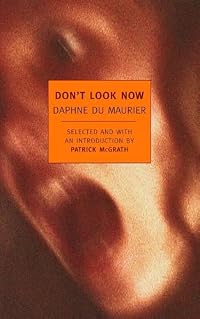
Don't Look Now: Selected Stories of Daphne du Maurier [NYRB Classics ]
by Daphne du Maurier
On This Page
Description
Patrick McGrath's revelatory new selection of du Maurier's stories shows her at her most chilling and most psychologically astute: a dead child reappears in the alleyways of Venice; routine eye surgery reveals the beast within to a meek housewife; nature revolts against man's abuse by turning a benign species into an annihilating force; a dalliance with a beautiful stranger offers something more dangerous than a broken heart.Tags
Recommendations














Member Reviews
Gripping, absolutely gripping – my listening to three Daphne du Maurier tales on audio: No Motive and two from this collection, Don’t Look Now and the author’s famous The Birds. Each reading spanning an hour and a half, the storytelling so compelling, picking up dramatic momentum every single minute, I dare not take a break until the shocking conclusion. And to add a bit more atmosphere to my listening to The Birds, out my apartment window, down at the pond, a gaggle of Canadian Geese started honking and fighting and honking some more.
Patrick McGrath writes in his astute Introduction to this New York Review Books (NYRB) edition how Daphne du Mauier possessed an uncanny genius to craft her stories in ways to sustain tension right show more up until the the final sentence, an ending frequently shocking and disturbing in the extreme.
I enjoyed each of the nine pieces collected here but two most especially: Don’t Look Now with its clairvoyant older twins and creepy happenings and the story serving as the focus of my review: The Birds. And please don't think of the Hitchcock film - other than attacking birds and terrorized humans, Daphne du Maurier's tale is a hundred shades darker, incomparably more ominous and threatening, even to the point of impending cataclysm for the entire human race.
THE BIRDS
“Black and white, jackdaw and gull, mingled in strange partnership, seeking some sort of liberation, never satisfied, never still. Flocks of starlings, rustling like silk, flew to fresh pasture, driven by the same necessity of movement, and the smaller birds, the finches and the larks, scattered from tree to hedge as if compelled.”
Handyman Nat Hocken lives in remote farming country out on a peninsula in England and remarks to one of the farmers how there’s something quite strange about all the bird behavior this autumn. Just how strange? Nat finds out very quickly when that very night birds enter the bedroom window of his son and daughter, dozens of little birds, attacking both of them, trying to peck out his son’s eyes. Nat takes immediate action, gets his children out of the room, closes the door, and frantically swings a pillow left and right, up and down, to kill as many birds as he can.
The next morning: “Nat gazed at the little corpses, shocked and horrified. They were all small birds, none of any size, there must have been fifty of them lying there upon the floor. There were robins, finches, sparrows, blue tits, larks, and bramblings, birds that by nature’s law kept to their own flock and their own territory, and now, joining one with another in their urge for battle, has destroyed themselves against the bedroom walls, or in the strife had been destroyed by him.” And this is only the beginning.
Later that day Ned is attacked by bigger birds out in a field and, after he races home for protection, both he and his wife hear on the radio that the government of England has called a state of emergency, advising all citizens to remain inside and take the necessary precautions to ensure their safety. But, above all else, people are urged to remain calm.
Time Out for Facts: there exists almost ten thousand different species of birds and according to some experts, the total worldwide bird population could total as many as four-hundred-billion. Whoa! Four-hundred-billion. No matter how you look at it, that’s a lot of birds. Imagine what would happen if, as if directed and coordinated by some unseen unifying force, all those birds began an attack en masse on humans.
Slovenian philosopher and cultural critic Slavoj Žižek believes the author was targeting the prevailing welfare state for their inability to effectively deal with the attacking birds. Patrick McGrath notes how du Maurier’s story anticipates a global ecological disaster. I myself think McGrath is on the mark and Žižek is way off the mark. As Nat Hocken asserts, survival, at least immediate survival, has everything to do with the sturdiness of one's shelter. Sorry, Slavoj - politicians of any stripe will be of little help in fending off a nonstop attack conducted by billions of birds.
Daphne du Maurier delves into the unsettling psychology produced by such an attack. Almost to be expected, initial reactions revolve around denial and rationalization. Very understandable since the cycle of human existence is completely dependent on the laws of nature.
And the more we understand the laws of nature, the more we feel we are in control. Herein lies the terror of the tale – the laws of nature remain intact with one glaring exception: the behavior of the birds. All of a sudden nature has transformed itself into the unknown. As writers such as H.P. Lovecraft recognized, there is no stronger human emotion than fear and no great fear than fear of the unknown.
As per the well-worn admonition, “Don’t just stand there, do something!” humans being humans, there is a natural instinct to take action. Upon hearing a roaring sound, Nat reflects how the authorities have sent out airplanes but knows this is sheer suicide since aircraft would be useless against thousands and thousands of birds flinging themselves to death against propellers, fuselages and jets.
Then Nat hears another sound, a sound prompting him to have one last smoke: “The hawks ignored the windows. They concentrated their attack upon the door. Nat listened to the tearing sound of splintered wood, and wondered how many million years of memory were stored in those little brains, behind the stabbing beaks, the piercing eyes, now giving them this instinct to destroy mankind with all the precision of machines.”
Did I mention gripping? I can assure you, you will never encounter a more chilling, spellbinding, mesmerizing tale then this one. Darn, down at the pond, those Canadian Geese are still honking up a storm. But no attacks on humans have been reported . . . yet. show less
Gripping, absolutely gripping – my listening to three Daphne du Maurier tales on audio: No Motive and two from this collection, Don’t Look Now and the author’s famous The Birds. Each reading spanning an hour and a half, the storytelling so compelling, picking up dramatic momentum every single minute, I dare not take a break until the shocking conclusion. And to add a bit more atmosphere to my listening to The Birds, out my apartment window, down at the pond, a gaggle of Canadian Geese started honking and fighting and honking some more.
Patrick McGrath writes in his astute Introduction to this New York Review Books (NYRB) edition how Daphne du Mauier possessed an uncanny genius to craft her stories in ways to sustain tension right show more up until the the final sentence, an ending frequently shocking and disturbing in the extreme. I enjoyed each of the nine pieces collected here but two most especially: Don’t Look Now with its clairvoyant older twins and creepy happenings and the story serving as the focus of my review: The Birds. And please don't think of the Hitchcock film - other than attacking birds and terrorized humans, Daphne du Maurier's tale is a hundred shades darker, incomparably more ominous and threatening, even to the point of impending cataclysm for the entire human race.
THE BIRDS
“Black and white, jackdaw and gull, mingled in strange partnership, seeking some sort of liberation, never satisfied, never still. Flocks of starlings, rustling like silk, flew to fresh pasture, driven by the same necessity of movement, and the smaller birds, the finches and the larks, scattered from tree to hedge as if compelled.” Handyman Nat Hocken lives in remote farming country out on a peninsula in England and remarks to one of the farmers how there’s something quite strange about all the bird behavior this autumn. Just how strange? Nat finds out very quickly when that very night birds enter the bedroom window of his little son and daughter, dozens of little birds, attacking both of them, trying to peck out his son’s eyes. Nat takes immediate action, gets his children out of the room, closes the door, and frantically swings a pillow left and right, up and down, to kill as many birds as he can.
The next morning: “Nat gazed at the little corpses, shocked and horrified. They were all small birds, none of any size, there must have been fifty of them lying there upon the floor. There were robins, finches, sparrows, blue tits, larks, and bramblings, birds that by nature’s law kept to their own flock and their own territory, and now, joining one with another in their urge for battle, has destroyed themselves against the bedroom walls, or in the strife had been destroyed by him.” And this is only the beginning. Later that day Ned is attacked by bigger birds out in a field and, after he races home for protection, both he and his wife hear on the radio that the government of England has called a state of emergency, advising all citizens to remain inside and take the necessary precautions to ensure their safety. But, above all else, people are urged to remain calm.
Fun facts: there exists almost ten thousand different species of birds and according to some experts, the total worldwide bird population could total as many as four-hundred-billion. Whoa! Four-hundred-billion. No matter how you look at it, that’s a lot of birds. Imagination what would happen if, as if directed and coordinated by some unseen unifying force, all those birds began an attack en masse on humans.
Slovenian philosopher and cultural critic Slavoj Žižek believes the author was targeting the prevailing welfare state for their inability to effectively deal with the attacking birds. Patrick McGrath notes how du Maurier’s story anticipates a global ecological disaster. I myself think McGrath is on the mark and Žižek is way off the mark. As Nat Hocken asserts, survival, at least immediate survival, has everything to do with the sturdiness of the one's shelter. Sorry, Slavoj - politicians of any stripe will be of little help in fending off a nonstop attack conducted by billions of birds.
Daphne du Maurier delves into the unsettling psychology produced by such an attack. Almost to be expected, initial reactions revolve around denial and rationalization. Very understandable since the cycle of human existence is completely dependent on the laws of nature. And the more we understand the laws of nature, the more we feel we are in control. Herein lies the terror of the tale – the laws of nature remain intact with one glaring exception: the behavior of the birds. All of a sudden nature has transformed itself into the unknown. As writers such as H.P. Lovecraft recognized, there is no stronger human emotion than fear and no great fear than fear of the unknown.
As per the well-worn admonition, “Don’t just stand there, do something!” humans being humans, there is a natural instinct to take action. Upon hearing a roaring sound, Nat reflects how the authorities have sent out airplanes but knows this is sheer suicide since aircraft would be useless against thousands and thousands of birds flinging themselves to death against propellers, fuselages and jets.
Then Nat hears another sound, a sound prompting him to have one last smoke: “The hawks ignored the windows. They concentrated their attack upon the door. Nat listened to the tearing sound of splintered wood, and wondered how many million years of memory were stored in those little brains, behind the stabbing beaks, the piercing eyes, now giving them this instinct to destroy mankind with all the precision of machines.” Did I mention gripping? I can assure you, you will never encounter a more chilling, spellbinding, mesmerizing tale then this one. Darn, down at the pond, those Canadian Geese are still honking up a storm. But no attacks on humans have been reported . . . yet. show less
Patrick McGrath writes in his astute Introduction to this New York Review Books (NYRB) edition how Daphne du Mauier possessed an uncanny genius to craft her stories in ways to sustain tension right show more up until the the final sentence, an ending frequently shocking and disturbing in the extreme. I enjoyed each of the nine pieces collected here but two most especially: Don’t Look Now with its clairvoyant older twins and creepy happenings and the story serving as the focus of my review: The Birds. And please don't think of the Hitchcock film - other than attacking birds and terrorized humans, Daphne du Maurier's tale is a hundred shades darker, incomparably more ominous and threatening, even to the point of impending cataclysm for the entire human race.
THE BIRDS
“Black and white, jackdaw and gull, mingled in strange partnership, seeking some sort of liberation, never satisfied, never still. Flocks of starlings, rustling like silk, flew to fresh pasture, driven by the same necessity of movement, and the smaller birds, the finches and the larks, scattered from tree to hedge as if compelled.” Handyman Nat Hocken lives in remote farming country out on a peninsula in England and remarks to one of the farmers how there’s something quite strange about all the bird behavior this autumn. Just how strange? Nat finds out very quickly when that very night birds enter the bedroom window of his little son and daughter, dozens of little birds, attacking both of them, trying to peck out his son’s eyes. Nat takes immediate action, gets his children out of the room, closes the door, and frantically swings a pillow left and right, up and down, to kill as many birds as he can.
The next morning: “Nat gazed at the little corpses, shocked and horrified. They were all small birds, none of any size, there must have been fifty of them lying there upon the floor. There were robins, finches, sparrows, blue tits, larks, and bramblings, birds that by nature’s law kept to their own flock and their own territory, and now, joining one with another in their urge for battle, has destroyed themselves against the bedroom walls, or in the strife had been destroyed by him.” And this is only the beginning. Later that day Ned is attacked by bigger birds out in a field and, after he races home for protection, both he and his wife hear on the radio that the government of England has called a state of emergency, advising all citizens to remain inside and take the necessary precautions to ensure their safety. But, above all else, people are urged to remain calm.
Fun facts: there exists almost ten thousand different species of birds and according to some experts, the total worldwide bird population could total as many as four-hundred-billion. Whoa! Four-hundred-billion. No matter how you look at it, that’s a lot of birds. Imagination what would happen if, as if directed and coordinated by some unseen unifying force, all those birds began an attack en masse on humans.
Slovenian philosopher and cultural critic Slavoj Žižek believes the author was targeting the prevailing welfare state for their inability to effectively deal with the attacking birds. Patrick McGrath notes how du Maurier’s story anticipates a global ecological disaster. I myself think McGrath is on the mark and Žižek is way off the mark. As Nat Hocken asserts, survival, at least immediate survival, has everything to do with the sturdiness of the one's shelter. Sorry, Slavoj - politicians of any stripe will be of little help in fending off a nonstop attack conducted by billions of birds.
Daphne du Maurier delves into the unsettling psychology produced by such an attack. Almost to be expected, initial reactions revolve around denial and rationalization. Very understandable since the cycle of human existence is completely dependent on the laws of nature. And the more we understand the laws of nature, the more we feel we are in control. Herein lies the terror of the tale – the laws of nature remain intact with one glaring exception: the behavior of the birds. All of a sudden nature has transformed itself into the unknown. As writers such as H.P. Lovecraft recognized, there is no stronger human emotion than fear and no great fear than fear of the unknown.
As per the well-worn admonition, “Don’t just stand there, do something!” humans being humans, there is a natural instinct to take action. Upon hearing a roaring sound, Nat reflects how the authorities have sent out airplanes but knows this is sheer suicide since aircraft would be useless against thousands and thousands of birds flinging themselves to death against propellers, fuselages and jets.
Then Nat hears another sound, a sound prompting him to have one last smoke: “The hawks ignored the windows. They concentrated their attack upon the door. Nat listened to the tearing sound of splintered wood, and wondered how many million years of memory were stored in those little brains, behind the stabbing beaks, the piercing eyes, now giving them this instinct to destroy mankind with all the precision of machines.” Did I mention gripping? I can assure you, you will never encounter a more chilling, spellbinding, mesmerizing tale then this one. Darn, down at the pond, those Canadian Geese are still honking up a storm. But no attacks on humans have been reported . . . yet. show less
If you have not read the short story upon which Alfred Hitchcock’s movie “The Birds” is based, then you have not… (Wait a minute. You haven’t seen “The Birds”? NO! Well, leave, right now, rent it, steal it, whatever you have to do. Go watch that. Okay. Done? Watched it now? Sheesh, who are some of these people? Where was I? Oh, yeah.) If you haven’t read the short story, then you have only tasted a piece of the terror that this story can bring. I’m old enough to remember when people were shocked by the ending of the movie (I won’t give it away), how they were appalled at the non-ending. Read the short story. You’ll gain a greater understanding of how an unresolved conflict really tells a greater story.
So, to say show more I’m a fan of this story is a bit of an understatement. Which means I feel that any book containing this Daphne Du Maurier classic is already worth the purchase. But this is more than one of Du Maurier’s stories – this is a collection. Prior to this book, my only experience was with that one short story. This collection proves that I need to get moving and discover more of her work.
The stories contained here are suspenseful, macabre, creepy, and, above all, compelling. Du Maurier generally starts simply – you feel you are visiting the lives of everyday people. But the normalcy starts to turn, and ordinary residents of these stories soon find themselves in extraordinary circumstances. For example, the first story (“Don’t Look Now”) starts with a couple who, we eventually learn, are visiting Venice to try and get away from the recent death of their young daughter. The wife meets two sisters who are psychic and, as the husband dismisses their visions, he finds himself wrapped up in them. In the story “Split Second”, we learn about a widow who is coming to grips with being alone – both because of her husband’s death a few years ago and her daughter attending a boarding school. The woman goes for a walk and returns home to find things turned completely around.
My descriptions are boring. That is because, as I said, the stories seem to start with the mundane. But Du Maurier, even in describing the mundane lives of people, draws you into the tales. And, before you know it, the story has been warped and you are wrapped in the lives and the story.
Not every story is perfect. The editor has purposely chosen a broad range of stories and it seems that this effort has resulted in the selection of some weaker ones. And speaking of that editor, an important warning about this particular collection: Do not read the Introduction prior to reading the stories. It describes every story and would, I imagine, take away the enjoyment of discovery within the stories. I can only imagine because I saw where the Introduction was headed and avoided it until I was done with the collection. Avoid the introduction. Do not avoid the collection. show less
So, to say show more I’m a fan of this story is a bit of an understatement. Which means I feel that any book containing this Daphne Du Maurier classic is already worth the purchase. But this is more than one of Du Maurier’s stories – this is a collection. Prior to this book, my only experience was with that one short story. This collection proves that I need to get moving and discover more of her work.
The stories contained here are suspenseful, macabre, creepy, and, above all, compelling. Du Maurier generally starts simply – you feel you are visiting the lives of everyday people. But the normalcy starts to turn, and ordinary residents of these stories soon find themselves in extraordinary circumstances. For example, the first story (“Don’t Look Now”) starts with a couple who, we eventually learn, are visiting Venice to try and get away from the recent death of their young daughter. The wife meets two sisters who are psychic and, as the husband dismisses their visions, he finds himself wrapped up in them. In the story “Split Second”, we learn about a widow who is coming to grips with being alone – both because of her husband’s death a few years ago and her daughter attending a boarding school. The woman goes for a walk and returns home to find things turned completely around.
My descriptions are boring. That is because, as I said, the stories seem to start with the mundane. But Du Maurier, even in describing the mundane lives of people, draws you into the tales. And, before you know it, the story has been warped and you are wrapped in the lives and the story.
Not every story is perfect. The editor has purposely chosen a broad range of stories and it seems that this effort has resulted in the selection of some weaker ones. And speaking of that editor, an important warning about this particular collection: Do not read the Introduction prior to reading the stories. It describes every story and would, I imagine, take away the enjoyment of discovery within the stories. I can only imagine because I saw where the Introduction was headed and avoided it until I was done with the collection. Avoid the introduction. Do not avoid the collection. show less
A collection of nine short stories from Daphne du Maurier, all of which are well-written and entertaining. It opens with the brilliant pair that were adapted into great films, Don’t Look Now and The Birds, where du Maurier was at her very best in creating suspense out of things beyond human comprehension or control. The elements of the supernatural, the macabre, and cruel acts of people are themes throughout her work, and she has a tendency to end her stories on conflicting, dark notes instead of settling for happy endings.
My third favorite was probably The Blue Lenses, which is about a woman who emerges from eye surgery able to see the true selves of people when their heads appear as various animals, which led to brilliant imagery show more as well as paranoid tension with what her husband and a kindly nurse seem to have going on.
In the category of people behaving badly we also have Kiss Me Again, Stranger, with a mild-mannered man becoming attracted to a rather strange young woman, La Sainte-Verge, which slowly reveals how a devoted peasant woman in Brittany is being cheated on by her husband, a sailor, and Indiscretion, which has one man telling another about how he was swindled by a woman after sleeping with her, something which results in unintended consequences.
In the category of the supernatural we have, Escort, which was written towards the end of WWII about a ghost ship with a little bit of patriotism mixed in, and Split Second, which has a middle-aged woman inadvertently becoming displaced in time.
Lastly, and maybe the most unique of the stories, we have Monte Verita, which is about a secret religious order hidden away in the mountains and how a couple of friends come into contact with it through one of their wives. One senses some of du Maurier’s own views mixed in to a story that keeps you guessing about the powers of those on a higher spiritual plane, as well as her pessimism in the menace that ignorant villagers pose to them.
Quotes:
On death:
“This, I thought to myself, still wondering but bewildered, happy, this is what I always hoped that death would be. The negation of all pain and all distress, and the centre of life flowing, not from the quibbling brain, but from the heart.”
On fate:
“I have a theory that each man’s life is like a pack of cards, and those we meet and sometimes love are shuffled with us. We find ourselves in the same suit, held by the hand of Fate. The game is played, we are discarded, and pass on.”
On leaving a place one has visited; I had this same feeling in Venice:
“As he stepped on to the steam-ferry, his luggage heaped beside him, a crowd of jostling people all about him, he had one momentary pang to be leaving Venice. When, if ever, he wondered, would they come again?” show less
My third favorite was probably The Blue Lenses, which is about a woman who emerges from eye surgery able to see the true selves of people when their heads appear as various animals, which led to brilliant imagery show more as well as paranoid tension with what her husband and a kindly nurse seem to have going on.
In the category of people behaving badly we also have Kiss Me Again, Stranger, with a mild-mannered man becoming attracted to a rather strange young woman, La Sainte-Verge, which slowly reveals how a devoted peasant woman in Brittany is being cheated on by her husband, a sailor, and Indiscretion, which has one man telling another about how he was swindled by a woman after sleeping with her, something which results in unintended consequences.
In the category of the supernatural we have, Escort, which was written towards the end of WWII about a ghost ship with a little bit of patriotism mixed in, and Split Second, which has a middle-aged woman inadvertently becoming displaced in time.
Lastly, and maybe the most unique of the stories, we have Monte Verita, which is about a secret religious order hidden away in the mountains and how a couple of friends come into contact with it through one of their wives. One senses some of du Maurier’s own views mixed in to a story that keeps you guessing about the powers of those on a higher spiritual plane, as well as her pessimism in the menace that ignorant villagers pose to them.
Quotes:
On death:
“This, I thought to myself, still wondering but bewildered, happy, this is what I always hoped that death would be. The negation of all pain and all distress, and the centre of life flowing, not from the quibbling brain, but from the heart.”
On fate:
“I have a theory that each man’s life is like a pack of cards, and those we meet and sometimes love are shuffled with us. We find ourselves in the same suit, held by the hand of Fate. The game is played, we are discarded, and pass on.”
On leaving a place one has visited; I had this same feeling in Venice:
“As he stepped on to the steam-ferry, his luggage heaped beside him, a crowd of jostling people all about him, he had one momentary pang to be leaving Venice. When, if ever, he wondered, would they come again?” show less
In his introduction, Patrick McGrath notes that although Daphne Du Maurier's work has had great popular success, "during her lifetime she received comparatively little critical esteem." Du Maurier herself was "pained deeply" about being "dismissed with a sneer as a bestseller" rather than as a serious writer. If her popularity, her status as a "bestseller," or her reputation as a Romance novelist keeps people from reading her work in this collection, well, that's a shame. If you're tired of same old same old in your reading life, and you want a bit of shaking up, I can't think of a better book to recommend than this one, a fine selection of stories that should not go unread. The choice of stories in this book might be a little uneven, show more but for the most part, they're worth every second of time you spend not only reading them, but thinking about them long after you've turned that last page. This book might also provide a different perspective from which to examine Du Maurier as much more than simply the woman who wrote Rebecca.
As a whole, this is a fascinating collection of stories. Thematically you'll find the author covers a wide range: isolation, love, loss, grief, dislocation, revenge, obsession, fate -- all very human attributes that here take on a different sort of significance in the lives of her characters. The beauty in these tales is that her people are just going about their every day lives -- at least at first. For example, In "Don't Look Now," a husband and wife are in Venice on holiday to help them to deal with their grief over their dead child. In "Split Second," a widow with a young daughter away at school steps out to take a walk and returns home. "The Blue Lenses" is expressed from the point of view of a woman who is recovering from eye surgery. All of these things are very normal, very mundane, and described very well by the author. But soon it begins to dawn on you that something is just off -- that things are moving ever so slightly away from ordinary, heading into the realm of extraordinary. By that time, you're so caught up in the lives of these people that you have to see them through to the end. The joke is on the reader, though -- in some cases the endings do not necessarily resolve things, but instead, point toward another possible chapter in the characters' futures. While the author doesn't do this in every story, when she does, it's highly effective and leaves you very unsettled and in my case, filled with a sense of unease thinking about what's going to happen to these people next. As one character notes, "Nothing's been the same since. Nor ever will be," and that's the feeling I walked away with in several of these stories.
While I enjoyed each and every story (and I'm not going to go through them all here -- they're best experienced rather than read about) there are some that I felt are much better than others. I was frankly floored by "The Birds," mainly due to the dawning realization on the part of Nat Hocken about the reality of his family's situation -- and that of England and quite possibly the rest of the world as well. This was for me, the most frightening story in the book, one that made me put the book down for a while before returning to it. And if you don't want to read the story because you've seen the Hitchcock movie, trust me -- there is very little similarity between the two. The title story, "Don't Look Now," is equally as chilling but in an entirely different way - I had, however, read it previously and I'd seen the movie, which sort of killed it as a reread. The movie sticks very closely to the story, so do yourself a favor, and read it first. You'll be happy you did. "Blue Lenses" is another excellent entry in this collection, about a woman whose bandages are removed after eye surgery where she's fitted with temporary blue lenses. It's only after the bandages are off that she makes a horrifying discovery -- and then she has to go home. The ending of this one actually made me shiver. Then, in a strange turn of events, another one of my favorite stories, "Monte Verità," starts at the end of the story. "Monte Verità" is longer in length than the others here, but that actually works in its favor. This one is just eerie -- otherworldly is also an adjective I'd use to describe it. The rest of the collection is good as well, but to me, these were the standouts -- the ones that messed with my head (in a good way) the most.
There are a number of good reviews of this book that go more in depth than what I've written here, but don't read them until after you've finished reading the book. I didn't read any of them until just now, after having finished writing my own thoughts down, and I noticed that there are also some that tend to give away the show. Also, you'd be doing yourself a big favor if you save the intro for last. This is a little gem of a collection that I'll be holding onto forever. NYRB classics has really done readers a great service by bringing these stories together -- my advice: if you're interested in trying out Du Maurier's short stories, this edition would be the perfect starting place. show less
As a whole, this is a fascinating collection of stories. Thematically you'll find the author covers a wide range: isolation, love, loss, grief, dislocation, revenge, obsession, fate -- all very human attributes that here take on a different sort of significance in the lives of her characters. The beauty in these tales is that her people are just going about their every day lives -- at least at first. For example, In "Don't Look Now," a husband and wife are in Venice on holiday to help them to deal with their grief over their dead child. In "Split Second," a widow with a young daughter away at school steps out to take a walk and returns home. "The Blue Lenses" is expressed from the point of view of a woman who is recovering from eye surgery. All of these things are very normal, very mundane, and described very well by the author. But soon it begins to dawn on you that something is just off -- that things are moving ever so slightly away from ordinary, heading into the realm of extraordinary. By that time, you're so caught up in the lives of these people that you have to see them through to the end. The joke is on the reader, though -- in some cases the endings do not necessarily resolve things, but instead, point toward another possible chapter in the characters' futures. While the author doesn't do this in every story, when she does, it's highly effective and leaves you very unsettled and in my case, filled with a sense of unease thinking about what's going to happen to these people next. As one character notes, "Nothing's been the same since. Nor ever will be," and that's the feeling I walked away with in several of these stories.
While I enjoyed each and every story (and I'm not going to go through them all here -- they're best experienced rather than read about) there are some that I felt are much better than others. I was frankly floored by "The Birds," mainly due to the dawning realization on the part of Nat Hocken about the reality of his family's situation -- and that of England and quite possibly the rest of the world as well. This was for me, the most frightening story in the book, one that made me put the book down for a while before returning to it. And if you don't want to read the story because you've seen the Hitchcock movie, trust me -- there is very little similarity between the two. The title story, "Don't Look Now," is equally as chilling but in an entirely different way - I had, however, read it previously and I'd seen the movie, which sort of killed it as a reread. The movie sticks very closely to the story, so do yourself a favor, and read it first. You'll be happy you did. "Blue Lenses" is another excellent entry in this collection, about a woman whose bandages are removed after eye surgery where she's fitted with temporary blue lenses. It's only after the bandages are off that she makes a horrifying discovery -- and then she has to go home. The ending of this one actually made me shiver. Then, in a strange turn of events, another one of my favorite stories, "Monte Verità," starts at the end of the story. "Monte Verità" is longer in length than the others here, but that actually works in its favor. This one is just eerie -- otherworldly is also an adjective I'd use to describe it. The rest of the collection is good as well, but to me, these were the standouts -- the ones that messed with my head (in a good way) the most.
There are a number of good reviews of this book that go more in depth than what I've written here, but don't read them until after you've finished reading the book. I didn't read any of them until just now, after having finished writing my own thoughts down, and I noticed that there are also some that tend to give away the show. Also, you'd be doing yourself a big favor if you save the intro for last. This is a little gem of a collection that I'll be holding onto forever. NYRB classics has really done readers a great service by bringing these stories together -- my advice: if you're interested in trying out Du Maurier's short stories, this edition would be the perfect starting place. show less
DuMaurier's short stories, the source for so many films, including The Birds, are gems. She is a gifted writer at building suspense and creating an eerie or disconcerting atmosphere.
Yet she also seems to tap into deeper human fears and her novels and short stories far surpass other writers of thrillers.
The Birds in particular is strikingly different than the film. Set in a remote British coastal town not long after the end of World War II the fears the bird evokes in the war veteran narrator resonate with his war experiences while still maintaining the mystery and fear of nature gone awry and at odds with humans.
The other stories include a woman who leaves her house and returns to find other people living there, a woman who recovers show more from eye surgery only to see the beast within others, a couple with escaping their grief over a dead child in Italy end up having an appointment in Samara.
DuMaurier's success has perhaps overshadowed her consummate skill as a writer and it is worth rediscovering that skill in these short stories. show less
Yet she also seems to tap into deeper human fears and her novels and short stories far surpass other writers of thrillers.
The Birds in particular is strikingly different than the film. Set in a remote British coastal town not long after the end of World War II the fears the bird evokes in the war veteran narrator resonate with his war experiences while still maintaining the mystery and fear of nature gone awry and at odds with humans.
The other stories include a woman who leaves her house and returns to find other people living there, a woman who recovers show more from eye surgery only to see the beast within others, a couple with escaping their grief over a dead child in Italy end up having an appointment in Samara.
DuMaurier's success has perhaps overshadowed her consummate skill as a writer and it is worth rediscovering that skill in these short stories. show less
I hadn't read any of du Maurier's short stories before, but this certainly won't be the last of them I watch for. Excellent, atmospheric, often delightfully creepy.
Members
- Recently Added By
Lists

Stories set in Venice The City Of Canals
14 works; 2 members
Author Information

203+ Works 57,358 Members
Daphne Du Maurier was born in London on May 13, 1907 and educated in Paris. In 1932, she married Lieutenant-General Sir Frederick Browning. She began writing short stories of mystery and suspense for magazines in 1928, a collection of which appeared as The Apple Tree in 1952. Her first novel, The Loving Spirit, was published in 1931. Her tightly show more woven, highly suspenseful plots and her strong characters make her stories perfect for adaptation to film or television. Among her many novels that were made into successful films are Jamaica Inn (1936), Rebecca (1938), Frenchman's Creek (1941), Hungry Hill (1943), My Cousin Rachel (1952), and The Scapegoat (1957). Her short story, The Birds (1953), was brought to the screen by director Alfred Hitchcock in a treatment that has become a classic horror-suspense film. She died on April 19, 1989 at the age of 81. (Bowker Author Biography) show less
All Editions
Series
Belongs to Publisher Series
Work Relationships
Contains
Common Knowledge
- Canonical title
- Don't Look Now: Selected Stories of Daphne du Maurier [NYRB Classics ]
- Alternate titles
- Don't Look Now: Stories
- Related movies
- Don't Look Now (1973 | IMDb); The Birds (1963 | IMDb)
- Blurbers
- Michael Dirda; Alberto Manguel
- Original language
- English
- Disambiguation notice
- The New York Review Books Classics version of Don't Look Now has the following table of contents:
- Don't Look Now
- The Birds
- Escort
- Split Second
- Kiss Me Again, Stranger
- The Blue Le... (show all)nses
- La Saint Vierge
- Indiscretion
- Monte Verità
Classifications
Statistics
- Members
- 799
- Popularity
- 34,567
- Reviews
- 20
- Rating
- (4.02)
- Languages
- English
- Media
- Paper
- ISBNs
- 1