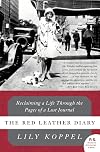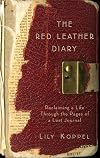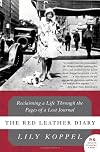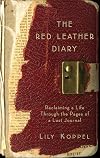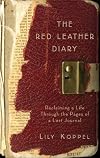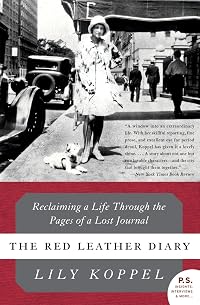
The Red Leather Diary: Reclaiming a Life Through the Pages of a Lost Journal
by Lily Koppel, Florence Wolfson Howitt
On This Page
Description
"A world straight from the pages of an F. Scott Fitzgerald novel. . . . An extraordinary story about coming of age, following your dreams and discovering (or rediscovering) who you are, were and want to be." - Parade Rescued from a Dumpster on the Upper West Side of Manhattan, a discarded diary brings to life the glamorous, forgotten world of an extraordinary young woman Opening the tarnished brass lock of a red leather diary found in the basement of a New York City apartment building, New show more York Times writer Lily Koppel embarked on a journey into the past. Compelled by the hopes and heartaches captured in the pages, Koppel set out to find the diary's owner, a 90-year old woman named Florence. Eventually reunited with her diary, Florence ventured back to the girl she once was, rediscovering a lost self that burned with artistic fervor. Joining intimate interviews with original diary entries, The Red Leather Diary is an evocative and entrancing work that recreates the romance and glitter, sophistication and promise, of 1930s New York, bringing to life the true story of a precocious young woman who dared to follow her dreams. show lessTags
Recommendations













Member Reviews
I have always loved and been drawn to journals, diaries and memoirs. The romance and charm of even how Lily found this diary was delightful. But yes, the time capsule it opened up was fascinating. If it had been me, I would have arranged to have the entire steamer trunk (maybe ALL of them, out there on that sidewalk, waiting for the dumpster), brought home with me, and I would have spent months going through each and every item, savouring every moment of treasure. But maybe that's just me!
Florence was the very definition of a brainy, artsy free spirit while, at the same time, rebelling and chafing against family and the constraints of the day, the same as every teenage girl across time, I am sure. That she could sail across the ocean show more alone and traipse around an increasingly tempestuous and dangerous Europe in 1934, and stay safe, even in her innocence, was remarkable to me. For sure, those were different times.
But what fascinated me almost as much as the diary itself, was the end, the last chapter, which brought us to the present, where Lily engages the help of a private investigator to help her locate Florence. And the meeting of the two, the kindred spirits, and the instantaneous bond they developed - I expected nothing less. I also enjoyed the final section, *About the Author*, an interview with Lily herself. I wish she had written more and hope she does. I read her second book, The Astronauts Wives several years ago, before I ever heard of this one. But I enjoyed The Red Leather Diary so much more. show less
Florence was the very definition of a brainy, artsy free spirit while, at the same time, rebelling and chafing against family and the constraints of the day, the same as every teenage girl across time, I am sure. That she could sail across the ocean show more alone and traipse around an increasingly tempestuous and dangerous Europe in 1934, and stay safe, even in her innocence, was remarkable to me. For sure, those were different times.
But what fascinated me almost as much as the diary itself, was the end, the last chapter, which brought us to the present, where Lily engages the help of a private investigator to help her locate Florence. And the meeting of the two, the kindred spirits, and the instantaneous bond they developed - I expected nothing less. I also enjoyed the final section, *About the Author*, an interview with Lily herself. I wish she had written more and hope she does. I read her second book, The Astronauts Wives several years ago, before I ever heard of this one. But I enjoyed The Red Leather Diary so much more. show less
Subtitled: Reclaiming a Life Through the Pages of a Lost Journal
Lily Koppel was a young (age 22) writer working at the New York Times when she stumbled upon a dumpster filled with old steamer trunks. Her curiosity piqued, she started scavenging and among the vintage clothing, handbags and general miscellanea she came across an old red leather diary, its cover cracked and peeling. It had originally been given to Florence Wolfson for her 14th birthday – Aug 11, 1929, and Florence dutifully wrote in it every day for the five years allowed on its pages.
The diary gave an intimate look at the life of a relatively privileged young lady in New York from 1919 to 1934. Florence attended the theater, opera, music concerts, had crushes and show more “love affairs,” read voraciously, studied hard, and was a keen observer of what was going on around her. But the diary did more than offer a fascinating glimpse into the past.
As Lily read the young Florence’s record of her hopes, dreams, experiences, heartbreaks and triumphs, she discovered something about herself. The diary had come to Koppel at a time when she, like the teenaged Florence, was searching for her purpose in life, wondering if she was on the right path, at once eager and frightened to experience new things.
And then Koppel went searching for Florence … and found her.
I was mesmerized from beginning to end. show less
Lily Koppel was a young (age 22) writer working at the New York Times when she stumbled upon a dumpster filled with old steamer trunks. Her curiosity piqued, she started scavenging and among the vintage clothing, handbags and general miscellanea she came across an old red leather diary, its cover cracked and peeling. It had originally been given to Florence Wolfson for her 14th birthday – Aug 11, 1929, and Florence dutifully wrote in it every day for the five years allowed on its pages.
The diary gave an intimate look at the life of a relatively privileged young lady in New York from 1919 to 1934. Florence attended the theater, opera, music concerts, had crushes and show more “love affairs,” read voraciously, studied hard, and was a keen observer of what was going on around her. But the diary did more than offer a fascinating glimpse into the past.
As Lily read the young Florence’s record of her hopes, dreams, experiences, heartbreaks and triumphs, she discovered something about herself. The diary had come to Koppel at a time when she, like the teenaged Florence, was searching for her purpose in life, wondering if she was on the right path, at once eager and frightened to experience new things.
And then Koppel went searching for Florence … and found her.
I was mesmerized from beginning to end. show less
A delightful biography/autobiography of the young Florence Wolfson (Howitt), resident of 1930s New York, as discovered in her found diary which spanned 5 years from her 14th to 19th birthday.
Journalist Lilly Koppel discovered the little red diary in a trunk which lay among many that had been put in a dumpster when the block owners where she lived were planning to re-purpose the basement storage space, and the tenants who no longer resided there's trunks were evicted.
Several years after finding the diary, and writing an article about it, Koppel hires a private detective to establish whether Florence is alive. At 92 she is alive and well, and Koppel takes the diary to be reunited with its author. Regular meetings ensue, and are recorded, show more and Florence fleshes out those brief daily entries of her teenage years. A young cultured woman comes alive to her aged self, and she agrees to the book being published.
Florence died aged 96 in 2012.
Thanks to Shelley for putting this on my radar. show less
Journalist Lilly Koppel discovered the little red diary in a trunk which lay among many that had been put in a dumpster when the block owners where she lived were planning to re-purpose the basement storage space, and the tenants who no longer resided there's trunks were evicted.
Several years after finding the diary, and writing an article about it, Koppel hires a private detective to establish whether Florence is alive. At 92 she is alive and well, and Koppel takes the diary to be reunited with its author. Regular meetings ensue, and are recorded, show more and Florence fleshes out those brief daily entries of her teenage years. A young cultured woman comes alive to her aged self, and she agrees to the book being published.
Florence died aged 96 in 2012.
Thanks to Shelley for putting this on my radar. show less
The story of how this book came to be is almost better than the book itself. Lilly Koppel, a twenty-something writer for the New York Times found a red leather diary in an old steamer trunk in front of her building one afternoon. Having decided it was time to finally clear out the basement, the building management put a bunch of trunks and other items out at the curb to be thrown away. Many of the items had been languishing in the basement for over 70 years. Seeing this mountain of old trunks, Lily's curiosity got the better of her, and she literally went dumpster diving. She came away with the diary, a vintage coat, a telegram and a few other odds and ends. As soon as she opened the diary and began reading, she was hooked. Lily read show more the diary and was fascinated by the young Florence Wolfson who had written the diary from 1929 to 1934. Florence had written an entry in the diary every day for five years from the ages of 14 to 19. Once again her curiosity wouldn't let her rest, and Lilly began to do some research on some of the people and places in the diary. Through a chance meeting, she teamed up with a private investigator who later found Florence Wolfson Howitt. Lilly contacted and met Florence who is now in her 90s and splits her time between Connecticut and Florida. Florence is thrilled to have her diary back and loves reading about the young girl she once was.
Lilly begins visiting Florence on a regular basis and develops a friendship with Florence. She also interviews many of Florence's family and friends, as well. With Florence's permission and the help of the interviews, Lilly turns the diary into the book, The Red Leather Diary: Reclaiming a Life Through the Pages of a Lost Journal. It would be an understatement of monumental proportion to say that this book is interesting. I was amazed at how 'modern' Florence was as a teen in the early 30s. She lived life to the fullest. She wanted to experience everything that life had to offer. She loved writing, drawing, painting and photography. She was also very emotional and enjoyed multiple relationships with both men and women. At times, Florence seems fearless, and at other times she seems like a frightened little girl. In many ways, Florence was ahead of her time, and she felt that she didn't really fit in anywhere.
As I said earlier, I love the premise behind this book. I love the way the project began. I loved reading about Florence and New York of the early 1930s. I loved discovering this unique woman who flouted convention and didn't want to marry a man and settle down simply because that's what society said she should do. My one complaint about the book is the fact that the writing sometimes felt disjointed. Koppel used the diary entries and filled in with background information she received from Florence and others. This led to choppiness and a writing style that didn't really flow that well sometimes. However, this is just a small quibble. This is a fascinating look into a time that has long since been lost. My only regret is that Florence didn't become a writer herself. show less
Lilly begins visiting Florence on a regular basis and develops a friendship with Florence. She also interviews many of Florence's family and friends, as well. With Florence's permission and the help of the interviews, Lilly turns the diary into the book, The Red Leather Diary: Reclaiming a Life Through the Pages of a Lost Journal. It would be an understatement of monumental proportion to say that this book is interesting. I was amazed at how 'modern' Florence was as a teen in the early 30s. She lived life to the fullest. She wanted to experience everything that life had to offer. She loved writing, drawing, painting and photography. She was also very emotional and enjoyed multiple relationships with both men and women. At times, Florence seems fearless, and at other times she seems like a frightened little girl. In many ways, Florence was ahead of her time, and she felt that she didn't really fit in anywhere.
As I said earlier, I love the premise behind this book. I love the way the project began. I loved reading about Florence and New York of the early 1930s. I loved discovering this unique woman who flouted convention and didn't want to marry a man and settle down simply because that's what society said she should do. My one complaint about the book is the fact that the writing sometimes felt disjointed. Koppel used the diary entries and filled in with background information she received from Florence and others. This led to choppiness and a writing style that didn't really flow that well sometimes. However, this is just a small quibble. This is a fascinating look into a time that has long since been lost. My only regret is that Florence didn't become a writer herself. show less
In 2003, journalist Lily Koppel exited her apartment at 98 Riverside Drive in New York and was surprised to see more than fifty trunks and valises from a bygone era piled high in a red dumpster. Intrigued, she climbed up and began excavating. Amid relics from the 1920s and 30s, stored within the confines of a forgotten trunk, was a small red leather diary written by a young girl. This discovery would not only change the course of Koppel’s life, but would open up the long forgotten world of Florence Wolfson - a precocious and passionate young woman who dreamed of a literary life and sought love while growing up in New York City. Born in 1915, Florence Wolfson came of age during Prohibition, the Depression and WWII. She was raised by show more Jewish immigrant parents who worked their way up to Manhattan’s fashionable neighborhoods. Florence’s voice within the pages of her diary drew Koppel to her. Here was a young girl who was highly intelligent, ahead of her time and driven to live life to its fullest.
The Red Leather Diary combines diary entries with narrative developed from interviews Koppel had with ninety year old Florence…who she located with help from a private investigator three years after discovering the diary. The book gives the reader a glimpse into the thoughts and dreams of a privileged girl who excelled in music, art and writing. It is also filled with teenage passion and drama as Florence discovers love with both boys and girls. Florence Wolfson started a literary salon (a novel idea) in 1934 which included famous poets John Berryman and Delmore Schwartz; and she traveled alone to Europe in 1936, on the cusp of WWII. Koppel captures the life of this enigmatic and strongly independent young woman perfectly.
But the book is not just about Florence - it is also about its author who arrived in New York City at the age of 22 seeking to make her own mark in the world. In an interview at the end of the book, Lily Koppel writes:
When I moved to New York, like every young person drawn to the big city, my quest echoed Florence’s: I was seeking love, meaning in my life, and, as a writer, a story.
Koppel’s discovery inflamed her imagination. When she finally was able to meet Florence Wolfson face to face, an immediate friendship formed - a unique connection between a young woman at the beginning of her life and an older woman looking back on her youth.
How do you feel when a forgotten chunk of your life, full of adolescent angst and passion, is handed to you? How do you feel when you see your striving, feeling, immature self through your now elderly eyes? It stopped my heart for a moment. That was me? - written by Florence (Wolfson) Howitt, September 3, 2007 -
I read straight through The Red Leather Diary, finding myself immersed in a time long gone through the words of a girl who wanted to live in the center of it all. Koppel has written a marvelous book that tugs at the reader’s imagination.
Highly recommended. show less
The Red Leather Diary combines diary entries with narrative developed from interviews Koppel had with ninety year old Florence…who she located with help from a private investigator three years after discovering the diary. The book gives the reader a glimpse into the thoughts and dreams of a privileged girl who excelled in music, art and writing. It is also filled with teenage passion and drama as Florence discovers love with both boys and girls. Florence Wolfson started a literary salon (a novel idea) in 1934 which included famous poets John Berryman and Delmore Schwartz; and she traveled alone to Europe in 1936, on the cusp of WWII. Koppel captures the life of this enigmatic and strongly independent young woman perfectly.
But the book is not just about Florence - it is also about its author who arrived in New York City at the age of 22 seeking to make her own mark in the world. In an interview at the end of the book, Lily Koppel writes:
When I moved to New York, like every young person drawn to the big city, my quest echoed Florence’s: I was seeking love, meaning in my life, and, as a writer, a story.
Koppel’s discovery inflamed her imagination. When she finally was able to meet Florence Wolfson face to face, an immediate friendship formed - a unique connection between a young woman at the beginning of her life and an older woman looking back on her youth.
How do you feel when a forgotten chunk of your life, full of adolescent angst and passion, is handed to you? How do you feel when you see your striving, feeling, immature self through your now elderly eyes? It stopped my heart for a moment. That was me? - written by Florence (Wolfson) Howitt, September 3, 2007 -
I read straight through The Red Leather Diary, finding myself immersed in a time long gone through the words of a girl who wanted to live in the center of it all. Koppel has written a marvelous book that tugs at the reader’s imagination.
Highly recommended. show less
In the 1930's traffic lights in New York City were adorned with bronze statues of Mercury, young girls met their dates under the Biltmore clock and danced at El Morroco. Into this long gone world Florence Wolfson, a precocious 14-year old was given a 5 year line a day diary which she faithfully filled out every day for the next five years. 67 years later the diary is found by a young reporter for the NY Times who becomes intrigued by this young girl from the past.
What follows is th story of a remarkable life- an intrepid young woman who bZatles against the conventions of her religion and class and carves out a most remarkable lif for herself. At kltimes exasperating, at times annoying, but never dull, Florence's life if full of show more Intellectual pursuits and adventure. I wanted to get into a time machine & go back & meet her for drinks or share her European adventures.
This is a great book for anyone who enjoys the story of a free spirited woman as well as a vivid picture of a New York that has now varnished. show less
What follows is th story of a remarkable life- an intrepid young woman who bZatles against the conventions of her religion and class and carves out a most remarkable lif for herself. At kltimes exasperating, at times annoying, but never dull, Florence's life if full of show more Intellectual pursuits and adventure. I wanted to get into a time machine & go back & meet her for drinks or share her European adventures.
This is a great book for anyone who enjoys the story of a free spirited woman as well as a vivid picture of a New York that has now varnished. show less
This book made me angry. The book and its author a nothing more than a fraud. My anger originated with the difficulty to figure out how the book had come into being and who the real author is. Authorship is claimed by Lily Koppel. It must be said that her claim to authorship is justified regarding the way the book was produced, but it does not seem entirely fair. Some of my anger also relates to the title: the words "diary" and "journal" are very misleading, suggesting a wealth of original material. However, the original source document is merely a notebook, containing ultra-short messages for each day between 1929 and 1935 (almost like a long-hand version of a Twitter account). Ms Koppel is not the editor of a historical document, no, show more she has selected and interpreted these short messages and writing a story around them. The story is based on the notes, conversations with the author, whom she tracked down, and library research (+ Lily's musings).
The author never tells us how many entries the original notebook contained, and how much of that she used. from the book, we get the impression that the notebook was crammed with notes, but a photographic image of the notebook on the author's website suggests that the notebook was only partially filled.
Another problematic issue is the overall scope of the book. The notebooks cover a five-year period, during which the author, Florence Wolfson, was between the ages of 14 and 19. However, the story in the book and reproduced photographs extend into the period after the age of 19, for example Florence's 'grand tour' to Europe at the age of 21! This transition / extension is not clearly marked, and obviously is a much more attractive part of Florence life.
The story that is told by the book is interesting, and the investigative work put into it is thorough and well-done. Nonetheless, much of my anger remains, as lingering irritation at the sloppiness of presenting the source and the lack of modesty on the part of the author, pushing herself on the foreground. show less
The author never tells us how many entries the original notebook contained, and how much of that she used. from the book, we get the impression that the notebook was crammed with notes, but a photographic image of the notebook on the author's website suggests that the notebook was only partially filled.
Another problematic issue is the overall scope of the book. The notebooks cover a five-year period, during which the author, Florence Wolfson, was between the ages of 14 and 19. However, the story in the book and reproduced photographs extend into the period after the age of 19, for example Florence's 'grand tour' to Europe at the age of 21! This transition / extension is not clearly marked, and obviously is a much more attractive part of Florence life.
The story that is told by the book is interesting, and the investigative work put into it is thorough and well-done. Nonetheless, much of my anger remains, as lingering irritation at the sloppiness of presenting the source and the lack of modesty on the part of the author, pushing herself on the foreground. show less
Members
- Recently Added By
Lists

Biggest Disappointments
606 works; 163 members
Author Information

2 Works 1,892 Members
1 Work 672 Members
Common Knowledge
- Canonical title
- The Red Leather Diary: Reclaiming a Life Through the Pages of a Lost Journal
- Original publication date
- 2008
Classifications
Statistics
- Members
- 672
- Popularity
- 42,665
- Reviews
- 45
- Rating
- (3.28)
- Languages
- Dutch, English, Italian
- Media
- Paper, Ebook
- ISBNs
- 8
- ASINs
- 8