On This Page
Description
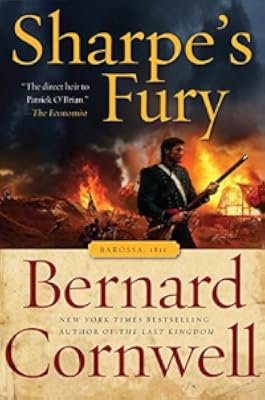
From New York Times bestselling author Bernard Cornwell, the eleventh installment in the world-renowned Sharpe series, chronicling the rise of Richard Sharpe, a Private in His Majesty's Army at the siege of Seringapatam. In the winter of 1811, the war seems lost. Spain has fallen to the French, except for Cadiz, now the Spanish capital and itself under siege. Inside the city walls an intricate diplomatic dance is taking place and Richard Sharpe faces more than one enemy. The small British show more force is trapped by a French army, and their only hope lies with the outnumbered redcoats outside refusing to admit defeat. There, in the sweltering horror of Barrosa, Sharpe will meet his old enemy Colonel Vandal once again. show lessTags
Recommendations









Member Reviews
Bernard Cornwell once again delivers a gripping historical adventure in Sharpe's Fury, the eleventh novel in the Sharpe series. This time, Richard Sharpe finds himself caught in the chaos of the Battle of Barrosa (1811), navigating both the brutality of war and the treachery of political schemes.
As always, Sharpe is in the thick of the action, and there’s never a dull moment. Whether he’s fighting the French, dealing with spies, or entangling himself in yet another romantic subplot, his life is anything but quiet. Seriously, how many women does Sharpe need? Every book seems to throw another one his way!
The pacing is solid, filled with Cornwell’s signature battle sequences that make you feel the smoke and steel of Napoleonic show more warfare. However, the ending felt a bit muddled with too many characters in play, making it harder to track who was doing what. That said, the book still delivered on what I love about the series—intense action, historical depth, and Sharpe being Sharpe.
Despite any confusion in the finale, Sharpe's Fury is an exciting read that fans of the series will enjoy. If you love historical fiction, Cornwell’s storytelling never disappoints. show less
As always, Sharpe is in the thick of the action, and there’s never a dull moment. Whether he’s fighting the French, dealing with spies, or entangling himself in yet another romantic subplot, his life is anything but quiet. Seriously, how many women does Sharpe need? Every book seems to throw another one his way!
The pacing is solid, filled with Cornwell’s signature battle sequences that make you feel the smoke and steel of Napoleonic show more warfare. However, the ending felt a bit muddled with too many characters in play, making it harder to track who was doing what. That said, the book still delivered on what I love about the series—intense action, historical depth, and Sharpe being Sharpe.
Despite any confusion in the finale, Sharpe's Fury is an exciting read that fans of the series will enjoy. If you love historical fiction, Cornwell’s storytelling never disappoints. show less
“Sharpe’s Fury” by Bernard Cornwell has all the ingredients I have come to expect from an outstanding Shape novel. It is rife with murder, mayhem, distrust, revenge, treachery and of course many scenes of pure Peninsula War carnage. However, what I liked most about this novel was Mr. Cornwell’s writing about Sharpe’s underhanded, roguish and thieving abilities. But as always it was the little stories that get me, like those of Sir Thomas Graham and Sergeant Patrick Masterson. Most especially Masterson’s exclaiming “Bejabbers, boys, I have their cuckoo” upon his capturing a coveted French eagle. It was also pleasant to see Sharpe at work in a somewhat duplicitous nature and double-dealing those who make a living at it. show more It’s been far too long since my last Sharpe book and I can’t wait to read the next adventure. show less
There isn't a great deal of fury going on in this eleventh (chronologically) Richard Sharpe novel, but at this point it must have started getting difficult to come up with titles? Maybe?
At any rate, Sharpe's Fury is, well, another Sharpe novel, in which much the sort of thing that happens in other Sharpe novels, happens again. He survives the nearly fatal incompetence of yet another highly placed British officer and manages to distinguish himself in doing so. He gets suckered into a decidedly non-military assignment on which, potentially, the fate of the Peninsular War depends. He meets a pretty woman of loose morals at just the right between-lovers moment to enjoy her usually expensive favors for free. He earns grudging admiration and show more gratitude and makes new enemies. He ruffles allied feathers. He is Richard Sharpe in a Richard Sharpe novel.
The fun here is largely in the side plots, which in this novel take place largely in and around boats, as befits its overall setting of the Spanish city of Cadiz, one of Europe's oldest cities, almost completely surrounded by the sea, its inhabitants desperately afraid that their British allies are going to make it into another Gibraltar. Well, most of them are afraid; some of them are more concerned about fanning that fear for their own political ends, whether they be to make of Spain a throwback autocratic monarchy/theocracy or to liberate it as a republic (with or without the help of Napoleon) or to continue to enjoy its current state of near lawlessness and profit potential.
Which brings us back to the main plot, which has Henry Wellesley, brother of the Iron Duke and British envoy to Spain in his own right. Unhappily married, it is he who first and primarily enjoys the favors of this novel's token female, only to convince himself he's in love, pen her some very indiscreet letters in which he tries to show off and impress her and thereby gives the Brit-haters of Cadiz exactly the kind of ammunition they need to make Brit-haters of the whole of Cadiz.
Guess who gets to try to buy, steal or destroy those letters? Hint: one of them carries around a non-regulation sword and rose up from the ranks; another carries a seven-barreled volley gun and actually gets to use it a bit. And, you know, the rest of their friends.
But that's all just the middle third of the book, which is bookended with, what else, battles. The last third, in a bit of a departure for the Sharpe novels, is rather light on scenes that actually feature Sharpe, as even Bernard "I put my infantry bastard at Trafalgar" Cornwell had trouble working his hero into the Battle of Barrosa. Suffice it to say that while Sharpe was playing spy/thief, the rest of the British are channeling Buttercup's beloved: "We are men of action; lies do not become us."
Again, history knowledge acts as a spoiler for this stuff, so I'm proud of myself for avoiding that Wikipedia article until just now. And again, well, the Spanish do not come off so well, perhaps even worse than the last time they let their British allies down. Still, I have a new hero about whom I wish to learn more in Sir Thomas Graham. Wow, that guy. show less
At any rate, Sharpe's Fury is, well, another Sharpe novel, in which much the sort of thing that happens in other Sharpe novels, happens again. He survives the nearly fatal incompetence of yet another highly placed British officer and manages to distinguish himself in doing so. He gets suckered into a decidedly non-military assignment on which, potentially, the fate of the Peninsular War depends. He meets a pretty woman of loose morals at just the right between-lovers moment to enjoy her usually expensive favors for free. He earns grudging admiration and show more gratitude and makes new enemies. He ruffles allied feathers. He is Richard Sharpe in a Richard Sharpe novel.
The fun here is largely in the side plots, which in this novel take place largely in and around boats, as befits its overall setting of the Spanish city of Cadiz, one of Europe's oldest cities, almost completely surrounded by the sea, its inhabitants desperately afraid that their British allies are going to make it into another Gibraltar. Well, most of them are afraid; some of them are more concerned about fanning that fear for their own political ends, whether they be to make of Spain a throwback autocratic monarchy/theocracy or to liberate it as a republic (with or without the help of Napoleon) or to continue to enjoy its current state of near lawlessness and profit potential.
Which brings us back to the main plot, which has Henry Wellesley, brother of the Iron Duke and British envoy to Spain in his own right. Unhappily married, it is he who first and primarily enjoys the favors of this novel's token female, only to convince himself he's in love, pen her some very indiscreet letters in which he tries to show off and impress her and thereby gives the Brit-haters of Cadiz exactly the kind of ammunition they need to make Brit-haters of the whole of Cadiz.
Guess who gets to try to buy, steal or destroy those letters? Hint: one of them carries around a non-regulation sword and rose up from the ranks; another carries a seven-barreled volley gun and actually gets to use it a bit. And, you know, the rest of their friends.
But that's all just the middle third of the book, which is bookended with, what else, battles. The last third, in a bit of a departure for the Sharpe novels, is rather light on scenes that actually feature Sharpe, as even Bernard "I put my infantry bastard at Trafalgar" Cornwell had trouble working his hero into the Battle of Barrosa. Suffice it to say that while Sharpe was playing spy/thief, the rest of the British are channeling Buttercup's beloved: "We are men of action; lies do not become us."
Again, history knowledge acts as a spoiler for this stuff, so I'm proud of myself for avoiding that Wikipedia article until just now. And again, well, the Spanish do not come off so well, perhaps even worse than the last time they let their British allies down. Still, I have a new hero about whom I wish to learn more in Sir Thomas Graham. Wow, that guy. show less
Appreciated that Sharpe's intellect was more prominent in this adventure than his fighting skills. And really loving the theme that the disbanded groups of peasants defending their countryside are far more threatening and effective than the official Spanish army. #Spain1811
Another typically enjoyable Sharpe adventure. Description of Battle of Barrosa seemed more graphic and longer than some battles in other books but probably because it was being fought on a number of fronts, and Sharpe and his men were only involved in part of it. Good rousing stuff, and always enjoy Cornwell's Historical Notes at the end.
Cornwell, Bernard. Sharpe’s Fury. Sharpe No. 11. HaperCollins, 2006.
This time Sharpe is headed to Cadiz on an undercover mission to recover some embarrassing love letters from a British diplomat. Before that though, he has to blow up a pontoon bridge, save a general, and help win a major battle. No wonder they keep promoting the guy, even though his upbringing is not officer and gentleman material.
This time Sharpe is headed to Cadiz on an undercover mission to recover some embarrassing love letters from a British diplomat. Before that though, he has to blow up a pontoon bridge, save a general, and help win a major battle. No wonder they keep promoting the guy, even though his upbringing is not officer and gentleman material.
In truth this is the first 'Sharpe' book that I have read and they are a completely new departure for me. That being said I really enjoyed it and will certainly follow up with others in the series.
Needless to say I come in very late on in Sharpe's career (seldom starting my reading in the correct order) so it took a little time to make sense of it all. My only prior knowledge came via two DVD's in fact.
Sharpe seems to be a 'loveable rogue' type of character and I look forward to reading more about him in due course.
I took the trouble on completing this book to check the historical facts of the Battle of Barrosa and of some of the participating characters,and I must say Bernard Cornwell seems to have done his research very well.
Needless to say I come in very late on in Sharpe's career (seldom starting my reading in the correct order) so it took a little time to make sense of it all. My only prior knowledge came via two DVD's in fact.
Sharpe seems to be a 'loveable rogue' type of character and I look forward to reading more about him in due course.
I took the trouble on completing this book to check the historical facts of the Battle of Barrosa and of some of the participating characters,and I must say Bernard Cornwell seems to have done his research very well.
Members
- Recently Added By
Lists

THE WAR ROOM
813 works; 24 members
Author Information

172+ Works 93,872 Members
Bernard Cornwell was born in London, England, on February 23, 1944, and came to the United States in 1980. He received a B.A. from the University of London in 1967. Cornwell served as producer of the British Broadcasting Corporation from 1969-1976. After this he was head of current affairs for BBC-TV in Belfast, Northern Ireland. In 1979 he became show more editor of television news for Thames Television of London. Since 1980 he has been a freelance writer. he lives with his wife on Cape Cod. Cornwell's Sharpe series, adventure stories about a British soldier set in the Peninsula War of 1808-1814, are built on the author's interest in the Duke of Wellington's army. Titles include Sharpe's Rifles, Sharpe's Revenge, Sharpe's Siege, Sharpe's Regiment, and Sharpe's Waterloo. The Last Kingdom series has ten books. Book ten, The Flame Bearer is on the bestsellers list. He has also written other works including Wildtrack, Killer's Wake, Sea Lord, Stormchild, Rebel, Copperhead, and Battle Flag. His title Death of Kings made The New York Times Best Seller List in 2012 and In 2014 his title The Pagan Lord made the list again. (Bowker Author Biography) show less
Series

Work Relationships
Is contained in
Sharpe's War Battle Collection (Sharpe's Waterloo, Sharpe's Siege, Sharpe's Regiment, Sharpe's Company, Sharpe's Battle, Sharpe's Fury, Sharpe's Escape, Sharpe's Gold, Sharpe's Eagle, Sharpe's Havoc, Sharpe's Rifles, Sharpe's Prey, Sharpe's Trafalgar, Sharpe's Fortress, Sharpe's Triumph, Sharpe's Tiger) by Bernard Cornwell
Sharpe's War Collection (Sharpe's Battle, Sharpe's Eagle, Sharpe's Escape, Sharpe's Fortress, Sharpe's Fury, Sharpe's Gold, Sharpe's Havoc, Sharpe's Prey, Sharpe's Rifles, Sharpe's Tiger, Sharpe's Trafalgar, Sharpe's Triumph) by Bernard Cornwell
Common Knowledge
- Canonical title
- Sharpe's Fury
- Original title
- Sharpe's Fury
- Alternate titles
- Sharpe's Fury: Richard Sharpe and the Battle of Barrosa, March 1811
- Original publication date
- 2006-08-28
- People/Characters
- Richard Sharpe; Patrick Harper; Arthur Wellesley, 1st Duke of Wellington; Sir Henry Wellesley; Caterina Blazquez; Daniel Hagman (show all 7); Michael Hogan
- Important places
- Cádiz, Andalusia, Spain
Classifications
Statistics
- Members
- 1,212
- Popularity
- 20,511
- Reviews
- 22
- Rating
- (3.85)
- Languages
- 5 — Czech, English, German, Spanish, Portuguese (Portugal)
- Media
- Paper, Audiobook, Ebook
- ISBNs
- 47
- ASINs
- 27