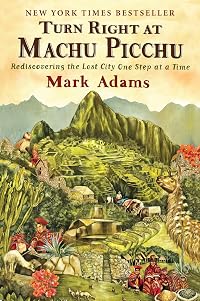
Turn right at Machu Picchu
by Mark Adams
On This Page
Description
Traces the author's recreation of Hiram Bingham III's discovery of the ancient citadel, Machu Picchu, in the Andes Mountains of Peru, describing his struggles with rudimentary survival tools and his experiences at the sides of local guides.Tags
Recommendations

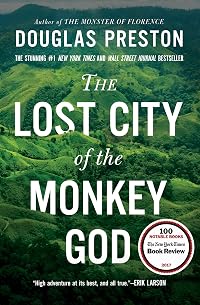
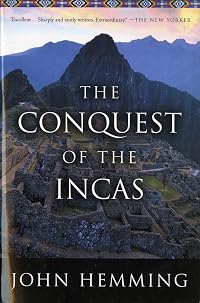
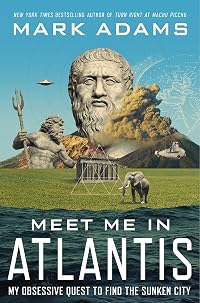
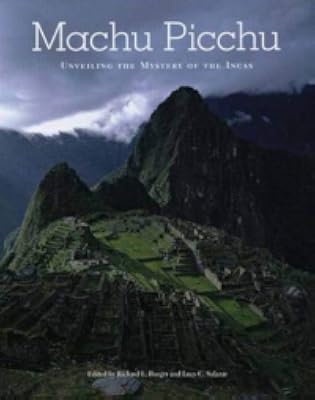






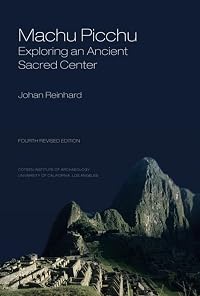

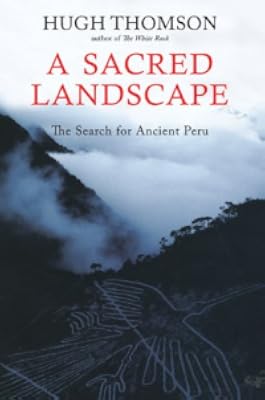

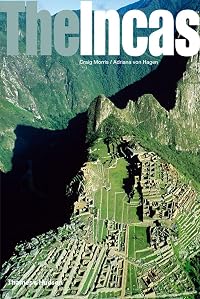


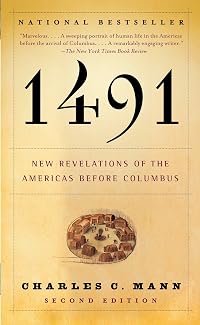



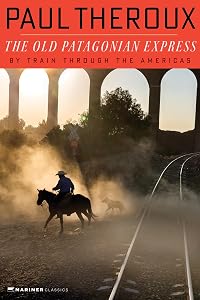

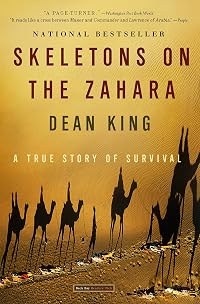
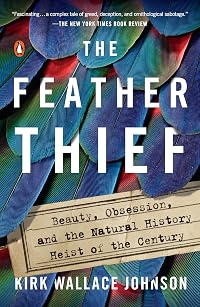


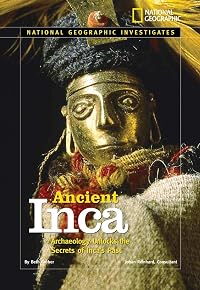






Member Recommendations
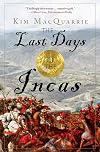
JGolomb A terrific narrative history of the conquest of the Incas.
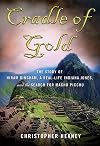
Cradle of Gold: The Story of Hiram Bingham, a Real-Life Indiana Jones, and the Search for Machu Picchu by Christopher Heaney
JGolomb Both books provide terrific insight into the history of the modern discovery of Machu Picchu.
Member Reviews
A little gem of a travel book. And the author is also a gem, a rare one - a self-deprecating American.
Tells the story of the author's exploration of Incan Peru, set against the explorations and publications of Hiram Bingham, the man who brought Machu Pichu to the attention of the world.
The whole thing is simply charming. The author is likeable, the characters of the guide and cooks and mule wranglers are generously reported, and the controversies that beset Bingham's legacy are well described but without unnecessary unpleasantness.
If only all travel books could be as enjoyable
Tells the story of the author's exploration of Incan Peru, set against the explorations and publications of Hiram Bingham, the man who brought Machu Pichu to the attention of the world.
The whole thing is simply charming. The author is likeable, the characters of the guide and cooks and mule wranglers are generously reported, and the controversies that beset Bingham's legacy are well described but without unnecessary unpleasantness.
If only all travel books could be as enjoyable
I was a little skeptical at the start of this book. At first, I was concerned it was going to become one of those dreary travelogues where the inexperienced author gets in over their head and the whole thing is a disaster and then they write a book. But it really wasn't that at all. He's definitely inexperienced in terms of that kind of rigorous trekking, but he was all in. The book is a nice mix of historical information about the discovery of Machu Picchu and the author's personal discovery. There are some great stories about things that happen along the way too, but they don't dominate the narrative. It's well written, and if you enjoy travel books, this is a good one. I don't know that I will ever hike the Inca Trail, but I show more definitely want to visit Peru someday. show less
Mark Adams, while following roughly the same path as Hiram Bingham III, comes to realize both the context and the magnitude of the discoveries. He also learns the value of wearing two pairs of socks while hiking in the jungle. His guide, John Leivers, helps him literally and figuratively navigate the world of the Inca Trail. His help in the author’s journey creates some of the most poignant and humorous anecdotes while they trek through the jungle.
The twin stories of the author and Bingham are also set against a third strand of history—that of the original Inca and the Spanish conquistadors. This triple history further enriches the adventure as we learn how Pizarro, Bingham, and the author interact with both the people and the show more environment of South America. Interwoven with each of these strands are bits and pieces of Peruvian politics, ethics, society, and culture. I thought the humor in this history book was well-timed and very engaging. This makes for a great weekend read. show less
The twin stories of the author and Bingham are also set against a third strand of history—that of the original Inca and the Spanish conquistadors. This triple history further enriches the adventure as we learn how Pizarro, Bingham, and the author interact with both the people and the show more environment of South America. Interwoven with each of these strands are bits and pieces of Peruvian politics, ethics, society, and culture. I thought the humor in this history book was well-timed and very engaging. This makes for a great weekend read. show less
I visited Machu Picchu in my early 20s and ever since, I have been fascinated by its history and its mysteries. I have read several accounts of Hiram Bingham III's life and his "discovery" of what many termed the Lost City of the Incas. (We all know that Bingham discovered the archeological site in the same manner that Columbus "discovered" America, as if no indigenous people ever lived in either place.) This book caught my eye at the library because of my prior interest in the subject.
Author Mark Adams worked for several adventure publications, but never engaged in any adventure of his own. But after reading the controversy over whether Bingham, the "discoverer" of Machu Picchu, had stolen important Peruvian artifacts and whether or show more not Yale was obliged to return them to Peru, he decided to research the matter and follow in Bingham's footsteps.
Adams writes: “Have you ever seen Mr. Travel Guy? He's the fellow who strides through international airports dressed like he's flying off to hunt wildebeests - shirt with dozens of pockets, drip-dry pants that zip off into shorts, floppy hat with a cord pulled tight under the chin in case a twister blows through the baggage claim area. All of this describes exactly what I was wearing. I could have been trick-or-treating as Hemingway."
The book tells the tale of Adam's physically-demanding trek through Peru with an Australian guide, John Leivers, who seemed to be Hiram Bingham's kindred spirit. Adams interspersed his own story with the history of the Spanish takeover of the Incan Empire and Bingham's own treks through Peru in search of important archeological finds.
Adams has an entertaining writing style that makes this book both an informative and a humorous read. show less
Author Mark Adams worked for several adventure publications, but never engaged in any adventure of his own. But after reading the controversy over whether Bingham, the "discoverer" of Machu Picchu, had stolen important Peruvian artifacts and whether or show more not Yale was obliged to return them to Peru, he decided to research the matter and follow in Bingham's footsteps.
Adams writes: “Have you ever seen Mr. Travel Guy? He's the fellow who strides through international airports dressed like he's flying off to hunt wildebeests - shirt with dozens of pockets, drip-dry pants that zip off into shorts, floppy hat with a cord pulled tight under the chin in case a twister blows through the baggage claim area. All of this describes exactly what I was wearing. I could have been trick-or-treating as Hemingway."
The book tells the tale of Adam's physically-demanding trek through Peru with an Australian guide, John Leivers, who seemed to be Hiram Bingham's kindred spirit. Adams interspersed his own story with the history of the Spanish takeover of the Incan Empire and Bingham's own treks through Peru in search of important archeological finds.
Adams has an entertaining writing style that makes this book both an informative and a humorous read. show less
After many years as an editor at National Geographic Adventure magazine, Mark Adams decided that he had had enough of sending other writers off to the far reaches of the globe in search of riveting stories from the world’s most inaccessible places. As the hundredth anniversary of Hiram Bingham’s discovery of Machu Picchu loomed, Adams, married to a Peruvian woman and long fascinated with Bingham (thought by many to be the inspiration for Indiana Jones), decided that this was the assignment to get himself out of his New York office.
And so, with limited outdoors experience (Adams hadn’t been in a tent in he couldn’t remember how long), the author set off to follow in the footsteps of the famous explorer through the jungles of show more South America. Through a fine balance of humor, thorough research, a well structured narrative, and lively prose, the reader is ushered along on a journey through three eras of history-the age of the Inca, the age of Hiram Bingham, and the age of Mark Adams. Many authors in a memoir of this sort inject far too much of themselves into the narrative. Adams uses his experience to provide comic relief but leaves the focus on Bingham and the Incan history which he strove to unearth in the jungles of Peru. Hiram Bingham’s own pursuit to answer questions pertaining to the Inca which remained unexplored or unanswered in his own day, in part for his own scholarly knowledge, and in part his desire to build his own legacy, was well laid out by Mark Adams. Throughout this exploration of Bingham’s quest the reader is carried along through three time phases simultaneously.
Not being one for jungles (Snakes? I think not!), I was happy to follow along from the comfort and relative safety of my own corner of the globe-yes, we have bears here in the Last Frontier, but at least I can see the threat coming! Mark Adams’ prose is so vivid, the reader will feel transported. I highly recommend this one for its history, adventure, and verve. show less
And so, with limited outdoors experience (Adams hadn’t been in a tent in he couldn’t remember how long), the author set off to follow in the footsteps of the famous explorer through the jungles of show more South America. Through a fine balance of humor, thorough research, a well structured narrative, and lively prose, the reader is ushered along on a journey through three eras of history-the age of the Inca, the age of Hiram Bingham, and the age of Mark Adams. Many authors in a memoir of this sort inject far too much of themselves into the narrative. Adams uses his experience to provide comic relief but leaves the focus on Bingham and the Incan history which he strove to unearth in the jungles of Peru. Hiram Bingham’s own pursuit to answer questions pertaining to the Inca which remained unexplored or unanswered in his own day, in part for his own scholarly knowledge, and in part his desire to build his own legacy, was well laid out by Mark Adams. Throughout this exploration of Bingham’s quest the reader is carried along through three time phases simultaneously.
Not being one for jungles (Snakes? I think not!), I was happy to follow along from the comfort and relative safety of my own corner of the globe-yes, we have bears here in the Last Frontier, but at least I can see the threat coming! Mark Adams’ prose is so vivid, the reader will feel transported. I highly recommend this one for its history, adventure, and verve. show less
Mark Adams' "Turn Right at Machu Picchu: Rediscovering the Lost City One Step at a Time" is a book that's a bit hard to classify. All at once, it's a serious (and seriously funny) travelogue; a smart and tightly written history; and an investigative report into the greatest archaeological discovery of the last century.
Author Adams spent time writing and editing for the now defunct National Geographic Adventurer magazine and despite working with and alongside some of the world's hardest core adventure travelers, he admits to not being much of one himself. He'd visited Machu Picchu with his son, but he'd done it the tourist way. He wanted to REdiscover Machu Picchu - the way its’ original discoverer, Hiram Bingham, had 100 years ago show more this July. He wanted to hike, climb, slog, tent and explore his way through the Vilcabamba region of Peru and finish at the site that was recently named one of the new Seven Wonders of the World.
Adams doesn't camp and hadn't been in a tent for years leading up to his Peruvian excursion. His preparation for the trip was extensive, including dressing the part of adventurer. "Have you ever seen Mr. Travel Guy? He's the fellow who strides through international airports dressed like he's flying off to hunt wildebeests - shirt with dozens of pockets, drip-dry pants that zip off into shorts, floppy hat with a cord pulled tight under the chin in case a twister blows through the baggage claim area. All of this describes exactly what I was wearing. I could have been trick-or-treating as Hemingway."
Make no mistake. Adams trip was an uncompromising adventure. There were no soft train rides, or helicopter drops into the jungle. Adams hiked, slept in tents, climbed miles of off-the-beaten-path terrain, and used the same bathroom facilities as Bingham had almost 100 years earlier - nature. His only chance at being successful in this endeavor was to surround himself with quality guides and support. He emphasized when he hired his guide, experienced explorer and discoverer in his own right John Leivers, that he wanted his trip to be about walking in Bingham's footsteps.
The real joy in reading "Turn Right at Machu Picchu" is the frank and insightful humor Adams embeds within his adventurous tales. While Leivers was his primary guide, Adams was surrounded by a colorful and interesting crowd, some of which speak only the ancient language of the Inca - quechua. One guide genuinely feared a man-eating devil goat that guarded the entrance to a farm used as a campsite. Adams points out that rumors and ghosts are abound in Peru and particularly in the Andes where "the mischievous twins of Superstition and Legend tend to thrive." Adams also struggled to communicate with Leivers because they come from such different worlds and experiences. Adams finally strikes a note of commonality when a fairly severe bout of bowel issues made his adventurer guide reminisce about his own time with the same problem.
He takes seemingly meaningless interactions and with only a few words turns them into something substantive, funny and culturally eye-opening. "One of the things about Peru that I'd found it hardest to adjust to - even more so than the popularity of Nescafe in a country that grew some of the finest coffee beans in the world -- was la hora perunana, Peruvian Time. This is the code, indecipherable to North Americans, by which Peruvians determine the latest possible moment that it is acceptable to arrive for an appointment. The statement "I'll be right back" can mean just that, or it can mean that the speaker is about to depart via steamship for Cairo. The habit drove Bingham bananas and hasn't improved over time, despite a widespread government campaign to combat tardiness a few years ago."
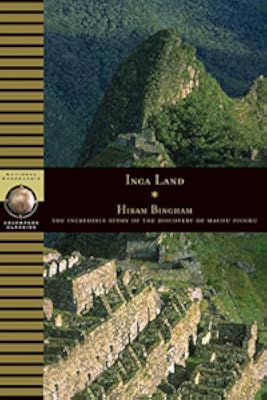
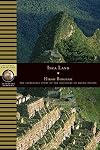
Mark's narrative parallels the expeditions of Hiram Bingham as documented in his books "Inca Land" and "Lost City of the Incas". Where Bingham went, so went Adams. What Adams sees, so wrote the famed explorer. Throughout the book, Adams provides a very smartly written and readable examination of Bingham's extensive and dramatic expeditions. His chapters are short and each thread of his story - his own travel, the history of the Inca Conquest and Bingham's parallel journeys - are woven as seamlessly, intricately and colorfully as a prototypical Andean poncho.
In Adams' parallels with Inca history, he points out the difficulty in separating fact from fiction "because virtually all the sources available are Spanish accounts of stories that had already been vetted by the Inca emperors to highlight their own heroic roles. Imagine a history of modern Iraq, written by Dick Cheney and based on authorized biographies of Saddam Hussein published in Arabic, and you'll get some idea of the problem historians face." Still Adams deftly pulls together multiple resources and his own independent research to trace the earliest beginnings of the Spanish Conquest until they finally subdued the last Inca Emperors.
It was the last Inca holdout that Bingham was seeking. The historical record is confusing, but consistently pointed to a location called Vilcabamba. It was unclear whether Vilcabamba was a town, city, or region, and Bingham's search was further muddied by the historical record pointing to several "final" Inca strongholds. But search he did, and Adams followed.
The first major site on Adams' agenda was Choquequiro, known as the "Cradle of Gold". The site is far less accessible than Machu Picchu despite stop-and-start initiatives by the Peruvian government to create easier tourist access through the Peruvian jungle. It's estimated that only 20-30 percent of the site has been cleared and Adams quotes his guide Leivers suggesting that "When this is all cleared, it'll be one of the most spectacular archaeological sites in the world."
Much new modern analysis of Machu Picchu and the entire Vilcabamba region northwest of Cuzco, revolves around archaeoastronomy - the study of archaeological sites in relation to their positions to each other, their environment and the heavens. Leivers and his ever-present handheld GPS would pinpoint locations of buildings and objects throughout the trip and started to pull together the connective thread of the regions' ruins. Upon climbing to the mountain peak that overlooks the Machu Picchu ruins, Adams wrote, "I had to admit when I ... saw how the site aligned with the natural features surrounding it I'd felt a twinge of...something. Awe? Transendence?"
Adams points out that among the various ruins that Bingham discovered, he also brought to the world the famed Inca Trail which thousands of hikers travel each year. Many Inca trails cross the former Empire, but there's only one Inca Trail - the one that leads to Machu Picchu. Adams followed miles of Inca trail throughout his trip, but needed a second trip with Leivers to explore the Inca Trail itself, and discover the trails' relationship with Machu Picchu. The Inca Trail is dotted with ruins of various sizes. Each ruin, whether placed within a terraced valley, or providing a dramatic overlook across jungle and mountains, in its own way, builds dramatically to the point at which it connects with Machu Picchu. Explorer and National Geographic Society Explorer-in-Residence Johan Reinhard succinctly places the Inca Trail in its’ proper context, "you can't finish the Inca Trail and NOT know that this was the end point of a pilgrimage."
As one might imagine, such a hard core experience would have a significant impact on one's life. As Leivers and Adams started their ascent of Mount Machu Picchu, Leivers starts to make a walking stick for himself, but finds that he's left his large hunting knife at their hotel in Aguas Calientes at the base of Machu Picchu. Adams unzipped his pack, dug around for a moment and then handed his knife to Leivers. The world-wide traveler and adventurer who's led trips across deserts and mountains said "That's good preparation, Mark. Nice sharp blade on it, too." Mark realizes "It was, I'm not ashamed to admit, one of the proudest moments of my life." show less
Author Adams spent time writing and editing for the now defunct National Geographic Adventurer magazine and despite working with and alongside some of the world's hardest core adventure travelers, he admits to not being much of one himself. He'd visited Machu Picchu with his son, but he'd done it the tourist way. He wanted to REdiscover Machu Picchu - the way its’ original discoverer, Hiram Bingham, had 100 years ago show more this July. He wanted to hike, climb, slog, tent and explore his way through the Vilcabamba region of Peru and finish at the site that was recently named one of the new Seven Wonders of the World.
Adams doesn't camp and hadn't been in a tent for years leading up to his Peruvian excursion. His preparation for the trip was extensive, including dressing the part of adventurer. "Have you ever seen Mr. Travel Guy? He's the fellow who strides through international airports dressed like he's flying off to hunt wildebeests - shirt with dozens of pockets, drip-dry pants that zip off into shorts, floppy hat with a cord pulled tight under the chin in case a twister blows through the baggage claim area. All of this describes exactly what I was wearing. I could have been trick-or-treating as Hemingway."
Make no mistake. Adams trip was an uncompromising adventure. There were no soft train rides, or helicopter drops into the jungle. Adams hiked, slept in tents, climbed miles of off-the-beaten-path terrain, and used the same bathroom facilities as Bingham had almost 100 years earlier - nature. His only chance at being successful in this endeavor was to surround himself with quality guides and support. He emphasized when he hired his guide, experienced explorer and discoverer in his own right John Leivers, that he wanted his trip to be about walking in Bingham's footsteps.
The real joy in reading "Turn Right at Machu Picchu" is the frank and insightful humor Adams embeds within his adventurous tales. While Leivers was his primary guide, Adams was surrounded by a colorful and interesting crowd, some of which speak only the ancient language of the Inca - quechua. One guide genuinely feared a man-eating devil goat that guarded the entrance to a farm used as a campsite. Adams points out that rumors and ghosts are abound in Peru and particularly in the Andes where "the mischievous twins of Superstition and Legend tend to thrive." Adams also struggled to communicate with Leivers because they come from such different worlds and experiences. Adams finally strikes a note of commonality when a fairly severe bout of bowel issues made his adventurer guide reminisce about his own time with the same problem.
He takes seemingly meaningless interactions and with only a few words turns them into something substantive, funny and culturally eye-opening. "One of the things about Peru that I'd found it hardest to adjust to - even more so than the popularity of Nescafe in a country that grew some of the finest coffee beans in the world -- was la hora perunana, Peruvian Time. This is the code, indecipherable to North Americans, by which Peruvians determine the latest possible moment that it is acceptable to arrive for an appointment. The statement "I'll be right back" can mean just that, or it can mean that the speaker is about to depart via steamship for Cairo. The habit drove Bingham bananas and hasn't improved over time, despite a widespread government campaign to combat tardiness a few years ago."
Mark's narrative parallels the expeditions of Hiram Bingham as documented in his books "Inca Land" and "Lost City of the Incas". Where Bingham went, so went Adams. What Adams sees, so wrote the famed explorer. Throughout the book, Adams provides a very smartly written and readable examination of Bingham's extensive and dramatic expeditions. His chapters are short and each thread of his story - his own travel, the history of the Inca Conquest and Bingham's parallel journeys - are woven as seamlessly, intricately and colorfully as a prototypical Andean poncho.
In Adams' parallels with Inca history, he points out the difficulty in separating fact from fiction "because virtually all the sources available are Spanish accounts of stories that had already been vetted by the Inca emperors to highlight their own heroic roles. Imagine a history of modern Iraq, written by Dick Cheney and based on authorized biographies of Saddam Hussein published in Arabic, and you'll get some idea of the problem historians face." Still Adams deftly pulls together multiple resources and his own independent research to trace the earliest beginnings of the Spanish Conquest until they finally subdued the last Inca Emperors.
It was the last Inca holdout that Bingham was seeking. The historical record is confusing, but consistently pointed to a location called Vilcabamba. It was unclear whether Vilcabamba was a town, city, or region, and Bingham's search was further muddied by the historical record pointing to several "final" Inca strongholds. But search he did, and Adams followed.
The first major site on Adams' agenda was Choquequiro, known as the "Cradle of Gold". The site is far less accessible than Machu Picchu despite stop-and-start initiatives by the Peruvian government to create easier tourist access through the Peruvian jungle. It's estimated that only 20-30 percent of the site has been cleared and Adams quotes his guide Leivers suggesting that "When this is all cleared, it'll be one of the most spectacular archaeological sites in the world."
Much new modern analysis of Machu Picchu and the entire Vilcabamba region northwest of Cuzco, revolves around archaeoastronomy - the study of archaeological sites in relation to their positions to each other, their environment and the heavens. Leivers and his ever-present handheld GPS would pinpoint locations of buildings and objects throughout the trip and started to pull together the connective thread of the regions' ruins. Upon climbing to the mountain peak that overlooks the Machu Picchu ruins, Adams wrote, "I had to admit when I ... saw how the site aligned with the natural features surrounding it I'd felt a twinge of...something. Awe? Transendence?"
Adams points out that among the various ruins that Bingham discovered, he also brought to the world the famed Inca Trail which thousands of hikers travel each year. Many Inca trails cross the former Empire, but there's only one Inca Trail - the one that leads to Machu Picchu. Adams followed miles of Inca trail throughout his trip, but needed a second trip with Leivers to explore the Inca Trail itself, and discover the trails' relationship with Machu Picchu. The Inca Trail is dotted with ruins of various sizes. Each ruin, whether placed within a terraced valley, or providing a dramatic overlook across jungle and mountains, in its own way, builds dramatically to the point at which it connects with Machu Picchu. Explorer and National Geographic Society Explorer-in-Residence Johan Reinhard succinctly places the Inca Trail in its’ proper context, "you can't finish the Inca Trail and NOT know that this was the end point of a pilgrimage."
As one might imagine, such a hard core experience would have a significant impact on one's life. As Leivers and Adams started their ascent of Mount Machu Picchu, Leivers starts to make a walking stick for himself, but finds that he's left his large hunting knife at their hotel in Aguas Calientes at the base of Machu Picchu. Adams unzipped his pack, dug around for a moment and then handed his knife to Leivers. The world-wide traveler and adventurer who's led trips across deserts and mountains said "That's good preparation, Mark. Nice sharp blade on it, too." Mark realizes "It was, I'm not ashamed to admit, one of the proudest moments of my life." show less
I love to travel. When I cannot do so in person, a great travel story is the next best thing. Mark Adams took me on an entertaining journey past and present to a site that has long fascinated me. I'm not planning on roughing it to the degree that he does (ever!), but his description of these Inca sites (on, off, and way off the beaten path), their history and culture, is wonderful. He writes with humor in a down-to-earth style. The opportunity to share in his travels, to experience, learn, and understand that the entire area around Machu Picchu is part of a cosmological whole, much more than the sum of its fascinating parts, is well worth picking up this story, this adventure.
Members
- Recently Added By
Lists

Best of Travel Narratives
142 works; 28 members

2008-2012 Notable Books for Adults
127 works; 10 members
Author Information

4 Works 1,803 Members
Mark Adams is an American journalist and bestselling author. His work has appeared in numerous national publications, including: EPSN: The Magazine, GQ, New York and The New Yorker. His latest book is entitled Meet Me in Atlantis: My Obsessive Quest to Find the Lost City. He is also the author of Turn Right at Machu Picchu and Mr. America. (Bowker show more Author Biography) show less
Some Editions
Awards and Honors
Awards
Distinctions
Common Knowledge
- Canonical title
- Turn right at Machu Picchu
- Original title
- Turn right at Machu Picchu
- Alternate titles
- Turn Right at Machu Picchu: Rediscovering the Lost City One Step at a Time
- Important places
- Lima, Peru; Machu Picchu, Peru; Cuzco, Peru
- Dedication
- For Aurita
- First words
- As the man dressed head to toe in khaki turned the corner and began racewalking uphill in my direction, I had to wonder: had we met before?
- Quotations
- "I know it's a lot to take in," John said. "Any questions so far?"
I could only think of one. "Is this harder than the Inca Trail?"
For a split second, John looked like he didn't understand me. "Mark, this trek ... (show all)is a lot harder than the Inca Trail." - Last words
- (Click to show. Warning: May contain spoilers.)"You remember how things work in Peru, Mark. It all depends on who you ask."
- Original language
- English
Classifications
- Genres
- Travel, Anthropology, General Nonfiction, Nonfiction, Biography & Memoir
- DDC/MDS
- 985.37 — History & geography History of South America Peru Southern Peru Cuzco
- LCC
- F3429.1 .M3 .A43 — Local History of the United States, Canada and Latin America Latin America. Spanish America South America Peru
- BISAC
Statistics
- Members
- 1,275
- Popularity
- 19,173
- Reviews
- 37
- Rating
- (3.82)
- Languages
- Dutch, English, French
- Media
- Paper, Audiobook, Ebook
- ISBNs
- 16
- ASINs
- 7