Betraying Spinoza: The Renegade Jew Who Gave Us Modernity (Jewish Encounters)
by Rebecca Goldstein
On This Page
Description
"In 1656, Amsterdam's Jewish community excommunicated Baruch Spinoza, and, at the age of twenty-three, he became the most famous heretic in Judaism. He was already germinating a secularist challenge to religion that would be as radical as it was original. He went on to produce one of the most ambitious systems in the history of Western philosophy, so ahead of its time that scientists today, from string theorists to neurobiologists, count themselves among Spinoza's progeny. In Betraying show more Spinoza, Rebecca Goldstein sets out to rediscover the flesh-and-blood man often hidden beneath the veneer of rigorous rationality, and to crack the mystery of the breach between the philosopher and his Jewish past. Goldstein argues that the trauma of the Inquisition's persecution of its forced Jewish converts plays itself out in Spinoza's philosophy. The excommunicated Spinoza, no less than his excommunicators, was responding to Europe's first experiment with racial anti-Semitism. Here is a Spinoza both hauntingly emblematic and deeply human, both heretic and hero a surprisingly contemporary figure ripe for our own uncertain age." show lessTags
Recommendations










Member Reviews
The world is the all-embracing web of necessary truths, intelligible through and through―and our own individual salvation rests in our knowing this.
Goldstein writes a deeply engaging biography of Spinoza, centering around his complicated identity as a first generation Dutch Jew of Sephardic/Portuguese origin, apostatizing from his faith and excommunicated from his community. His radical rationalism replaced any need for religious dogma. From logic, he derived a whole system of being, which Goldstein describes in beautiful detail. She weaves her own relationship with the philosophy of Spinoza into his biography, describing her yeshiva teacher warning of his apostasy, as well as her years teaching his Ethics in a class on 17th century show more rationality. Her illuminating descriptions of the state of Jewish thought during the 17th century, specifically among the Dutch Jewry, were crucial in imagining how Spinoza might have developed his beautifully poetic philosophical system. show less
Goldstein writes a deeply engaging biography of Spinoza, centering around his complicated identity as a first generation Dutch Jew of Sephardic/Portuguese origin, apostatizing from his faith and excommunicated from his community. His radical rationalism replaced any need for religious dogma. From logic, he derived a whole system of being, which Goldstein describes in beautiful detail. She weaves her own relationship with the philosophy of Spinoza into his biography, describing her yeshiva teacher warning of his apostasy, as well as her years teaching his Ethics in a class on 17th century show more rationality. Her illuminating descriptions of the state of Jewish thought during the 17th century, specifically among the Dutch Jewry, were crucial in imagining how Spinoza might have developed his beautifully poetic philosophical system. show less
"By decree of the angels and by the command of the holy men, we excommunicate, expel, curse and damn Baruch de Espinoza, with the consent of God, Blessed be He, and with the consent of the entire holy congregation, and in front of these holy scrolls with the 613 precepts which are written therein; cursing him with the excommunication with which Joshua banned Jericho and with the curse which Elisha cursed the boys and with all the castigations which are written in the Book of the Law. Cursed be he by day and cursed be he by night; cursed be he when he lies down and cursed be he when he rises up. Cursed be he when he goes out and cursed be he when he comes in. The Lord will not spare him, but then the anger of the Lord and his jealousy show more shall smoke against that man, and all the curses that are written in this book shall lie upon him, and the Lord shall blot out his name from under heaven. And the Lord shall separate him unto evil out of all the tribes of Israel, according to all the curses of the covenant that are written in this book of the law. But you that cleave unto the Lord your God are alive every one of you this day." -- excerpt from the excommunication of Baruch de Espinoza, July 27, 1656.
Bertrand Russell describes Spinoza as "the noblest and most lovable of the great philosophers." I cannot disagree. As remarkable as his philosophy is, his conduct is even more so.
Goldstein titled her book Betraying Spinoza because she hopes to reconstruct his identity and demonstrate how it influenced his thinking, while recognizing that his formal philosophy endeavors to abrogate the concept of identity. Through an analysis of Jewish history at large (and the 17th century Amsterdam Jewish community in particular) and making the occasional educated guess, she makes the compelling case that Spinoza, in rejecting Judaism, was a sort of Jewish savior. By destroying the Jewish conceit of being God's "chosen people," he undercuts all forms of essentialism, religious or otherwise.
His impact on John Locke is noted. The leap to his influence on the deism that informed the thinking of those who would found the United States is short. When I am at my most pessimistic I think of the philosopher, and those like him, and I allow myself to hope. show less
Bertrand Russell describes Spinoza as "the noblest and most lovable of the great philosophers." I cannot disagree. As remarkable as his philosophy is, his conduct is even more so.
Goldstein titled her book Betraying Spinoza because she hopes to reconstruct his identity and demonstrate how it influenced his thinking, while recognizing that his formal philosophy endeavors to abrogate the concept of identity. Through an analysis of Jewish history at large (and the 17th century Amsterdam Jewish community in particular) and making the occasional educated guess, she makes the compelling case that Spinoza, in rejecting Judaism, was a sort of Jewish savior. By destroying the Jewish conceit of being God's "chosen people," he undercuts all forms of essentialism, religious or otherwise.
His impact on John Locke is noted. The leap to his influence on the deism that informed the thinking of those who would found the United States is short. When I am at my most pessimistic I think of the philosopher, and those like him, and I allow myself to hope. show less
This is the first book I’ve read by Rebecca Goldstein, a philosopher-novelist (a fascinating combination of professions). The title is interesting. It turns out that “betraying” Spinoza is the attempt to understand him in his biographical context, having grown up in the Sephardic community in Amsterdam, a group that shared a precarious identity as Jews after having lived for generations as “Christians” on the Iberian peninsula. Goldstein suggests that Spinoza’s “rebellion,” leading to the unusual step of life-long disfellowship from the synagogue, was that he sought to dismiss all personalized aspects that usually contribute to identity.
Goldstein not only places Spinoza’s philosophy in the context of his personal life, show more but she also draws a parallel between it and the mysticism of St. Teresa of Ávila, whose spirituality was an inward, private practice, albeit employing a different medium, prayer, instead of Spinoza’s mathematically rigorous reason. “It is intriguing to speculate how the Marrano psyche, necessarily oriented inward, found such different expression in these two spiritual geniuses” (p. 115).
I enjoyed reading this in parallel to Spinoza’s Ethics. Although Spinoza’s approach, which Goldstein terms “radical objectivity” differs from Goldstein’s own, that of analytic philosophy, she is a sympathetic commentator. It was helpful to me to have Goldstein explain two crucial terms in Spinoza’s project that had puzzled me, “nature” and “substance,” confirming my suspicion that he must mean something other than we conventionally do.
The prose is elegant and accessible. I particularly liked the author's recollection of her first exposure to Spinoza as a high school student in an Orthodox yeshiva in lower Manhattan at the hands of Mrs. Schoenfeld, whose condemnation of this “heretic” piqued young Goldstein’s interest. This, together with a recreation of Spinoza late in life in the final chapter, demonstrate how Goldstein’s two activities of philosophy and novel-writing join in a delightful way. An excellent book. show less
Goldstein not only places Spinoza’s philosophy in the context of his personal life, show more but she also draws a parallel between it and the mysticism of St. Teresa of Ávila, whose spirituality was an inward, private practice, albeit employing a different medium, prayer, instead of Spinoza’s mathematically rigorous reason. “It is intriguing to speculate how the Marrano psyche, necessarily oriented inward, found such different expression in these two spiritual geniuses” (p. 115).
I enjoyed reading this in parallel to Spinoza’s Ethics. Although Spinoza’s approach, which Goldstein terms “radical objectivity” differs from Goldstein’s own, that of analytic philosophy, she is a sympathetic commentator. It was helpful to me to have Goldstein explain two crucial terms in Spinoza’s project that had puzzled me, “nature” and “substance,” confirming my suspicion that he must mean something other than we conventionally do.
The prose is elegant and accessible. I particularly liked the author's recollection of her first exposure to Spinoza as a high school student in an Orthodox yeshiva in lower Manhattan at the hands of Mrs. Schoenfeld, whose condemnation of this “heretic” piqued young Goldstein’s interest. This, together with a recreation of Spinoza late in life in the final chapter, demonstrate how Goldstein’s two activities of philosophy and novel-writing join in a delightful way. An excellent book. show less
On the face of things, reading a book about Baruch Spinoza is not an easy task for a religious Jew. After all, Spinoza is one of the great rationalist philosophers who started his "career" by annoying his Jewish community in Amsterdam so much that eventually it was decided to penalise him with the Jewish version of an excommunication. Spinoza went on to change his name to Benedictus (Baruch in Hebrew and Benedictus in Latin mean "blessed"), to learn Latin (forbidden to Jews in those days) and to develop a view of the world that equated God with nature, a big "no no" in Jewish theology. In many respects, Spinoza is considered to be the first secular Jew, or in the words of this book's subtitle: the renegade Jew who gave us show more modernity.
Rebecca Goldstein is a (Jewish) professor of philosophy who wrote an autobiography of Spinoza. She opens the book by telling us about a childhood experience of hers: being "taught" about Spinoza by a religious teacher in her school. It was the understandably highly critical position of this teacher with regards to Spinoza that sparked her interest in the man and his work. Goldstein went on to study Spinoza in depth and teach courses about his philosophy (and that of Descartes) at university. She shares with the reader the love she has for the philosopher and her emotions at seeing her students slowly opening up to gain appreciation of his notoriously difficult writings.
Most of this book tries to reconstruct Spinoza's life based on facts: what we know about him from his works and from what others have written about him. Goldstein introduces the reader to some of Spinoza's philosophy throughout the book and some parts are indeed heavy-going (especially the discussion about his magnum opus: The Ethics). But it is towards the end of the book that her narrative turns to be really interesting. She breaks from the strictly academic approach and tries to imagine what Spinoza would have felt towards the end of his life. She uses a historical event - the opening of the main synagogue in Amsterdam - to tell us an imaginary tale about Spinoza coming back to watch the ceremony from a distance. We read about his throughts as he ruminated about the fate of this community of Portugese Jews who fled the inquisition in their country to find a new life in this relatively tolerant Protestant country. To me, the story of this community, which Goldstein explains at length and in vivid colours, was an eye-opener. It made a lot of what Spinoza wrote about clearer and put his philosophy in the right context. show less
Rebecca Goldstein is a (Jewish) professor of philosophy who wrote an autobiography of Spinoza. She opens the book by telling us about a childhood experience of hers: being "taught" about Spinoza by a religious teacher in her school. It was the understandably highly critical position of this teacher with regards to Spinoza that sparked her interest in the man and his work. Goldstein went on to study Spinoza in depth and teach courses about his philosophy (and that of Descartes) at university. She shares with the reader the love she has for the philosopher and her emotions at seeing her students slowly opening up to gain appreciation of his notoriously difficult writings.
Most of this book tries to reconstruct Spinoza's life based on facts: what we know about him from his works and from what others have written about him. Goldstein introduces the reader to some of Spinoza's philosophy throughout the book and some parts are indeed heavy-going (especially the discussion about his magnum opus: The Ethics). But it is towards the end of the book that her narrative turns to be really interesting. She breaks from the strictly academic approach and tries to imagine what Spinoza would have felt towards the end of his life. She uses a historical event - the opening of the main synagogue in Amsterdam - to tell us an imaginary tale about Spinoza coming back to watch the ceremony from a distance. We read about his throughts as he ruminated about the fate of this community of Portugese Jews who fled the inquisition in their country to find a new life in this relatively tolerant Protestant country. To me, the story of this community, which Goldstein explains at length and in vivid colours, was an eye-opener. It made a lot of what Spinoza wrote about clearer and put his philosophy in the right context. show less
Goldstein acknowledges in the title of her book that by seeking to understand Spinoza from the context of Jewish history, from a kind of imaginative empathy for his particular condition, she is betraying his philosophy. She then proceeds to draw us readers into his philosophy by evoking exactly that imaginative empathy in us. She paints us a portrait of the strange mix of freedom and inward-looking dogmatism of the traumatized “nation” of Sephardic Jews in 17th century Amsterdam. She invites us to glimpse the world of ideas Spinoza was born into, and to speculate on the loneliness of the gentle, motherless boy and his drive for truth that tugged him away from the usual comforting thoughts and habits of his community.
It seems to be show more disloyal, Goldstein’s historical approach. Spinoza himself wrote in the language of reason so pure that many casual readers (such as myself) give up after a few hours of struggle in the icy crystals of his logic. In approaching Spinoza’s reality, anything individual or personal evaporates into the purity of truth. How wrong, then, to join in Goldstein’s sisterly imagination! Doesn’t it obviate his whole premise, that one triangulates truth through deductive reason and what I understand to be a kind of logical intuition? As I gropingly understand Spinoza’s position, there appears to be no place for explanation by pointing to outcomes, and certainly not for hanging explanations on contingency. So how can Goldstein, who certainly grasps Spinoza’s works far better than most, dare to wonder what it felt like to be Spinoza?
By the end of the book, however, I came to understand Goldstein’s project better. Despite the title, she does not cheat Spinoza’s philosophy. She does not try to explain or justify Spinoza’s philosophy by his personal history or even his Jewishness. That, I think, would indeed have been a betrayal. Instead, she merely tags along with him, traces his path up the mountain towards God. To Spinoza, his uniqueness and his struggle are both irrelevant in the face of God, but to the rest of us, this tale, like a zen koan, may help us both see and see past. show less
It seems to be show more disloyal, Goldstein’s historical approach. Spinoza himself wrote in the language of reason so pure that many casual readers (such as myself) give up after a few hours of struggle in the icy crystals of his logic. In approaching Spinoza’s reality, anything individual or personal evaporates into the purity of truth. How wrong, then, to join in Goldstein’s sisterly imagination! Doesn’t it obviate his whole premise, that one triangulates truth through deductive reason and what I understand to be a kind of logical intuition? As I gropingly understand Spinoza’s position, there appears to be no place for explanation by pointing to outcomes, and certainly not for hanging explanations on contingency. So how can Goldstein, who certainly grasps Spinoza’s works far better than most, dare to wonder what it felt like to be Spinoza?
By the end of the book, however, I came to understand Goldstein’s project better. Despite the title, she does not cheat Spinoza’s philosophy. She does not try to explain or justify Spinoza’s philosophy by his personal history or even his Jewishness. That, I think, would indeed have been a betrayal. Instead, she merely tags along with him, traces his path up the mountain towards God. To Spinoza, his uniqueness and his struggle are both irrelevant in the face of God, but to the rest of us, this tale, like a zen koan, may help us both see and see past. show less
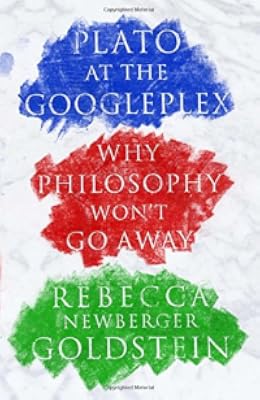
A memoir, biography, history, and philosophical explication in the sometimes excellent Jewish Encounters Series by the author of Plato at the Googleplex, which I think I bombed. I’m probably not smart enough to grok most of this, and some of it was screaming for me to write a question mark in the margin:
It may be objected that, as we understand God as the cause of all things, we by that very fact regard God as the cause of pain. But I make answer, that, in so far as we understand the causes of pain, it to that extent, ceases to be a passion, that is, it ceases to be pain; therefore in so far as we understand God to be the cause of pain, we to that extent feel pleasure. [Really?]
That is what the problem of evil comes down to: the show more stubborn stupidity of mankind. [A weak answer before the Theory of Evolution, but certainly inadequate now.]
This book certainly held my attention and it is an outstanding and clever overall production. show less
It may be objected that, as we understand God as the cause of all things, we by that very fact regard God as the cause of pain. But I make answer, that, in so far as we understand the causes of pain, it to that extent, ceases to be a passion, that is, it ceases to be pain; therefore in so far as we understand God to be the cause of pain, we to that extent feel pleasure. [Really?]
That is what the problem of evil comes down to: the show more stubborn stupidity of mankind. [A weak answer before the Theory of Evolution, but certainly inadequate now.]
This book certainly held my attention and it is an outstanding and clever overall production. show less
I loved this book. Not only I am fascinated by Spinoza, but Rebecca Goldstein does a fantastic job introducing him as a person, philosopher and Jew. She aptly describes his environment growing up, providing biographic elements in a manner that illustrates her various assertions about the reasons and implications of Spinoza's work. Her style is approachable and fluid and yet scholarly. It is clear that she knows much about the subject matter. This book was also the first one I purchased in the Jewish Encounters series, and I am happy I did it. The series is amazingly diversified, and the publishing is flawless. Highly recommended.
Members
- Recently Added By
Author Information

15+ Works 3,751 Members
Rebecca Goldstein graduated summa cum laude from Barnard College and received her Ph.D. from Princeton University in the philosophy of science. She has taught philosophy at Barnard. She lives in Cambridge, Massachusetts. (Bowker Author Biography)
Awards and Honors
Awards
Series
Belongs to Publisher Series
Work Relationships
Common Knowledge
- Original publication date
- 2006
- People/Characters
- Spinoza, Baruch, 1632-1677
- Important places
- Amsterdam, North Holland, Netherlands; The Netherlands; North Holland, Netherlands
- Dedication
- For Steve DESPITE SPINOZA
LJCRS Book Fair Selection 5767 - First words
- By what right is Benedictus Spinoza included in this series, devoted as it is to Jewish themes and thinkers?
- Last words
- (Click to show. Warning: May contain spoilers.)The world has been transformed (although not enough) by a long and complicated chain of causes and effects that reach back to Spinoza's lonely choice to think out the world for himself.
- Publisher's editor
- Rosen, Jonathan
- Blurbers
- Ferguson, Niall; Frankfurt, Harry G.; Damasio, Antonio R.; Carroll, James; Putnam, Hilary; Bloom, Harold (show all 7); Leonard, John
Classifications
- Genres
- Philosophy, Nonfiction, Biography & Memoir, History, Religion & Spirituality, General Nonfiction
- DDC/MDS
- 199.492 — Philosophy & psychology Modern western philosophy Philosophy in other geographic areas Europe Other European Countries Netherlands
- LCC
- B3997 .G65 — Philosophy, Psychology and Religion Philosophy (General) By period Modern By region or country
- BISAC
Statistics
- Members
- 548
- Popularity
- 54,199
- Reviews
- 14
- Rating
- (3.72)
- Languages
- Dutch, English, Swedish
- Media
- Paper, Ebook
- ISBNs
- 5
- ASINs
- 5