On This Page
Description
Retells the stories of Greek gods and heroes.Tags
Recommendations


















Member Reviews
Had to look up words like henotheistic and cathectic. Didn’t learn anything useful until page 384: “No tribal rite has yet been recorded which attempts to keep winter from descending; on the contrary: the rites all prepare the community to endure, together with the rest of nature, the season of the terrible cold.” Etc. And on the next page: “…anyone in exile from the community is a nothing. From the other point of view, however, this exile is the first step of the quest.” Which made me think of my trans friends.
Robert Graves was easier to read, if less plausible.
Robert Graves was easier to read, if less plausible.
As Graves further develops the sacred king model of James George Frazer, it feels too convenient of an explanation. Everything relates to legendary "heroic age" proto-kings and invasive migrations explain myths. It recalls to me the quote from the movie My Big Fat Greek Wedding:
In the end, we all are explained by this historio-mythic paradigm reverberated in echoes of the Old Testament and folklore of the British show more Isles and Ireland.
Graves does bring in etymological, archaeological, and logical arguments in clarifying the roots of the stories laid down by the mythographers. Is there a study done based on the latest knowledge of these views? Either way, even if there are erroneous conclusions, I like this harmonized myths and Graves' explanations (his footnotes are better than the myths themselves) like a like even for its faults the classic The Boston Strangler. show less
"...give me a word, any word. and i sew you how the root of that word is Greek
... So. Ian Miller. You know, the word Miller come from the Greek word meaning apple. Our family name, Pourtokalos, come from the Greek word meaning orange. So here tonight we have apple and orange. We all different. But, in the end, we all fruit."
In the end, we all are explained by this historio-mythic paradigm reverberated in echoes of the Old Testament and folklore of the British show more Isles and Ireland.
Graves does bring in etymological, archaeological, and logical arguments in clarifying the roots of the stories laid down by the mythographers. Is there a study done based on the latest knowledge of these views? Either way, even if there are erroneous conclusions, I like this harmonized myths and Graves' explanations (his footnotes are better than the myths themselves) like a like even for its faults the classic The Boston Strangler. show less
I can say several things conclusively.
1) I will not be reading volume 2
2) Having read this, I have no desire whatsoever to return to those "Golden Days."
3) To take a phrase from Steinbeck and his friend Ricketts, "It might be so."
This is a work far beyond my experience or knowledge, so I can say nothing about the worthiness of the scholarship, etc. I can only say what I thought as a reader.
I found the individual stories variously enlightening, appalling, entertaining, interesting and somewhat dull, depending on how obscure the people in the tales were. The names were multitudinous, many were similar and interchangeable, which didn't help me keep track at all.
Sources were listed, most of which I will never read, but it is good to know show more they are there. I do wish heartily that an edition had been published with photographs of the items and murals from which some of the tales were supposedly derived. I may take a little time on Google to see if I can find any of them. I suspect that when I do, it will be like looking at a sonogram of a baby and being told that it is this sex or that, or anything else about it. They all pretty much look a jumble to my untrained eyes, and when I have looked at other ancient art and been told what it represents, all I can do is say, "Oh? Um, hmmm."
As for Graves fixation on the Moon goddess and all that is represented or misrepresented by the myths, that is where I invoke the above Steinbeck quote, because who is to say it isn't?
Graves asserts that there are many common threads in ancient religions and more modern ones. It is undeniable as far as many of the stories go, however, all would seem to be quite watered down now from the original intent, and for that I have to say, thank Whomever you wish, because those practices were horrid! Like the wine of Olympus which had to be watered lest it drive mortals insane, I would say the same goes for these early religious practices. I am heartily glad that we now have only representations of most of them. Enough said.
Here's one more thought. It doesn't pay to be the most beautiful, talented, wise or athletic. The gods will pay attention to you if you are, and that is almost never a good thing.
I am glad to have read this, it helps much with cultural references, and I will be saving it as a reference book. show less
1) I will not be reading volume 2
2) Having read this, I have no desire whatsoever to return to those "Golden Days."
3) To take a phrase from Steinbeck and his friend Ricketts, "It might be so."
This is a work far beyond my experience or knowledge, so I can say nothing about the worthiness of the scholarship, etc. I can only say what I thought as a reader.
I found the individual stories variously enlightening, appalling, entertaining, interesting and somewhat dull, depending on how obscure the people in the tales were. The names were multitudinous, many were similar and interchangeable, which didn't help me keep track at all.
Sources were listed, most of which I will never read, but it is good to know show more they are there. I do wish heartily that an edition had been published with photographs of the items and murals from which some of the tales were supposedly derived. I may take a little time on Google to see if I can find any of them. I suspect that when I do, it will be like looking at a sonogram of a baby and being told that it is this sex or that, or anything else about it. They all pretty much look a jumble to my untrained eyes, and when I have looked at other ancient art and been told what it represents, all I can do is say, "Oh? Um, hmmm."
As for Graves fixation on the Moon goddess and all that is represented or misrepresented by the myths, that is where I invoke the above Steinbeck quote, because who is to say it isn't?
Graves asserts that there are many common threads in ancient religions and more modern ones. It is undeniable as far as many of the stories go, however, all would seem to be quite watered down now from the original intent, and for that I have to say, thank Whomever you wish, because those practices were horrid! Like the wine of Olympus which had to be watered lest it drive mortals insane, I would say the same goes for these early religious practices. I am heartily glad that we now have only representations of most of them. Enough said.
Here's one more thought. It doesn't pay to be the most beautiful, talented, wise or athletic. The gods will pay attention to you if you are, and that is almost never a good thing.
I am glad to have read this, it helps much with cultural references, and I will be saving it as a reference book. show less
This collection of Greek myths is for the student and scholar of mythology, not for someone who wants an easily readable compendium of myths. The organization of the themes and deities is chronological, that is, it starts with Greek creation myths, the birth of the gods, and then expands to include every god, demi-god, nymph, and mortal being who had anything to do with the gods. Each chapter tells the story of a particular figure with notes on sources, and variations on the story/characters. Graves also gives short explanations of the underlying historical meaning of some of the myths, such as: some stories indicate a suppression of particular deities due to war or incorporation by a foreign culture. Some of the sources are cryptic, as show more when Graves says a story is a "misinterpretation" of an icon that depicts an event or deity, but he doesn't state where this "icon" can be seen and how he came to the conclusion that is was "misinterpreted". One concludes also because it comes up again and again, that every female deity/figure is a manifestation of the 3-faced moon goddess. Each of these assertions are extremely interesting, but need a whole chapter, even a book, to fully explain it.
Overall, it is a detailed, highly researched, reference book. With all the crossover references and intermingling of family relationships, it would help to have a detailed family tree of the gods, though how to do such a thing so as to fit it onto a readable page or pages would be a huge challenge. show less
Overall, it is a detailed, highly researched, reference book. With all the crossover references and intermingling of family relationships, it would help to have a detailed family tree of the gods, though how to do such a thing so as to fit it onto a readable page or pages would be a huge challenge. show less
Although it has been years since I investigated, at the time I read this, and for decades afterward, this was the most complete compendium of the Greek myths I could find, and the only one that included references to all the sources. I found it an invaluable resource. At least some later editions of the same work seem to have omitted the references. Boo! Hiss!
This work remains the standard for most modern explanations of ancient myths, with sections devoted to each mythical legend followed by Graves' explanations. I find he takes the approach of a poet, rather than an academic, which makes it easier to digest. He does seem to take certain stands, such as calling out the Greeks for preferring thunder and lightning (Zeus) over the sun (Helius). How dare they. Graves is very thorough with notes upon notes, to the point that I lost track of Plato's Atlantis. As a reader, I use this whenever I have a yearn to jog through the multitude of Olympians who cause me confusion.
Book Season = Year Round (the gods never sleep)
Book Season = Year Round (the gods never sleep)
You don't have to buy into Graves' every interpretation to appreciate this standard reference.
Members
- Recently Added By
Author Information

259+ Works 40,616 Members
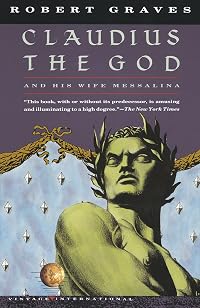
Robert Graves (also known as Robert Ranke Graves) was born in 1895 in London and served in World War I. Goodbye to All That: an Autobiography (1929), was published at age thirty three, and gave a gritty portrait of his experiences in the trenches. Graves edited out much of the stark reality of the book when he revised it in 1957. Although his most show more popular works, I, Claudius (1934) and its sequel, Claudius the God and His Wife Messalina (1935), were produced for television by the BBC in 1976 and seen in America on Masterpiece Theater, he was also famous as a poet, producing more than 50 volumes of poetry. Graves was awarded the 1934 James Tait Black Memorial Prize for both I, Claudius and Claudius the God. Also a distinguished academic, Graves was a professor of English in Cairo, Egypt, in 1926, a poetry professor at Oxford in the 1960s, and a visiting lecturer at universities in England and the U.S. He wrote translations of Greek and Latin works, literary criticism, and nonfiction works on many other topics, including mythology and poetry. He lived most of his life in Majorca, Spain, and died after a protracted illness in 1985. (Bowker Author Biography) show less

Robert Graves has a Legacy Library. Legacy libraries are the personal libraries of famous readers, entered by LibraryThing members from the Legacy Libraries group.
Some Editions
Series

Belongs to Publisher Series
Work Relationships
Is contained in
Common Knowledge
- Canonical title
- The Greek Myths: Volume 1
- Original title
- The Greek Myths
- Original publication date
- 1955
- Important places
- Ancient Greece; Greece
- Important events
- Classical Antiquity
- Epigraph
- The death of the Old Bull of the Year apparently poleaxed, and the birth of the New Year's Bull-Calf from a date cluster; under the supervision of a Cretan Priestess, who identifies herself with the palm-tree.
From a Midd... (show all)le-Minoan bead-seal in the author's collection. About 1900 B.C. - First words
- In the beginning, Eurynome, the Goddess of All Things, rose naked from Chaos, but found nothing substantial for her feet to rest upon, and therefore divided the sea from the sky, dancing lonely upon its waves.
- Last words
- (Click to show. Warning: May contain spoilers.)But though masquerading as an epic, the "Odyssey" is the first Greek novel, and therefore wholly irresponsible where myths are concerned. I have suggested the possible circumstances of its composition in another novel: "Homer's Daughter."
(Click to show. Warning: May contain spoilers.)An Etruscan sacred egg of polished black trachite, found at Perugia, with an arrow in relief running around it, is this same holy egg.
Classifications
- Genres
- Nonfiction, General Nonfiction, History
- DDC/MDS
- 292 — Religion Other religions Greek & Roman Mythology
- LCC
- BL781 .G65 — Philosophy, Psychology and Religion Religions. Mythology. Rationalism Religions. Mythology. Rationalism History and principles of religions European. Occidental Classical (Etruscan, Greek, Roman)
- BISAC
Statistics
- Members
- 1,803
- Popularity
- 12,190
- Reviews
- 16
- Rating
- (4.15)
- Languages
- 12 — Czech, Dutch, English, Estonian, Finnish, French, German, Hungarian, Italian, Russian, Spanish, Portuguese (Portugal)
- Media
- Paper, Ebook
- ISBNs
- 23
- ASINs
- 63
