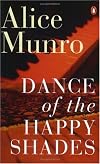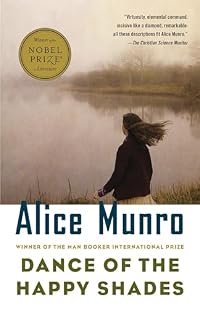
Dance of the Happy Shades and Other Stories
by Alice Munro
On This Page
Description
WINNER OF THE NOBEL PRIZE® IN LITERATURE 2013In these fifteen short stories—her eighth collection of short stories in a long and distinguished career—Alice Munro conjures ordinary lives with an extraordinary vision, displaying the remarkable talent for which she is now widely celebrated. Set on farms, by river marshes, in the lonely towns and new suburbs of western Ontario, these tales are luminous acts of attention to those vivid moments when revelation emerges from the layers of show more experience that lie behind even the most everyday events and lives.
"Virtuosity, elemental command, incisive like a diamond, remarkable: all these descriptions fit Alice Munro."—Christian Science Monitor
"How does one know when one is in the grip of art—of a major talent?....It is art that speaks from the pages of Alice Munro's stories."—Wall Street Journal. show less
Tags
Recommendations





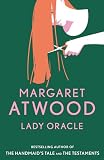
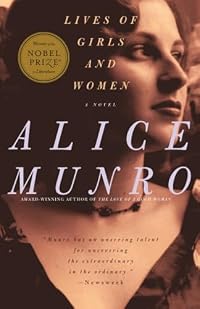
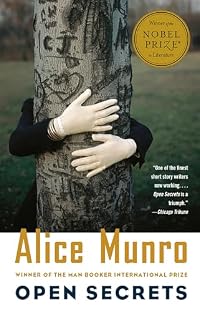

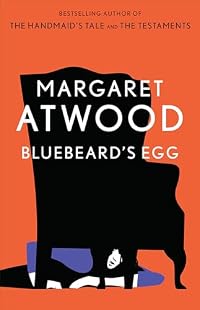

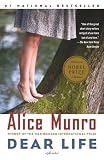

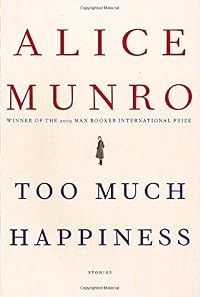
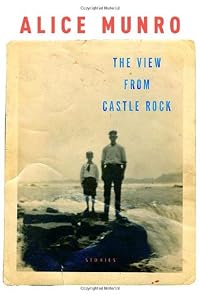
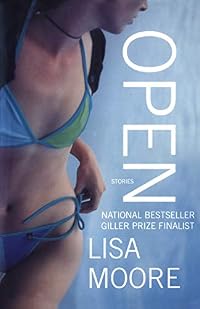
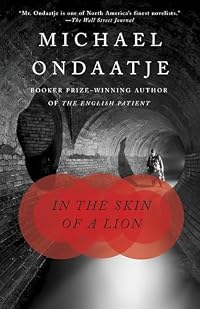
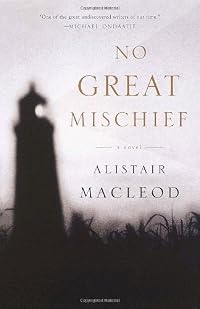

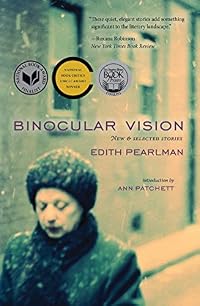

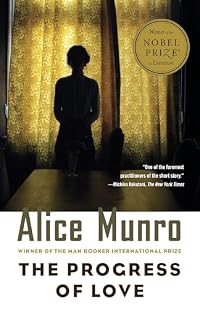
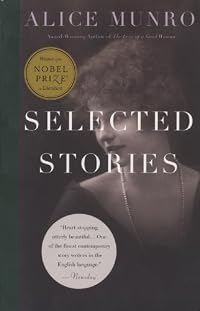
Member Recommendations
Member Reviews
The young and very young women in these stories are entering adult life with enough material sustenance for survival but lacking essential emotional nutrients. The landscape, however literally broad, is claustrophobic - often suffocatingly hot and parental trellises are few or fractured for the young climbing vines.
Alice Munro’s first collection of short stories is not simply a landmark work of Canadian fiction—it is a significant contribution to fiction written in English. These early stories are steeped in a glow of nostalgia and often turn their focus to young people yearning for independence and chafing against the role that society has assigned them. Also featured prominently are strained or lost emotional connections and diverging generational attitudes toward life and love. The settings are rural and small-town southwestern Ontario in the early to middle decades of the 20th century, a time of evolving lifestyles and hardscrabble self-sufficiency. A number of stories are narrated by children and depict their wonder and apprehension as show more they come face to face with a confusing but enthralling adult world. In “Walker Brothers Cowboy,” the young narrator and her younger brother go for a drive into the country with their father, a traveling salesman. Eventually they end up at a house where they meet a woman, Nora, whom, the narrator gradually realizes, is her father’s old sweetheart, and the shock of this hidden dimension of her father’s past thus revealed unveils to her the world as a place of depth and nuance that “darkens and turns strange” the moment you turn your back on it. Other stories place young women in awkward or oppressive social situations resulting from clashing attitudes toward gender roles. In “The Shining Houses,” a young mother, Mary, lives in a growing neighbourhood of newly constructed dwellings mingled in with the old. Mary admires her neighbour, Mrs. Fullerton, a resident of long standing, a cantankerous but strong-willed, independent woman who keeps chickens and sells eggs. Later, at a children’s birthday party that Mary attends with other young mothers like herself along with their young husbands, the conversation turns to a general disgust with Mrs. Fullerton’s “rundown” property and a plan to use a city ordinance to have her evicted. When Mary is asked to sign a petition she refuses, but her confusion is profound, and she leaves the party haunted by what she’s done to herself by resisting a notion that to her seems reprehensible but to others seems righteous and necessary. And in “The Office” a young mother, an aspiring fiction writer, bravely defies social and domestic norms by renting office space where she can work in peace, free of family distractions. But, to her chagrin, her concentration is disturbed, maddeningly and repeatedly, by her condescending and meddling landlord, who refuses to treat her and her artistic goals seriously. The stories are bracingly open-ended and, in their structural elasticity, imply endless vistas of narrative possibility. Throughout, Munro’s prose is precise and controlled and crowded with sensory detail. Her settings live and breathe: the natural world shimmers and pulsates; every texture, every sight, sound and smell of every interior space is rendered with stunning physicality that haunts the reader’s imagination like a lived memory. A virtuoso performance, The Dance of the Happy Shades received widespread acclaim when it was published in 1968 when the author was 37. A must-read for fans of the short story, this book also belongs on the reading list of every student of 20th-Century fiction. show less
Finally finished working my way through Alice Munro's book, Dance of the Happy Shades. She does a fabulous job of capturing the awkwardness, intense feelings and poignant comedy of adolescent girls in stories such as The Red Dress - 1946 and An Ounce of Cure. She uses language that gave me a strong sense of time and place as in A Trip to the Coast. In several stories I found myself thinking "I know that feeling". I am in awe of her ability to find the perfectly descriptive language to capture emotion, location, personal characteristics, the small details of a scene or action that make it real.
Alice Munro is one of my favorite authors. Over her entire career she has deftly written about the lives of ordinary girls and women - their experiences, their challenges, their dreams. She is so worthy of the Nobel Prize for Literature, which she won in 2013.
This is Munro's first published book, and like most of the others, it is a book of short stories. It is just as beautifully written as her later ones, and shows her early power of storytelling. In this volume, which won the Canadian Governor General's Prize in 1968, each story is a gem. Some are about growing up in small-town Ontario - the mysteries of adults, the trials and worries of coming-of-age - of sex, love and work. Others are told with grown-up eyes, looking back at times show more gone by. There is a feeing of nostalgia in all of them, to be sure. Yet there are also universal truths at the heart. show less
This is Munro's first published book, and like most of the others, it is a book of short stories. It is just as beautifully written as her later ones, and shows her early power of storytelling. In this volume, which won the Canadian Governor General's Prize in 1968, each story is a gem. Some are about growing up in small-town Ontario - the mysteries of adults, the trials and worries of coming-of-age - of sex, love and work. Others are told with grown-up eyes, looking back at times show more gone by. There is a feeing of nostalgia in all of them, to be sure. Yet there are also universal truths at the heart. show less
This was Munro's first published work and it won the Governor-General's Award for fiction in 1968. I think it is fair to say that many of the stories are autobiographical, remembering her early years in Wingham Ontario. She speaks for all of the misfit girls, those girls who don't quite fit in with the other kids at school or even their own family. Having been one of those girls I could relate.
The story "Red Dress - 1946" is about a girl who goes to the high school dance and fears she is never going to be asked for a dance. She almost leaves with another girl but, at the last moment, she is asked to dance. At the end of the night the boy walks her home and kisses her. Then he turned back to town, never knowing he had been my rescuer, show more that he had brought me from Mary Fortune's territory into the ordinary world. I'm sure that same story could have been written about 1966 or 1986 or 2006.
In "Boys and Girls" the daughter of a fox farmer lets a horse out of the pasture when her father was about to kill it. When her little brother tells their father what she did, the father dismisses it by saying "She's only a girl." Munro's father was a fox and poultry farmer and I'm sure Alice was taught early on that there was no room for sentiment on a farm. As I did, I'm sure she rebelled against that but felt like she didn't really belong to the family.
I think the clearest passage about the feeling of being a misfit is this one found on page 75:
...the difficulties I got into were a faithful expression of my own incommodious nature--the same nature that caused my mother to look at me on any occasion which traditionally calls for feelings of pride and maternal accomplishment (my departure for my first formal dance, I mean, or my hellbent preparations for a descent on college) with an expression of brooding and fascinated despair, as if she could not possibly expect, did not ask, that it should go with me as it did with other girls; the dreamed-of spoils of daughters--orchids, nice boys, diamond rings--would be borne home in due course by the daughters of her friends, but not by me; all she could do was hope for a lesser rather than a greater disaster--an elopement, say, with a boy who could never earn his living, rather than an abduction into the White Slave trade.
On behalf of all the other females of the world who have worried that they will never belong, I want to say thanks to Alice Munro. Thanks for showing us that we're not alone. show less
The story "Red Dress - 1946" is about a girl who goes to the high school dance and fears she is never going to be asked for a dance. She almost leaves with another girl but, at the last moment, she is asked to dance. At the end of the night the boy walks her home and kisses her. Then he turned back to town, never knowing he had been my rescuer, show more that he had brought me from Mary Fortune's territory into the ordinary world. I'm sure that same story could have been written about 1966 or 1986 or 2006.
In "Boys and Girls" the daughter of a fox farmer lets a horse out of the pasture when her father was about to kill it. When her little brother tells their father what she did, the father dismisses it by saying "She's only a girl." Munro's father was a fox and poultry farmer and I'm sure Alice was taught early on that there was no room for sentiment on a farm. As I did, I'm sure she rebelled against that but felt like she didn't really belong to the family.
I think the clearest passage about the feeling of being a misfit is this one found on page 75:
...the difficulties I got into were a faithful expression of my own incommodious nature--the same nature that caused my mother to look at me on any occasion which traditionally calls for feelings of pride and maternal accomplishment (my departure for my first formal dance, I mean, or my hellbent preparations for a descent on college) with an expression of brooding and fascinated despair, as if she could not possibly expect, did not ask, that it should go with me as it did with other girls; the dreamed-of spoils of daughters--orchids, nice boys, diamond rings--would be borne home in due course by the daughters of her friends, but not by me; all she could do was hope for a lesser rather than a greater disaster--an elopement, say, with a boy who could never earn his living, rather than an abduction into the White Slave trade.
On behalf of all the other females of the world who have worried that they will never belong, I want to say thanks to Alice Munro. Thanks for showing us that we're not alone. show less
I like reading and re-reading the first books of the writers I love. They have a certain charm, and an indication of the origins from which their later works flow. They also show the early point of recurring themes, revisited places, and an overall sense of development achieved when compared to the works that followed.
All of these short stories are set in small towns which resemble Munro's hometown of Wingham, Ontario. It was clear while reading these stories that a lot of the material is drawn from memory. An interesting fact I learned about two days ago is that these stories are responsible for seven decades worth of hostility. Elements of a story matching with certain real life events that involve a tragic death, as well as people of show more the town feeling that characters in the book were actual people who lived in Wingham and who, according to them, were depicted in an unsavoury light, are to blame. The hostility was so great that threats of bodily harm against Munro had her seek protection from the town police when she visited her hometown for a literary festival. Her town accepts her more warmly now, and that she won a Nobel might have something to do with it.
This would be a good place for someone who hasn't read Munro. Not only because these are good stories, but also because the only place to go from here is up as the writing becomes richer, more complex, and more refined with the later works. show less
All of these short stories are set in small towns which resemble Munro's hometown of Wingham, Ontario. It was clear while reading these stories that a lot of the material is drawn from memory. An interesting fact I learned about two days ago is that these stories are responsible for seven decades worth of hostility. Elements of a story matching with certain real life events that involve a tragic death, as well as people of show more the town feeling that characters in the book were actual people who lived in Wingham and who, according to them, were depicted in an unsavoury light, are to blame. The hostility was so great that threats of bodily harm against Munro had her seek protection from the town police when she visited her hometown for a literary festival. Her town accepts her more warmly now, and that she won a Nobel might have something to do with it.
This would be a good place for someone who hasn't read Munro. Not only because these are good stories, but also because the only place to go from here is up as the writing becomes richer, more complex, and more refined with the later works. show less
Munro’s stories and writing are captivating, partly due to the era, and her familiarity with the awkwardness of girlhood and intensity of youth—fleeting yet fraught with meaning. Her stencnes are essential, physical, creative and depth, her description artful and whole. She has a loyalty and affection for her characters, shown by her creative characterizations, such as being “as soft and shapeless as a collapsed pudding,” and by her creativity in detailed description, makng us sympathetic to her characters without being judgmental or pitying. Smells and feelings are evoked in description with such vividness as to paint entire images of a person: “her neck warm and smelling of raisins as it always did, but the rest of her under show more the covers had changed into some large, fragile and mysterious object, difficult to move.” And in the same story, her father’s boots give “off complicated smell of manure, machine oil, caked black mud and the ripe and disintegrating material that lined their soles… They had an expressin that was dogged and uncompromoising, even brutal…” Munro excels in describing the physical and emotional humanity of her characters without explaining them psychologically.
I am sensitive to how children with disabilities are portrayed, particularly children with MR. In the eponymous story, the final, in this collection published in 1968, Munro aptly describes such children as having “unfinished features,” because she is looking at children, rather than applying theories or categories or judgments on them. Her power of observation and of creatively recording those observations give rise to the stories she tells. show less
I am sensitive to how children with disabilities are portrayed, particularly children with MR. In the eponymous story, the final, in this collection published in 1968, Munro aptly describes such children as having “unfinished features,” because she is looking at children, rather than applying theories or categories or judgments on them. Her power of observation and of creatively recording those observations give rise to the stories she tells. show less
Members
- Recently Added By
Lists

Governor General of Canada's English Fiction Awards
89 works; 3 members

Best Sellers / Popular 1968
237 works; 5 members
Author Information

126+ Works 30,337 Members
Alice Munro was born Alice Laidlaw in Wingham, Ontario on July 10, 1931. She published her first story, The Dimensions of a Shadow, while a student at the University of Western Ontario in 1950. She left the university in 1951 to get married and start a family. In 1972 she became Writer in Residence at the University of Western Ontario. Her first show more collection, Dance of the Happy Shades, was published in 1968 and won the Governor General's Award, Canada's highest literary prize. Her other works include Lives of Girls and Women, The View from Castle Rock, Something I've Been Meaning to Tell You, Too Much Happiness, and Dear Life. She has received several awards including the Governor General's Award for fiction for Who Do You Think You Are? and The Progress of Love, the Giller Prize for Runaway in 2004, the Man Booker International Prize in 2009 for her lifetime body of work, and the 2013 Nobel Prize in Literature. Her stories have appeared in numerous publications including The New Yorker, The Paris Review, and The Atlantic Monthly. Also, in 2013, her title Dear Life: Stories made The New York Times Best Seller List. (Bowker Author Biography) show less
Awards and Honors
Work Relationships
Common Knowledge
- Canonical title
- Dance of the Happy Shades and Other Stories
- Original publication date
- 1968
Classifications
Statistics
- Members
- 807
- Popularity
- 34,083
- Reviews
- 21
- Rating
- (4.14)
- Languages
- 10 — Catalan, Chinese, English, French, German, Italian, Korean, Malayalam, Polish, Spanish
- Media
- Paper, Ebook
- ISBNs
- 38
- ASINs
- 14