On This Page
Description
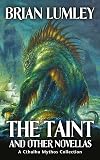
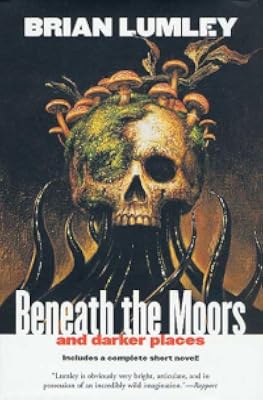
A collection of thrilling tales from H. P. Lovecraft's Cthulhu Mythos by one of horror's biggest legends. This volume contains the very best of Brian Lumley's Mythos novellas.Included in this collection:
Introduction
The Horror at Oakdeene
Born of the Winds
The Fairground Horror
The Taint
Rising with Surtsey
Lord of the Worms
The House of the Temple
.
Tags
Recommendations








Member Reviews
The prolific Brian Lumley, a stalwart of British horror, has collected what his publisher calls his best Cthulhu Mythos tales in the first volume of what appears to be a series.
Where does it stand in the Lovecraftian canon? Well, it mostly stands as a worthy successor to Derleth, if you take the Mythos not to be the starting point for great literature but as a universe for pulp exploitation. In this volume at least, Lumley largely concentrates on tales of horrors associated with the ocean and, in one story, the winds. The smell of the sea, as you might expect of a British writer, pervades the book.
Most of these stories, which contain their own inner coherence (for example, the Oakdene asylum appears repeatedly as if it had wandered in show more from an Amicus movie production), were written when Lumley was not yet a full time writer but was holding down a steady job in an extended military career - solid, workmanlike stuff but showing none of the signs of a mind able to give itself completely to its subject matter.
Most of the stories come, therefore, from the late 1960s through to the early 1980s, and they bear loose comparison with the Stephen King collection, which has its own occasional use of more land-based Lovecraftian themes, as reviewed by us recently - http://www.goodreads.com/book/show/2309535.Night_Shift
King, as Lumley might well admit, is the superior writer, although Lumley at his best is far better than King at his worst. The bulk of the stories in this collection are entertaining enough - although the last two ('The Lord of the Worms', a dreadful sub-Wheatley tale of black magic whose only purpose seems to have been to give some sort of back story to his Titus Crow creation, and 'The House of the Temple') might easily have been left out with profit. The latter, however, although largely pedestrian and predictable, opens out (as Lumley is, on occasion, wont to do) into some remarkable last pages of genuine eldritch horror even as it bathetically collapses into cliche at the end.
Other stories are more solid but they contain nothing that should hold a reader who is not a died-in-the-wool Lovecraftian, one who needs his fix and will put up with some less potent drug than he would really like.
Two stories or rather novella rise above the rest - 'Born of the Winds' (1972/3) and 'The Taint' (2002/2003). These suggest that Lumley is at his best (as in his Necroscope series) when he is given the space to tell a longer tale and develop character. In this, he is much like King and unlike Lovecraft himself and, say, Ligotti. His other short stories are basically pulp, at times almost pastiches of the entertaining fodder to be found at the top end of the 'Wierd Tales' market, but these two novella really do have something going for them.
The earliest, BOTW, is derivative of Algernon Blackwood's 'The Wendigo' which Lumley cleverly identifies with Ithaqua, the Wind Walker, from the Lovecraftian Mythos. The transition is seamless. Although perhaps not great literature in that absolute sense beloved of the Academy, the writing is atmospheric (it is set in the Canadian wastes) and it is a worthy addition to the canon.
But it is 'The Taint' that holds our attention. It is a small masterpiece. It can be no accident that it comes after well over thirty years of practice at the art of writing.
It takes the Innsmouth story and creates a tale of miscegenation between man and sea-beast that contains none of the racist disgust of Lovecraft. Instead it creates a very humane story of the human costs of dark dabblings in the past that becomes a lively metaphor for the terrible effects on later generations of the boundary-crossing of earlier ones. References to AIDS and CJD are not accidental, nor the idea that scientific interest in the Innsmouth population might have its own, not necessarily entirely evil, momentum.
There is little of Cthulhu in this story but a great deal of interest in developing what Lovecraft had never explained into a narrative that fills some gaps plausibly. In this sense, it is more than another tale within a tradition, it is a brilliant extension of the narrative, still very much loyal to Lovecraft's 'facts' but from a more humane if pessimistic British perspective at the beginning of the twenty first century.
It has also been brilliantly translated into a Cornish environment - directly across from the New England coast. The 'surprise' (we are not into spoilers) seems no surprise when it comes and yet Lumley's skilled writing has brilliantly drawn us away from the only logical reason the protagonist is in the decayed fishing village and towards the relationships between the middle class exiles who stand apart from the locals. It is a skilled example of literary misdirection and shows what Lumley is capable of.
This story has appeared elsewhere (in 'Weird Shadows over Innsmouth', publ. 2005) so that this book does not need to be purchased if you have that volume and are not a Lovecraftian mythos completist. On the other hand, the story is so interesting that I would say that the book is worth the purchase for it alone - assuming you are reasonably well educated in Lovecraft's themes and can enjoy the other stories for what they are, dark fun.
I like Lumley. He is an honest cove in popular literature, It is good to see him still appearing on Waterstone's shelves and with a decent section at 'Forbidden Planet', but this collection is otherwise really (like King's) strictly for the fans or for Lovecraftians (like me) who cannot fail to get a thrill from the Master's grim world-view (albeit as twisted by Derlethianism).
'The Taint' is the best story in part because it goes to the core of the Master's work and throws out all the accretions of Arkham Press. It develops Lovecraft and when we say we wish Lovecraft had written more, this is what we generally mean - that his dark vision, set in each successive time, should reflect what science, not myth, might tell us about the eldritch horrors 'out there'. show less
Where does it stand in the Lovecraftian canon? Well, it mostly stands as a worthy successor to Derleth, if you take the Mythos not to be the starting point for great literature but as a universe for pulp exploitation. In this volume at least, Lumley largely concentrates on tales of horrors associated with the ocean and, in one story, the winds. The smell of the sea, as you might expect of a British writer, pervades the book.
Most of these stories, which contain their own inner coherence (for example, the Oakdene asylum appears repeatedly as if it had wandered in show more from an Amicus movie production), were written when Lumley was not yet a full time writer but was holding down a steady job in an extended military career - solid, workmanlike stuff but showing none of the signs of a mind able to give itself completely to its subject matter.
Most of the stories come, therefore, from the late 1960s through to the early 1980s, and they bear loose comparison with the Stephen King collection, which has its own occasional use of more land-based Lovecraftian themes, as reviewed by us recently - http://www.goodreads.com/book/show/2309535.Night_Shift
King, as Lumley might well admit, is the superior writer, although Lumley at his best is far better than King at his worst. The bulk of the stories in this collection are entertaining enough - although the last two ('The Lord of the Worms', a dreadful sub-Wheatley tale of black magic whose only purpose seems to have been to give some sort of back story to his Titus Crow creation, and 'The House of the Temple') might easily have been left out with profit. The latter, however, although largely pedestrian and predictable, opens out (as Lumley is, on occasion, wont to do) into some remarkable last pages of genuine eldritch horror even as it bathetically collapses into cliche at the end.
Other stories are more solid but they contain nothing that should hold a reader who is not a died-in-the-wool Lovecraftian, one who needs his fix and will put up with some less potent drug than he would really like.
Two stories or rather novella rise above the rest - 'Born of the Winds' (1972/3) and 'The Taint' (2002/2003). These suggest that Lumley is at his best (as in his Necroscope series) when he is given the space to tell a longer tale and develop character. In this, he is much like King and unlike Lovecraft himself and, say, Ligotti. His other short stories are basically pulp, at times almost pastiches of the entertaining fodder to be found at the top end of the 'Wierd Tales' market, but these two novella really do have something going for them.
The earliest, BOTW, is derivative of Algernon Blackwood's 'The Wendigo' which Lumley cleverly identifies with Ithaqua, the Wind Walker, from the Lovecraftian Mythos. The transition is seamless. Although perhaps not great literature in that absolute sense beloved of the Academy, the writing is atmospheric (it is set in the Canadian wastes) and it is a worthy addition to the canon.
But it is 'The Taint' that holds our attention. It is a small masterpiece. It can be no accident that it comes after well over thirty years of practice at the art of writing.
It takes the Innsmouth story and creates a tale of miscegenation between man and sea-beast that contains none of the racist disgust of Lovecraft. Instead it creates a very humane story of the human costs of dark dabblings in the past that becomes a lively metaphor for the terrible effects on later generations of the boundary-crossing of earlier ones. References to AIDS and CJD are not accidental, nor the idea that scientific interest in the Innsmouth population might have its own, not necessarily entirely evil, momentum.
There is little of Cthulhu in this story but a great deal of interest in developing what Lovecraft had never explained into a narrative that fills some gaps plausibly. In this sense, it is more than another tale within a tradition, it is a brilliant extension of the narrative, still very much loyal to Lovecraft's 'facts' but from a more humane if pessimistic British perspective at the beginning of the twenty first century.
It has also been brilliantly translated into a Cornish environment - directly across from the New England coast. The 'surprise' (we are not into spoilers) seems no surprise when it comes and yet Lumley's skilled writing has brilliantly drawn us away from the only logical reason the protagonist is in the decayed fishing village and towards the relationships between the middle class exiles who stand apart from the locals. It is a skilled example of literary misdirection and shows what Lumley is capable of.
This story has appeared elsewhere (in 'Weird Shadows over Innsmouth', publ. 2005) so that this book does not need to be purchased if you have that volume and are not a Lovecraftian mythos completist. On the other hand, the story is so interesting that I would say that the book is worth the purchase for it alone - assuming you are reasonably well educated in Lovecraft's themes and can enjoy the other stories for what they are, dark fun.
I like Lumley. He is an honest cove in popular literature, It is good to see him still appearing on Waterstone's shelves and with a decent section at 'Forbidden Planet', but this collection is otherwise really (like King's) strictly for the fans or for Lovecraftians (like me) who cannot fail to get a thrill from the Master's grim world-view (albeit as twisted by Derlethianism).
'The Taint' is the best story in part because it goes to the core of the Master's work and throws out all the accretions of Arkham Press. It develops Lovecraft and when we say we wish Lovecraft had written more, this is what we generally mean - that his dark vision, set in each successive time, should reflect what science, not myth, might tell us about the eldritch horrors 'out there'. show less
Welcoming the chance to get my Lovcraftian horror on via the excellent narration of Joshua Saxon, I tore into THE TAINT AND OTHER NOVELLAS. What fun!
A collection of 5 novellas which were written back in the mid to late 1900s, these tales do not have the polish of Lumley's later works, like the Necroscope series. These stories are more the work of a writer starting out, (while serving in the military), a writer bewitched by Lovecraft's Cthulhu mythos. The fun parts of the mythos are here, but they lack the racism and other issues of Lovecraft's work.
My favorites of the 5 were: LORD OF THE WORMS This tale featured Titus Crow, a name I remember from back in the day, though I can't quite remember the tales in which he featured. In this show more story, he's invited to a home under the pretense of cataloging a large book collection at an old estate. Of course nothing is as it appears. Throw in some mesmerizing hypnotism, (see what I did there?!), some maggots and some spiked wine and you have yourself a great time!
THE TAINT was a fun tale involving fish-men. That's right, fish-men. With all the creepiness inherent in that phrase. It's not as much a pulp tale as one would think, with just the right mix of horror and perhaps a bit of social commentary, (but that's just my take.)
Finally, the last story THE TEMPLE HOUSE takes the form of a man inheriting an old estate from his uncle. He takes a friend and goes to Scotland to inspect his inheritance, and soon finds a letter from his uncle asking him to destroy the place. Why? You'll have to read this to find out!
Regarding the narrator, Joshua Saxon-I've only listened to one other performance of his, which was the excellent THE CIPHER by Kathe Koja. In that book he was voicing only one character while in this collection, he voices all kinds of people and he does it quite well. English, American, Scottish, he does them all and never for a moment did I doubt the origins of any of the characters. Well done, sir!
This was a collection full of fun Lovecraftian monsters, fish people, maggots and worms. If these are the things that delight you, then you'll enjoy the hell out of this volume!
Recommended!
*I received this audio download free from the narrator, in exchange for my honest feedback. This is it!* show less
A collection of 5 novellas which were written back in the mid to late 1900s, these tales do not have the polish of Lumley's later works, like the Necroscope series. These stories are more the work of a writer starting out, (while serving in the military), a writer bewitched by Lovecraft's Cthulhu mythos. The fun parts of the mythos are here, but they lack the racism and other issues of Lovecraft's work.
My favorites of the 5 were: LORD OF THE WORMS This tale featured Titus Crow, a name I remember from back in the day, though I can't quite remember the tales in which he featured. In this show more story, he's invited to a home under the pretense of cataloging a large book collection at an old estate. Of course nothing is as it appears. Throw in some mesmerizing hypnotism, (see what I did there?!), some maggots and some spiked wine and you have yourself a great time!
THE TAINT was a fun tale involving fish-men. That's right, fish-men. With all the creepiness inherent in that phrase. It's not as much a pulp tale as one would think, with just the right mix of horror and perhaps a bit of social commentary, (but that's just my take.)
Finally, the last story THE TEMPLE HOUSE takes the form of a man inheriting an old estate from his uncle. He takes a friend and goes to Scotland to inspect his inheritance, and soon finds a letter from his uncle asking him to destroy the place. Why? You'll have to read this to find out!
Regarding the narrator, Joshua Saxon-I've only listened to one other performance of his, which was the excellent THE CIPHER by Kathe Koja. In that book he was voicing only one character while in this collection, he voices all kinds of people and he does it quite well. English, American, Scottish, he does them all and never for a moment did I doubt the origins of any of the characters. Well done, sir!
This was a collection full of fun Lovecraftian monsters, fish people, maggots and worms. If these are the things that delight you, then you'll enjoy the hell out of this volume!
Recommended!
*I received this audio download free from the narrator, in exchange for my honest feedback. This is it!* show less
A rather split compilation of several of Lumley's novellas within the scope of the Cycle of Cthulhu Myth. About half of them are pure pastiche; channeling Lovecraft so precisely that I thought I might have been reading August Derleth. That said, Lumley is a great writer and one of my favorite in the field, so he's a pleasure to read even when the pastiche prose are purple. Lumley's introductions to each novella (exclusive to this gorgeous Subterranean Press edition) help soften the blow a bit in their self-deprecating humor and earnestness. Most of the pastiche stories were written 35-40 years ago and represented some of Lumley's earliest published works, so one can't fault him too fiercely, if at all.
As much pulpy fun as it was to show more read the handful of Lovecraft homages, the real joy comes in the later novellas also included here, especially The Taint and Born of the Winds. Clearly written after his style had matured somewhat, these tales are unique in character and content (if not necessarily in setting) and were a real pleasure to encounter.
I've been a fan of Lumley's since reading his Necroscope novels some years ago, but had had very little exposure to his Mythos Cycle stories. This was a pretty good collection with which to rectify that omission and the brief time it took me to read them was well-spent. A solid comp with some slight lows, a lot of midlines, and a couple of very high highs. Four stars for fans of Lumley or the Mythos, probably far less than that for anyone else. show less
As much pulpy fun as it was to show more read the handful of Lovecraft homages, the real joy comes in the later novellas also included here, especially The Taint and Born of the Winds. Clearly written after his style had matured somewhat, these tales are unique in character and content (if not necessarily in setting) and were a real pleasure to encounter.
I've been a fan of Lumley's since reading his Necroscope novels some years ago, but had had very little exposure to his Mythos Cycle stories. This was a pretty good collection with which to rectify that omission and the brief time it took me to read them was well-spent. A solid comp with some slight lows, a lot of midlines, and a couple of very high highs. Four stars for fans of Lumley or the Mythos, probably far less than that for anyone else. show less
An interesting collection of ... tertiary?* Cthulhu Mythos tales. They're collected from throughout his career and each has a brief preface by Lumley giving some background and his opinions of the piece. Spoilers follow, major spoilers are marked.
*Primary was of course Lovecraft and correspondents, Derleth was a late enough protegée to be secondary, so Lumley as Derleth's protegée is tertiary.
I've heard mixed things of Lumley, including that his writing is unsatisfactory pastiche. I found all of them worth reading, but that's not an unfair comment. Most of the stories are heavily based on Lovecraft's works (the exceptions being from Derleth's), with a heavy focus on Cthulhu and watery entities, and long lists of the same old Mythos show more tomes. The writing is also, to varying extents, influenced the same way, as Lumley points out. I don't know whether it's down to being a Best Of collection but a certain sense of sameness pervaded the collection. There are two tales written as witness statements by protagonists thought to be insane and possibly murderers. There seemed to be an emphasis on water and Cthulhu, and a small collection of tomes focused on these topics. There are also two stories where it turns out someone is a Mythos cultist. In a book of seven stories, that feels like a lot.
Despite this I enjoyed it reasonably well. My personal favourites were the final two, Lord of the Worms and the House of the Temple. The House I enjoyed not least because it felt the most original in terms of what was actually going on, though the ending owes something to Lovecraft's "The Thing on the Doorstep" and the protagonists seem a little feckless. Lord of the Worms did something rather different, had a pleasingly practical (if stubborn) protagonist, and a satisfying aura of menace.
"The Taint" is the title story and it probably earned it, though I thought the writing was a bit creaky. The opening was quite heavy, and the middle-class domestic troubles felt just a tad too prominent to me. However, the developments in the rest of the novel were interestingly different, and I didn't have much idea where exactly it was going, though the overall lines were clear enough.I'm still not sure about stories where the protagonist is a villain, let alone a Mythos cultist. This was miles better than the revolting "Doom that Came to Innsmouth" which gave us a serial killer rapist protagonist, but I still find something intrusive and unwanted about having the character through whose head we see the world casually condemning a mildly inconvenient friend to a slow and horrible death. There was also some slightly confusing stuff about genetic modification, which left me confused about the book's intended period for a while - was this supposed to be alt-hist or maybe actual sci-fi? I don't think so, but then there seem to be some actual successes in gene therapy and genetic engineering... that kind of thing would be blazed over the media as a staggering triumph, but both it and the Innsmouth Lookers have obviously been kept mostly obscure.
The remaining stories were fine, all with their own strengths and weaknesses. Indecisive narrators who hesitate to do anything, even in the face of huge volumes of Mythos tomes and evidence they're telling the truth, are a bit of a theme in Mythos fiction so I can't really fault it for that. I did feel the writing tends to get too thick, especially where Mythos is concerned, and that it worked best when it broke free of the Lovecraft/Derleth influence to something a little freer and more natural. On the whole I'd call this a fairly solid and readable collection, with interesting ideas and scenes, but not one I see myself coming back to. I may be interested to see what becomes of Titus Crow, who I know has a bit of a series. show less
*Primary was of course Lovecraft and correspondents, Derleth was a late enough protegée to be secondary, so Lumley as Derleth's protegée is tertiary.
I've heard mixed things of Lumley, including that his writing is unsatisfactory pastiche. I found all of them worth reading, but that's not an unfair comment. Most of the stories are heavily based on Lovecraft's works (the exceptions being from Derleth's), with a heavy focus on Cthulhu and watery entities, and long lists of the same old Mythos show more tomes. The writing is also, to varying extents, influenced the same way, as Lumley points out. I don't know whether it's down to being a Best Of collection but a certain sense of sameness pervaded the collection. There are two tales written as witness statements by protagonists thought to be insane and possibly murderers. There seemed to be an emphasis on water and Cthulhu, and a small collection of tomes focused on these topics. There are also two stories where it turns out someone is a Mythos cultist. In a book of seven stories, that feels like a lot.
Despite this I enjoyed it reasonably well. My personal favourites were the final two, Lord of the Worms and the House of the Temple. The House I enjoyed not least because it felt the most original in terms of what was actually going on, though the ending owes something to Lovecraft's "The Thing on the Doorstep" and the protagonists seem a little feckless. Lord of the Worms did something rather different, had a pleasingly practical (if stubborn) protagonist, and a satisfying aura of menace.
"The Taint" is the title story and it probably earned it, though I thought the writing was a bit creaky. The opening was quite heavy, and the middle-class domestic troubles felt just a tad too prominent to me. However, the developments in the rest of the novel were interestingly different, and I didn't have much idea where exactly it was going, though the overall lines were clear enough.
The remaining stories were fine, all with their own strengths and weaknesses. Indecisive narrators who hesitate to do anything, even in the face of huge volumes of Mythos tomes and evidence they're telling the truth, are a bit of a theme in Mythos fiction so I can't really fault it for that. I did feel the writing tends to get too thick, especially where Mythos is concerned, and that it worked best when it broke free of the Lovecraft/Derleth influence to something a little freer and more natural. On the whole I'd call this a fairly solid and readable collection, with interesting ideas and scenes, but not one I see myself coming back to. I may be interested to see what becomes of Titus Crow, who I know has a bit of a series. show less
Ratings
Members
- Recently Added By
Author Information

257+ Works 15,861 Members
Brian Lumley was born on England's North Coast on December 2, 1937. He joined the British Army in his teens and remained a soldier for twenty-two years. He first started writing while stationed in Berlin. Lumley's first book was published in the early 1970's. He retired from the Army in 1981 and took up writing full time. He is the author of over show more 40 books, and is most well known for his "Necroscope Series" which consists of 13 titles. He won the 1989 British Fantasy Award for his Novelette "Fruiting Bodies" as well as the 1990 Fear Magazine Award for "Necroscope III: The Source." In 1998, Lumley won the Grand Master of Horror Award at the World Horror Convention in Phoenix, Arizona. On 28 March 2010 Lumley received the Lifetime Achievement Award of the Horror Writers Association. He also received a World Fantasy Award for Lifetime Achievement in 2010. (Bowker Author Biography) show less
Some Editions
Awards and Honors
Awards
Series

Work Relationships
Common Knowledge
- Canonical title
- The Taint and Other Novellas
- Original publication date
- 2007
- Important places
- Arkham, Massachusetts, USA
- First words
- In the summer of 1935, Martin Spellman went to work as a trainee mental nurse at Oakdeene Sanatorium.
- Last words
- (Click to show. Warning: May contain spoilers.)If they should bring me my breakfast one morning and find me dead - will my face really look like that?
Classifications
Statistics
- Members
- 132
- Popularity
- 246,725
- Reviews
- 4
- Rating
- (3.94)
- Languages
- English
- Media
- Paper, Audiobook, Ebook
- ISBNs
- 5
- ASINs
- 5