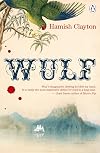
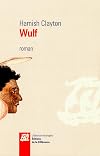
Wulf
by Hamish Clayton
On This Page
Description
Fiction. Historical Fiction. HTML:Early nineteenth century New Zealand – the great chief Te Rauparaha has conquered tiny Kapiti Island, from where Ngati Toa launches brutal attacks on its southern enemies. Off the coast of Kapiti, English trader John Stewart seeks to trade with Te Rauparaha, setting off a train of events that forever change the course of New Zealand history. Narrated by two English sailors on board Stewart's ship, these events are also eerily resonant of a more distant show more memory, stretching back into mythology, of the charismatic leader Wulf and an ancient lament. History, it seems, may be repeating itself. Wulf, Hamish Clayton's inventive, brilliant first novel, explores a subject little covered in New Zealand fiction, and marks the emergence of a startlingly assured, exciting new voice. 'I was blown away by Wulf's imaginative derring-do. It is easily the most impressive debut I've read in a long time.' —Lloyd Jones, author of Mister Pip 'A powerfully imagined novel – assured, crisply poetic and spellbinding in its unfurling narrative. . . . Clayton [is] a gifted writer for a new generation.' —Murray Bramwell, NZ Books Also available as an eBook. show lessTags
Recommendations



















Member Reviews
Wulf picked up the NZ Society of Authors Best First Book award this year, and it really is something different from a standard NZ historical novel, more CK Stead than Maurice Shadbolt. My only quibble is biological anachronism: it mentions moa stories and giant eagle bones years before they were actually unearthed, and describes pohutakawa flowering along the Kapiti coast when their normal range is north of Kawhia.
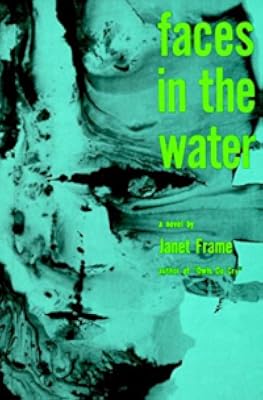
What an astonishing book this is, a gem from the black trees and green hills of New Zealand. The writing is somewhat Katherine Mansfield -, subtle and occasionally elegant; while the story line is shades of the nightmare world of Janet Frame. The sheer brutality and nastiness of the characters - both Maori and pakeha - leaves a frisson of shivers down the spine as events draw to their inevitable conclusion. The prose style can be overblown, but overall this is a work full of high promise.
Early in the 19th century Te Rop'raha (Te Rauparaha) leads his people in a forced migration down into the Southern area of the North Island of New Zealand. And eventually the opportunity to take the strategically located, and much coveted, Kopitee (Kapiti) Island presents itself. From Kapiti Island Te Rauparaha and his warriors are able to launch attack after attack on the surrounding tribes, until finally Te Rauparaha and the Ngati Toa tribe hold the entire lower North Island and Te Rauparaha has earned the epithet 'Napoleon of the South Pacific'.
It is through the eyes of the English traders who come to trade with Te Rauparaha, most of them on their first trip to New Zealand, that we watch these events unfold.
Strictly speaking Wulf is show more historical fiction, but it's so much more than that and almost defies classification. The narrative is firmly grounded in New Zealand history, but Clayton's writing is poetic and lyrical, using layered metaphors to construct rich, evocative imagery that creates a strong sense of place and time. Clayton's Te Rauparaha is embued with an almost mystical quality that seems to match the mana (prestige, authority, stature) he earned and fear he inspired. The whole book has an otherworldly quality to it, much of which is due to the descriptions of the land which is starkly contrasted with the brutal reality of the inter-tribal Musket Wars.
While I wasn't particularly gripped by the story or characters, this was just such a beautiful book to read. Wulf is not an easy read; because of the complex poetic and metaphorical language there were a few passages I had to go back over to be sure I understood. But this is the kind of book I will happily reread, and I'm sure I'll find something new in it each time.
Clayton spells the Maori names phonetically, a reflection of the English traders' early struggles to interpret and pronouce the Maori language perhaps. And on that level it makes sense, but the spelling of 'Kopitee' irritated me at every mention because, phonetically, the spelling doesn't make sense. I was also slightly uncomfortable with the level of cannibalism hinted at. I may be being naive, and it is a contentious issue, but I thought it was perhaps a little too prevalent in the story compared with (my understanding of) the reality - although Clayton does address this in his author's notes. But these two things are the only quibbles I had, and are minor at that.
I've never read another book like Wulf, and I suspect it will be a long time before another like it comes along. show less
It is through the eyes of the English traders who come to trade with Te Rauparaha, most of them on their first trip to New Zealand, that we watch these events unfold.
Strictly speaking Wulf is show more historical fiction, but it's so much more than that and almost defies classification. The narrative is firmly grounded in New Zealand history, but Clayton's writing is poetic and lyrical, using layered metaphors to construct rich, evocative imagery that creates a strong sense of place and time. Clayton's Te Rauparaha is embued with an almost mystical quality that seems to match the mana (prestige, authority, stature) he earned and fear he inspired. The whole book has an otherworldly quality to it, much of which is due to the descriptions of the land which is starkly contrasted with the brutal reality of the inter-tribal Musket Wars.
While I wasn't particularly gripped by the story or characters, this was just such a beautiful book to read. Wulf is not an easy read; because of the complex poetic and metaphorical language there were a few passages I had to go back over to be sure I understood. But this is the kind of book I will happily reread, and I'm sure I'll find something new in it each time.
Clayton spells the Maori names phonetically, a reflection of the English traders' early struggles to interpret and pronouce the Maori language perhaps. And on that level it makes sense, but the spelling of 'Kopitee' irritated me at every mention because, phonetically, the spelling doesn't make sense. I was also slightly uncomfortable with the level of cannibalism hinted at. I may be being naive, and it is a contentious issue, but I thought it was perhaps a little too prevalent in the story compared with (my understanding of) the reality - although Clayton does address this in his author's notes. But these two things are the only quibbles I had, and are minor at that.
I've never read another book like Wulf, and I suspect it will be a long time before another like it comes along. show less
Ratings
Members
- Recently Added By
Published Reviews
ThingScore 100
The novel is also much concerned with the power of narratives, the blood-beat of words, the inevitable distortions of history recalled and rearranged.
It's a world where things shift shape, two cultures flounder to understand each other in a land both beautiful and inimical, names are "fluid, porous", and viewpoints shuttle in time and place.
The writing pulses with urgency and oratory. It's show more crammed - and intermittently over-stuffed - with imagery. show less
It's a world where things shift shape, two cultures flounder to understand each other in a land both beautiful and inimical, names are "fluid, porous", and viewpoints shuttle in time and place.
The writing pulses with urgency and oratory. It's show more crammed - and intermittently over-stuffed - with imagery. show less
added by avatiakh
Lists

Narrative verse for pleasure
75 works; 8 members
Author Information

3 Works 80 Members
Hamish Clayton is New Zealand author who wrote The Pale North which made the New Zealand Best Seller List. He also won the Hubert Church Best First Book Award for fiction with his title Wulf. (Bowker Author Biography)
Awards and Honors
Common Knowledge
- People/Characters
- Te Rauparaha
- Important places
- Kapiti Island, Wellington, New Zealand
- First words
- Sometime in the tenth century, or perhaps earlier, a poet somewhere in Britain wrote a poem which has come to be known as both 'Wulf' and 'Wulf and Eadwacer'.
- Blurbers
- Jones, Lloyd
Classifications
Statistics
- Members
- 58
- Popularity
- 529,902
- Reviews
- 3
- Rating
- (3.77)
- Languages
- English, French
- Media
- Paper, Ebook
- ISBNs
- 4
- ASINs
- 2