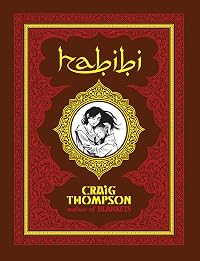
Habibi
by Craig Thompson
On This Page
Description
"Sprawling across an epic landscape of deserts, harems, and modern industrial clutter, Habibi tells the tale of Dodola and Zam, refugee child slaves bound to each other by chance, by circumstance, and by the love that grows between them. We follow them as their lives unfold together and apart; as they struggle to make a place for themselves in a world (not unlike our own) fueled by fear, lust, and greed; and as they discover the extraordinary depth-- and frailty-- of their connection. At show more once contemporary and timeless, Habibi gives us a love story of astounding resonance: a parable about our relationship to the natural world, the cultural divide between the first and third worlds, the common heritage of Christianity and Islam, and, most potently, the magic of storytelling" -- dust jacket wrap. show lessTags
Recommendations









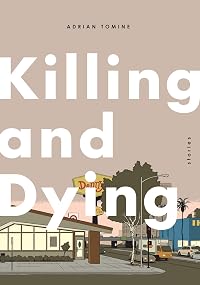
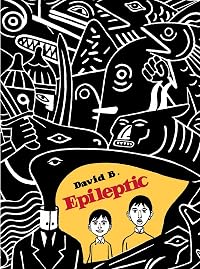
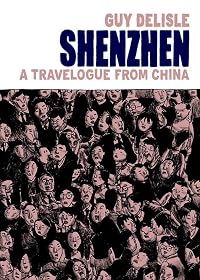
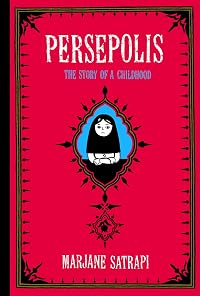
Member Recommendations

Member Reviews
Wrrr. This graphic novel. Wrrr. The art is *amazing.* The structure and the intertwining of motifs and themes is by turns fascinating and compelling. The story is only so-so. And then there's the "urg" feeling I had the whole time I was reading. The story is set in an unnamed Middle Eastern country sometime in the near-ish future. Here's my first two "urg" feelings: Craig Thompson is not, to the best of my ability to discover, of any sort of Middle Eastern descent nor is he culturally adjacent in any way (like, say, having married someone of Middle Eastern descent). A white person writing a book about the Middle East is not an automatic "urg," but it does make me pay real close attention and start looking for an answer to the question, show more "Why *this* story, why by *you*?" I didn't feel like I ever got that answer. And the nonspecificity of the setting made me go "Hrrm" as well. Americans aren't historically so great at understanding Middle Eastern countries, cultures, and peoples with nuance and specificity, so the vague setting feels like maybe not enough effort. Then there's the dramatic sexualization of the female lead, who is shown naked *a lot* and who is raped *a lot* and who we *see* getting raped *a lot.* I didn't feel like this nudity and sexual violence was helping me confront anything or learn anything (except maybe demonstrating that whole "arousal does not equal desire" thing, but I never felt like Thompson was going for that, so.). There's a sultan who is one hundred percent governed by his lusts. Flrn. He's got a harem, and guess how many of the women in it are full-fledged characters rather than naked women we see the sultan ****ing in all kinds of positions? Dingdingding. Zero. And then there are the characters of African descent. They are decidedly simian in appearance. They are *treated* (some of them anyway) as fully-rounded characters; their depiction in the story is not racist as far I saw, but their *images* were. Whhyyyyyy? Aside from the eye-popping "wow" of the art itself, the positive thing that stood out to me about this graphic novel was the depiction of stories from both Christian and Islamic religious tradition that were woven into the larger narrative. These were magnificently illustrated, and the explanation of the differences between the same stories from the two different traditions were fascinating. It made me wish Thompson had teamed up with some religious scholars and done a nonfic comparative graphic work about Christianity and Islam. Alas. show less
Dodola is a 9 year old girl sold into marriage by her father. Her husband, a scribe, tells her stories and teaches her how to read and write. When Dodola is 12 she is stolen from her husband and branded as a slave. She manages to escape from the slave market with a 3 year old orphan boy, Cham. (Dodola calls him Zam) Dodola and Zam live in an abandoned boat in the dessert. Dodola raises Zam as if he were her child, she shares her stories with him, and teaches him to read and write. Dodola uses her body to trade for food from the men in the passing caravans. When Dodola is 21 and Zam is 12 they become separated. After many years apart and many struggles they are reunited and eventually form a different relationship. Although the story is show more often bleak and violent (mainly sexual violence) the ultimate message is positive.
Thompson uses stories from Islam and Christianity, weaving them together, in narrative as well as in the illustrations. This is a gorgeous book. Thompson utilizes the Arabic alphabet, alchemical symbols and arabesque design motifs as borders, chapter and endpapers and background design elements. Some of the art panels are stunning. One of my favorite panels shows the two main characters standing with their arms wrapped around each other in a hug with rain pouring down. In this panel the rain is depicted as the words of a poem in Arabic. (An excerpt from the poem is below).
An amazing book. Highly recommended.
excerpt from Rain Song by Badr Shakir al-Sayyab
Translated from Arabic by Lena Jayyusi and Christopher Middleton
It is as if archways of mist drank the clouds
And drop by drop dissolved in the rain...
As if children snickered in the vineyard towers,
The song of the rain
Rippled the silence of birds in the trees...
Drip, drop, the rain...
Drip...
Drop...the rain
Evening yawned, from low clouds
Heavy tears are streaming still.
It is as if a child before sleep were rambling on
About his mother ( a year ago he went to wake her, did not find her,
Then was told, for he kept on asking,
"After tomorrow, she'll come back again...")
That she must come back again,
Yet his playmates whisper that she is there
In the hillside, sleeping her death forever,
Eating the earth around her, drinking the rain;
As if a forlorn fisherman gathering nets
Cursed the waters and fate
And scattered a song at moonset,
Drip, drop, the rain...
Drip, drop, the rain...
Do you know what sorrows the rain can inspire?
Do you know how gutters weep when it pours down?
Do you know how lost a solitary person feels in the rain?
Endless, like spilt blood, like hungry people, like love,
Like children, like the dead, endless the rain. show less
Thompson uses stories from Islam and Christianity, weaving them together, in narrative as well as in the illustrations. This is a gorgeous book. Thompson utilizes the Arabic alphabet, alchemical symbols and arabesque design motifs as borders, chapter and endpapers and background design elements. Some of the art panels are stunning. One of my favorite panels shows the two main characters standing with their arms wrapped around each other in a hug with rain pouring down. In this panel the rain is depicted as the words of a poem in Arabic. (An excerpt from the poem is below).
An amazing book. Highly recommended.
excerpt from Rain Song by Badr Shakir al-Sayyab
Translated from Arabic by Lena Jayyusi and Christopher Middleton
It is as if archways of mist drank the clouds
And drop by drop dissolved in the rain...
As if children snickered in the vineyard towers,
The song of the rain
Rippled the silence of birds in the trees...
Drip, drop, the rain...
Drip...
Drop...the rain
Evening yawned, from low clouds
Heavy tears are streaming still.
It is as if a child before sleep were rambling on
About his mother ( a year ago he went to wake her, did not find her,
Then was told, for he kept on asking,
"After tomorrow, she'll come back again...")
That she must come back again,
Yet his playmates whisper that she is there
In the hillside, sleeping her death forever,
Eating the earth around her, drinking the rain;
As if a forlorn fisherman gathering nets
Cursed the waters and fate
And scattered a song at moonset,
Drip, drop, the rain...
Drip, drop, the rain...
Do you know what sorrows the rain can inspire?
Do you know how gutters weep when it pours down?
Do you know how lost a solitary person feels in the rain?
Endless, like spilt blood, like hungry people, like love,
Like children, like the dead, endless the rain. show less
(No plot summary here, just my thoughts.)
I don't know. This book was exciting to start, but the further and deeper I got into it, I felt confused and uncomfortable. Honestly, the academic side of me feels as if I should reread parts of this to understand it more thematically, but I kind of...just...don't...want to. I'm over this.
I try to keep an open mind in my reviews, however, in this one I'm just going to say this flat out:
I didn't like it. That statement isn't based on the art/plot/character/etc, but in the same way someone might say they don't like a certain food. "Habibi" just wasn't for me.
First of all, this book is 80% drawings of boobs. And that's not to say that *boobs* are the problem-not at all! The problem is there just show more seems to be little or no purpose to having so many of them drawn in so many ways on SO. MANY. PAGES. Literally every other page there are boobs and the main character herself is topless for most of the book. The boobs don't drive the plot forwards at all- they are largely there for the sexualization of the women characters. Again, I don't have a problem with the nudity, but there needs to be a purpose for it, especially in a graphic novel where most of the reading is visual.
One of the major themes of this book is sex and sexuality- Dodola, the main female character, is sold and raped at a young age. She sleeps with passing men in exchange for food and water. She is later part of a sultan's harem. She is raped again. And although this is part of the story, all of it begins to feel very uneasily sexualized, almost lingered upon simply for the sake of the visual. [I just saw another review where someone called it very voyeuristic, and that's eerily correct. I agree.] I don't think there was a single female character in here that wasn't abused/naked/miserable for all of their arc.
The male main character, Zam, also has a storyline that leans heavily on sex/sexuality, and where that thread went just seemed to ramble on and not add up to much. There are people he encounters who he is told to stay away from because they are "whores", and these characters suffer the brunt of the abuse in that plot. It just began to feel uncomfortable, and not in a way that books are supposed to sometimes feel uncomfortable.
As a reader and a writer, I know not every story is going to be happy or feel-good. Life has uncomfortable moments and books reflect life. "Habibi" isn't meant to be a happy-go-lucky novel. But it really evoked a strong sense of unease- I felt as if I had to tell myself "It's okay, it's just fiction, keep reading" for parts of this. But fiction has a strong impact, and it lingers with you, and this wasn't a story I cared to really remember.
Moving on: the setting/world was so CONFUSING. Everything is built up in a world that feels very Middle Easter, almost Biblical, and then WHAM! There's a Jeep?? And people wearing sunglasses?? And dump trucks?? Oh, but wait, now we're back to camels and tunics and clay jars of water? Oh wait- now there's a FREAKIN PLASTIC WATER BOTTLE COMPANY??!?
I gave up on trying to understand if this was supposed to be a fictional world or a blending of a urban/desert Middle Eastern city. The geography made no sense. The world was confusing.
Also, some of the side characters and scenes were just gross. This is a very biased thing, but they just made me feel sick. The fisherman character, Noah, in the later parts was just incredibly creepy to me. His mental state was really disturbing and I almost stopped reading. It's not a dramatic part of the book, I just simply didn't like it. Same for the short little man in the harem, most of the eunchs, and nearly every main male character.
I think the strongest part of "Habibi" was the art style itself- there were some lovely pages, mostly when Dodola was telling Bible stories or parts of the Quaran. There's a delicate intricacy to the pages that is atmospheric and luring. The artwork is really what's getting most of that second star rating.
Read this if you want. It has a couple small nice moments. The art is good. But it's just not the greatest graphic novel out there. show less
I don't know. This book was exciting to start, but the further and deeper I got into it, I felt confused and uncomfortable. Honestly, the academic side of me feels as if I should reread parts of this to understand it more thematically, but I kind of...just...don't...want to. I'm over this.
I try to keep an open mind in my reviews, however, in this one I'm just going to say this flat out:
I didn't like it. That statement isn't based on the art/plot/character/etc, but in the same way someone might say they don't like a certain food. "Habibi" just wasn't for me.
First of all, this book is 80% drawings of boobs. And that's not to say that *boobs* are the problem-not at all! The problem is there just show more seems to be little or no purpose to having so many of them drawn in so many ways on SO. MANY. PAGES. Literally every other page there are boobs and the main character herself is topless for most of the book. The boobs don't drive the plot forwards at all- they are largely there for the sexualization of the women characters. Again, I don't have a problem with the nudity, but there needs to be a purpose for it, especially in a graphic novel where most of the reading is visual.
One of the major themes of this book is sex and sexuality- Dodola, the main female character, is sold and raped at a young age. She sleeps with passing men in exchange for food and water. She is later part of a sultan's harem. She is raped again. And although this is part of the story, all of it begins to feel very uneasily sexualized, almost lingered upon simply for the sake of the visual. [I just saw another review where someone called it very voyeuristic, and that's eerily correct. I agree.] I don't think there was a single female character in here that wasn't abused/naked/miserable for all of their arc.
The male main character, Zam, also has a storyline that leans heavily on sex/sexuality, and where that thread went just seemed to ramble on and not add up to much. There are people he encounters who he is told to stay away from because they are "whores", and these characters suffer the brunt of the abuse in that plot. It just began to feel uncomfortable, and not in a way that books are supposed to sometimes feel uncomfortable.
As a reader and a writer, I know not every story is going to be happy or feel-good. Life has uncomfortable moments and books reflect life. "Habibi" isn't meant to be a happy-go-lucky novel. But it really evoked a strong sense of unease- I felt as if I had to tell myself "It's okay, it's just fiction, keep reading" for parts of this. But fiction has a strong impact, and it lingers with you, and this wasn't a story I cared to really remember.
Moving on: the setting/world was so CONFUSING. Everything is built up in a world that feels very Middle Easter, almost Biblical, and then WHAM! There's a Jeep?? And people wearing sunglasses?? And dump trucks?? Oh, but wait, now we're back to camels and tunics and clay jars of water? Oh wait- now there's a FREAKIN PLASTIC WATER BOTTLE COMPANY??!?
I gave up on trying to understand if this was supposed to be a fictional world or a blending of a urban/desert Middle Eastern city. The geography made no sense. The world was confusing.
Also, some of the side characters and scenes were just gross. This is a very biased thing, but they just made me feel sick. The fisherman character, Noah, in the later parts was just incredibly creepy to me. His mental state was really disturbing and I almost stopped reading. It's not a dramatic part of the book, I just simply didn't like it. Same for the short little man in the harem, most of the eunchs, and nearly every main male character.
I think the strongest part of "Habibi" was the art style itself- there were some lovely pages, mostly when Dodola was telling Bible stories or parts of the Quaran. There's a delicate intricacy to the pages that is atmospheric and luring. The artwork is really what's getting most of that second star rating.
Read this if you want. It has a couple small nice moments. The art is good. But it's just not the greatest graphic novel out there. show less
A beautiful, gorgeous, stunning graphic novel that deals with Arabic culture and language as much as it does the story of Dodola and Zam. And if it were just that, it'd be 5 stars.
But it's not just that. Dodola and Zam meet as slaves, Dodola claiming the terrified and abandoned Zam as her own, and they survive in the desert as long as they can, Zam finding water and Dodola approaching rare caravans and trading her body for food. While this is depressing, it's an unfortunate situation for many women in history and recent times, and the love and understanding she and Zam have is more than enough for Dodola to be happy. While she is forced into prostitution to survive, it's always her own choice and determination that have her do so, show more avoiding the typical "victim" framing that's the conventional approach. Throughout her life Dodola has been used for her body, and this is simply her reclaiming that object for her own use.
So far so good!
Of course, a 12-year old girl raising a 3-year old boy is going to cause some problems, and Thompson certainly does not shy away from that. Zam's eventual sexual awakening is a source of confusion and frustration to him, especially as it really, truly awakens as he hides and witnesses his mother/sister/friend Dodola violently raped on one of her caravan visits. (Speaking of: it is very detailed and very graphic. And with the frequency with which it reappears, in memories and fantasies, almost borders on the voyeuristic and sadistic.)
And then the book takes an... uncomfortable turn. Or at least I felt uncomfortable reading it, and I can't quite pinpoint why. The tragedy of it all? The careless mistakes that lead to itZam didn't need to become a eunuch, and clearly suffers for it. If he had someone to talk him through what was happening and to let him know it was normal, it never would have happened. ? The weird sexuality that begins to pervade everything Of course it makes sense in certain contexts: Dodola is a concubine and Zam is struggling with the fact that he has a sexuality at all. But Why does Dodola decide to see Zam as a sexual being once they reunite? The boy she mourned for as her son? And, really, what was the point of her pregnancy and loss of her actual son? She didn't even care (which, of course. She was numb and terrified and hated everything. But the experience didn't even change her). ?
An aside: for all of Thompson's depictions of sex and sexuality and nudity, we see very few penises (if any). This makes no sense. Either he's trying to normalize nudity, in which case it's a glaring oversight, or he is merely providing this gratuitous female nudity as titillation, which is gross. Where are the penises when Dodola is being raped? Surely that would amplify the horror the reader is meant to feel. Where are the scars of the eunuchs? Surely that would drive home the finality and cruelty of Zam's "solution." show less
But it's not just that. Dodola and Zam meet as slaves, Dodola claiming the terrified and abandoned Zam as her own, and they survive in the desert as long as they can, Zam finding water and Dodola approaching rare caravans and trading her body for food. While this is depressing, it's an unfortunate situation for many women in history and recent times, and the love and understanding she and Zam have is more than enough for Dodola to be happy. While she is forced into prostitution to survive, it's always her own choice and determination that have her do so, show more avoiding the typical "victim" framing that's the conventional approach. Throughout her life Dodola has been used for her body, and this is simply her reclaiming that object for her own use.
So far so good!
Of course, a 12-year old girl raising a 3-year old boy is going to cause some problems, and Thompson certainly does not shy away from that. Zam's eventual sexual awakening is a source of confusion and frustration to him, especially as it really, truly awakens as he hides and witnesses his mother/sister/friend Dodola violently raped on one of her caravan visits. (Speaking of: it is very detailed and very graphic. And with the frequency with which it reappears, in memories and fantasies, almost borders on the voyeuristic and sadistic.)
And then the book takes an... uncomfortable turn. Or at least I felt uncomfortable reading it, and I can't quite pinpoint why. The tragedy of it all? The careless mistakes that lead to it
An aside: for all of Thompson's depictions of sex and sexuality and nudity, we see very few penises (if any). This makes no sense. Either he's trying to normalize nudity, in which case it's a glaring oversight, or he is merely providing this gratuitous female nudity as titillation, which is gross. Where are the penises when Dodola is being raped? Surely that would amplify the horror the reader is meant to feel. Where are the scars of the eunuchs? Surely that would drive home the finality and cruelty of Zam's "solution." show less
Habibi is an ambitious undertaking, with the author attempting to portray many of the world's ills, from the treatment of women and Africans in the strictest (unnamed) Muslim country to environmental concerns such as water pollution and garbage dumps. In addition, the author attempts to depict similarities between stories in the Hebrew Bible/New Testament and the Quran. For instance, he compares the story of Abraham and the sacrifice of his son in parallel religious traditions in a visual and simple way. I found this thread of the story to be the most interesting.
The main characters of the story are Dodola, a young girl sold into marriage at a very young age, and who subsequently is forced into prostitution and sexual slavery. And the show more orphan toddler, Zam, whom she rescues from a slave auction and nurtures until he is twelve. The two are then separated for six years, and when they are reunited they form an unusual love relationship.
Habibi is a beautifully drawn graphic novel with extensive calligraphy and Islamic design elements. I decided to read the book simply from it's cover and a glance at a few pages. For this reason alone, I would recommend reading it. However, I found aspects of the story to be disturbing, especially the transition from a maternal relationship to a sexual one. In addition, I often felt adrift, as the novel takes place in an unnamed place in a time that seems to be both historic and modern. Unfettered with any ties to the real world, the novel seems to move in arbitrary ways that push the plot forward, but in ways that feel surreal. I think a push from the editor for narrative clarity and purpose would have been helpful. I also think that it is a beautifully designed book that could attract readers who wouldn't typically read a graphic novel.
Qualified recommendation. show less
The main characters of the story are Dodola, a young girl sold into marriage at a very young age, and who subsequently is forced into prostitution and sexual slavery. And the show more orphan toddler, Zam, whom she rescues from a slave auction and nurtures until he is twelve. The two are then separated for six years, and when they are reunited they form an unusual love relationship.
Habibi is a beautifully drawn graphic novel with extensive calligraphy and Islamic design elements. I decided to read the book simply from it's cover and a glance at a few pages. For this reason alone, I would recommend reading it. However, I found aspects of the story to be disturbing, especially the transition from a maternal relationship to a sexual one. In addition, I often felt adrift, as the novel takes place in an unnamed place in a time that seems to be both historic and modern. Unfettered with any ties to the real world, the novel seems to move in arbitrary ways that push the plot forward, but in ways that feel surreal. I think a push from the editor for narrative clarity and purpose would have been helpful. I also think that it is a beautifully designed book that could attract readers who wouldn't typically read a graphic novel.
Qualified recommendation. show less
I almost feel bad for tagging this with 'comics'. Thompson's Habibi is a stunning work of art that takes twice as much time to read because you keep returning to the beautiful images and exquisitely detailed panels. The story itself is heartbreaking, hopeful, a thought-provoking narrative of the lives of (mainly) two people. That is horribly vague, I know, but there is no one definite one category I can put Habibi into. It borrows from both classic and biblical tales, offers a fascinating insight into Arabic almost as an afterthought, and after the last page, it leaves you staring into the distance, completely awed.
I seem to be a bit biased with Thompson as I love his artwork, however, this is the second of the challenged books as mentioned in my Blankets review. Onward!
Habibi is a tale of parallelisms within a love story. The parallelisms of the Abrahamic religions: Islam, Judaism, and Christianity; and the parallelisms of first to third world countries. If you pay attention close enough, the worlds within the worlds will change before your eyes without even leaving the country. The love story also flows from motherly to lover (READ THE BOOK - its not like that) as Dodola and Zam grow together as child slave refugees. Remember my bias with Craig Thompson's artwork? He spent years with Arabic mentors who helped him with the religion and show more calligraphy and language that just made the beauty and magic of the storytelling more wondrous. Again, this book would not be for students as I would not pick that fight. However it carries a powerful message, that we are all the same on this earth. show less
Habibi is a tale of parallelisms within a love story. The parallelisms of the Abrahamic religions: Islam, Judaism, and Christianity; and the parallelisms of first to third world countries. If you pay attention close enough, the worlds within the worlds will change before your eyes without even leaving the country. The love story also flows from motherly to lover (READ THE BOOK - its not like that) as Dodola and Zam grow together as child slave refugees. Remember my bias with Craig Thompson's artwork? He spent years with Arabic mentors who helped him with the religion and show more calligraphy and language that just made the beauty and magic of the storytelling more wondrous. Again, this book would not be for students as I would not pick that fight. However it carries a powerful message, that we are all the same on this earth. show less
Members
- Recently Added By
Published Reviews
ThingScore 50
When I had finished reading Habibi, I thought, well, it's Orientalist, it's misogynist, but damn, he learned how to write Arabic calligraphy well. ... To my surprise, I discovered from reports of people who had seen Thompson read and discuss his work, that though he had learned the basics of the alphabet, the intricate calligraphy in the book was all traced from outside sources. ... But this show more is simply one more example of the shallowness that undergirds the entire work: a laudable impulse to learn more, to reverse prejudice, was followed by a lazy embrace of Burton over Said, of voyeurism over empowerment, and tracing over writing. Habibi is a beautiful book and a terrible book. I am grateful for how much it has offended me. I could almost burn it. show less
added by lquilter
And that is Habibi’s ultimate strength. All its cleverness, all its density, all its intricacy, are brought together in the service of one simple but all-too-easily-forgotten point: There is no way through this life but with each other. That is the foundation for Thompson’s interlocking patterns, its self-evidence obscured from our view like the scratched-out shapes that form a letter. show more Thankfully we have a writer like Thompson around to focus our gaze. show less
added by Serviette
Habibi, which the eye perceives as a celebration of life force, settles in the mind as a campaign of punishment. Gaze upon its beauty and despair
added by souloftherose
Lists

Recommended Comics / Graphic Novels
595 works; 122 members

Best Stand-Alone Graphic Novels
107 works; 19 members

Middle East and Maghreb Graphic Novels
46 works; 3 members
Club Read's Graphic Stories Recommendations
127 works; 2 members

Best 21st Century Books (So Far)
670 works; 86 members

BBC's 100 Novels That Shaped Our World
100 works; 22 members

Banned or Challenged Books
400 works; 41 members

B-B to Get
131 works; 1 member
Author Information

35+ Works 10,656 Members
Awards and Honors
Awards
Distinctions
Series
Belongs to Publisher Series
Common Knowledge
Classifications
- Genre
- Graphic Novels & Comics
- DDC/MDS
- 741.5 — Arts & recreation Drawing & decorative arts Drawing Comic books, graphic novels, fotonovelas, cartoons, caricatures, comic strips
- LCC
- PN6727 .T48 .H33 — Language and Literature Literature (General) Literature (General) Collections of general literature Comic books, strips, etc.
- BISAC
Statistics
- Members
- 2,193
- Popularity
- 9,255
- Reviews
- 117
- Rating
- (3.98)
- Languages
- 14 — Catalan, Czech, Danish, Dutch, English, Finnish, French, German, Italian, Polish, Serbian, Spanish, Turkish, Portuguese (Portugal)
- Media
- Paper
- ISBNs
- 21
- ASINs
- 2