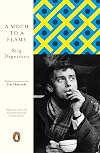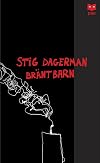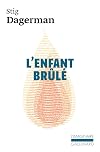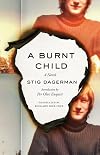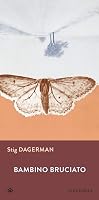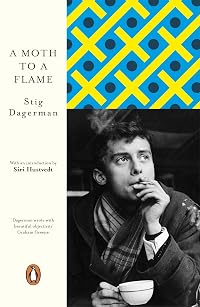
A Burnt Child
by Stig Dagerman
On This Page
Description
Set in a working-class neighborhood in Stockholm, A Burnt Child revolves around a young man named Bengt who falls into deep, private turmoil with the unexpected death of his mother. Written in a taut and beautifully naturalistic tone, it remains Stig Dagerman's most widely read novel and is one of the crowning works of his short but celebrated career.Tags
Recommendations
















Member Reviews
Written in 1948, this Swedish classic typifies Nordic literature in its sparse darkness and tension throughout.
This slim novel begins on the day of the protagonist's mother's funeral. She is a woman who was generally not well liked by neighbours or family, but as his mother the young man loved her and is bereft by her loss. As the novel develops, his grief and confusion is heightened as his father brings the woman he was having an affair with whilst his wife was still alive into the young man's life, and he becomes bent on getting his revenge on his father and his lover.
The first part of the novel I found to be quite difficult as the grief of the young man is pronounced and makes for bleak reading, but it slowly begins to reveal itself show more as a novel of some brilliance. Dagerman keeps the reader in an enthralled state of tension as the young man becomes more and more erratic and unreliable in thought and action as he tries to make sense of his grief and his confused feelings towards his father, his father's lover and his own fiancee.Through his thoughts, Dagerman explores the complexity of love and hate and how they are inextricably linked as two sides of the same coin.
Sadly Dagerman took his own life in his early 30s, and it feels as if some of his own wrestlings with life seep their way into the inner turmoil of the protagonist as he tries to make sense of what is unfolding around him.
4 stars - a dark and gripping novel that keeps you tense throughout. show less
This slim novel begins on the day of the protagonist's mother's funeral. She is a woman who was generally not well liked by neighbours or family, but as his mother the young man loved her and is bereft by her loss. As the novel develops, his grief and confusion is heightened as his father brings the woman he was having an affair with whilst his wife was still alive into the young man's life, and he becomes bent on getting his revenge on his father and his lover.
The first part of the novel I found to be quite difficult as the grief of the young man is pronounced and makes for bleak reading, but it slowly begins to reveal itself show more as a novel of some brilliance. Dagerman keeps the reader in an enthralled state of tension as the young man becomes more and more erratic and unreliable in thought and action as he tries to make sense of his grief and his confused feelings towards his father, his father's lover and his own fiancee.Through his thoughts, Dagerman explores the complexity of love and hate and how they are inextricably linked as two sides of the same coin.
Sadly Dagerman took his own life in his early 30s, and it feels as if some of his own wrestlings with life seep their way into the inner turmoil of the protagonist as he tries to make sense of what is unfolding around him.
4 stars - a dark and gripping novel that keeps you tense throughout. show less
I was surprised by "A Moth to a Flame". I had read another work by Dagerman ("Island of the Doomed") and enjoyed it a great deal (5 stars) but it didn't prepare me for this currently reviewed work. This work stunned me. The prose is deceptively simple but the power of the prose is overwhelming.
We are slowly drawn into the emotional life of the main character (Bengt). What at first seems to be a quirky but fundamentally understandable emotional life leads us into an increasingly uneasy place. The author toys with our initial empathy. As the title implies we become more and more anxious about where this is headed. We have become the ones who are at risk. The conclusion finally releases us but doesn't completely heal the pain of our show more journey.
Dagerman's work is masterful. He manages our mood in addition to the plot with a simplicity which disguises it's power. We find, despite our fears, we must read more. A remarkable talent and an equally remarkable novel. show less
We are slowly drawn into the emotional life of the main character (Bengt). What at first seems to be a quirky but fundamentally understandable emotional life leads us into an increasingly uneasy place. The author toys with our initial empathy. As the title implies we become more and more anxious about where this is headed. We have become the ones who are at risk. The conclusion finally releases us but doesn't completely heal the pain of our show more journey.
Dagerman's work is masterful. He manages our mood in addition to the plot with a simplicity which disguises it's power. We find, despite our fears, we must read more. A remarkable talent and an equally remarkable novel. show less
Quite a disturbing read. Poetic at times. Pared down to the essentials of existence with real insight and an ability to get at the impulses of its characters even while said characters are unaware of their subconscious motives. You start off siding with Bengt the narrator as he grieves for his mother while others engage in hypocrisy until you realize Bengt is just as self-deceived. If you like the first few pages you'll likely enjoy all of it.
"When we ourselves deceive a person we can understand it quite well, since every naked action has an escort of ornamental explanations; but that we ourselves may possibly be deceived is inconceivable, just as inconceivable as the fact that we shall die one day. We can only conceive of others dying and getting burnt."
This is an incisive psychological study of four individuals: Bengt, a student, his fiancee Berit, his father Knut, and his father's mistress Gun. The novel opens with the funeral of Bengt's mother (Knut's wife). Bengt is deeply, and somewhat dramatically, grieving, and is angry and disturbed at what he perceives to be his father's lack of "appropriate" emotion. When Bengt inadvertently learns on the day of the funeral of the show more existence of Gun and her relationship with Knut, Bengt vows to "avenge" his mother.
The story is told in alternating chapters, one told by an omniscient narrator, and the other in the first person by Bengt (usually in the form of letters Bengt writes to himself, as his mother had recommended for when something was bothering him). Over the course of a year we follow the emotional ups and downs of these four characters, as Bengt learns that things are not always as they seem.
Dagerman's widow (he committed suicide in 1954) states, "Stig never invented anything in his books, you know. He may have embroidered incidents a bit, mixed two or three real-life people together or even changed thei sexes sometimes; but everything he wrote about actually happened to him." And, everything in this book felt absolutely true and real to me, and I will definitely be reading more by Dagerman. show less
This is an incisive psychological study of four individuals: Bengt, a student, his fiancee Berit, his father Knut, and his father's mistress Gun. The novel opens with the funeral of Bengt's mother (Knut's wife). Bengt is deeply, and somewhat dramatically, grieving, and is angry and disturbed at what he perceives to be his father's lack of "appropriate" emotion. When Bengt inadvertently learns on the day of the funeral of the show more existence of Gun and her relationship with Knut, Bengt vows to "avenge" his mother.
The story is told in alternating chapters, one told by an omniscient narrator, and the other in the first person by Bengt (usually in the form of letters Bengt writes to himself, as his mother had recommended for when something was bothering him). Over the course of a year we follow the emotional ups and downs of these four characters, as Bengt learns that things are not always as they seem.
Dagerman's widow (he committed suicide in 1954) states, "Stig never invented anything in his books, you know. He may have embroidered incidents a bit, mixed two or three real-life people together or even changed thei sexes sometimes; but everything he wrote about actually happened to him." And, everything in this book felt absolutely true and real to me, and I will definitely be reading more by Dagerman. show less
Rather philosophical which I really enjoyed. Another story of a romantic affair between a young and older person... I don't know what it is with me lately and being drawn to stories of inappropriate lovers. I seem to have read a lot of books featuring this kind of thing....
There is a lot of pent up anger and confusion in this book - transmitted through the protagonist Bengt. Bengt is selfish and his attitude towards others (his fiancé and father) is warped. He is a young man who's mother has recently died, and his grief is mixed up and overpowered by hatred towards his father, who has a mistress. Bengt is intent on ruining his father's relationship because he feels it so unashamedly disrespects the memory of his mother. An affair show more between Bengt and the mistress, who is named Gun, soon transpires. His preoccupation with defending his mother's honour is soon understood to have been mingled with an intense jealousy of his father. I knew this affair was coming, it is in the blurb. But it seemed to take forever to get there! The first half of the book was bleak and intense (which I enjoyed), but it just dragged on a bit and repeated details too much. Particularly the adjective 'beautiful' - it is every second word!
As soon as Bengt and Gun declare their love the book picks up pace and more actual events occur. It got more interesting. It seemed to become another book - an intentional shift? I'm not sure. I just think it's a case of being a very slow-burner. The bleakness remains, and it is overall a very depressing book. But I do like those kinds of ones. show less
There is a lot of pent up anger and confusion in this book - transmitted through the protagonist Bengt. Bengt is selfish and his attitude towards others (his fiancé and father) is warped. He is a young man who's mother has recently died, and his grief is mixed up and overpowered by hatred towards his father, who has a mistress. Bengt is intent on ruining his father's relationship because he feels it so unashamedly disrespects the memory of his mother. An affair show more between Bengt and the mistress, who is named Gun, soon transpires. His preoccupation with defending his mother's honour is soon understood to have been mingled with an intense jealousy of his father. I knew this affair was coming, it is in the blurb. But it seemed to take forever to get there! The first half of the book was bleak and intense (which I enjoyed), but it just dragged on a bit and repeated details too much. Particularly the adjective 'beautiful' - it is every second word!
As soon as Bengt and Gun declare their love the book picks up pace and more actual events occur. It got more interesting. It seemed to become another book - an intentional shift? I'm not sure. I just think it's a case of being a very slow-burner. The bleakness remains, and it is overall a very depressing book. But I do like those kinds of ones. show less
Stig Dagerman was a Swedish author. At the age of 31 he went into his garage and closed all of the doors and windows, started up his car, sat in the driver's seat, and died... before he did that, he was a damn good writer.
His most famous short story, To Kill a Child, can be found here.
In A Burnt Child a mother dies... a wife dies. The story revolves around four characters. The widower Knut. His son, Bengt. Gun, Knut's mistress. And, Berit, Bengt's timid and sickly girlfriend.
Bengt is the main character. Bengt has issues... mother issues. He is the burnt child. He hates and loves his father, the mistress, and his girlfriend. The saying that there is a fine line between love and hate is perfectly detailed in this story. In Bengt's life show more there are only extremes... extreme happiness, extreme sadness... living, dying... the beautiful, the ugly... it is a binary world Bengt finds himself in.
What Mum used to say to me when I was unhappy, when I was grown-up and unhappy. When I was little she used to kiss me to make me happy, but when I was grown-up and unhappy she used to say: Sit down at the table and write a letter to yourself. It's always worth while writing to yourself, but almost only to yourself. And when you have finished you aren't unhappy any more, but you have a long letter. A long, lovely letter.
Because Bengt is most times unhappy every other chapter is a letter from Bengt to Bengt. It is in these letters that his true character emerges and the confusions of his life are detailed.
The story begins with the mother's funeral and slowly builds in tension until we read his last letter. It's not a happy book. It's a lonely book. A cold Swedish winter book with long nights watching candles burn.
The grooves in sorrow's steps are deep and full of salt and sand. show less
His most famous short story, To Kill a Child, can be found here.
In A Burnt Child a mother dies... a wife dies. The story revolves around four characters. The widower Knut. His son, Bengt. Gun, Knut's mistress. And, Berit, Bengt's timid and sickly girlfriend.
Bengt is the main character. Bengt has issues... mother issues. He is the burnt child. He hates and loves his father, the mistress, and his girlfriend. The saying that there is a fine line between love and hate is perfectly detailed in this story. In Bengt's life show more there are only extremes... extreme happiness, extreme sadness... living, dying... the beautiful, the ugly... it is a binary world Bengt finds himself in.
What Mum used to say to me when I was unhappy, when I was grown-up and unhappy. When I was little she used to kiss me to make me happy, but when I was grown-up and unhappy she used to say: Sit down at the table and write a letter to yourself. It's always worth while writing to yourself, but almost only to yourself. And when you have finished you aren't unhappy any more, but you have a long letter. A long, lovely letter.
Because Bengt is most times unhappy every other chapter is a letter from Bengt to Bengt. It is in these letters that his true character emerges and the confusions of his life are detailed.
The story begins with the mother's funeral and slowly builds in tension until we read his last letter. It's not a happy book. It's a lonely book. A cold Swedish winter book with long nights watching candles burn.
The grooves in sorrow's steps are deep and full of salt and sand. show less
Después del éxito internacional de su colección de artículos de la Segunda Guerra Mundial, Stig Dagerman fue enviado a Francia con la misión de continuar esta tarea periodística. En cambio, se refugió en un pequeño pueblo francés y en el verano de 1948 creó lo que sería su novela más personal, conmovedora e impactante: Niño quemado. Ambientada en un barrio de clase trabajadora en Estocolmo, la historia gira en torno a un joven llamado Bengt, que cae en una profunda confusión privada por la muerte inesperada de su madre. Mientras lucha por hacer frente a su pérdida, su desesperación se transforma lentamente en rabia cuando descubre que su padre tenía una amante. Pero cuando Bengt jura venganza en nombre de la memoria de show more su madre, también se ve arrastrado a una relación febril y conflictiva. show less
Feb 19, 2022Spanish
Members
- Recently Added By
Author Information

61+ Works 1,811 Members
Stig Dagerman (1923-1954) was the literary wunderkind of his generation in Sweden. Surpassed in Swedish literature perhaps only by August Strindberg in terms of his work's compressed intensity, Dagerman's remarkable literary output came to an abrupt end when he committed suicide at the age of thirty-one. Gri Somnen(Sleep Walking) By Karin Mamma show more Anderson, 1986. The Artist is Represented by Galleri Magnus Karlsson, Stockholm and the David Zwirner Gallery, New York Photo by Buknowskis Auctions Author Photograph Courtesy of Norstedts Agency. show less
Some Editions
Awards and Honors
Series
Belongs to Publisher Series
Work Relationships
Is contained in
Common Knowledge
- Canonical title
- A Burnt Child
- Original title
- Bränt Barn
- Alternate titles
- A Moth to a Flame
- Original publication date
- 1948
- People/Characters
- Bengt; Knut; Gun; Berit; Alma
- Important places
- Stockholm, Sweden
- Epigraph
- Det är inte sant att ett bränt barn skyr elden. Det dras till elden som en mal till ljuset. Det vet att när det kommer nära skall det åter bränna sig. Ändå kommer det för nära.
- First words
- Det är en maka som skall begravas klockan två och klockan halv tolv står maken i köket framför den spräckta spegeln över vasken.
- Last words
- (Click to show. Warning: May contain spoilers.)Också fastrarna skall de låta ringa.
Classifications
- Genres
- Fiction and Literature, General Fiction
- DDC/MDS
- 839.73 — Literature & rhetoric German & related literatures Other Germanic literatures Swedish literature Swedish fiction
- LCC
- PT9875 .D12 .B713 — Language and Literature German, Dutch and Scandinavian literatures Swedish literature Individual authors or works 1900-1960
- BISAC
Statistics
- Members
- 372
- Popularity
- 84,541
- Reviews
- 11
- Rating
- (3.80)
- Languages
- 13 — Czech, Dutch, English, Estonian, Finnish, French, German, Greek, Italian, Polish, Portuguese, Spanish, Swedish
- Media
- Paper, Ebook
- ISBNs
- 34
- ASINs
- 2