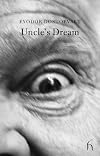
Uncle's Dream
by Fyodor Dostoyevsky 
On This Page
Description
A tale of a provincial family desperate to better itself through a marriage of their daughter. The old man is almost forced into a wedding that is expected to last for a short period before he dies and leaves his fortune to the young girl. But not everything is going as planned. The story provides an brilliant insight into the desperation, psychology, gossip, and rivalry of provincial merchants trying to better their position in life.Tags
Recommendations


















Member Reviews
This collection is a Soviet-era (1956) publication of 3 Dostoevsky novelettes in English translation. As with most Soviet translations, this one has some minor idiom issues and awkwardness. That may not be so important as the three stories are rather awkward to begin with: Uncle's Dream (1859), Most Unfortunate (1862) and The Gambler (1867).
"Uncle's Dream" is an overly complicated story of the machinations of various matrons and others around a doddering old man, who happens to be very, very rich. There is conniving, trickery, lost honor, sacrifice and hysterics. You get glimpses of character types and situations that will reach a climax in his later novels, but here it's still in the laboratory.
"Most Unfortunate" (sometimes show more translated as 'A Nasty Story') could best be described as a humorous anecdote turned into a tormenting nightmare. The boss happens upon the wedding of a subordinate and thinking he would honor him by joining the festivities causes agony to all involved--not excluding himself.
"The Gambler" is the best known of the three novelas as it involves one of Dostoevsky's most known vices. Like all Dostoevsky's work, the reader will either hate it or rave over it. Not yet at the level of his masterworks, it shows his ability to delve into the frenetic world of obsession. show less
"Uncle's Dream" is an overly complicated story of the machinations of various matrons and others around a doddering old man, who happens to be very, very rich. There is conniving, trickery, lost honor, sacrifice and hysterics. You get glimpses of character types and situations that will reach a climax in his later novels, but here it's still in the laboratory.
"Most Unfortunate" (sometimes show more translated as 'A Nasty Story') could best be described as a humorous anecdote turned into a tormenting nightmare. The boss happens upon the wedding of a subordinate and thinking he would honor him by joining the festivities causes agony to all involved--not excluding himself.
"The Gambler" is the best known of the three novelas as it involves one of Dostoevsky's most known vices. Like all Dostoevsky's work, the reader will either hate it or rave over it. Not yet at the level of his masterworks, it shows his ability to delve into the frenetic world of obsession. show less
نسبت به بقیه کارهای داستایوسکی به نظرم فرق داشت. بیشتر از این که حس فضای تیره و تار، با آمیزه روانشناسی که تو بقیه کارهاش معمولا دیده مي شن، ملموس باشه، حس کمدی داشت. ماریا الکساندرونا مادری منفعت طلب و نسبتا سلطه جو که از هیچ کاری دریغ نمی کنه تا دخترش زینا به زندگی و آینده ای مطمئن دست پیدا کنه. در این بین امیری ثروتمند و بسیار مسن وارد داستان می شه که گزینه مناسبی برای ازدواج زینا از نظر مادرش محسوب می شه. طنز show more سیاه به کار گرفته شده، سطحی بودن و تفکر نه چندان پخته افراد حاضر رو به خوبی نشون می داد. پرداختن به تصنعی بودن احساسات، رفتارها و حتی چهره های شخصیت ها داستان رو جالب تر می کرد.
در رابطه با کتاب صوتی، صداگذاری رضا عمرانی بسیار عالی بود.
"- خوب بله، بله خوب. ما خیلی با هم دوست بودیم. همیشه هم دماغشو تو توتون می کرد. خیلی مضحک بود.
- بتهوون؟!
- خوب بله، بتهوون... شایدم بتهوون نبود و یه مرد آلمانی دیگه ای بود. آخه می دونید اونجا آلمانی زیاده" show less
در رابطه با کتاب صوتی، صداگذاری رضا عمرانی بسیار عالی بود.
"- خوب بله، بله خوب. ما خیلی با هم دوست بودیم. همیشه هم دماغشو تو توتون می کرد. خیلی مضحک بود.
- بتهوون؟!
- خوب بله، بتهوون... شایدم بتهوون نبود و یه مرد آلمانی دیگه ای بود. آخه می دونید اونجا آلمانی زیاده" show less
An ambitious mother seeks to marry off her proud daughter to the senile but rich Prince K (who everyone expects to die within a few years). The problem is that the prince is rather absent-minded. He even forgets that he is tricked into a marriage proposal. Believing it to be a dream, he ignores the young lady and a scandal is on the way.
Who would have thought that Dostoevsky would write such a witty story? One humorous scene follows the other as this frail old man prone to forgetfulness frustrates the plans of his relatives.
Who would have thought that Dostoevsky would write such a witty story? One humorous scene follows the other as this frail old man prone to forgetfulness frustrates the plans of his relatives.
This was a great novel by Dostoevsky. The set-up is key, as a prince is going to be lured into marrying a woman who is looking to make off with his money (and estate) while keeping her lover amidst her. However, complications arise and a fitting conclusion follows. I will not spoil the plot, as the book is quite worth reading, but this was one of the better Dostoevsky works that I have read. I was very surprised and enthusiastic the whole way through. This one is a page turner. The characters were deep and realistic in their psychological makeup and the plot was nuanced enough to follow but not lose track of. Dostoevsky and Russian literature enthusiasts, as well as those interested in classics, should pick up this one.
4.25 stars- well show more worth it! show less
4.25 stars- well show more worth it! show less
I actually read this in Constance Garnett's translation. It describes the farce-like proceedings in a small Russian provincial town when an unscrupulous woman tries to trick a senile millionaire into marrying her daughter. Dostoyevsky is not well known for his comic writing and if you are looking for laugh out loud funny this is not for you. Nevertheless, it is worth persevering with for its strong dramatic scenes, its sense of a decadent society, but above all for the characterization. All his characters seem to be larger than life.
A somewhat entertaining short story about a manipulative mother's attempts to arrange a marriage between her beautiful daughter and a wealthy elderly prince on the verge of senility. Myriad characters attempt, for their own reasons, to disrupt mother's plans.
A good, but hardly great, read.
A good, but hardly great, read.
Como pasa con los mejores vinos, con el tiempo, este escritor maduró y creó obras de gran talla literaria. Muchos de los temas que se tratan en esta novela se verian, también, en otras suyas como "Crimen y castigo". En ésta, particularmente, crea un ambiente entre Shakespeare y Calderón de la Barca, si bien llega a ser difícil de leer y, para mi gusto, increíblemente aburrida e insulsa.
Members
- Recently Added By
Lists

Fyodor Dostoevsky books
17 works; 1 member
Author Information

1,430+ Works 179,607 Members
One of the most powerful and significant authors in all modern fiction, Fyodor Dostoevsky was the son of a harsh and domineering army surgeon who was murdered by his own serfs (slaves), an event that was extremely important in shaping Dostoevsky's view of social and economic issues. He studied to be an engineer and began work as a draftsman. show more However, his first novel, Poor Folk (1846), was so well received that he abandoned engineering for writing. In 1849, Dostoevsky was arrested for being a part of a revolutionary group that owned an illegal printing press. He was sentenced to be executed, but the sentence was changed at the last minute, and he was sent to a prison camp in Siberia instead. By the time he was released in 1854, he had become a devout believer in both Christianity and Russia - although not in its ruler, the Czar. During the 1860's, Dostoevsky's personal life was in constant turmoil as the result of financial problems, a gambling addiction, and the deaths of his wife and brother. His second marriage in 1887 provided him with a stable home life and personal contentment, and during the years that followed he produced his great novels: Crime and Punishment (1886), the story of Rodya Raskolnikov, who kills two old women in the belief that he is beyond the bounds of good and evil; The Idiots (1868), the story of an epileptic who tragically affects the lives of those around him; The Possessed (1872), the story of the effect of revolutionary thought on the members of one Russian community; A Raw Youth (1875), which focuses on the disintegration and decay of family relationships and life; and The Brothers Karamazov (1880), which centers on the murder of Fyodor Karamazov and the effect the murder has on each of his four sons. These works have placed Dostoevsky in the front rank of the world's great novelists. Dostoevsky was an innovator, bringing new depth and meaning to the psychological novel and combining realism and philosophical speculation in his complex studies of the human condition. (Bowker Author Biography) show less
Fyodor Dostoyevsky has a Legacy Library. Legacy libraries are the personal libraries of famous readers, entered by LibraryThing members from the Legacy Libraries group.
Some Editions
Awards and Honors
Awards
Series
Belongs to Publisher Series
Work Relationships
Is contained in
Common Knowledge
- Canonical title
- Uncle's Dream
- Original title
- Дядюшкин сон
- Alternate titles*
- Ooms droom
- Original publication date
- 1859
- Original language*
- venäjä
*Some information comes from Common Knowledge in other languages. Click "Edit" for more information.
Classifications
- Genres
- Fiction and Literature, General Fiction
- DDC/MDS
- 891.733 — Literature & rhetoric Asian Literature East Indo-European and Celtic literatures Russian and East Slavic languages Russian fiction 1800–1917
- LCC
- PG3326 .D5 — Language and Literature Slavic languages and literatures. Baltic languages. Albanian language Slavic. Baltic. Albanian Russian literature Individual authors and works 1800-1870 Dostoyevsky
- BISAC
Statistics
- Members
- 280
- Popularity
- 114,746
- Reviews
- 10
- Rating
- (3.64)
- Languages
- 16 — Catalan, Danish, Dutch, English, Finnish, French, German, Italian, Norwegian (Bokmål), Norwegian, Portuguese, Russian, Croatian, Spanish, Swedish, Turkish
- Media
- Paper, Audiobook, Ebook
- ISBNs
- 50
- ASINs
- 13