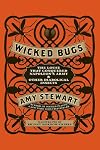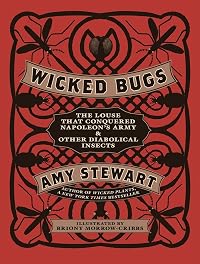
Wicked Bugs: The Louse That Conquered Napoleon's Army and Other Diabolical Insects
by Amy Stewart 
Wicked Things (2)
On This Page
Description
Nature. Nonfiction. HTML:In this darkly comical look at the sinister side of our relationship with the natural world, Stewart has tracked down over one hundred of our worst entomological foes—creatures that infest, infect, and generally wreak havoc on human affairs. From the world’s most painful hornet, to the flies that transmit deadly diseases, to millipedes that stop traffic, to the “bookworms” that devour libraries, to the Japanese beetles munching on your roses, Wicked Bugs show more delves into the extraordinary powers of six- and eight-legged creatures.With wit, style, and exacting research, Stewart has uncovered the most terrifying and titillating stories of bugs gone wild. It’s an A to Z of insect enemies, interspersed with sections that explore bugs with kinky sex lives (“She’s Just Not That Into You”), creatures lurking in the cupboard (“Fear No Weevil”), insects eating your tomatoes (“Gardener’s Dirty Dozen”), and phobias that feed our (sometimes) irrational responses to bugs (“Have No Fear”).
Intricate and strangely beautiful etchings and drawings by Briony Morrow-Cribbs capture diabolical bugs of all shapes and sizes in this mixture of history, science, murder, and intrigue that begins—but doesn’t end—in your own backyard. show less
Tags
Recommendations





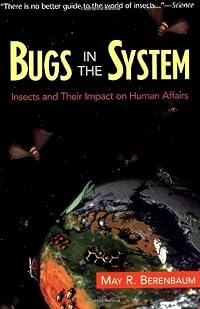
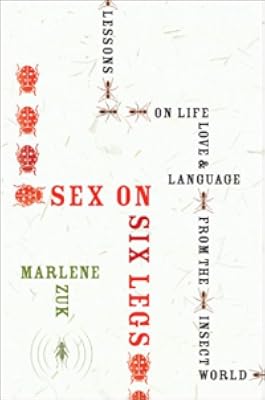
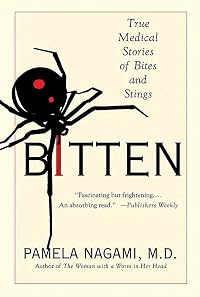

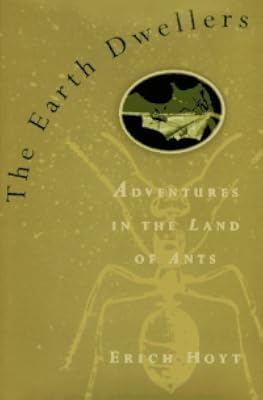

Member Recommendations
CarolineMCarrico The books are in a similar format with comparable topics.
20
Euryale Both books combine look at insects via science and history
Member Reviews
Do not read this book while using public transportation...I missed my train stop because the subject matter kept me completely engrossed.
Needless to say, I will never eat pork again and I am slathering myself in mosquito repellent nightly. I have a whole new respect for these mighty bugs and the mayhem they produce. Certainly the chapter on the Brazilian Wandering Spider brought me to rapid attention when the author explains that a passenger almost boarded an international flight with hundreds of these aggressive creatures in his carry on bags. No more aisle seats for me.
Book Season = Spring
Needless to say, I will never eat pork again and I am slathering myself in mosquito repellent nightly. I have a whole new respect for these mighty bugs and the mayhem they produce. Certainly the chapter on the Brazilian Wandering Spider brought me to rapid attention when the author explains that a passenger almost boarded an international flight with hundreds of these aggressive creatures in his carry on bags. No more aisle seats for me.
Book Season = Spring
I have arachnophobia. I once refused to sleep in my room after I saw a spider crawling on my dust ruffle; my dog usually ate spiders for me, but I had no idea whether she found it or not so I slept on the couch and then washed all of my bedding in ultra hot water the next day (my parents love this story). I seriously believe every spider in my house is out to get me. Hey, it’s not labeled an irrational fear for nothing.
So what would possess me to read a book about all sorts of bugs, including several chapters on arachnids? I will cite insanity or at least perverse curiosity. After all, if I am going to beat my enemy, I need to learn as much about him or her as possible. (Seriously, why are spiders always considered female? Is it the show more whole black widow thing? Because I’m thinking it is more than a little sexist.)
While I will never espouse to Ms. Stewart’s level of enthusiasm towards bugs, I will say she does a great job of making them interesting. Ms. Stewart presents a lot of information about her bugs of choice and does so methodically, showcasing her careful research and incorporating anecdotes to drive home her messaging. Each bug receives its own chapter, and she typically ends each chapter by identifying those bugs which are in the same family as the spotlighted one. In that way, she connects the insects so that you can see how they all fit into the planet’s ecology.
While I actually found myself enjoying Wicked Bugs, I did not enjoy the audio production. Ms. Marlo is a perfectly adequate narrator, and she does a great job injecting the right amount of enthusiasm and disgust into the words. My problem stems with the fact that there are no breaks. When looking at the print version, there are chapter numbers and titles. In the audio version, there are no chapter numbers. Ms. Marlo literally goes from one sentence right into the title and opening section of the next chapter without pause and without identifying it in some way as a natural break. For the first hour or so, I was thoroughly confused whether a new bug was a continuation of the “Meet the Relatives” section or a new chapter entirely. Once I understood how they structured the audio, I found I was able to enjoy it better, but the lack of pauses and natural breaks in the narration bothered me until the very end.
There are some weird-ass bugs out there, and most of them I have no desire to meet. I consider myself better informed about bugs in general and proud that there were only a few chapters that turned my stomach. In spite of the fact that Ms. Stewart did confirm my reasons for never wanting to garden or go to a rain forest or African jungle and in spite of the poor audio production, I am surprisingly glad I read Wicked Bugs. After all, forewarned is forearmed. I got you now, spiders! show less
So what would possess me to read a book about all sorts of bugs, including several chapters on arachnids? I will cite insanity or at least perverse curiosity. After all, if I am going to beat my enemy, I need to learn as much about him or her as possible. (Seriously, why are spiders always considered female? Is it the show more whole black widow thing? Because I’m thinking it is more than a little sexist.)
While I will never espouse to Ms. Stewart’s level of enthusiasm towards bugs, I will say she does a great job of making them interesting. Ms. Stewart presents a lot of information about her bugs of choice and does so methodically, showcasing her careful research and incorporating anecdotes to drive home her messaging. Each bug receives its own chapter, and she typically ends each chapter by identifying those bugs which are in the same family as the spotlighted one. In that way, she connects the insects so that you can see how they all fit into the planet’s ecology.
While I actually found myself enjoying Wicked Bugs, I did not enjoy the audio production. Ms. Marlo is a perfectly adequate narrator, and she does a great job injecting the right amount of enthusiasm and disgust into the words. My problem stems with the fact that there are no breaks. When looking at the print version, there are chapter numbers and titles. In the audio version, there are no chapter numbers. Ms. Marlo literally goes from one sentence right into the title and opening section of the next chapter without pause and without identifying it in some way as a natural break. For the first hour or so, I was thoroughly confused whether a new bug was a continuation of the “Meet the Relatives” section or a new chapter entirely. Once I understood how they structured the audio, I found I was able to enjoy it better, but the lack of pauses and natural breaks in the narration bothered me until the very end.
There are some weird-ass bugs out there, and most of them I have no desire to meet. I consider myself better informed about bugs in general and proud that there were only a few chapters that turned my stomach. In spite of the fact that Ms. Stewart did confirm my reasons for never wanting to garden or go to a rain forest or African jungle and in spite of the poor audio production, I am surprisingly glad I read Wicked Bugs. After all, forewarned is forearmed. I got you now, spiders! show less
If watching the news about the spread of the Zika and West Nile viruses isn’t enough to keep you terrified, this book will help convince you to stay inside whenever possible, and wear shoes when not.
This survey of “bugs,” as the author explains, actually goes beyond “true bugs” to include “all manner of creepy, crawly, slithering creatures that have had some terrible impact on human affairs.” She also said in an interview that she wanted people to understand “that nature is powerful, that we need to respect that power, and that we need to remember that the world does not revolve around us.” She certainly convinced me.
The stories she tells are fascinating, along with many of them being scary. For example, she reports show more that scientists speculate that the destruction of the floodwall system of New Orleans that led to so much devastation was caused in part by Formosan subterranean termites. It happens that the seams of the floodwalls are made of waste residue from processed sugarcane, a very attractive food source for the termites. Post-Katrina inspections showed evidence of insect attacks.
Also very interesting was her section on fleas, which helped spread the Bubonic Plague in Europe. Fleas picked up the bacterium Yersinia pestis from rats probably traveling to Europe in the holds of ships from Asia. The fleas then spread the bacteria through vomiting (yes, vomiting) diseased blood into bite sites. The death toll, especially during the initial European outbreak in the fourteenth century, was huge. It was probably made worse by the fact that at the same time, felines, previously used as mousers, came to be seen by the Church as consorts of witches and Satan. Thus cats that that might have otherwise eaten the rats were killed by the thousands.
The section on tapeworms is pretty gross (and therefore very diverting) and the section on how bugs are used in forensic entomology was riveting.
There are many more great stories that come out of this short and highly entertaining book, but I don’t want to spoil them all for readers. show less
This survey of “bugs,” as the author explains, actually goes beyond “true bugs” to include “all manner of creepy, crawly, slithering creatures that have had some terrible impact on human affairs.” She also said in an interview that she wanted people to understand “that nature is powerful, that we need to respect that power, and that we need to remember that the world does not revolve around us.” She certainly convinced me.
The stories she tells are fascinating, along with many of them being scary. For example, she reports show more that scientists speculate that the destruction of the floodwall system of New Orleans that led to so much devastation was caused in part by Formosan subterranean termites. It happens that the seams of the floodwalls are made of waste residue from processed sugarcane, a very attractive food source for the termites. Post-Katrina inspections showed evidence of insect attacks.
Also very interesting was her section on fleas, which helped spread the Bubonic Plague in Europe. Fleas picked up the bacterium Yersinia pestis from rats probably traveling to Europe in the holds of ships from Asia. The fleas then spread the bacteria through vomiting (yes, vomiting) diseased blood into bite sites. The death toll, especially during the initial European outbreak in the fourteenth century, was huge. It was probably made worse by the fact that at the same time, felines, previously used as mousers, came to be seen by the Church as consorts of witches and Satan. Thus cats that that might have otherwise eaten the rats were killed by the thousands.
The section on tapeworms is pretty gross (and therefore very diverting) and the section on how bugs are used in forensic entomology was riveting.
There are many more great stories that come out of this short and highly entertaining book, but I don’t want to spoil them all for readers. show less
Lions, tigers, and bears? Pfft, who has time to worry about those when there are Assassin Bugs, Filth Flies, and Guinea Worms to worry about?! Wicked Bugs describes these and dozens of other dangerous, painful, destructive, and downright horrible bugs that'll cause a lot more damage than some measly little kitty cat.
It does all this in quite a fun, readable way as well. Chapters are dedicated to individual insects (categorized as dangers, painful, destructive, or horrible) and details the havoc they can wreak when left unchecked. Each bug also gets a full page illustration as well, in case the reader needs a visual aid to help them imagine what it would be like to be bitten by a Brazilian Wandering Spider. The chapters amount to what show more you might call a bite-sized chunk, usually 3-4 pages, which works perfectly for this book. It makes the book readable, you don't get that exhausted 'overloaded' feeling you might sometimes get when reading denser nonfiction, and it gives you a nice quick overview of the Icky in question before shifting to the next one.
There is also the occasional chapter about a chosen subject, which gives a quick paragraph or 3 about an insect who falls into that particular category. For example, there are chapters about stinging caterpillars, zombie bugs (bugs that invade the bodies of another bugs and control its actions,) and the ultimate horror; a chapter about book-eating insects. These are also a quick 3-4 pages and do a great job of breaking up any potential monotony in reading chapter after chapter dedicated to individual bugs.
Really, the book wasn't so horrifying as it was fascinating. The writing is clear, quick and to the point, yet filled with interesting information. It's one of those nonfiction books you find yourself saying "just one more chapter..." for a half-dozen chapters or so. Very readable, very enjoyable, and very satisfying. A terrific book, and I look forward to going back and reading Wicked Plants now. This one is well worth looking into. Highly recommended. show less
It does all this in quite a fun, readable way as well. Chapters are dedicated to individual insects (categorized as dangers, painful, destructive, or horrible) and details the havoc they can wreak when left unchecked. Each bug also gets a full page illustration as well, in case the reader needs a visual aid to help them imagine what it would be like to be bitten by a Brazilian Wandering Spider. The chapters amount to what show more you might call a bite-sized chunk, usually 3-4 pages, which works perfectly for this book. It makes the book readable, you don't get that exhausted 'overloaded' feeling you might sometimes get when reading denser nonfiction, and it gives you a nice quick overview of the Icky in question before shifting to the next one.
There is also the occasional chapter about a chosen subject, which gives a quick paragraph or 3 about an insect who falls into that particular category. For example, there are chapters about stinging caterpillars, zombie bugs (bugs that invade the bodies of another bugs and control its actions,) and the ultimate horror; a chapter about book-eating insects. These are also a quick 3-4 pages and do a great job of breaking up any potential monotony in reading chapter after chapter dedicated to individual bugs.
Really, the book wasn't so horrifying as it was fascinating. The writing is clear, quick and to the point, yet filled with interesting information. It's one of those nonfiction books you find yourself saying "just one more chapter..." for a half-dozen chapters or so. Very readable, very enjoyable, and very satisfying. A terrific book, and I look forward to going back and reading Wicked Plants now. This one is well worth looking into. Highly recommended. show less
In this darkly comical look at the sinister side of our relationship with the natural world, Stewart has tracked down over one hundred of our worst entomological foes?creatures that infest, infect, and generally wreak havoc on human affairs. From the world?s most painful hornet, to the flies that transmit deadly diseases, to millipedes that stop traffic, to the ?bookworms÷ that devour libraries, to the Japanese beetles munching on your roses, Wicked Bugs delves into the extraordinary powers of six- and eight-legged creatures. With wit, style, and exacting research, Stewart has uncovered the most terrifying and titillating stories of bugs gone wild. It?s an A to Z of insect enemies, interspersed with sections that explore bugs with kinky show more sex lives (?She?s Just Not That Into You÷), creatures lurking in the cupboard (?Fear No Weevil÷), insects eating your tomatoes (?Gardener?s Dirty Dozen÷), and phobias that feed our (sometimes) irrational responses to bugs (?Have No Fear÷). Intricate and strangely beautiful etchings and drawings by Briony Morrow-Cribbs capture diabolical bugs of all shapes and sizes in this mixture of history, science, murder, and intrigue that begins?but doesn?t end?in your own backyard show less
Rating: too busy scratching to give it one.
The Book Report: Amy Stewart, perpetratrix of Flower Confidential (a book I loathed), has given us bite-sized bios of horrible, horrible, horrible little creepy/crawly or fly-y/stingy horrible things with lots of horrible legs and horrible, horrible ways of mating and reproducing in general. Most of the worst ones are female. Just like in life.
My Review: I've finished it, and so far I've determined that I suffer from:
--scabies
--Guinea worm disease
--tapeworm
--Lyme disease
--elephantiasis
--bilharzia
--sand-fly infestation under my itchy toenail
I've taken eleven showers with surgical scrub so far. I expect that, when I go outside next after the haz-mat suit is delivered, I shall be ridiculed...but I show more *won't* be a feast for the horrible disgusting vile scary critters this book is about! show less
The Book Report: Amy Stewart, perpetratrix of Flower Confidential (a book I loathed), has given us bite-sized bios of horrible, horrible, horrible little creepy/crawly or fly-y/stingy horrible things with lots of horrible legs and horrible, horrible ways of mating and reproducing in general. Most of the worst ones are female. Just like in life.
My Review: I've finished it, and so far I've determined that I suffer from:
--scabies
--Guinea worm disease
--tapeworm
--Lyme disease
--elephantiasis
--bilharzia
--sand-fly infestation under my itchy toenail
I've taken eleven showers with surgical scrub so far. I expect that, when I go outside next after the haz-mat suit is delivered, I shall be ridiculed...but I show more *won't* be a feast for the horrible disgusting vile scary critters this book is about! show less
"Wicked Bugs" is a thoroughly disgusting book which sent shivers of sheer revulsion down my spine and which I thoroughly love. In "Wicked Bugs: The Louse that Conquered Napoleon's Army & Other Diabolical Insects" author Amy Stewart has created a humorous introduction to only a few of those creepy crawlies we humans share the planet with.....and those few are more than enough to convince even the most egotistical that humanity continues to exist only in spite of the "Bugs" best intentions.
Everywhere we look, on every continent (baring only Antarctica, though I wouldn't put it past a future species of hardy cockroach to find a way to live there eventually), in every country, in every type of terrain, there is always some "bug" living show more there willing to make a human being's life unbearable (or in the case of some parasites, only another fellow bug's life).
From the Asian Giant Hornet to the Rocky Mountain Locust to the ordinary Mosquito, all are here to make our lives miserable, by spreading disease (Malaria is popular with Mosquitoes), destroying crops (a Rocky Mountain Locust cloud once ate its way across the U.S. Southwest) and causing a great deal of pain (the sting of the Asian Giant Hornet has been described as being "like driving a hot nail through your leg"). The Bug World clearly has it "in" for mankind.
The exotic "Asian Giant Hornet", is so large (5 centimeters from head to tail) that when they fly they actually resemble small birds. Thankfully, the Giant Hornet is only native to Asia, where members of the species can be seen foraging in garbage cans for bits of discarded fish to carry back to their young.
Then there is the ordinary "Nightcrawler", which though long thought to be good for the soil, has actually been proven to sometimes be bad for the soil, destroying the much needed spongy duff layer that native plants (it is accidentally imported Nightcrawler species members doing this) require in order to germinate and grow.
However, though the "Millipede" might look creepy and disgusting, they are actually not dangerous to humans, mostly eating dead leaves, except when swarms of them swarm over railroad tracks, literally stopping the trains in their tracks from wheel slippage due to the squished Millipede bodies on the tracks. Or how about the Scottish Millipede which swarm around from April to October, necessitating blackouts in order to keep the millipedes from invading homes.
The nastiest creepy crawly in this collection has to be the "Brazilian Wandering Spider". It doesn't spin a web like most spiders, it actively prowls the forest floor hunting for prey. The bite causes immediate and severe pain, followed by breathing difficulties, paralysis and even asphyxiation. With proper care (and a little luck) victims can survive. However, the most venomous members of this species are definitely capable of killing, with the elderly and young children at the most risk. But what makes the "Brazilian Wandering Spider" the scariest creature in this book is the overt aggressiveness it tends to exhibit, refusing to scurry away at the sight of an aggressor and instead standing its ground and rising up on its hind legs spoiling for a fight. The author Stewart says it best, "Anyone who swats at one of these spiders had better aim to kill, because if it survives a swat with a broom it might try to climb straight up the handle and bite."
"Wicked Bugs" is a fascinating read, but not one for the faint of heart. After reading this treatise on "Bugs" I will never look at this world quite the same way and I will never take humanity's position as the self-proclaimed "top of the food change" for granted. show less
Everywhere we look, on every continent (baring only Antarctica, though I wouldn't put it past a future species of hardy cockroach to find a way to live there eventually), in every country, in every type of terrain, there is always some "bug" living show more there willing to make a human being's life unbearable (or in the case of some parasites, only another fellow bug's life).
From the Asian Giant Hornet to the Rocky Mountain Locust to the ordinary Mosquito, all are here to make our lives miserable, by spreading disease (Malaria is popular with Mosquitoes), destroying crops (a Rocky Mountain Locust cloud once ate its way across the U.S. Southwest) and causing a great deal of pain (the sting of the Asian Giant Hornet has been described as being "like driving a hot nail through your leg"). The Bug World clearly has it "in" for mankind.
The exotic "Asian Giant Hornet", is so large (5 centimeters from head to tail) that when they fly they actually resemble small birds. Thankfully, the Giant Hornet is only native to Asia, where members of the species can be seen foraging in garbage cans for bits of discarded fish to carry back to their young.
Then there is the ordinary "Nightcrawler", which though long thought to be good for the soil, has actually been proven to sometimes be bad for the soil, destroying the much needed spongy duff layer that native plants (it is accidentally imported Nightcrawler species members doing this) require in order to germinate and grow.
However, though the "Millipede" might look creepy and disgusting, they are actually not dangerous to humans, mostly eating dead leaves, except when swarms of them swarm over railroad tracks, literally stopping the trains in their tracks from wheel slippage due to the squished Millipede bodies on the tracks. Or how about the Scottish Millipede which swarm around from April to October, necessitating blackouts in order to keep the millipedes from invading homes.
The nastiest creepy crawly in this collection has to be the "Brazilian Wandering Spider". It doesn't spin a web like most spiders, it actively prowls the forest floor hunting for prey. The bite causes immediate and severe pain, followed by breathing difficulties, paralysis and even asphyxiation. With proper care (and a little luck) victims can survive. However, the most venomous members of this species are definitely capable of killing, with the elderly and young children at the most risk. But what makes the "Brazilian Wandering Spider" the scariest creature in this book is the overt aggressiveness it tends to exhibit, refusing to scurry away at the sight of an aggressor and instead standing its ground and rising up on its hind legs spoiling for a fight. The author Stewart says it best, "Anyone who swats at one of these spiders had better aim to kill, because if it survives a swat with a broom it might try to climb straight up the handle and bite."
"Wicked Bugs" is a fascinating read, but not one for the faint of heart. After reading this treatise on "Bugs" I will never look at this world quite the same way and I will never take humanity's position as the self-proclaimed "top of the food change" for granted. show less
Members
- Recently Added By
Published Reviews
ThingScore 75
Wicked Bugs delivers the sting, whether it’s a deeper understanding of all the critters that go “zzzz” in the night or a good gross-out that you’re after.
added by WeeklyAlibi
Lists

Recommended Nature Writing
346 works; 180 members

Books Read in 2013
1,630 works; 51 members

Workman Publishing
38 works; 1 member

Favorite Animal Non-Fiction
293 works; 144 members

Weirdo Nonfiction
138 works; 3 members
Author Information

20+ Works 10,365 Members
Amy Stewart is the author of From the Ground Up: The Story of a First Garden, and is the garden columnist and book critic for North Coast Journal. Her articles appear in a number of publications, including Organic Gardening, Bird Watcher's Digest, and the San Francisco Chronicle
Amy Stewart is a LibraryThing Author, an author who lists their personal library on LibraryThing.
All Editions
Awards and Honors
Awards
Distinctions
Series

Work Relationships
Common Knowledge
- Canonical title
- Wicked Bugs: The Louse That Conquered Napoleon's Army and Other Diabolical Insects
- Original publication date
- 2011
- People/Characters
- Napoleon Bonaparte
- Important events
- plagues (bubonic plague)
- Dedication
- To PSB
- First words
- In 1909, the Chicago Daily Tribune ran an article titled "If Bugs Were the Size of Men." (Introduction)
Classifications
Statistics
- Members
- 864
- Popularity
- 31,570
- Reviews
- 48
- Rating
- (3.76)
- Languages
- English, Estonian, German, Polish
- Media
- Paper, Audiobook, Ebook
- ISBNs
- 13
- ASINs
- 6