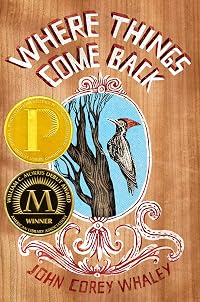
Where Things Come Back
by John Corey Whaley
On This Page
Description
Seventeen-year-old Cullen's summer in Lily, Arkansas, is marked by his cousin's death by overdose, an alleged spotting of a woodpecker thought to be extinct, failed romances, and his younger brother's sudden disappearance.Tags
Recommendations


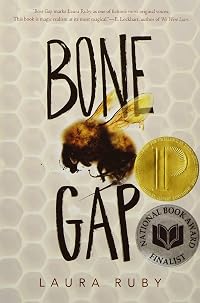
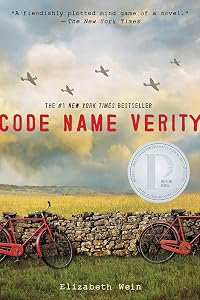
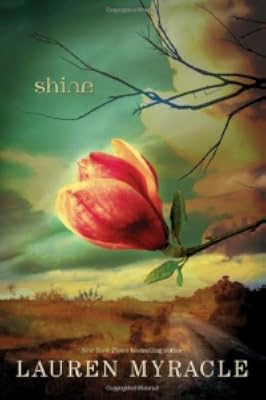
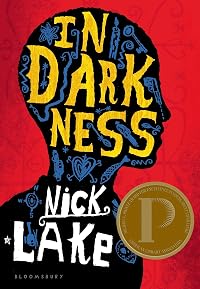







Member Recommendations
Member Reviews
Where Things Come Back by John Corey Whaley
First I was duped. I thought that this book would be more paranormal with people are reincarnated into extinct birds and more. My mind raced with the possibilities, but that’s just me. I paint with broad strokes as a writer and my reading obsession reflects it. In contrast, John Whaley etches in human detail with a deft touch. There is reference to zombies but they stagger only in the id. There is one page where details lavishly describe the defiling of a grave that inched towards my expectations before reality quickly set back in. What feeds off the main character Colin Witter, his family, his Arkansas hometown of Lilly, is all too real, life in all its unfair roughness. The book however show more does fit this review column for it is indeed dark.
Colin’s life is harder than many. In his senior year he has to deal with a dead cousin and a missing little brother, Gabriel (biblical reference anyone?) and the emotional fallout that slowly eats away at his family and himself. He is resilient, think Holden Caufield on Prozac, possessing a bitter but unshakeable faith in the possibilities the future may hold. Trust me, his glass is more than half empty but he manages to keep hold of the empty vessel. He constantly muse the state of mankind with a list of book titles he’ll eventually write that mirror the author’s own chapter titles.
Part of his salvation (trust me, salvation, damnation, redemption, fate doled from on high, this book is rife with such metaphor) is a bird long thought extinct. It is here he uses a paintbrush better used on houses. The central image that creates a fervor in Colin’s hometown is the possibility that this giant bird, the Lazarus woodpecker (metaphor, see!?) may have reappeared in Lily. Its rebirth gives Lilly’s inhabitants something, possibly the only thing, to be excited about during their life sentence in the small town. Colin unleashes his pent up anger on it and everything it represents.
The B story is presented in an even more ham-handed fashion. As it intertwines with Colin’s journey it does has some plot reveals that justify its inclusion. Not a perfect novel but far closer than most in the young adult genre, plus, a little imbalance makes for good intellectual debate, correct?
DON’T skip to the end then read from the beginning (I never understood that habit anyways) for you will deprive yourself of a satisfying read. It’s all about the title of the book is my only hint. Read it. Have someone else read it and chat.
Plus bonus! You’ll learn a new (or old) curse word, Ass-hat!
THINK: Last Picture Show directed by David Lynch for an episode of The Twilight Zone
1st LINE – “I was seventeen when I saw my first dead body.” show less
First I was duped. I thought that this book would be more paranormal with people are reincarnated into extinct birds and more. My mind raced with the possibilities, but that’s just me. I paint with broad strokes as a writer and my reading obsession reflects it. In contrast, John Whaley etches in human detail with a deft touch. There is reference to zombies but they stagger only in the id. There is one page where details lavishly describe the defiling of a grave that inched towards my expectations before reality quickly set back in. What feeds off the main character Colin Witter, his family, his Arkansas hometown of Lilly, is all too real, life in all its unfair roughness. The book however show more does fit this review column for it is indeed dark.
Colin’s life is harder than many. In his senior year he has to deal with a dead cousin and a missing little brother, Gabriel (biblical reference anyone?) and the emotional fallout that slowly eats away at his family and himself. He is resilient, think Holden Caufield on Prozac, possessing a bitter but unshakeable faith in the possibilities the future may hold. Trust me, his glass is more than half empty but he manages to keep hold of the empty vessel. He constantly muse the state of mankind with a list of book titles he’ll eventually write that mirror the author’s own chapter titles.
Part of his salvation (trust me, salvation, damnation, redemption, fate doled from on high, this book is rife with such metaphor) is a bird long thought extinct. It is here he uses a paintbrush better used on houses. The central image that creates a fervor in Colin’s hometown is the possibility that this giant bird, the Lazarus woodpecker (metaphor, see!?) may have reappeared in Lily. Its rebirth gives Lilly’s inhabitants something, possibly the only thing, to be excited about during their life sentence in the small town. Colin unleashes his pent up anger on it and everything it represents.
The B story is presented in an even more ham-handed fashion. As it intertwines with Colin’s journey it does has some plot reveals that justify its inclusion. Not a perfect novel but far closer than most in the young adult genre, plus, a little imbalance makes for good intellectual debate, correct?
DON’T skip to the end then read from the beginning (I never understood that habit anyways) for you will deprive yourself of a satisfying read. It’s all about the title of the book is my only hint. Read it. Have someone else read it and chat.
Plus bonus! You’ll learn a new (or old) curse word, Ass-hat!
THINK: Last Picture Show directed by David Lynch for an episode of The Twilight Zone
1st LINE – “I was seventeen when I saw my first dead body.” show less
In the remarkable, bizarre, and heart-wrenching summer before Cullen Witter’s senior year of high school, he is forced to examine everything he thinks he understands about his small and painfully dull Arkansas town. His cousin overdoses; his town becomes absurdly obsessed with the alleged reappearance of an extinct woodpecker; and most troubling of all, his sensitive, gifted fifteen-year-old brother, Gabriel, suddenly and inexplicably disappears.
Meanwhile, the crisis of faith spawned by a young missionary’s disillusion in Africa prompts a frantic search for meaning that has far-reaching consequences. As distant as the two stories initially seem, they are woven together through masterful plotting and merge in a surprising and show more harrowing climax.
This extraordinary tale from a rare literary voice finds wonder in the ordinary and illuminates the hope of second chances. show less
Meanwhile, the crisis of faith spawned by a young missionary’s disillusion in Africa prompts a frantic search for meaning that has far-reaching consequences. As distant as the two stories initially seem, they are woven together through masterful plotting and merge in a surprising and show more harrowing climax.
This extraordinary tale from a rare literary voice finds wonder in the ordinary and illuminates the hope of second chances. show less
I picked up Where Things Come Back by John Corey Whaley because Beth Kephart mentioned it in her keynote address at the Publishing Perspectives: YA What's Next? publishing conference. She described it as "...brilliantly odd. Because it’s fantastically germane. Because it is about a search to know and overcome in a woodpeckers-are-going-extinct-and-parents-are-losing-their-way world." Not that I like everything Beth likes, but if it deserves her honorable mention, then it's worth investigating.
Have you ever read a book, and somewhere around a third of the way through, you realize you don't want to put it down? Well, that's what happened to me and Where Things Come Back...I realized, while I was too tired to read further, I only show more reluctantly put it down to go to bed.
Also, have you ever read a book and found you had a hard time describing the book? That's me again. John Corey Whaley has written two stories in one. In the first written in first person by Cullen Witter, his younger brother by a year, Gabriel, has vanished with no trace. In the second, Benson Sage has an unfulfilling missionary experience in Ethiopia, returns home to a disappointed family and ultimately jumps to his death from the bell tower of the First Baptist Church on Christmas Eve. How these two stories merge may be a little far fetched, but it is no less enjoyable or satisfying because of it.
At first I thought Cullen Witter was the next coming of Holden Caulfield because he's calling everyone ass-hats. But that's not where this book goes. It goes towards a small Arkansas town grasping for straws to survive and provide some excitement, even if it is in the hands of a potential charlatan searching for the last living Lazarus woodpecker. It goes towards young men grasping at straws to find meaning in their lives. It goes towards best friend, Lucas, who keeps coming back because he cares about Cullen and Gabriel. And it goes towards misguided youth in towns large and small who screw up and grow up.
Cullen is an interesting character. He sort of daydreams about things. For instance, "When one is sitting in the passenger seat of his best friend's car as an overly enthusiastic hillbilly is ranting in the backseat about being snubbed by a cheerleader at lunch, his mind begins to wander and think about zombies....." As you can guess, some of these daydreams are a "little odd?"
So, while I find it hard to really describe Where Things Come Back in terms better than those used by Beth Kephart, the one thing I can say is it's a book worth reading. I'm presuming that you'll come to a point where you won't want to put it down either.
Oh, and great opening lines..."I was seventeen years old when I saw my first dead body." Kind of grips you, doesn't it? show less
Have you ever read a book, and somewhere around a third of the way through, you realize you don't want to put it down? Well, that's what happened to me and Where Things Come Back...I realized, while I was too tired to read further, I only show more reluctantly put it down to go to bed.
Also, have you ever read a book and found you had a hard time describing the book? That's me again. John Corey Whaley has written two stories in one. In the first written in first person by Cullen Witter, his younger brother by a year, Gabriel, has vanished with no trace. In the second, Benson Sage has an unfulfilling missionary experience in Ethiopia, returns home to a disappointed family and ultimately jumps to his death from the bell tower of the First Baptist Church on Christmas Eve. How these two stories merge may be a little far fetched, but it is no less enjoyable or satisfying because of it.
At first I thought Cullen Witter was the next coming of Holden Caulfield because he's calling everyone ass-hats. But that's not where this book goes. It goes towards a small Arkansas town grasping for straws to survive and provide some excitement, even if it is in the hands of a potential charlatan searching for the last living Lazarus woodpecker. It goes towards young men grasping at straws to find meaning in their lives. It goes towards best friend, Lucas, who keeps coming back because he cares about Cullen and Gabriel. And it goes towards misguided youth in towns large and small who screw up and grow up.
Cullen is an interesting character. He sort of daydreams about things. For instance, "When one is sitting in the passenger seat of his best friend's car as an overly enthusiastic hillbilly is ranting in the backseat about being snubbed by a cheerleader at lunch, his mind begins to wander and think about zombies....." As you can guess, some of these daydreams are a "little odd?"
So, while I find it hard to really describe Where Things Come Back in terms better than those used by Beth Kephart, the one thing I can say is it's a book worth reading. I'm presuming that you'll come to a point where you won't want to put it down either.
Oh, and great opening lines..."I was seventeen years old when I saw my first dead body." Kind of grips you, doesn't it? show less
During the last month of Cullen Witter's junior year, his junkie cousin overdoses. That is the most normal thing that happens to Cullen during the summer before his senior year. The Lazarus Woodpecker, thought to be extinct, is spotted in the woods causing the residents of his little town to go woodpecker crazy. He starts dating the girl of his dreams. But biggest thing of all, Cullen's younger brother Gabriel disappears. In order to survive, Cullen must empty his pockets and look under the couch for any hope he can muster, anything that will keep him afloat while he waits to find out if his brother is dead or not.
This is a weird little book. And when I say weird, I mean it in a good way.
It is a book about taking chaos and trying to show more string it into order. A book about random coincidences glued to random personal meanings and then presented as a version of reality.
I also mean that in a good way.
Oh, I wasn't sure at first. At first it seemed like an entertaining if not wholly remarkable narrative from the perspective of a slightly nerdy seventeen-year old boy who doesn't quite fit any of the convenient pigeon holes. But very soon the book becomes so much more.
Everybody in Lily seems a little damaged, from Cullen's aunt to the pretty Alma Ember who managed to be both a college drop out and a divorcée at the tender age of nineteen. Perhaps one of the most damaged and most empathetic characters is Cullen's best friend Lucas Cader, who tries very hard to fill the hole in his life left by the death of his own brother. No wonder when the Lazarus bird shows up it is seen as proof that everybody can have a second chance just like the woodpecker's namesake, old Lazarus himself. The frenzied, manic hope of the townspeople is in direct contrast to the Witters, who are islanded in their anxiety and fear for their son and brother Gabriel.
Cullen's story is punctuated by the story of Benton Sage, a failed missionary to Africa and then by his roommate Cabot Searcy. It isn't clear until the very end where the two stories will intersect but when they do, I found it very hard to breathe. The escalating tension, the madness, the hope, the fragile broken-ness of everyone made the climax avalanche toward the denouement. I am not surprised this book one both the Michael Printz award and the William C. Morris award. It is wholly original, thought-provoking, heart-breaking and hopeful at the same time. show less
This is a weird little book. And when I say weird, I mean it in a good way.
It is a book about taking chaos and trying to show more string it into order. A book about random coincidences glued to random personal meanings and then presented as a version of reality.
I also mean that in a good way.
Oh, I wasn't sure at first. At first it seemed like an entertaining if not wholly remarkable narrative from the perspective of a slightly nerdy seventeen-year old boy who doesn't quite fit any of the convenient pigeon holes. But very soon the book becomes so much more.
Everybody in Lily seems a little damaged, from Cullen's aunt to the pretty Alma Ember who managed to be both a college drop out and a divorcée at the tender age of nineteen. Perhaps one of the most damaged and most empathetic characters is Cullen's best friend Lucas Cader, who tries very hard to fill the hole in his life left by the death of his own brother. No wonder when the Lazarus bird shows up it is seen as proof that everybody can have a second chance just like the woodpecker's namesake, old Lazarus himself. The frenzied, manic hope of the townspeople is in direct contrast to the Witters, who are islanded in their anxiety and fear for their son and brother Gabriel.
Cullen's story is punctuated by the story of Benton Sage, a failed missionary to Africa and then by his roommate Cabot Searcy. It isn't clear until the very end where the two stories will intersect but when they do, I found it very hard to breathe. The escalating tension, the madness, the hope, the fragile broken-ness of everyone made the climax avalanche toward the denouement. I am not surprised this book one both the Michael Printz award and the William C. Morris award. It is wholly original, thought-provoking, heart-breaking and hopeful at the same time. show less
A Printz award winning first novel by John Corey Whaley, a self-described “loner with a knack for writing semi-depressing stories.” (from his acknowledgements). The work begins with two seemingly disparate stories; a 17 year old boy from small town Arkansas whose brother has mysteriously disappeared, and a Christian missionary trying to save souls in Ethiopia. Mid way through the book we see how these lives parallel each other in their search for identity and meaning in their lives, and intersect with the disappearance of the brother. The theme of searching runs throughout this book, whether it’s for the missing brother and a rare bird, for meaning in a religious text, for hope, or for the more abstruse “meaning of life.’ I show more got a bit lost in the timeline of events and with some of the references to biblical texts, but overall it was a very engaging read with well-drawn characters. show less
Whaley, J.C. (2011). Where things come back. New York: Random House/Delacorte. 232 pp. ISBN: 978-1-4424-1333-7. (Hardcover); $16.99.*
Cullen’s brother, Gabriel, has suddenly and mysteriously disappeared during a time in which their very boring town of Lily, Arkansas is attempting to draw in tourist dollars with sightings of the Lazarus bird, which may not be extinct.
This is a religious/cosmological tour de force that includes the study of the book of Enoch, a book that never really made it into the Bible—perhaps because it is so filled with fallen angels and evil kings (and breeding). We will be dealing with all sorts of deaths, perhaps the most interesting deaths will be those connected to our faith in our social structure. Enoch show more begins with a young man whose eyes were opened by God and he begins to see visions. The use of this dubious spiritual book (which many believe comes from Ethiopia) is an excellent framing device for this journey of sorting wheat from chaff (so to speak). Used in conjunction with the Lazarus bird, with all the images that Lazarus evokes, suggests to readers that we will be burying beliefs and giving birth to new ones based on tradition, perception, experience, and thoughtful consideration. What I love about this book is that is actually more akin to a Pullman book--a huge slam against our mega church notion of religion, but still filled with a vaguely spiritual existential hope for a personal growth, even if ultimate meaning remains aloof. Life is good except for all of the lies and dead bodies that try to trap you into traveling to Ethiopia to serve God, for example. Along the way we have a snappy opening paragraph, quirky book titles, and more. We have Benton Sage struggling to discover the meaning of life. He thinks he might find it in his missionary work in Ethiopia. When Benton's journal falls into the hands of Cabot, we see Cabot trying to make sense of Benton's journal, which is trying to make sense of the Book of Enoch--not your typical Bible book! The play between Enoch and the Lazarus Bird invites rereading because it is so filled with meaning upon layer of meaning. The parallel depiction of characters attempting to make sense of spiritual matters (and missing brothers/deities) is nicely mimicked by what has happened in real life to the book of Enoch (which makes Benton's actions perfectly understandable). The juxtaposition of this Benton-inspired story and the Lazarus Bird and the missing brother, Gabriel is exceptionally well done and nuanced. And while we have this rather grim tale, it is spiced with the voice of a very real teen and his sarcastic "ass hat" humor. Cullen is as believable as they come—and wittier. The ending of this book does a remarkable job of pulling the threads tight.
I love this section on the second to the last page:
When I asked him the meaning of life, Dr. Webb got very quiet and then told me that life has no meaning, it only has whatever meaning each of us puts on our own life. I'll tell you now that I still don't know the meaning of mine. And Lucas Cader, with all his brains and talent, doesn't know the meaning of his either. But I'll tell you the meaning of all this. The meaning of some bird showing up and some boy disappearing and you knowing all about it. The meaning of this was not to save you, but to warn you instead. To warn you of confusion and delusion and assumption. To warn you psychics and zombies and ghosts of your lost brother. To warn you of Ada Taylor and her sympathy and mothers who wake you up with vacuums. To warn you of two-foot-tall birds that say they can help, but never do. (p. 227).
I think this is too much of a polarizing book to win awards but then the National Book Award Foundation just awarded Whaley with an award, so who knows? I can't at all see this one gaining Newbery consensus, but it is my dark horse pick for Printz consideration. I love this odd little book! What's not to love about a book that mashes the south with Ethiopia; fringe religion with a presumed extinct woodpecker (that becomes a Biblical metaphor); a murder mystery with a coming of age story? When is the last time an existential thriller won a children's book award? show less
Cullen’s brother, Gabriel, has suddenly and mysteriously disappeared during a time in which their very boring town of Lily, Arkansas is attempting to draw in tourist dollars with sightings of the Lazarus bird, which may not be extinct.
This is a religious/cosmological tour de force that includes the study of the book of Enoch, a book that never really made it into the Bible—perhaps because it is so filled with fallen angels and evil kings (and breeding). We will be dealing with all sorts of deaths, perhaps the most interesting deaths will be those connected to our faith in our social structure. Enoch show more begins with a young man whose eyes were opened by God and he begins to see visions. The use of this dubious spiritual book (which many believe comes from Ethiopia) is an excellent framing device for this journey of sorting wheat from chaff (so to speak). Used in conjunction with the Lazarus bird, with all the images that Lazarus evokes, suggests to readers that we will be burying beliefs and giving birth to new ones based on tradition, perception, experience, and thoughtful consideration. What I love about this book is that is actually more akin to a Pullman book--a huge slam against our mega church notion of religion, but still filled with a vaguely spiritual existential hope for a personal growth, even if ultimate meaning remains aloof. Life is good except for all of the lies and dead bodies that try to trap you into traveling to Ethiopia to serve God, for example. Along the way we have a snappy opening paragraph, quirky book titles, and more. We have Benton Sage struggling to discover the meaning of life. He thinks he might find it in his missionary work in Ethiopia. When Benton's journal falls into the hands of Cabot, we see Cabot trying to make sense of Benton's journal, which is trying to make sense of the Book of Enoch--not your typical Bible book! The play between Enoch and the Lazarus Bird invites rereading because it is so filled with meaning upon layer of meaning. The parallel depiction of characters attempting to make sense of spiritual matters (and missing brothers/deities) is nicely mimicked by what has happened in real life to the book of Enoch (which makes Benton's actions perfectly understandable). The juxtaposition of this Benton-inspired story and the Lazarus Bird and the missing brother, Gabriel is exceptionally well done and nuanced. And while we have this rather grim tale, it is spiced with the voice of a very real teen and his sarcastic "ass hat" humor. Cullen is as believable as they come—and wittier. The ending of this book does a remarkable job of pulling the threads tight.
I love this section on the second to the last page:
When I asked him the meaning of life, Dr. Webb got very quiet and then told me that life has no meaning, it only has whatever meaning each of us puts on our own life. I'll tell you now that I still don't know the meaning of mine. And Lucas Cader, with all his brains and talent, doesn't know the meaning of his either. But I'll tell you the meaning of all this. The meaning of some bird showing up and some boy disappearing and you knowing all about it. The meaning of this was not to save you, but to warn you instead. To warn you of confusion and delusion and assumption. To warn you psychics and zombies and ghosts of your lost brother. To warn you of Ada Taylor and her sympathy and mothers who wake you up with vacuums. To warn you of two-foot-tall birds that say they can help, but never do. (p. 227).
I think this is too much of a polarizing book to win awards but then the National Book Award Foundation just awarded Whaley with an award, so who knows? I can't at all see this one gaining Newbery consensus, but it is my dark horse pick for Printz consideration. I love this odd little book! What's not to love about a book that mashes the south with Ethiopia; fringe religion with a presumed extinct woodpecker (that becomes a Biblical metaphor); a murder mystery with a coming of age story? When is the last time an existential thriller won a children's book award? show less
Cullen Witter's summer before his Senior year promises to be as boring as ever in small Arkansas. He works in a convenience store, has pretty normal parents, and a younger brother, Gabriel, who's so close to him, that people think they're twins.
Everything changes when a visiting ornithologist spots the long-extinct Lazarus Woodpecker, Cullen's cousin overdoses and, worst of all, his beloved brother disappears.
Cullen's story is cross-cut with the story of Benton Sage, a troubled missionary. Although totally dissimilar, the two stories eventually come together with satisfactory twists and turns.
The voice in this book is incredible: at turns, funny, sad, insightful. It is such a beautifully-wrought look at grief (Cullen for his brother) show more that it made this reader cry.
Teens may have trouble bringing the two stories together (Cullen's is more compelling than Benton's) but those who persevere will be rewarded with a great Coming of Age tale. show less
Everything changes when a visiting ornithologist spots the long-extinct Lazarus Woodpecker, Cullen's cousin overdoses and, worst of all, his beloved brother disappears.
Cullen's story is cross-cut with the story of Benton Sage, a troubled missionary. Although totally dissimilar, the two stories eventually come together with satisfactory twists and turns.
The voice in this book is incredible: at turns, funny, sad, insightful. It is such a beautifully-wrought look at grief (Cullen for his brother) show more that it made this reader cry.
Teens may have trouble bringing the two stories together (Cullen's is more compelling than Benton's) but those who persevere will be rewarded with a great Coming of Age tale. show less
Members
- Recently Added By
Lists

Recommend the 20 best books you've read in the last five years
2,168 works; 606 members

Struggle for Freedom
69 works; 4 members

to get
244 works; 2 members

Books Read in 2022
5,166 works; 112 members

Books Read in 2025
4,091 works; 97 members
Author Information

7+ Works 2,543 Members
John Corey Whaley received a B.A. in English and an M.A in secondary English education from Louisiana Tech University. Before becoming a young adult author, he taught public school for five years. His first novel, Where Things Come Back, received the 2012 Printz Award and the 2012 Morris Award. His other novels include Noggin and Highly Illogical show more Behavior. (Bowker Author Biography) show less
Some Editions
Awards and Honors
Awards
Distinctions
Notable Lists
Common Knowledge
- Original title
- Where things come back
- Original publication date
- 2011
- Dedication
- For Anita Cooper, teacher and friend
- First words
- I was seventeen years old when I saw my first dead body.
- Last words
- (Click to show. Warning: May contain spoilers.)He smiles the slightest of smiles. Book Title #89: Where Things Come Back.
- Publisher's editor
- Tripathi, Namrata
Classifications
Statistics
- Members
- 1,244
- Popularity
- 19,723
- Reviews
- 79
- Rating
- (3.75)
- Languages
- English, German, Spanish, Turkish
- Media
- Paper, Audiobook, Ebook
- ISBNs
- 19
- ASINs
- 8