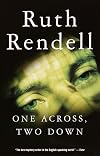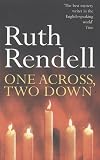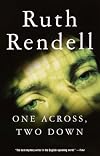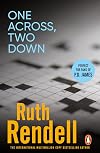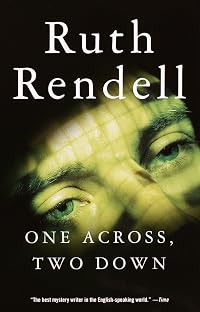
One Across, Two Down
by Ruth Rendell
On This Page
Description
There are only two things in life that interest Stanley: solving crossword puzzles, and getting his hands on his mother-in-law's money. For twenty years, nearly all his adult life, the puzzles have been his only pleasure; his mother-in-law's money his only dream. And in all those years it has never once occurred to Stanley that she would try to outsmart him and the money might never be his. Until now. It is only now that Stanley, so clever at misleading double-meanings and devious clues, show more decides to construct a puzzle of his own - and so give death a helping hand. show lessTags
Recommendations









Member Reviews
Granted, I have never been a lower-middle class woman living in 1970s England, but Rendell succeeds in putting me there. I really can’t put my finger on one thing that helps her pull this off. It’s an amalgamation of many things; knowing her subject, knowing the difference between a boring detail that adds no flavor and one that is telling and immediate, knowing how to make the seemingly ordinary into something vital and insightful. Brilliant. And the effect is to make me, the reader distanced by time and circumstances, understand exactly how and why people behave the way they do.
Like much of her work, this one creeps up on you slowly. She places event next to event until a sinister picture emerges. Stanley just starts out as a show more lazy man, using his wife’s small means to sustain him while he does the bare minimum. Sounds just like a type of sociopath I just read about. He knows from the start that Vera’s mom has a lot of money that will go to her when she dies. That’s the only reason he stays with Vee. Vee knows it though she tries to find virtue in her choice of mate. She rationalizes, but in the end she confronts what she really knows to be true about Stanley’s character and creates an exit for herself. Luckily Stanley practically hands her justification on a plate.
Schemes, fights, foul-play and death ensue. All this while, his mind starts going due to the stress over his circumstances. He develops a nasty and severe eye twitch that slowly extends to his whole body. He drinks more and has little tolerance for it. He starts to think in terms of a crossword puzzle all the time. Taking words out of conversations and setting clues for them; picturing the completed puzzle in his mind. Rational, linear thought has all but left him. This is a good example of Rendell's unique vision and craft. show less
Like much of her work, this one creeps up on you slowly. She places event next to event until a sinister picture emerges. Stanley just starts out as a show more lazy man, using his wife’s small means to sustain him while he does the bare minimum. Sounds just like a type of sociopath I just read about. He knows from the start that Vera’s mom has a lot of money that will go to her when she dies. That’s the only reason he stays with Vee. Vee knows it though she tries to find virtue in her choice of mate. She rationalizes, but in the end she confronts what she really knows to be true about Stanley’s character and creates an exit for herself. Luckily Stanley practically hands her justification on a plate.
Schemes, fights, foul-play and death ensue. All this while, his mind starts going due to the stress over his circumstances. He develops a nasty and severe eye twitch that slowly extends to his whole body. He drinks more and has little tolerance for it. He starts to think in terms of a crossword puzzle all the time. Taking words out of conversations and setting clues for them; picturing the completed puzzle in his mind. Rational, linear thought has all but left him. This is a good example of Rendell's unique vision and craft. show less
One of Rendell's darker stories.
Stanley Manning and his wife Vera live with Vera's mother Maud, who has promised Vera that she will inherit a substantial sum when Maud dies. However, Maud prefers that Vera leave her husband and live elsewhere with her, as she does not care for Stanley. The feeling is reciprocated. The constant bickering between the two is bringing Vera to a breaking point.
Maud is no sweetheart but she's right about Stanley. He's not worth much. He gets jobs and loses them regularly, prefers to collect unemployment, and dreams of being rich when the old lady pops off. He also dreams, a little, of crossword puzzles. He likes doing them. It is perhaps the greatest pleasure in his day.
The situation reaches something of a show more head when Maud's longtime friend writes to say she is going to move nearby (thus doubling the criticism Stanley endures) and that she needs a place to stay for the weekend just before she moves. Of course she can stay in Vera's house. Because it is Vera's house, given to her by her mother.
It is really Stanley's story, although Vera figures in it more as she starts to see more clearly. Circumstances don't exactly line up as planned by anyone.
A quick read that at times is actually funny. show less
Stanley Manning and his wife Vera live with Vera's mother Maud, who has promised Vera that she will inherit a substantial sum when Maud dies. However, Maud prefers that Vera leave her husband and live elsewhere with her, as she does not care for Stanley. The feeling is reciprocated. The constant bickering between the two is bringing Vera to a breaking point.
Maud is no sweetheart but she's right about Stanley. He's not worth much. He gets jobs and loses them regularly, prefers to collect unemployment, and dreams of being rich when the old lady pops off. He also dreams, a little, of crossword puzzles. He likes doing them. It is perhaps the greatest pleasure in his day.
The situation reaches something of a show more head when Maud's longtime friend writes to say she is going to move nearby (thus doubling the criticism Stanley endures) and that she needs a place to stay for the weekend just before she moves. Of course she can stay in Vera's house. Because it is Vera's house, given to her by her mother.
It is really Stanley's story, although Vera figures in it more as she starts to see more clearly. Circumstances don't exactly line up as planned by anyone.
A quick read that at times is actually funny. show less
One Across, Two Down is the somewhat mundane murder mystery of a distasteful husband, Stanley, who wants nothing more than to off his mother-in-law and inherit her money; the mother-in-law, Maud, who is disagreeable and constantly tries to convince her daughter to leave Stanley; and Vera, an overworked, retiring woman besieged by both her overbearing mother and negligent husband.
When Maud's friend, Ethel, comes to visit, events conspire to create a mystery that, intriguingly, does not rest on the grisly nature of the crime, but the people involved. Rendell in many respects is reminiscent of Mary Rinestone Hart - but she really shines when focusing on the people and relationships; crime is almost incidental. In fact, it would be a bit of show more a misnomer to call it a mystery, and perhaps even a stretch to call it a murder. More suspenseful is the way the story unfolds, the way the characters interact, and the intersections of criminal and mundane life.
A true gem among thrillers that rely on blood and shock to tell their story, Rendell proves that the most interesting thing about a crime is the people involved. show less
When Maud's friend, Ethel, comes to visit, events conspire to create a mystery that, intriguingly, does not rest on the grisly nature of the crime, but the people involved. Rendell in many respects is reminiscent of Mary Rinestone Hart - but she really shines when focusing on the people and relationships; crime is almost incidental. In fact, it would be a bit of show more a misnomer to call it a mystery, and perhaps even a stretch to call it a murder. More suspenseful is the way the story unfolds, the way the characters interact, and the intersections of criminal and mundane life.
A true gem among thrillers that rely on blood and shock to tell their story, Rendell proves that the most interesting thing about a crime is the people involved. show less
Layabout Stanley is good for nothing except solving and even composing crossword puzzles; certainly he's not good at holding down a job. He's stuck in a small house in London with his colourless wife Vera and his truly ghastly mother-in-law Maud, praying for the day when Maud will shuffle off this mortal coil and he and Vera -- which, in Stanley's mind, means just he -- can get their hands on Maud's money. On the day that Maud's if anything even ghastlier friend Ethel arrives to stay there starts a chapter of accidents that seems, suitably manipulated by a guileful Stanley, to be set to bring about his fondest wish. And for a while everything goes according to his fetid little plan. But then his house of cards collapses: fate takes a show more vengeance upon him that's disproportionate to his undoubted crimes.
This is an early Rendell work, and hasn't yet the power and the sure touch her psychological thrillers would soon come to have. On the other hand, it's often very funny, which most of her later novels haven't been; Stanley is such a frightful apology for a human being that his attitudes frequently had me chuckling -- not just because they're reprehensible, which they undoubtedly are, but because they're understandable. There's enough validity in them that I found myself reluctantly beginning to root for him: who wouldn't, after a few years in the company of Maud, become fixated on the anticipated inheritance?
Far from Rendell's best -- it doesn't convey that brooding awareness of imminent malevolence she would become so skilled at conjuring -- but an enjoyable piece. show less
This is an early Rendell work, and hasn't yet the power and the sure touch her psychological thrillers would soon come to have. On the other hand, it's often very funny, which most of her later novels haven't been; Stanley is such a frightful apology for a human being that his attitudes frequently had me chuckling -- not just because they're reprehensible, which they undoubtedly are, but because they're understandable. There's enough validity in them that I found myself reluctantly beginning to root for him: who wouldn't, after a few years in the company of Maud, become fixated on the anticipated inheritance?
Far from Rendell's best -- it doesn't convey that brooding awareness of imminent malevolence she would become so skilled at conjuring -- but an enjoyable piece. show less
Sometimes it's nice to go to something early by a writer to remind oneself that the two of you did get on and it is only in more recent times that there has been a need to part.
The idea itself is nice: as Stanley descends into his breakdown, the only thing that keeps his tic at bay is crosswords. He is a ghastly creep for whom one nonetheless can't help feeling a little sorry. Rendell's good enough to do that. Read her early stuff, if you like this sort of thing, it is quite worth it.
The idea itself is nice: as Stanley descends into his breakdown, the only thing that keeps his tic at bay is crosswords. He is a ghastly creep for whom one nonetheless can't help feeling a little sorry. Rendell's good enough to do that. Read her early stuff, if you like this sort of thing, it is quite worth it.
Sometimes it's nice to go to something early by a writer to remind oneself that the two of you did get on and it is only in more recent times that there has been a need to part.
The idea itself is nice: as Stanley descends into his breakdown, the only thing that keeps his tic at bay is crosswords. He is a ghastly creep for whom one nonetheless can't help feeling a little sorry. Rendell's good enough to do that. Read her early stuff, if you like this sort of thing, it is quite worth it.
The idea itself is nice: as Stanley descends into his breakdown, the only thing that keeps his tic at bay is crosswords. He is a ghastly creep for whom one nonetheless can't help feeling a little sorry. Rendell's good enough to do that. Read her early stuff, if you like this sort of thing, it is quite worth it.
Sometimes it's nice to go to something early by a writer to remind oneself that the two of you did get on and it is only in more recent times that there has been a need to part.
The idea itself is nice: as Stanley descends into his breakdown, the only thing that keeps his tic at bay is crosswords. He is a ghastly creep for whom one nonetheless can't help feeling a little sorry. Rendell's good enough to do that. Read her early stuff, if you like this sort of thing, it is quite worth it.
The idea itself is nice: as Stanley descends into his breakdown, the only thing that keeps his tic at bay is crosswords. He is a ghastly creep for whom one nonetheless can't help feeling a little sorry. Rendell's good enough to do that. Read her early stuff, if you like this sort of thing, it is quite worth it.
Members
- Recently Added By
Lists

Books With Numbers in the Title
308 works; 13 members
Author Information

316+ Works 51,375 Members
Ruth Rendell (1930-2015) Ruth Rendell was born in Essex, England on February 17, 1930. She was educated at Loughton County High School. Rendell began her career as a journalist. She wrote six novels before sending her work in to a publisher. She writes crime novels and psychological thrillers, and is best known for her Inspector Wexford books. show more Rendell also writes under the pseudonym Barbara Vine. Rendell has received many awards for her writing, including the Silver, Gold, and Cartier Diamond Daggers from the Crime Writers' Association, three Edgars from the Mystery Writers of America, The Arts Council National Book Awards, and The Sunday Times Literary Award. She is a fellow of the Royal Society of Literature. Many of her titles have been made into films and made-for-tv movies. Rendell died on May 2, 2015. She was 85 years old. (Bowker Author Biography) show less
Some Editions
Series
Belongs to Publisher Series
Il giallo Mondadori (1217)
rororo thriller (2899)
Work Relationships
Common Knowledge
- Canonical title
- One Across, Two Down
- Original title
- One Across, Two Down
- Original publication date
- 1971
- People/Characters
- Vera Manning; Stanley Manning
- Epigraph
- Come into the garden, Maud,
For the black bat, night, has flown,
Come into the garden, Maud,
I am here at the gate alone,
Alfred, Lord Tennyson - Dedication
- For my son
- First words
- Vera Manning was very tired.
- Last words
- (Click to show. Warning: May contain spoilers.)The dawn showed muddy red over the warehouses and the first few drops of rain began to fall.
- Original language*
- Englisch
*Some information comes from Common Knowledge in other languages. Click "Edit" for more information.
Classifications
Statistics
- Members
- 423
- Popularity
- 73,270
- Reviews
- 16
- Rating
- (3.62)
- Languages
- 10 — Danish, Dutch, English, French, German, Hungarian, Italian, Portuguese, Slovenian, Spanish
- Media
- Paper, Audiobook, Ebook
- ISBNs
- 35
- ASINs
- 8