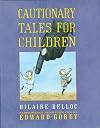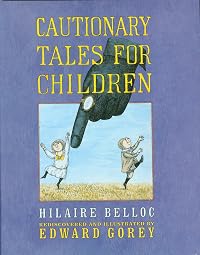
Cautionary Tales for Children
by Hilaire Belloc
On This Page
Description
One of Hilaire Belloc's most famous works, "Cautionary Tales for Children" satirizes a genre of admonitory children's literature popular in England in the late 18th and 19th centuries. The seven stories contained in this work are macabre parodies of childhood lessons, and will entertain more sophisticated readers who can appreciate these tales of disproportionate punishment. Presented in a classic picture book style, illustrators have captured the foibles of children like Jim, who let go of show more his nurse's hand and was eaten by a lion; Matilda, who told lies, and was burned to death; and Henry King who swallowed string. The consequences range from naughty children being whimsically eaten by lions, to stern reprimands for a boy who fires a loaded gun at his sister. Originally written nearly a century ago, Belloc's sprightly verses are a quick and cathartic read for teenagers, and reflect a trend of literature that is still popular today. show lessTags
Recommendations



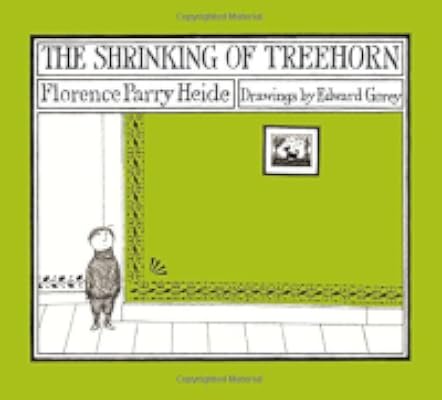
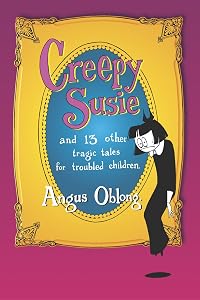

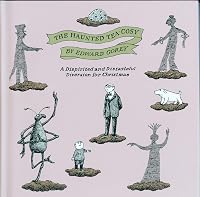
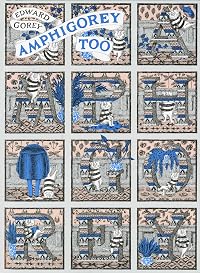


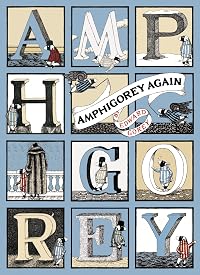

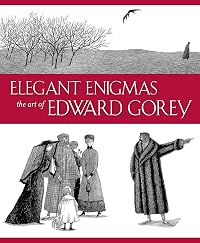






Member Recommendations
Member Reviews
Sometimes I feel quite impish and dream of finding oodles of books like this to distribute in all the Little Free Libraries in my town. Let's rename this from "cautionary" to "consequence genre."
Children's consequence genre answers that insatiable kid curiosity about the stuff they want to know, answering a question like, "What if I opened the cage with the lion at the zoo?" Good question, let's find out...
With open Jaws, a Lion sprang,
And hungrily began to eat
The Boy: beginning at his feet.
Now just imagine how it feels
When first your toes and then your heels,
And then by gradual degrees,
Your shins and ankles, calves and knees,
Are slowly eaten, bit by bit.
And then, to drive home the point, the fascinating and ghoulish picture:
I do think, show more though, it might be best to introduce children early to this genre rather than late. Else they grow up to make FAFO YT videos crying because they voted in a snake as king and are surprised that it bit them. They thought it would bite only those ugly people they dislike so much! Silly, silly grownups. They should have read more books like this in childhood, then they'd know it's not good to embrace a known snake or open a lion cage without actually having to idiotically try it, saving a whole country a lot of misery. show less
Children's consequence genre answers that insatiable kid curiosity about the stuff they want to know, answering a question like, "What if I opened the cage with the lion at the zoo?" Good question, let's find out...
With open Jaws, a Lion sprang,
And hungrily began to eat
The Boy: beginning at his feet.
Now just imagine how it feels
When first your toes and then your heels,
And then by gradual degrees,
Your shins and ankles, calves and knees,
Are slowly eaten, bit by bit.
And then, to drive home the point, the fascinating and ghoulish picture:
I do think, show more though, it might be best to introduce children early to this genre rather than late. Else they grow up to make FAFO YT videos crying because they voted in a snake as king and are surprised that it bit them. They thought it would bite only those ugly people they dislike so much! Silly, silly grownups. They should have read more books like this in childhood, then they'd know it's not good to embrace a known snake or open a lion cage without actually having to idiotically try it, saving a whole country a lot of misery. show less
Rhyme, rhythm, repetition.
Snuggled in a cuddly, loving lap.
Rhyme, rhythm, repetition.
Pictures for full multi-sensory immersion.
Rhyme, rhythm, repetition.
Two voices: sometimes taking turns, sometimes in unison.
Rhyme, rhythm, repetition.
This is the stuff of formative childhood memories.
My father regularly read these poems to me with melodramatic intonation when I was a child. He read (and sung) other things, but these were always the favourites. To this day, I know many of them by heart and I can only hear or read them with his delicious intonation.
Cautionary
Perhaps I have Belloc to thank for the fact I haven’t (yet) died as a result of chewing bits of string, slamming doors, telling dreadful lies, playing with a loaded gun, or show more running away from my nurse/nanny into the jaws of a hungry lion. Not that I was ever scared by these tales, perhaps in part because each one opens with a spoiler, and thereafter, I knew them anyway. Nor have I suffered deleterious consequences of making faces, throwing stones, or being unable to read.
For a slightly more adult slant on this idea, in prose, see Saki's brilliant short story The Open Window, which I reviewed HERE.
Variety
The cautions are a quirky mix of bizarre, gory, hyperbolic, and (just occasionally) sensible. A few good children do well (obedience leading to inheritance, for example), but they’re less fun. This volume also includes a Moral Alphabet and shorter poems about peers (aristocrats) and beasts, but for us, it was and is about the Cautionary Tales.
Inevitably there are a few duffers, but the best are sublime. Then again, it’s impossible for me to rate these objectively (but I don’t care).
Join in
These are written for performance. Even if you’re alone, read them aloud.
They’re so familiar to me, that it’s easy to give partial quotes and expect others to pick up with instant familiarity. Of course, few do. (It’s similar with Monty Python, Not the Nine O’Clock News, Flanders and Swann, and Yes Minister, amongst others.)
Age
Many of these poems do not sit easily with modern sensibilities, especially the colonial, class, and gender assumptions. The first were published in 1907 as parodies of earlier fare. Even the concept of moralistic tales is perhaps too preachy nowadays. But that’s their charm.
There’s also a dash of knowingness: a cautionary tale (Rebecca, Who Slammed Doors For Fun And Perished Miserably) that includes children being summoned to hear the story just told, and another (R, in the Moral Alphabet) about a reviewer of this very book.
Illustrations
The editions with Edward Gorey illustrations look excellent for anyone wanting a first taste, but they’re not for me. When I strive for objectivity, I grudgingly acknowledge that they’re more aesthetically appealling and skillful. But it’s Lord Ian Basil Gawaine Hamilton-Temple-Blackwood’s (yes, really) line drawings that are indelibly imprinted in my mind, accompanied by my father’s voice.
See also
You can read nearly a dozen of the cautionary tales, with BTB’s illustrations, HERE.
The other comic poems/songs that were the bedrock of my childhood and then my own child’s, are in the Flanders and Swann Songbook (my review HERE).
For a modern and darker twist on these, see Tim Burton's Melancholy Death of the Oyster Boy (my review HERE). show less
Snuggled in a cuddly, loving lap.
Rhyme, rhythm, repetition.
Pictures for full multi-sensory immersion.
Rhyme, rhythm, repetition.
Two voices: sometimes taking turns, sometimes in unison.
Rhyme, rhythm, repetition.
This is the stuff of formative childhood memories.
My father regularly read these poems to me with melodramatic intonation when I was a child. He read (and sung) other things, but these were always the favourites. To this day, I know many of them by heart and I can only hear or read them with his delicious intonation.
Cautionary
Perhaps I have Belloc to thank for the fact I haven’t (yet) died as a result of chewing bits of string, slamming doors, telling dreadful lies, playing with a loaded gun, or show more running away from my nurse/nanny into the jaws of a hungry lion. Not that I was ever scared by these tales, perhaps in part because each one opens with a spoiler, and thereafter, I knew them anyway. Nor have I suffered deleterious consequences of making faces, throwing stones, or being unable to read.
Matilda
Matilda told such Dreadful Lies,
It made one Gasp and Stretch one’s Eyes;
…
For once, towards the Close of Day,
Matilda, growing tired of play,
And finding she was left to alone,
Went tiptoe to the telephone
And summoned the Immediate Aid
Of London’s Nobel Fire-Brigade.
...
[Another evening]
That Night a Fire did break out-
You should have heard Matilda Shout!
You should have heard her Scream and Bawl,
...
For every time She shouted "Fire!"
They only answered "Little Liar!"
And therefore when her Aunt returned,
Matilda, and the House, were burned.
For a slightly more adult slant on this idea, in prose, see Saki's brilliant short story The Open Window, which I reviewed HERE.
Variety
The cautions are a quirky mix of bizarre, gory, hyperbolic, and (just occasionally) sensible. A few good children do well (obedience leading to inheritance, for example), but they’re less fun. This volume also includes a Moral Alphabet and shorter poems about peers (aristocrats) and beasts, but for us, it was and is about the Cautionary Tales.
Inevitably there are a few duffers, but the best are sublime. Then again, it’s impossible for me to rate these objectively (but I don’t care).
Join in
These are written for performance. Even if you’re alone, read them aloud.
The Frog
Be kind and tender to the Frog,
And do not call him names,
As ‘Slimy skin,’ or ‘Polly-wog,’
Or likewise ‘Ugly James,’
Or ‘Gape-a-grin,’ or ‘Toad-gone-wrong,’
Or ‘Billy Bandy-knees’:
The Frog is justly sensitive
To epithets like these.
No animal will more repay
A treatment kind and fair;
At least so lonely people say
Who keep a frog (and, by the way,
They are extremely rare).
They’re so familiar to me, that it’s easy to give partial quotes and expect others to pick up with instant familiarity. Of course, few do. (It’s similar with Monty Python, Not the Nine O’Clock News, Flanders and Swann, and Yes Minister, amongst others.)
Age
Many of these poems do not sit easily with modern sensibilities, especially the colonial, class, and gender assumptions. The first were published in 1907 as parodies of earlier fare. Even the concept of moralistic tales is perhaps too preachy nowadays. But that’s their charm.
Lord Finchley
Lord Finchley tried to mend the Electric Light
Himself.
It struck him dead: And serve him right!
It is the business of the wealthy man
To give employment to the artisan.
There’s also a dash of knowingness: a cautionary tale (Rebecca, Who Slammed Doors For Fun And Perished Miserably) that includes children being summoned to hear the story just told, and another (R, in the Moral Alphabet) about a reviewer of this very book.
Illustrations
The editions with Edward Gorey illustrations look excellent for anyone wanting a first taste, but they’re not for me. When I strive for objectivity, I grudgingly acknowledge that they’re more aesthetically appealling and skillful. But it’s Lord Ian Basil Gawaine Hamilton-Temple-Blackwood’s (yes, really) line drawings that are indelibly imprinted in my mind, accompanied by my father’s voice.
The Porcupine
What! Would you slap the Porcupine?
Unhappy child—desist!
Alas! That any friend of mine
Should turn Tupto-philist.*
* From the "tupto"=I strike; "philo"=I love; one that loves to strike; The word is not found in classical Greek, nor does it occur among the writers of the Renaissance—nor anywhere else.
See also
You can read nearly a dozen of the cautionary tales, with BTB’s illustrations, HERE.
The other comic poems/songs that were the bedrock of my childhood and then my own child’s, are in the Flanders and Swann Songbook (my review HERE).
For a modern and darker twist on these, see Tim Burton's Melancholy Death of the Oyster Boy (my review HERE). show less
Anyone who has read Edward Gorey, who may have been inspired by it, will be extremely disappointed in this mostly unfunny, rather unpleasantly illustrated tongue-in-cheek collection of stories of what happens to bad (or in one case, good) children. The rhymes are awkward, the stories lack humor, and it is difficult to see why the book has remained popular over the years. (I am reviewing the original edition, not the more recent edition with Gorey's illustrations.)
One of those books for "children" that speak to readers of all ages. Belloc's wit rivals that of Lewis Carrol and others, over the years, have added to the literature of moral fables begun by Aesop.
In the true form of Victorian humorous morality stories, this collection of poems warns children away from some typically bad behavior by showing us osme of the bad things that can happen. The rhymes are tightly lyrical, which makes them highly accessible for readers young and old, if slightly predictable.
This knee slapper is almost 100 years old! Silly poems, rhyming couplets that mock Victorian poetry while telling of children who are punished horribly, eaten by lions and the like. Children will enjoy the ridiculousness, and enhance their vocabulary. Simple drawings by Edward Gorey are sure to please.
A great book for older children. A way to teach that their are consequences to behavior, perhaps not good ones either.
Members
- Recently Added By
Lists

1001 Children's Books You Must Read Before You Grow Up
774 works; 101 members

1900s (Decade, not century)
73 works; 17 members

CCE 1000 Good Books List
1,033 works; 12 members

Edward Gorey Covers
150 works; 8 members

Poetry Corner
187 works; 15 members

Books Read in 2005
185 works; 7 members

Five star books
1,767 works; 110 members

Children's Literature 1900 - 1950 in order
413 works; 8 members
Author Information

257+ Works 9,066 Members
Hilaire Belloc, 1870 - 1953 Hilaire Belloc was born in France in 1870, educated at Oxford, and naturalized as a British subject in 1902. Although he began as a writer of humorous verse for children, his works include satire, poetry, history, biography, fiction, and many volumes of essays. With his close friend and fellow Catholic, G. K. show more Chesterton, Belloc founded the New Witness, a weekly newspaper opposing capitalism and free thought and supporting a philosophy known as distributism. The pair was so close in thought and association that George Bernard Shaw nicknamed them Chesterbelloc. During his life, Belloc published over 150 books. Today, however, he is best remembered for only a few works, most notably his light verse, such as Cautionary Tales (1907) and A Bad Child's Book of Beasts (1896). Belloc died in 1953 from burns caused when his dressing gown caught fire from the hearth. (Bowker Author Biography) show less
Some Editions
Awards and Honors
Distinctions
Series
Belongs to Publisher Series
Work Relationships
Is contained in
Is abridged in
Common Knowledge
- Original title
- Cautionary Tales for Children
- Original publication date
- 1907
- People/Characters
- Jim (who ran away from nurse and was eaten by a lion)
- Epigraph
- And is it True? It is not True.
And it it were it wouldn't do,
For people such as me and you
Who pretty nearly all day long
Are doing something rather wrong.
Because if things were really so,
You would h... (show all)ave perished long ago,
And I would not have lived to write
The noble lines that meet your sight,
Nor B. T. B. survived to draw
The nicest things you ever saw.
H. B. - First words
- [Introduction] Upon being asked by a Reader whether the verses contained in this book were true.
- Last words
- (Click to show. Warning: May contain spoilers.)The moral is (it is indeed!)
You mustn't monkey with the Creed. - Original language
- English
Classifications
Statistics
- Members
- 807
- Popularity
- 34,466
- Reviews
- 12
- Rating
- (4.03)
- Languages
- English
- Media
- Paper, Ebook
- ISBNs
- 26
- ASINs
- 11