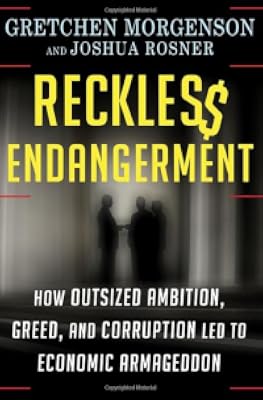
Reckless Endangerment: How Outsized Ambition, Greed, and Corruption Led to Economic Armageddon
by Gretchen Morgenson, Joshua Rosner
On This Page
Description
"TheNew York Times's Pulitzer Prize-winning columnist reveals how the financial meltdown emerged from the toxic interplay of Washington, Wall Street, and corrupt mortgage lenders. In Reckless Endangerment, Gretchen Morgenson, the star business columnist of The New York Times, exposes how the watchdogs who were supposed to protect the country from financial harm were actually complicit in the actions that finally blew up the American economy. Drawing on previously untapped sources and show more building on original research from coauthor Joshua Rosner--who himself raised early warnings with the public and investors, and kept detailed records--Morgenson connects the dots that led to this fiasco. Morgenson and Rosner draw back the curtain on Fannie Mae, the mortgage-finance giant that grew, with the support of the Clinton administration, through the 1990s, becoming a major opponent of government oversight even as it was benefiting from public subsidies. They expose the role played not only by Fannie Mae executives but also by enablers at Countrywide Financial, Goldman Sachs, the Federal Reserve, HUD, Congress, the FDIC, and the biggest players on Wall Street, to show how greed, aggression, and fear led countless officials to ignore warning signs of an imminent disaster. Character-rich and definitive in its analysis, this is the one account of the financial crisis you must read"-- "In Reckless Endangerment, Gretchen Morgenson, the star business columnist of The New York Times, exposes how the watchdogs who were supposed to protect the country from financial harm were actually complicit in the actions that finally blew up the American economy. Drawing on previously untapped sources and building on original research from coauthor Joshua Rosner--who himself raised early warnings with the public and investors, and kept detailed records--Morgenson connects the dots that led to this fiasco. Morgenson and Rosner draw back the curtain on Fannie Mae, the mortgage-finance giant that grew, with the support of the Clinton administration, through the 1990s, becoming a major opponent of government oversight even as it was benefiting from public subsidies. They expose the role played not only by Fannie Mae executives but also by enablers at Countrywide Financial, Goldman Sachs, the Federal Reserve, HUD, Congress, the FDIC, and the biggest players on Wall Street, to show how greed, aggression, and fear led countless officials to ignore warning signs of an imminent disaster. Character-rich and definitive in its analysis, this is the one account of the financial crisis you must read"-- show lessTags
Recommendations


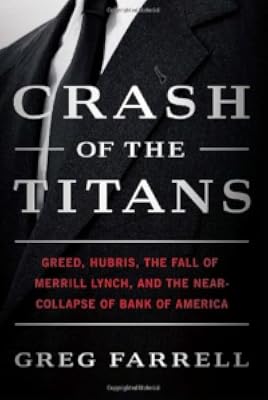
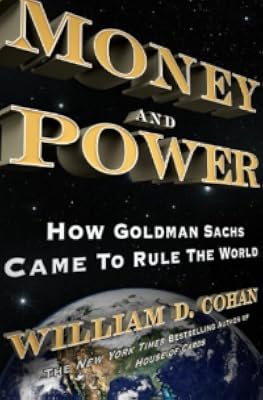
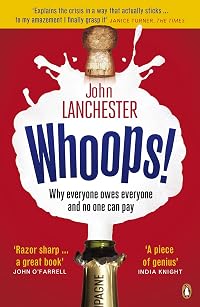
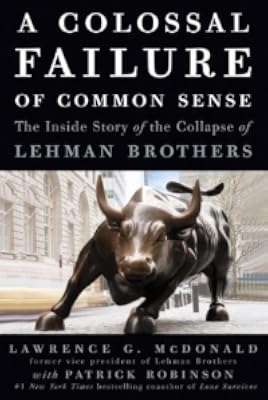
Member Reviews
A very readable account of the lead up to the housing bubble and 2007 mortgage melt down that led to the 2008 collapse of the financial markets. The sad thing is that so many of the individuals involved/responsible for the fiasco are still in positions of power. One of the few books about the crisis that goes back to its origins and names names.
Morgenson and Rosner do a masterful job of tracing the roots of the financial crisis to a series of public policy decisions that consistently gave precedence to political goals over market forces in allocating credit. Curiously, however, they seem to argue that disaster could have been avoided if only the politicians could have played a greater role in thwarting the self-correcting mechanisms of the market. A reader, on the other hand, might well ask if our economy and financial system would have been better off without the self-interested ministrations of politicos like Barney Frank and Christopher Dodd. Financial markets contain self-correcting mechanisms; they are not painless, but they work. If these had not been deliberately show more short-circuited by political intervention, it is likely that the real estate bubble would have been deflated much earlier, with less pain and much less expense.
The culture of corruption that surrounded the housing GSEs (Fannie and Freddie) was no accident: the abuses were deliberately embraced as lenders were coerced into suspending time-honored ways of extending credit in order to achieve politically defined goals. Practices that are now retrospectively condemned (low doc/no doc mortgages, zero down mortgages, and many more) were embraced by people like President Clinton as ways of providing credit to people who had previously been excluded from ownership. The GSEs and their supporters argued that old lending standards that emphasized cash flow, collateral value, credit history, and borrower character had to be replaced by new ways of lending in order to achieve the socially desirable goal of increased home ownership. Indeed, the whole concept of securitizeable sub-prime mortgage product was designed to provide more liquidity to a market that most local bankers had sense enough to avoid. As the process accelerated, lenders and Wall Street were certainly complicit, and they should have resisted. But they were smart enough to recognize the risks of NOT aligning their practices with the goals of those who controlled the levers of power. For example, more than one bank was forced to pay "CRA ransom" (in the form of loans extended to non-qualified borrowers) as a price for Fed approval of its merger application. And, as Morgenson and Rosner make clear, it was very dangerous for anyone in government or the private sector to oppose Fannie or Freddie when they were at the peak of their power. Retribution was swift and brutal, and powerful interests on Capitol Hill were quick to snap to attention when the perceived interests on the GSEs were threatened. Too much power and patronage were at stake, and the GSEs maintained both slush funds and local offices throughout the country to make sure that their friends were rewarded and their enemies punished.
This is an important story. Much of it flies in the face of the 'conventional wisdom' that has developed around the financial crisis. Sadly, it is short on insightful analysis, and many questions are left unanswered. For instance, in assigning blame, the authors totally overlook the role of borrowers who eagerly lied on applications. And, while the authors offer tantalizing hints, they never directly confront the reasons behind the decision not to criminally prosecute men like Jim Johnson and Frank Raines, the two Democratic Party hacks who led Fannie Mae's during the lead-up to the housing crisis, enriching themselves even as they brought financial devastation to millions of families. Also, the account of the role of financial derivatives in contributing to the crisis is badly bungled, merely rehashing common prejudices and misconceptions. Although Morgensen is a respected business reporter, she is apparently unaware of the real benefits that had been created for consumers by financial technologies like securitization and credit scoring. These innovations made it possible to make credit available to previously underserved individuals and communities; their abuse came only when market discipline was deliberately abandoned in order to achieve political goals.
The devastation caused by the financial crisis is ongoing, and our ability to emerge from it depends in large measure on an informed understanding of the choices and policy decisions that led us to the brink of financial disaster. Attributing the crisis simply to 'market failure' or 'Wall Street greed' does little to enhance or understanding. Morgenson and Rosner have provided an account that points in the right direction. But it fails to go far enough. show less
The culture of corruption that surrounded the housing GSEs (Fannie and Freddie) was no accident: the abuses were deliberately embraced as lenders were coerced into suspending time-honored ways of extending credit in order to achieve politically defined goals. Practices that are now retrospectively condemned (low doc/no doc mortgages, zero down mortgages, and many more) were embraced by people like President Clinton as ways of providing credit to people who had previously been excluded from ownership. The GSEs and their supporters argued that old lending standards that emphasized cash flow, collateral value, credit history, and borrower character had to be replaced by new ways of lending in order to achieve the socially desirable goal of increased home ownership. Indeed, the whole concept of securitizeable sub-prime mortgage product was designed to provide more liquidity to a market that most local bankers had sense enough to avoid. As the process accelerated, lenders and Wall Street were certainly complicit, and they should have resisted. But they were smart enough to recognize the risks of NOT aligning their practices with the goals of those who controlled the levers of power. For example, more than one bank was forced to pay "CRA ransom" (in the form of loans extended to non-qualified borrowers) as a price for Fed approval of its merger application. And, as Morgenson and Rosner make clear, it was very dangerous for anyone in government or the private sector to oppose Fannie or Freddie when they were at the peak of their power. Retribution was swift and brutal, and powerful interests on Capitol Hill were quick to snap to attention when the perceived interests on the GSEs were threatened. Too much power and patronage were at stake, and the GSEs maintained both slush funds and local offices throughout the country to make sure that their friends were rewarded and their enemies punished.
This is an important story. Much of it flies in the face of the 'conventional wisdom' that has developed around the financial crisis. Sadly, it is short on insightful analysis, and many questions are left unanswered. For instance, in assigning blame, the authors totally overlook the role of borrowers who eagerly lied on applications. And, while the authors offer tantalizing hints, they never directly confront the reasons behind the decision not to criminally prosecute men like Jim Johnson and Frank Raines, the two Democratic Party hacks who led Fannie Mae's during the lead-up to the housing crisis, enriching themselves even as they brought financial devastation to millions of families. Also, the account of the role of financial derivatives in contributing to the crisis is badly bungled, merely rehashing common prejudices and misconceptions. Although Morgensen is a respected business reporter, she is apparently unaware of the real benefits that had been created for consumers by financial technologies like securitization and credit scoring. These innovations made it possible to make credit available to previously underserved individuals and communities; their abuse came only when market discipline was deliberately abandoned in order to achieve political goals.
The devastation caused by the financial crisis is ongoing, and our ability to emerge from it depends in large measure on an informed understanding of the choices and policy decisions that led us to the brink of financial disaster. Attributing the crisis simply to 'market failure' or 'Wall Street greed' does little to enhance or understanding. Morgenson and Rosner have provided an account that points in the right direction. But it fails to go far enough. show less
This is a quality account of how the 2008 market collapse occurred and demonstrates, without question, that our government is unable to protect it's people. There are multiple instances laid out in the book where well intentioned politicians tried to enact legislation to protect the population from sub-prime predators, only to be carefully eviscerated by lobbyists and the people who know people in higher places. It's truly amazing to see how economic bubbles continue to rise and be defended by our most powerful politicians (who know nothing of economics) with a standard belief that "this time, it's different."
I came to this book from an article in the Wall Street Journal. If you plan to read this, you should also purchase a copy of The show more Wall Street Money Machine as that presents additional information on this topic. show less
I came to this book from an article in the Wall Street Journal. If you plan to read this, you should also purchase a copy of The show more Wall Street Money Machine as that presents additional information on this topic. show less
So what caused the 2008 financial crisis? We know that the direct cause was the meltdown in the US housing market. I think we are still trying to put together the pieces and point the finger of blame. It was a big bubble and the explosive reaction when the bubble burst. It took many different forces to get the bubble so big.
In Reckless Endangerment, Gretchen Morgenson and Joshua Rosner take their turn looking at the outsized ambition, greed, and corruption that lead up to the crisis. They point the finger of blame directly at Fannie Mae and its executives.
The authors portray a company that ruthlessly leveraged the implicit government guarantee to create billions of dollars of shareholder wealth and millions of dollars in executive show more compensation. They beat the drumbeat of housing as the American Dream. Everyone should get a chance to own their own home. Fannie Mae used their version of the American Dream to bully Congress and their regulators to let them have a very thin capital reserve and to keep their finances very opaque. The authors pin the blame squarely on James Johnson, the CEO of Fannie Mae during the 1990s and his successor, Franklin Raines.
The rating agencies also get some of blame by the authors. I think the rating agencies have not received enough of the blame. Their shoddy rating of debt instruments let them get AAA ratings that they did not deserve. Only a handful of companies and a handful of countries get the top rating. But when it came to real estate backed securities, the rating agencies were handing them out like cotton candy at the state fair.
Institutional investors were looking for safe place for their money that could still earn a coupon. US treasury bonds were paying a very low interest rate. Pension funds and insurance companies determine their funding levels based on a projected rate or return. Many were limited to only invest in the highest quality asset either by regulation or internal policies. That meant they would only buy the top rated bonds.
Banks has to maintain their capital levels based on the quality of the loans/bonds/assets they held. With top-rated bonds, the banks had to retain very little capital. By holding AAA ratted bonds, the banks could retain less capital and put more to work.
The rating agencies were telling them that these mortgage-backed securities were top rated. (They were wrong.)
The vast majority of the book is spent sticking pins in Fannie Mae, their lobbying efforts, and their executives. I agree that Fannie Mae abused its position. I agree that Fannie Mae helped create an attitude that everyone should be a homeowner and everyone should be able to afford to buy a home. But their story comes to crashing halt in 2004 when Fannie Mae gets caught in large scale accounting fraud. Most of the manipulation can be tied directly to triggers for executive compensation.
In 2005 the first signs of bad mortgages were popping up and the buyers for the lower rated pieces of mortgage debt were not buying them. Without those buyers, the mortgage securitization would fail. Fannie Mae was leading the charge up until that point. But it didn’t stop there. That’s why have a problem pointing the finger at Fannie Mae. The mortgage/housing boom kept going.
The authors pull some of the dubious lenders into the book. Countrywide, Novastar, and Fremont all get ripped apart.
It’s not until the last chapter that they hit upon the issue that hyper-inflated the real estate bubble. The buyers for the lowest rated pieces of mortgage-backed securities were not buying as much. In part, this was because the increased quantity of junk they saw ending up in the pools. In part, it may be because they saw the bubble. Then the magic happened.
Wall Street firms packaged the lower rated pieces into new pools and sold those securities. These were the toxic assets. Somehow they convinced the rating agencies that some tranches of this pile of junk could still get the top ratings. Those high rated tranches were sold off to the institutional investors and the real nasty stuff was sold off to more speculative investors. This kept the mortgage securitization pipeline going for two more years.
Why keep going when you could see the bubble? It was their job. There were thousands of jobs tied to originating the mortgages, the warehouse lines that funded them, the organization of the pools and the selling of the final securities. It was not their job to assess the bubble and just stop working. There was no brakeman in the system. The regulators do not have the oversight, the power, or the willingness to stop an asset bubble. (Let’s see what happens with the price of gold.)
The brakes were slammed on when the Wall Street firms realized they were holding on to the lowest rated tranches of the securitizations and they couldn’t get rid of them. They stopped the production. They stopped it fast. In early 2007 warehouse lines were cut off and underwriting standards were suddenly raised to higher (more sensible?) levels.
With the pipeline cutoff, the hyper-inflated housing bubble reached the bursting point. Then mortgage-backed securities investors stopped getting their checks. They realized that their coupon-paying beauty queen was just a pig with lipstick.
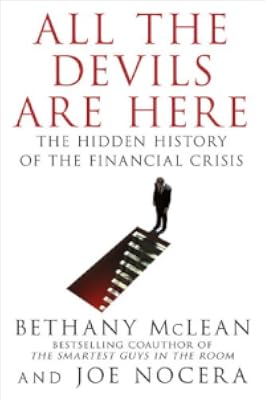
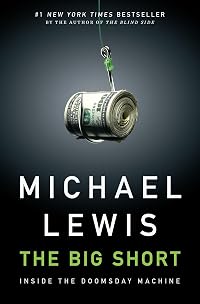
I think All the Devils Are Here did a better job of putting all the pieces together and The Big Short did a better job explaining the mechanisms of the mortgage-backed securities industry. If you don’t like Fannie Mae or want to read a story of how corporate greed exploited American politics then Reckless Endangerment should be on your reading list
http://www.compliancebuilding.com/2011/10/06/reckless-endangerment/ show less
In Reckless Endangerment, Gretchen Morgenson and Joshua Rosner take their turn looking at the outsized ambition, greed, and corruption that lead up to the crisis. They point the finger of blame directly at Fannie Mae and its executives.
The authors portray a company that ruthlessly leveraged the implicit government guarantee to create billions of dollars of shareholder wealth and millions of dollars in executive show more compensation. They beat the drumbeat of housing as the American Dream. Everyone should get a chance to own their own home. Fannie Mae used their version of the American Dream to bully Congress and their regulators to let them have a very thin capital reserve and to keep their finances very opaque. The authors pin the blame squarely on James Johnson, the CEO of Fannie Mae during the 1990s and his successor, Franklin Raines.
The rating agencies also get some of blame by the authors. I think the rating agencies have not received enough of the blame. Their shoddy rating of debt instruments let them get AAA ratings that they did not deserve. Only a handful of companies and a handful of countries get the top rating. But when it came to real estate backed securities, the rating agencies were handing them out like cotton candy at the state fair.
Institutional investors were looking for safe place for their money that could still earn a coupon. US treasury bonds were paying a very low interest rate. Pension funds and insurance companies determine their funding levels based on a projected rate or return. Many were limited to only invest in the highest quality asset either by regulation or internal policies. That meant they would only buy the top rated bonds.
Banks has to maintain their capital levels based on the quality of the loans/bonds/assets they held. With top-rated bonds, the banks had to retain very little capital. By holding AAA ratted bonds, the banks could retain less capital and put more to work.
The rating agencies were telling them that these mortgage-backed securities were top rated. (They were wrong.)
The vast majority of the book is spent sticking pins in Fannie Mae, their lobbying efforts, and their executives. I agree that Fannie Mae abused its position. I agree that Fannie Mae helped create an attitude that everyone should be a homeowner and everyone should be able to afford to buy a home. But their story comes to crashing halt in 2004 when Fannie Mae gets caught in large scale accounting fraud. Most of the manipulation can be tied directly to triggers for executive compensation.
In 2005 the first signs of bad mortgages were popping up and the buyers for the lower rated pieces of mortgage debt were not buying them. Without those buyers, the mortgage securitization would fail. Fannie Mae was leading the charge up until that point. But it didn’t stop there. That’s why have a problem pointing the finger at Fannie Mae. The mortgage/housing boom kept going.
The authors pull some of the dubious lenders into the book. Countrywide, Novastar, and Fremont all get ripped apart.
It’s not until the last chapter that they hit upon the issue that hyper-inflated the real estate bubble. The buyers for the lowest rated pieces of mortgage-backed securities were not buying as much. In part, this was because the increased quantity of junk they saw ending up in the pools. In part, it may be because they saw the bubble. Then the magic happened.
Wall Street firms packaged the lower rated pieces into new pools and sold those securities. These were the toxic assets. Somehow they convinced the rating agencies that some tranches of this pile of junk could still get the top ratings. Those high rated tranches were sold off to the institutional investors and the real nasty stuff was sold off to more speculative investors. This kept the mortgage securitization pipeline going for two more years.
Why keep going when you could see the bubble? It was their job. There were thousands of jobs tied to originating the mortgages, the warehouse lines that funded them, the organization of the pools and the selling of the final securities. It was not their job to assess the bubble and just stop working. There was no brakeman in the system. The regulators do not have the oversight, the power, or the willingness to stop an asset bubble. (Let’s see what happens with the price of gold.)
The brakes were slammed on when the Wall Street firms realized they were holding on to the lowest rated tranches of the securitizations and they couldn’t get rid of them. They stopped the production. They stopped it fast. In early 2007 warehouse lines were cut off and underwriting standards were suddenly raised to higher (more sensible?) levels.
With the pipeline cutoff, the hyper-inflated housing bubble reached the bursting point. Then mortgage-backed securities investors stopped getting their checks. They realized that their coupon-paying beauty queen was just a pig with lipstick.
I think All the Devils Are Here did a better job of putting all the pieces together and The Big Short did a better job explaining the mechanisms of the mortgage-backed securities industry. If you don’t like Fannie Mae or want to read a story of how corporate greed exploited American politics then Reckless Endangerment should be on your reading list
http://www.compliancebuilding.com/2011/10/06/reckless-endangerment/ show less
For anyone puzzling over where blame lies for the financial meltdown of the late summer of 2008, this is a book to read. The answer might be surprising. Gretchen Morgenson, the principal author, is a business and financial editor and a columnist for The New York Times. The book is a detailed account of what, who, how, and why behind the financial meltdown which nearly plunged the country into a second great depression in the waning days of the George W. Bush presidency.
The general assumption of many, especially partisans with no love for President Bush, is that because it happened toward the end of his eight year presidency his policies must have been at fault. President Obama rarely lets a week go by without blaming the current show more economic problems on President Bush, or only slightly more subtly, “the situation which we inherited.” Yet the problem runs far deeper than blame of the Republican administration during which it occurred.
The 2008 financial crisis can be traced directly to the early years of the presidency of Bill Clinton. President Clinton in 1994 proclaimed the need for more Americans to be homeowners. He set the goal of 70% of the populace living in homes they own. He relentlessly pursued that policy by causing his young secretary of Housing and Urban Development, Andrew Cuomo, to have his bureaucracy issue regulations which encouraged banks and other lending institutions to drop the standards for home mortgages. That included a virtual elimination of the 20% down payment which homeowners needed to qualify for a mortgage, and the age old wisdom enshrined in the banking industry that the homeowner’s monthly mortgage payment should not exceed 25% of his take home pay. With a few regulation changes, and accusations that banks were engaging in “redlining” discrimination against inner city neighborhoods, the nation’s traditional banks were quickly persuaded to make mortgage loans which a few years earlier would have resulted in a quick mortgage rejection letter.
New lenders came to prominence such as Countrywide Financial, United Companies Financial, NovaStar, and Fremont Investment & Loan. They made billions of dollars on these newly minted mortgages to borrowers who traditionally could not have gotten a mortgage to buy a house. Bankers called the good mortgage prospects, prime candidates. This new class of borrowers became known as sub-prime. These sub-prime mortgages were issued by the lenders and then sold in huge blocks to Fannie Mae and Freddie Mac. These two private corporations are “government-sponsored enterprises,” meaning that they were in 1994 private corporations, but ones which the public largely perceived to be guaranteed by the full faith and credit of the United States government.
During the Clinton years Fannie Mae, the larger of the two, was run by James A. Johnson. Johnson successfully lobbied congress to see that his agency was never effectively regulated. Johnson and the executives of his organization and the lenders made millions each year in salaries and bonuses. But Fannie Mae and the many lenders which sold their mortgages to Fannie Mae were undercapitalized. They made risky loans to people who could not afford them. When these sub-prime homeowners started defaulting in large numbers, the whole house of cards came down, and voila, the financial crisis of 2008. Most of those lenders are now in bankruptcy and Fannie Mae and Freddy Mac are now under government control and bailout. Johnson and his fellow executives got off while the American taxpayers pay the bills.
While all of this was unfolding the congress, mostly run by the Democrats, was asleep at the switch. Senate Finance Committee Chairman Christopher Dodd, Democrat from Connecticut, and House Financial Services Chairman Barney Frank, Democrat from Massachusetts are mentioned prominently in this book as being cosy with Johnson and Fannie Mae. Perhaps the ultimate insult added to injury is when these two powerful Democrats devised the congressional response to the crisis. Congress passed the Dodd-Frank Wall Street Reform and Consumer Protection Act of 2010 to supposedly insure that such a financial crisis could never happed again. But the new law, despite its massive size and scope, utterly failed to address the to-big-to fail institutions such as Fannie Mae. The law did nothing to increase accountability of those running these huge financial institution, nor did it even address the issues of how to resolve the insolvent Fannie and Freddy situation. When such behemoth unmanageable financial institutions get in trouble in the future, the government (meaning the taxpayers) will have no alternative but to again bail them out, or alternatively to let them fail and then face national financial collapse as we did in the summer of 2008.
If one expects partisan reasons given from the left side of the political spectrum from this New York Times reporter, they will be greatly disappointed by this book. As for many of the cast of characters who were responsible for allowing all of this to happen on their watch, many are in the Obama Administration or with close ties to the current president. So much for the penchant of the current administration to blame today’s financial problems on “the situation which we inherited.” To a great degree, the people who allowed the current mess to happen on their watch are now serving in the current administration. show less
The general assumption of many, especially partisans with no love for President Bush, is that because it happened toward the end of his eight year presidency his policies must have been at fault. President Obama rarely lets a week go by without blaming the current show more economic problems on President Bush, or only slightly more subtly, “the situation which we inherited.” Yet the problem runs far deeper than blame of the Republican administration during which it occurred.
The 2008 financial crisis can be traced directly to the early years of the presidency of Bill Clinton. President Clinton in 1994 proclaimed the need for more Americans to be homeowners. He set the goal of 70% of the populace living in homes they own. He relentlessly pursued that policy by causing his young secretary of Housing and Urban Development, Andrew Cuomo, to have his bureaucracy issue regulations which encouraged banks and other lending institutions to drop the standards for home mortgages. That included a virtual elimination of the 20% down payment which homeowners needed to qualify for a mortgage, and the age old wisdom enshrined in the banking industry that the homeowner’s monthly mortgage payment should not exceed 25% of his take home pay. With a few regulation changes, and accusations that banks were engaging in “redlining” discrimination against inner city neighborhoods, the nation’s traditional banks were quickly persuaded to make mortgage loans which a few years earlier would have resulted in a quick mortgage rejection letter.
New lenders came to prominence such as Countrywide Financial, United Companies Financial, NovaStar, and Fremont Investment & Loan. They made billions of dollars on these newly minted mortgages to borrowers who traditionally could not have gotten a mortgage to buy a house. Bankers called the good mortgage prospects, prime candidates. This new class of borrowers became known as sub-prime. These sub-prime mortgages were issued by the lenders and then sold in huge blocks to Fannie Mae and Freddie Mac. These two private corporations are “government-sponsored enterprises,” meaning that they were in 1994 private corporations, but ones which the public largely perceived to be guaranteed by the full faith and credit of the United States government.
During the Clinton years Fannie Mae, the larger of the two, was run by James A. Johnson. Johnson successfully lobbied congress to see that his agency was never effectively regulated. Johnson and the executives of his organization and the lenders made millions each year in salaries and bonuses. But Fannie Mae and the many lenders which sold their mortgages to Fannie Mae were undercapitalized. They made risky loans to people who could not afford them. When these sub-prime homeowners started defaulting in large numbers, the whole house of cards came down, and voila, the financial crisis of 2008. Most of those lenders are now in bankruptcy and Fannie Mae and Freddy Mac are now under government control and bailout. Johnson and his fellow executives got off while the American taxpayers pay the bills.
While all of this was unfolding the congress, mostly run by the Democrats, was asleep at the switch. Senate Finance Committee Chairman Christopher Dodd, Democrat from Connecticut, and House Financial Services Chairman Barney Frank, Democrat from Massachusetts are mentioned prominently in this book as being cosy with Johnson and Fannie Mae. Perhaps the ultimate insult added to injury is when these two powerful Democrats devised the congressional response to the crisis. Congress passed the Dodd-Frank Wall Street Reform and Consumer Protection Act of 2010 to supposedly insure that such a financial crisis could never happed again. But the new law, despite its massive size and scope, utterly failed to address the to-big-to fail institutions such as Fannie Mae. The law did nothing to increase accountability of those running these huge financial institution, nor did it even address the issues of how to resolve the insolvent Fannie and Freddy situation. When such behemoth unmanageable financial institutions get in trouble in the future, the government (meaning the taxpayers) will have no alternative but to again bail them out, or alternatively to let them fail and then face national financial collapse as we did in the summer of 2008.
If one expects partisan reasons given from the left side of the political spectrum from this New York Times reporter, they will be greatly disappointed by this book. As for many of the cast of characters who were responsible for allowing all of this to happen on their watch, many are in the Obama Administration or with close ties to the current president. So much for the penchant of the current administration to blame today’s financial problems on “the situation which we inherited.” To a great degree, the people who allowed the current mess to happen on their watch are now serving in the current administration. show less
Read to 144...badly written and tedious, even for finance+policy. Alex and Sean, the office meatheads, loved it.
The New York Times's Pulitzer Prize-winning columnist reveals how the financial meltdown emerged from the toxic interplay of Washington, Wall Street, and corrupt mortgage lenders.
Members
- Recently Added By
Author Information

6+ Works 524 Members
Gretchen Morgenson is the market watch columnist for The New York Times and author of Forbes Great Minds of Business. (Bowker Author Biography) Gretchen Morgenson was born in State College, Pennsylvania on January 2, 1956. She received a B.A. degree in English and history from Saint Olaf College in 1976. She began her career as an assistant editor show more at Vogue magazine in 1976, but by the time she left the magazine 1981, she was a writer and financial columnist. She worked as a stockbroker for Dean Witter Reynolds in New York from 1981 to 1984. She decided to return to the field of journalism and held numerous positions in the field including a staff writer at Money magazine, the executive editor at Worth magazine, and an investigative business writer and editor at Forbes magazine. She also served as the press secretary for the Forbes for President campaign from September 1995 to March 1996. She has been working at the New York Times since 1998 as assistant business and financial editor and a columnist. She won the Pulitzer Prize in 2002 for her "trenchant and incisive" coverage of Wall Street. She has written several books including Forbes Great Minds of Business, TheCapitalist's Bible, and Reckless Endangerment: How Outsized Ambition, Greed, and Corruption Led to Economic Armageddon. (Bowker Author Biography) show less
2 Works 483 Members
Awards and Honors
Distinctions
Common Knowledge
- Canonical title
- Reckless Endangerment: How Outsized Ambition, Greed, and Corruption Led to Economic Armageddon
- Original publication date
- 2011
- Blurbers
- Eichenwald, Kurt; Moyers, Bill; Burrough, Bryan; Ferguson, Charles; Johnson, Simon
Classifications
- Genres
- Economics, Nonfiction, Business, General Nonfiction, History, Politics and Government
- DDC/MDS
- 332.720973 — Society, government, & culture Economics Banking & Money Credit; credit system Mortgages & Real Estate Finance
- LCC
- HG2040.5 .U5 .M58 — Social sciences Finance Finance Banking Special classes of banks and financial
- BISAC
Statistics
- Members
- 361
- Popularity
- 87,048
- Reviews
- 9
- Rating
- (3.87)
- Languages
- English
- Media
- Paper, Audiobook, Ebook
- ISBNs
- 7
- ASINs
- 6