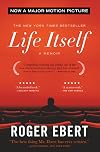
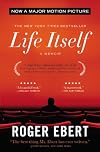
Life Itself: A Memoir
by Roger Ebert
On This Page
Description
The film critic best known for his "Chicago Sun-Times" reviews and his thirty years as co-host of "Siskel & Ebert at the Movies" describes his life and career, including his recovery from alcoholism and the complications from thyroid cancer treatment.Tags
Recommendations




Member Reviews
Roger Ebert tells a damn fine story. His memoir is full of fond and unflinching recollections, an essential kindness and wonderfully entertaining encounters with friends and celebrities alike. His attitude toward life, looking back after painful lessons and his life-changing battle with cancer strikes a deep chord with me, a kindred spirit and admirable man who was much more than just a "movie critic." Really loved this book.
The Short of It:
Written with humor and heart.
The Rest of It:
Everyone is familiar with Roger Ebert, right? His characteristic “thumbs-up” rating for movies he enjoyed, his battle with cancer that destroyed his face and took his voice forever, his antagonistic but often funny interactions with Gene Siskel? I grew up watching him. I spent hours in theaters watching the movies he recommended and he was probably one of the main reasons I entered college as a film major. But what I didn’t know and really didn’t begin to know, was the man behind the famous rating system. I didn’t really get to know him until his battle with cancer and I didn’t read this book until he passed away this past April. What a life.
Life Itself is a treat show more for anyone who enjoys small town life and nostalgia in general. Ebert’s small town of Urbana, Illinois provided a safe, comforting backdrop for his childhood. His trips to the local movie theater are written about with the care and gentle handling of a man in love with his childhood. He was always a wonderful writer, but the sense of place he conveys in this memoir will bring tears to your eyes for what once was. I loved these glimpses into Ebert’s life. His funny perspective, his awkwardness and his ability to break it all down into pleasant digestible bits.
There are some things I learned that I was not aware of before reading his book. I had no idea that he was a recovering alcoholic. The section on him joining Alcoholics Anonymous was told with such honestly, that I wanted to just reach through the pages and offer him a gentle, guiding hand. I also didn’t know that Gene Siskel, the critic that was forever (in my mind) arguing with Ebert over the movies they reviewed, was actually a very close friend and that their success on TV came quite accidentally. Additionally, I had no idea that Ebert was such a reader! Lots of book love in this one.
What I did expect and did not get was more insight into his battle with cancer. This part of his life is told in a very matter-of-fact way and details are kept to a minimum. He doesn’t dwell on what he lost. In fact, I’m not sure I expected him to be as optimistic as he was in the book, but in the end, I am glad that the cancer did not rule his life even though on the outside looking in, it certainly seemed that way.
I don’t read many memoirs but this book was a real treat. There’s quite a bit of humor and the stories from his youth are told with a lot of heart. I found myself yearning for simpler times and I’d be lying if I didn’t say that the man is missed. I never look at movies quite the same way. His sense of wonder, his ability to appreciate the small, creative nuances that directors injected into their films and his knack for saying exactly what he means is what made him a favorite in my eye.
For more reviews, visit my blog: Book Chatter show less
Written with humor and heart.
The Rest of It:
Everyone is familiar with Roger Ebert, right? His characteristic “thumbs-up” rating for movies he enjoyed, his battle with cancer that destroyed his face and took his voice forever, his antagonistic but often funny interactions with Gene Siskel? I grew up watching him. I spent hours in theaters watching the movies he recommended and he was probably one of the main reasons I entered college as a film major. But what I didn’t know and really didn’t begin to know, was the man behind the famous rating system. I didn’t really get to know him until his battle with cancer and I didn’t read this book until he passed away this past April. What a life.
Life Itself is a treat show more for anyone who enjoys small town life and nostalgia in general. Ebert’s small town of Urbana, Illinois provided a safe, comforting backdrop for his childhood. His trips to the local movie theater are written about with the care and gentle handling of a man in love with his childhood. He was always a wonderful writer, but the sense of place he conveys in this memoir will bring tears to your eyes for what once was. I loved these glimpses into Ebert’s life. His funny perspective, his awkwardness and his ability to break it all down into pleasant digestible bits.
There are some things I learned that I was not aware of before reading his book. I had no idea that he was a recovering alcoholic. The section on him joining Alcoholics Anonymous was told with such honestly, that I wanted to just reach through the pages and offer him a gentle, guiding hand. I also didn’t know that Gene Siskel, the critic that was forever (in my mind) arguing with Ebert over the movies they reviewed, was actually a very close friend and that their success on TV came quite accidentally. Additionally, I had no idea that Ebert was such a reader! Lots of book love in this one.
What I did expect and did not get was more insight into his battle with cancer. This part of his life is told in a very matter-of-fact way and details are kept to a minimum. He doesn’t dwell on what he lost. In fact, I’m not sure I expected him to be as optimistic as he was in the book, but in the end, I am glad that the cancer did not rule his life even though on the outside looking in, it certainly seemed that way.
I don’t read many memoirs but this book was a real treat. There’s quite a bit of humor and the stories from his youth are told with a lot of heart. I found myself yearning for simpler times and I’d be lying if I didn’t say that the man is missed. I never look at movies quite the same way. His sense of wonder, his ability to appreciate the small, creative nuances that directors injected into their films and his knack for saying exactly what he means is what made him a favorite in my eye.
For more reviews, visit my blog: Book Chatter show less
Starting out this read like it was going to be a dry recitation of biographical facts – where Ebert was born, what schools he went to, so on and so on – and then somewhere along the way it turned into an intimate portrayal of a truly remarkable life. Of course the main subject was Ebert himself but the way he wrote about his own life became a perceptive look at the world he lived in and those around him. I ended up with 14 pages of annotations in my ereader, too many to include here, but one that I especially liked was this quote, “No good movie is too long. No bad movie is short enough”. It reminded me of this line from Jane Austen’s Sense and Sensibility, “If a book is well written, I always find it too short”, and that show more brings up my one and only criticism of this memoir – it’s too short. show less
Ebert’s path from only child growing up in Urbana, Illinois, to American’s best known film critic (along with his partner Gene Siskel is a true joy to read. I don’t know how this book escaped my notice for eight years. It’s a memoir that anyone can enjoy, but being a journalism major in college and having taught journalism, it held more interest for me than the average memoir. Stories about Chicago will fit the bill for anyone in love with that city. Ebert knew every square inch of the Windy City including all of the famous, not so famous, and infamous bars in the city. He hung out with many of the icons of Chicago including Studs Terkel. His interviews with all of the major Hollywood stars during the better part of four decades show more are fascinating. Ebert’s battle with cancer, which left him disfigured, is a major part of the end of the story. Never once, however, did he resort to sympathy soliciting as he talks about his condition with intellect and logic. His discussion of religion, including his own humanistic beliefs is candid and refreshing.
I really enjoyed this book even though, of course, I knew its sad ending. Ebert was a sensitive journalist whose writing skills were surpassed only by his faith in the industry he spent his adult lifetime covering. I highly recommend “Life Itself.” show less
I really enjoyed this book even though, of course, I knew its sad ending. Ebert was a sensitive journalist whose writing skills were surpassed only by his faith in the industry he spent his adult lifetime covering. I highly recommend “Life Itself.” show less
Whatever I have to say here, probably won't matter much considering the legion of faithful readers and fans that Roger Ebert has amassed over his many years of writing about movies and the film industry, in newspaper columns, magazine pieces, and many books, not to mention his long TV tenure as a noted film critic with his close friend Gene Siskel who died a dozen years ago.
The truth is I never read any of those columns, feature articles or books, and only watched his TV show a few times. LIFE ITSELF is my first real in-depth exposure to the work of Roger Ebert. And I loved it. Because he is a natural writer who makes you feel like a close confidante in this memoir which overflows with warm humor, keen insights and a moving awareness show more of his own fragile mortality. This last is a result of his many surgeries in the past few years to combat cancer and then to rebuild his face and restore his voice. The final surgeries were not very successful and left him mute and unable to eat or drink and with some permanent disfigurement. Ebert is philosophical about all of this and allows you into his most private thoughts regarding this time, which not only makes you want to weep, but also quite magically allows you to laugh out loud. Such is the magic of Ebert's still intact sense of humor and simple yet graceful writing style.
But Ebert's life has been a full and interesting one. When he talks of his Catholic school days and then awkward adolescence and college years, it's easy to relate and, often, to laugh with him. He is grateful to his parents for a happy childhood, while also acknowledging the alcoholism that plagued them both, although at different times in their lives. He also owns up to his own years of alcoholism and how it marred and stunted his personal relationships until he finally joined AA and left it behind. He is brutally honest about his own failings throughout the narrative, saying more than once that if he's going to write this memoir, he might as well tell the whole truth.
There is much here, of course about all the film and TV people he met, interviewed and, in some cases, became personal friends with. But none of it really seems like simple name-dropping. Again, that honesty prevails and makes even those parts of the book seem special. He says, for example, about an interview he did with Dolly Parton at the premiere of 9 TO 5 -
"I confessed it to Siskel: I had been granted a private half hour with Dolly Parton, and as we spoke I was filled with a strange ethereal grace. This was not spiritual, nor was it sexual. It was healing or comforting."
About his nearly lifelong friendship with sportswriter Bill Nack he says -
"Our bond is reading, and our subject is often not far removed from the Meaning of It All. We are puzzled that we are now nearly seventy. How did that happen? Our conversations all take place in the present tense. We are always meeting for the first time. When you're young you don't realize that at every age you are always in the present, and in that sense no older; when I look at Bill I see the same man I met at Illinois."
As a lifelong reader and lover of books, I can relate to this kind of friendship. And like Ebert and Nack, I too am nearly seventy and often, looking in a mirror wonder to myself who that old geezer is and how did this happen.
Perhaps two of the most moving and effective chapters of the book are the last two: "How I Believe in God" and "Go Gently." After the last few trying years of his pain-filled life, Ebert is acutely aware of death and claims he is not afraid of it. And I believe him. And I admire tremendously his courage and what seems to be his overriding philosophy. If I were to break it down to just a couple of words, it would be this: Be kind.
Thank you for writing your story, Roger, and for your frankness, honesty, and kindness. show less
The truth is I never read any of those columns, feature articles or books, and only watched his TV show a few times. LIFE ITSELF is my first real in-depth exposure to the work of Roger Ebert. And I loved it. Because he is a natural writer who makes you feel like a close confidante in this memoir which overflows with warm humor, keen insights and a moving awareness show more of his own fragile mortality. This last is a result of his many surgeries in the past few years to combat cancer and then to rebuild his face and restore his voice. The final surgeries were not very successful and left him mute and unable to eat or drink and with some permanent disfigurement. Ebert is philosophical about all of this and allows you into his most private thoughts regarding this time, which not only makes you want to weep, but also quite magically allows you to laugh out loud. Such is the magic of Ebert's still intact sense of humor and simple yet graceful writing style.
But Ebert's life has been a full and interesting one. When he talks of his Catholic school days and then awkward adolescence and college years, it's easy to relate and, often, to laugh with him. He is grateful to his parents for a happy childhood, while also acknowledging the alcoholism that plagued them both, although at different times in their lives. He also owns up to his own years of alcoholism and how it marred and stunted his personal relationships until he finally joined AA and left it behind. He is brutally honest about his own failings throughout the narrative, saying more than once that if he's going to write this memoir, he might as well tell the whole truth.
There is much here, of course about all the film and TV people he met, interviewed and, in some cases, became personal friends with. But none of it really seems like simple name-dropping. Again, that honesty prevails and makes even those parts of the book seem special. He says, for example, about an interview he did with Dolly Parton at the premiere of 9 TO 5 -
"I confessed it to Siskel: I had been granted a private half hour with Dolly Parton, and as we spoke I was filled with a strange ethereal grace. This was not spiritual, nor was it sexual. It was healing or comforting."
About his nearly lifelong friendship with sportswriter Bill Nack he says -
"Our bond is reading, and our subject is often not far removed from the Meaning of It All. We are puzzled that we are now nearly seventy. How did that happen? Our conversations all take place in the present tense. We are always meeting for the first time. When you're young you don't realize that at every age you are always in the present, and in that sense no older; when I look at Bill I see the same man I met at Illinois."
As a lifelong reader and lover of books, I can relate to this kind of friendship. And like Ebert and Nack, I too am nearly seventy and often, looking in a mirror wonder to myself who that old geezer is and how did this happen.
Perhaps two of the most moving and effective chapters of the book are the last two: "How I Believe in God" and "Go Gently." After the last few trying years of his pain-filled life, Ebert is acutely aware of death and claims he is not afraid of it. And I believe him. And I admire tremendously his courage and what seems to be his overriding philosophy. If I were to break it down to just a couple of words, it would be this: Be kind.
Thank you for writing your story, Roger, and for your frankness, honesty, and kindness. show less
For years, we watched Roger Ebert on TV as he reviewed the latest motion pictures, usually with Gene Siskel as his partner. Ebert was certainly the more embracing of the two, and in his written reviews as well he often liked movies that I saw little virtue in. Nevertheless, his enthusiasm and writing ability made me take a second look at some of those films. This same positive outlook pervades his memoir. After having lost his ability to speak, eat, and drink and having lost his lower jaw after three unsuccessful surgeries, Ebert must now rely on the written word more than ever. And we are all lucky he can do so, because this is a marvelous book in so many ways.
First, there is the story of his struggle against his cancer, helped by his show more wife and soulmate Chaz. You will be (or at least should be) moved to tears by the devotion of Chaz and by Roger’s love for her. She is a presence throughout the book, and it is clear that Ebert would not be alive today without her, and he would not be so productive either.
Second, there is the story of his childhood. I was especially moved (to tears again) by the description of his relationship with his father, who worked as an electrician at the University of Illinois, and of his father’s death (from cancer) after Roger finished high school.
Third there are the wonderful stories of the people he has met over the years, some of them famous (Robert Mitchum, Lee Marvin, Russ Meyer, Robert Altman, Mike Royko, Studs Turkel, etc.) and some that he worked with and became close friends with. Some of the episodes Ebert relates are very funny, and many are very moving. Of special interest are the sections about his love/hate relationship with Gene Siskel, who died of cancer in 1999. Along the way we get insights into the differences between Johnny Carson, Jay Leno, and David Letterman as well.
Fourth, there are chapters that focus on subjects, such as racism or belief.
Each chapter pretty much stands on its own. Though the book follows a basic chronological order, there is occasional repetition and overlap, but this is about the only weakness, and it is very minor, that I can cite.
By the time he was graduated from high school, Ebert was already a full-time newspaperman, and this profession followed him to the University of Illinois where he edited the Daily Illini, and then to the Chicago Sun-Times, where after a couple of years he became the film critic—with no real qualifications, so he just kind of made it up as he went along. If he didn’t really understand a film, he just talked about what he saw and how it made him feel. As a result, there is a very personal aspect to all of his writing, and in this memoir, he holds nothing back. We follow him as he acknowledges his alcoholism and seeks treatment through AA. His description of the organization is probably the most positive I have ever read—it seems that AA pervades the entire world, so that wherever he was, he could find a meeting to attend. Ebert, who had lost his belief in god, but not his faith in humanity, was not troubled by any of the religious aspects of the organization and it has helped him to remain sober since 1979. After his father’s death and her remarriage, however, Ebert’s mother also became an alcoholic. The descriptions of their relationship are brutally honest. Having wanted him to be a priest, she was contemptuous of any women he dated, especially if they weren’t Catholic. Ebert attributes his late marriage to fear of having to face his mother’s wrath while she was alive. But because he was also an alcoholic, he can understand her actions as well. And he remembers the mother who was a businesswoman before such things were common and all the other good things about her and how he was raised.
I could go on and on about this book. But I hope by now you get the idea. Don’t think you have to be a movie buff to find it interesting. You only need to have an interest in life. About that, Ebert has a lot to teach us. show less
First, there is the story of his struggle against his cancer, helped by his show more wife and soulmate Chaz. You will be (or at least should be) moved to tears by the devotion of Chaz and by Roger’s love for her. She is a presence throughout the book, and it is clear that Ebert would not be alive today without her, and he would not be so productive either.
Second, there is the story of his childhood. I was especially moved (to tears again) by the description of his relationship with his father, who worked as an electrician at the University of Illinois, and of his father’s death (from cancer) after Roger finished high school.
Third there are the wonderful stories of the people he has met over the years, some of them famous (Robert Mitchum, Lee Marvin, Russ Meyer, Robert Altman, Mike Royko, Studs Turkel, etc.) and some that he worked with and became close friends with. Some of the episodes Ebert relates are very funny, and many are very moving. Of special interest are the sections about his love/hate relationship with Gene Siskel, who died of cancer in 1999. Along the way we get insights into the differences between Johnny Carson, Jay Leno, and David Letterman as well.
Fourth, there are chapters that focus on subjects, such as racism or belief.
Each chapter pretty much stands on its own. Though the book follows a basic chronological order, there is occasional repetition and overlap, but this is about the only weakness, and it is very minor, that I can cite.
By the time he was graduated from high school, Ebert was already a full-time newspaperman, and this profession followed him to the University of Illinois where he edited the Daily Illini, and then to the Chicago Sun-Times, where after a couple of years he became the film critic—with no real qualifications, so he just kind of made it up as he went along. If he didn’t really understand a film, he just talked about what he saw and how it made him feel. As a result, there is a very personal aspect to all of his writing, and in this memoir, he holds nothing back. We follow him as he acknowledges his alcoholism and seeks treatment through AA. His description of the organization is probably the most positive I have ever read—it seems that AA pervades the entire world, so that wherever he was, he could find a meeting to attend. Ebert, who had lost his belief in god, but not his faith in humanity, was not troubled by any of the religious aspects of the organization and it has helped him to remain sober since 1979. After his father’s death and her remarriage, however, Ebert’s mother also became an alcoholic. The descriptions of their relationship are brutally honest. Having wanted him to be a priest, she was contemptuous of any women he dated, especially if they weren’t Catholic. Ebert attributes his late marriage to fear of having to face his mother’s wrath while she was alive. But because he was also an alcoholic, he can understand her actions as well. And he remembers the mother who was a businesswoman before such things were common and all the other good things about her and how he was raised.
I could go on and on about this book. But I hope by now you get the idea. Don’t think you have to be a movie buff to find it interesting. You only need to have an interest in life. About that, Ebert has a lot to teach us. show less
I read the memoir of Roger Ebert entitled Life Itself and I was absolutely tickled by it. I am sorry that he has lost his physical voice, but his narrative voice is fantastic! Best known for his years of movie reviews a la "Siskel and Ebert at the Movies," I always loved when the two of them disagreed and got all heated up about their recommendations. Ebert does a great job of capturing many innocent moments of youth back in the day when kids played in the neighborhood but you never really kept track of them and they just magically showed up at dinnertime. Lots of fun moments spent with Hollywood royalty. Touching scenes with his wife. Beautiful writing and great wit. Well worth the read.
Members
- Recently Added By
Lists

Film
114 works; 1 member
Author Information

76+ Works 5,244 Members
Roger Joseph Ebert was born on June 18, 1942 in Urbana, Illinois, and died on April 4, 2013. He received his undergraduate degree from the University of Illinois at Urbana-Champaign, where he was editor of the Daily Illini. He is best known for his film review column in the Chicago Sun Times since 1967 and for the television programs Sneak show more Previews, At the Movies with Gene Siskel and Roger Ebert and Siskel and Ebert and The Movies. After Gene Siskel's death in 1999, Roger Ebert teamed up with Ruchard Roeper for the television series Ebert and Roeper and The Movies which began airing in 2000. Ebert's movie reviews were in more than 200 newspapers in the U.S. and worldwide by Universal Press Syndicate. He wrote more than 15 books, including his annual movie yearbook which was a collection of his reviews for that specific year. He became the first film critic to win a Pulitzer Prize. In June 2005, he was given a star on the Hollywood Walk of Fame; he was the first professional critic to receive this award. He received honorary degrees from the University of Colorado, the AFI Conservatory, and the School of Art Institute of Chicago. Ebert died on April 4, 2013 at age 70. He had lost his voice and much of his jaw after battling thyroid and salivary gland cancer. (Bowker Author Biography) show less
Awards and Honors
Distinctions
Notable Lists
Common Knowledge
- People/Characters
- Roger Ebert; Gene Siskel
Classifications
- Genres
- Biography & Memoir, Nonfiction, General Nonfiction
- DDC/MDS
- 791.43092 — Arts & recreation Recreation, sports, and performing arts Public performances Motion pictures, radio, television, podcasting Motion pictures Standard subdivisions History, geographic treatment, biography; description, critical appraisal of specific companies and studios {for specific films see 791.437} Biography
- LCC
- PN1998.3 .E327 .A3 — Language and Literature Literature (General) Literature (General) Drama Motion pictures
- BISAC
Statistics
- Members
- 754
- Popularity
- 37,273
- Reviews
- 28
- Rating
- (3.93)
- Languages
- English, French
- Media
- Paper, Audiobook, Ebook
- ISBNs
- 13
- ASINs
- 15