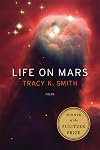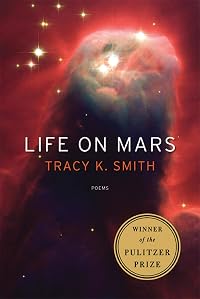
Life on Mars: Poems
by Tracy K. Smith
On This Page
Description
In these brilliant new poems, Tracy K. Smith envisions a sci-fi future sucked clean of any real dangers, contemplates the dark matter that keeps people both close and distant, and revisits the kitschy concepts like "love" and "illness" now relegated to the Museum of Obsolescence. These poems reveal the realities of life lived here, on the ground, where a daughter is imprisoned in the basement by her own father, where celebrities and pop stars walk among us, and where the poet herself loses show more her father, one of the engineers who worked on the Hubble Space Telescope. With this remarkable third collection, Smith establishes herself among the best poets of her generation. show lessTags
Recommendations













Member Reviews
The title of this collection, Life on Mars seems almost tongue-in-cheek as the collection is VERY much about life here on earth, in a very visceral, beautiful, and sometimes intensely difficult, way. Poems like "Everything That Ever Was" manage to dance with the universe without overly lofty ambition, keeping our feet on the ground. "The Universe as Primal Scream" marries biblical storytelling with the everyday tedium of our existence. Occasionally Smith packs a huge punch with just a few words (your mileage will vary, based on personal experiences). When I read, "Tonight, I'm at the bottom of the Grand Canyon. I don't know where I end" ("They May Love All That He Has Chosen and Hate All That He Has Rejected"), I was transported to that show more exact state of being. Prior to reading the collection I had been at an event where Tracy K. Smith spoke about her father, and many of the poems in this collection revealed much about that relationship--in particular the one dedicated to his memory, "The Speed of Belief".
At that same event, Smith said, "When you read a poem you become humble." In humility there is great wisdom and beauty and it is woven throughout this wonderful collection. show less
At that same event, Smith said, "When you read a poem you become humble." In humility there is great wisdom and beauty and it is woven throughout this wonderful collection. show less
There is a sci-fi tilt to [[Tracy K. Smith]]’s book of poetry, [Life on Mars]; her father was an optical engineer who worked on the Hubble telescope. He'd "read Larry Niven at home and drink scotch on the rocks,/ His eyes exhausted and pink." A good part of the book reflects her reactions to his death in 2008. She also takes a celestial-eye view of our foibles ("I spent two years not looking/Into the mirror at his office") horrors (the "father in the news who kept his daughter/ Locked in a cell for decades") and irrationalities ("I didn't want to believe/ What we believe in those rooms").
I hoped to find the remarkable title poem, [Life On Mars], somewhere online, but no luck. It starts like this:
Tina says what if dark matter is like show more the space between people
When what holds them together isn't exactly love, and I think
That sounds right - how strong the pull can be, as if something
That knows better won't let you drift apart so easily, and how
Small and heavy you feel, stuck there spinning in place.
Life can treat us roughly and horribly.
I knew which direction to go
From the stench of what still burned.
It was funny to see my house
Like that - as if the roof
Had been lifted up and carried off
By someone playing at dolls.
***
Tina says we do it to one another, every day,
Knowing and not knowing. When it is love,
What happens feels like dumb luck. When it's not,
We're riddled with bullets, shot through like ducks.
Is it all due to dark matter? Or something else? It's well worth your tracking down that title poem to find out what she says.
This excellent one, beautifully titled, "My God, It's Full of Stars", can be found online. http://www.poetryfoundation.org/poem/243880 Here's part of it:
Maybe the dead know, their eyes widening at last,
Seeing the high beams of a million galaxies flick on
At twilight. Hearing the engines flare, the horns
Not letting up, the frenzy of being. I want to be
One notch below bedlam, like a radio without a dial.
Wide open, so everything floods in at once.
And sealed tight, so nothing escapes. Not even time,
Which should curl in on itself and loop around like smoke.
The title of the book comes from the David Bowie song, and his Ziggy Stardust persona pops up in the book. So does the movie [2001: A Space Odyssey] and other cultural artifacts. This is a poetry book that's easy to enjoy, while giving the reader lots to ponder. I love this question she raises at the end of "No-Fly Zone"
You lie there kicking like a baby, waiting for God himself
To lift you past the rungs of your crib. What
Would your life say if it could talk? show less
I hoped to find the remarkable title poem, [Life On Mars], somewhere online, but no luck. It starts like this:
Tina says what if dark matter is like show more the space between people
When what holds them together isn't exactly love, and I think
That sounds right - how strong the pull can be, as if something
That knows better won't let you drift apart so easily, and how
Small and heavy you feel, stuck there spinning in place.
Life can treat us roughly and horribly.
I knew which direction to go
From the stench of what still burned.
It was funny to see my house
Like that - as if the roof
Had been lifted up and carried off
By someone playing at dolls.
***
Tina says we do it to one another, every day,
Knowing and not knowing. When it is love,
What happens feels like dumb luck. When it's not,
We're riddled with bullets, shot through like ducks.
Is it all due to dark matter? Or something else? It's well worth your tracking down that title poem to find out what she says.
This excellent one, beautifully titled, "My God, It's Full of Stars", can be found online. http://www.poetryfoundation.org/poem/243880 Here's part of it:
Maybe the dead know, their eyes widening at last,
Seeing the high beams of a million galaxies flick on
At twilight. Hearing the engines flare, the horns
Not letting up, the frenzy of being. I want to be
One notch below bedlam, like a radio without a dial.
Wide open, so everything floods in at once.
And sealed tight, so nothing escapes. Not even time,
Which should curl in on itself and loop around like smoke.
The title of the book comes from the David Bowie song, and his Ziggy Stardust persona pops up in the book. So does the movie [2001: A Space Odyssey] and other cultural artifacts. This is a poetry book that's easy to enjoy, while giving the reader lots to ponder. I love this question she raises at the end of "No-Fly Zone"
You lie there kicking like a baby, waiting for God himself
To lift you past the rungs of your crib. What
Would your life say if it could talk? show less
Sci-Fi poetry, can ya dig it?!!!! I loved the poetry, the images it evoked, the emotions laid open for consideration.
There is one poem that references Bowie, David Bowie, of course, the Starman himself. His recent death and final musical video made that particular poem, and several which followed it, all the more poignant. Ah, Bowie, now you really are the Starman. Ground control to Major Tom.
I truly enjoyed the poetry in this book.
There is one poem that references Bowie, David Bowie, of course, the Starman himself. His recent death and final musical video made that particular poem, and several which followed it, all the more poignant. Ah, Bowie, now you really are the Starman. Ground control to Major Tom.
I truly enjoyed the poetry in this book.
I do not know how to review poetry so my general rule is 1) Did it make me feel something? Anger, anguish, love, loss? 2) Were their lines of such beauty and inspiration and thoughtfulness that I had to to write it down? 3) Did I go back and read poems multiple times?
If any of the answers are yes, then it was great. This collection, all answers yes. Especially "Solstice." I've read it multiple times.
If any of the answers are yes, then it was great. This collection, all answers yes. Especially "Solstice." I've read it multiple times.
So, let me be clear: I do not read a lot of poetry. In fact, since graduating college, probably only the poems that friends have posted on their threads here on LT. But I heard Smith speak and loved her as a person and I bought this book, which won the Pulitzer Prize.
I am more of a traditionalist: I do not care for lines that extend into the next one, stopped by punctuation halfway in. Or stanzas that are sometimes three lines and then often two. Let's not even talk about rhyming. Clearly I am dated. Nor do I enjoy politics in my poetry. But there you are. This is what she does. In the end, my limits were tossed aside as Smith explored life, death, piracy, space, love, Bowie and her father (who worked on the Hubble Telescope).
I didn't show more understand all of the poems, but many of them I found stunning, or really interesting, or both!
This one is about the presence of her own child before conception:
“When Your Small Form Tumbled Into Me”
...You must have watched
For what felt like forever, wanting to be
What we passed back and forth between us like fire.
Wanting weight, desiring desire, dying
To descend into flesh, fault, the brief ecstasy of being.
From what dream of world did you wriggle free?
What soared--and what grieved--when you aimed your will
At the yes of my body alive like that on the sheets? show less
I am more of a traditionalist: I do not care for lines that extend into the next one, stopped by punctuation halfway in. Or stanzas that are sometimes three lines and then often two. Let's not even talk about rhyming. Clearly I am dated. Nor do I enjoy politics in my poetry. But there you are. This is what she does. In the end, my limits were tossed aside as Smith explored life, death, piracy, space, love, Bowie and her father (who worked on the Hubble Telescope).
I didn't show more understand all of the poems, but many of them I found stunning, or really interesting, or both!
This one is about the presence of her own child before conception:
“When Your Small Form Tumbled Into Me”
...You must have watched
For what felt like forever, wanting to be
What we passed back and forth between us like fire.
Wanting weight, desiring desire, dying
To descend into flesh, fault, the brief ecstasy of being.
From what dream of world did you wriggle free?
What soared--and what grieved--when you aimed your will
At the yes of my body alive like that on the sheets? show less
This was the first book I bought in NYC, and the Book Riot Live conference, and it's the book I carted around the city in my purse, reading in coffee shops and over lunch. When I bought it, I thought the title was referencing Mars, the planet, rather than David Bowie, which was an unexpected resonance -- the high school friend I was staying with in Harlem is dating Iman's daughter. Bowie's step-daughter. There were a number of Bowie stories that weekend.
Now, in between reading this book and writing the review, David Bowie has died. And so much of this book is about death and remembrance and what strings us all together that I need to read it again. All of it again.
This is definitely one of those books of poetry that must be kept on the show more shelf. To be pulled down, again, in times of need. To read when missing a lost loved one. When feeling connected to the whole universe. When needing to feel connected to the whole universe. When darkness baffles us. When it is all too clear. show less
Now, in between reading this book and writing the review, David Bowie has died. And so much of this book is about death and remembrance and what strings us all together that I need to read it again. All of it again.
This is definitely one of those books of poetry that must be kept on the show more shelf. To be pulled down, again, in times of need. To read when missing a lost loved one. When feeling connected to the whole universe. When needing to feel connected to the whole universe. When darkness baffles us. When it is all too clear. show less
I'm fairly new to the world of poetry, and this Pulitzer prize-winning book came highly recommended. Tracy K. Smith's poems are challenging in what they convey, at least they were at the beginning. My first self-taught lesson of poetry was to stop trying so hard to understand and just let go. By simply focusing on the words, perhaps trying to encapsulate them by how they sounded aloud, I started to arrive at some version of understanding. It was hard to know for sure because it was never blindingly obvious, and certainly never the same each time, but it felt right and realizing that also felt fight. I can foresee this being an ongoing introspective pursuit.
In one of my favorite movies, "Contact" starring Jodie Foster, there's a line show more near the end of the movie where her character, while staring at a never-before-seen celestial event, says, "I have no words to describe it. They should've sent a poet." I like to imagine Tracy K. Smith's "Life on Mars" is an answer to that call. show less
In one of my favorite movies, "Contact" starring Jodie Foster, there's a line show more near the end of the movie where her character, while staring at a never-before-seen celestial event, says, "I have no words to describe it. They should've sent a poet." I like to imagine Tracy K. Smith's "Life on Mars" is an answer to that call. show less
Members
- Recently Added By
Lists

Books Read in 2018
4,360 works; 110 members

Poetry Corner
187 works; 15 members

Recommend the 20 best books you've read in the last five years
2,168 works; 606 members

Female Author
1,234 works; 67 members

Books With Place Names in the Title
215 works; 10 members

LibraryThingers' 1001 Books You Must Read Before You Die
442 works; 30 members

Black Authors
384 works; 32 members

Must-Read Books by Black Authors
114 works; 92 members

Favorite Recent Poetry: 1980-2022
178 works; 70 members

At the Library
217 works; 1 member

Books Read in 2017
4,249 works; 129 members

Poetry volumes by single author
121 works; 8 members
Author Information

18+ Works 2,197 Members
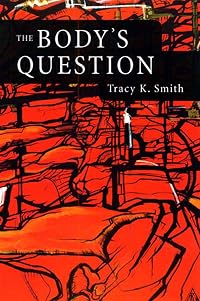
Tracy K. Smith is the author of three previous books of poetry, including Life on Mars, winner of the Pulitzer Prize; Duende, winner of the James Laughlin Award; and The Body's Question, winner of the Cave Canem Poetry Prize. She is also the editor of an anthology, American Journal: Fifty Poems for Our Time, and the author of a memoir, Ordinary show more Light, which was a finalist for the National Book Award. In 2017, Smith was appointed Poet Laureate of the United States. She teaches at Princeton University. show less
Awards and Honors
Awards
Distinctions
Common Knowledge
- Canonical title
- Life on Mars: Poems
- Original publication date
- 2011-05-10
Classifications
Statistics
- Members
- 796
- Popularity
- 34,914
- Reviews
- 25
- Rating
- (4.11)
- Languages
- English, Spanish
- Media
- Paper, Audiobook, Ebook
- ISBNs
- 8
- ASINs
- 3