On This Page
Description
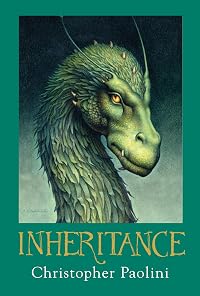
The young Dragon Rider Eragon must finally confront the evil king Galbatorix to free Alagaesia from his rule once and for all.Tags
Recommendations
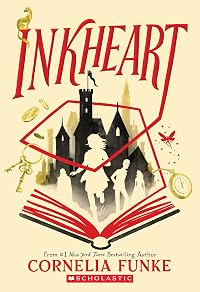
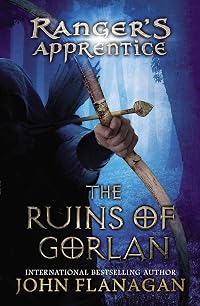
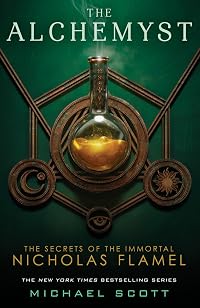
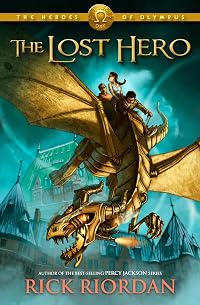
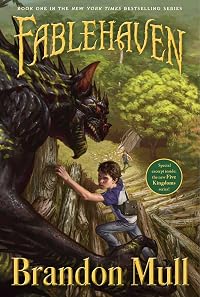
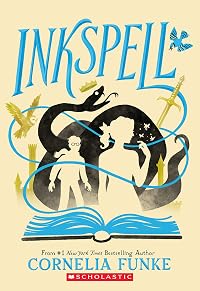
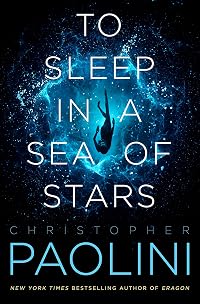
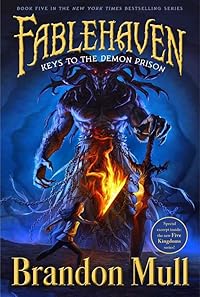
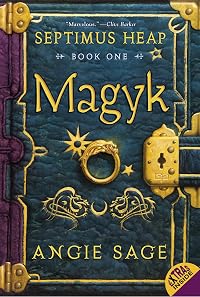
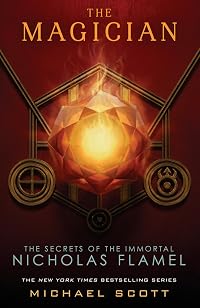
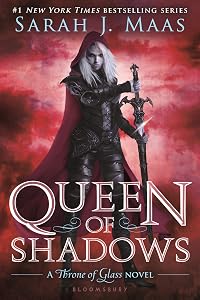
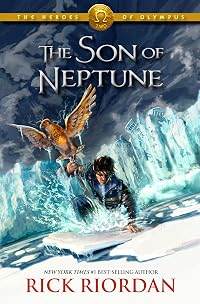
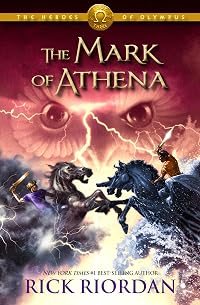
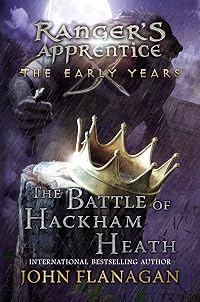
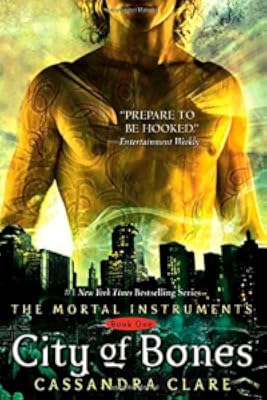
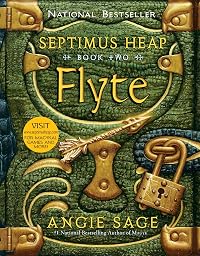


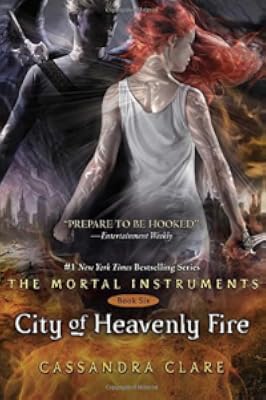
Member Recommendations
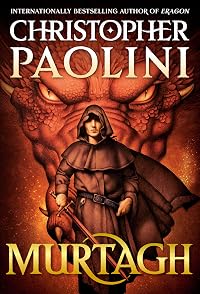
Hedgepeth A young man is given the opportunity to manipulate great power and restore a lost order.
12
Member Reviews
"Say what you will, Stronghammer."
"It is this: too much blood and too many tears have been shed for us to turn back now... This may be a battle between gods... but I for one will keep fighting until the gods strike me down, or until I strike them down. A dragon might kill ten thousand wolves one at a time, but ten thousand wolves together can kill a dragon."
Do you need to read the previous three? (Eragon, Eldest and Brisingr) Yes. Absolutely. Even though Paolini gives a summary of events in the prelude, you MUST read the other ones. This one makes every previous page worthwhile twice over. When I tell you it is riproaring action from chapter one on, believe it. This series has been aiming for a fantastic, bloody, magical ending from the show more first sentence of Eragon, and Inheritance doesn't disappoint. It is a can't-put-down fantasy, and though readers think they know where it's headed... you're all wrong. You may get there eventually, but like in the wonderful poem Ithaka, it's the journey that matters. Death and birth, violence, torture, good and evil and everything in between, this is amazing writing (tighter and better edited than the last two) and will leave you thinking about its events and characters for a long time afterward. Strong 7th grade readers and up. show less
"It is this: too much blood and too many tears have been shed for us to turn back now... This may be a battle between gods... but I for one will keep fighting until the gods strike me down, or until I strike them down. A dragon might kill ten thousand wolves one at a time, but ten thousand wolves together can kill a dragon."
Do you need to read the previous three? (Eragon, Eldest and Brisingr) Yes. Absolutely. Even though Paolini gives a summary of events in the prelude, you MUST read the other ones. This one makes every previous page worthwhile twice over. When I tell you it is riproaring action from chapter one on, believe it. This series has been aiming for a fantastic, bloody, magical ending from the show more first sentence of Eragon, and Inheritance doesn't disappoint. It is a can't-put-down fantasy, and though readers think they know where it's headed... you're all wrong. You may get there eventually, but like in the wonderful poem Ithaka, it's the journey that matters. Death and birth, violence, torture, good and evil and everything in between, this is amazing writing (tighter and better edited than the last two) and will leave you thinking about its events and characters for a long time afterward. Strong 7th grade readers and up. show less
i told myself i would write a scathing review of the whole series when i finished but i am just so happy to be done with it that i have no energy left. this series legitimately made my soul leave my body with how poorly planned and written it was. i truly have absolutely no clue how tf people are so in love with it. it must be nostalgia. there is not much groundbreaking or even that interesting about this series. in fact a lot of it is just plain bad. i honestly think i may have blocked some of it from my memory. anyway, so instead, i shall highlight my main issues and … disturbances reading this particular book. which happens to already be a lot of things so idek how long the review i had initially intended would be
first off, why show more would you write a whole SERIES, a whole FOUR BOOKS leading up to a big bad enemy only to kill said enemy in such a dumb and boring way??? ur telling me the galbatorix that the author spent 4 whole books making out to be an all powerful tyrant who is so cool and dangerous is killed by… guilt??? by feeling bad for what he did??? no i mean literally. that is how he died. eragon made him ~feel all the emotional pain he inflicted~ like the loser of a main character he is and galbatorix literally just poofs into dust after screaming a bunch about how he felt bad. that’s just beyond laughable. i’m not even fully sure how to comment. like come on show less
first off, why show more would you write a whole SERIES, a whole FOUR BOOKS leading up to a big bad enemy only to kill said enemy in such a dumb and boring way??? ur telling me the galbatorix that the author spent 4 whole books making out to be an all powerful tyrant who is so cool and dangerous is killed by… guilt??? by feeling bad for what he did??? no i mean literally. that is how he died. eragon made him ~feel all the emotional pain he inflicted~ like the loser of a main character he is and galbatorix literally just poofs into dust after screaming a bunch about how he felt bad. that’s just beyond laughable. i’m not even fully sure how to comment. like come on show less
Book 1 and 2 are amazing, it was obvious he was inspired by Lord of the Rings but most modern fantasy is and he wrote the first book as a kid. It's justifiable. In Book 3 we see he has grown as a writer but his overconfidence with this fact becomes his downfall. He overwrites, trying to show off his growth by bouncing between different perspectives despite it being unnecessary (and frankly many times unwanted). Still it was decent addition. Here in book 4 he went off the deep end and all the issues with book 3 become amplified.
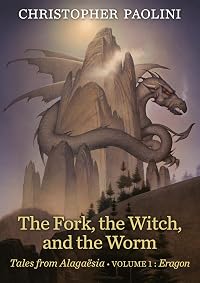
Not only is it drastically overwritten like book 3, he leaves too many loose ends (which he claims was "on purpose") for a final book in a series. Apparently he is also claiming he will one day write a book 5 to show more tie up these loose ends but it will not be for a very long time. I do not believe "The Fork, the Witch, and the Worm" is meant to be this book 5. The climax involving the big bad felt rushed and more went on outside the scene than in it. Moving to the ending, it is probably the worst of any book or series I've ever read. Three of the most prominent characters go against the natures he has just spent the entire series setting up, and everything is left on a very sad forlorn note. While I will defend his inspiration from Lord of the Rings in his earlier works, what he did here is inexcusable. The end is almost a carbon copy of the ending to the Lord of the Rings series.
I genuinely feel like Paolini said "Screw it" toward the end and did a great disservice to fans. In my honest opinion, this was the worst book in the series and the ending is unjustifiable and frankly lazy. I will likely never buy any of his works going forward. show less
Not only is it drastically overwritten like book 3, he leaves too many loose ends (which he claims was "on purpose") for a final book in a series. Apparently he is also claiming he will one day write a book 5 to show more tie up these loose ends but it will not be for a very long time. I do not believe "The Fork, the Witch, and the Worm" is meant to be this book 5. The climax involving the big bad felt rushed and more went on outside the scene than in it. Moving to the ending, it is probably the worst of any book or series I've ever read. Three of the most prominent characters go against the natures he has just spent the entire series setting up, and everything is left on a very sad forlorn note. While I will defend his inspiration from Lord of the Rings in his earlier works, what he did here is inexcusable. The end is almost a carbon copy of the ending to the Lord of the Rings series.
I genuinely feel like Paolini said "Screw it" toward the end and did a great disservice to fans. In my honest opinion, this was the worst book in the series and the ending is unjustifiable and frankly lazy. I will likely never buy any of his works going forward. show less
Gerard Doyle does a masterful job narrating this audiobook and is why I give this book five stars. I had enjoyed Eragon so much but Eldest and Brisingr not as much. As a matter of fact, I was not intending to read this book. The battle after battle scenes, particularly in Brisingr, was too much for me.
While I did listen to ths book, I also did have a physical book mainly for the map. The recap of the previous three books at the beginning, which was left out of the audiobook, was useful.
This book does have battles, including the battle with Galbatorix, but it has so much more. I liked that many scenes were from Roran's point of view (despite those being battle scenes). The scenes with Nasuada and Murtagh were, in their way, touching. show more The very long ending was necessary and good. Yet there could be an entire new series based on the ending. I am glad Angela remains a mystery.
On a separate note, what is Listening Library's problem with their audiobook production? Why can't they in some way signal the end of a CD - even with just a longer pause? With 25 CDs, this normal practice for them was extremely annoying. show less
While I did listen to ths book, I also did have a physical book mainly for the map. The recap of the previous three books at the beginning, which was left out of the audiobook, was useful.
This book does have battles, including the battle with Galbatorix, but it has so much more. I liked that many scenes were from Roran's point of view (despite those being battle scenes). The scenes with Nasuada and Murtagh were, in their way, touching. show more The very long ending was necessary and good. Yet there could be an entire new series based on the ending. I am glad Angela remains a mystery.
On a separate note, what is Listening Library's problem with their audiobook production? Why can't they in some way signal the end of a CD - even with just a longer pause? With 25 CDs, this normal practice for them was extremely annoying. show less
Christopher Paolini and I go way back: Eragon was one of the books that in a way led me to starting this blog. When I finished it I wanted to talk about it, share my thoughts in a place that was mine and where my comments wouldn't get lost in the shuffle of thousands. So I posted my thoughts on my then-personal blog. Several months later I realized that what I really wanted to talk about was books, so after testing several platforms Bibliophile's Corner as we know it was born. Now, over two years later, I read the last installment in the story of Eragon and Saphira and their fight against the evil Galbratorix and I'm very impressed with Paolini who at such a young age created such an elaborate and sprawling story with excellent show more adventure, insightful commentary on the human condition, and characters who grew and evolved in the most satisfying way.
If there is a book or a series the Inheritance Cycle reminds me of it is Tolkien's Lord of the Rings. It is a bit simpler and scaled down but it has the same concept of a quest, an unlikely hero, lots of races and languages (can you even imagine creating a whole new language, let alone five?), armies marching through lands and a seemingly omnipotent villain. I'm not much of a fan of bloody battles and longish conversations about affairs of the state so there Paolini lost me just as successfully as Tolkien did. Fortunately there was enough to keep my interest in between and I particularly enjoyed the sections where Roran was the protagonist because it gave a different perspective of events as well as a view from a position of no magical powers and the struggle to keep up and hold one's own through sheer will, courage, determination, creativity and intellect.
Throughout the book Paolini revealed secrets and brought plot lines to conclusion, many of which began as early as the first volume, and I couldn't help but admire his plotting prowess. With Inheritance it becomes that much more obvious how much planning went into this series, and anybody who can do this as well as Paolini did is undeniably talented. Not all mysteries were revealed but there are plenty of hints to allow the reader to connect the dots and draw their own conclusions. I do wish however that we learned the true names of Eragon, Saphira and Arya - in the course of the book they discover and reveal them to each other but not to the reader. Then again, maybe it was intentional to avoid possibly disappointing the readers, it happens so often that the hype surrounding the affair is greater and more exciting than the affair itself.
When I think about what is my favorite part of this book I inevitably come back to the battle with Galbratorix. That chapter was so full of bare humanity despite all the magic, of intentions true and misguided, and alliances that seemed unlikely but nonetheless made perfect sense that it made for an excellent culmination of the struggle that's lasted through most of the series. It was very satisfying to see how things turned out despite the fact that it wasn't exactly a 'happily ever after' for everyone, and, fittingly, it was the strongest chapter of the book.
Now that the last book in the series is finished I have been thinking about the kind of person Paolini must be to have written a book and a series such as this. He is very young, not even 30 years old, and yet his books are full of the kind of thoughtful perceptiveness I would expect from an older person. His examinations of right and wrong and how one gets there as well as his insights into human nature are often startling in their simplicity and truthfulness, and I still have one of the quotes I copied from Eragon or Eldest hanging on my cork board. I'm glad to have given Eragon a chance way back when and I look forward to what Paolini will reveal next, and judging by the hints he's dropped in an interview for the Pacific Northwest Writers Association there's much more to come. show less
If there is a book or a series the Inheritance Cycle reminds me of it is Tolkien's Lord of the Rings. It is a bit simpler and scaled down but it has the same concept of a quest, an unlikely hero, lots of races and languages (can you even imagine creating a whole new language, let alone five?), armies marching through lands and a seemingly omnipotent villain. I'm not much of a fan of bloody battles and longish conversations about affairs of the state so there Paolini lost me just as successfully as Tolkien did. Fortunately there was enough to keep my interest in between and I particularly enjoyed the sections where Roran was the protagonist because it gave a different perspective of events as well as a view from a position of no magical powers and the struggle to keep up and hold one's own through sheer will, courage, determination, creativity and intellect.
Throughout the book Paolini revealed secrets and brought plot lines to conclusion, many of which began as early as the first volume, and I couldn't help but admire his plotting prowess. With Inheritance it becomes that much more obvious how much planning went into this series, and anybody who can do this as well as Paolini did is undeniably talented. Not all mysteries were revealed but there are plenty of hints to allow the reader to connect the dots and draw their own conclusions. I do wish however that we learned the true names of Eragon, Saphira and Arya - in the course of the book they discover and reveal them to each other but not to the reader. Then again, maybe it was intentional to avoid possibly disappointing the readers, it happens so often that the hype surrounding the affair is greater and more exciting than the affair itself.
When I think about what is my favorite part of this book I inevitably come back to the battle with Galbratorix. That chapter was so full of bare humanity despite all the magic, of intentions true and misguided, and alliances that seemed unlikely but nonetheless made perfect sense that it made for an excellent culmination of the struggle that's lasted through most of the series. It was very satisfying to see how things turned out despite the fact that it wasn't exactly a 'happily ever after' for everyone, and, fittingly, it was the strongest chapter of the book.
Now that the last book in the series is finished I have been thinking about the kind of person Paolini must be to have written a book and a series such as this. He is very young, not even 30 years old, and yet his books are full of the kind of thoughtful perceptiveness I would expect from an older person. His examinations of right and wrong and how one gets there as well as his insights into human nature are often startling in their simplicity and truthfulness, and I still have one of the quotes I copied from Eragon or Eldest hanging on my cork board. I'm glad to have given Eragon a chance way back when and I look forward to what Paolini will reveal next, and judging by the hints he's dropped in an interview for the Pacific Northwest Writers Association there's much more to come. show less
Inheritance is the last book in the four volume Inheritance Cycle, and easily the best of the lot. That is less a compliment to the quality of Inheritance, but rather a commentary on the poor quality of the early volumes, paired with the way that Paolini has grown as an author.
The series has always walked the thin line between homage and plagiarism. Paolini has stated in interviews that he set out to write the kind of book that he would like to read, and he seems to have achieved this. However, he did so with a patchwork quilt of imitation, with scenes and characters sampled and remixed from the likes of Robert Jordan, Anne McCaffrey, David Eddings, and of course, J.R.R. Tolkien. The result is a mishmash of conflicting, but nevertheless show more very powerful, ideas. The seams are visible, especially through the uneven language and inconsistent (and omnipresent) fantasy names.
Paolini has always been a little boy wearing his father’s clothes, an image both touching and pitiful. In Inheritance, he has begun to grow into those clothes, but they still fit poorly. The book is best where Paolini uses his own voice and creates new problems for his characters to solve, and weakest where he ties up loose ends from prior books and maintains consistency with them. He is simply operating under the constraints that the early books in the series have imposed upon him—perhaps his next series, if he chooses to write one, will be unfettered by such considerations.
I read through the book with little fear that anything amiss would happen to the main characters, and little fear that the protagonists would fail in their mission. The driving factor for me was to discover how it would be achieved. As a result, I found myself occasionally surprised to discover the protagonists enduring very real struggle and torment, facing difficulties that left lasting marks over and above their survival through the story.
Nevertheless, the final climax was far too “Return of the Jedi” to have much real impact, and the hundred-plus pages that followed were unnecessary, attempting to tie up every loose end without offering much in the way of character development. Much of the “action” in that section was summarized instead of told in narrative form, and the scenes we did get were more of a grand tour of everyone Eragon ever met. The author would have served the reader better by including some of it in an appendix, and concentrating on more important matters.
In all, this final book was a good and worthy end to a series that many young readers have enjoyed, but it did not elevate the series to the level of a classic. I hope that Paolini’s future stories escape from the spectre of Eragon and break new ground. show less
The series has always walked the thin line between homage and plagiarism. Paolini has stated in interviews that he set out to write the kind of book that he would like to read, and he seems to have achieved this. However, he did so with a patchwork quilt of imitation, with scenes and characters sampled and remixed from the likes of Robert Jordan, Anne McCaffrey, David Eddings, and of course, J.R.R. Tolkien. The result is a mishmash of conflicting, but nevertheless show more very powerful, ideas. The seams are visible, especially through the uneven language and inconsistent (and omnipresent) fantasy names.
Paolini has always been a little boy wearing his father’s clothes, an image both touching and pitiful. In Inheritance, he has begun to grow into those clothes, but they still fit poorly. The book is best where Paolini uses his own voice and creates new problems for his characters to solve, and weakest where he ties up loose ends from prior books and maintains consistency with them. He is simply operating under the constraints that the early books in the series have imposed upon him—perhaps his next series, if he chooses to write one, will be unfettered by such considerations.
I read through the book with little fear that anything amiss would happen to the main characters, and little fear that the protagonists would fail in their mission. The driving factor for me was to discover how it would be achieved. As a result, I found myself occasionally surprised to discover the protagonists enduring very real struggle and torment, facing difficulties that left lasting marks over and above their survival through the story.
Nevertheless, the final climax was far too “Return of the Jedi” to have much real impact, and the hundred-plus pages that followed were unnecessary, attempting to tie up every loose end without offering much in the way of character development. Much of the “action” in that section was summarized instead of told in narrative form, and the scenes we did get were more of a grand tour of everyone Eragon ever met. The author would have served the reader better by including some of it in an appendix, and concentrating on more important matters.
In all, this final book was a good and worthy end to a series that many young readers have enjoyed, but it did not elevate the series to the level of a classic. I hope that Paolini’s future stories escape from the spectre of Eragon and break new ground. show less
I had been waiting years for the publication of the last installment of Christopher Paolini's Inheritance Cycle of fantasy novels. His descriptive writing drew me in to the story of the young farm boy whose life was transformed by finding a dragon's egg. I stayed with Eragon and Saphira through the ups and downs of their journeys across Alagaesia. I endured the sub-par film interpretation of Eragon, which does not do justice to the entrancing prose of the novel. I read book three, Brisingr, with the expectation that the story would end; Paolini originally intended to write a trilogy. When the novel ended with no resolution and a note from the author that he needed more pages to see the story to its conclusion, I was at first shocked to show more the point of indignation. Books with no resolution are my bane; I become frustrated with wonder about what might happen next. So I wondered and waited for the publication of the last installment, checking Paolini's blog and bookstore shelves for any information about the release of Eragon's final adventures.
Inheritance did not disappoint. Although the plot inevitably leads to a battle with Galbatorix at Uru-baen, the road of war is full of unpredictable twists and turns. As circumstances drive the main characters apart geographically, they are forced to develop independently from each other. Roran has a crisis of faith as he faces unprecedented danger in battle; Katrina must intervene to restore his self-confidence. Nasuada is removed from the Varden, forcing Eragon into an unwanted position of leadership. Like Roran, Eragon and Saphira lose sight of themselves and are compelled to embark on a journey of self-discovery. Glaedr pushes through his grief to become instrumental in leading Eragon and Saphira to their combined destinies. Murtagh and Thorn struggle to come to terms with their existence under Galbatorix's reign of terror. Arya deals with a terrible loss, but gains something precious on her journey home. The werecats become more important than ever as they ally themselves with the Varden. The end of the novel caught me off guard; the characters make choices that challenge the reader's ideas of how things should have been (well, my ideas). However, all of the choices make sense in terms of the greater good. And, though there is resolution, there is just enough room to wonder, "What happens next?" show less
Inheritance did not disappoint. Although the plot inevitably leads to a battle with Galbatorix at Uru-baen, the road of war is full of unpredictable twists and turns. As circumstances drive the main characters apart geographically, they are forced to develop independently from each other. Roran has a crisis of faith as he faces unprecedented danger in battle; Katrina must intervene to restore his self-confidence. Nasuada is removed from the Varden, forcing Eragon into an unwanted position of leadership. Like Roran, Eragon and Saphira lose sight of themselves and are compelled to embark on a journey of self-discovery. Glaedr pushes through his grief to become instrumental in leading Eragon and Saphira to their combined destinies. Murtagh and Thorn struggle to come to terms with their existence under Galbatorix's reign of terror. Arya deals with a terrible loss, but gains something precious on her journey home. The werecats become more important than ever as they ally themselves with the Varden. The end of the novel caught me off guard; the characters make choices that challenge the reader's ideas of how things should have been (well, my ideas). However, all of the choices make sense in terms of the greater good. And, though there is resolution, there is just enough room to wonder, "What happens next?" show less
Members
- Recently Added By
Lists

Here There Be Dragons
143 works; 23 members

Books Read in 2014
2,344 works; 89 members

Books Read in 2015
3,299 works; 129 members

Elaina's
183 works; 1 member

Kindle Fantasy/Science Fiction Re-Read
151 works; 1 member
Author Information

36+ Works 107,241 Members
Christopher Paolini was born in Southern California on November 17, 1983, but grew up primarily in Paradise Valley, Montana. He was home schooled and at the age of 15, graduated from high school through an accredited correspondence course at American School in Chicago, Illinois. He decided to write a book and after three years of writing and show more editing, Eragon was self-published in 2001. The Paolini family spent the following year promoting the book themselves by giving presentations to the local library and high school and then eventually branching out to libraries, bookstores, and schools across the United States. After his step-son read a copy of the book, author Carl Hiaasen brought Eragon to the attention of publisher Alfred A. Knopf, who acquired the rights to publish Eragon and the rest of the Inheritance Cycle in 2003. The other books in the cycle include Eldest, Brisingr, and Inheritance. Eragon was made into a movie in December 2006. (Bowker Author Biography) show less
Some Editions
Awards and Honors
Awards
Distinctions
Notable Lists
Series

Belongs to Publisher Series
blanvalet (38262)
Work Relationships
Is contained in
Common Knowledge
- Canonical title
- Inheritance
- Original title
- Inheritance
- Alternate titles
- The Vault of Souls
- Original publication date
- 2011-11-04
- People/Characters*
- Eragon; Saphira; Arya; Wyrden; Bloëdhgarm; Roran (show all 22); Jörmundur; Nasuada; Grimrr Halbtatze; Angela; Katrina; Albriech; Farica; Orrin; Baldor; Galbatorix; Fisk; Elain; Gertrude; Horst; Elva; Carn
- Important places
- Alagaësia
- Dedication
- As always, this book is for my family. And also for the dreamers of dreams: the many artists, musicians and storytellers who have made this journey possible.
- First words
- The dragon Saphira roared, and the soldiers before her quailed.
- Last words
- (Click to show. Warning: May contain spoilers.)We are not alone, little one, said Saphira. A smile crept across his face. And the ship sailed onward, gliding serenely down the moonlit river toward the dark lands beyond.
- Publisher's editor*
- Distel, Luitgard; Künzel, Katrin
- Original language
- English
*Some information comes from Common Knowledge in other languages. Click "Edit" for more information.
Classifications
- Genres
- Fantasy, Fiction and Literature, Teen, Young Adult
- DDC/MDS
- 813.6 — Literature & rhetoric American literature in English American fiction in English 2000-
- LCC
- PZ7 .P19535 .I — Language and Literature Fiction and juvenile belles lettres Fiction and juvenile belles lettres Juvenile belles lettres
- BISAC
Statistics
- Members
- 12,142
- Popularity
- 718
- Reviews
- 181
- Rating
- (3.90)
- Languages
- 21 — Catalan, Czech, Danish, Dutch, English, Estonian, Finnish, French, German, Greek, Hungarian, Indonesian, Italian, Japanese, Norwegian (Bokmål), Romanian, Spanish, Swedish, Turkish, Portuguese (Portugal), Chinese, traditional
- Media
- Paper, Audiobook, Ebook
- ISBNs
- 102
- ASINs
- 39