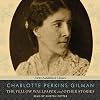
The Yellow Wallpaper and Other Stories {Tantor AudioBook}
by Charlotte Perkins Gilman
On This Page
Description
This collection brings together twelve of the finest short stories of prominent American feminist author Charlotte Perkins Gilman. "The Yellow Wallpaper," Gilman's best-known work, was first published in 1892 and represents an important examination of nineteenth-century attitudes toward women's physical and mental health. Written as a collection of journal entries by a woman whose physician husband has confined her to her bedroom, the story depicts the narrator's descent into psychosis as show more her confinement gradually erodes her sanity. This collection also includes the stories "The Giant Wistaria," "According to Solomon," "The Boys and the Butter," "Her Housekeeper," "Martha's Mother," "A Middle-Sized Artist," "An Offender," "When I Was a Witch," "The Cottagette," "Making a Living," and "Mr. Robert Grey Sr." show lessTags
Recommendations





Member Recommendations
Member Reviews
In the The Yellow Wallpaper a Victorian era woman and her husband rent a summer home for three months. She has experienced some sort of mental breakdown or depression and her husband, a doctor, has brought her out to the country in hopes that the fresh air and lack of stimulation will help her to regain her mental faculties. Instead, as we find out through covert journal enteries forbidden to her, just the opposite occurs. Each journal finds her deeper in her madness, until at the very last the true depth of her insanity is revealed to her husband.
I found this to be a very intriguing read, and more than a little disturbing. It is described as a a struggle to conform to Victorian ideals, but it read to me more like something we have show more been hearing more and more of in the news the past few years - post partum psychosis. As someone with experience with the less sever cousin, post partum depression, I felt I could actually relate to her. Sometimes life does feel like a prison that you have to creep through. As difficult as it is to struggle daily with the depression, I can only imagine how much worse it is for someone with psychosis to feel so locked in their mind that there is no escape.
For all its hideous nature, the story itself was beautifully written. Even as I type this I can see her creeping along the bottom of the wall, shoulder rubbing it away, her fingers clawing at it to rip it down. The words are sparse and very carefully chosen. In fact the sparseness of the words is what makes it so powerful. However, I can't help but wish it had been fleshed out more. This story could have easily been expanded, the woman's inexorable descent into madness given more depth. 29 pages just isn't enough to give the unnamed woman and her derangement all the attention she deserves. This is a problem I have with all short stories, they always feel somewhat lacking, and leaving me wanting more. I really wanted to give this story a full five star review, but it's briefness and my feeling of being cheated out of the full story bothers me just enough to drop one of those stars. It is however the finest example of a short story I have ever read and its inclusion in the first edition of the 1001 Books You Must Read Before You Die is fully warranted. show less
I found this to be a very intriguing read, and more than a little disturbing. It is described as a a struggle to conform to Victorian ideals, but it read to me more like something we have show more been hearing more and more of in the news the past few years - post partum psychosis. As someone with experience with the less sever cousin, post partum depression, I felt I could actually relate to her. Sometimes life does feel like a prison that you have to creep through. As difficult as it is to struggle daily with the depression, I can only imagine how much worse it is for someone with psychosis to feel so locked in their mind that there is no escape.
For all its hideous nature, the story itself was beautifully written. Even as I type this I can see her creeping along the bottom of the wall, shoulder rubbing it away, her fingers clawing at it to rip it down. The words are sparse and very carefully chosen. In fact the sparseness of the words is what makes it so powerful. However, I can't help but wish it had been fleshed out more. This story could have easily been expanded, the woman's inexorable descent into madness given more depth. 29 pages just isn't enough to give the unnamed woman and her derangement all the attention she deserves. This is a problem I have with all short stories, they always feel somewhat lacking, and leaving me wanting more. I really wanted to give this story a full five star review, but it's briefness and my feeling of being cheated out of the full story bothers me just enough to drop one of those stars. It is however the finest example of a short story I have ever read and its inclusion in the first edition of the 1001 Books You Must Read Before You Die is fully warranted. show less
Strongly written short stories: the title story is a memorable portrayal of a woman sliding into madness after the birth of her chld. "Recuperating" in a rented home, the logical (making the right answers to her husband and servant, walking in the garden) are intercut with a weird and horrible obsession with the patterns on the walls...
In the title story “The Yellow Wallpaper” Charlotte Perkins Gilman tells the story of a woman on the verge of a nervous breakdown. A specialist recommends that she takes rest cure; a treatment in which has her lying in bed all day and only allowed two house of intellectual activities a day. After a few months of staring at the walls, things are far from improving.
While this is a collection of short stories, I am focusing on the title story simple because it gives you a sense of what to expect when reading Charlotte Perkins Gilman. “The Yellow Wallpaper” explores the decline of the protagonist’s health, both physically and mentally. Written in a series of diary entries, the story not only looks at depression but, on a deeper show more level, gender roles. The doctor and her husband are portrayed as repressors; while their intentions are to help her heal they never take into account her own opinion.
This in turn critiques that position of the woman, especially when it comes to the institution of marriage. Gilman looks at marriage as a hierarchy; the male is actively working and knows what is best for the house, while the wife is put in charge of the domestic jobs (cooking, cleaning and so on). The wife becomes a second class citizen; a servant only there to serve her husband. When the protagonist of “The Yellow Wallpaper” gets sick she is demoted further and her role becomes similar to a petulant child.
While I have focused on the story “The Yellow Wallpaper”, these similar themes are found throughout this collection. What I found so satisfying is the way Charlotte Perkins Gilman uses irony to express her opinions. The use of both verbal and dramatic irony is found in all her stories but I enjoyed the sarcasm the most. There is a lot of symbolism and motifs within the stories well worth exploring that really empathises her point.
I loved this collection of short stories by Charlotte Perkins Gilman, there are so many interesting topics worth exploring and I used “The Yellow Wallpaper” to emphases and provide a glimpse into what you can expect. I am determined to read a whole lot more of Gilman’s works, I fell in love with her writing style and got so much pleasure out of reading these stories. The Yellow Wallpaper and Other Stories is a collection of stories well worth picking up and adding to your personal library.
This review originally appeared on my blog; http://literary-exploration.com/2015/04/28/the-yellow-wallpaper-and-other-storie... show less
While this is a collection of short stories, I am focusing on the title story simple because it gives you a sense of what to expect when reading Charlotte Perkins Gilman. “The Yellow Wallpaper” explores the decline of the protagonist’s health, both physically and mentally. Written in a series of diary entries, the story not only looks at depression but, on a deeper show more level, gender roles. The doctor and her husband are portrayed as repressors; while their intentions are to help her heal they never take into account her own opinion.
This in turn critiques that position of the woman, especially when it comes to the institution of marriage. Gilman looks at marriage as a hierarchy; the male is actively working and knows what is best for the house, while the wife is put in charge of the domestic jobs (cooking, cleaning and so on). The wife becomes a second class citizen; a servant only there to serve her husband. When the protagonist of “The Yellow Wallpaper” gets sick she is demoted further and her role becomes similar to a petulant child.
While I have focused on the story “The Yellow Wallpaper”, these similar themes are found throughout this collection. What I found so satisfying is the way Charlotte Perkins Gilman uses irony to express her opinions. The use of both verbal and dramatic irony is found in all her stories but I enjoyed the sarcasm the most. There is a lot of symbolism and motifs within the stories well worth exploring that really empathises her point.
I loved this collection of short stories by Charlotte Perkins Gilman, there are so many interesting topics worth exploring and I used “The Yellow Wallpaper” to emphases and provide a glimpse into what you can expect. I am determined to read a whole lot more of Gilman’s works, I fell in love with her writing style and got so much pleasure out of reading these stories. The Yellow Wallpaper and Other Stories is a collection of stories well worth picking up and adding to your personal library.
This review originally appeared on my blog; http://literary-exploration.com/2015/04/28/the-yellow-wallpaper-and-other-storie... show less
Actual conversation."Meg did you ever read 'The Yellow Wallpaper' in high school?""Yes!""Cool, well you should read it again!""Is that the one where she walks into the ocean?"So close.I did like the story in high school and I revisited it via DailyLit over lunch today. DO THIS.I was stunned (again) how good it is. It's terrifying! And makes its feminist thesis perfectly clear while also being tragic and ominous. Coming from so far away as 1892, it's incredible to think what Gilman must have been like.
I haven’t read much classic reads this year, and a few days before the end of 2018, I decided to go for a classic short story, and I chose The Yellow Wallpaper by Charlotte Perkins Gilman.
This classic has been written by a woman in the 19th century. A time when women weren’t treated the same way as today. A difficult time, where women couldn’t express their opinion as they wished, but they were suppressed by the male authority in the family.
When The Yellow Wallpaper came out, it was considered a Gothic Horror Tale. It is hard to believe for me, knowing the world we live in today, and how we, as women can express our opinions openly. But back in the days, this is how it was. It wasn’t easy for the woman, and I am glad we have a show more lot of brave women from that time, that gathered the courage to tell stories for the next generations.
This is a story about a woman, who seems to suffer of post-partum depression (a type of mood disorder associated with childbirth). She has been forced by her husband and doctor to stay in her room until she is ”mentally capable” again to take care of her baby. I am not a mother, but I can imagine the pain and suffering of not being allowed to see and hold your unborn child. And people thought this was okay?
The woman is constantly staring at the yellow wallpaper and the window, constantly reassuring herself that this is all happening for her own good, and that the husband and doctor know best, until a point where we are not actually sure if she is in her right mind anymore.
She starts to see a woman inside the wallpaper, and believes the woman is struggling to break free. I loved the metaphor used, as her subconscious knows she is trapped, and the end is so painful to read, but oh, so powerful.
Even though such a short read, The Yellow Wallpaper is an impressive view on cultural traditions, and the position of women in the family. A classic and a must-have for every woman!
Blog | Facebook | Twitter | Instagram | Pinterest show less
This classic has been written by a woman in the 19th century. A time when women weren’t treated the same way as today. A difficult time, where women couldn’t express their opinion as they wished, but they were suppressed by the male authority in the family.
When The Yellow Wallpaper came out, it was considered a Gothic Horror Tale. It is hard to believe for me, knowing the world we live in today, and how we, as women can express our opinions openly. But back in the days, this is how it was. It wasn’t easy for the woman, and I am glad we have a show more lot of brave women from that time, that gathered the courage to tell stories for the next generations.
This is a story about a woman, who seems to suffer of post-partum depression (a type of mood disorder associated with childbirth). She has been forced by her husband and doctor to stay in her room until she is ”mentally capable” again to take care of her baby. I am not a mother, but I can imagine the pain and suffering of not being allowed to see and hold your unborn child. And people thought this was okay?
The woman is constantly staring at the yellow wallpaper and the window, constantly reassuring herself that this is all happening for her own good, and that the husband and doctor know best, until a point where we are not actually sure if she is in her right mind anymore.
She starts to see a woman inside the wallpaper, and believes the woman is struggling to break free. I loved the metaphor used, as her subconscious knows she is trapped, and the end is so painful to read, but oh, so powerful.
Even though such a short read, The Yellow Wallpaper is an impressive view on cultural traditions, and the position of women in the family. A classic and a must-have for every woman!
Blog | Facebook | Twitter | Instagram | Pinterest show less
This is a good collection of very feminist short stories by Charlotte Perkins Gilman. The Yellow Wallpaper is probably the most complex/interesting, but I liked all the other stories as well if not more. Some of them were actually quite optimistic which I was pleasantly surprised by.
I'd read The Yellow Wallpaper many years ago in an anthology. I always remembered it but never ventured into looking up more of Gilman's writings, until now. And it was well worth it. Her other stories are charming, intriguing and witty, and may even be better than her most well known one, The Yellow Wallpaper .
It's a pity she's been branded a "feminist" writer, as this term can be so loaded and turn off many readers. I appreciate her stories and writing style as they are- without any particular agenda. I failed to find any misandry in her characters.
This collection contained only seven stories; I hope to find more of her writings.
It's a pity she's been branded a "feminist" writer, as this term can be so loaded and turn off many readers. I appreciate her stories and writing style as they are- without any particular agenda. I failed to find any misandry in her characters.
This collection contained only seven stories; I hope to find more of her writings.
Members
- Recently Added By
Lists

1001 Books You Must Read Before You Die
1,448 works; 1,134 members

Out of Copyright
244 works; 14 members

Women's reading list
50 works; 7 members

Short Story Collections and Anthologies
261 works; 42 members

Western World's Greatest Books - Project Gutenberg
295 works; 15 members

American Lit for Eng 11 Research Project
368 works; 6 members

Books Read in 2013
1,630 works; 51 members

A Rainbow of Books: Colors in the Title
570 works; 24 members
Author Information

142+ Works 14,831 Members
Charlotte Perkins Gilman was born in 1860 in Hartford, Conn. Her traumatic childhood led to depression and to her eventual suicide. Gilman's father abandoned the family when she was a child and her mother, who was not an affectionate woman, recruited relatives to help raise her children. Among these relatives was Harriet Beecher Stowe, the author show more of Uncle Tom's Cabin. Due to her family situation, Gilman learned independence, but also became alienated from her many female relatives. Gilman married in 1884 and was soon diagnosed with depression. She was prescribed bed rest, which only seemed to aggravate her condition and she eventually divorced her husband, fearing that marriage was partly responsible for her depressed state. After this, Gilman became involved in feminist activities and the writing that made her a major figure in the women's movement. Books such as Women and Economics, written in 1898, are proof of her importance as a feminist. Here she states that only when women learn to be economically independent can true equality be achieved. Her fiction works, particularly The Yellow Wallpaper, are also written with feminist ideals. A frequent lecturer, she also founded the feminist magazine Forerunner in 1909. Gilman, suffering from cancer, chose to end her own life and committed suicide on August 17, 1935. More information about this fascinating figure can be found in her book The Living of Charlotte Perkins Gilman: An Autobiography, published in 1935. (Bowker Author Biography) Charlotte Perkins Gilman was born in 1860 in Hartford, Conn. Her traumatic childhood led to depression and to her eventual suicide. Gilman's father abandoned the family when she was a child and her mother, who was not an affectionate woman, recruited relatives to help raise her children. Among these relatives was Harriet Beecher Stowe, the author of Uncle Tom's Cabin. Due to her family situation, Gilman learned independence, but also became alienated from her many female relatives. Gilman married in 1884 and was soon diagnosed with depression. She was prescribed bed rest, which only seemed to aggravate her condition and she eventually divorced her husband, fearing that marriage was partly responsible for her depressed state. After this, Gilman became involved in feminist activities and the writing that made her a major figure in the women's movement. Books such as Women and Economics, written in 1898, are proof of her importance as a feminist. Here she states that only when women learn to be economically independent can true equality be achieved. Her fiction works, particularly The Yellow Wallpaper, are also written with feminist ideals. A frequent lecturer, she also founded the feminist magazine Forerunner in 1909. Gilman, suffering from cancer, chose to end her own life and committed suicide on August 17, 1935. More information about this fascinating figure can be found in her book The Living of Charlotte Perkins Gilman: An Autobiography, published in 1935. (Bowker Author Biography) show less
Some Editions
Awards and Honors
Notable Lists
Work Relationships
Contains
Common Knowledge
- Canonical title
- The Yellow Wallpaper and Other Stories {Tantor AudioBook}
- Original publication date
- 1995
- First words
- It is very seldom that mere ordinary people like John and myself secure ancestral halls for the summer.
- Disambiguation notice
- This unabridged MP3 audiobook includes 12 Gilman stories. Please do not combine it with the title story only, or with any other collections except those confirmed as having the same contents. Thank you.
Classifications
Statistics
- Members
- 317
- Popularity
- 100,626
- Reviews
- 13
- Rating
- (3.89)
- Languages
- English, French, Swedish
- Media
- Paper, Audiobook, Ebook
- ISBNs
- 2
- UPCs
- 1
- ASINs
- 6