
The Stranger's Child
by Alan Hollinghurst
On This Page
Description
In the late summer of 1913, George Sawle brings his Cambridge schoolmate--a handsome, aristocratic young poet named Cecil Valance--to his family's modest home outside London for the weekend. George is enthralled by Cecil, and soon his sixteen-year-old sister, Daphne, is equally besotted by him and the stories he tells about Corley Court, the country estate he is heir to. But what Cecil writes in Daphne's autograph album will change their and their families' lives forever: a poem that, after show more Cecil is killed in the Great War and his reputation burnished, will become a touchstone for a generation, a work recited by every schoolchild in England. Over time, a tragic love story is spun, even as other secrets lie buried--until, decades later, an ambitious biographer threatens to unearth them. show lessTags
Recommendations
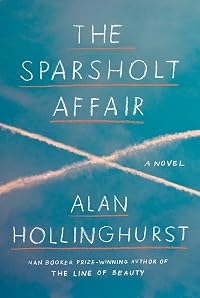
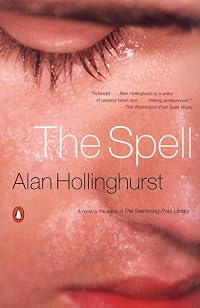
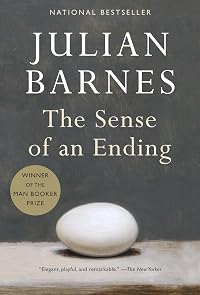

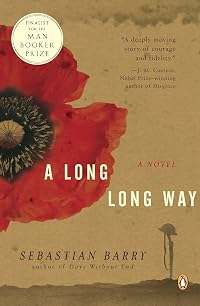



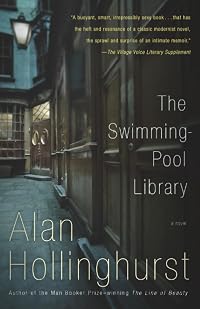
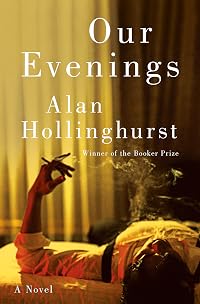
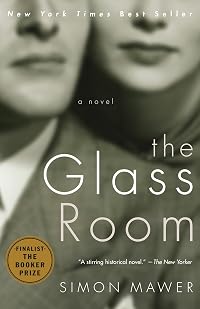
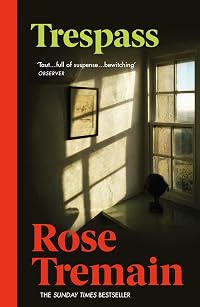












Member Recommendations
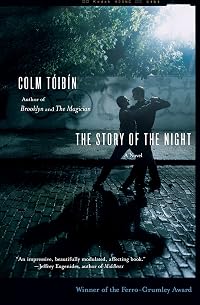
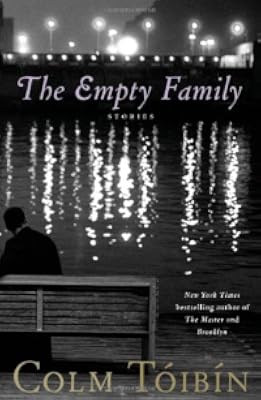
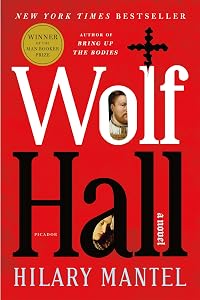
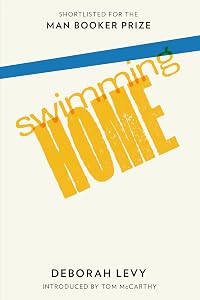
kylenapoli Gives the reader a similar backstage view of 'what really happened' and how it is misremembered, misrepresented, and otherwise lost to time.
20
Member Reviews
This is in many ways quite a different book. Starting in the world of EM Forster, where the Edwardian bourgeoisie uncomfortably rubs shoulders with the nouveau very riche aristocracy, lubricated by poetry and sex; it changes setting, linking characters across a hundred years of profound social and economic change, united somehow by a piece of poetry, elusive, but somehow capturing some essence of the English character. Hollinghurst uses this device of the interlinked story to explore very many different themes - changing social attitudes to homosexuality (and women's relationships with gay men); literature and criticism; performance and silence; childhood and heredity; mental illness and charm; social status and economic cycles; show more education, architecture, discovery and, most importantly, mystery and secrecy. The book ends where it starts, with a breathless chase for revelation which is as tricky and elusive as the novel itself. For a writer often known for his openness and candour, this book celebrates the unspoken and confronts the question always there for fiction, and for us as humans living our own narratives - what can be said to be true? What survives of us, what stories, what fractional views - and this is as much true of those who are famous and have others paid to construct their narratives, as those who live undiscovered lives. Fascinating show less
The novel opens with two Cambridge scholars pursuing a necessarily secret affair at one boy's country home.
A poem is written, becomes famous, and biographers try to unearth the background to the poem over the next century. A century of England that begins with a love that dare not speak its name and ends with celebrations of gay marriage. An England that loves the romance and nostalgia for the country house, and both understands its inequality whilst mourning its decline and demolition to be replaced by modern boxes.
Hollinghurst writes with a beguiling ease. He understands the slight nuances of class, the rise and shabby fall of fortune and ageing, and can describe every small social awkwardness.
A poem is written, becomes famous, and biographers try to unearth the background to the poem over the next century. A century of England that begins with a love that dare not speak its name and ends with celebrations of gay marriage. An England that loves the romance and nostalgia for the country house, and both understands its inequality whilst mourning its decline and demolition to be replaced by modern boxes.
Hollinghurst writes with a beguiling ease. He understands the slight nuances of class, the rise and shabby fall of fortune and ageing, and can describe every small social awkwardness.
This tells a riveting and complex saga with profound insight, plenty of intrigue and dashes of wit. From the first dozen pages, even the first few sentences, I was drawn into a love affair with the writing of this book. I read large chunks more than once because the writing is breathtaking, but leisurely: I wanted to capture the craft and jot down many quotes (see the end of this for a long selection).
Having finished, I still love it, even though the quality was not quite maintained. It is a story told in five parts and spanning a century. The first two parts are superb (and have echoes of Waugh's "Brideshead Revisited" (http://www.goodreads.com/review/show/23328741) and Byatt's "The Children's Book" show more (http://www.goodreads.com/review/show/111385225)); the third is good, and the last two are too different to fit well with what’s gone before, and the ending is unsatisfyingly abrupt. It's not so much that the later sections are bad as the fact they just didn't "fit" the rest of the book and suffer in comparison with what precedes them. It almost felt as if they were there to bang home the themes of truth, memories, aging, changing mores etc, just in case we didn't notice them in the earlier sections. It's another way in which it resembles "The Children's Book": the best aspects are stunning, but it is also very flawed
Although Hollinghurst is well known as a gay writer (both himself, and his books), and this does feature gay relationships and illustrate how attitudes have changed over the last hundred years, it felt like a family saga, rather than a gay book.
PLOT
The key character appears to be a budding poet, Cecil Valence. He enters the story in 1913 as the wealthy university friend of middle class George Sawle. All the characters in the coming hundred years and 500+ pages have some sort of connection with him, but really it is George’s sister Daphne who is the pivot of the tangled stories. And they are tangled: there is a web of relationships, with lies, suppressed longings, and secrets, so one is often unsure who fancies who and who knows what about whom.
Subsequent sections are in the mid 1920s, mid 1960s, around 1990 and the present day (2011/12). The first two sections have a strong sense of place: the Sawle’s suburban home, Two Acres, and then the Valence’s enormous Victorian estate, Corley Court. These sections have very strong echoes of “Brideshead”, yet don’t feel derivative (a skillful balancing act). In later sections, the characters and plot are rather more adrift.
I enjoyed the deliberate obfuscation of the sudden time jumps at the start of each section, e.g. not being immediately sure who labels such as "husband" and "dead brother" applied to, or who “Mrs Jacobs” was (not always the most obvious one). I just didn't enjoy the characters, style and milieu of the later parts quite as much.
CHARACTERS
The Valences and Sawles are the main characters – along with their respective homes (again, like Brideshead). A new wife “felt she wouldn’t have chosen it, felt it had in a way chosen her”.
The changing zeitgeist and the aging and maturing of the characters are generally very good: insightful, amusing and plausible.
The opening word (“she”) refers to Daphne, a central character throughout, though not always the most important. As she says of herself in old age, “I never pretended to be a wonderful writer, but I have known some very interesting people.”
The contrasts between what people say, feel, mean and are thought to mean by others are clearly but delicately marked, especially in the first section, when Daphne is juggling sibling rivalry with the first stirrings of attraction, whilst still very naïve about such things. Other characters have things to hide (relationships, drink, money problems). Daphne often “felt again she was missing something, but was carried along by the excitement of making [adult] conversation”.
THEMES
CLASS
Class difference, deference, aspiration and the consequences of social mobility (up and down) are obvious themes that affect all the characters. Is “unthinking social confidence” the same as being a snob? One woman had “a slight bewildered totter among the grandeur that her daughter now had to pretend to take for granted” (so much summed up in that pithy sentence) and another “hadn’t been born into [X’s] world, even though she now wore its lacquered carapace”. At the other end of the spectrum, a humble bank clerk feels socially awkward from knowing, via people’s financial circumstances, that they may not be all that they seem.
TRUTH and WRITING
More importantly, several characters write (poetry, biography, memoirs, criticism). Questions of “what is the truth?”, “who knows what?” and the way we edit our own and other people’s histories weave through the book and are pertinent to all the main characters, especially those burdened with secrets (whether their own or those of others). Memoirs are “not fiction… but a sort of poetical reconstruction”. Are such edits usually unconscious, and if not, are they justifiable? They certainly make it hard for biographers, one of whom complains, “People wouldn’t tell you things, and they then blamed you for not knowing them.” Then he realised “The writer of a life didn’t only write about the past, and that the secrets he dealt in might have all kinds of consequences in other lives, in years to come” – and this aspect is perhaps the dominant theme of the book, creating a Russian-doll like structure of nested histories.
SECRECY
The subtle dynamics of covert relationships are carefully drawn, especially early on, managing to create a degree of ambiguity and at the same time, giving the reader the feeling of being “in the know”. Later on, there is additional dramatic tension from the characters’ own doubts about some things, and even the reader’s doubts about which characters know what: George was “amused by its [a poem] having a secret and sadly reassured by the fact it could never be told.”
HOMOSEXUALITY
I feel as if this ought to be a major theme, and possibly Hollinghurst would like it to be, but it never felt like a big deal to me. Yes, several characters are gay or bisexual, and some are secretive about their desires, but the desire and the secrecy seemed more pertinent than the sex of the people they were attracted to. Having sections set in different periods does illustrate how society has become more accepting, but maybe that's just society growing up?
AGING and MATURITY
The main characters span a variety of ages, which presents a challenge that Hollinghurst rises to. In particular, the Edwardian Daphne’s teenage desires and anxieties are wonderfully done. When offered a cigar, “She really didn’t want the cigar, but she was worried by the thought of missing a chance at it. It was something none of her friends had done, she was pretty sure of that.” So she took it “with a feeling of shame and duty and regret”. Whether it was a cigar or something else, I’m sure we can all empathise with Daphne’s mixed emotions. Similarly, being in on (partial) adult knowledge isn’t always what one wants or expects, “the joy of discovery was shadowed by the sense of being left behind”. Pondering her first kiss, she “savoured the shock of it properly… With each retelling, the story… made her heart race a fraction less… and her reasonable relief at this gradual change was coloured with a tinge of indignation”.
DRINK
Several characters drink too much, though some are more aware of it than others: “the tray of bottles, some friendly, some over-familiar, one or two to be avoided”.
WRITING STYLE
The opening chapter is particularly entrancing: it captures the anticipation of the forthcoming evening, coupled with the evening light, in a series of subtly beautiful images about relationships, awkwardness, and ease, presaging all that is to come. There are wonderful images and great insight throughout. It might be thought to be overwritten, but I enjoyed the detail.
THE TITLE
Who is the eponymous "stranger's child"? For a while that question niggled (it's a phrase from Tennyson), and there are one or two candidates, but later I felt it didn't really matter, and was perhaps just a metaphor for each child's uniqueness, and, in some respects, their unknowability.
QUOTATIONS
• “Something of the time of day held her, with its hint of a mystery she had so far overlooked… It was the long still moment when the hedges and borders turned dusky and vague, but anything she looked at closely… seemed to give itself back to the day with a secret throb of colour.”
• “The slight asperity that gave even her nicest remarks an air of sarcasm.”
• Jonah was only 15, had never acted as a valet (or even observed one) and was told to “unpack… and arrange the contents ‘convincingly’. This was the word, enormous but elusive, that Jonah had had on his mind all day… gripping him again with a subtle horror.” Later, he had “The strange feeling of being intimate with someone who was simultaneously unaware of him.”
• Even the legitimate offspring of a respectable dead father can feel it a social handicap in Edwardian times: “He felt a twinge of shame and regret at having no father, and for ever having to make do.”
• Outrageous letters were like “Pompeiian obscenities, hiding just out of view behind the curtains and in the shadows of the inglenook.”
• “Records were indeed marvels, but they were only tiny helpings of the ocean of music.”
• A 16-year old “picked up her glass and drained it with a complicated feeling of sadness and satisfaction that was thoroughly endorsed by Wagner’s restless ballad.”
• For some reason, this tickled me, “… said Daphne experimentally”.
• A couple had “their little myth of origins, its artificiality part of its erotic charm”.
• “The remark [a compliment] seemed to have curved in the air, to have set out towards some more obvious and perhaps deserving target, and then swooped wonderfully home.”
• “His feelings absorbed him so completely that he seemed to float towards them, weak with excitement, across a purely symbolic landscape.”
• A woodland pond was “a loose ellipse of water”.
• He had “a very particular way of looking at her… of holding her eye at moments in their talk, so that another unspoken conversation seemed also to be going on… She felt a certain thrilled complacency at the choice he had secretly made.”
• “moaning with a lover’s pangs, as well as with a certain sulky relief at this tragic postponement.”
• “spread some butter on her toast, though really her smothered anxiety had squeezed up her appetite to nothing.”
• Of a somewhat back-handed compliment: “her involuntary German air of meaning rather more.”
• She “held back, with a thin fixed smile, in which various doubts and questions were tightly hidden.”
• A dining room “with its gaudy décor, its mirrors and gilding” was “like some funereal fairground”!
• People who had loved and feuded came together to share memories of someone who had died, “submissively clutching their contributions. A dispiriting odour of false piety and dutiful suppression seemed to rise from the table and hang like cabbage-smells in the jelly-mould domes of the ceiling”.
• Tact required a “courteous saunter around an unmentionable truth” and “a mist of delicacy had obscured the subject”.
• “The dark oak door of the chapel loomed, seemed to summon and dishearten the visitor with the same black stare… Chapel silence, with its faint penumbra of excluded sounds.”
• They “looked more like colleagues than a couple” because “their hands seemed somehow locked away from any mutual use”.
• “Bland evasiveness had slowly assumed the appearance of natural forgiveness.”
• He “turned to her with that unstable mixture of indulgence and polite bewilderment and mocking distaste that she had come to know and dread and furiously resent.”
• After one character’s boorish outburst at a children’s party “a collective effort at repair had been made”, one couple “having an ideally boring conversation about shooting to show that things were under control”!
• After dinner, there was “talk of a game. Those who were keen half smothered their interest, and those who weren’t pretended blandly that they didn’t mind.”
• “It was the most unapproachable room in the house… dark with prohibitions. His father’s anger… had withdrawn into it, like a dragon to its lair.”
• “His features seemed rather small and provisional.”
• “The front door was wide open, as though the house had surrendered itself to the sunny day.”
• “At this indefinable time of day… The time, like the light, seemed somehow viscous.”
• A lodger’s room: “Nothing went with anything else. They had the air of things not wanted elsewhere in the house… the brown wool rug made by Mr Marsh himself at what must have been a low moment.”
• The PE teacher “dressed in sports kit at improbable times of day, he was adored by many of the boys, and instinctively avoided by others.”
• “In the deepening shadows between pools of candlelight, the guests… conversations stretching and breaking, in an amiable jostle… like a flickering frieze, unknowable faces all bending willingly to something perhaps none of them individually would have chosen to do.”
• “eagerness struggling with some entrenched habit of disappointment.”
• Daphne’s copious bag had “the family trait of being shapelessly bulky – too bulky, really, to count as a handbag. It admitted as much in its helpless slump.”
• “The upstairs windows seemed to ponder blankly on the reflections of clouds.”
• “The perfect but impersonal dentures that gave their own helpless eagerness to an old man’s face” – the same man with “the eagerness and charm, the smile confidently friendly but not hilarious, the note of respect with a hint of conspiracy.”
• “Her sense of humour is really no more than an irritable suspicion that someone else might find something funny.”
• A house heaving with clutter creates “a worrying sense of the temporary grown permanent” (a lesson for me).
• “The air of mildly offended blankness, which is the default expression of any congregation.”
• “X and his computer lived together in intense co-dependency, as if they shared a brain, his arcane undiscriminating memory backed up on the machine and perpetually enlarged by it.” show less
Having finished, I still love it, even though the quality was not quite maintained. It is a story told in five parts and spanning a century. The first two parts are superb (and have echoes of Waugh's "Brideshead Revisited" (http://www.goodreads.com/review/show/23328741) and Byatt's "The Children's Book" show more (http://www.goodreads.com/review/show/111385225)); the third is good, and the last two are too different to fit well with what’s gone before, and the ending is unsatisfyingly abrupt. It's not so much that the later sections are bad as the fact they just didn't "fit" the rest of the book and suffer in comparison with what precedes them. It almost felt as if they were there to bang home the themes of truth, memories, aging, changing mores etc, just in case we didn't notice them in the earlier sections. It's another way in which it resembles "The Children's Book": the best aspects are stunning, but it is also very flawed
Although Hollinghurst is well known as a gay writer (both himself, and his books), and this does feature gay relationships and illustrate how attitudes have changed over the last hundred years, it felt like a family saga, rather than a gay book.
PLOT
The key character appears to be a budding poet, Cecil Valence. He enters the story in 1913 as the wealthy university friend of middle class George Sawle. All the characters in the coming hundred years and 500+ pages have some sort of connection with him, but really it is George’s sister Daphne who is the pivot of the tangled stories. And they are tangled: there is a web of relationships, with lies, suppressed longings, and secrets, so one is often unsure who fancies who and who knows what about whom.
Subsequent sections are in the mid 1920s, mid 1960s, around 1990 and the present day (2011/12). The first two sections have a strong sense of place: the Sawle’s suburban home, Two Acres, and then the Valence’s enormous Victorian estate, Corley Court. These sections have very strong echoes of “Brideshead”, yet don’t feel derivative (a skillful balancing act). In later sections, the characters and plot are rather more adrift.
I enjoyed the deliberate obfuscation of the sudden time jumps at the start of each section, e.g. not being immediately sure who labels such as "husband" and "dead brother" applied to, or who “Mrs Jacobs” was (not always the most obvious one). I just didn't enjoy the characters, style and milieu of the later parts quite as much.
CHARACTERS
The Valences and Sawles are the main characters – along with their respective homes (again, like Brideshead). A new wife “felt she wouldn’t have chosen it, felt it had in a way chosen her”.
The changing zeitgeist and the aging and maturing of the characters are generally very good: insightful, amusing and plausible.
The opening word (“she”) refers to Daphne, a central character throughout, though not always the most important. As she says of herself in old age, “I never pretended to be a wonderful writer, but I have known some very interesting people.”
The contrasts between what people say, feel, mean and are thought to mean by others are clearly but delicately marked, especially in the first section, when Daphne is juggling sibling rivalry with the first stirrings of attraction, whilst still very naïve about such things. Other characters have things to hide (relationships, drink, money problems). Daphne often “felt again she was missing something, but was carried along by the excitement of making [adult] conversation”.
THEMES
CLASS
Class difference, deference, aspiration and the consequences of social mobility (up and down) are obvious themes that affect all the characters. Is “unthinking social confidence” the same as being a snob? One woman had “a slight bewildered totter among the grandeur that her daughter now had to pretend to take for granted” (so much summed up in that pithy sentence) and another “hadn’t been born into [X’s] world, even though she now wore its lacquered carapace”. At the other end of the spectrum, a humble bank clerk feels socially awkward from knowing, via people’s financial circumstances, that they may not be all that they seem.
TRUTH and WRITING
More importantly, several characters write (poetry, biography, memoirs, criticism). Questions of “what is the truth?”, “who knows what?” and the way we edit our own and other people’s histories weave through the book and are pertinent to all the main characters, especially those burdened with secrets (whether their own or those of others). Memoirs are “not fiction… but a sort of poetical reconstruction”. Are such edits usually unconscious, and if not, are they justifiable? They certainly make it hard for biographers, one of whom complains, “People wouldn’t tell you things, and they then blamed you for not knowing them.” Then he realised “The writer of a life didn’t only write about the past, and that the secrets he dealt in might have all kinds of consequences in other lives, in years to come” – and this aspect is perhaps the dominant theme of the book, creating a Russian-doll like structure of nested histories.
SECRECY
The subtle dynamics of covert relationships are carefully drawn, especially early on, managing to create a degree of ambiguity and at the same time, giving the reader the feeling of being “in the know”. Later on, there is additional dramatic tension from the characters’ own doubts about some things, and even the reader’s doubts about which characters know what: George was “amused by its [a poem] having a secret and sadly reassured by the fact it could never be told.”
HOMOSEXUALITY
I feel as if this ought to be a major theme, and possibly Hollinghurst would like it to be, but it never felt like a big deal to me. Yes, several characters are gay or bisexual, and some are secretive about their desires, but the desire and the secrecy seemed more pertinent than the sex of the people they were attracted to. Having sections set in different periods does illustrate how society has become more accepting, but maybe that's just society growing up?
AGING and MATURITY
The main characters span a variety of ages, which presents a challenge that Hollinghurst rises to. In particular, the Edwardian Daphne’s teenage desires and anxieties are wonderfully done. When offered a cigar, “She really didn’t want the cigar, but she was worried by the thought of missing a chance at it. It was something none of her friends had done, she was pretty sure of that.” So she took it “with a feeling of shame and duty and regret”. Whether it was a cigar or something else, I’m sure we can all empathise with Daphne’s mixed emotions. Similarly, being in on (partial) adult knowledge isn’t always what one wants or expects, “the joy of discovery was shadowed by the sense of being left behind”. Pondering her first kiss, she “savoured the shock of it properly… With each retelling, the story… made her heart race a fraction less… and her reasonable relief at this gradual change was coloured with a tinge of indignation”.
DRINK
Several characters drink too much, though some are more aware of it than others: “the tray of bottles, some friendly, some over-familiar, one or two to be avoided”.
WRITING STYLE
The opening chapter is particularly entrancing: it captures the anticipation of the forthcoming evening, coupled with the evening light, in a series of subtly beautiful images about relationships, awkwardness, and ease, presaging all that is to come. There are wonderful images and great insight throughout. It might be thought to be overwritten, but I enjoyed the detail.
THE TITLE
Who is the eponymous "stranger's child"? For a while that question niggled (it's a phrase from Tennyson), and there are one or two candidates, but later I felt it didn't really matter, and was perhaps just a metaphor for each child's uniqueness, and, in some respects, their unknowability.
QUOTATIONS
• “Something of the time of day held her, with its hint of a mystery she had so far overlooked… It was the long still moment when the hedges and borders turned dusky and vague, but anything she looked at closely… seemed to give itself back to the day with a secret throb of colour.”
• “The slight asperity that gave even her nicest remarks an air of sarcasm.”
• Jonah was only 15, had never acted as a valet (or even observed one) and was told to “unpack… and arrange the contents ‘convincingly’. This was the word, enormous but elusive, that Jonah had had on his mind all day… gripping him again with a subtle horror.” Later, he had “The strange feeling of being intimate with someone who was simultaneously unaware of him.”
• Even the legitimate offspring of a respectable dead father can feel it a social handicap in Edwardian times: “He felt a twinge of shame and regret at having no father, and for ever having to make do.”
• Outrageous letters were like “Pompeiian obscenities, hiding just out of view behind the curtains and in the shadows of the inglenook.”
• “Records were indeed marvels, but they were only tiny helpings of the ocean of music.”
• A 16-year old “picked up her glass and drained it with a complicated feeling of sadness and satisfaction that was thoroughly endorsed by Wagner’s restless ballad.”
• For some reason, this tickled me, “… said Daphne experimentally”.
• A couple had “their little myth of origins, its artificiality part of its erotic charm”.
• “The remark [a compliment] seemed to have curved in the air, to have set out towards some more obvious and perhaps deserving target, and then swooped wonderfully home.”
• “His feelings absorbed him so completely that he seemed to float towards them, weak with excitement, across a purely symbolic landscape.”
• A woodland pond was “a loose ellipse of water”.
• He had “a very particular way of looking at her… of holding her eye at moments in their talk, so that another unspoken conversation seemed also to be going on… She felt a certain thrilled complacency at the choice he had secretly made.”
• “moaning with a lover’s pangs, as well as with a certain sulky relief at this tragic postponement.”
• “spread some butter on her toast, though really her smothered anxiety had squeezed up her appetite to nothing.”
• Of a somewhat back-handed compliment: “her involuntary German air of meaning rather more.”
• She “held back, with a thin fixed smile, in which various doubts and questions were tightly hidden.”
• A dining room “with its gaudy décor, its mirrors and gilding” was “like some funereal fairground”!
• People who had loved and feuded came together to share memories of someone who had died, “submissively clutching their contributions. A dispiriting odour of false piety and dutiful suppression seemed to rise from the table and hang like cabbage-smells in the jelly-mould domes of the ceiling”.
• Tact required a “courteous saunter around an unmentionable truth” and “a mist of delicacy had obscured the subject”.
• “The dark oak door of the chapel loomed, seemed to summon and dishearten the visitor with the same black stare… Chapel silence, with its faint penumbra of excluded sounds.”
• They “looked more like colleagues than a couple” because “their hands seemed somehow locked away from any mutual use”.
• “Bland evasiveness had slowly assumed the appearance of natural forgiveness.”
• He “turned to her with that unstable mixture of indulgence and polite bewilderment and mocking distaste that she had come to know and dread and furiously resent.”
• After one character’s boorish outburst at a children’s party “a collective effort at repair had been made”, one couple “having an ideally boring conversation about shooting to show that things were under control”!
• After dinner, there was “talk of a game. Those who were keen half smothered their interest, and those who weren’t pretended blandly that they didn’t mind.”
• “It was the most unapproachable room in the house… dark with prohibitions. His father’s anger… had withdrawn into it, like a dragon to its lair.”
• “His features seemed rather small and provisional.”
• “The front door was wide open, as though the house had surrendered itself to the sunny day.”
• “At this indefinable time of day… The time, like the light, seemed somehow viscous.”
• A lodger’s room: “Nothing went with anything else. They had the air of things not wanted elsewhere in the house… the brown wool rug made by Mr Marsh himself at what must have been a low moment.”
• The PE teacher “dressed in sports kit at improbable times of day, he was adored by many of the boys, and instinctively avoided by others.”
• “In the deepening shadows between pools of candlelight, the guests… conversations stretching and breaking, in an amiable jostle… like a flickering frieze, unknowable faces all bending willingly to something perhaps none of them individually would have chosen to do.”
• “eagerness struggling with some entrenched habit of disappointment.”
• Daphne’s copious bag had “the family trait of being shapelessly bulky – too bulky, really, to count as a handbag. It admitted as much in its helpless slump.”
• “The upstairs windows seemed to ponder blankly on the reflections of clouds.”
• “The perfect but impersonal dentures that gave their own helpless eagerness to an old man’s face” – the same man with “the eagerness and charm, the smile confidently friendly but not hilarious, the note of respect with a hint of conspiracy.”
• “Her sense of humour is really no more than an irritable suspicion that someone else might find something funny.”
• A house heaving with clutter creates “a worrying sense of the temporary grown permanent” (a lesson for me).
• “The air of mildly offended blankness, which is the default expression of any congregation.”
• “X and his computer lived together in intense co-dependency, as if they shared a brain, his arcane undiscriminating memory backed up on the machine and perpetually enlarged by it.” show less
A very clever, entertaining novel, taking us on a lightning tour of twentieth century British literary history in a series of elegant pastiches linked by the changing reputation of a poet killed in the First World War. Possibly just a little bit too full of itself to be really satisfying as a novel - I was left with a sneaking suspicion that it does for the Georgian poets what Possession did for the mid-Victorians - but in between all the textual playfulness it does raise a few serious questions about the nature of memory, evidence and reputation, and about the dubious role of the biographer.
I enjoyed reading The Stranger’s Child, mainly because of the glimpses it offers of gay male life at a series of points in the 20th century. Or more narrowly, it offers pictures of gay male life in the affluent middle class in England. The first scenes are in the romantic Edwardian period before World War I blew apart the comfortable life of men’s colleges and secret societies. Then, the post-war society of the 1920s is disrupted with social decay and a somewhat bewildered questioning of values. In the upheaval of the 1960s, young men begin seeking each other out but hiding their sexuality when gay male sex was still a criminal act. This develops in the 1980s to a gay biographer looking into the tantalizing details that the show more relatives of his subject don’t want to talk about. By the end of the novel in the early part of the 21st century, a campy society of same-sex marriages and funerals is commonplace, but old homophobic values still linger.
The thread that ties them together is Cecil, a charismatic and somewhat creepy young man in the first story who dies a war hero and minor poet. His relatives and numerous others reflect on his life at each point in the 20th century as his poetry becomes famous, then a cliché, then a source for popular and academic re-examination, and finally the subject of an obscure book search. The connection to Cecil’s story becomes very thin and disputed by the end, which is probably the post-modern point of the book. In fact, the sections dealing with the biographer become almost comic as he puts his interpretation on very little evidence, while other characters actively strive to maintain their preferred interpretation. So, while giving these glimpses of gay life, Hollinghurst is also pointing out how subjective they are, and how they cannot be read simply from our current viewpoint.
While the glamour of Cecil’s privileged background is initially attractive, Paul in the later episodes is to me the most interesting character. He comes from a poor, working class town where homosexuality would be scandalous in the 1950s, and it’s interesting to see how he lives his life in his bedsitting room and banking job, but works his way into the gay literary elite of the TLS. (The picture Hollinghurst gives of the inner TLS culture seems satirically apt.) Paul is the only central character who is not from an affluent background and he seems to struggle with his identity, both as a gay man and as a literary fringe dweller. Class consciousness remains embedded in English society through all the changes of the 20th century. It merely has different expressions at different points.
The title refers to a poem by Tennyson in which a stranger, looking at things in a new way, discovers anew something that had been lost. In the novel, the characters in each of the vignettes look on the subject and see it in a new way from their own contemporary perspective.
Not a lot happens in any of the vignettes. In a way, they reminded me of the way Henry James writes a scene – the interest is on the changing psychological relationships of the characters more than it is on anything they actually do. The characters have a lot going on internally, from their perspectives at different times and in their different relationships to homosexuality. The early scenes at the Two Acres cottage also reminded me of the domestic middle-class scenes that E.M. Forster described in some of his novels. Ironically, it all ends with a bookseller’s agent looking for saleable clues and finding none. The legend of the charismatic Cecil fades away, much like the gardened cottage that he memorialized in his most famous poem, left a crumbling site for re-development in the final scenes.
As I recall in his previous novels, Hollinghurst writes in the voice of a detached, ironic observer. This allows him a satirical and at times comic tone, although I find the detachment blocks any real engagement with the characters or the limited story line. The short length of each of the segments keeps the book moving, but it also limits a reader’s engagement. There was enough interest for me in the varied scenes of gay lives, but I think it would have been quite tedious to follow any of the characters on their own. show less
The thread that ties them together is Cecil, a charismatic and somewhat creepy young man in the first story who dies a war hero and minor poet. His relatives and numerous others reflect on his life at each point in the 20th century as his poetry becomes famous, then a cliché, then a source for popular and academic re-examination, and finally the subject of an obscure book search. The connection to Cecil’s story becomes very thin and disputed by the end, which is probably the post-modern point of the book. In fact, the sections dealing with the biographer become almost comic as he puts his interpretation on very little evidence, while other characters actively strive to maintain their preferred interpretation. So, while giving these glimpses of gay life, Hollinghurst is also pointing out how subjective they are, and how they cannot be read simply from our current viewpoint.
While the glamour of Cecil’s privileged background is initially attractive, Paul in the later episodes is to me the most interesting character. He comes from a poor, working class town where homosexuality would be scandalous in the 1950s, and it’s interesting to see how he lives his life in his bedsitting room and banking job, but works his way into the gay literary elite of the TLS. (The picture Hollinghurst gives of the inner TLS culture seems satirically apt.) Paul is the only central character who is not from an affluent background and he seems to struggle with his identity, both as a gay man and as a literary fringe dweller. Class consciousness remains embedded in English society through all the changes of the 20th century. It merely has different expressions at different points.
The title refers to a poem by Tennyson in which a stranger, looking at things in a new way, discovers anew something that had been lost. In the novel, the characters in each of the vignettes look on the subject and see it in a new way from their own contemporary perspective.
Not a lot happens in any of the vignettes. In a way, they reminded me of the way Henry James writes a scene – the interest is on the changing psychological relationships of the characters more than it is on anything they actually do. The characters have a lot going on internally, from their perspectives at different times and in their different relationships to homosexuality. The early scenes at the Two Acres cottage also reminded me of the domestic middle-class scenes that E.M. Forster described in some of his novels. Ironically, it all ends with a bookseller’s agent looking for saleable clues and finding none. The legend of the charismatic Cecil fades away, much like the gardened cottage that he memorialized in his most famous poem, left a crumbling site for re-development in the final scenes.
As I recall in his previous novels, Hollinghurst writes in the voice of a detached, ironic observer. This allows him a satirical and at times comic tone, although I find the detachment blocks any real engagement with the characters or the limited story line. The short length of each of the segments keeps the book moving, but it also limits a reader’s engagement. There was enough interest for me in the varied scenes of gay lives, but I think it would have been quite tedious to follow any of the characters on their own. show less
A brilliant multi-generational, multi-perspective, multi-issue social, personal, economic tracing of history and mores in the United Kingdom through five episodes that take place in 1913, 1926, 1967,1977, 2008. The connecting thread is the life of Cecil Valance, a minor poet lionized after his death in WWI. Cecil was bi-sexual but more gay. His life is like a rock in a pond that sets off ripples through years and a network of people, especially as a biographer tries to unearth the "truth" of his life. But what is truth and how does one try to define, much less disentangle, patterns of life and relationships across generations and decades of lives beset by memory, false memory, reconstructed memory. So pulling one thread of biography show more might lead in one direction while another could be quite different. This is not unlike Richard Feynman's description of a quantum system as one that has not just one history, but every possible history. How to handle all those states in trying to describe a life and its effects?
This is also a novel about the impossibility of truly knowing another person, of being able to "live in their skin", and the even greater impossibility of re-constructing the life of a person. It is about the fallibility of memory, by its nature and by its tendency to reconfirm whatever patterns it has constructed of the past: "....too young himself to know that memories were only memories of memories. It was diamond-rare to remember something fresh", and, "...he could see that the thing that she'd made had replaced the now remote original experience, and couldn't usefully be interrogated for any further unrevealed details". Hollinghurst is a writer who stuns with his perspicacity and sensitivity in exploring and describing individual emotions and the relationships that make life. His writing throbs: "The April brilliance that threatened the fire in the morning-room here threw sloping drops and shards of colour across the wall and across the white marble fireplace. They painted the blind marble busts of Homer and Milton pink, turquoise and buttercup. The colours seemed to warm and caress them as they slid and stretched". show less
This is also a novel about the impossibility of truly knowing another person, of being able to "live in their skin", and the even greater impossibility of re-constructing the life of a person. It is about the fallibility of memory, by its nature and by its tendency to reconfirm whatever patterns it has constructed of the past: "....too young himself to know that memories were only memories of memories. It was diamond-rare to remember something fresh", and, "...he could see that the thing that she'd made had replaced the now remote original experience, and couldn't usefully be interrogated for any further unrevealed details". Hollinghurst is a writer who stuns with his perspicacity and sensitivity in exploring and describing individual emotions and the relationships that make life. His writing throbs: "The April brilliance that threatened the fire in the morning-room here threw sloping drops and shards of colour across the wall and across the white marble fireplace. They painted the blind marble busts of Homer and Milton pink, turquoise and buttercup. The colours seemed to warm and caress them as they slid and stretched". show less
The Stranger's Child is a beautifully written novel that explores the extent to which we can know others. The novel spans almost a century, beginning in 1915 with poet Cecil Valance's visit to his friend George's house, "Two Acres."
Cecil is central to the rest of the novel although he dies during WWI. His life and death influence his family and the biographers and scholars who want to write about him. In a wonderful irony, we see the biographers interview people involved with Cecil, and we know they are asking all of the wrong questions. We, the readers, also know that many of Cecil's family and friends knew only bits of his life.
The language is exquisite. Hollinghurst captures people and places with a few deft phrases. He describes show more Wilfrid's relationship with his father: "So Wilfrid went to his father, and was pulled experimentally for a second or two against the heavy strange-scented skirts of the brocade dressing gown. It was the touch of privilege, a feel of the luxurious concessions allowed when something awful had happened, and in the interesting surprise of it he at once stopped crying."
People at a party: "In the deepening shadows between pools of candlelight, the guests, gathering up bags and glasses, conversations stretching and breaking, in an amiable jostle as they bunched in through the french windows seemed ... like a flickering frieze..."
This wonderful novel will certainly be one of the year's best. show less
Cecil is central to the rest of the novel although he dies during WWI. His life and death influence his family and the biographers and scholars who want to write about him. In a wonderful irony, we see the biographers interview people involved with Cecil, and we know they are asking all of the wrong questions. We, the readers, also know that many of Cecil's family and friends knew only bits of his life.
The language is exquisite. Hollinghurst captures people and places with a few deft phrases. He describes show more Wilfrid's relationship with his father: "So Wilfrid went to his father, and was pulled experimentally for a second or two against the heavy strange-scented skirts of the brocade dressing gown. It was the touch of privilege, a feel of the luxurious concessions allowed when something awful had happened, and in the interesting surprise of it he at once stopped crying."
People at a party: "In the deepening shadows between pools of candlelight, the guests, gathering up bags and glasses, conversations stretching and breaking, in an amiable jostle as they bunched in through the french windows seemed ... like a flickering frieze..."
This wonderful novel will certainly be one of the year's best. show less
Members
- Recently Added By
Published Reviews
ThingScore 88
För en litteraturvetare är romanen förstås rena tivolit, med sina beskrivningar av research, intervjuer med mer eller mindre frispråkiga släktingar, pusslandet med ledtrådar och akademisk tuppfäktning.
added by Jannes
In The Stranger’s Child he weaves a number of stories around the idea of Brooke and his posthumous fortunes, detailing the lives caught up in the reputational arc of a Brooke-like poet called Cecil Valance between 1913 and 2008. Both world wars, fought offstage, have effects that ramify throughout the novel, as do changing attitudes to gay people and to biographical disclosure. Hollinghurst show more writes with amused tenderness about Rupert Trunk-type phenomena, investing them with dignity and pathos, but he also puts both hands on opportunities for irony, arch humour and, intermittently, an un-Jamesian directness. show less
added by kidzdoc
Lists

Booker Prize
491 works; 62 members

Best family sagas
244 works; 34 members

Man Booker Prize Longlist 2011
13 works; 2 members

Historical Fiction Lovers
88 works; 4 members

Authors from England
147 works; 4 members

Walter Scott Prize Winners and Shortlist
66 works; 6 members
Talk Discussions
Past Discussions
The Stranger's Child by Alan Hollinghurst in Booker Prize (November 2020)
Author Information

18+ Works 12,306 Members
Some Editions
Awards and Honors
Awards
Distinctions
Notable Lists
Series
Belongs to Publisher Series
Common Knowledge
- Canonical title*
- Kind van een vreemde
- Original title
- The stranger's child : a novel
- Original publication date
- 2011
- People/Characters
- George Sawle; Cecil Valance; Daphne Sawle; Freda Sawle; Hubert Sawle; Paul Bryant (show all 10); Peter Rowe; Corinna Keeping; Dudley Valance; Ralph Revel
- Important places
- England, UK; Cambridge, Cambridgeshire, England, UK; Corley Court, Berkshire, England, UK; Two Acres, Middlesex, England, UK
- Important events
- World War I
- Dedication
- IM Mick Imlah 1956-2009
- First words
- She'd been lying in the hammock reading poetry for over an hour. It wasn't easy: she was thinking all the while about George coming back with Cecil, and she kept sliding down, in small half-willing surrenders, till she was in... (show all) a heap, with the book held tiringly above her face. Now the light was going, and the words began to hide among themselves on the page. -Chapter 1
- Last words
- (Click to show. Warning: May contain spoilers.)He looked on his phone for the text, and caught the smell of smoke in his hands.
- Canonical DDC/MDS
- 823.914
*Some information comes from Common Knowledge in other languages. Click "Edit" for more information.
Classifications
Statistics
- Members
- 1,805
- Popularity
- 12,094
- Reviews
- 82
- Rating
- (3.51)
- Languages
- 17 — Czech, Danish, Dutch, English, Finnish, French, German, Greek, Hungarian, Italian, Norwegian (Bokmål), Norwegian, Polish, Spanish, Swedish, Turkish, Portuguese (Portugal)
- Media
- Paper, Audiobook, Ebook
- ISBNs
- 51
- ASINs
- 14