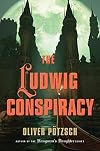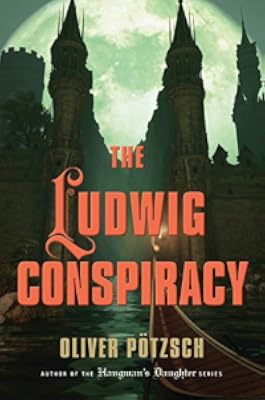
The Ludwig Conspiracy
by Oliver Pötzsch
On This Page
Description
A bold new thriller from the best-selling author of The Hangman's Daughter seriesIn 1886, Ludwig II, the Fairy-tale King of Bavaria, was deposed after being declared insane by doctors who had never met him. He died mysteriously soon thereafter, his eccentric and beautiful castles his only legacy. In The Ludwig Conspiracy, master of historical suspense Oliver Pötzsch brings the Mad King back to life.
An encoded diary by one of Ludwig's confidants falls into the hands of modern-day rare-book show more dealer Steven Lukas, who soon realizes that the diary may bring him more misery than money. Lukas teams up with a beautiful art detective, Sara Lengfeld, to investigate each of Ludwig's three famous castles for clues to crack the diary's code as mysterious thugs and Ludwig's fanatical followers chase them at every step. Just what in the diary could be so explosive?
"This gripping thriller brings together the present and the past with high-action adventure in a bold, entertaining storyline." —Shepherd Express (Milwaukee)
"Pötzsch makes clever use of Bavaria's equivalent of the Kennedy assassination in this excellent stand-alone . . . Pötzsch's sophisticated plotting and good use of a real-life historical puzzle place this far ahead of most Da Vinci Code wannabes." —Publishers Weekly, starred review
. show less
Tags
Recommendations







Member Reviews
I really enjoy Oliver Potzsch’s historical mystery series about a 17th Century hangman and his family. So when I discovered the galley to his new historical thriller, I jumped at the chance to read it. It did not disappoint. So much so I stayed up too late reading it. I like the way he combines the present with the past, and fact with fiction. In fact, the Voltaire quote before the novel begins informs the whole novel, “History is the lie that is commonly agreed upon.”
The Ludwig Conspiracy is about the past and its repercussions for the present and the future. It is the story of a Munich rare book dealer, Steven Lukas, Mad King Ludwig II of Bavaria, and the hunt for a diary and its secrets. Steven finds an encoded diary by a show more confidant of Mad King Ludwig, the one whose beautiful castles inspired Walt Disney and draw thousands of tourists every year. This diary may explain the mysterious death of Mad King Ludwig, but it comes with a lot of baggage, including people who will do anything to possess it, including murder.
The story begins with the torture and death of a professor who found an encoded diary by one of King Ludwig’s confidants. However the professor outsmarted his torturers and left it in a Munich antiquarian book shop. Its owner, Steven Lukas, discovers it, but as he begins to decode the diary he discovers how dangerous the past can be. He meets the beautiful art detective, Sara Lengfeld, who helps him in his journey to decipher this old text. It takes Steven’s 19th Century knowledge and Sara’s computer savvy to crack the code. Their journey takes them to Ludwig’s three famous castles searching for clues to crack the diary’s code. Every step of the way they have strange and scary people following them. They race to discover the clues that will unlock the diary without losing their lives.
I enjoyed the back and forth between the present and past. Not only did I get a contemporary page turner, I got a historical one as well. Potzsch makes good use of the history and legend of King Ludwig to come up with a thrilling story of how and why King Ludwig died and why his mysterious death continues to fascinate to this day. With one Poztsch novel down this year, I've got one to go - the next novel in the Hangman’s Daughter series, The Poisoned Pilgrim. And I can't wait. show less
The Ludwig Conspiracy is about the past and its repercussions for the present and the future. It is the story of a Munich rare book dealer, Steven Lukas, Mad King Ludwig II of Bavaria, and the hunt for a diary and its secrets. Steven finds an encoded diary by a show more confidant of Mad King Ludwig, the one whose beautiful castles inspired Walt Disney and draw thousands of tourists every year. This diary may explain the mysterious death of Mad King Ludwig, but it comes with a lot of baggage, including people who will do anything to possess it, including murder.
The story begins with the torture and death of a professor who found an encoded diary by one of King Ludwig’s confidants. However the professor outsmarted his torturers and left it in a Munich antiquarian book shop. Its owner, Steven Lukas, discovers it, but as he begins to decode the diary he discovers how dangerous the past can be. He meets the beautiful art detective, Sara Lengfeld, who helps him in his journey to decipher this old text. It takes Steven’s 19th Century knowledge and Sara’s computer savvy to crack the code. Their journey takes them to Ludwig’s three famous castles searching for clues to crack the diary’s code. Every step of the way they have strange and scary people following them. They race to discover the clues that will unlock the diary without losing their lives.
I enjoyed the back and forth between the present and past. Not only did I get a contemporary page turner, I got a historical one as well. Potzsch makes good use of the history and legend of King Ludwig to come up with a thrilling story of how and why King Ludwig died and why his mysterious death continues to fascinate to this day. With one Poztsch novel down this year, I've got one to go - the next novel in the Hangman’s Daughter series, The Poisoned Pilgrim. And I can't wait. show less
Translated into English, as The Ludwig Conspiracy.
Steven Lucas is out of place in Munich's West End. His dusty little antique bookshop, along with his elegant suits no longer attract many customers, and he's also in need of money to keep his business up.
Since it never rains but it pours, our hero soon finds himself entangled in a murder mystery from over a century ago, whose stakes seem inexplicably high. After finding a diary written by the assistant to King Ludwig II's personal doctor, quite a few people seem to be out to get Steven. Luckily, the smart and pretty art detective, Sara Lengfeld, is on his side, so he might still make it out in one piece.
Even if you've never heard of King Ludwig II (a.k.a The Fairytale King), you've most show more definitely heard of his castles. The most famous one, Neuschwanstein, is considered to have been the inspiration for the Disney castle(s). Other than that, the king was a lousy politician who made all the wrong choices, which led to the Kingdom of Bavaria (now a German land) being annexed to the Prussian Empire.
The King's death is shrouded in complete mystery even now, and that's where Oliver Pötzsch's current novel enters the scene, giving the reader a fairly plausible explanation.
Those who compare it with The Da Vinci Code are quite accurate: we have a book-smart guy who's tasked with decrypting a diary written in code, a smart and pretty art detective out to avenge her uncle's death, and of course numerous bad guys who're also forced to rely on our hero's code breaking ability.
As Cara's review states:
While Dan Brown has chosen to reveal 'shocking' details about Jesus, this novel focuses on a Bavarian king whose only merit seems to have been a great imagination, along with 3 tourist attractions: Neuschwanstein Castle, Linderhof Palace and Herrenchiemsee Palace. All very nice indeed, but other than including visits to these castles in my holiday plans, I can't say I cared a lot about the mystery itself.
To be fair, I did want to find out how it all ended, and obviously rooted for poor confused Steven to have his well-deserved happy ending. Nevertheless, when comparing the stakes of the two books, this one can't really compete.
3/5 stars for a decent murder mystery, and an excellent inspiration for a holiday destination. show less
Steven Lucas is out of place in Munich's West End. His dusty little antique bookshop, along with his elegant suits no longer attract many customers, and he's also in need of money to keep his business up.
Since it never rains but it pours, our hero soon finds himself entangled in a murder mystery from over a century ago, whose stakes seem inexplicably high. After finding a diary written by the assistant to King Ludwig II's personal doctor, quite a few people seem to be out to get Steven. Luckily, the smart and pretty art detective, Sara Lengfeld, is on his side, so he might still make it out in one piece.
Even if you've never heard of King Ludwig II (a.k.a The Fairytale King), you've most show more definitely heard of his castles. The most famous one, Neuschwanstein, is considered to have been the inspiration for the Disney castle(s). Other than that, the king was a lousy politician who made all the wrong choices, which led to the Kingdom of Bavaria (now a German land) being annexed to the Prussian Empire.
The King's death is shrouded in complete mystery even now, and that's where Oliver Pötzsch's current novel enters the scene, giving the reader a fairly plausible explanation.
Those who compare it with The Da Vinci Code are quite accurate: we have a book-smart guy who's tasked with decrypting a diary written in code, a smart and pretty art detective out to avenge her uncle's death, and of course numerous bad guys who're also forced to rely on our hero's code breaking ability.
As Cara's review states:
Here is the problem with this book: No one does the Da Vinci Code better than the Da Vinci Code, and this book is no Da Vinci Code.
While Dan Brown has chosen to reveal 'shocking' details about Jesus, this novel focuses on a Bavarian king whose only merit seems to have been a great imagination, along with 3 tourist attractions: Neuschwanstein Castle, Linderhof Palace and Herrenchiemsee Palace. All very nice indeed, but other than including visits to these castles in my holiday plans, I can't say I cared a lot about the mystery itself.
To be fair, I did want to find out how it all ended, and obviously rooted for poor confused Steven to have his well-deserved happy ending. Nevertheless, when comparing the stakes of the two books, this one can't really compete.
3/5 stars for a decent murder mystery, and an excellent inspiration for a holiday destination. show less
The author clearly fell in love with his research and the subject of the conspiracy (loosely based on real events), but the story itself is horribly hackneyed and full of clichés including a groanworthy romance subplot. I don’t remember The Hangman's Daughter being like this and I was quite fond of both story and characters there. Maybe the detail of the mystery story is richer to someone already read into the history and case of Ludwig (ie. the original German audience).
The encoded memoir of Theodor Marot, a confidant of King Ludwig II, finds its way into the possession of Steven Lukas, an antiquarian book dealer. It soon becomes obvious that other people want the book as well, presumably because of the information it contains about the final days in the life of Ludwig who died under mysterious circumstances in 1886. Steven finds himself partnering with an art detective, Sara Lengfeld, to investigate each of Ludwig’s three famous castles for clues to crack the book’s code as several mysterious and dangerous men pursue them.
I had difficulty finishing this book because its pace is so slow and the plot so repetitive: Steven reads a part of the diary; he and Sara arrive at a castle and solve part of show more the code; they encounter bad guys but manage to escape; they move on to the next castle. Repeatedly bullets whiz by Steven or Theodor but do no damage, even when the weapon is fired by an expert. Countless times Steven sees someone who seems familiar but he can’t remember where he saw that person. There is also a great deal of plot manipulation because events move forward because of chance and coincidence. For example, just as Sara decides they need the help of someone “’who really knows his way around all this Ludwig stuff,’” she points “to an exit road that suddenly appeared before them in the darkness” and directs him to this expert who turns out to know someone who has access to the keys of the next castle. One man’s injury is described such that he won’t “’get far with that wound,’” but then it turns out to be “only a graze”? Another man is shot and bleeding profusely and having difficulty breathing so his death is imminent (“’I don’t think [he] can last much longer’”) but then he miraculously is conscious, moving and able to have an extended conversation. For the sake of suspense, characters keep secrets until the last possible moment.
There is a big reveal near the end of the book, but it is not really that great a secret. A perceptive reader will notice the too-obvious clues. In the first chapter, Steven has a visitor in his shop who makes a cryptic comment (“’The royal line is at stake’”) and shortly afterwards, Steven finds the memoir and immediately feels “a slight dizziness, and a strange, bitter smell as if something were left burning.” Those two clues are really all it takes to figure out the ending. It is only Steven who is too dense to put together the pieces of the puzzle.
Characterization is weak. Even Steven and Sara do no emerge as fully developed characters. He is an introvert who eschews modernity; she is an extrovert who embraces technology. Their conversation does not sound natural – perhaps the stiltedness is the result of the translation. Neither is their relationship shown as developing; one minute they (often identified not by name but as the book seller and the art detective) are exchanging caustic barbs and the next minute they are in love.
There are several references that seem anachronistic. The role of police in 1886 seems very modern; one gendarme even goes out for a cigarette. Would the term neurologist have been used in the 19th century? In 1886, would it have been possible to produce and distribute 30,000 pamphlets virtually overnight? Would someone in his/her memoirs write statements like, “My promise was to bind me until death and beyond” and “How was I to guess, at the time, that this girl would determine the fate of so many of us long after our deaths”? The memoirist is prescient?
This book certainly possesses the characteristics of the thriller genre and I can imagine it being made into a movie, but it is not my type of book. I want solid characterization, sophisticated plotting, and realistic events. That being said, the novel has inspired me to read some non-fiction about King Ludwig II. Undoubtedly, the author did extensive research, and for this he must be commended.
Note: I received an ARC of this book from the publisher via NetGalley. show less
I had difficulty finishing this book because its pace is so slow and the plot so repetitive: Steven reads a part of the diary; he and Sara arrive at a castle and solve part of show more the code; they encounter bad guys but manage to escape; they move on to the next castle. Repeatedly bullets whiz by Steven or Theodor but do no damage, even when the weapon is fired by an expert. Countless times Steven sees someone who seems familiar but he can’t remember where he saw that person. There is also a great deal of plot manipulation because events move forward because of chance and coincidence. For example, just as Sara decides they need the help of someone “’who really knows his way around all this Ludwig stuff,’” she points “to an exit road that suddenly appeared before them in the darkness” and directs him to this expert who turns out to know someone who has access to the keys of the next castle. One man’s injury is described such that he won’t “’get far with that wound,’” but then it turns out to be “only a graze”? Another man is shot and bleeding profusely and having difficulty breathing so his death is imminent (“’I don’t think [he] can last much longer’”) but then he miraculously is conscious, moving and able to have an extended conversation. For the sake of suspense, characters keep secrets until the last possible moment.
There is a big reveal near the end of the book, but it is not really that great a secret. A perceptive reader will notice the too-obvious clues. In the first chapter, Steven has a visitor in his shop who makes a cryptic comment (“’The royal line is at stake’”) and shortly afterwards, Steven finds the memoir and immediately feels “a slight dizziness, and a strange, bitter smell as if something were left burning.” Those two clues are really all it takes to figure out the ending. It is only Steven who is too dense to put together the pieces of the puzzle.
Characterization is weak. Even Steven and Sara do no emerge as fully developed characters. He is an introvert who eschews modernity; she is an extrovert who embraces technology. Their conversation does not sound natural – perhaps the stiltedness is the result of the translation. Neither is their relationship shown as developing; one minute they (often identified not by name but as the book seller and the art detective) are exchanging caustic barbs and the next minute they are in love.
There are several references that seem anachronistic. The role of police in 1886 seems very modern; one gendarme even goes out for a cigarette. Would the term neurologist have been used in the 19th century? In 1886, would it have been possible to produce and distribute 30,000 pamphlets virtually overnight? Would someone in his/her memoirs write statements like, “My promise was to bind me until death and beyond” and “How was I to guess, at the time, that this girl would determine the fate of so many of us long after our deaths”? The memoirist is prescient?
This book certainly possesses the characteristics of the thriller genre and I can imagine it being made into a movie, but it is not my type of book. I want solid characterization, sophisticated plotting, and realistic events. That being said, the novel has inspired me to read some non-fiction about King Ludwig II. Undoubtedly, the author did extensive research, and for this he must be commended.
Note: I received an ARC of this book from the publisher via NetGalley. show less
So good... I lost sleep. I like how Potzsch makes historical figures come alive in their time period, yet they're relatable. I love how he wove two timelines together, and his villain and the conclusion of book were very creative.
I LOVE Ludwig II of Austria, and this book was very satisfying.
I LOVE Ludwig II of Austria, and this book was very satisfying.
An excellent thriller with a strong historical basis involving the death of King Ludwig of Germany. An antiquarian bookseller (Steven) gets involved with an art detective (Sara) to solve the mystery of Theodor Marot's diary that details the last days and circumstances surrounding his death. Lots of puzzles throughout as they navigate the decoding and clues. Enjoyed the surprise reveals at the end.
I like historical novels, especially ones that are well researched. From somewhere I hears a quote that if you want to teach history, tell the story. That happens here, along with a current thriller consisting of a chase for a diary written in shorthand and code. The historical period is King Ludwig II before the World Wars, and his deposition and death in 1886. Beyond posters for his most famous castle, Neuschwanstein, the model for Disney's Cinderella'a castle, the Mad King of Bavaria is unknown in America today.
Members
- Recently Added By
Lists

Crime and Mysteries to Read
746 works; 31 members

Cryptology - non-fiction and fiction
57 works; 4 members

Books Read in 2015
3,299 works; 129 members
Author Information

31 Works 7,356 Members
Some Editions
Common Knowledge
- Canonical title
- The Ludwig Conspiracy
- Original title
- Die Ludwig-Verschwörung
- People/Characters
- Ludwig II, King of Bavaria
- Original language
- German
Classifications
- Genres
- Fiction and Literature, Historical Fiction, Mystery
- DDC/MDS
- 833.92 — Literature & rhetoric German & related literatures German fiction 1900- 1990-
- LCC
- PT2676 .O895 .L8313 — Language and Literature German, Dutch and Scandinavian literatures German literature Individual authors or works 1961-2000
- BISAC
Statistics
- Members
- 352
- Popularity
- 89,667
- Reviews
- 9
- Rating
- (3.46)
- Languages
- English, German
- Media
- Paper, Audiobook, Ebook
- ISBNs
- 9
- ASINs
- 8