
On This Page
Description
Amid a cyclone in the Bay of Bengal, three vessels, and the diverse occupants within, converge on Canton's Fanqui-Town, or Foreign Enclave, which is a powder keg awaiting a spark to ignite the Opium Wars.Tags
Recommendations
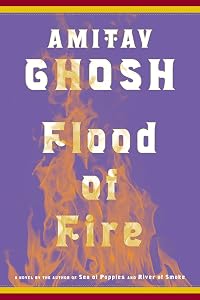
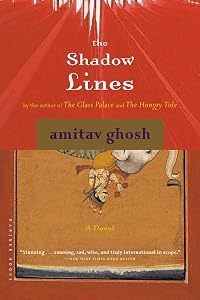
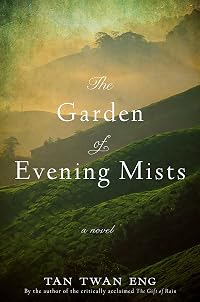



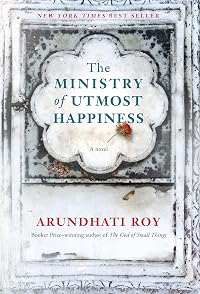




















Member Recommendations

Tinwara Mitchells book is set in a similar enclave: the island of Dejima near Nagasaki, where only Dutch merchants were allowed to trade (but not to enter Japan) Set in the year 1799.
110
Member Reviews
The second volume of Amitav Ghosh's Ibis Trilogy, River of Smoke, was as engaging as the first, but in a different way. In both books, Ghosh has the ability to leave us hanging from cliffs at the ends of chapters: both volumes are awfully hard to put down. In River, however, Ghosh seems to be changing things up in how he structures his narrative. In fact, it seems to me that he is doing something that few fiction writers do: he is allowing description and explanation, rather than action, to do—especially in the first three-quarters or so of the book—almost all the work. This could be bone dry, but instead his explication of the opium trade, Canton, Parsis, Victorian plant collecting, and the other subjects he touches on are a joy to show more read. I look forward to volume 3. show less
I was initially nonplussed by ‘River of Smoke’, as it by no means picks up where [b:Sea of Poppies|1330324|Sea of Poppies (Ibis Trilogy, #1)|Amitav Ghosh|https://images.gr-assets.com/books/1327376395s/1330324.jpg|1319808] left off. Instead, the reader is suddenly pulled forward in time. After this rather disconcerting start, however, the narrative settles into a group of main characters and their adventures in and around Canton. These were so well recounted that I enjoyed ‘River of Smoke’ even more than its prequel. Whereas [b:Sea of Poppies|1330324|Sea of Poppies (Ibis Trilogy, #1)|Amitav Ghosh|https://images.gr-assets.com/books/1327376395s/1330324.jpg|1319808] gives the reader an insight into the production of opium in India, show more as well as recounting the eventful voyage of the Ibis, ‘River of Smoke’ delves into the export of the drug to China. Much of the story therefore takes place in a similar location as [b:The Thousand Autumns of Jacob de Zoet|7141642|The Thousand Autumns of Jacob de Zoet|David Mitchell|https://images.gr-assets.com/books/1320540908s/7141642.jpg|7405757] (a trading colony, albeit adjacent to China rather than Japan) yet Ghosh brings the place and its history to life in a way that Mitchell never quite managed. I think this is in part a matter of language, as well as a wider range of points of view. Like its prequel, 'River of Smoke' novel uses many languages in a distinctive fashion that is both playful and profound. There are some genuinely hilarious innuendoes (I loved all the business about Bulgarians), as well as sequences in which translation plays a critical role. The nature of the language used often conveys a great deal about the relationships between characters, as well as reinforcing the incredible cultural variety of Fanqui-town and Canton.
I was impressed with the nuanced fashion in which the opium trade was explored. The range of points of view are so well chosen. For example, the reader follows Bahram, an opium trader from India who appears thoughtful and principled yet sees nothing wrong with selling a destructive drug. Whilst it is obvious that the Chinese government is right to try and end the opium trade, a scourge upon their population, it is also fascinating to be presented with ways in which the trade justifies itself. Most of the British merchants resort to platitudes about ‘free trade’, whilst others deplore opium in the name of christianity. Other characters without a financial stake in the trade seem to approve of or condemn it purely on the basis of whatever opinions they happen to have been exposed to. I wondered, though, why Neel never thought to connect the work he was doing for an opium dealer with the horrifying detox from the drug that he helped Ah Fatt through. There was an interesting ambivalence, or you could call it hypocrisy, between personal and business views of opium to be seen in many characters. Moreover, the point is repeatedly made that the British empire was profiting hugely from pushing opium to China whilst simultaneously banning it on their own shores. The rare plant sub-plot provides an effective complement to all this, showing a different sort of trade.
In short, I was fascinated by the historical events and how they were shown through the eyes of multiple sympathetic, well-drawn characters. Ghosh is a marvellous historical novelist and I look forward to the third of the trilogy. I assume that will fill in some gaps between the end of ‘River of Smoke’ and the flash-forward at the beginning. show less
I was impressed with the nuanced fashion in which the opium trade was explored. The range of points of view are so well chosen. For example, the reader follows Bahram, an opium trader from India who appears thoughtful and principled yet sees nothing wrong with selling a destructive drug. Whilst it is obvious that the Chinese government is right to try and end the opium trade, a scourge upon their population, it is also fascinating to be presented with ways in which the trade justifies itself. Most of the British merchants resort to platitudes about ‘free trade’, whilst others deplore opium in the name of christianity. Other characters without a financial stake in the trade seem to approve of or condemn it purely on the basis of whatever opinions they happen to have been exposed to. I wondered, though, why Neel never thought to connect the work he was doing for an opium dealer with the horrifying detox from the drug that he helped Ah Fatt through. There was an interesting ambivalence, or you could call it hypocrisy, between personal and business views of opium to be seen in many characters. Moreover, the point is repeatedly made that the British empire was profiting hugely from pushing opium to China whilst simultaneously banning it on their own shores. The rare plant sub-plot provides an effective complement to all this, showing a different sort of trade.
In short, I was fascinated by the historical events and how they were shown through the eyes of multiple sympathetic, well-drawn characters. Ghosh is a marvellous historical novelist and I look forward to the third of the trilogy. I assume that will fill in some gaps between the end of ‘River of Smoke’ and the flash-forward at the beginning. show less
With River of Smoke, Amitav Ghosh continues the story that he originally introduced in Sea of Poppies. When we left off the Ibis was battling a storm off the coast of Mauritius and some of the characters were adrift in a long boat. While not picking up exactly where he left off, we are first treated to a flash forward and from this we can see Deeti’s future as a revered matriarch. He then picks up the narrative and brings us up to date on the whereabouts of the characters. He zeros in on two of the characters from the first book, Neel and Paulina, as well as introducing some new, and colourful characters to help flesh out the story. We follow these characters as they embark on further adventures that eventually lead to Canton. We show more arrive there in time to read of the various incidents that were to lead to the First Opium War in 1840.
Although the story may not have captivated me quite as much as Sea of Poppies, I think River of Smoke is, in many ways, the better book. What this book offers is a good story, peopled with engaging characters, but the payload for me was the history. The detailed descriptions of Canton in 1839, from the clothing, the food, the customs, the religion and, mostly, the political situation. I knew very little about this period of history particularly it’s financial importance both in Asia and the Western World. Ghosh manages to paint a vivid picture of power, money and greed and conveys his facts without losing the readers’ interest.
The use of Robin’s letters to Paulina at the start of many of the later chapters was simply brilliant. Written in a humorous, chatty tone, he was able to bring together the various threads of the story, the opium trade, the search for the elusive golden camellia, as well as the political manoeuvrings. In contrast we have the darker story of Bahram Modi who had so much to gain or lose in this conflict.
Overall, River of Smoke was a rich, satisfying read, managing to be both exotic and informative. show less
Although the story may not have captivated me quite as much as Sea of Poppies, I think River of Smoke is, in many ways, the better book. What this book offers is a good story, peopled with engaging characters, but the payload for me was the history. The detailed descriptions of Canton in 1839, from the clothing, the food, the customs, the religion and, mostly, the political situation. I knew very little about this period of history particularly it’s financial importance both in Asia and the Western World. Ghosh manages to paint a vivid picture of power, money and greed and conveys his facts without losing the readers’ interest.
The use of Robin’s letters to Paulina at the start of many of the later chapters was simply brilliant. Written in a humorous, chatty tone, he was able to bring together the various threads of the story, the opium trade, the search for the elusive golden camellia, as well as the political manoeuvrings. In contrast we have the darker story of Bahram Modi who had so much to gain or lose in this conflict.
Overall, River of Smoke was a rich, satisfying read, managing to be both exotic and informative. show less
When last we heard of Deeti, she was set adrift in the Bay of Bengal during a furious cyclone, after a mutiny aboard the Ibis, a ship headed for China with a boatload of indentured servants. At the same time (maybe) the Anahita, loaded with its cargo of opium, was also being tossed around and its owner, Seth Bahram Modi, was desperately trying to save his valuable goods. Coincidentally, a ship carrying a load of rare botanicals, the Redruth, also made its way through an identical storm.
Where Sea of Poppies, with its colorful cast of characters was a wild, sea-faring tale, this second part of Amitav Ghosh’s trilogy is a land adventure, based in the coastal Chinese city of Canton. The theme is very simple: the assault of an unsuspecting show more people by greedy foreign entrepreneurs importing opium. These businessmen from the UK, US and India (where the poppies are grown) are “free traders” and fail to see themselves as responsible for the unsavory habits of those Chinese citizens who choose to imbibe.
Along the way we are treated to Ghosh’s lovely prose and the mingling of historical fact and fictitious figures because make no mistake: this is a history lesson like not many historical fiction novels can claim to be. When a new Commissioner, Lin Zexu (an actual historical figure) is appointed, who rumors say will clean up the opium problem, he is described in this way:
”Commissioner Lin’s arrival had been preceded by a steady flow of reports about his southwards journey. These accounts had created an extraordinary ferment in the province. The stories being told were such as to make people wonder whether the Yum-chae might not be the last of a breed of men that had long been thought to be extinct: an incorruptible public servant who was also a scholar and an intellectual---a state official like those memorialized in legend and parable.” (Page 396)
Ghosh paints a picture of life in Canton, especially in the foreign enclave known as Fanqui-town, with incredible artistry and realistic aplomb. You think you’re right there with him and the Achha, with the foreign businessmen and the mandarins, with the rich and the poor. His complex development of the character of Bahram Modi had my head spinning. I had such compassion for him and yet, he was preying on the Chinese people because of his greediness. But his employees were blindly loyal to him anhd tried to protect him. My emotions were going back and forth as if I was watching a tennis match.
Alternately we learn through the letters of Robin Chinnery, a frustrated artist, of the hunt for an elusive rare Golden Camelia. His letters to the French orphan, Paulette, who was working with a horticulturalist on the Redruth, offer a light and humorous touch to the narrative.
Carefully researched and beautifully written, I will be happily waiting for the last part of this trilogy. Highly recommended. show less
Where Sea of Poppies, with its colorful cast of characters was a wild, sea-faring tale, this second part of Amitav Ghosh’s trilogy is a land adventure, based in the coastal Chinese city of Canton. The theme is very simple: the assault of an unsuspecting show more people by greedy foreign entrepreneurs importing opium. These businessmen from the UK, US and India (where the poppies are grown) are “free traders” and fail to see themselves as responsible for the unsavory habits of those Chinese citizens who choose to imbibe.
Along the way we are treated to Ghosh’s lovely prose and the mingling of historical fact and fictitious figures because make no mistake: this is a history lesson like not many historical fiction novels can claim to be. When a new Commissioner, Lin Zexu (an actual historical figure) is appointed, who rumors say will clean up the opium problem, he is described in this way:
”Commissioner Lin’s arrival had been preceded by a steady flow of reports about his southwards journey. These accounts had created an extraordinary ferment in the province. The stories being told were such as to make people wonder whether the Yum-chae might not be the last of a breed of men that had long been thought to be extinct: an incorruptible public servant who was also a scholar and an intellectual---a state official like those memorialized in legend and parable.” (Page 396)
Ghosh paints a picture of life in Canton, especially in the foreign enclave known as Fanqui-town, with incredible artistry and realistic aplomb. You think you’re right there with him and the Achha, with the foreign businessmen and the mandarins, with the rich and the poor. His complex development of the character of Bahram Modi had my head spinning. I had such compassion for him and yet, he was preying on the Chinese people because of his greediness. But his employees were blindly loyal to him anhd tried to protect him. My emotions were going back and forth as if I was watching a tennis match.
Alternately we learn through the letters of Robin Chinnery, a frustrated artist, of the hunt for an elusive rare Golden Camelia. His letters to the French orphan, Paulette, who was working with a horticulturalist on the Redruth, offer a light and humorous touch to the narrative.
Carefully researched and beautifully written, I will be happily waiting for the last part of this trilogy. Highly recommended. show less
This is the second novel in Amitav Ghosh's planned trilogy, set in the late 1830s, on the eve of Britain's first opium war with China. I read the first, Sea of Poppies, three years ago and enjoyed Amitav's deft use of language as he wove several tales set in the heat of the north Indian plains where the poppies grew; they were processed in British opium factories and stored on the Hooghly River's wharves. River of Smoke continues the story by shifting the action from Calcutta to Canton, a Chinese port city (today's Guangzhou).
The narrative is Dickensian in that it features a wide range of characters, all of whom are connected by the power of opium and represent various social classes and interests that coexist on China's periphery. The show more Ibis, a former slave ship that transported prisoners and indentured servants to Mauritius, is connected to the first novel. The Redruth, equipped for botanical exploration by a Cornish plantsman, and the Ibis and Anahita, an opium carrier from Bombay owned by Bahram, a Parsi merchant, are overtaken by a storm. The characters' fates on these three ships are connected by the storm. The narrative is so full of specifics about the setting and era that you, as the reader, are occasionally transported to Canton or any of the numerous other locations that Ghosh imagines. The main characters depict the blending of high and low life, even though the book centers on three main ships and their clan. Ghosh creates an exciting sense of place throughout it all.
As the interests of the British, Indian, and other foreign opium traders clash with the Chinese rulers' mounting resistance, suspense grows. The emperor appoints a new commissioner whose main goal is to stop the amount of destructive opium being smuggled into the nation, which brings the conflict to a head. Opium, like other drugs in our day, seemed to have an irresistible power, and neither side has entirely clean hands. Opium was like the wind or the tides, Bahram told Napoleon (yes, he and his assistant met the General): "A man is neither good nor evil because he sails his ship upon the wind. He must be evaluated based on how he behaves with those around him, including his friends, family, and servants." (p. 166) Bahram ultimately finds himself lacking. One of the epicenters of globalism during the first part of the nineteenth century was Canton.
This reader was impressed by Ghosh's use of language, which spans English, Hindi, Parsi, Malay, and Chinese, though it can occasionally be overwhelming. In spite of that, the reader is captivated by the stories and characters that inhabit them. The allusions and metaphors extend from the West to the East. There is a mention of Gericault's masterwork, "The Raft of the Medusa," at one point in the middle of the book. While the events in the book take their toll as the story comes to a close, I think the predicament of these castaways is a fitting metaphor for the participants in the opium trade. show less
The narrative is Dickensian in that it features a wide range of characters, all of whom are connected by the power of opium and represent various social classes and interests that coexist on China's periphery. The show more Ibis, a former slave ship that transported prisoners and indentured servants to Mauritius, is connected to the first novel. The Redruth, equipped for botanical exploration by a Cornish plantsman, and the Ibis and Anahita, an opium carrier from Bombay owned by Bahram, a Parsi merchant, are overtaken by a storm. The characters' fates on these three ships are connected by the storm. The narrative is so full of specifics about the setting and era that you, as the reader, are occasionally transported to Canton or any of the numerous other locations that Ghosh imagines. The main characters depict the blending of high and low life, even though the book centers on three main ships and their clan. Ghosh creates an exciting sense of place throughout it all.
As the interests of the British, Indian, and other foreign opium traders clash with the Chinese rulers' mounting resistance, suspense grows. The emperor appoints a new commissioner whose main goal is to stop the amount of destructive opium being smuggled into the nation, which brings the conflict to a head. Opium, like other drugs in our day, seemed to have an irresistible power, and neither side has entirely clean hands. Opium was like the wind or the tides, Bahram told Napoleon (yes, he and his assistant met the General): "A man is neither good nor evil because he sails his ship upon the wind. He must be evaluated based on how he behaves with those around him, including his friends, family, and servants." (p. 166) Bahram ultimately finds himself lacking. One of the epicenters of globalism during the first part of the nineteenth century was Canton.
This reader was impressed by Ghosh's use of language, which spans English, Hindi, Parsi, Malay, and Chinese, though it can occasionally be overwhelming. In spite of that, the reader is captivated by the stories and characters that inhabit them. The allusions and metaphors extend from the West to the East. There is a mention of Gericault's masterwork, "The Raft of the Medusa," at one point in the middle of the book. While the events in the book take their toll as the story comes to a close, I think the predicament of these castaways is a fitting metaphor for the participants in the opium trade. show less
While an enjoyable read, this book does not hold the same sway over the imagination as the prior book in the series, Sea of Poppies. I've spent some time trying to decide why this is so, because the writing style is in no way inferior -- Ghosh still brings a painterly eye and a sense of setting and place that is vivid and clear to the page. His word pictures are jewel-like in their detail and brilliance. His sense of history, also, is beautiful and finely told. I'm sure an immense amount of research went into the book but it never weighs down the narrative. He is diligent in letting the reader experience history as his characters do -- as events unfold, rather than as a great backdrop to their lives. Because of this, he is able to show more maintain a level of suspense and drama in their lives that is rarely diluted by the perspective of an omnipotent narrator. And if there is the occasional foreshadowing, or rare moments where a character's fate is telegraphed to the reader, well these are easily forgiven lapses against the panoramic story Ghosh is telling. If I had read this book first, I would have loved it for the description of life in Canton alone. Likewise, Ghosh's characters are all beautifully drawn, complex and driven by motives that are wholly real and understandable and compelling. They stand on their own, and do not demand of the reader any knowledge of the events that occurred in the first book, although reading Sea of Poppies certainly enriches the reader's perspective. But the continuing stories of Paulette and Neel and Ah Fatt -- central characters in the first book -- are taken up via the simple expedient of introducing them through the eyes of the people who become involved in their lives: a botanist/explorer who runs into Paulette during a visit to a neglected botanical garden; an opium trader whose ship is docked for repairs, where it is recognized by Ah Fatt. The coincidences are striking, but credible. Certainly plausible enough not to derail the story.
So the lukewarm reaction River of Smoke generally receives is a bit of a mystery. I finally decided that my problem with the book was a certain lack of narrative focus that Sea of Poppies did not suffer from. There is, in the end, a thematic exploration to the first book in the Ibis trilogy-- is it all about transformation. Metamorphosis. Every one of the characters who end up together on the Ibis are in the process of becoming somebody new: A local rajah becomes a person without caste. A woman escapes her own funeral pyre and leaves her old life in its ashes. A French girl makes herself into an Asiatic. A black sailor slowly turns into a white sahib. There is even a man who is gradually becoming the vessel for a female spirit. The color, the history, the picture of colonial India, the vivid historical detail and the striking way Ghosh can call up a scene before the reader's eyes -- these are all hung, as it were, on the frame of this common theme of transformation. Transformation is the underlying drive each character feels -- it is what makes the reader invested in their fate. So that even though Sea of Poppies ends with something of a cliff hanger, the story does feel complete, in a sense, because at that point every character has embraced who they have become. There is nothing like this narrative coherence in River of Smoke. It is, instead, simply a story of "what happens next." Beautifully told, to be sure, but not compelling in the way that Sea of Poppies was compelling. The lives of these people are now simply leaves swirling in the winds of change, and while there is some interest in seeing where, eventually, they come to rest, there is no real sense of direction or purpose to the novel except this: what happens next. It's not quite enough for a literary novel, to be honest. Not when we already know the author is capable of telling a deep story, not just a wide one. show less
So the lukewarm reaction River of Smoke generally receives is a bit of a mystery. I finally decided that my problem with the book was a certain lack of narrative focus that Sea of Poppies did not suffer from. There is, in the end, a thematic exploration to the first book in the Ibis trilogy-- is it all about transformation. Metamorphosis. Every one of the characters who end up together on the Ibis are in the process of becoming somebody new: A local rajah becomes a person without caste. A woman escapes her own funeral pyre and leaves her old life in its ashes. A French girl makes herself into an Asiatic. A black sailor slowly turns into a white sahib. There is even a man who is gradually becoming the vessel for a female spirit. The color, the history, the picture of colonial India, the vivid historical detail and the striking way Ghosh can call up a scene before the reader's eyes -- these are all hung, as it were, on the frame of this common theme of transformation. Transformation is the underlying drive each character feels -- it is what makes the reader invested in their fate. So that even though Sea of Poppies ends with something of a cliff hanger, the story does feel complete, in a sense, because at that point every character has embraced who they have become. There is nothing like this narrative coherence in River of Smoke. It is, instead, simply a story of "what happens next." Beautifully told, to be sure, but not compelling in the way that Sea of Poppies was compelling. The lives of these people are now simply leaves swirling in the winds of change, and while there is some interest in seeing where, eventually, they come to rest, there is no real sense of direction or purpose to the novel except this: what happens next. It's not quite enough for a literary novel, to be honest. Not when we already know the author is capable of telling a deep story, not just a wide one. show less
This is the second of a planned trilogy, I believe, about the Opium Wars in the 1800's. 'Sea of Poppies' is the first novel which told how all passengers of a ship loaded with opium and convicts for transport came to be there. This continues the story with several of the Ibis' inhabitants as well as adding some new ones. We are mostly with Neel and Paulette. We are also introduced to Ah Fat's father Bahram Moddi, a Parsi opium dealer. The action takes place in 'Fanqui-town' -- essentially a foreign enclave outside of the walls of the forbidden city, Canton.
We get much more into opium in this novel and some of the politics leading up to the Opium Wars. Frankly, this was all fairly fascinating to me as I knew little of what I believe is show more true history with many real historical personages. The language feels authentic especially the Chineese-Indian-English pidgin which perplexed and annoyed me at the beginning but was strangely intelligible and delightful by the end.
Ghosh is an excellent writer in terms of setting a scene and transporting one there with such foreign sights, sounds, foods, customs. I think though structurally the book seemed a bit all over the place - hard to know where it was really going and who was really the protagonist. Alot of repetition and uneven dramatic tension. It took me quite some time to get through this novel - very similar to my feelings about 'Sea of Poppies.'
I only hope the third novel comes out quicker than 'River of Smoke' because I really had forgotten alot in three years and therfore struggled some getting into it. But overall, a worthy read, a fascinating look at a place and time I knew nothing about, (always thought the Chinese brought opium to the rest of us), funny, sad and transporting but does require some patience. show less
We get much more into opium in this novel and some of the politics leading up to the Opium Wars. Frankly, this was all fairly fascinating to me as I knew little of what I believe is show more true history with many real historical personages. The language feels authentic especially the Chineese-Indian-English pidgin which perplexed and annoyed me at the beginning but was strangely intelligible and delightful by the end.
Ghosh is an excellent writer in terms of setting a scene and transporting one there with such foreign sights, sounds, foods, customs. I think though structurally the book seemed a bit all over the place - hard to know where it was really going and who was really the protagonist. Alot of repetition and uneven dramatic tension. It took me quite some time to get through this novel - very similar to my feelings about 'Sea of Poppies.'
I only hope the third novel comes out quicker than 'River of Smoke' because I really had forgotten alot in three years and therfore struggled some getting into it. But overall, a worthy read, a fascinating look at a place and time I knew nothing about, (always thought the Chinese brought opium to the rest of us), funny, sad and transporting but does require some patience. show less
Members
- Recently Added By
Published Reviews
ThingScore 88
On one level, the novel that arises from this formative geopolitics is a remarkable feat of research, bringing alive the hybrid customs of food and dress and the competing philosophies of the period with intimate precision; on another it is a subversive act of empathy, viewing a whole panorama of world history from the "wrong" end of the telescope. The real trick, though, is that it is also show more fabulously entertaining. show less
added by souloftherose
Amitav Ghosh's two latest novels carry us deep inside the opium trade in the 1830s. River of Smoke is the second volume of a proposed trilogy. The first, Sea of Poppies, published in 2008, took us along the Ganges and to Calcutta, where the poppies are grown and the opium processed. River of Smoke follows the story through to Canton in China, where the opium is sold. The Chinese authorities show more are trying to prevent illegal imports of the drug, which has inflicted a plague of addiction on the Chinese population while making empire-sized fortunes for the irrepressibly shameless traders, mostly British.
In historical novels the past can sometimes feel tamed; hindsight, hovering just off the page, tells us that we know what it all added up to and what came of it (the First Opium War, during which British gunboats enforced a treaty opening Chinese ports to international trade, comes shortly after the ending of this novel). But Ghosh's novels somehow succeed in taking us back inside the chaos of when "then" was "now". His grasp of the detail of the period is exhaustive – he is so thoroughly submerged in it – that readers can't possibly remember all the things he shows them, or hold on to all the life-stories of all the characters he introduces. Both novels are cabinets of curiosities, crowded with items that hold a story of their own. show less
In historical novels the past can sometimes feel tamed; hindsight, hovering just off the page, tells us that we know what it all added up to and what came of it (the First Opium War, during which British gunboats enforced a treaty opening Chinese ports to international trade, comes shortly after the ending of this novel). But Ghosh's novels somehow succeed in taking us back inside the chaos of when "then" was "now". His grasp of the detail of the period is exhaustive – he is so thoroughly submerged in it – that readers can't possibly remember all the things he shows them, or hold on to all the life-stories of all the characters he introduces. Both novels are cabinets of curiosities, crowded with items that hold a story of their own. show less
added by kidzdoc
Lists

Best Historical Fiction
620 works; 261 members

Best Books About Journeys and Quests
117 works; 30 members

Indian Diaspora
42 works; 2 members

Books Read in 2012
816 works; 34 members

Global Reads: Books Set in East Asia
139 works; 12 members

Novels Set on Rivers
14 works; 2 members

Asia
178 works; 7 members
Talk Discussions
Past Discussions
River of Smoke Group Read (June 15th) in 75 Books Challenge for 2012 (July 2012)
Author Information

Born in Calcutta, and spent his childhood in Bangladesh, Sri Lanka, and Northern India. He studied in Delhi, Oxford, and Egypt and taught at various Indian and American universities. Author of a travel book and three acclaimed novels. Ghosh has also written for GRANTA, THE NEW YORKER, THE NEW YORK TIMES, and THE OBSERVER. He lives in New York City show more with his wife and two children. (Publisher Provided) Amitav Ghosh was born in Calcutta, India on July 11, 1956. He studied in Delhi, Oxford and Alexandria. His first book, The Circle of Reason, won France's Prix Médicis. He has won several other awards including the Sahitya Akademi Award and the Ananda Puraskar for The Shadow Lines, the Arthur C. Clarke award for The Calcutta Chromosome, and the Crossword Book Prize for The Hungry Tide and Sea of Poppies. His other works include In an Antique Land, Dancing in Cambodia, The Glass Palace, and River of Smoke. In 2007, he was awarded the Padma Shri, one of India's highest honors, by the President of India. He made the New Zealand Best Seller List in 2015 with his title Flood of Fire. (Bowker Author Biography) show less
Some Editions
Awards and Honors
Awards
Notable Lists
Series

Belongs to Publisher Series
Work Relationships
Is contained in
Common Knowledge
- Canonical title*
- Il fiume dell'oppio
- Original title
- River of smoke
- Original publication date
- 2011-06-09 (UK) (UK); 2011-09-27 (US) (US)
- People/Characters
- Neel Rattan Halder; Paulette Lambert; Seth Bahramji Naurozji Modi (Barry Moddi); Robin Chinnery; "Fitcher" Penrose; Deeti (show all 10); Ah Fatt; Zadig Karabedian (Zadig Bey); Kalua; Baboo Nob Kissin
- Important places
- Canton, China; Fanqui-Town, Canton, China; China
- Important events
- Opium Wars (1839 | 1860)
- Dedication
- For my mother
On her eigthieth - First words
- Deeti's shrine was hidden in a cliff, in a far corner of Mauritius, where the island's eastern and southern shorelines collide to form the wind-whipped dome of the Morne Brabant.
- Last words
- (Click to show. Warning: May contain spoilers.)I realized that if it were not for those paintings no one would believe that such a place ever existed.
(Click to show. Warning: May contain spoilers.)My mother, Anjali Ghosh, taught me to read--without her the voyage would never have begun. - Original language
- English
*Some information comes from Common Knowledge in other languages. Click "Edit" for more information.
Classifications
- Genres
- Fiction and Literature, General Fiction, Historical Fiction
- DDC/MDS
- 823.914 — Literature & rhetoric English & Old English literatures English fiction 1900- 1901-1999 1945-1999
- LCC
- PR9499.3 .G536 .R58 — Language and Literature English English Literature English literature: Provincial, local, etc.
- BISAC
Statistics
- Members
- 1,156
- Popularity
- 21,741
- Reviews
- 56
- Rating
- (3.88)
- Languages
- 9 — Dutch, English, French, German, Italian, Norwegian (Bokmål), Portuguese, Spanish, Turkish
- Media
- Paper, Audiobook, Ebook
- ISBNs
- 39
- UPCs
- 1
- ASINs
- 16