Snakes in Suits: When Psychopaths Go to Work
by Paul Babiak, Robert D. Hare
On This Page
Description
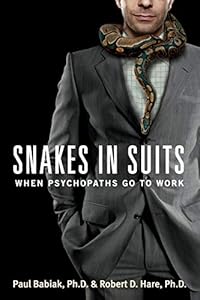
Revised and updated with the latest scientific research and updated case studies, the business classic that offers a revealing look at psychopaths in the workplace-how to spot their destructive behavior and stop them from creating chaos in the modern corporate organization. Over the past decade, Snakes in Suits has become the definitive book on how to discover and defend yourself against psychopaths in the office. Now, Dr. Paul Babiak and Dr. Robert D. Hare return with a revised and updated show more edition of their essential guide. All of us at some point have-or will-come into contact with psychopathic individuals. The danger they present may not be readily apparent because of their ability to charm, deceive, and manipulate. Although not necessarily criminal, their self-serving nature frequently is destructive to the organizations that employ them. So how can we protect ourselves and our organizations in a business climate that offers the perfect conditions for psychopaths to thrive? In Snakes in Suits, Hare, an expert on the scientific study of psychopathy, and Babiak, an industrial and organizational psychologist and a leading authority on the corporate psychopath, examine the role of psychopaths in modern corporations and provide the tools employers can use to avoid and deal with them. Together, they have developed the B-Scan 360, a research tool designed specifically for business professionals. Dr. Babiak and Dr. Hare reveal the secret lives of psychopaths, explain the ways in which they manipulate and deceive, and help you to see through their games. The rapid pace of today's corporate environment provides the perfect breeding ground for these "snakes in suits" and this newly revised and updated classic gives you the insight, information, and power to protect yourself and your company before it's too late. show lessTags
Recommendations














Member Reviews
"Dumb psychopaths go to prison, smart psychopaths go to the executive floor". That's the premise of this interesting book that analyses how psychopaths manage to be successful in corporate environments or in specific industries. According to the author, psychopaths are 4 times more frequent among managers than among the general population.
The book offers many great insights, and although inevitably, when specific examples were mentioned, I did sometimes wonder whether impression management or high-energy office banter might label me a psychopath (don't read this if you have psychological hypochondria), the author makes clear that true psychopaths display an entire range of behaviours with underneath a chilling emotional shallowness.
The show more pace slows down a bit here and there when the author provides specific HR advice for people dealing with psychopaths (when they're already part of the organisation), or trying to weed out psychopaths from job applicants.
This book helped me realise that an old friend (now estranged), whose behaviour I'd always found strange and cruel, had many psychopathic tendencies, as did a former colleague whose destructive energy had previously baffled me (you know who you are :). If I'd read this book before, I'd have realised this sooner and I would have been better prepared to deal with their behaviour. But odds are I'll meet more psychopaths during the rest of my career, so unfortunately it will probably come in useful in the future. show less
The book offers many great insights, and although inevitably, when specific examples were mentioned, I did sometimes wonder whether impression management or high-energy office banter might label me a psychopath (don't read this if you have psychological hypochondria), the author makes clear that true psychopaths display an entire range of behaviours with underneath a chilling emotional shallowness.
The show more pace slows down a bit here and there when the author provides specific HR advice for people dealing with psychopaths (when they're already part of the organisation), or trying to weed out psychopaths from job applicants.
This book helped me realise that an old friend (now estranged), whose behaviour I'd always found strange and cruel, had many psychopathic tendencies, as did a former colleague whose destructive energy had previously baffled me (you know who you are :). If I'd read this book before, I'd have realised this sooner and I would have been better prepared to deal with their behaviour. But odds are I'll meet more psychopaths during the rest of my career, so unfortunately it will probably come in useful in the future. show less
This could have been about a third of the length and not lost content. It is VERY repetitive. I'm not sure how helpful it is, either, although the last couple of chapters do make a pass at offering hints about how to cope if one is working with such a snake.
The authors also claim that not all corporations are psychopathic. I wonder about this, since the legal mandate for corps is precisely psychopathic: they are legally required to do everything possible to improve shareholder value/profits, no matter what the cost is to society at large or their own workers. By the definitions in the book, that sounds scarily close to psychopathy to me!
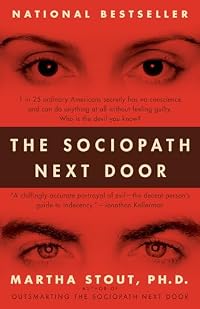
In short: not really recommended. "The Sociopath Next Door" was much better-written and more helpful. show more With this one, I was hoping for some info that would make some sense of some of the huge corporate scandals of recent years, but there was really nothing like that. show less
The authors also claim that not all corporations are psychopathic. I wonder about this, since the legal mandate for corps is precisely psychopathic: they are legally required to do everything possible to improve shareholder value/profits, no matter what the cost is to society at large or their own workers. By the definitions in the book, that sounds scarily close to psychopathy to me!
In short: not really recommended. "The Sociopath Next Door" was much better-written and more helpful. show more With this one, I was hoping for some info that would make some sense of some of the huge corporate scandals of recent years, but there was really nothing like that. show less
- Babiak and Hare write the story of a fictional Dave, an archetype business psychopath. The story is accompanied by highlight boxes with relevant research and concludes with helpful defensive techniques if one has to deal with one of these people.
They show how psychopathological aggression, self confidence, lack of respect, manipulation and egoism can promote a psychopath in certain business environments and they note that psychopaths are more common in business (3%) than in society at large (1%). They frequently destroy their companies if they reach top management with a good example being Andrew Fastow of Enron (see Eichenwald's "Conspiracy of Fools").
Personally I have only come across two of these people, one as an employee (who I show more terminated) and a client (who we cut contact with) but in the early stages the manipulation was successful and the whole psychopath checklist was present.
As a related point, while reading this book my mind kept turning to Steve Jobs of Apple. show less
They show how psychopathological aggression, self confidence, lack of respect, manipulation and egoism can promote a psychopath in certain business environments and they note that psychopaths are more common in business (3%) than in society at large (1%). They frequently destroy their companies if they reach top management with a good example being Andrew Fastow of Enron (see Eichenwald's "Conspiracy of Fools").
Personally I have only come across two of these people, one as an employee (who I show more terminated) and a client (who we cut contact with) but in the early stages the manipulation was successful and the whole psychopath checklist was present.
As a related point, while reading this book my mind kept turning to Steve Jobs of Apple. show less
Surprisingly good. The format of interspersing content-fulled chapters with another episode in the life of Dave works amazingl well.
A great guide to how to deal with psychopaths, full of insights
A great guide to how to deal with psychopaths, full of insights
I found chapters 2 and 8-9 useful. The rest of the book is repetitive and the writing is amateurish.
Bleargh. Pointless and shallow. Not what I expected from the man who wrote the diagnostic test for psychopathy. The lameness of this book makes me begin to wonder about the thinking behind the diagnosis.
On the other hand, made me realize I haven't worked with anyone who is truly a psychopath.
On the other hand, made me realize I haven't worked with anyone who is truly a psychopath.
Very accurate description of the snake I once worked for.
Members
- Recently Added By
Author Information

3 Works 588 Members

9 Works 1,687 Members
Some Editions
Common Knowledge
- Original publication date
- 2006-05-01
- Original language
- English
Classifications
Statistics
- Members
- 582
- Popularity
- 50,103
- Reviews
- 8
- Rating
- (3.31)
- Languages
- English, German, Hungarian
- Media
- Paper, Audiobook, Ebook
- ISBNs
- 14
- ASINs
- 6