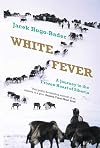
White Fever: A Journey to the Frozen Heart of Siberia
by Jacek Hugo-Bader
On This Page
Description
No one in their right mind travels across Siberia in the middle of winter in a modified Russian jeep, with only a CD player (which breaks on the first day) for company. But Jacek Hugo-Bader is no ordinary traveler. As a fiftieth birthday present to himself, Jacek Hugo-Bader sets out to drive from Moscow to Vladivostok, traversing a continent that is two and a half times bigger than America, awash with bandits, and not always fully equipped with roads. But if his mission sounds deranged it is show more in keeping with the land he is visiting. For Siberia is slowly dying -- or, more accurately, killing itself. This is a traumatized post-Communist landscape peopled by the homeless and the hopeless: alcoholism is endemic, as are suicides, murders, and deaths from AIDS. As he gets to know these communities and speaks to the people, Hugo-Bader discovers a great deal of tragedy, but also dark humor to be shared amongst the reindeer shepherds, the former hippies, the modern-day rappers, the homeless and the sick, the shamans, and the followers of 'one of the six Russian Christs,' just one of the many arcane religions that flourish in this isolated, impossible region. show lessTags
Recommendations












































Member Reviews
This book is supposed to be the travelogue of Hugo-Bader, a Polish journalist who decides, for his 50th birthday, to drive from Moscow to Vladivostok. In winter.
And while there is definitely some of the travel in here--distances, times, gas, breakdowns--mostly this book is about the people he meets in a few particular people. We meet the native Evenk; the people living near Semipalitinsk, Kazahkstan, who were exposed to nuclear testing in the 1950s/60s; Kalishnikov who designed the gun named for him; Miss HIV and others dealing with the disease; former residents of state farms; Shamans; alcoholics and drug users; prostitutes; and the residents of a religious sect who strile him as very happy. Hugo-Bader very much focuses on the bad in show more Siberia--drugs, alcohol, poverty, AIDS. He does discuss how the Native people struggle with alcohol and meets with a Native doctor who discusses metabolisms, loss of culture and language, poverty. But this book is called "White Fever"--which is apparently how Russians refer to delirium tremens (severe alcohol withdrawal). I thought it was referring to Siberia in winter. It feels a little flippant and disrespectful, because that is certainly not all the book is about.
But while he largely focuses on those struggling to get by in the new Russia, or those who have "reverted" to older ways of living (comune, shamansim) he largely glosses over the clever mechanics who keep his car running without the proper parts, the doctors and nurses, the teachers, the motel owners and cooks. Presumably there are lots of people living their lives, raising their families, going about their days, who are largely boring regular people. It's hard to see if they really exist with this book. show less
And while there is definitely some of the travel in here--distances, times, gas, breakdowns--mostly this book is about the people he meets in a few particular people. We meet the native Evenk; the people living near Semipalitinsk, Kazahkstan, who were exposed to nuclear testing in the 1950s/60s; Kalishnikov who designed the gun named for him; Miss HIV and others dealing with the disease; former residents of state farms; Shamans; alcoholics and drug users; prostitutes; and the residents of a religious sect who strile him as very happy. Hugo-Bader very much focuses on the bad in show more Siberia--drugs, alcohol, poverty, AIDS. He does discuss how the Native people struggle with alcohol and meets with a Native doctor who discusses metabolisms, loss of culture and language, poverty. But this book is called "White Fever"--which is apparently how Russians refer to delirium tremens (severe alcohol withdrawal). I thought it was referring to Siberia in winter. It feels a little flippant and disrespectful, because that is certainly not all the book is about.
But while he largely focuses on those struggling to get by in the new Russia, or those who have "reverted" to older ways of living (comune, shamansim) he largely glosses over the clever mechanics who keep his car running without the proper parts, the doctors and nurses, the teachers, the motel owners and cooks. Presumably there are lots of people living their lives, raising their families, going about their days, who are largely boring regular people. It's hard to see if they really exist with this book. show less
An odd sort of travel book really. Details of the traveling we only in the last chapter of the book. What this book really is about is the people of Russia and Siberia.
He writes about the places and people that he meets, and highlights the just how desperate and poor the people are in the post Soviet era. I didn't realise just how big a problem they have with Aids now, let alone what is going to happen in the future.
He writes about the places and people that he meets, and highlights the just how desperate and poor the people are in the post Soviet era. I didn't realise just how big a problem they have with Aids now, let alone what is going to happen in the future.
Ratings
Members
- Recently Added By
Lists

Books about Russia and the former USSR
67 works; 12 members

Sense of place
156 works; 13 members
Author Information

12+ Works 220 Members
Awards and Honors
Awards
Notable Lists
Common Knowledge
- Canonical title
- White Fever: A Journey to the Frozen Heart of Siberia
- Original title
- Biała gorączka
- Important places
- Siberia, Russia
Classifications
- Genres
- Travel, Nonfiction, Biography & Memoir, General Nonfiction
- DDC/MDS
- 915.70486 — History & geography Geography & travel Geography of and travel in Asia Siberia
- LCC
- DK756.2 .H8413 — History of Europe, Asia, Africa and Oceania Russia. Soviet Union. Former Soviet Republics – Poland History of Russia. Soviet Union. Former Soviet Republics Local history and description Siberia
- BISAC
Statistics
- Members
- 112
- Popularity
- 290,526
- Reviews
- 2
- Rating
- (4.16)
- Languages
- 7 — English, German, Hungarian, Italian, Polish, Spanish, Swedish
- Media
- Paper, Ebook
- ISBNs
- 14
- ASINs
- 2