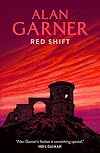
Red Shift
by Alan Garner
On This Page
Description
A disturbing exploration of the inevitability of life. Under Orion's stars, bluesilver visions torment Tom, Macey and Thomas as they struggle with age-old forces. Distanced from each other in time, and isolated from those they live among, they are yet inextricably bound together by the sacred power of the moon's axe and each seek their own refuge at Mow Cop. Can those they love so intensely keep them clinging to reality? Or is the future evermore destined to reflect the past?Tags
Recommendations























Member Reviews
Where to start with a book like this? It's been said of Garner's work that it's complex, not complicated, and that seems fair.
There's a simplicity in presenting much of the story as dialogue, but as the time periods of the present day, 17th and 2nd centuries overlap and intertwine, there's more going on than is immediately apparent.
I picked this up in the Children's section, but this is far from suitable for a child, in terms of the interplay of dialogue, the swearing, the references to sex, rape used as a weapon of war, murder, beheadings, and themes of isolation, alienation and the breakdown of personality.
In the Romano-British period, we are with survivors of the historically mysterious Legio IX Hispania, the Ninth Legion who show more disappeared from Imperial records, possibly (or possibly not) in an uprising of the Celtic Brigantes tribe. Garner translates their Roman soldierly talk into that of modern day special forces, seeking to survive in the hostile territory that became Cheshire by "going tribal". One of their number has fits of violently psychotic behaviour, replicated in the 17th century by a Cheshire villager, living in the same area, and further linked by possession of a Bronze Age stone axe. The historical Civil War Barthomley Massacre of 1643 is the setting of these episodes, and while not explicitly named, the Royalist leader of the massacre, John, 1st Lord Byron, proves that "mad, bad, and dangerous to know" ran in that family.
In 1973, Tom and Jan, late teens in a long distance relationship, have found the axe and keep it as a talisman to feel connected with each other. Tom's disintegrating mental health resonates with his historical counterparts, and I think there's a hint of metempsychosis in their shared visions.
Then there are the possible autobiographical elements of Garner's own experiences of being bipolar, growing up in this exact area, and, like modern Tom, being the first of his family to enter higher education, and feeling alienated from them as a result.
There's no neat conclusion, and it's simultaneously bewildering, frustrating and marvelous! 4.75♦️ show less
There's a simplicity in presenting much of the story as dialogue, but as the time periods of the present day, 17th and 2nd centuries overlap and intertwine, there's more going on than is immediately apparent.
I picked this up in the Children's section, but this is far from suitable for a child, in terms of the interplay of dialogue, the swearing, the references to sex, rape used as a weapon of war, murder, beheadings, and themes of isolation, alienation and the breakdown of personality.
In the Romano-British period, we are with survivors of the historically mysterious Legio IX Hispania, the Ninth Legion who show more disappeared from Imperial records, possibly (or possibly not) in an uprising of the Celtic Brigantes tribe. Garner translates their Roman soldierly talk into that of modern day special forces, seeking to survive in the hostile territory that became Cheshire by "going tribal". One of their number has fits of violently psychotic behaviour, replicated in the 17th century by a Cheshire villager, living in the same area, and further linked by possession of a Bronze Age stone axe. The historical Civil War Barthomley Massacre of 1643 is the setting of these episodes, and while not explicitly named, the Royalist leader of the massacre, John, 1st Lord Byron, proves that "mad, bad, and dangerous to know" ran in that family.
In 1973, Tom and Jan, late teens in a long distance relationship, have found the axe and keep it as a talisman to feel connected with each other. Tom's disintegrating mental health resonates with his historical counterparts, and I think there's a hint of metempsychosis in their shared visions.
Then there are the possible autobiographical elements of Garner's own experiences of being bipolar, growing up in this exact area, and, like modern Tom, being the first of his family to enter higher education, and feeling alienated from them as a result.
There's no neat conclusion, and it's simultaneously bewildering, frustrating and marvelous! 4.75♦️ show less
Rating: 4.8* of five
The Publisher Says: Collins YA editionA disturbing exploration of the inevitability of life. Under Orion's stars, bluesilver visions torment Tom, Macey and Thomas as they struggle with age-old forces. Distanced from each other in time, and isolated from those they live among, they are yet inextricably bound together by the sacred power of the moon's axe and each seek their own refuge at Mow Cop. Can those they love so intensely keep them clinging to reality? Or is the future evermore destined to reflect the past?
NYRB edition In second-century Britain, Macey and a gang of fellow deserters from the Roman army hunt and are hunted by deadly local tribes. Fifteen centuries later, during the English Civil War, Thomas show more Rowley hides from the ruthless troops who have encircled his village. And in contemporary Britain, Tom, a precocious, love-struck, mentally unstable teenager, struggles to cope with the imminent departure for London of his girlfriend, Jan.
Three separate stories, three utterly different lives, distant in time and yet strangely linked to a single place, the mysterious, looming outcrop known as Mow Cop, and a single object, the blunt head of a stone axe: all these come together in Alan Garner’s extraordinary Red Shift, a pyrotechnical and deeply moving elaboration on themes of chance and fate, time and eternity, visionary awakening and destructive madness.
My Review: Why didn't I hear about this back in 1973? I'd've lapped it right up with happy warbles and gruntled slurps. But what completely baffles me is how anyone could read this unpunctuated marvel of modernism and say, "YA shelves, next!" or even more utterly inapt, "Fantasy novel incoming!" WHAT. THE. ACTUAL. FUCK. are these people thinking? Teens might get absorbed in the time-travel element, and some goodly percentage of them will like the Cormac McCarthy-esque attributionless dialogue, but the fantasy reader is going away very sorely disappointed. Yes, there's a goddess, and heaven knows we're up to our hips in angsty teens. BUT THAT'S NOT THE POINT!
*fantods*
Okay, I've been ungently squawked at for spoilery reviews. (Good lord, grow up people! Don't read reviews of books you want to read if you're phobic about it!) There are three stories here. All of them take place in a very very tight geographical locus. They are separated by 1500 years (earliest to middle) and 300 years (middle to modern). The dialogue is all modern English, and still Alan Garner manages to convey a sense of the temporal location of the story...if you're paying attention!
And all the teens are able to experience each other. It's all psychometric in genesis (go look it up if it's new to you), and Garner handles it *beautifully* by not Explaining it, only making sure you know what happens as a result of the time loops.
I'm not sure what else I can say without giving too much of the game away, so let's cut to the chase: I don't like phauntaisee nawvelles and I'm pretty durned hmmmmm about time travel these post-Outlander days. And this novel, this gem of a McCarthy-writes-The Sound and the Fury-with-Virginia-Woolf novel, hooked me, gaffed me through the gills, landed me in the bottom of the boat and (at the very very end) exploded my teensy ickle brain-like thing with wowee.
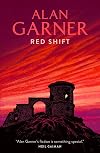
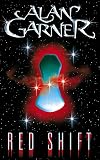
So why aren't all sorts of people warbling their lungs out about it? Same reason I didn't until today: Never heard of it. I picked it up, idly, unsuspectingly, from a shelf in the house...looked at the "99¢" Day-Glo orange Jamesway sticker on the silver-foil coated jacket, winced, and then
and then
oh some more and then
And now here I am, warbling about a YA time-travel teen-angsty romantic novel. With me on how weird that is? See the thing that doesn't fit the picture, namely me smiling?
Buy. Read. Yes. show less
The Publisher Says: Collins YA editionA disturbing exploration of the inevitability of life. Under Orion's stars, bluesilver visions torment Tom, Macey and Thomas as they struggle with age-old forces. Distanced from each other in time, and isolated from those they live among, they are yet inextricably bound together by the sacred power of the moon's axe and each seek their own refuge at Mow Cop. Can those they love so intensely keep them clinging to reality? Or is the future evermore destined to reflect the past?
NYRB edition In second-century Britain, Macey and a gang of fellow deserters from the Roman army hunt and are hunted by deadly local tribes. Fifteen centuries later, during the English Civil War, Thomas show more Rowley hides from the ruthless troops who have encircled his village. And in contemporary Britain, Tom, a precocious, love-struck, mentally unstable teenager, struggles to cope with the imminent departure for London of his girlfriend, Jan.
Three separate stories, three utterly different lives, distant in time and yet strangely linked to a single place, the mysterious, looming outcrop known as Mow Cop, and a single object, the blunt head of a stone axe: all these come together in Alan Garner’s extraordinary Red Shift, a pyrotechnical and deeply moving elaboration on themes of chance and fate, time and eternity, visionary awakening and destructive madness.
My Review: Why didn't I hear about this back in 1973? I'd've lapped it right up with happy warbles and gruntled slurps. But what completely baffles me is how anyone could read this unpunctuated marvel of modernism and say, "YA shelves, next!" or even more utterly inapt, "Fantasy novel incoming!" WHAT. THE. ACTUAL. FUCK. are these people thinking? Teens might get absorbed in the time-travel element, and some goodly percentage of them will like the Cormac McCarthy-esque attributionless dialogue, but the fantasy reader is going away very sorely disappointed. Yes, there's a goddess, and heaven knows we're up to our hips in angsty teens. BUT THAT'S NOT THE POINT!
*fantods*
Okay, I've been ungently squawked at for spoilery reviews. (Good lord, grow up people! Don't read reviews of books you want to read if you're phobic about it!) There are three stories here. All of them take place in a very very tight geographical locus. They are separated by 1500 years (earliest to middle) and 300 years (middle to modern). The dialogue is all modern English, and still Alan Garner manages to convey a sense of the temporal location of the story...if you're paying attention!
And all the teens are able to experience each other. It's all psychometric in genesis (go look it up if it's new to you), and Garner handles it *beautifully* by not Explaining it, only making sure you know what happens as a result of the time loops.
I'm not sure what else I can say without giving too much of the game away, so let's cut to the chase: I don't like phauntaisee nawvelles and I'm pretty durned hmmmmm about time travel these post-Outlander days. And this novel, this gem of a McCarthy-writes-The Sound and the Fury-with-Virginia-Woolf novel, hooked me, gaffed me through the gills, landed me in the bottom of the boat and (at the very very end) exploded my teensy ickle brain-like thing with wowee.
So why aren't all sorts of people warbling their lungs out about it? Same reason I didn't until today: Never heard of it. I picked it up, idly, unsuspectingly, from a shelf in the house...looked at the "99¢" Day-Glo orange Jamesway sticker on the silver-foil coated jacket, winced, and then
and then
oh some more and then
And now here I am, warbling about a YA time-travel teen-angsty romantic novel. With me on how weird that is? See the thing that doesn't fit the picture, namely me smiling?
Buy. Read. Yes. show less
If Elidor was about a family haunted by a place, Red Shift is about a place haunted by itself. Three lives intersect at the far end of the perceptible spectrum, at a point triangulated by the stars of Orion, the the top of Mow Cop Hill and a prehistoric stone axe-head. Troubled young men at odds with their world and their time and their families and communities and with reality itself love three young women in circumstances that strain them to breaking point, and at the breaking point they break through time to each other in their trauma and pain.
A modern couple under pressure from distance and class and unspoken secrets. A Civil War -era couple besieged by fear and violence. A Roman-era couple mired in horror and savagery. Boundaries show more are increasingly less defined. Unattributed dialogue and prose so sparse it has whole worlds of meaning packed into each word. Raw emotions and uncontrollable inner demons set Tom and Thomas and Macey apart from everything, yet they yearn for the comforts of family and community and love, but in each era there is only one person who will accept them for who they are and their struggle to hold onto that person breaks time itself.
A raw, bitter, brutal book, but also painfully beautiful and filled with the power of place and time and myth. There is time, and there is space, and there is the person who must find themselves and find love somewhere in all that time and space, and the more connected to to the vastness of both, the harder that is. show less
A modern couple under pressure from distance and class and unspoken secrets. A Civil War -era couple besieged by fear and violence. A Roman-era couple mired in horror and savagery. Boundaries show more are increasingly less defined. Unattributed dialogue and prose so sparse it has whole worlds of meaning packed into each word. Raw emotions and uncontrollable inner demons set Tom and Thomas and Macey apart from everything, yet they yearn for the comforts of family and community and love, but in each era there is only one person who will accept them for who they are and their struggle to hold onto that person breaks time itself.
A raw, bitter, brutal book, but also painfully beautiful and filled with the power of place and time and myth. There is time, and there is space, and there is the person who must find themselves and find love somewhere in all that time and space, and the more connected to to the vastness of both, the harder that is. show less
My all-time favourite book. Alan Garner weaves together three separate stories taking place in the same geographical Cheshire, England locations in Roman time, Civil War times and modern day. The title refers referrs to how light appears to change colour when objects (planets) are moving away from (red) or toward the observer (blue). Astronomers use this to judge distance. It's like the Doppler Effect, when an ambulance's siren changes tone as it approaches and then passes. In the book, the reader's perceptions and understandings change as the characters' perceptions and understandings change. Love and loyalty turn to betrayal and distrust and ultimately some kind of acceptance, albeit not fully resolved. Indeed, the shift of characters show more is red - away from each other. Some readers may find it difficult to follow, with many passages consisting of dialogue where you need to work out who is speaking, before the scene abryuptly shifts to a different time. Like many Garner books, it features young people as lead characters but that doesn't make it a young readers' book. I've read it at least 10 times, and find it devastating every time. show less
I read this novel as a teenager about the same age as Tom and Jan and have always said this is my favourite Alan Garner novel as the story has stayed with me but I wondered if I would still enjoy it as much now that I am older. In fact I think I enjoyed it more. Tom and Jan's love story is still as moving and emotional as I found it then and I feel for them as they try to maintain a long-distance relationship, meeting only every eight weeks by the end I was heart-broken once again. Woven around this story of 1970s Britain are two other stories, one set in Roman times and one in the Civil War and linking them all is a stone. Alan Garner places all this in Cheshire around Mow Cop on the border with Staffordshire and his sense of place is show more second to none. His ability to tell historical tales with folk tales and a contemporary love story is a feat he pulls off very well. I love the dialogue and the beautiful poetry he gives the conversations too. show less
If you're a fan of Margo Lanagan, you may have seen her refer to Garner, and this book in particular, in one or more interviews. There's a reason. Like her, Garner carefully and tersely tells a complex story (three in fact), with some scenes of horrific but never gratuitous brutality, never stopping for explication of background, or pointers to a moral, except perhaps in the very closing line. Unlike Lanagan, and Garner's previous work, this is told largely in dialogue, like a play without even the stage directions to say who is speaking. I presume the goal was to keep the author's voice as hidden as possible, and possibly to allow those scenes of brutality to be present but not seen, like a radio drama without sound effects.
I first show more read this when it came out nearly 40 years ago, having enjoyed his previous fantasies for children. I didn't get much of the book then. Sadly I haven't gotten any smarter after several decades, but though it remains out of my full reach, Red Shift remains one of my favorites. show less
I first show more read this when it came out nearly 40 years ago, having enjoyed his previous fantasies for children. I didn't get much of the book then. Sadly I haven't gotten any smarter after several decades, but though it remains out of my full reach, Red Shift remains one of my favorites. show less
I first read this book as a teenager and found it haunting and moving. I come to reread it 30 odd years later and still find it a powerful book. Alan Garner is one of our finest writers and here he concocts a story made up of three interlinking strands. All feature a troubled boy protagonist and a 5000 year old stone axe. The present day story features two teenage lovers, Jan and Tom. Tom lives with his parents in a caravan, fighting his inner demons while trying to cope with his feelings for Jan. Another story features Roman legionnaires, survivors of the massacred Ninth legion who seek sanctuary on Mow Cop hill. The final strand is set in the Civil War and tells of the massacre at Barthomley, near Mow Cop.
Mow Cop, it's castle and show more folly tower, it's church and the surrounding landscape all loom large in the story. The three protagonists are linked by visions all seemingly connected to the stone axe.
Garner roots his tales in the landscape and Red Shift is no exception. It's a short novel, less than 200 pages long. But he packs a powerful emotional punch into those pages, as the tragedy and mystery unfold in each strand. There are no easy resolutions here and the book is all the more affecting for that.
A fine read. show less
Mow Cop, it's castle and show more folly tower, it's church and the surrounding landscape all loom large in the story. The three protagonists are linked by visions all seemingly connected to the stone axe.
Garner roots his tales in the landscape and Red Shift is no exception. It's a short novel, less than 200 pages long. But he packs a powerful emotional punch into those pages, as the tragedy and mystery unfold in each strand. There are no easy resolutions here and the book is all the more affecting for that.
A fine read. show less
Members
- Recently Added By
Lists

The Guardian's 1000 Novels Everyone Must Read
1,005 works; 547 members

Best Children's Books You've Read
197 works; 74 members

Favorite Childhood Books
1,646 works; 517 members
Bibliography for Among Others
159 works; 15 members

Year 9 Reading List
29 works; 3 members
What Makes This Book So Great
102 works; 16 members

Cawthorn and Moorcock's Fantasy: The 100 Best Books
110 works; 7 members

Reading history in Children's Books
78 works; 3 members

Backlisted Podcast
65 works; 3 members
Backlisted
109 works; 9 members

Wyrd as Folk
43 works; 4 members

Books Read in 2025
4,091 works; 97 members
Author Information

49+ Works 10,975 Members
Some Editions
Awards and Honors
Series
Belongs to Publisher Series
Work Relationships
Is contained in
Has the adaptation
Was inspired by
Has as a commentary on the text
Common Knowledge
- Canonical title
- Red Shift
- Original title
- Red Shift
- Original publication date
- 1973
- People/Characters
- Tom; Jan; Thomas Rowley; Margery Rowley; John Fowler; Thomas Venables (show all 14); John Byron, 1st Lord Byron; Macey; Logan; Face; Magoo; Buzzard; Corn Goddess; Legio IX Hispania
- Important places
- Rudheath, Cheshire, England, UK; Mow Cop, Cheshire, England, UK; Crewe, Cheshire, England, UK; Barthomley, Cheshire, England, UK; St. Bertoline's Church, Barthomley, Cheshire, England, UK; Roman Britain
- Important events
- Revolt of the Brigantes (circa 108 CE); Disappearance of Legio IX Hispania (Ninth Legion, Roman Empire); English Civil War; Barthomley Massacre (English Civil War, 24-12-1643)
- Related movies
- Red Shift (1978 | IMDb)
- Dedication
- For Billy
- First words
- 'Shall I tell you?'
- Last words
- (Click to show. Warning: May contain spoilers.)it doesn't matter. Not really now not any more.
- Blurbers
- LeGuin, Ursula K.; Gaiman, Neil
- Original language
- English
Classifications
Statistics
- Members
- 934
- Popularity
- 28,425
- Reviews
- 20
- Rating
- (3.82)
- Languages
- English, German, Swedish
- Media
- Paper, Ebook
- ISBNs
- 16
- UPCs
- 1
- ASINs
- 15