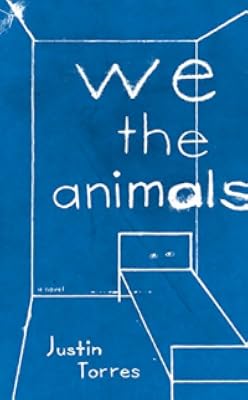
We the Animals
by Justin Torres
On This Page
Description
"An exquisite, blistering debut novel. Three brothers tear their way through childhood-- smashing tomatoes all over each other, building kites from trash, hiding out when their parents do battle, tiptoeing around the house as their mother sleeps off her graveyard shift. Paps and Ma are from Brooklyn--he's Puerto Rican, she's white--and their love is a serious, dangerous thing that makes and unmakes a family many times. Life in this family is fierce and absorbing, full of chaos and heartbreak show more and the euphoria of belonging completely to one another. From the intense familial unity felt by a child to the profound alienation he endures as he begins to see the world, this beautiful novel reinvents the coming-of-age story in a way that is sly and punch-in-the-stomach powerful. Written in magical language with unforgettable images, this is a stunning exploration of the viscerally charged landscape of growing up, how deeply we are formed by our earliest bonds, and how we are ultimately propelled at escape velocity toward our futures"--Provided by publisher. show lessTags
Recommendations
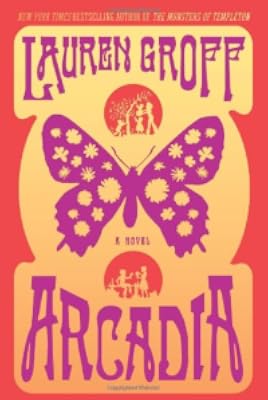
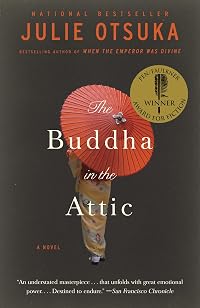
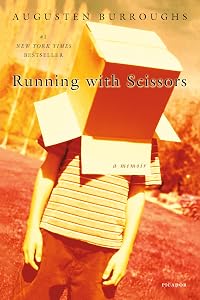
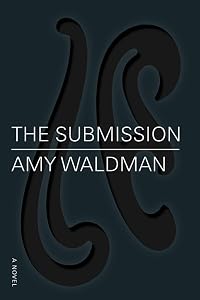
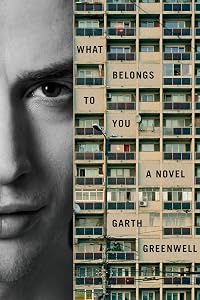
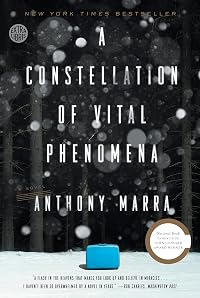
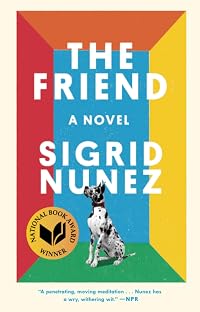

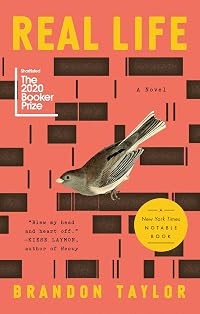



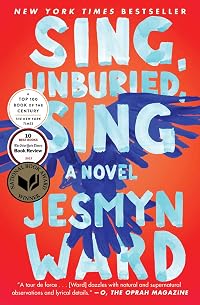
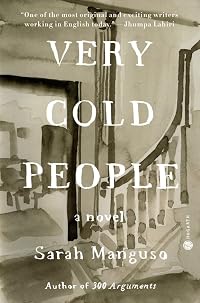
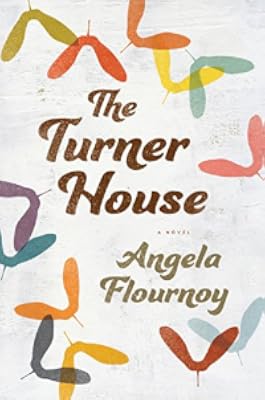
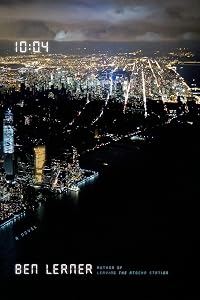


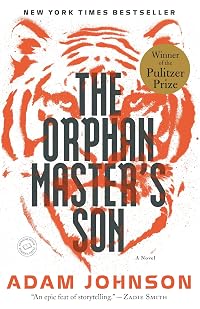
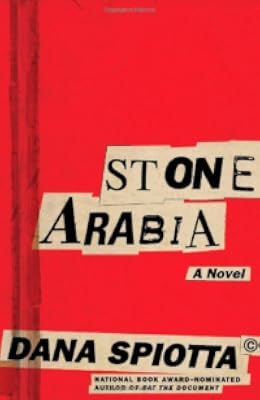
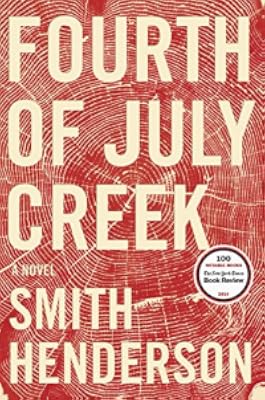
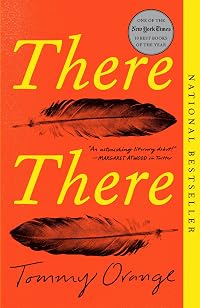

Member Recommendations
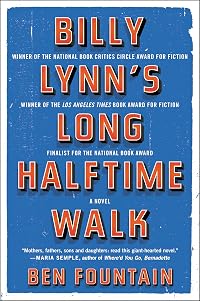
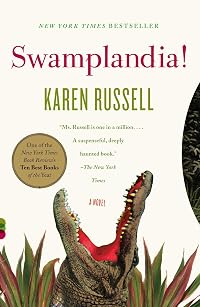
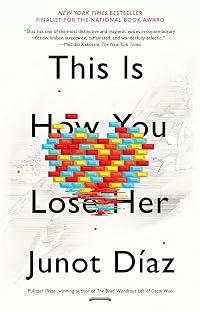
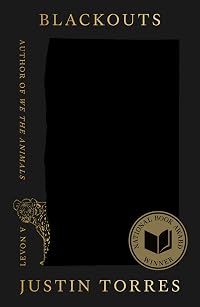
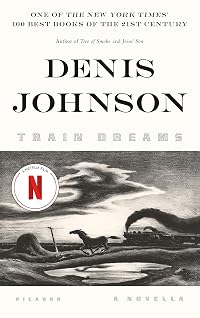
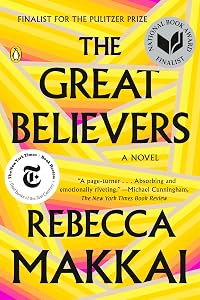
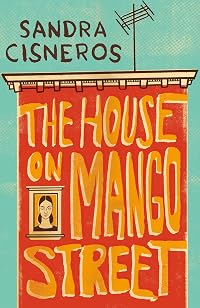
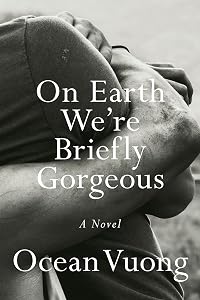
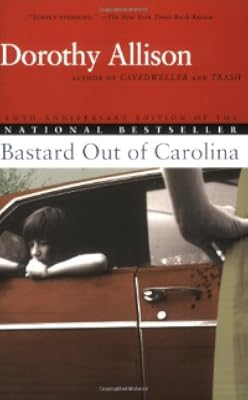
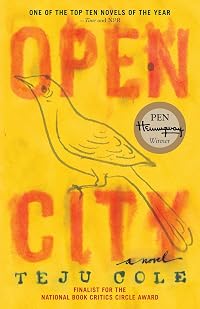
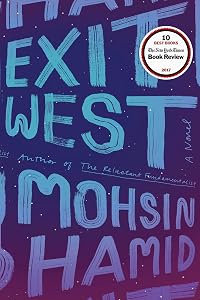
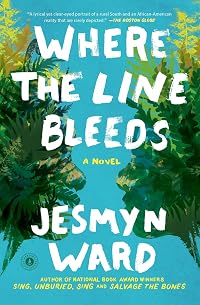
circumspice Another difficult coming of age novel about poverty and family dysfunction told in short, searing chapters.
Member Reviews
A brief, intense book about three brothers in a poor mixed-race family surviving childhood. In a sense, I want to thank the author for setting this story down. Almost all of the characters in "We the Animals" are socially marginal, uneducated, and barely able to articulate their own experiences; you get the feeling that Torres is rescuing something from the void here and telling stories that could easily have disappeared entirely. It certainly doesn't hurt that his prose is marvelously sensual and direct: the author often forsakes the visual for a sort of all-over full-body writing. This is a sort of nighttime book: from the prospective of his young, stressed-out protagonists, every event seems both mysterious, troubling and dreamlike. show more It's only toward the very end of "We the Animals" that I found some cause for complaint. The book is, as other have mentioned, probably too short, and this family's story is left unfinished, even if the author suggests that most of its members are likely to meet unhappy fates. Its last scene, though touching and exquisitely written, could also be criticized for being sort of hokey and too overtly metaphorical. Still, most of the other cheapo e-books I've taken a flyer on aren't anywhere near this accomplished. "We the Animals" was a lovely surprise. show less
“Now a boy of all wild beasts the most difficult to manage.”
-Plato
Small books can pack quite a punch and this debut novel is a prime example. It follows three young brothers, of mixed heritage, as they blast through childhood, in upstate New York, with a volatile father and a hard-working, mostly absent mother. At turns, funny, sad, violent and touching, the edgy prose blossoms like a dark flower.
“We made kites: trash bags on strings. We ran, slipped, the knees of our dungarees all grass stained, we got up, ran, choked ourselves half to death with laughter, but we found speed, and our trash kites soared.”
-Plato
Small books can pack quite a punch and this debut novel is a prime example. It follows three young brothers, of mixed heritage, as they blast through childhood, in upstate New York, with a volatile father and a hard-working, mostly absent mother. At turns, funny, sad, violent and touching, the edgy prose blossoms like a dark flower.
“We made kites: trash bags on strings. We ran, slipped, the knees of our dungarees all grass stained, we got up, ran, choked ourselves half to death with laughter, but we found speed, and our trash kites soared.”
Understated and poetic, this is one of those novels that, however short, is still powerful and brilliant. Torres' writing is spot-on, and the characters are both believable and entertaining. For all of this, the downfall is in the end the length of the book--everything is so packed into a short space that the book just doesn't have the impact which it might otherwise. Much of the book is spent with readers getting to know the characters, and while all of that time is well-spent, the climax and ending pages come far too quickly for the slow and subtle build-up. I'll read more of Torres' work, and might well recommend this one, but I hope that in the future he'll take his time with the action and last fourth of the book, as he did in the show more first half and beginning pages. show less
Yes, it's well written. But I was conscious all the time that I was reading A Work of Art—that the story of these three boys growing up had been filtered and refined retrospectively by the eye, ear, and pen of the youngest, the "I" at the core of its largely first-person-plural narration. There's nothing wrong with that per se, but it means we receive the story, not via someone the protagonist's age, but via an adult whose primary concern is making art: it comes as material, not experience. And the experience is and should be what attracts a reader to these stories (they are strung together into a novel, but they can all stand alone quite well). The nature and expression of the bonds among brothers—moreover, brothers whose "Paps" is show more Puerto Rican and whose "Ma" is white, with all the differences that implies in views of masculinity and male roles—is fantastic material for a book. It shouldn't need to be told in the first person; it shouldn't matter that it culminates in a life and career for its narrator that tears the family apart. Frankly, I don't care and I don't want to know who the narrator becomes as an adult: I want to hear about the kids.
The last story, "The Night I Am Made" (the longest in the book, the only one with subsections of its own, the only one with a real plot involving multiple events, not just event epiphany)—that last story is where we're suddenly thrust into the narrator's adult, first-person-singular perspective. It tells the events and revelations which spell the end of the family unit, particularly the unit of "we" three brothers. It's a good story too, and it tells of an experience worth reading about, from the perspective of its more-or-less adult protagonist. (We can't help but suspect that protagonist is a version of the author. Is this really a novel, or is it a memoir?) But after 17 tales of the brothers-as-unit, it's an unwelcome shift. Joyce managed a smooth transition from the child's perspective to the adult's, and specifically the adult-as-writer, in [b:A Portrait of the Artist as a Young Man|7588|A Portrait of the Artist as a Young Man|James Joyce|http://photo.goodreads.com/books/1309376772s/7588.jpg|3298883]. Sure, he was Joyce, but that means it can be done, and I didn't see it happening here.
I'd love to read the same stories told by Manny or Joel, rather than Justin.
(The book overall is remarkably similar to Malick's The Tree of Life, and the film has the same flaw: the Sean Penn character forces an adult perspective which is unnecessary and unwelcome, especially when the child's perspective has been presented so well. But, unless you're a very slow reader, the book will go faster!) show less
The last story, "The Night I Am Made" (the longest in the book, the only one with subsections of its own, the only one with a real plot involving multiple events, not just event epiphany)—that last story is where we're suddenly thrust into the narrator's adult, first-person-singular perspective. It tells the events and revelations which spell the end of the family unit, particularly the unit of "we" three brothers. It's a good story too, and it tells of an experience worth reading about, from the perspective of its more-or-less adult protagonist. (We can't help but suspect that protagonist is a version of the author. Is this really a novel, or is it a memoir?) But after 17 tales of the brothers-as-unit, it's an unwelcome shift. Joyce managed a smooth transition from the child's perspective to the adult's, and specifically the adult-as-writer, in [b:A Portrait of the Artist as a Young Man|7588|A Portrait of the Artist as a Young Man|James Joyce|http://photo.goodreads.com/books/1309376772s/7588.jpg|3298883]. Sure, he was Joyce, but that means it can be done, and I didn't see it happening here.
I'd love to read the same stories told by Manny or Joel, rather than Justin.
(The book overall is remarkably similar to Malick's The Tree of Life, and the film has the same flaw: the Sean Penn character forces an adult perspective which is unnecessary and unwelcome, especially when the child's perspective has been presented so well. But, unless you're a very slow reader, the book will go faster!) show less
This reminded me a little bit of The Glass Castle, though it is fiction. It is still a toxic way to raise kids and has some autobiographical overtones. The narrator is the youngest of three brothers all very close in age, born to a young mother and an abusive father. "Papa and Ma are from Brooklyn -- he's Puerto Rican, she's white - and their love is serious, dangerous thing that makes and unmakes a family many times" (Book jacket) The boys are raised in a remote area of upstate NY, where they are essentially feral and come to rely solely on each other, though they are as apt to beat each other silly as they are to help each other out and unite against a common enemy. It is told in a series of vignettes that are like verbal photographs show more -- capturing a moment, a memory, an event so precisely and poignantly -- and ultimately completing the album of a childhood they are lucky to survive. The narrator has his own coming-of-age issues that separate him from his band of brothers -- he is intelligent, he likes to learn, and he is gay, though his alienation begins prior to this. It is a story of survival and the wonder that someone with these twisted stunted roots can still grow and blossom. It is a short novel, which makes some of the heartbreak endurable and seems to be propelled with urgency toward a better end. "... a gorgeous, deeply humane book. Every page sings, and every scene startles." (blurb by Daniel Alarcon) Fun personal connection: a friend/colleague I know is mentioned in the acknowledgements for her role in the author's life as his English teacher. show less
Justin Torres' We the Animals is filled with captivating, poetic substance, portraying the difficulties of a young boy coming of age in a tumultuous environment. Torres’s story is heartbreakingly honest, with its dark aspects of the human condition such as feeling like an outsider or fending for survival. Throughout the text, the main character and his brothers are depicted as "animals", as they scavenger for food and play together as a pack. Their family life is chaotic at best, with an abusive father who often leaves without warning and a mother who must work the night shift to support her family, often leaving her disoriented. Although these scenes lead us to be empathetic toward these young boys, Torres also provides images of show more love, as both of the parents spend time with their children. The genius behind this short novel is its complicated depiction of the relationship between love and violence. This story does not only portray the dysfunction of a family, it also honestly depicts the love that may even propel these violent actions.
By the end of the novel, we see a whole other aspect of the main character’s story. As he comes to terms with his sexuality, he begins to feel more alienated from his family, who have always been his "pack". The story is told with a we pronoun at the beginning, yet ends with the perspective of I. This sort of alienation is an interesting spin on the coming of age novel, in which a happy ending is not necessarily reached.
Torres's writing is beautiful, exhilarating and captivating. I found myself immersed in the novel from the beginning. Each chapter is a snapshot view of the life of this character and can be viewed as a series of short stories that loosely connect, leading to the end scene. What Torres has portrayed in this novel is just that- how a collection of life experiences can lead us to who we are today. Beautifully written with a captivating complexity, this novel is one you must read. show less
By the end of the novel, we see a whole other aspect of the main character’s story. As he comes to terms with his sexuality, he begins to feel more alienated from his family, who have always been his "pack". The story is told with a we pronoun at the beginning, yet ends with the perspective of I. This sort of alienation is an interesting spin on the coming of age novel, in which a happy ending is not necessarily reached.
Torres's writing is beautiful, exhilarating and captivating. I found myself immersed in the novel from the beginning. Each chapter is a snapshot view of the life of this character and can be viewed as a series of short stories that loosely connect, leading to the end scene. What Torres has portrayed in this novel is just that- how a collection of life experiences can lead us to who we are today. Beautifully written with a captivating complexity, this novel is one you must read. show less
The opening line is: We wanted more. This is a coming-of-age story focused on three brothers growing up in upstate New York; it is narrated by the youngest boy. Their parents married as teenagers and struggle to make do. Paps is a frequently-out-of-work alcoholic. Ma toils long hours on the graveyard shift, and occasionally sinks into depression. Left largely to fend for themselves, the boys grow up as wild animals. In various scenes they are rambunctious, energetic, tender, seeking adventure, neglected, abused, hungry, confused and lonely. And always, they want more - food, attention, love, security.
Torres writes with a unique prose-poetry style that packs a powerful punch. Sentences and phrases tumble over one another as three boys at show more play will do – each demanding ALL your attention until the next comes along and does the same thing. It’s raw and compelling. There were times when I gasped aloud and times when I chuckled at the boys’ mischievous antics.
However … At about page 100 (of 125 pages) the novel takes a VERY dark turn. I felt completely sucker punched by the descriptions of the narrator’s awakening sexuality. The language is graphic and violent. The choppy, short sentences that moved the story forward for the first 100 pages were completely inadequate to explain what was happening in the characters’ lives. Having pictured the boys as somewhere between 8-12 years old, I’m suddenly confronted with scenes that must involve 15-17-year-olds (or I sure hope so, though even that is young). I felt completely disconnected from the story at that point and re-read the last 15 or so pages twice to ensure I hadn’t somehow missed something. Torres is clearly talented, but the hole he left in this work is a huge disappointment.
I give the book 3*** in recognition of the emotional impact, especially in the first 100 pages.
WARNING - readers averse to crude language or reading about homosexuality might want to avoid this book. show less
Torres writes with a unique prose-poetry style that packs a powerful punch. Sentences and phrases tumble over one another as three boys at show more play will do – each demanding ALL your attention until the next comes along and does the same thing. It’s raw and compelling. There were times when I gasped aloud and times when I chuckled at the boys’ mischievous antics.
However … At about page 100 (of 125 pages) the novel takes a VERY dark turn. I felt completely sucker punched by the descriptions of the narrator’s awakening sexuality. The language is graphic and violent. The choppy, short sentences that moved the story forward for the first 100 pages were completely inadequate to explain what was happening in the characters’ lives. Having pictured the boys as somewhere between 8-12 years old, I’m suddenly confronted with scenes that must involve 15-17-year-olds (or I sure hope so, though even that is young). I felt completely disconnected from the story at that point and re-read the last 15 or so pages twice to ensure I hadn’t somehow missed something. Torres is clearly talented, but the hole he left in this work is a huge disappointment.
I give the book 3*** in recognition of the emotional impact, especially in the first 100 pages.
WARNING - readers averse to crude language or reading about homosexuality might want to avoid this book. show less
Members
- Recently Added By
Published Reviews
ThingScore 75
added by gsc55
This brief but extraordinary novel defies easy categorization, but in it Torres demonstrates a mastery of prose seldom encountered in first books.
added by prosperosbook
Lists

Short and Sweet
245 works; 24 members

Literature by People of Color
81 works; 9 members

Lithub: The 50 Best Contemporary Novels Under 200 Pages
50 works; 4 members

Dysfunctional Families
133 works; 7 members

2008-2012 Notable Books for Adults
127 works; 10 members

"We" narration
49 works; 2 members

Animals in the Title
498 works; 11 members

NYT 100 best books of 21st C
100 works; 31 members

Books Read in 2025
4,091 works; 97 members
Author Information

4+ Works 2,193 Members
Some Editions
Awards and Honors
Awards
Distinctions
Common Knowledge
- Canonical title
- We the Animals
- Original publication date
- 2011
- Important places
- New York, New York, USA
- Blurbers
- Cunningham, Michael; Robinson, Marilynne; Harding, Paul
Classifications
Statistics
- Members
- 1,479
- Popularity
- 15,698
- Reviews
- 74
- Rating
- (3.57)
- Languages
- 8 — Dutch, English, French, German, Italian, Russian, Spanish, Swedish
- Media
- Paper, Audiobook, Ebook
- ISBNs
- 33
- ASINs
- 9