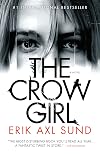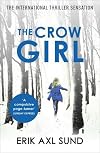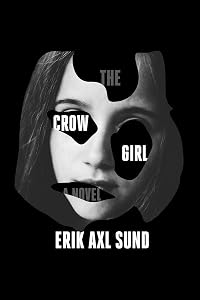
The Crow Girl
by Erik Axl Sund, Håkan Axlander Sundquist (Author), Jerker Eriksson (Author)
Victoria Bergman (Collections and Selections — Omnibus 1-3)
On This Page
Description
It begins in a Stockholm city park where the abused body of a young boy is discovered. Detective Superintendent Jeanette Kihlberg heads the investigation, battling an apathetic prosecutor and a bureaucratic police force unwilling to devote resources to solving the murder of an immigrant child. But with the discovery of the mutilated corpses of two more children, it becomes clear that a serial killer is at large. Superintendent Kihlberg turns to therapist Sofia Zetterlund for her expertise in show more the psychopathology of those who kill, and the lives of the two women become quickly intertwined - professionally and personally. As they draw closer to each other and to the truth about the killings, what surfaces is the undeniable fact that these murders are only the most obvious evidence of an insidious evil woven deep into Swedish society. show lessTags
Recommendations
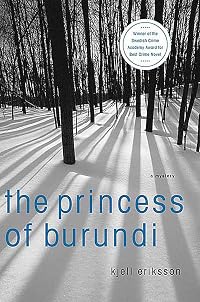
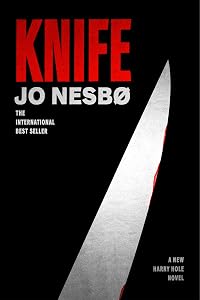
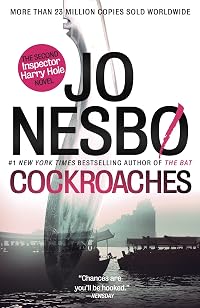
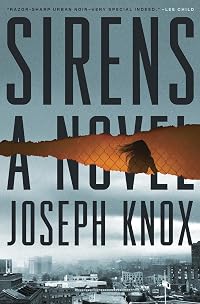






Member Recommendations
by anonymous user
by TAir
Member Reviews
The Crow Girl is not a novel that is going to garner a lot of attention this summer. It is long, which always scares off potential readers for some reason. Moreover, it is dark. So, so dark. Its subject matter is not for the faint of heart by any means. Yet, for those who do finish it, what they discover is a book that manages to discuss some of the most difficult topics in society with dignity. It does so without resorting to graphic descriptions or other forms of sensationalism. It is a book that dredges the very bottom of mankind but still leaves a reader hopeful.
That is not to say that The Crow Girl is perfect. In fact, it is anything but perfect. For one, while the authors do an admirable job presenting severe mental illness, the show more narrative becomes extremely difficult to follow at times as a result. This is in part because the narrator is the one suffering from mental illness, so it is as if readers get an intimate look into her mind. However, for this complex story with a large cast of characters, this intimacy also makes it difficult to figure out what is happening.
There is also an issue with the specificity of location. The authors have what could be termed a compulsion to be as specific as possible about the location of the narrative as it progresses. There is an overabundance of street names within the story, which may mean more for someone familiar with Stockholm and the surrounding areas but means absolutely nothing to the average American. That being said, the story gains nothing from this specificity. The authors do this to show that such horrific crimes can occur within any neighborhood with the most unassuming people as its perpetrators, but they could have just as easily made their point with fewer street names and a more generic statement.
Lastly, there is a dullness to the entire novel, as if the authors are so afraid of making a misstep in regards to its touchy subject matter that they omitted emotion from all of the characters. One sees this most in Sofia and Jeannette’s relationship which grows from suspicion to mutual admiration to friendship to love with no fanfare. There is just no connection between them that would indicate a growing closeness. The same holds true for almost everything Jeannette and Sofia face individually. There should be rage and horror, despondency and a deep sense of betrayal. Instead, their stories are simply flat.
In a way, this lack of emotion is a good thing as the subject matter is just so difficult. Severe child abuse, child sex slave trade, severe mental trauma, gruesome murders – The Crow Girl has it all. None are easy subjects, but this novel layers them together in a creative fashion that works surprisingly well. Still, were there that added emotion that would make the characters more realistic, the story might prove to be too difficult for readers to tackle.
The Crow Girl is admirably ambitious in its scope, and the authors succeed fairly well in their attempts to present a grand novel about abuse, mental illness, and murder. The characters might feel flat, but they do grow and develop. More importantly, as hideous as the crimes committed within the novel are, the story ends on a note of hope. It does not have a fairy tale ending in which everyone lives happily ever after, but there is sufficient closure for readers to understand that this is as good as it could possibly get from some of the characters. The fact that some of the cast is able to move on and look towards the future is the greatest indicator of hope there is – hope that good will triumph, hope of survival against life’s greatest traumas.
While The Crow Girl is not the type of novel that will be popular or will generate even a modicum of buzz from the publishing world, I am still glad I read it for it is a fascinating study into the mindset of the mentally ill. This is on top of the fact that it is a decent murder mystery that takes you down several twisty paths before arriving at its heartbreaking conclusion. It is one of the toughest books I have ever read due to its subject matter, but that makes it that much more satisfying upon finishing it. show less
That is not to say that The Crow Girl is perfect. In fact, it is anything but perfect. For one, while the authors do an admirable job presenting severe mental illness, the show more narrative becomes extremely difficult to follow at times as a result. This is in part because the narrator is the one suffering from mental illness, so it is as if readers get an intimate look into her mind. However, for this complex story with a large cast of characters, this intimacy also makes it difficult to figure out what is happening.
There is also an issue with the specificity of location. The authors have what could be termed a compulsion to be as specific as possible about the location of the narrative as it progresses. There is an overabundance of street names within the story, which may mean more for someone familiar with Stockholm and the surrounding areas but means absolutely nothing to the average American. That being said, the story gains nothing from this specificity. The authors do this to show that such horrific crimes can occur within any neighborhood with the most unassuming people as its perpetrators, but they could have just as easily made their point with fewer street names and a more generic statement.
Lastly, there is a dullness to the entire novel, as if the authors are so afraid of making a misstep in regards to its touchy subject matter that they omitted emotion from all of the characters. One sees this most in Sofia and Jeannette’s relationship which grows from suspicion to mutual admiration to friendship to love with no fanfare. There is just no connection between them that would indicate a growing closeness. The same holds true for almost everything Jeannette and Sofia face individually. There should be rage and horror, despondency and a deep sense of betrayal. Instead, their stories are simply flat.
In a way, this lack of emotion is a good thing as the subject matter is just so difficult. Severe child abuse, child sex slave trade, severe mental trauma, gruesome murders – The Crow Girl has it all. None are easy subjects, but this novel layers them together in a creative fashion that works surprisingly well. Still, were there that added emotion that would make the characters more realistic, the story might prove to be too difficult for readers to tackle.
The Crow Girl is admirably ambitious in its scope, and the authors succeed fairly well in their attempts to present a grand novel about abuse, mental illness, and murder. The characters might feel flat, but they do grow and develop. More importantly, as hideous as the crimes committed within the novel are, the story ends on a note of hope. It does not have a fairy tale ending in which everyone lives happily ever after, but there is sufficient closure for readers to understand that this is as good as it could possibly get from some of the characters. The fact that some of the cast is able to move on and look towards the future is the greatest indicator of hope there is – hope that good will triumph, hope of survival against life’s greatest traumas.
While The Crow Girl is not the type of novel that will be popular or will generate even a modicum of buzz from the publishing world, I am still glad I read it for it is a fascinating study into the mindset of the mentally ill. This is on top of the fact that it is a decent murder mystery that takes you down several twisty paths before arriving at its heartbreaking conclusion. It is one of the toughest books I have ever read due to its subject matter, but that makes it that much more satisfying upon finishing it. show less
This review covers a book, published in English, which contains three books previously released in Sweden as Krakflickan, Hungerelden and Pythians Ansvisnigar. And let me tell you I’m really glad about that. About halfway through part 1, which I assume is the first novel, things got so dark, bleak and crazy that I thought I’d give up if there were two more books to go. After a bit of research I realized I had all three and pushed on. It did take some mental fortitude though since the entire book seems to revel in violence and degradation. As you’d think, men are the perpetrators and women and children the recipients. It’s pretty darn awful, but written in such a way that I wanted to see how it ended. The grisly parts got show more skimmed.
The book is told in short little vignettes that read like scenes in a movie. Each is labeled and so you know who will be the focus for the section. One is Jeanette, a cop in Stockholm trying to solve multiple murders of young boys; some illegal and unknown, some identified, but so down the social ladder that her bosses don’t really care. The other POV is Sofia, a psychologist who eventually is tagged to help Jeanette in her investigation. There is a lot of authorial sleight-of-hand and many things are not what they seem. Much of Sophia’s narrative goes back in time with her patients and her past; both of which are horrific enough to break your brain. A lot of the time with Jeanette is devoted to her crumbling marriage and struggles with being a female police officer with high rank.We also get a bit from some other cops and a repulsive Prosecutor named von Kwist. It's definitely a product of its time and there are a lot of contemporary pop culture references and references to life in Sweden/Stockholm. I called up a map so I could understand the geography. It's VERY politically correct on all fronts. Anyone who isn't at least a little bi-curious is the weirdo and of course women can't succeed as easily as men because men are assholes. Illegals/immigrants are just as, if not more important than a political appointee who gets into a major scrape. You get the idea. I'm not saying they're wrong, but it's laid on pretty thick.
The story is fairly drawn out and detailed and as an American I was a bit appalled at some of the things built into the Swedish system of justice. In the end, I suppose it works for them but imagine a prosecutor here being able to dictate who the investigators can and cannot question. What?? Crazy. Also crimes seem to get individual budgets that are set at the start of a case. Probably that’s the same here, but it’s covert. The writing isn’t elegant and there are some translation issues, but it moves right along. If you like really odd thrillers with a big psychological component (both analysis and mental illness) and can stomach a whole heck of a lot of torture porn, this series is worth checking out. show less
The book is told in short little vignettes that read like scenes in a movie. Each is labeled and so you know who will be the focus for the section. One is Jeanette, a cop in Stockholm trying to solve multiple murders of young boys; some illegal and unknown, some identified, but so down the social ladder that her bosses don’t really care. The other POV is Sofia, a psychologist who eventually is tagged to help Jeanette in her investigation. There is a lot of authorial sleight-of-hand and many things are not what they seem. Much of Sophia’s narrative goes back in time with her patients and her past; both of which are horrific enough to break your brain. A lot of the time with Jeanette is devoted to her crumbling marriage and struggles with being a female police officer with high rank.We also get a bit from some other cops and a repulsive Prosecutor named von Kwist. It's definitely a product of its time and there are a lot of contemporary pop culture references and references to life in Sweden/Stockholm. I called up a map so I could understand the geography. It's VERY politically correct on all fronts. Anyone who isn't at least a little bi-curious is the weirdo and of course women can't succeed as easily as men because men are assholes. Illegals/immigrants are just as, if not more important than a political appointee who gets into a major scrape. You get the idea. I'm not saying they're wrong, but it's laid on pretty thick.
The story is fairly drawn out and detailed and as an American I was a bit appalled at some of the things built into the Swedish system of justice. In the end, I suppose it works for them but imagine a prosecutor here being able to dictate who the investigators can and cannot question. What?? Crazy. Also crimes seem to get individual budgets that are set at the start of a case. Probably that’s the same here, but it’s covert. The writing isn’t elegant and there are some translation issues, but it moves right along. If you like really odd thrillers with a big psychological component (both analysis and mental illness) and can stomach a whole heck of a lot of torture porn, this series is worth checking out. show less
Definitely not for the faint hearted this one. To call it Noir is like talking about the Pope's funny hat. Any darker and it would've disappeared up some terrible orifice with a great deal of pain and a very full description.
Like any book, as you read you build up a picture of the characters and what is happening. This book however, lets you do that and then piece by piece, stroke by stroke undoes everything you thought you knew about anything in the book. In any other book this would appear contrived and frustrating but in this book it is done so superbly well that you cannot help but be drawn further and further into it.
It is very tempting to add some spoilers to illustrate what I am talking about but I really do not like adding show more spoilers. Suffice it to say that in this book are some of the most remarkable plot devices that I have ever come across. I was stunned at certain revelations many times throughout this book. I say "revelations" but in fact it was much more subtle than that it was like the reality that I thought I was seeing suddenly morphed into a completely different reality.
At around 800 pages it requires a certain fortitude and commitment to read this book to the end given how dark it is, how graphically descriptive it is, and how thoroughly shocking it is. Having said that I would urge anyone who likes a good crime novel to pick this up and set aside some good reading time. show less
Like any book, as you read you build up a picture of the characters and what is happening. This book however, lets you do that and then piece by piece, stroke by stroke undoes everything you thought you knew about anything in the book. In any other book this would appear contrived and frustrating but in this book it is done so superbly well that you cannot help but be drawn further and further into it.
It is very tempting to add some spoilers to illustrate what I am talking about but I really do not like adding show more spoilers. Suffice it to say that in this book are some of the most remarkable plot devices that I have ever come across. I was stunned at certain revelations many times throughout this book. I say "revelations" but in fact it was much more subtle than that it was like the reality that I thought I was seeing suddenly morphed into a completely different reality.
At around 800 pages it requires a certain fortitude and commitment to read this book to the end given how dark it is, how graphically descriptive it is, and how thoroughly shocking it is. Having said that I would urge anyone who likes a good crime novel to pick this up and set aside some good reading time. show less
This is a tough book to evaluate. On one hand I loved it and did not want to put it down, but had to due to its length and weight – it is 768 pages long and a rather hefty tome. On the other hand the descriptions of the numerous victims in the story are horrific, and there are many victims in this tale, so reading so much of this is rather repulsive. However, the writing is wonderful, the storyline is intriguing and the end is something I did not anticipate. When I learned that the original Swedish version was three separate books that the English version combined into one, its length made more sense. I gave it a high rating because while I both loved and was repulsed by it, I never wavered in my desire to find out what happened next show more right up to the end. show less
I haven't rated this book because I've abandoned it three hours in to a thirty hour book.
The writing is excellent. The characterisation is subtle and clear. The sense of doom is all pervasive.
I just couldn't cope with the subject matter. Three hours of contemplating the rationale for, mechanics of and damage inflicted by child abuse was as much as I could stomach. Another twenty-seven hours of it was inconceivable.
If you have a stronger stomach than I do, I'm sure you'll find this to be a compellong read with three strong but flawed woman as the main characters.
The writing is excellent. The characterisation is subtle and clear. The sense of doom is all pervasive.
I just couldn't cope with the subject matter. Three hours of contemplating the rationale for, mechanics of and damage inflicted by child abuse was as much as I could stomach. Another twenty-seven hours of it was inconceivable.
If you have a stronger stomach than I do, I'm sure you'll find this to be a compellong read with three strong but flawed woman as the main characters.
"How much can a human being withstand before they turn into a monster?"
For me, a glaring difference between (most) crime thrillers from the States versus those from Scandinavian countries is that the latter tends to be more character-driven. Many US crime fiction novels are just that - crime fiction. They've got the detective, the perpetrator, the crime, the investigation; they read as procedurals. Scandinavian crime fiction, on the other hand, brings crime fiction to a whole new level by straying away from the genre's traditional formula. Stieg Larsson's "The Girl With the Dragon Tattoo" is a classic example. Scandinavian crime fiction stories tend to be grittier and complex - they probe endlessly at problems within Swedish (in this show more instance) society and use the narrative techniques of crime fiction to do so.
"The Crow Girl" is a deeply psychological novel. It surpasses "Gone Girl" by eons. As of right now, this book epitomises the psychological crime genre for me, because it balances both psychology and crime seamlessly together to form a very genuine story - one that's not trying to be a psychological crime novel. And most importantly, it uses both genres to explore societal issues and age-long questions about human endurance.
She thinks about what determines the value of a human life. Is it the number of mourners at the funeral, the financial value of the estate, or the media interest in the death? The social influence of the deceased? Their country of origin or skin colour? Or the sum of police resources allocated to a murder investigation?"
I don't think I can properly introduce the complex cast of characters in this book largely because the discovery of these characters is part of the experience for the reader. In my opinion, the psychological turns serve not to shock (in fact, I expected a lot of it), but to serve as an analysation of one of the overall themes of the book, illustrated by the first quote. It's a story that explores the vicious cycle of unimaginable pain and insurmountable hatred, victim and perpetrator; every character has their own set of motivations, and the lengths they go to achieve their goals plays a large part in the way these seemingly unrelated characters' lives collide.
"The Crow Girl" is emotionally crushing, but in my opinion it is so very important that it be read. I think this book adequately contributes to an understanding of the psychology of violence, pain, and the ways the human mind tries to protect itself. It has the potential to inspire people to learn more about a deep-seated issue that affects millions in societies beyond just Scandinavia; this alone makes the effort to read it worth it.
Last but not least: Jerker Eriksson and Håkan Axlander Sundquist have done a brilliant job writing some of the book's most prolific scenes. There are moments where the imagery and pacing are incredibly cinematic. The story will literally creep into you until you feel like its dark brutality has parked itself deep inside you.
Kudos to translator Neil Smith for taking this HUGE trilogy on and doing it fantastically. show less
For me, a glaring difference between (most) crime thrillers from the States versus those from Scandinavian countries is that the latter tends to be more character-driven. Many US crime fiction novels are just that - crime fiction. They've got the detective, the perpetrator, the crime, the investigation; they read as procedurals. Scandinavian crime fiction, on the other hand, brings crime fiction to a whole new level by straying away from the genre's traditional formula. Stieg Larsson's "The Girl With the Dragon Tattoo" is a classic example. Scandinavian crime fiction stories tend to be grittier and complex - they probe endlessly at problems within Swedish (in this show more instance) society and use the narrative techniques of crime fiction to do so.
"The Crow Girl" is a deeply psychological novel. It surpasses "Gone Girl" by eons. As of right now, this book epitomises the psychological crime genre for me, because it balances both psychology and crime seamlessly together to form a very genuine story - one that's not trying to be a psychological crime novel. And most importantly, it uses both genres to explore societal issues and age-long questions about human endurance.
She thinks about what determines the value of a human life. Is it the number of mourners at the funeral, the financial value of the estate, or the media interest in the death? The social influence of the deceased? Their country of origin or skin colour? Or the sum of police resources allocated to a murder investigation?"
I don't think I can properly introduce the complex cast of characters in this book largely because the discovery of these characters is part of the experience for the reader. In my opinion, the psychological turns serve not to shock (in fact, I expected a lot of it), but to serve as an analysation of one of the overall themes of the book, illustrated by the first quote. It's a story that explores the vicious cycle of unimaginable pain and insurmountable hatred, victim and perpetrator; every character has their own set of motivations, and the lengths they go to achieve their goals plays a large part in the way these seemingly unrelated characters' lives collide.
"The Crow Girl" is emotionally crushing, but in my opinion it is so very important that it be read. I think this book adequately contributes to an understanding of the psychology of violence, pain, and the ways the human mind tries to protect itself. It has the potential to inspire people to learn more about a deep-seated issue that affects millions in societies beyond just Scandinavia; this alone makes the effort to read it worth it.
Last but not least: Jerker Eriksson and Håkan Axlander Sundquist have done a brilliant job writing some of the book's most prolific scenes. There are moments where the imagery and pacing are incredibly cinematic. The story will literally creep into you until you feel like its dark brutality has parked itself deep inside you.
Kudos to translator Neil Smith for taking this HUGE trilogy on and doing it fantastically. show less
A long, very disturbing and complex crime novel set mainly in Sweden which features a murder investigation lead by D.S. Jeanette Kihlberg. Shortly after the discovery of the first victim, others are found and the investigation expands to try to link them and discover the perpetrator. In due course, the help of o psychotherapist, Sofia Zetterlund, is sought in order to produce a profile of the killer. Both Jeanette and Sofia have unresolved issues in the lives and are mutually attracted, which adds another complication to the investigation. At times the novel moves rather slowly and at one point the pace of the book is reflected as “Jeanette feels like she’s talking to an encyclopaedia” and also there are a plethora of Stockholm show more street names. The novel explores the horrific crimes of child abuse and the driving force for the murders is revenge. There is no way that you can foresee the end and even Jeanette feels that she has not resolved the true background to the crimes. show less
Members
- Recently Added By
Lists

Books Read in 2016
4,666 works; 199 members

Scandinavian Crime
90 works; 3 members

Reading List - Scandinavian Fiction
134 works; 3 members

Allie's List of Books I Want To Read
93 works; 1 member

Books Read in 2025
4,091 works; 97 members
Author Information

16 Works 1,451 Members
Some Editions
Awards and Honors
Distinctions
The Guardian Book of the Day (2016-04-26)
Series

Belongs to Publisher Series
Work Relationships
Common Knowledge
- Canonical title
- The Crow Girl
- Original title
- Kråkflickan
- Original publication date
- 2016-06-14
- People/Characters
- Jeanette Kihlberg (police detective superintendent); Victoria Bergman; Jens Hurtig (police); Samuel Bai; Tyra Mäkelä (convicted murderer); Karl Lundström (show all 14); Ivo Andrić (pathologist); Åke (husband of Jeanette); Johan (son of Jeanette and Åke); Åhlund (police); Schwarz (police); Dennis Billing (police commissioner, boss of Jeanette); Sofia Zetterlund (psychotherapist); Ann-Britt Eriksson (receptionist for Sofia)
- Important places
- Stockholm, Sweden
- Epigraph*
- Dunkel ist unser Leben. Groß unsere angeborene Enttäuschung - die bewirkt, dass überhaupt so viele Märchen in Skandinaviens Wäldern blühen. Düster verkohlt der Hungerbrand unseres Herzens. Viele werden zu Wächtern am ... (show all)Meiler ihres eigenen Herzens; legen im Siechtum ihrer Verträumtheit das Ohr heran und hören, wie ihr Herz rauschend verbrennt.
Harry Martinson: Die Nesseln blühen - Dedication
- in memory of
a sister, those of us who failed,
and those of you who forgave - First words*
- Das Haus war über hundert Jahre alt, und die massiven Steinwände waren meterdick, was bedeutete, dass sie sie wahrscheinlich gar nicht zu isolieren brauchte, aber sie wollte lieber auf Nummer sicher gehen.
- Last words*
- (Click to show. Warning: May contain spoilers.)Victoria Bergman schließt die Augen und erinnert sich.
- Original language
- Swedish
- Canonical DDC/MDS
- 839.738
- Canonical LCC
- PT9877.29.U55
- Disambiguation notice
- This translation is compromised of three works that were originally published separately in slightly different form in 2010, 2011, and 2012 as Kråkflickan (The Crow Girl), Hungerelden (The Hunger Fire), and ... (show all)Pythians Anvisningar (The Pythia's Instructions).
Do not combine this trilogy with its first part with the same name. (recently reseparated, some omnibus editions may be incorrect)
*Some information comes from Common Knowledge in other languages. Click "Edit" for more information.
Classifications
- Genres
- Fiction and Literature, Mystery
- DDC/MDS
- 839.738 — Literature & rhetoric German & related literatures Other Germanic literatures Swedish literature Swedish fiction 2000-
- LCC
- PT9877.29 .U55 — Language and Literature German, Dutch and Scandinavian literatures Swedish literature Individual authors or works 2001-
- BISAC
Statistics
- Members
- 500
- Popularity
- 60,305
- Reviews
- 26
- Rating
- (3.35)
- Languages
- 8 — Danish, English, Finnish, French, German, Portuguese, Spanish, Swedish
- Media
- Paper, Audiobook, Ebook
- ISBNs
- 23
- ASINs
- 7