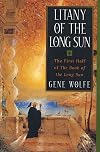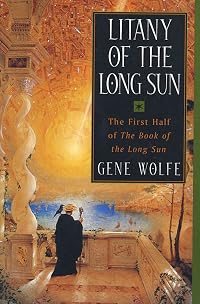
Litany of the Long Sun: Nightside the Long Sun and Lake of the Long Sun
by Gene Wolfe
The Book of the Long Sun (Collections and Selections — Omnibus 1-2), Solar Cycle (Collections and Selections — Omnibus 06,07)
On This Page
Description
Litany of the Long Sun contains the full texts ofNightside the Long Sun andLake of the Long Sun, that together make up the first half of The Book of the Long Sun. This great work is set on a huge generation starship in the same future as the classic Book of the New Sun (also available in two volumes from Orb).Tags
Recommendations
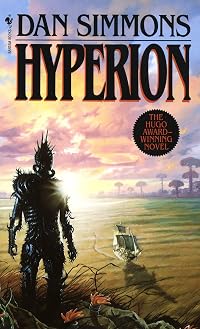
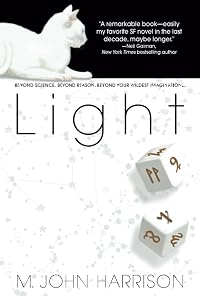
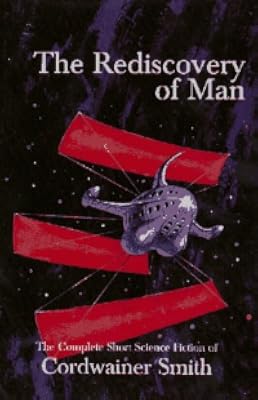
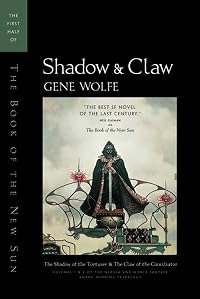

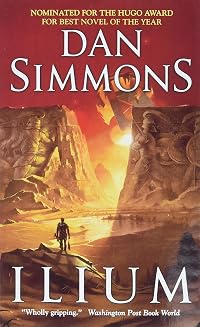
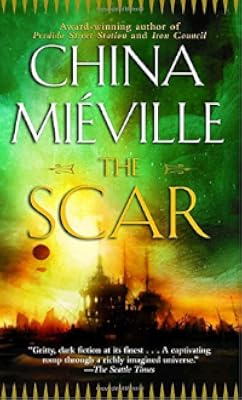
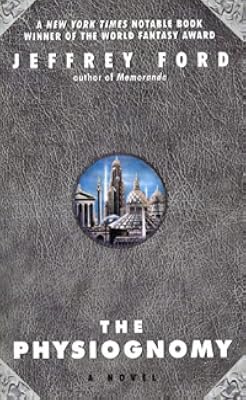
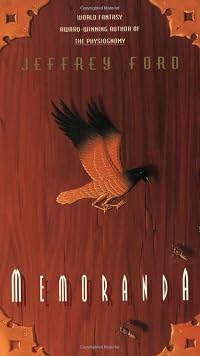
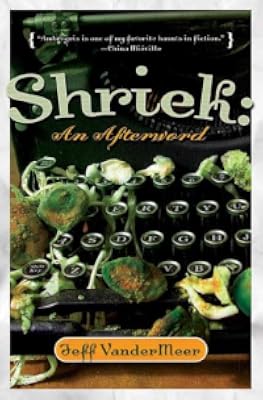
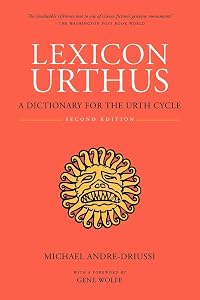
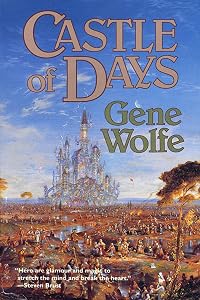


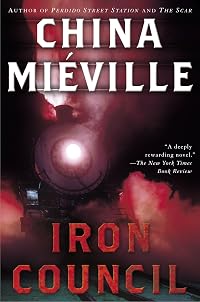

Member Recommendations
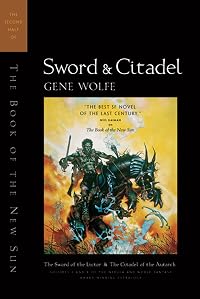
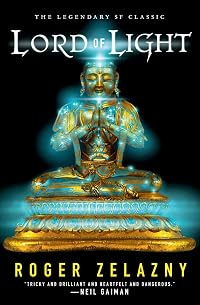
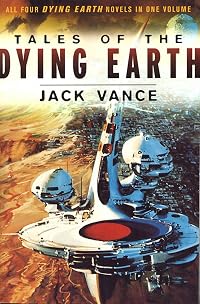
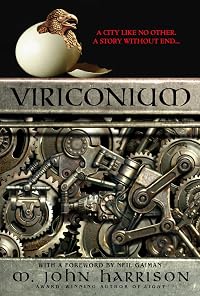
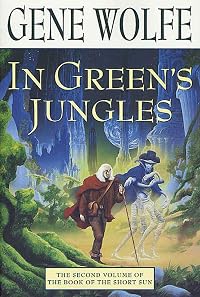
santhony Similar science fiction with focus on a quasi-religious order.
Member Reviews
This volume containing Nightside the Long Sun and Lake of the Long Sun was my first reading in Gene Wolfe's Solar Cycle beyond the Book of the New Sun (including its Urth). While I appreciate that this second series are supposedly set in a shared far-future continuity, there's no intersection of plot, character, or setting with the five New Sun books.
There are quite a few points on which this Long Sun series differs from its predecessor. The chapters are longer and fewer in number, making for a different reading rhythm. It has a distinct central protagonist (and a more likable one, on the whole), but he is not the narrator. There is no concluding declaration for each book, to punctuate the story. In fact, it didn't feel like much was show more resolved at the end of Nightside. So I thought, ok, I'll look at the start of the next book and see if there's a gap in the narrative, then I'll give it a rest for a little before continuing. But--Lake of the Long Sun picks up without any pause for breath. So I ended up reading the first two chapters of the second book in the same sitting as the last one of the first book!
The protagonist Patera Silk's dreams are important in the Long Sun, just as dreams were for Severian in the New Sun. Silk's dreams are described more believably--the telling really communicates the distortions and uncertainty of dream logic, including ambiguity about the reality of events until waking is finally established. Silk is also, like Severian, a reasonably zealous product of a tutelary order. Instead of being a journeyman of the Guild of Torturers, Silk is an augur (priest) of the polytheistic religion of his city, serving in a neighborhood manteion (temple for animal sacrifice) with its attached school. Silk is sometimes called a "butcher," since killing animals is central to his profession. So, despite the augur's relative harmlessness Wolfe again raises for the reader the sort of conundrums he created with his torturer hero. He does a very effective job of making Silk into a conscientious, sympathetic character with "innocence" as his keynote.
Where the New Sun had the alzabo as a means to abrogate the conventional boundaries of personal consciousness, the Long Sun presents a number of instances of divine (and possibly diabolical) possession. The nature and ontological status of the gods is subjected to repeated questioning and re-evaluation by Silk and others over the course of the story, and at this midpoint--with two books of the Long Sun left to go--it doesn't seem to have reached any sense of finality. But effects of divine initiative are certainly real, and they are not limited to theophanies in the "sacred windows," which are quite evidently some sort of electronic display screens.
As in the New Sun books, the Long Sun presents a richly-imagined setting, working its way out from quotidian details to a much larger and stranger picture as the story proceeds. This setting has been subjected to spoilers in jacket copy and reviews, but I'd rather just say that it's completely different than that of the other books. It is more fun to discover it through the book than it would be for me to try to reduce it to some of its larger features. One significant aspect that is introduced at the start is the fact that the city of Viron is a consciously mixed society of "bios" and "chems," where the former are humans of biological descent, and the latter are engineered persons. There is a surprising level of community and reciprocity between these two sorts of people, and Wolfe often plays on the reader's expectations in order to delay awareness that a given character is a chem.
On the whole, I find that these Long Sun books succeed in perpetuating and renewing many of the most interesting tropes and preoccupations of the New Sun series, while transposing them to an entirely new milieu. It's an impressive feat, and I'm looking forward to reading the second half of the Long Sun series. show less
There are quite a few points on which this Long Sun series differs from its predecessor. The chapters are longer and fewer in number, making for a different reading rhythm. It has a distinct central protagonist (and a more likable one, on the whole), but he is not the narrator. There is no concluding declaration for each book, to punctuate the story. In fact, it didn't feel like much was show more resolved at the end of Nightside. So I thought, ok, I'll look at the start of the next book and see if there's a gap in the narrative, then I'll give it a rest for a little before continuing. But--Lake of the Long Sun picks up without any pause for breath. So I ended up reading the first two chapters of the second book in the same sitting as the last one of the first book!
The protagonist Patera Silk's dreams are important in the Long Sun, just as dreams were for Severian in the New Sun. Silk's dreams are described more believably--the telling really communicates the distortions and uncertainty of dream logic, including ambiguity about the reality of events until waking is finally established. Silk is also, like Severian, a reasonably zealous product of a tutelary order. Instead of being a journeyman of the Guild of Torturers, Silk is an augur (priest) of the polytheistic religion of his city, serving in a neighborhood manteion (temple for animal sacrifice) with its attached school. Silk is sometimes called a "butcher," since killing animals is central to his profession. So, despite the augur's relative harmlessness Wolfe again raises for the reader the sort of conundrums he created with his torturer hero. He does a very effective job of making Silk into a conscientious, sympathetic character with "innocence" as his keynote.
Where the New Sun had the alzabo as a means to abrogate the conventional boundaries of personal consciousness, the Long Sun presents a number of instances of divine (and possibly diabolical) possession. The nature and ontological status of the gods is subjected to repeated questioning and re-evaluation by Silk and others over the course of the story, and at this midpoint--with two books of the Long Sun left to go--it doesn't seem to have reached any sense of finality. But effects of divine initiative are certainly real, and they are not limited to theophanies in the "sacred windows," which are quite evidently some sort of electronic display screens.
As in the New Sun books, the Long Sun presents a richly-imagined setting, working its way out from quotidian details to a much larger and stranger picture as the story proceeds. This setting has been subjected to spoilers in jacket copy and reviews, but I'd rather just say that it's completely different than that of the other books. It is more fun to discover it through the book than it would be for me to try to reduce it to some of its larger features. One significant aspect that is introduced at the start is the fact that the city of Viron is a consciously mixed society of "bios" and "chems," where the former are humans of biological descent, and the latter are engineered persons. There is a surprising level of community and reciprocity between these two sorts of people, and Wolfe often plays on the reader's expectations in order to delay awareness that a given character is a chem.
On the whole, I find that these Long Sun books succeed in perpetuating and renewing many of the most interesting tropes and preoccupations of the New Sun series, while transposing them to an entirely new milieu. It's an impressive feat, and I'm looking forward to reading the second half of the Long Sun series. show less
Having read this series out of order (I read the followup novels of the Book of the Short Sun first) gave me an interesting perspective on it, I think.
Some things, I was like, "ah, I wish I had known that" but just as often I thought, "ah, now knowing that makes this more interesting..."
The books tell the story of a young priest in a poor community who, in his efforts to save his church from the development plans of a wealthy crimelord, finds himself reluctantly on the path to greatness...
It's seemingly a simple story, but the complexities of Wolfe's world and his characterizatons catapult it onto another level altogether.
The book takes place on a generational spaceship that the inhabitants have forgotten is a spaceship, worshiping the show more original builders of the project as gods (as they intended). However, the minor(?) god that Patera Silk believes has given him a vision is known as the Outsider, and, Wolfe implies, may actually be God... The book has strong religious themes, but also has plenty of action, humor, oddities and grotesqueries, and more... good stuff! show less
Some things, I was like, "ah, I wish I had known that" but just as often I thought, "ah, now knowing that makes this more interesting..."
The books tell the story of a young priest in a poor community who, in his efforts to save his church from the development plans of a wealthy crimelord, finds himself reluctantly on the path to greatness...
It's seemingly a simple story, but the complexities of Wolfe's world and his characterizatons catapult it onto another level altogether.
The book takes place on a generational spaceship that the inhabitants have forgotten is a spaceship, worshiping the show more original builders of the project as gods (as they intended). However, the minor(?) god that Patera Silk believes has given him a vision is known as the Outsider, and, Wolfe implies, may actually be God... The book has strong religious themes, but also has plenty of action, humor, oddities and grotesqueries, and more... good stuff! show less
Let's get the important thing out of the way first: you need to read this book.
The middle part of Wolfe's Solar Cycle (the Books of the New Sun, Long Sun and Short Sun), The Book of the Long Sun may well be the greatest piece of speculative fiction written in the past two decades. It's certainly the most accessible of Wolfe's work I've read to date - with the sole exception, possibly, of his Wizard Knight duology. Yet while in that series it sometimes felt that Wolfe was opting for simplicity and accessibility at the expense of depth, in The Book of the Long Sun Wolfe manages to combine - rather, to fuse - an engaging adventure story (and several other sorts of story whose nature it would probably be better to discover for yourself) show more with an exploration of issues of faith and morality and a continuing expansion of the mythology and history of the universe first seen in the Book of the New Sun. While I often don't share Wolfe's actual take on these things, it's fascinating to watch him do all this.
Patera Silk is an augur - a member of a religious order called the Chapter - charged with administering to the spiritual needs of the inhabitants of one of the poorest quarters of the city of Viron in which he lives. Yet these are bad times for the Chapter, and for Viron itself. The city is gripped by drought, power is in the hands of the ruthless leaders of the Ayuntamiento, who have overturned the constitution and control the city with fear and military force, no god has appeared at any of the Sacred Windows of the city for decades and - worst of all - there are rumours that the manteion where Silk teaches and preaches is to be sold to a criminal.
While there are certainly strong connections between this book and the New Sun books, I don't feel these are important enough to make any real difference to the order in which potential readers should approach the two. Certainly it would add something to the experience (in particular, it would flesh out the details of one of the background characters in this book), but it simply isn't necessary to have read The Book of The New Sun before attempting this.
In fact, I rather think this series would be an ideal introduction to Wolfe's fiction.
Most of the usual Wolfe tropes are on display: unreliable narrators, mysteries about characters' parentage, games with names and naming conventions and the sort of vocabulary that makes you fear the author has swallowed a dictionary. But above and beyond all that, Wolfe is just an incredible writer, capable of simultaneously juggling a couple of dozen distinctly voiced and motivated characters, neatly laying out the clues for mysteries and plot developments that won't be revealed for another three, four, or five hundred pages, seamlessly weaving together any number of different plot arcs, revealing huge amounts about people and places without ever resorting to obvious exposition, and just simply writing good prose: words, sentences, paragraphs and chapters that you enjoy reading and want to read more of.
Rereading Litany ... now, for what must be the fourth or fifth time (as preparation for what will be my second attempt at the Short Sun books), I was struck particularly by the amount of effort and care that Wolfe has so obviously put in to these books. Wolfe is an author enamored of mysteries and secrets and revelations, but he doesn't cheat: the clues are all firmly in place, almost as soon as the book begins. That a work with so many twists can still be so gripping after several readings is surely a testament to what an impressive achievement this series really is.
Read this book. You won't regret it. show less
The middle part of Wolfe's Solar Cycle (the Books of the New Sun, Long Sun and Short Sun), The Book of the Long Sun may well be the greatest piece of speculative fiction written in the past two decades. It's certainly the most accessible of Wolfe's work I've read to date - with the sole exception, possibly, of his Wizard Knight duology. Yet while in that series it sometimes felt that Wolfe was opting for simplicity and accessibility at the expense of depth, in The Book of the Long Sun Wolfe manages to combine - rather, to fuse - an engaging adventure story (and several other sorts of story whose nature it would probably be better to discover for yourself) show more with an exploration of issues of faith and morality and a continuing expansion of the mythology and history of the universe first seen in the Book of the New Sun. While I often don't share Wolfe's actual take on these things, it's fascinating to watch him do all this.
Patera Silk is an augur - a member of a religious order called the Chapter - charged with administering to the spiritual needs of the inhabitants of one of the poorest quarters of the city of Viron in which he lives. Yet these are bad times for the Chapter, and for Viron itself. The city is gripped by drought, power is in the hands of the ruthless leaders of the Ayuntamiento, who have overturned the constitution and control the city with fear and military force, no god has appeared at any of the Sacred Windows of the city for decades and - worst of all - there are rumours that the manteion where Silk teaches and preaches is to be sold to a criminal.
While there are certainly strong connections between this book and the New Sun books, I don't feel these are important enough to make any real difference to the order in which potential readers should approach the two. Certainly it would add something to the experience (in particular, it would flesh out the details of one of the background characters in this book), but it simply isn't necessary to have read The Book of The New Sun before attempting this.
In fact, I rather think this series would be an ideal introduction to Wolfe's fiction.
Most of the usual Wolfe tropes are on display: unreliable narrators, mysteries about characters' parentage, games with names and naming conventions and the sort of vocabulary that makes you fear the author has swallowed a dictionary. But above and beyond all that, Wolfe is just an incredible writer, capable of simultaneously juggling a couple of dozen distinctly voiced and motivated characters, neatly laying out the clues for mysteries and plot developments that won't be revealed for another three, four, or five hundred pages, seamlessly weaving together any number of different plot arcs, revealing huge amounts about people and places without ever resorting to obvious exposition, and just simply writing good prose: words, sentences, paragraphs and chapters that you enjoy reading and want to read more of.
Rereading Litany ... now, for what must be the fourth or fifth time (as preparation for what will be my second attempt at the Short Sun books), I was struck particularly by the amount of effort and care that Wolfe has so obviously put in to these books. Wolfe is an author enamored of mysteries and secrets and revelations, but he doesn't cheat: the clues are all firmly in place, almost as soon as the book begins. That a work with so many twists can still be so gripping after several readings is surely a testament to what an impressive achievement this series really is.
Read this book. You won't regret it. show less
I bounced back and forth between 3 and 4 stars in every other chapter of this book. (As a side note, those 4 star ratings I gave Book of the New Sun desperately need to be revisited, because my estimation of them has only grown with time.) There are parts of this that feel as rich and inspired as anything in Book of the New Sun, and there are other parts that just feel like Wolfe reveling in being Wolfe - not that there's anything wrong with that, but it doesn't really make for a fun reading experience on the first pass. The ending is great, though, and I'm curious to see where this goes.
This is the best Gene Wolfe book I've ever read.
To be fair, I'm not sure if I just finally got used to his style. When I read the New Sun, I hadn't gotten used to his manner of embedding meaning in typically meaningless places. For instance, instead of using a concrete noun to describe something in a plot sequence, he would use adjectives which made reading a lot trickier for me (a dragon-like face descended and closed about him vs. the face of the dragon descended and closed about him). It makes certain segments more ambiguous about what they are really saying when there isn't much noun redundancy.
His character viewpoints are the best I have ever read and he is often lauded for this trait. His characters are self-centered, show more non-omniscient, and often incorrect. I love it. I wish more authors wrote in this style.
The actual plot of this novel is gearing up to be the same sort of rise to power while discovering a new world type of arc that New Sun had. Through the plot, we follow Silk as he loses his innocence and grow to understand world events unfolding within the whorl through his eyes. At certain points it reads like a mystery novel, at certain points a religious sermon, and at certain points old-school science fiction. The hints of science fiction elements that he doesn't fully understand and yet the reader understands are fun to read.
Overall, I would highly recommend this book to any science fiction fan. show less
To be fair, I'm not sure if I just finally got used to his style. When I read the New Sun, I hadn't gotten used to his manner of embedding meaning in typically meaningless places. For instance, instead of using a concrete noun to describe something in a plot sequence, he would use adjectives which made reading a lot trickier for me (a dragon-like face descended and closed about him vs. the face of the dragon descended and closed about him). It makes certain segments more ambiguous about what they are really saying when there isn't much noun redundancy.
His character viewpoints are the best I have ever read and he is often lauded for this trait. His characters are self-centered, show more non-omniscient, and often incorrect. I love it. I wish more authors wrote in this style.
The actual plot of this novel is gearing up to be the same sort of rise to power while discovering a new world type of arc that New Sun had. Through the plot, we follow Silk as he loses his innocence and grow to understand world events unfolding within the whorl through his eyes. At certain points it reads like a mystery novel, at certain points a religious sermon, and at certain points old-school science fiction. The hints of science fiction elements that he doesn't fully understand and yet the reader understands are fun to read.
Overall, I would highly recommend this book to any science fiction fan. show less
This fantasy novel is very similar in style to Neil Stephenson’s Anathem. As in that work, the author in Litany of the Long Sun constructs an alien culture and landscape centered on a quasi-religious order. In doing so, many terms and references are completely foreign to the reader. However, unlike Anathem, no glossary or appendix is included to explain these foreign terms. The result is many pages in which the reader is somewhat left to his own devices in interpreting the text.
Now, I’m used to a period of familiarization, but I’ve never read an entire book and still been left largely in the dark as to the nature, function or even any explanation whatsoever concerning so many terms and characters. Even the most foreign and show more difficult to grasp fantasy landscapes clue the reader in to an extent necessary to understand and enjoy the narrative. As an example, what is a “sybil”? Is it a robot? Is it a part biological, part mechanical hybrid? One of them eats, while another does not. One is 300 years old while another is 90 years old and on the verge of wearing out. What is their origin and/or function?
I was able to follow the story through the first “book”, but midway through the second book, I lost my way. Perhaps dialogue such as the following contributed to my confusion:
“They’ll beat it out of you, grab the deck and
send you with him. It’d be a lily grab on you, Jugs,
‘cause you helped him. As for the Patera here,
Crane saw to his hoof and rode him to Orchid’s
in his own dilly, so it’d be candy to smoke up something…
Only if you go flash, if you roll him
over to some bob culls with somebody like me
to say Pas for you, we’ll all be stanch cits and
heroes too. You scavy I never turned up the
bloody rags, riffling some cardcase’s ken?
You scavy I covered ‘em up and left him be?
Buy it, I washed him if he’s stand still. And
if he wouldn’t, why, I rolled him over.”
Huh?
I’m aware that this is a follow up to a previous series by the author, but was assured that reading the prior works was not necessary to an understanding of this series. Perhaps I was misinformed. In any event, this work, which encompasses the first two “books” in a series of four, was sufficiently unsatisfactory that I will not proceed to the conclusion, a rarity for me. show less
Now, I’m used to a period of familiarization, but I’ve never read an entire book and still been left largely in the dark as to the nature, function or even any explanation whatsoever concerning so many terms and characters. Even the most foreign and show more difficult to grasp fantasy landscapes clue the reader in to an extent necessary to understand and enjoy the narrative. As an example, what is a “sybil”? Is it a robot? Is it a part biological, part mechanical hybrid? One of them eats, while another does not. One is 300 years old while another is 90 years old and on the verge of wearing out. What is their origin and/or function?
I was able to follow the story through the first “book”, but midway through the second book, I lost my way. Perhaps dialogue such as the following contributed to my confusion:
“They’ll beat it out of you, grab the deck and
send you with him. It’d be a lily grab on you, Jugs,
‘cause you helped him. As for the Patera here,
Crane saw to his hoof and rode him to Orchid’s
in his own dilly, so it’d be candy to smoke up something…
Only if you go flash, if you roll him
over to some bob culls with somebody like me
to say Pas for you, we’ll all be stanch cits and
heroes too. You scavy I never turned up the
bloody rags, riffling some cardcase’s ken?
You scavy I covered ‘em up and left him be?
Buy it, I washed him if he’s stand still. And
if he wouldn’t, why, I rolled him over.”
Huh?
I’m aware that this is a follow up to a previous series by the author, but was assured that reading the prior works was not necessary to an understanding of this series. Perhaps I was misinformed. In any event, this work, which encompasses the first two “books” in a series of four, was sufficiently unsatisfactory that I will not proceed to the conclusion, a rarity for me. show less
Takes a while to get going, and definitely requires thorough reading to understand what's going on, but as it starts moving, becomes excellent.
Members
- Recently Added By
Lists

Best Science Fiction Novels
816 works; 430 members

Generation Ship
28 works; 7 members

Religious Science Fiction
70 works; 20 members

Put a Bird On It
75 works; 12 members
Author Information

315+ Works 43,639 Members
Gene Wolfe was born in New York City on May 7, 1931. He dropped out of Texas A&M University during his junior year and was drafted into the Army to fight in the Korean War. After the war, he received a degree in mechanical engineering from the University of Houston. He worked as an industrial engineer for Procter and Gamble, where he developed the show more machine that cooks the dough used to make Pringles potato chips. He was an editor of the trade journal Plant Engineering from 1972 to 1984 before retiring to become a full-time writer. He wrote more than 30 books during his lifetime including The Fifth Head of Cerberus, Peace, The Book of the New Sun, and The Land Across. He received the Campbell Memorial Award, the Edward E. Smith Memorial Award, the Locus Award four times, and the Nebula Award and the World Fantasy Award two times each. In 1996, he was given the World Fantasy Award for Lifetime Achievement. He was inducted into the Science Fiction Hall of Fame in 2007 and was named a Grand Master by the Science Fiction and Fantasy Writers of America in 2012. He died after a long battle with heart disease on April 14, 2019 at the age of 87. (Bowker Author Biography) show less
Some Editions
Awards and Honors
Awards
Series


Work Relationships
Contains
Common Knowledge
- Canonical title
- Litany of the Long Sun: Nightside the Long Sun and Lake of the Long Sun
- Original title
- Litany of the Long Sun: The First Half of the Book of the Long Sun
- Original publication date
- 1993 (Nightside the Long Sun) (Nightside the Long Sun); 1994 (Lake of the Long Sun) (Lake of the Long Sun); 1994 (omnibus) (omnibus)
- People/Characters
- Patera Silk
- First words
- Enlightenment came to Patera Silk on the ball court; nothing could ever be the same after that.
- Last words
- (Click to show. Warning: May contain spoilers.)"Thank Hierax and all the gods that I was able to rescue you!"
- Blurbers
- Knight, Damon; Le Guin, Ursula K.
- Original language
- English
Classifications
Statistics
- Members
- 995
- Popularity
- 26,381
- Reviews
- 10
- Rating
- (4.16)
- Languages
- English
- Media
- Paper, Audiobook
- ISBNs
- 2
- ASINs
- 3