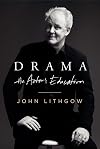
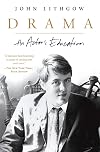
Drama: An Actor's Education
by John Lithgow
On This Page
Description
Biography & Autobiography. Performing Arts. Nonfiction. Through the vivid stories in "Drama", John Lithgow shares a backstage history of his struggle, crisis, and discovery, and the scenes of his early life and career that took place before he became a nationally-known star. Above all, "Drama" is a tribute to the most important influence in John Lithgow's life: his father, Arthur Lithgow. An actor, director, producer, and great lover of Shakespeare, Arthur brought theatre to John's boyhood, show more where performance and storytelling were a constant and cherished part of family life. Lithgow brings the theatre worlds of New York and London to life as he relives his collaborations with renowned performers and directors including Mike Nichols, Bob Fosse, Liv Ullmann, Meryl Streep, and Brian De Palma. Lithgow's ruminations on the nature of theatre, performance, and storytelling cut to the heart of why actors are driven to perform, and why people are driven to watch them do it. At once hilarious and reflective, "Drama" pulls back the curtain on the making of one of our most beloved actors. show lessTags
Recommendations








Member Recommendations
Member Reviews
John Lithgow's autobiography focuses mainly on his youth (including life with his father, who had an interesting but uneven career bringing Shakespeare to the public) and his stage work up through the 70s, rather than on the TV and movie career most people are more likely to know him from. But even though I'm one of those "most people," that was just fine by me. This is a warm, thoughtful, intelligently written memoir that offers up some real insight into what the life of an actor is like. It's interesting that one of the points that Lithgow repeatedly makes is that, despite the fact that he started acting literally before he could remember, it took him a ridiculously long time to realize it's what he wanted to do professionally, show more because his love of the profession, and his love of storytelling, come through very clearly here. And he writes without either egomania or cloying false modesty, instead displaying sincere pride in his accomplishments and rueful honestly about his flaws. It's a surprisingly good read. show less
This book starts with a tender reflection on the cruelty of time balanced with the sweet nostalgia of his father-son relationship. There are enough surprises in this book to help you vicariously observe the happenstance of meeting true legends, some in the ordinary course of life and others in the roiling mess of theatre, film, and TV. Unlike many other biographies, he doesn’t display these interactions with the Bigs as saga of social currency. He stays on point with the storyline.
He was just a boy once, his parents ran legitimately successful Shakespeare festivals, and that was his normal. (This reminds me of Peter Shickley’s lecture at the Mary Pickford Theatre years ago, when he stated with humor, ‘As a kid, I thought it was show more the most normal thing in the world for my parents and family to host string quartets every Friday night in our Dakota home.’)
And then he was a man, fraught with the usual doubts about direction and profession. We should all be glad he has generously worked in every area of the performing arts, not just because he is good, but because he had a hand in dragging in and elevating some of the very best. That is honorable and necessary for the Arts to thrive. Good on you, Mr. Lithgow. It is a true story, and truly told. show less
He was just a boy once, his parents ran legitimately successful Shakespeare festivals, and that was his normal. (This reminds me of Peter Shickley’s lecture at the Mary Pickford Theatre years ago, when he stated with humor, ‘As a kid, I thought it was show more the most normal thing in the world for my parents and family to host string quartets every Friday night in our Dakota home.’)
And then he was a man, fraught with the usual doubts about direction and profession. We should all be glad he has generously worked in every area of the performing arts, not just because he is good, but because he had a hand in dragging in and elevating some of the very best. That is honorable and necessary for the Arts to thrive. Good on you, Mr. Lithgow. It is a true story, and truly told. show less
I absolutely love the way Lithgow writes and his ability to tell a story through acting (be it physical or just with his voice) is superb, so when I found out that my local library had his audiobook, I jumped at the chance to listen to it.
This is a book about father and son, but it is also about overcoming hardships in life, something we can all identify with. I was surprised how honest he was about his life, and in such a gentle way that is just accepting what was and is now moving on from it. The book doesn't cover his time on screen the way it covers his time on stage, but he really doesn't need Hollywood to talk about his life in a compelling way. In fact, I think we would probably lose some of the coherency and emotion if we looked show more deeper into Lithgow's on screen career. Not that it wasn't worthy, just that this book was about his journey to becoming an actor, which happened on stage. But then, I'm a theater person so I'm probably biased.
Lithgow doesn't just tell you his story or the story of his family, he also reflects on why acting, theater, and performing are important to society. As someone who enjoys the arts, I was as wrapped up in that thought process as I was in his family history. I don't believe you have to be interested in the arts in order to enjoy this audiobook, but I think your appreciation for it might just grow a little after listening. One of the things I became more aware of while I listened is that though I love the career I picked out for myself and (I feel I am fairly good at it, if I may say), there are still things out there that I am just as good at, if not better at, and I should keep my eye open for those and try them out if they become available to me. You never know when something that matches you perfectly will pop up and offer its hand. show less
This is a book about father and son, but it is also about overcoming hardships in life, something we can all identify with. I was surprised how honest he was about his life, and in such a gentle way that is just accepting what was and is now moving on from it. The book doesn't cover his time on screen the way it covers his time on stage, but he really doesn't need Hollywood to talk about his life in a compelling way. In fact, I think we would probably lose some of the coherency and emotion if we looked show more deeper into Lithgow's on screen career. Not that it wasn't worthy, just that this book was about his journey to becoming an actor, which happened on stage. But then, I'm a theater person so I'm probably biased.
Lithgow doesn't just tell you his story or the story of his family, he also reflects on why acting, theater, and performing are important to society. As someone who enjoys the arts, I was as wrapped up in that thought process as I was in his family history. I don't believe you have to be interested in the arts in order to enjoy this audiobook, but I think your appreciation for it might just grow a little after listening. One of the things I became more aware of while I listened is that though I love the career I picked out for myself and (I feel I am fairly good at it, if I may say), there are still things out there that I am just as good at, if not better at, and I should keep my eye open for those and try them out if they become available to me. You never know when something that matches you perfectly will pop up and offer its hand. show less
Drama is a memoir, focusing largely on Lithgow's life up to the age of 30. He talks about his childhood, his family, his education, and his early stage acting experiences. He talks about the thrill of making an audience laugh, the performance he put on to get out of being drafted, and his tempestuous affair with cast mate Liv Ullmann.
As a child, Lithgow's family moved around a lot. His father, Arthur Lithgow, was a Shakespearean actor, director, and producer - putting together the Shakespeare festivals at which John absorbed his earliest impressions of an actor's life. Lithgow went on to attend Harvard and then to London to study acting on a Fulbright grant.
Lithgow meets some amazing people along the way. One of his babysitters growing show more up was "a vibrant girl named Coretta" (pg. 20). - later known as Coretta Scott King, wife of Martin Luther King, Jr. He also tells a story of working with an unknown young actress from Yale in a play called Trelawny of the "Wells" in the mid-1970s. The actress was "authentic... vibrant, animated, and radiantly beautiful" (pg. 275). Later, he ran into the young woman again while directing a comedy revival in Manhattan. She auditioned for a role in Tennessee Williams' one-act play Twenty-seven Wagons Full of Cotton - the basis for the later movie Baby Doll. Lithgow calls watching this audition "a little piece of theater history" (pg. 277). Why? "It was the last time Meryl Streep had to audition for anything" (pg. 278).
In Drama, Lithgow talks a lot about the joys of acting, especially on stage and especially for an audience of children and adolescents:
"The more I perform for children, the more I love it. They are a sensational audience for a stage performer and an exhilarating change of pace from adults. The goal of theater is a suspension of disbelief. With grown-ups, you never completely achieve it. Adults never entirely forget that they are watching actors pretend. You can certainly have an impact on them. You can surprise them, move them, shock them, and make them laugh. But you're not fooling them for a moment. Adults always sit in a theater with the smug, unwavering knowledge that they are watching a calculated piece of fiction.
"Not so children. They barely know what a theater is. For them, there is little difference between artifice and reality. Irony means nothing to them. Their disbelief is in a constant state of suspension" (pg. 82).
"I began to realize that kids - so spontaneous, restless, and impudent - were the ideal focus group for a piece of theater. If you are inauthentic, excessive, or boring onstage, and adult audience will rarely protest. Out there in the darkness, they will cough, shift in their seats, stare at their programs, roll their eyes, or nod off. The only way they register their displeasure is by merely applauding at the curtain call with slightly less enthusiasm (when did you last hear someone actually boo an actor?). But kids? When kids think something is dull, fake, corny, square, gauche, or inept, they'll let you know it. They'll riot. But if you can keep their attention and reach into their hearts, you know you've really achieved something" (pg. 187).
If you're a fan of John Lithgow, Drama is a must-read. Even cursory fans, like myself, will enjoy it. Aspiring actors and theater buffs will also get a lot out of it. Lithgow's writing is clear and interesting. His experiences range from funny to tragic, and he tells each story with the appropriate tone. As Drama leaves off fairly early in Lithgow's career, perhaps we can expect a follow-up memoir at some point? show less
As a child, Lithgow's family moved around a lot. His father, Arthur Lithgow, was a Shakespearean actor, director, and producer - putting together the Shakespeare festivals at which John absorbed his earliest impressions of an actor's life. Lithgow went on to attend Harvard and then to London to study acting on a Fulbright grant.
Lithgow meets some amazing people along the way. One of his babysitters growing show more up was "a vibrant girl named Coretta" (pg. 20). - later known as Coretta Scott King, wife of Martin Luther King, Jr. He also tells a story of working with an unknown young actress from Yale in a play called Trelawny of the "Wells" in the mid-1970s. The actress was "authentic... vibrant, animated, and radiantly beautiful" (pg. 275). Later, he ran into the young woman again while directing a comedy revival in Manhattan. She auditioned for a role in Tennessee Williams' one-act play Twenty-seven Wagons Full of Cotton - the basis for the later movie Baby Doll. Lithgow calls watching this audition "a little piece of theater history" (pg. 277). Why? "It was the last time Meryl Streep had to audition for anything" (pg. 278).
In Drama, Lithgow talks a lot about the joys of acting, especially on stage and especially for an audience of children and adolescents:
"The more I perform for children, the more I love it. They are a sensational audience for a stage performer and an exhilarating change of pace from adults. The goal of theater is a suspension of disbelief. With grown-ups, you never completely achieve it. Adults never entirely forget that they are watching actors pretend. You can certainly have an impact on them. You can surprise them, move them, shock them, and make them laugh. But you're not fooling them for a moment. Adults always sit in a theater with the smug, unwavering knowledge that they are watching a calculated piece of fiction.
"Not so children. They barely know what a theater is. For them, there is little difference between artifice and reality. Irony means nothing to them. Their disbelief is in a constant state of suspension" (pg. 82).
"I began to realize that kids - so spontaneous, restless, and impudent - were the ideal focus group for a piece of theater. If you are inauthentic, excessive, or boring onstage, and adult audience will rarely protest. Out there in the darkness, they will cough, shift in their seats, stare at their programs, roll their eyes, or nod off. The only way they register their displeasure is by merely applauding at the curtain call with slightly less enthusiasm (when did you last hear someone actually boo an actor?). But kids? When kids think something is dull, fake, corny, square, gauche, or inept, they'll let you know it. They'll riot. But if you can keep their attention and reach into their hearts, you know you've really achieved something" (pg. 187).
If you're a fan of John Lithgow, Drama is a must-read. Even cursory fans, like myself, will enjoy it. Aspiring actors and theater buffs will also get a lot out of it. Lithgow's writing is clear and interesting. His experiences range from funny to tragic, and he tells each story with the appropriate tone. As Drama leaves off fairly early in Lithgow's career, perhaps we can expect a follow-up memoir at some point? show less
I have been a fan of John Lithgow for awhile now. His sense of humor, timing, and talent exudes from every work of acting he has performed and this autobiography is further proof that his talents extend into writing as well. Raised and schooled in northeast Ohio myself, the name Lithgow comes up often in the summer especially with the Great Lakes Theatre Festival; little did I know that it was John's father who founded it.
This autobiography is a wonderful tale of how childhood, education, experience, and dreams can form a person and create the basis of the rest of their lives. Though Lithgow's childhood was spent moving around to accommodate his father's jobs, he learned the art of acting, love of literature, how to manage an audience, show more and how to use life's lessons in what you do. His love for his parents and family is evident with every story, his sense of humor and timing create moments of laughter, and his honesty provides hope. He does not shy from his mistakes but rather exposes them in such a manner that his readers don't judge him on, but rather can empathize with. This book was a joy to read and I could not put it down. The only thing that could have made it better would have been a companion CD in which Lithgow read it to me; however, the entire I was reading it I had his unique voice in my head encouraging me to the next page. show less
This autobiography is a wonderful tale of how childhood, education, experience, and dreams can form a person and create the basis of the rest of their lives. Though Lithgow's childhood was spent moving around to accommodate his father's jobs, he learned the art of acting, love of literature, how to manage an audience, show more and how to use life's lessons in what you do. His love for his parents and family is evident with every story, his sense of humor and timing create moments of laughter, and his honesty provides hope. He does not shy from his mistakes but rather exposes them in such a manner that his readers don't judge him on, but rather can empathize with. This book was a joy to read and I could not put it down. The only thing that could have made it better would have been a companion CD in which Lithgow read it to me; however, the entire I was reading it I had his unique voice in my head encouraging me to the next page. show less
In this memoir, Lithgow writes of how his early years shaped him as an actor, from his childhood, to his time at Harvard, to his studies in the UK as a Fulbright scholar, and on to his breakthrough on Broadway and film.
I truly enjoyed listening to Lithgow narrate his own personal history. I don't know how much of his work I've actually seen, but I do like his voice. He took my thoughts and feelings exactly where he wanted them to go. I was quiet and pensive as he spoke about the power of story in his father's last days, I was howling with laughter alone in my car as he wrote about his father telling off a decidedly unpassionate Romeo, and I was interested enough not to notice as I listened and worked my way through yet another week of show more the Couch to 5K training program.
You could probably accuse Lithgow of name-dropping, but when he's speaking of his work, it's impossible not to name-drop. I was very interested to learn that he was at Harvard with Tommy Lee Jones and that he saw some of Meryl Streep's earliest Broadway auditions.
He doesn't hold much, if anything, back. His first marriage was rocky and he acknowledges his role in that. He writes honestly about his great love and respect for his father, how confused he felt to sort of surpass his work, and how determined he became to disassociate himself from his father's influence.
If you like memoirs at all, I do recommend this as audio. It's wonderfully narrated by a fascinating man.
Thanks to the publisher for sending me a copy in a contest I won during Audiobook Week at Devourer of Books. show less
I truly enjoyed listening to Lithgow narrate his own personal history. I don't know how much of his work I've actually seen, but I do like his voice. He took my thoughts and feelings exactly where he wanted them to go. I was quiet and pensive as he spoke about the power of story in his father's last days, I was howling with laughter alone in my car as he wrote about his father telling off a decidedly unpassionate Romeo, and I was interested enough not to notice as I listened and worked my way through yet another week of show more the Couch to 5K training program.
You could probably accuse Lithgow of name-dropping, but when he's speaking of his work, it's impossible not to name-drop. I was very interested to learn that he was at Harvard with Tommy Lee Jones and that he saw some of Meryl Streep's earliest Broadway auditions.
He doesn't hold much, if anything, back. His first marriage was rocky and he acknowledges his role in that. He writes honestly about his great love and respect for his father, how confused he felt to sort of surpass his work, and how determined he became to disassociate himself from his father's influence.
If you like memoirs at all, I do recommend this as audio. It's wonderfully narrated by a fascinating man.
Thanks to the publisher for sending me a copy in a contest I won during Audiobook Week at Devourer of Books. show less
Let me start by saying I'm not into theater at all, I've fallen asleep at every play or musical I've ever been to, except Annie when I was around 10. BUT, my mom was a seamstress and she worked backstage at at least a couple plays doing hair, makeup, and costuming, once in a while I dragged along and I always found it pretty fascinating. I even played a mouse, with no lines in a play I can't remember.
I like John Lithgow and I like biographies, so I decided to give it a try. Pretty interesting, and often touching, stuff. He's a surprisingly good writer, certain turns of phrase really wow'd me. The audio was great because he reads it, but then he mentioned some pictures that are in the regular book so now I want to find a copy to look show more through. What I thought was kind of strange was that he barely talked about "Third Rock From the Sun" at all and he never mentioned Shrek. I thought those would be a big part of it because it's what he's most well-known for, but I guess he wanted it to be a book about acting and directing and maybe there are other books about Third Rock. show less
I like John Lithgow and I like biographies, so I decided to give it a try. Pretty interesting, and often touching, stuff. He's a surprisingly good writer, certain turns of phrase really wow'd me. The audio was great because he reads it, but then he mentioned some pictures that are in the regular book so now I want to find a copy to look show more through. What I thought was kind of strange was that he barely talked about "Third Rock From the Sun" at all and he never mentioned Shrek. I thought those would be a big part of it because it's what he's most well-known for, but I guess he wanted it to be a book about acting and directing and maybe there are other books about Third Rock. show less
Members
- Recently Added By
Lists

Books Read in 2014
2,343 works; 89 members

Actors
65 works; 5 members
Author Information

33+ Works 4,316 Members
John Lithgow was born on October 19, 1945 in Rochester, NY. He went to Harvard University, where he graduated magna cum laude in 1967. After graduation, Lithgow won a Fulbright Scholarship to study at the London Academy of Music and Dramatic Art. He has won four Emmy Awards, two Tony Awards, a Golden Globe Award, and two Screen Actors Guild show more Awards. He has also been nominated twice for the Academy Award for Best Actor in a Supporting Role. In 2005, he became the first actor ever to deliver a commencement speech at Harvard University. In addition to acting, he is the author of many books for children. He lives in Los Angeles. show less
Awards and Honors
Classifications
- Genres
- Biography & Memoir, Nonfiction, General Nonfiction
- DDC/MDS
- 792.02 — Arts & recreation Recreation, sports, and performing arts Stage presentations modified standard subdivisions Techniques, procedures, apparatus, equipment, materials, miscellany
- LCC
- PN2287 .L473 .A3 — Language and Literature Literature (General) Literature (General) Drama Dramatic representation. The theater Special regions or countries
- BISAC
Statistics
- Members
- 260
- Popularity
- 124,668
- Reviews
- 22
- Rating
- (3.88)
- Languages
- English, French
- Media
- Paper, Audiobook, Ebook
- ISBNs
- 17
- ASINs
- 9