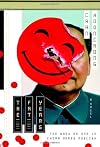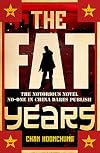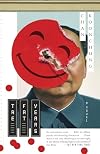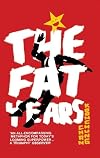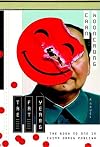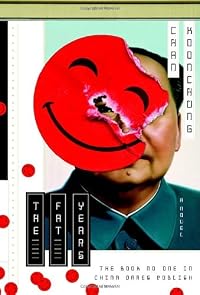
The Fat Years
by Koon Chung Chan
On This Page
Description
Banned in China, this controversial and politically charged novel tells the story of the search for an entire month erased from official Chinese history.Beijing, sometime in the near future: a month has gone missing from official records. No one has any memory of it, and no one could care less—except for a small circle of friends, who will stop at nothing to get to the bottom of the sinister cheerfulness and amnesia that have possessed the Chinese nation. When they kidnap a show more high-ranking official and force him to reveal all, what they learn—not only about their leaders, but also about their own people—stuns them to the core. It is a message that will astound the world.
A kind of Brave New World reflecting the China of our times, The Fat Years is a complex novel of ideas that reveals all too chillingly the machinations of the postmodern totalitarian state, and sets in sharp relief the importance of remembering the... show less
Tags
Recommendations





Member Reviews
Things are going well in China, so well that people refer to it as China's Golden Age of Ascendancy. Meanwhile, the rest of the world is in economic crisis, triggered by the recession of 2008. This is the premise of Chan Koonchung's novel The Fat Years. Written in 2009, it pictures a China in the near future of 2013. In this world, there had been an even greater financial crisis in 2011, one in which the dollar lost one third of its value in a day, leaving lots of room for global shifts of power.
Miraculously, the Chinese seem to have escaped the repercussions of the fallout from this second crisis. The citizens are happy and content, well fed and able to buy the material goods that reenforce these feelings of happiness and contentment. show more Things are so good, that Lao Chen, the protagonist, had moved from HongKong to Beijing for all it has to offer.
One day, however, Lao Chen met a character from his past on the street. Fang Caodi insisted that the month of February was missing from the year 2011. A doubting Lao Chen reflected
The increase in personal happiness was the only thing that struck him as noteworthy. Then another person from his past appeared: Little Xi, an old girlfriend. She too hinted things might not be quite right. Other characters emerge. Zhang Dou had been a child labourer in the illegal market for such workers. Dong Niang, the prostitute Lao Chen visits periodically suggests that the general air of well being is off kilter.
In a manner somewhat reminiscent of the bumbling in Candide or Don Quixote, the characters spread out into the local countryside and reunite in what seems like a happy ending.
This is the PRC though, not story time, so Chan has added a long Epilogue. What made Dong Niang, Zhang Dou, Fang Caodi and Little Xi unusual was that they did not experience the same level of happiness that others enjoyed. They even had vague memories of that missing month. Dong had left Beijing, but the other three and Lao Chen banded together to find out what really happened. The truth is revealed under unusual circumstances by a member of the Politburo, He Dongsheng.
He delivers an all night impromptu combination of speech and lecture on Party politics, economic reform, the role of ideology, the workings of one party dictatorships, control of information and control of social unrest. The difference between the impact of forgetting and not knowing is made clear, using the example of the year 1989, rarely discussed:
The generation of leaders involved in 1989 had been replaced by He Dongsheng and his cohort. Although they knew of the turmoil, other more recent events stood out in their minds. They all pointed to one conclusion though; there needed to be plans in place for dealing with large scale disturbances. He managed to link such crisis plans with the hope that their implementation ...would allow the government to take full advantage of the opportunity to bring order out of chaos, and complete all the unfinished business of the last thirty plus years of 'Reform and Opening'.
At first He Dongsheng's lecture seemed overblown. He articulated a horrifyingly pragmatic approach to natural and manmade disasters that is completely logical if you are a Politburo member in a country with well over one billion people. As his listeners debated various points with him, and he put twentieth century events in an economic context, it all became quite intriguing. Michael Duke says in his Translator's Note "Reality has already caught up with He Dongsheng's monologue, and many of the plans he describes have already been fulfilled, especially China's buying up of much of the world's natural resources to fuel its economic behemoth... All these plans are intended to fulfill the goals of a China that its leaders and many of its people believe is in ascendance and destined to become the main power in the world."
The Fat Years has been banned in China, although it does circulate there. In a regime that practises such levels of censorship, one of the important questions the book raises is whether the vast majority of people really care about what's happening as long as they themselves are comfortable. This isn't just a question for the Chinese; it's a question for all of us. show less
Miraculously, the Chinese seem to have escaped the repercussions of the fallout from this second crisis. The citizens are happy and content, well fed and able to buy the material goods that reenforce these feelings of happiness and contentment. show more Things are so good, that Lao Chen, the protagonist, had moved from HongKong to Beijing for all it has to offer.
One day, however, Lao Chen met a character from his past on the street. Fang Caodi insisted that the month of February was missing from the year 2011. A doubting Lao Chen reflected
Every day I read the papers and checked the Internet news sites; every night I watched CCTV and the Phoenix Channel, and I hung around with intelligent people. I didn't think that any major event had escaped my notice. I believed in myself -- my knowledge, my wisdom and my independent judgement.
The increase in personal happiness was the only thing that struck him as noteworthy. Then another person from his past appeared: Little Xi, an old girlfriend. She too hinted things might not be quite right. Other characters emerge. Zhang Dou had been a child labourer in the illegal market for such workers. Dong Niang, the prostitute Lao Chen visits periodically suggests that the general air of well being is off kilter.
In a manner somewhat reminiscent of the bumbling in Candide or Don Quixote, the characters spread out into the local countryside and reunite in what seems like a happy ending.
This is the PRC though, not story time, so Chan has added a long Epilogue. What made Dong Niang, Zhang Dou, Fang Caodi and Little Xi unusual was that they did not experience the same level of happiness that others enjoyed. They even had vague memories of that missing month. Dong had left Beijing, but the other three and Lao Chen banded together to find out what really happened. The truth is revealed under unusual circumstances by a member of the Politburo, He Dongsheng.
He delivers an all night impromptu combination of speech and lecture on Party politics, economic reform, the role of ideology, the workings of one party dictatorships, control of information and control of social unrest. The difference between the impact of forgetting and not knowing is made clear, using the example of the year 1989, rarely discussed:
One year was not to be mentioned. Had it disappeared?
For some people that year was an indelible memory. It was just like the title of a book commemorating the June 4, 1989, Tiananmen Massacre by the Hong Kong Journalists' Association: The People Will Never Forget.
But will the people really never forget?
For the great majority of young mainland Chinese, the events of the Tienanmen Massacre have never entered their consciousness; they have never seen the photographs and news reports about it, and even fewer have had it explained by their family or teachers. They have not forgotten it; they have never known anything about it. In theory, after a period of time has elapsed, an entire year can indeed disappear from history -- because no one says anything about it.
The generation of leaders involved in 1989 had been replaced by He Dongsheng and his cohort. Although they knew of the turmoil, other more recent events stood out in their minds. They all pointed to one conclusion though; there needed to be plans in place for dealing with large scale disturbances. He managed to link such crisis plans with the hope that their implementation ...would allow the government to take full advantage of the opportunity to bring order out of chaos, and complete all the unfinished business of the last thirty plus years of 'Reform and Opening'.
At first He Dongsheng's lecture seemed overblown. He articulated a horrifyingly pragmatic approach to natural and manmade disasters that is completely logical if you are a Politburo member in a country with well over one billion people. As his listeners debated various points with him, and he put twentieth century events in an economic context, it all became quite intriguing. Michael Duke says in his Translator's Note "Reality has already caught up with He Dongsheng's monologue, and many of the plans he describes have already been fulfilled, especially China's buying up of much of the world's natural resources to fuel its economic behemoth... All these plans are intended to fulfill the goals of a China that its leaders and many of its people believe is in ascendance and destined to become the main power in the world."
The Fat Years has been banned in China, although it does circulate there. In a regime that practises such levels of censorship, one of the important questions the book raises is whether the vast majority of people really care about what's happening as long as they themselves are comfortable. This isn't just a question for the Chinese; it's a question for all of us. show less
Once I realised that trying to ease myself back into reading non-fiction after avoiding it since Trumpageddon with a 900 page biography of Mao was ill-advised, I took up a novel about China instead. ‘The Fat Years’ turned up on my dystopia keyword search, although I wouldn’t class it as dystopian. The situation described is only a slight exaggeration of current affairs. 'The Fat Years' was first published in 2009 and is set in 2013, so has an exceedingly contemporary feel. The narrative follows a small group of characters as their unease about life in China grows. They realise that a month has gone missing from official records and their memories, so set out to find out what happened. This is not an idealistic quest, however. Only show more one character, maybe two, has any hope of changing things. The others just want to know for their own intellectual satisfaction.
I found the story a little slow at first while it followed Old Chen’s daily life. Once he encountered other main characters and some answers to their questions began to emerge, though, it became very compelling. The highlights, to my mind, are effectively lectures on Chinese politics. In a way this is a non-fiction analysis of China’s geopolitical near future, framed by a fictional account of how people in China might experience these trends. The writing style is pleasingly ironic and amusing, for example:
The structure of the book is somewhat odd. The denouement and most powerful passages are all in the so-called epilogue, which takes up nearly a third of the book. I won’t soon forget the ‘live together or die together’ dilemma. Also of note is this pitilessly accurate portrait of the US:
Aren’t we all. But of course China still has all these interest groups, just differently arranged. As I understand it, all of the above except the churches and PR lobbies are part of the one party state, so wrangles between them take place within the government. While said state can take bold and decisive action, the novel makes clear that such action nearly always takes the form of punitive crackdowns involving imprisoning, torturing, and executing people who are very probably innocent, in order to send a message. One repeated refrain in the text is the choice between ‘a good hell’ and ‘a counterfeit paradise’. In other words, will you accept oppression in return for material comfort, or fight it? At what point is the level of oppression no longer worth the material stability it allows you? Two very difficult questions that are highly relevant to 2016 and the approaching year. The book has no easy answers, but forces you to confront China’s ascendancy and what it means for all of us. It's a fascinating read. show less
I found the story a little slow at first while it followed Old Chen’s daily life. Once he encountered other main characters and some answers to their questions began to emerge, though, it became very compelling. The highlights, to my mind, are effectively lectures on Chinese politics. In a way this is a non-fiction analysis of China’s geopolitical near future, framed by a fictional account of how people in China might experience these trends. The writing style is pleasingly ironic and amusing, for example:
As they were thinking and talking, the four men met at the front gate [of the church]. [...]
“Who’s in charge here?” asked Fang Caodi impatiently.
“God is in charge here,” said Li Tiejan.
“Don’t talk nonsense,” said Fang Caodi.
The structure of the book is somewhat odd. The denouement and most powerful passages are all in the so-called epilogue, which takes up nearly a third of the book. I won’t soon forget the ‘live together or die together’ dilemma. Also of note is this pitilessly accurate portrait of the US:
America’s elected politicians were beholden to a plethora of interest groups: Wall Street, big business, the arms industry, local power groups, the churches, the labour unions, and various public-relations lobbies; they also had to take care of popular and media opinion. So when it was necessary for them to unite to accomplish something big and important, all they could do was look around, to the left and right, and fight meaningless little battles; they didn’t dare cut to the bone and heal the body politic, and were even less likely to take bold and decisive action. American market fundamentalists and the right wing of the Republican party constantly dragged their feet and added to the confusion; they were completely out of touch with reality and could certainly mess things up, but they could not make any positive contributions. He Dongsheng was completely discouraged with Western democracy.
Aren’t we all. But of course China still has all these interest groups, just differently arranged. As I understand it, all of the above except the churches and PR lobbies are part of the one party state, so wrangles between them take place within the government. While said state can take bold and decisive action, the novel makes clear that such action nearly always takes the form of punitive crackdowns involving imprisoning, torturing, and executing people who are very probably innocent, in order to send a message. One repeated refrain in the text is the choice between ‘a good hell’ and ‘a counterfeit paradise’. In other words, will you accept oppression in return for material comfort, or fight it? At what point is the level of oppression no longer worth the material stability it allows you? Two very difficult questions that are highly relevant to 2016 and the approaching year. The book has no easy answers, but forces you to confront China’s ascendancy and what it means for all of us. It's a fascinating read. show less
Set in modern day China (kind of) and explores the lives of people who don’t quite see eye to eye with the ruling regime.
It is fiction but the kind of fiction that parallels the present in an uncanny way.
One of the more interesting parts is the explanation of the trade off between personal freedom and the greater good of everyone as a whole. This view is put across, quite convincingly, from the ruling regime that sacrifices have to be made if you want stability, progress, and a decent standard of living for everyone.
When you consider that in China a staggering 800m people have been lifted above the poverty line in 40 years and that includes 82.39 million people lifted out of poverty over the past six years.
I don’t know what it is show more like where you live but I can safely say that in New Zealand and England the absolute opposite is true.
In New Zealand In 1982, 14% of children lived in poverty. In 2016, 28% of children live in poverty.
If you had a choice between a place to live and means of earning a living in return for cameras on the streets what would you choose?
One the interesting things about the western concept of freedom is that it is entirely dependent on having money. If you are poor have a lot less freedom than those that are wealthy. The poorer you are the less freedom you have.
Many years ago I met a Czech film maker who had defected to the west. In his own country every film he made was shown in cinemas all over the Soviet bloc, but he was not allowed to make the films that he really wanted to make. He was in awe of the west where anyone could make any film they wanted without hindrance. What he never factored in was that you could make any film you liked but it was almost impossible to get it shown anywhere let alone in a cinema. Indeed he discovered that the film studios bore an uncanny resemblance to the Soviet film institute that he had run away from.
From that meeting I learned that freedom is a very strange thing. You can have it and not be able to do anything with it, you can be free but have less real freedom than those that are not free. In the Soviet bloc you could vote for one party with one ideology but in the west we have the freedom to vote for two parties but still only one ideology.
I was lucky to have grown up in a time of relative wealth but I would rather have cameras all along my street that have to see families sleeping in cars, which I do regularly.
Any book that makes you think in real terms about our lives is worth reading, this is one of them. show less
It is fiction but the kind of fiction that parallels the present in an uncanny way.
One of the more interesting parts is the explanation of the trade off between personal freedom and the greater good of everyone as a whole. This view is put across, quite convincingly, from the ruling regime that sacrifices have to be made if you want stability, progress, and a decent standard of living for everyone.
When you consider that in China a staggering 800m people have been lifted above the poverty line in 40 years and that includes 82.39 million people lifted out of poverty over the past six years.
I don’t know what it is show more like where you live but I can safely say that in New Zealand and England the absolute opposite is true.
In New Zealand In 1982, 14% of children lived in poverty. In 2016, 28% of children live in poverty.
If you had a choice between a place to live and means of earning a living in return for cameras on the streets what would you choose?
One the interesting things about the western concept of freedom is that it is entirely dependent on having money. If you are poor have a lot less freedom than those that are wealthy. The poorer you are the less freedom you have.
Many years ago I met a Czech film maker who had defected to the west. In his own country every film he made was shown in cinemas all over the Soviet bloc, but he was not allowed to make the films that he really wanted to make. He was in awe of the west where anyone could make any film they wanted without hindrance. What he never factored in was that you could make any film you liked but it was almost impossible to get it shown anywhere let alone in a cinema. Indeed he discovered that the film studios bore an uncanny resemblance to the Soviet film institute that he had run away from.
From that meeting I learned that freedom is a very strange thing. You can have it and not be able to do anything with it, you can be free but have less real freedom than those that are not free. In the Soviet bloc you could vote for one party with one ideology but in the west we have the freedom to vote for two parties but still only one ideology.
I was lucky to have grown up in a time of relative wealth but I would rather have cameras all along my street that have to see families sleeping in cars, which I do regularly.
Any book that makes you think in real terms about our lives is worth reading, this is one of them. show less
http://nwhyte.livejournal.com/2399046.html
This is a fascinating book, by a writer who was born in Shanghai, educated in Hong Kong and now lives in Beijing. The book itself has been published in Hong Kong and Taiwan, but is not officially available on the mainland (though a fascinating foreword by Julia Lovell refers to Beijing's "chic party-hostesses slipp[ing] copies of the book into guests’ take-home bags"). It came out in 2009 and is set in the very near future of 2013, after a further financial crisis has wrecked the world economy apart from China, which has now become Top Nation, and yet everyone - or all but a very few - appears to have completely forgotten the crucial month of February 2011, in which the world changed.
There's show more a lot in here, including Christianity as a weird foreign religion, state drugging of the population a la Blake's 7, and using sfnal themes as a metaphor for the erasure of June 1989 from official memory; I can see why official China may feel it cuts a bit close to the bone - the protagonist, contrasting the West and China, suggests that:
"The only disparity is that, theoretically, the power of Western governments is given to them by the people, while in China the people’s freedom is given to them by the government. Is this distinction really that important?"
Readers may give their own answer to the question, taking into account when and where the book was written and published.
Anyway, I now appreciate the depth of my own ignorance about China even more. show less
This is a fascinating book, by a writer who was born in Shanghai, educated in Hong Kong and now lives in Beijing. The book itself has been published in Hong Kong and Taiwan, but is not officially available on the mainland (though a fascinating foreword by Julia Lovell refers to Beijing's "chic party-hostesses slipp[ing] copies of the book into guests’ take-home bags"). It came out in 2009 and is set in the very near future of 2013, after a further financial crisis has wrecked the world economy apart from China, which has now become Top Nation, and yet everyone - or all but a very few - appears to have completely forgotten the crucial month of February 2011, in which the world changed.
There's show more a lot in here, including Christianity as a weird foreign religion, state drugging of the population a la Blake's 7, and using sfnal themes as a metaphor for the erasure of June 1989 from official memory; I can see why official China may feel it cuts a bit close to the bone - the protagonist, contrasting the West and China, suggests that:
"The only disparity is that, theoretically, the power of Western governments is given to them by the people, while in China the people’s freedom is given to them by the government. Is this distinction really that important?"
Readers may give their own answer to the question, taking into account when and where the book was written and published.
Anyway, I now appreciate the depth of my own ignorance about China even more. show less
This is an brilliant novel influenced by the 2008 economic downturn in the West. It contains 3 distinct parts:
1. Various diaries and first person narratives involving a mystery about 28 missing days from the collective people of China.
2. A third person narrated quest to find and save a missing woman.
3. A monologue by a party head, given to the dissidents who have kidnapped him in an effort to figure out why China's residents are so happy and how 28 days are missing from 99% of the population's memory.
This is an exploration of China's future, and ultimately, how Chinese citizens live today. The Chinese Party isn't under the Orwellian illusion of working for the "good of the people". In fact, this "Party seeks power entirely for its show more own sake. We are not interested in the good of others; we are interested solely in power." show less
1. Various diaries and first person narratives involving a mystery about 28 missing days from the collective people of China.
2. A third person narrated quest to find and save a missing woman.
3. A monologue by a party head, given to the dissidents who have kidnapped him in an effort to figure out why China's residents are so happy and how 28 days are missing from 99% of the population's memory.
This is an exploration of China's future, and ultimately, how Chinese citizens live today. The Chinese Party isn't under the Orwellian illusion of working for the "good of the people". In fact, this "Party seeks power entirely for its show more own sake. We are not interested in the good of others; we are interested solely in power." show less
A novel set in near-future Beijing follows the widespread disappearance of a month from official records and human memory that is disregarded by everyone except a small circle of friends who kidnap a high-ranking official to expose the truth. Summary BPL
“Between a good hell and a fake paradise-which one would you choose?”
Started out reading this one then moving to the audiobook. I couldn’t keep the names straight and it was a huge help to hear them pronounced properly.
The Fat Years is a lightly fictionalized commentary on China’s current collective amnesia about its past, particularly Tiananmen Square in 1989. The author says that the Chinese people would rather enjoy their Starbucks and shopping malls (the fake paradise) than show more question the regime that does not permit mention of government leaders, that controls internet parameters (even Google gave in!), what citizens read and watch, that spies on and harrasses its own people…. It has been compared to 1984 and Brave New World.
I listened to the audiobook twice—that was long!—as I found it difficult to follow the different points of view, and what I was to infer from them. This book will appeal to readers who are interested in the political scene in China and China’s role in the global economy or those, like myself, who want to get caught up on it.
7 out of 10. Serious readers only. show less
“Between a good hell and a fake paradise-which one would you choose?”
Started out reading this one then moving to the audiobook. I couldn’t keep the names straight and it was a huge help to hear them pronounced properly.
The Fat Years is a lightly fictionalized commentary on China’s current collective amnesia about its past, particularly Tiananmen Square in 1989. The author says that the Chinese people would rather enjoy their Starbucks and shopping malls (the fake paradise) than show more question the regime that does not permit mention of government leaders, that controls internet parameters (even Google gave in!), what citizens read and watch, that spies on and harrasses its own people…. It has been compared to 1984 and Brave New World.
I listened to the audiobook twice—that was long!—as I found it difficult to follow the different points of view, and what I was to infer from them. This book will appeal to readers who are interested in the political scene in China and China’s role in the global economy or those, like myself, who want to get caught up on it.
7 out of 10. Serious readers only. show less
From the blurb:
”Beijing, sometime in the near future: a month has gone missing from official records. No one has any memory of it, and no one can care less. Except for a small circle of friends, who will stop at nothing to get to the bottom of the sinister cheerfulness and amnesia that has possessed the Chinese nation. When they kidnap a high-ranking official and force him to reveal all, what they learn – not only about their leaders, but also about their own people – stuns them to the core.”
I initially really struggled to get into this book because of the style. I’m not sure if this is a result of Duke’s translation or if this is how Koonchung actually writes, but I found the language often went beyond simple and verged on show more basic, even amateurish, and in numerous places the dialogue was stilted. The characters don’t really have any individual voices.
The Fat Years is a somewhat peculiar book. Most of the real issues explored are more truth than fiction. The first two thirds of the book I found quite slow, it seems the bulk of the book is used to set the scene so that the real issues can be explored through the epilogue. But if you can get past these issues, this is an extremely interesting, thought provoking read.
The Fat Years is set in 2013 and pushes the current situation under the ‘big brother’ communist government just a bit beyond reality. The story is centered around the mystery of the forgotten month, but the book is really an exploration of Chinese politics, economics, society, selective ‘cultural amnesia’ and media manipulation and the choice between “a good hell and a fake paradise”. The plausibility of the situation portrayed serves as a warning regarding the future of China.
For me the most interesting part was the epilogue, which for the most part is a 50 page monologue arguing the rational behind the Communist party policy. The information on economic policy is an accurate depiction of actual Chinese policy, and while the reader is aware of how these policies infringe on the rights of individual’s, the economic theory seems to make some uncomfortable sense. Reading this passage, I found myself wishing I had a greater understanding of economic theory so that I could pick apart the argument as the other characters don’t really do this on the reader’s behalf in much depth.
The Fat Years has apparently had quite an impact – it is banned in China but has a strong underground following. It isn’t an overtly critical book, instead it raises questions, especially regarding whether the ends really justify the means, and tries to present both sides of the argument.
Anyone thinking this is some mystery/thriller fiction would be wrong, it is a social commentary. The plot is therefore weak, but the plot is simply a mechanism by which the themes can be explored. And it is the themes and the insight into modern China and the mentality of a nation that is the truly interesting aspect of this book. show less
”Beijing, sometime in the near future: a month has gone missing from official records. No one has any memory of it, and no one can care less. Except for a small circle of friends, who will stop at nothing to get to the bottom of the sinister cheerfulness and amnesia that has possessed the Chinese nation. When they kidnap a high-ranking official and force him to reveal all, what they learn – not only about their leaders, but also about their own people – stuns them to the core.”
I initially really struggled to get into this book because of the style. I’m not sure if this is a result of Duke’s translation or if this is how Koonchung actually writes, but I found the language often went beyond simple and verged on show more basic, even amateurish, and in numerous places the dialogue was stilted. The characters don’t really have any individual voices.
The Fat Years is a somewhat peculiar book. Most of the real issues explored are more truth than fiction. The first two thirds of the book I found quite slow, it seems the bulk of the book is used to set the scene so that the real issues can be explored through the epilogue. But if you can get past these issues, this is an extremely interesting, thought provoking read.
The Fat Years is set in 2013 and pushes the current situation under the ‘big brother’ communist government just a bit beyond reality. The story is centered around the mystery of the forgotten month, but the book is really an exploration of Chinese politics, economics, society, selective ‘cultural amnesia’ and media manipulation and the choice between “a good hell and a fake paradise”. The plausibility of the situation portrayed serves as a warning regarding the future of China.
For me the most interesting part was the epilogue, which for the most part is a 50 page monologue arguing the rational behind the Communist party policy. The information on economic policy is an accurate depiction of actual Chinese policy, and while the reader is aware of how these policies infringe on the rights of individual’s, the economic theory seems to make some uncomfortable sense. Reading this passage, I found myself wishing I had a greater understanding of economic theory so that I could pick apart the argument as the other characters don’t really do this on the reader’s behalf in much depth.
The Fat Years has apparently had quite an impact – it is banned in China but has a strong underground following. It isn’t an overtly critical book, instead it raises questions, especially regarding whether the ends really justify the means, and tries to present both sides of the argument.
Anyone thinking this is some mystery/thriller fiction would be wrong, it is a social commentary. The plot is therefore weak, but the plot is simply a mechanism by which the themes can be explored. And it is the themes and the insight into modern China and the mentality of a nation that is the truly interesting aspect of this book. show less
Members
- Recently Added By
Lists

BBC World Book Club
261 works; 5 members
Author Information
21 Works 443 Members
Some Editions
Awards and Honors
Distinctions
Notable Lists
Common Knowledge
- Canonical title
- The Fat Years
- Original title
- 盛世:中國2013年; Shengshi Zhongguo
- Original publication date
- 2009 (Chinese); 2011 (English) (Chinese | English)
- Important places
- Beijing, China
- First words
- Zhongguancun, China's Silicon Valley in northwest Beijing, is a fine place to visit these days. (Preface)
One whole month is missing.
The Fat Years is a unique combination of a mystery novel with a realistic exposé of the political, economic, and social system of China as it is today, and will be for the foreseeable future. (Translator's Note) - Last words
- (Click to show. Warning: May contain spoilers.)He gazed about the airy, glazed mall, as we glided down the escalator back to street level on a perfect, blue-skied August day. "Not today. I don't know about tomorrow, though." (Preface)
(Click to show. Warning: May contain spoilers.)The eastern sky was bright, and the two of them shaded their eyes as they walked arm in arm into the harsh light of day.
(Click to show. Warning: May contain spoilers.)In the meantime, The Fat Years provides the most interesting and enlightening way for us to understand both the possible future of China and what it is like for many urban Chinese to live in the belly of the Chinese Leviathan. (Translator's Note) - Blurbers
- Bernstein, Richard; Xinran; Schell, Orville; Shih, Shu-Mei; Cheek, Timothy; Evans, Paul
- Original language
- Chinese
Classifications
- Genres
- Fiction and Literature, Science Fiction, General Fiction
- DDC/MDS
- 895.1 — Literature & rhetoric Literatures of other languages Literatures of East and Southeast Asia Chinese
- LCC
- PL2840 .G84 .S5413 — Language and Literature Languages and literatures of Eastern Asia, Africa, Oceania Languages of Eastern Asia, Africa, Oceania Chinese language and literature Chinese literature Individual authors and works
- BISAC
Statistics
- Members
- 348
- Popularity
- 90,225
- Reviews
- 15
- Rating
- (3.33)
- Languages
- 9 — Catalan, Chinese, Danish, Dutch, English, French, German, Italian, Spanish
- Media
- Paper, Audiobook, Ebook
- ISBNs
- 17
- ASINs
- 6